For this research task, I had to look at a range of artist and designers that have developed projects over-time.
Bryan Eccleshall
The first person I researched is Bryan Eccleshall. I started by watching a short video of Bryan Eccleshall talking about his challenge that he set himself which was to create a drawing a day for a year.
We can see the video about this challenge below.
After years of employment, it was great news to discover Bryan has returned to his artistic pursuits and is now a renowned artist and tutor at OCA.
Whilst watching the video, I discovered he created drawings that he purposefully did not want to be too showy or dramatic but a catalogue of illustrations as part of his self-challenge, and when they are viewed all together, they become a work of art.
Below is a quote from his video:
“If I just do something, and keep doing it, something will happen.” (Parry, 2013)
This quote has been a source of inspiration for me as I am often scared to begin something and will put it off. As he said, I just need to act and keep at it, and hopefully something will happen in my creative process. Through his challenge, he has noticed an improvement in his drawing ability, a quickening of his workflow, the addition of new techniques, and the creation of a catalogue of illustrations.
Christian Marclay
I then did research on the movie “The Clock” by Christian Marclay and I watched a portion of the movie on the internet, which in full is a 24-hour-long montage of motion picture and television clips.
We can see part of the film below.
Each clip reflects or refers to a certain time of day. The movie keeps pace with real time, and each clip appears at the same moment it depicts, creating a captivating experience for the viewer.
The movie contains snippets from a variety of genres and eras. He and his team have arranged the footage to give the feeling of a continuous story. His group of six assistants spent years looking through film footage to discover the ideal snippets to use in this movie.
As I watched part of the movie, I noticed that Marclay and his team put clips from different films together in a clever way, making the audience think about the past, present, and future. This lead me and possibly other people too feeling anxious about our lives. Are we utilising our time in the best way possible? It made me think how many times I look at a clock each day? I think about making sure to get my children to school and to their after-school clubs, cook dinner, and start the bedtime routine, all according to a timely schedule. I am always aware of time in many other circumstances as well. What would life be like when not conforming to the clock? The film most importantly underlines the importance of the present.
Overall, the movie experience is very intriguing and is a clever work of art which will cause viewers to think about how they spend their time.
On Kawara
On Kawara was a Japanese conceptual artist that explored time, language, and human existence. He was born in 1933 in Kariya, Japan, and lived and worked in various cities around the world until his death in 2014.
Below is an interesting video I watched where three art curators discuss Kawara’s artwork. The artwork was exhibited at the Guggenheim Museum.
The “Date Paintings,” which Kawara started in 1966 and lasted up until his death in 2014, are what make him most famous, according to the film. Each painting is based on the passage of time, is painted in monochrome and have the creation dates on top of the canvas for each work. The dates are painted by hand in either white or black letters. The paintings frequently represent their place and culture by being made in many time zones and languages.
It was pleasing to see that the exhibition was held at the Guggenheim Museum, as this was a particularly significant venue for On Kawara’s work, as he had long admired the building’s architecture and believed that its spiral design and open interior space emphasised the passage of time.
Kawara’s other notable works include the “I Got Up” series, in which he sent postcards to friends and colleagues every day for two years, each one stamped with the time he woke up that day. He also created the “One Million Years” project, which consists of two sets of bound volumes, each containing pages upon pages of printed years and dates. The first set lists the years from one million years ago to the present day, while the second set lists the years from the present day to one million years in the future.
Douglas Gordo
Douglas Gordon, like On Kawara, is an artist known for conceptual works that explore time. His other works explore memory, identity, and perception.
One of Gordon’s most famous works is, “24 Hour Psycho,” a video presentation of Alfred Hitchcock’s classic film “Psycho.” It was first shown at the Tramway gallery in south Glasgow in 1993. The film was played in slow motion for twenty-four hours. By stretching the film’s duration, it encourages viewers to consider the emotional as well as psychological impacts of time and memory, Gordon has created a sensation of paused time.
Overall, Gordon’s work frequently uses perception, repetition, and distortion to question traditional ways of seeing. By doing this, he is encouraging viewers to question their own perceptions and assumptions.
Tatsuo Miyajima
Japanese modern artist Tatsuo Miyajima is known for his use of digital technology and his exploration of time, space, and life cycles. He enjoys creating performance artworks to create interactive experiences for his audiences.
His work is motivated by three ideas: “keep Evolving,” “connect with everything,” and “continue forever.” He has produced many long-term projects one which he is most famous for is “Counter Void”: This project features a room filled with LED counters that count down from nine to one. The subject and purpose of this project is to question “life and death.”
Below is a video where Tatsuo takes you through one of his sketch books and explains the meaning behind his work.
Alfredo Jaar
Alfredo Jaar is a Chilean-born artist who is known for his socially and political works of art. He has created numerous projects throughout his career, but one of his most famous and influential projects is “The Rwanda Project” which he began in 1994.
When I investigated this project more, I learned that it was a project in response to the 1994 genocide in Rwanda. I did some further study because I was unfamiliar with the history of the genocide and the reasons it occurred and thought this would help me to better understand Alfredo’s thought process.
I started by doing some research on Google, then I watched some films about the genocide in Rwanda.
One video of such is displayed below.
I was shocked and saddened to learn what had occurred. I learned that the Rwandan genocide claimed the lives of about a million innocent individuals in just 100 days. Two ethnic groups, the Hutus, and the Tutsis, were battling over the land they shared for many years. Many Tutsis fled the nation after the Hutu community overthrew the Tutsi monarchy in 1959. Later, to help the Tutsis community with their return to their homeland, they established the RPF and signed a peace treaty with the Hutus in the 1980s. Yet, on April 6, 1994, a Hutu president was killed along with everyone else on board the aircraft that had been shot down.
Extreme Hutu groups in revenge planned to massacre the Tutsis people in large numbers after blaming them for the crash. Women and girls were seized as sex slaves and many Tutsis were killed with machetes. Three months were spent with their bloodshed.
After the genocide, Jaar visited Rwanda to record the destruction and produce a body of work that would bring attention to the catastrophe. The project had several parts, including a collection of images, a video display, and a public engagement.
The video below displays a portion of Alfredo’s creation. I teared up a little when I read about what happened in Rwanda and when I saw Alfredo’s response in his artwork.
The film mentioned above shows a record of 17 front covers from Newsweek issues published between April and August into Alfredo’s exhibition. None of the front covers, save for the last, refer to the genocides taking place in Rwanda. At the base of each cover, Alfredo writes a brief caption outlining the events in Rwanda. The last cover of The Seventeen honours individuals who have perished in genocides. This serves as an emotional ending to his artwork.
His work is quite straightforward but incredibly moving and thought-provoking as a tribute to the Rwandan victims. Together, the covers demonstrate how art can be used to speak out against political and social injustices as well as to bring attention to human rights crimes. It also serves as an example of what journalists should not do.
“I don’t like, and I do not except the term political artists. We are all artists and we all critically engage with the world because we act in the world so everything, we do represent a conception of the world in that sense we’re all political. When it is not critical, when there is no conception of the world, that is not art, that is decoration.”
(Louisiana Channel, 2013b)
This remark spoke to me since, after finishing college, I battled for years to rediscover my love of art. The purpose of drawing seemed pointless since a camera could capture every detail. After thinking about it I realised and understood that I wanted to produce work that had a purpose and a meaning rather than merely a drawing.
With all the artists I have looked at, his is my favourite and most inspirational body of work.
Next, I answered the following questions from the OCA textbook
- How might you produce a similar daily project?
As Alfredo inspired me the most out of all the artists, I have thought about how I could produce a similar project to his but based upon a different topic.
First, I would need to identify the issue that my project will address. It could be a social issue, an environmental issue, something based upon current news. I would then need to research the subject to understand the problem better and think about potential solutions. I would need to think about what I wanted to achieve from creating this artwork. I would start with a mind map of ideas and then develop selected ideas further into a detailed plan.
What could the subject or content be?
As said above the subject content could be based on social issue, an environmental issue, something based upon current news. Having a quick look at what is happening in the world today I realised sadly there will always be something I could create. For instance, as a starting point the subject could be about any of the following below.
- Poverty
- Knife crime
- Racism
- Ukraine War
Think of things that happen regularly but might change slightly, like going to the shops, or reading a newspaper, or a domestic routine.
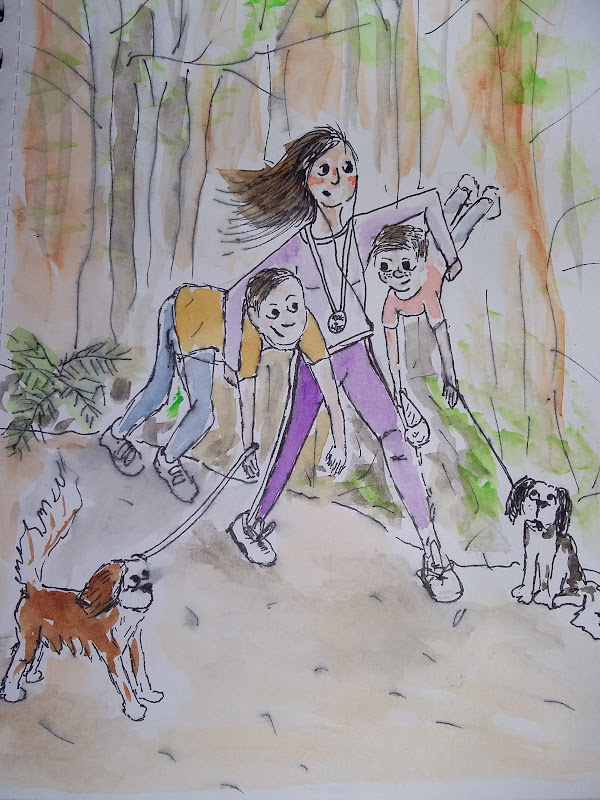
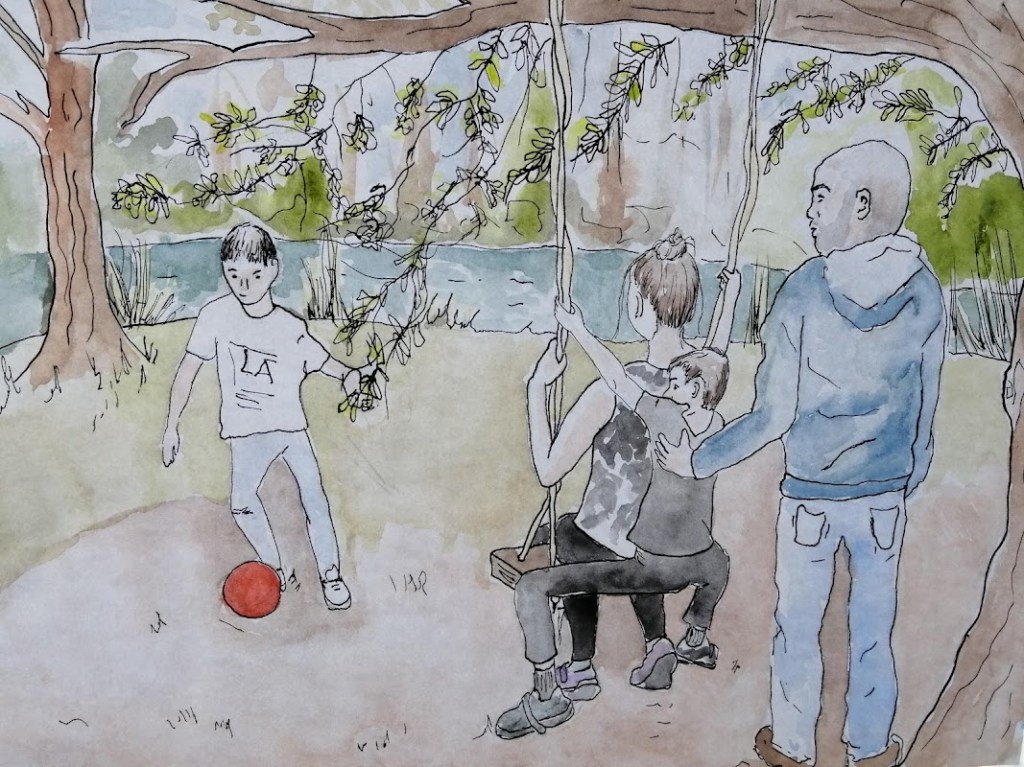
I have always wanted to make a daily diary of what has happened in my day using illustrations, this is thinking very differently from the ideas above. I often consider how bizarre something was and how my life would make an excellent comic book. For instance, one time when I was walking through the woods near my house, a middle-aged woman dressed all in red came skipping towards me singing before she vanished into the distance. This kind of thing is unusual, therefore would be an interesting starting point.
Here is an illustration I created while I thought back on a walk I took with my children. As you can see, it was not as relaxing as I had hoped and is the sort of thing that I would put into the diary.
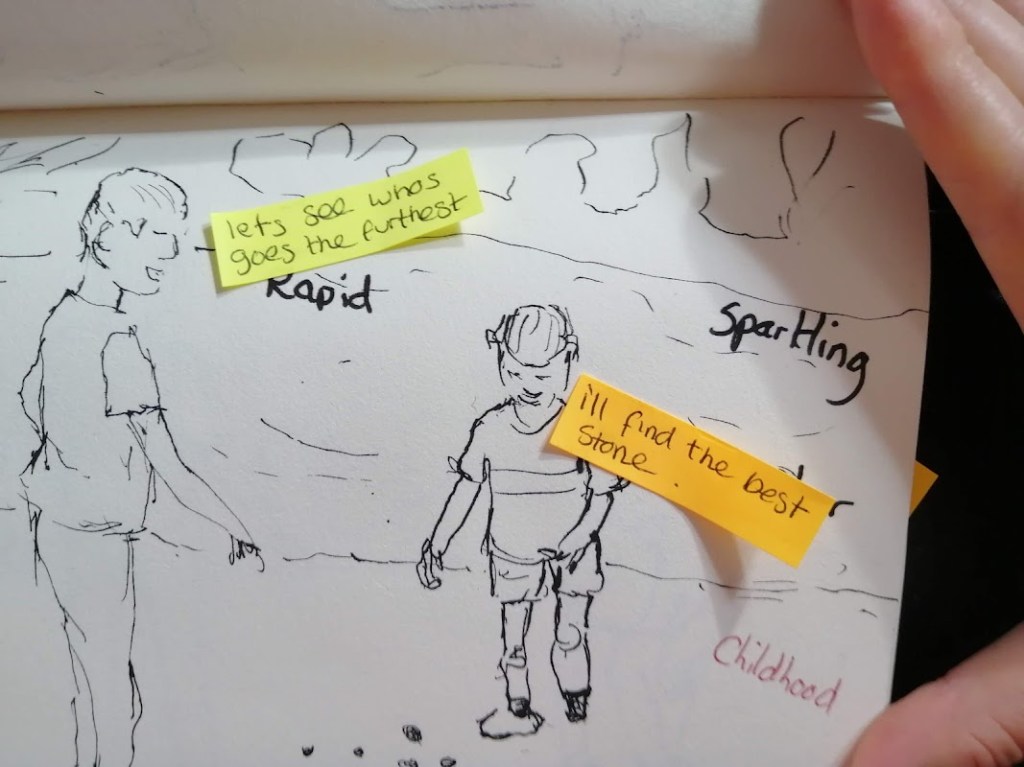
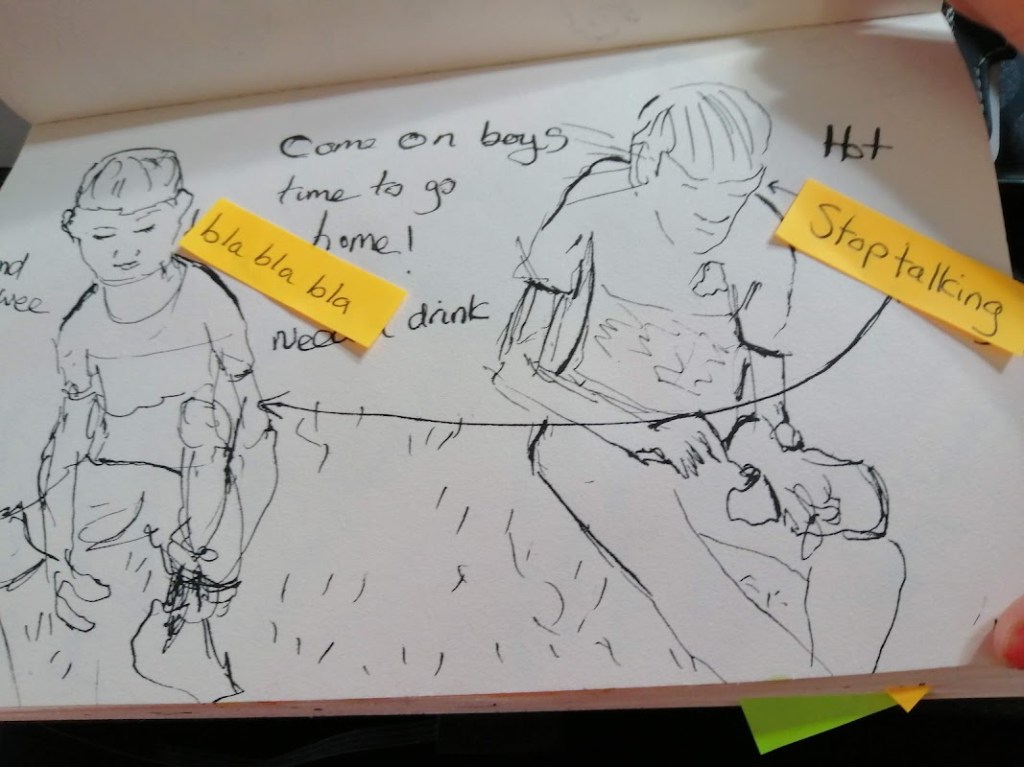
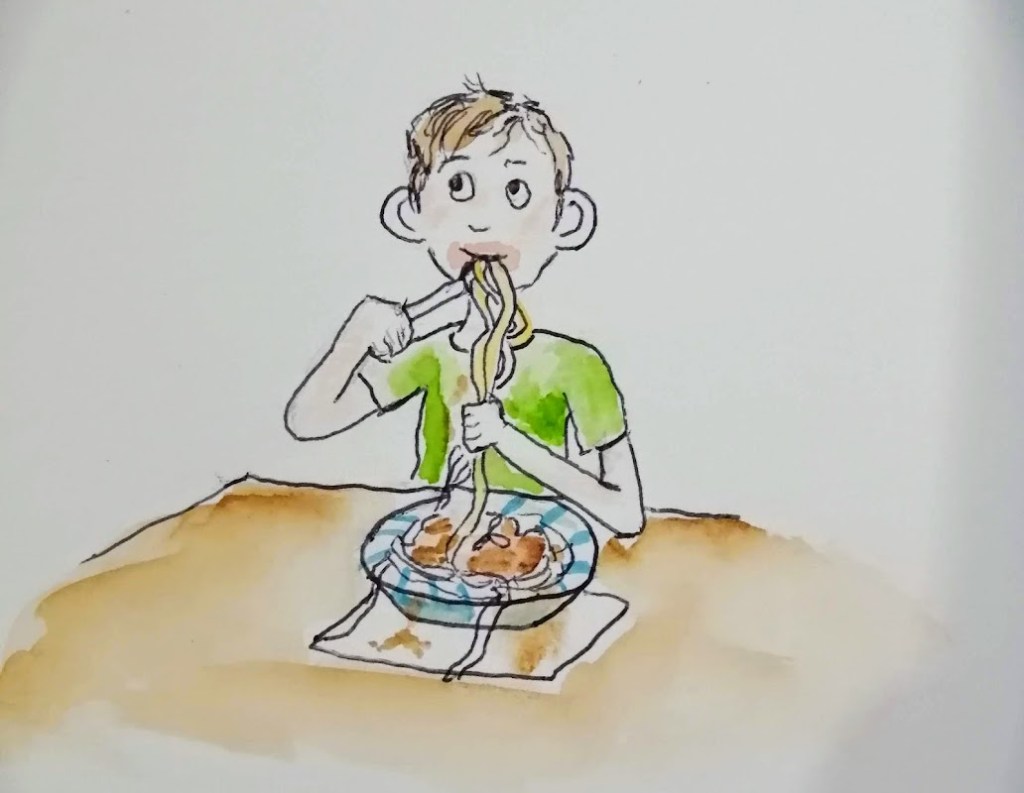
Below are some other examples of the type of illustrations I could include.
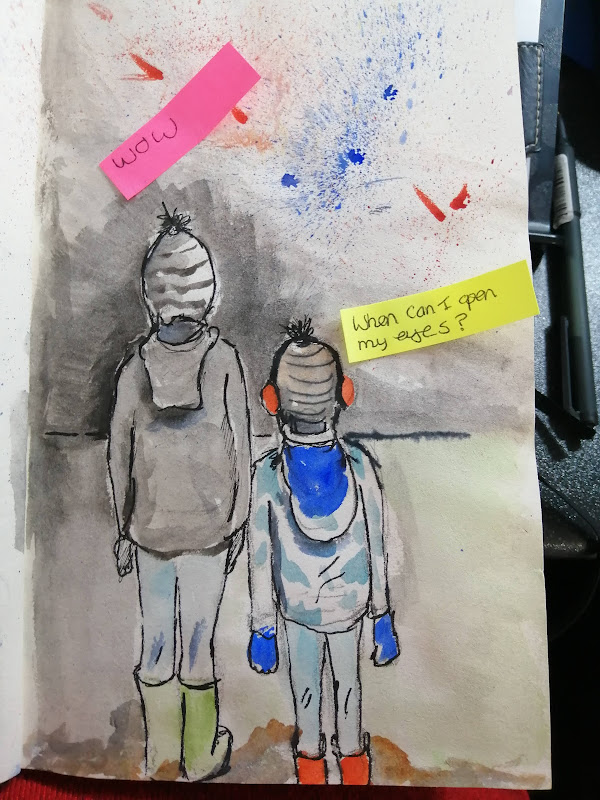
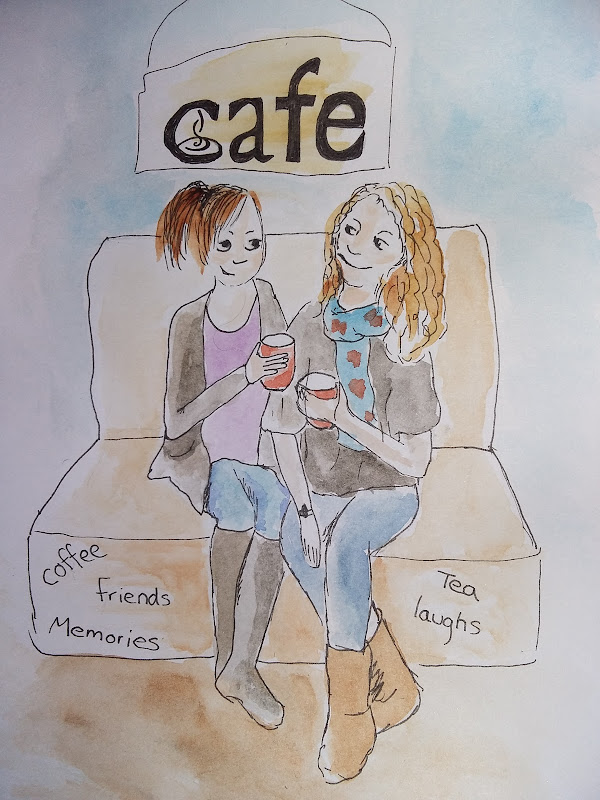
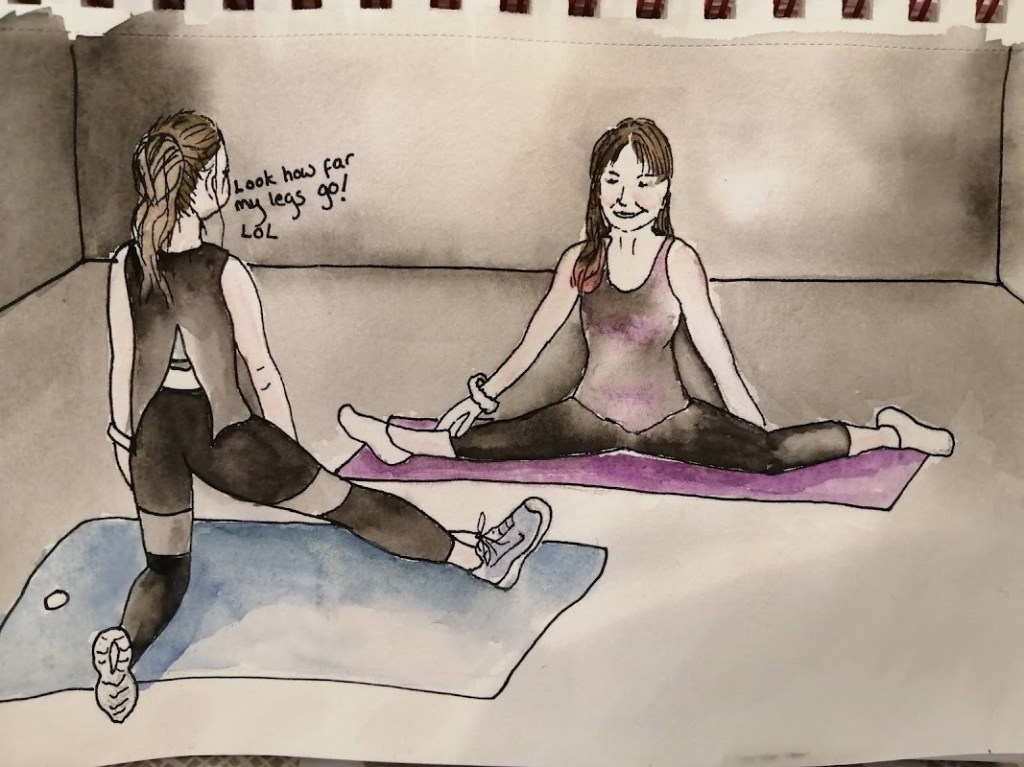
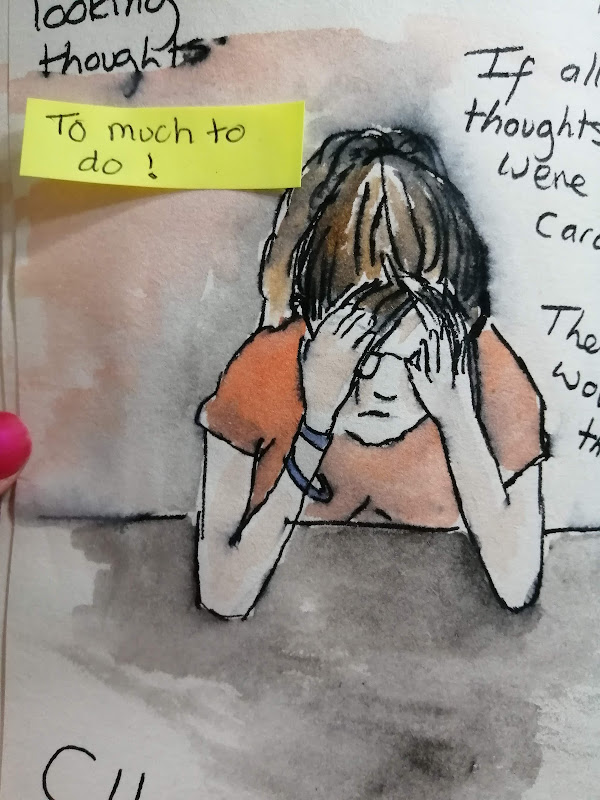
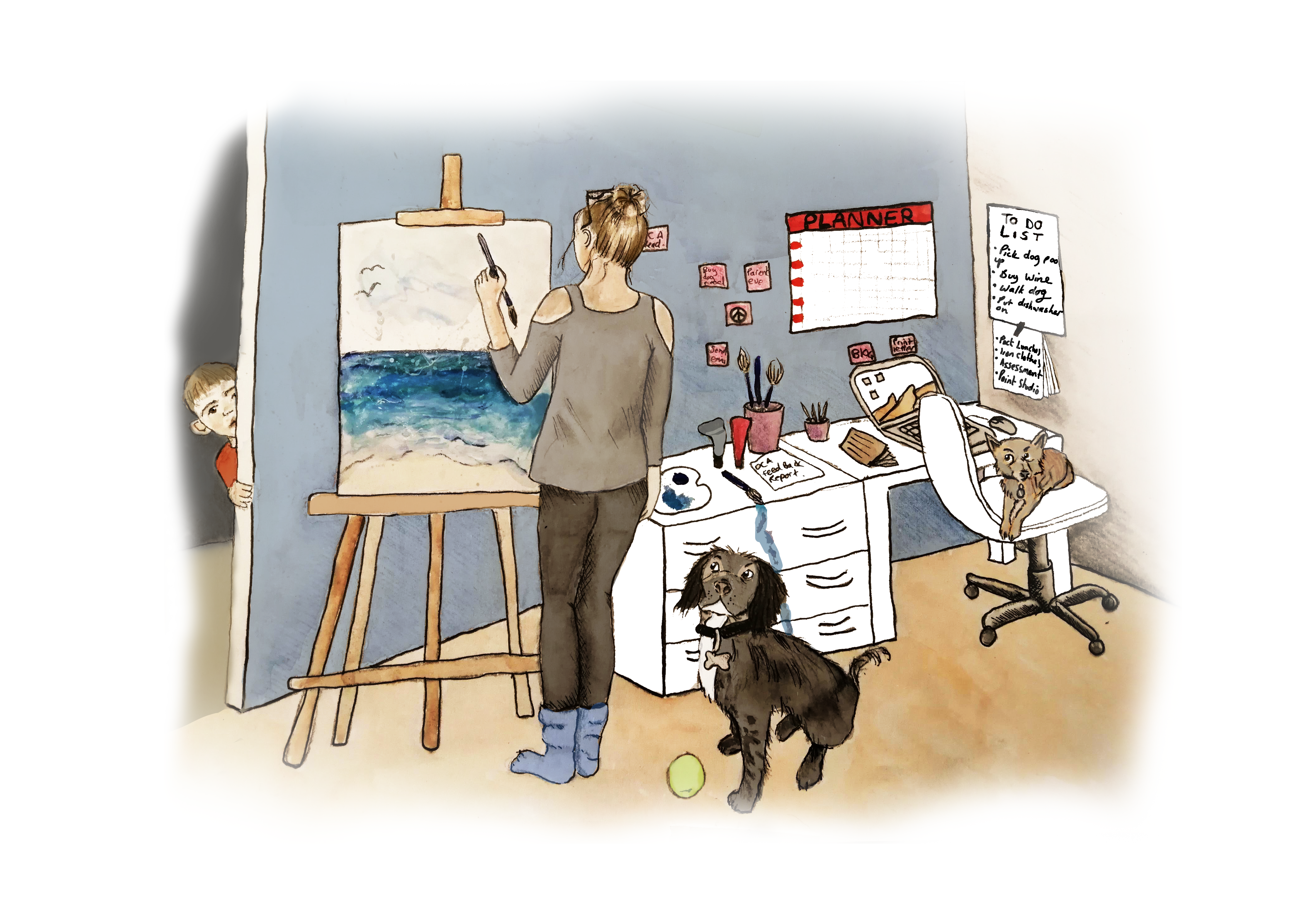
How could the way you record it vary, or what form might your record of it take? Could it be drawn in a diary, or as a calendar? Could it be 365 photographs of the view outside your window, or a series of collages from the daily newspaper?
As previously said, I intended to compile a diary of incidents that happen in my daily life. This diary may be illustrated in the way shown above using watercolours, but it could also contain photographs and handwritten notes. A few collages from my daily newspaper might also be added so I could refer to the day and other events that were occurring on that day.
I like the concept of keeping a diary since it serves a purpose. I can use it to reflect on what has happened over the year, see how my children have changed over time, practise sketching, and create a special memory to pass down to my children.
References
24 Hour Psycho | guardian.co.uk Arts. (n.d.). https://www.theguardian.com/arts/pictures/image/0,8543,-10104531576,00.html
BBC News Africa. (2019, April 6). How could the Rwandan genocide happen? – BBC Africa [Video]. YouTube. https://www.youtube.com/watch?v=SVnOGsJY5RQ
Counter Void. (n.d.). Tatsuo Miyajima. https://tatsuomiyajima.com/work-projects/counter-void/
ewanfilms. (2015, January 29). “24 Hour Psycho” Douglas Gordon Documentary [Video]. YouTube. https://www.youtube.com/watch?v=9V0PTNgsQDY
Grrr.nl. (n.d.). One Million Years – On Kawara. https://www.stedelijk.nl/en/collection/10699-on-kawara-one-million-years
LissonGallery. (2018, December 18). Tatsuo Miyajima: Innumerable Life / Buddha [Video]. YouTube. https://www.youtube.com/watch?v=7sh9BzVCHys
Louisiana Channel. (2013a, July 11). Alfredo Jaar Interview: Images Are Not Innocent [Video]. YouTube. https://www.youtube.com/watch?v=3-t2Yx3mz5k
On Kawara—Silence | The Guggenheim Museums and Foundation. (n.d.). [Video]. The Guggenheim Museums and Foundation. https://www.guggenheim.org/video/on-kawarasilence
Parry, J. (2013, November 4). Drawing Every Day – Bryan Eccleshall – The Open College of the Arts. The Open College of the Arts. https://www.oca.ac.uk/weareoca/fine-art/bryan-eccleshall/
Stephens, N. (2022, February 11). Tatsuo Miyajima: Finding the Art in You | COBO Social. COBO Social. https://www.cobosocial.com/dossiers/art/tatsuo-miyajima-finding-the-art-in-you/
Tate. (n.d.). Five Ways Christian Marclay’s The Clock does more than just tell the time | Tate. https://www.tate.org.uk/art/lists/five-ways-christian-marclays-clock-does-more-just-tell-time
Tatsuo Miyajima Biography, Artworks & Exhibitions. (n.d.). Ocula Artist. https://ocula.com/artists/tatsuo-miyajima/
“The Rwanda Project” — Art21. (n.d.). Art21. https://art21.org/read/alfredo-jaar-the-rwanda-project/
This was Alfredo Jaar’s Rwanda’s project. (2019, July 11). https://publicdelivery.org/alfredo-jaar-rwanda/
Wikipedia contributors. (2023a, January 22). Alfredo Jaar. Wikipedia. https://en.wikipedia.org/wiki/Alfredo_Jaar
Wikipedia contributors. (2023b, February 24). Douglas Gordon. Wikipedia. https://en.wikipedia.org/wiki/Douglas_Gordon

 Visual Skills 2