Brief
Undertake a series of mind-maps or spider diagrams to generate associations based on a single concept. Try and develop a process that moves your thinking through the obvious, to find more subtle, subjective, specific, or unusual motifs.
- Use a mind-map or spider diagram to generate associations based on one of the following concepts:● CUTTING ● GROW ● HIDE ● SEED ● WOBBLE or another concept that relates to your current practice: Place the word in the centre and radiate your ideas outwards.
- Try introducing images to your map or diagram as a way of offering new possibilities and ideas. Use quick drawings or snapshots as a way to do this on your spider-diagram, or move to your sketchbook to develop ideas further.
- Introduce new ideas to your map or diagram to help broaden your associations, for example, thinking about the sound, smell, touch, or movement of your concept/ideas as much as their image. Think about how you can use lateral thinking techniques as further prompts.
- Identify concepts/ideas in your spider diagram that you feel are the furthest or most divergent from your starting point. Amend or start a new diagram that aims to find connections between these divergent ideas and your original starting point. Alternatively, add new words or ideas, alongside your original and start to develop a more complex, rhizomatic set of connections. New words could include:● HISTORIC ● OVERLOOKED
● MUNDANE ● EXTRAORDINARY- Identify which single idea/concept or lines of connections you feel have possibilities or are the richest in terms of how you might start developing a visual piece of work in response.
Use your learning log to identify these and reflect on the process and the exercise as a whole.
Visual Skills 2 – Visual Exploration – OCA
Keywords from the brief:
- Use a series of mind maps or spider diagrams to generate associations based on a single concept.
- Introduce images to the mind maps.
- Use lateral thinking techniques as further prompts
- Identify a concept from these spider diagrams that has the best possibility for starting a visual piece.
A series of mind maps or spider diagrams
To start this exercise, I made spider diagrams for each of the mentioned words to see what ideas I could come up with for each topic.
Cutting
The first word to investigate was cutting. Initial thoughts included cutting the grass, cutting hair, and cutting a piece of cake. However, when I thought about each new idea, I found myself deviating from the initial notion and coming up with some quite distinct thoughts such as self-harm, mental health, mystery, and pampered pets.

Grow
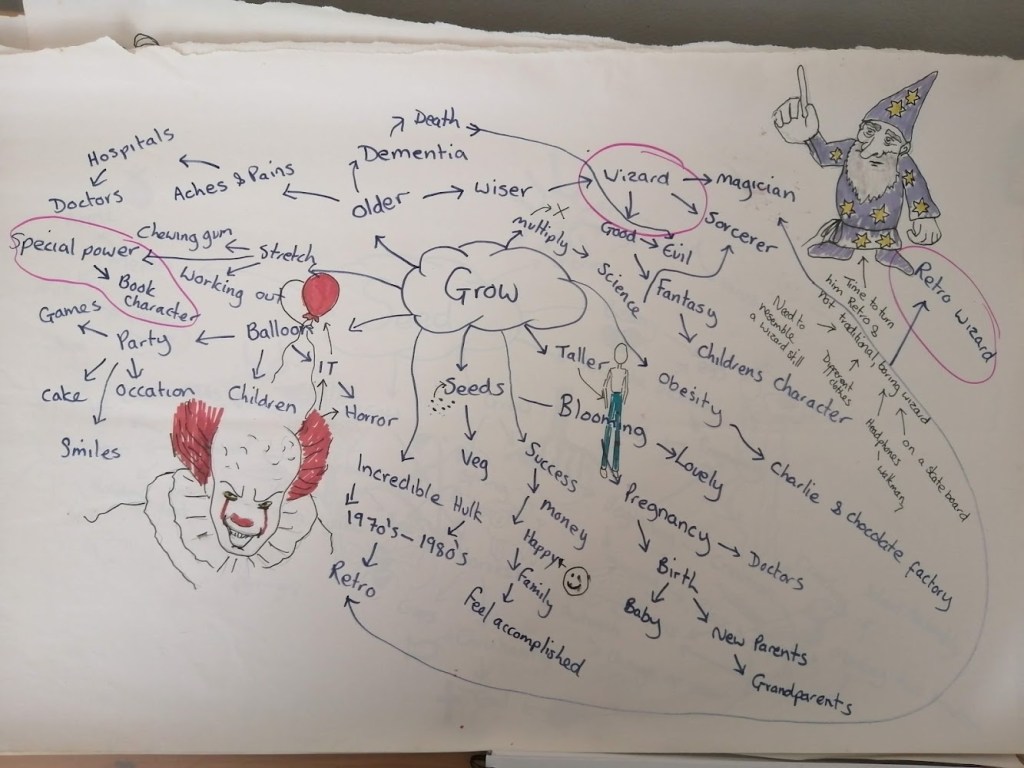
The second topic to look into was grow. Again, I began with simple terms like “growing older,” “growing taller,” and “growing seeds.” These ideas, however, produced some unusual concepts such as wizards, horror, and special powers.
Hide
The third theme was hide. This was a little more difficult for me to think of words at first, yet I soon got terms like hide and seek, hide from the enemy, and protect. This sparked three ideas for future projects: Boogeyman, Robber, and a comic strip depicting the realities of joining the military against the parents’ perspective. This final project idea probably came to me because my son is planning to enlist in the Royal Air Force.
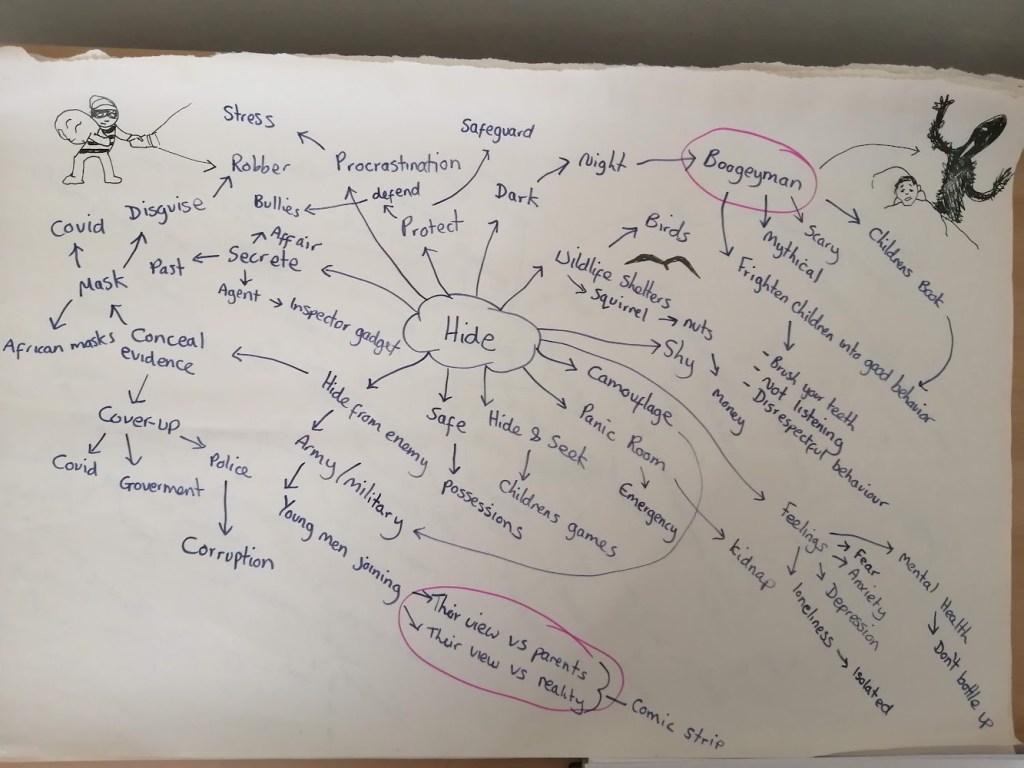
Seed
The fourth topic was seed. This was my least favourite notion, and I had the most difficulty coming up with fresh words for it. Each of the words was self-explanatory, such as sow, grow, and harvest. God, COVID, and Mad were the most far from my starting point for the word seed. However, when compared to the earlier spider diagrams, I didn’t believe these were viable ideas for a new project.
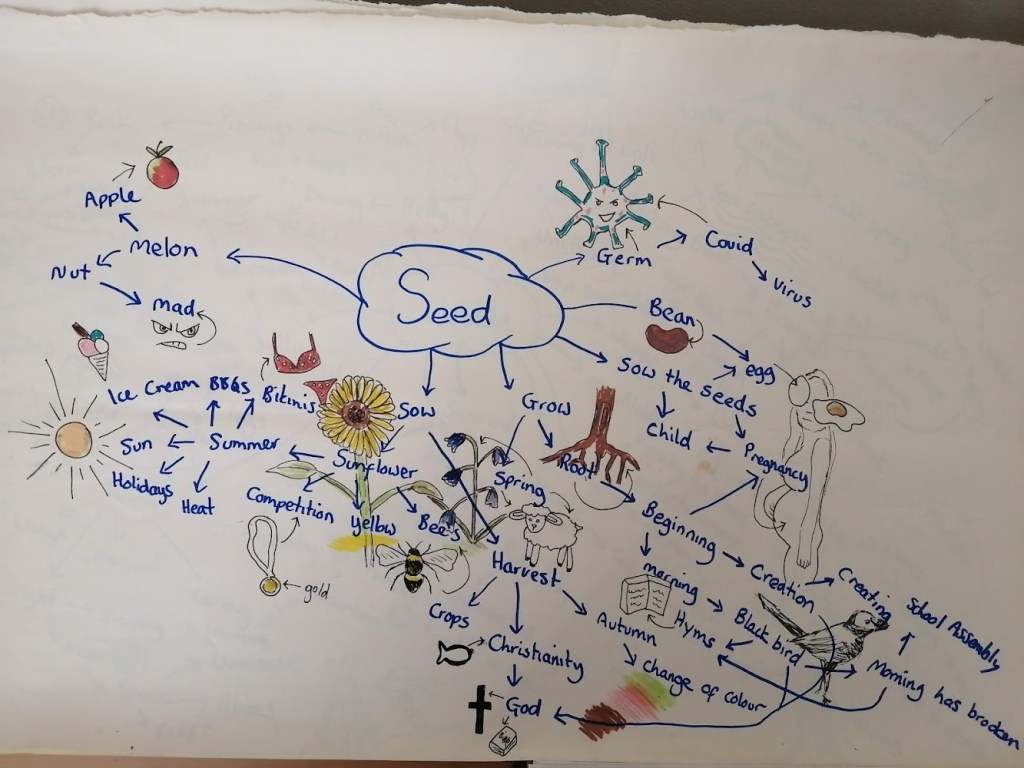
Wobble
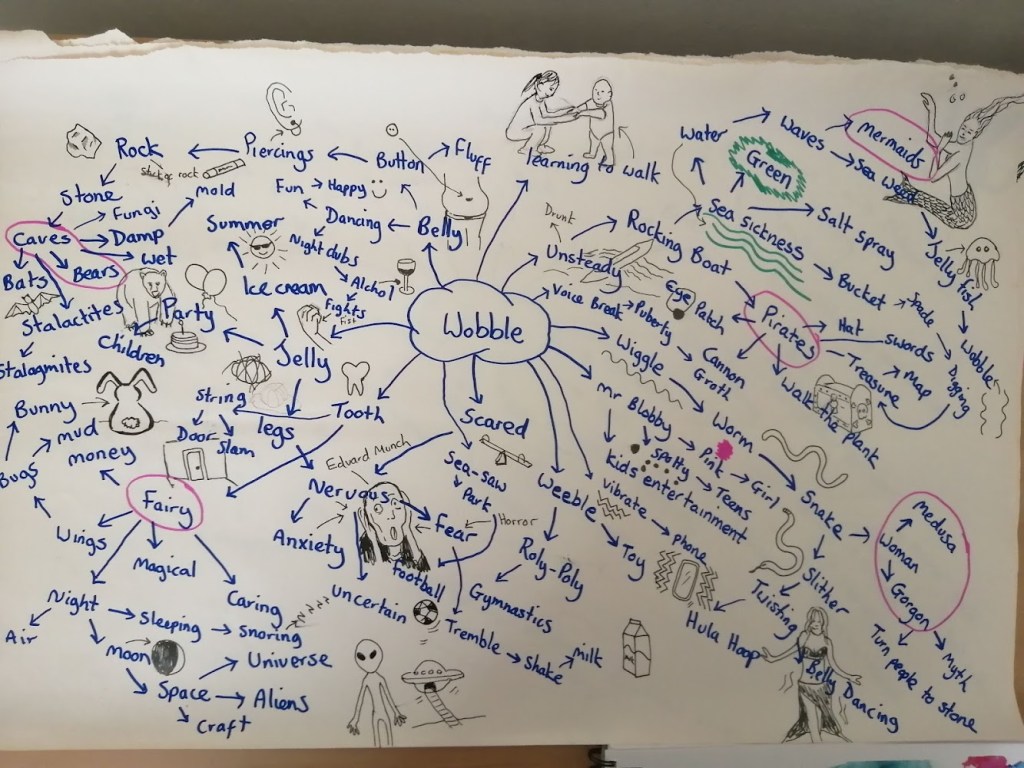
Wobble was the final word to be investigated. This word inspired the most ideas for me. I started out with words like teeth, jelly, scared, and unstable. However, the more I brainstormed, the more bizarre concepts I came up with, such as mermaids, bears, fairies, wizards, and Medusa, which surprised me.
Using images within the mind-maps.
I tried to incorporate little thumbnail sketches of what I was thinking about in each spider diagram; the more I did it, the easier it became. As shown in the diagram above, sketching out concepts helped me produce more ideas.
Looking at each of the spider diagrams side by side I looked at what I thought would be the most interesting words to use as a starting point for a new project and circled them in pink.
The ideas I liked the most were:
- Caves/bears
- Tooth Fairy
- Mermaids
- Pirates
- Medusa
- Boogeyman
- Wizard
Looking over the list, I was amazed to discover that I had thought about fantasy characters for each spider diagram. However, being happy in children’s illustration is what I hope to achieve in the future, and I believe I’m on the right path to achieve this.
I wanted to play with each of the concepts right away, so I chose Wizard to experiment with just for fun.
First, I made a new spider diagram based on this topic.
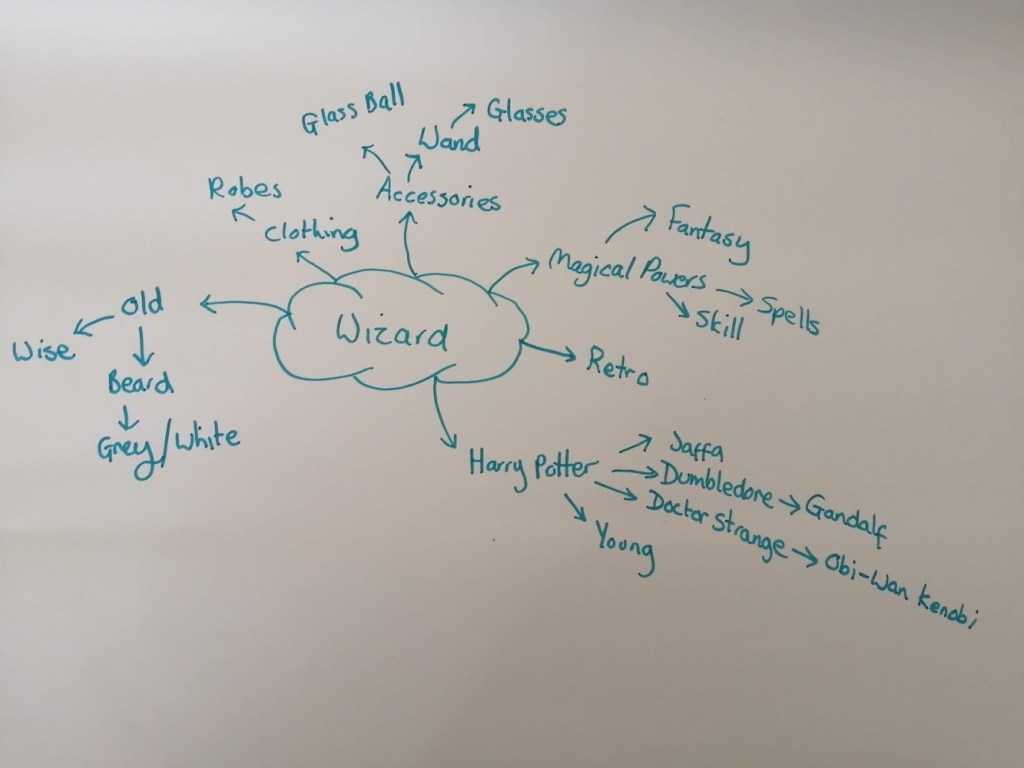
After thinking how I could distinguish a traditional wizard from a standard drawing of one. I imagined what a modern-day wizard would look like. Especially if he was a young man. I didn’t want to make the mistake of recreating Harry Potter’s appearance (glasses, robe, and wand). Using Pinterest, I created a mood board with ideas for a young wizard.
As this was only for enjoyment and not for a final assignment, I figured it would be a good opportunity to learn some digital skills. I’ve attempted to draw digital illustrations a few times, but because I lack the necessary skills, the drawings never turn out as I would like.
This time I watched a Skill-share class to try and learn some new skills and I then applied it to my own drawing. The class I watched is called:
Digital painting : Fantasy illustration step by step tutorial.
By Ariya Abeen
Following along with the classes and techniques but using my own inspiration I began by starting my illustration with a few thumbnail ideas.
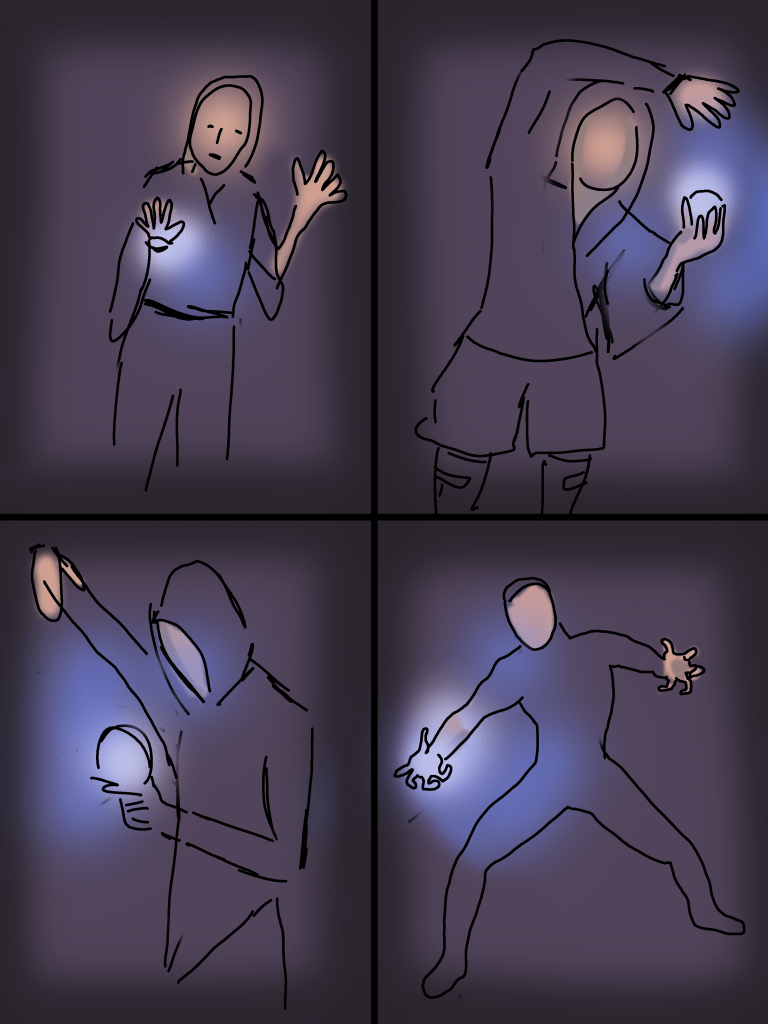
Next, I chose the bottom right thumbnail idea to work on as my new illustration.
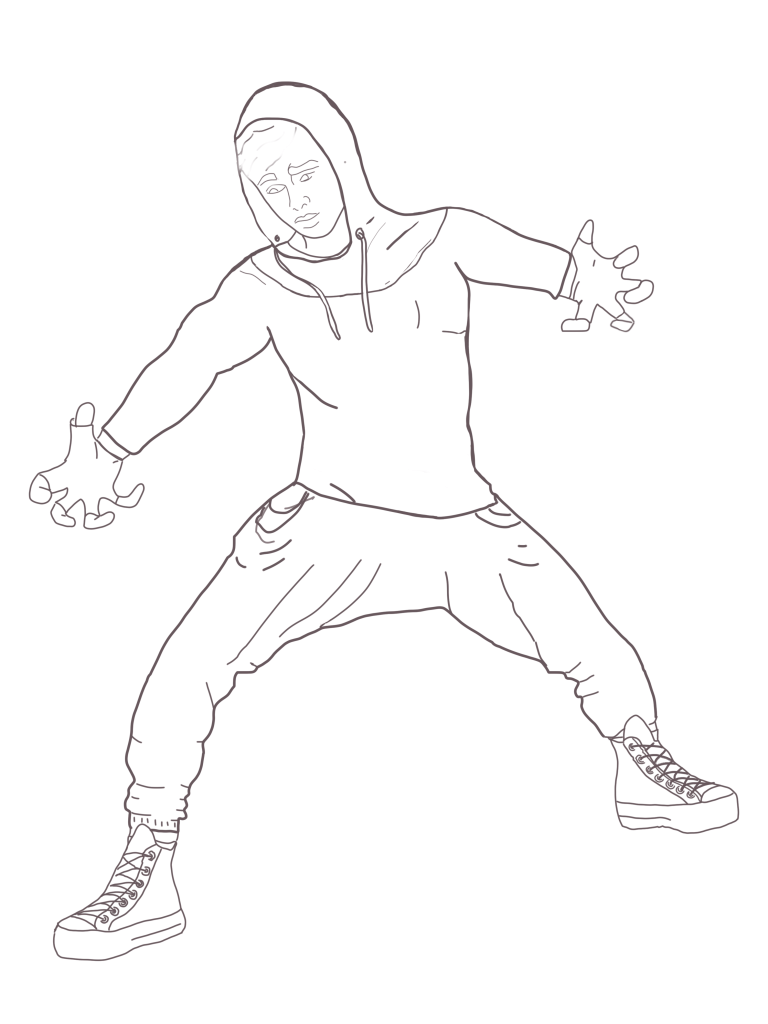
Selecting the brush tool in Adobe Photoshop I sketched out a more detailed drawing of the young wizard. I wanted him to be young and trendy so dressed him in a hoody, skater gloves, baggy trousers and Converse trainers.
Next, I started to colour the illustration again using the brush tool.
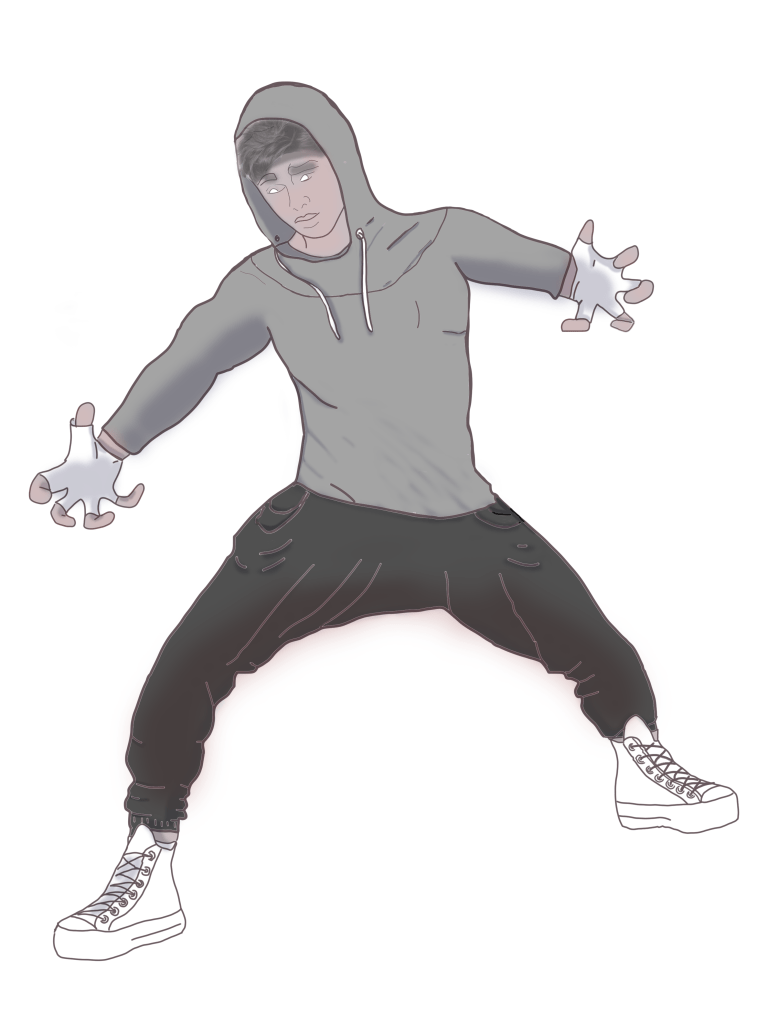
Then I began adding further detail and started to add the background.
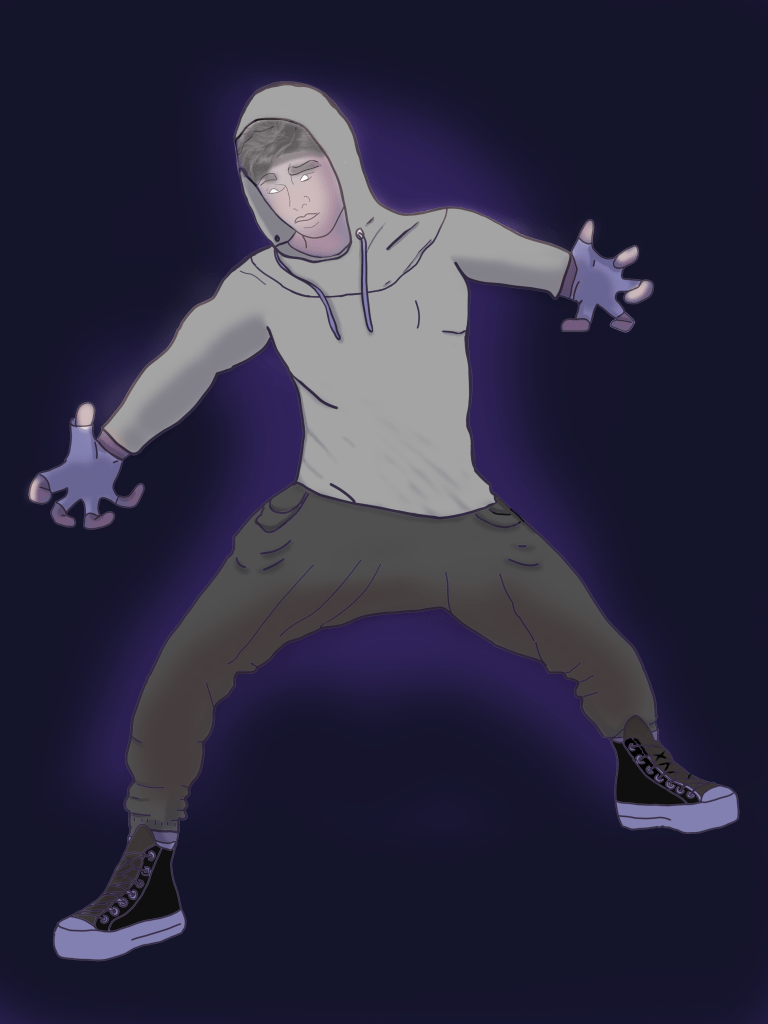
I continued to add detail to the background, including shadows and highlights, after receiving colour guidance from the Skillshare class, and I added a magical element to the artwork that the young wizard is conjuring.

Reflection.
This was a fun activity that turned out to be a surprisingly useful tool. It has allowed me to come up with new and intriguing project ideas that I would not have thought of otherwise. It was fascinating to observe how brainstorming may eventually transform my initial ideas into something altogether different.
It was enjoyable to experiment with digital painting and to gain new skills, but I am disappointed that I still have a lot to learn in this area. Due to my lack of technical understanding in this field, it will take some time for me to make a digital drawing that I am proud of. However, I will continue to practise this whenever possible.
I am also excited to come back to the list of fantasy characters and experiment with other mediums to illustrate soon.

 Visual Skills 2