Up to now you have been reflecting on and collating what you have produced in this unit. Now take the 10 images you uploaded in the last exercise and print them off – you could print off several versions at different sizes to give you lots of visual options. For this exercise you are going to mix up and combine selected elements to create new images. If you are comfortable with software you may decide to complete this exercise digitally.
Lay out your printed images somewhere so that you can look at them together. This is similar to the ‘Cut Ups’ exercise in Part Two but this time all of the imagery is of your own making. Arrange your composite drawings to create connections between them. You could choose to group elements from different drawings together to see what happens, or elements from a few of your photographs. Or you could mix up part of a drawing with part of a photograph and part of a painting. You might like a figure in one image and a landscape in another – put them together to see what new story or narrative they create. Be as experimental as you can. When you have made 10 new composite images upload them to your blog and reflect on the process in writing on your learning log.
Visual Skills 2: Visual Exploration p129
Keywords from the brief
Take the 10 images you uploaded in the last exercise and print them off
Mix up and combine selected elements to create new images.
You may decide to complete this exercise digitally.
Arrange your composite drawings to create connections between them.
Be as experimental as you can.
Reflect on the process in writing on your learning log.
Here is a link to my last exercise that contains the ten selected images.
To see all the images I had chosen up front, I first made an online mood board of them. I then started experimenting with different compositions and digitally segmenting certain areas of each image. Here are the finished drawings made from different portions of the earlier pictures.
One
For the first image, I combined a character I drew for the exercise Slow and a background I painted for Assignment 4. It excited me, as I could see possibilities for a new story. To show my idea, I then wrote a paragraph for the story and made a mockup.
Fig. 1 schoolboy down the rabbit hole (2024)
Fig. 2 schoolboy down the rabbit holemockup (2024)
Two
For the next illustration, I experimented with a different composition. I did this by combining the background from assignment four with the two clay sculptures. It was interesting to focus on the fleeing rabbit instead of the earlier detailed drawing.
Fig. 3 Fleeting Rabbit (2024)
Three
For this illustration, I combined the drawing of a house from the Slow exercise, where I created a comic, with the background and white rabbit drawing from Assignment 4.
Fig. 4 Rabbit going home (2024)
Four
This drawing incorporates elements from assignment 4’s background with the painting I completed for an exercise in part three.
Fig. 5 Bats (2024)
Five
This drawing incorporates elements from assignment 4’s background with a character I drew for the exercise: Slow. I then added the text ontop of the painted shape.
Fig. 6 Take time to make your soul happy (2024)
Six
This drawing incorporates elements from part two and part four. The alice clay sculpture can be faintly seen in the water.
Fig. 7 Wizard saving Alice (2024)
Seven
This drawing incorporates elements from part two and and assignment four.
Fig. 8 Wizard capturing the rabbit (2024)
Eight
This drawing incorporates elements from part three and four.
Fig. 9 Reds Secret (2024)
Nine
This image incoperates ellements from each part of the unit. It reminded me of some of the dreams I have had in the past.
Fig. 10 Am I dreaming (2024)
Ten
This illustration incoperates elements from part two and four.
Fig. 11 Stop (2024)
Reflection
The process of combining different elements from various past images has allowed me to explore new perspectives and create unique visual narratives. By digitally segmenting certain areas, I was able to play with composition and create unexpected connections between the original artworks. Overall, this exercise has pushed me to think outside the box and experiment with my creativity in a new way. The final images show a blend of colours, textures, and shapes that were not originally present in the individual images. From all of the new illustrations my favourites are number one, seven and eight as I think they could be used in childrens books.
List of illustrations
Fig. 1 Fowler, G (2024) schoolboy down the rabbit hole [mixed media] In possession of the author: Forest of Dean, UK.
Fig. 2 Fowler, G (2024) schoolboy down the rabbit hole mockup [digital artwork] In possession of the author: Forest of Dean, UK.
Fig. 3 Fowler, G (2024) Fleeting Rabbit [mixed media] In possession of the author: Forest of Dean, UK.
Fig. 4 Fowler, G (2024) Rabbit going home [mixed media] In possession of the author: Forest of Dean, UK.
Fig. 5 Fowler, G (2024) Bats [mixed media] In possession of the author: Forest of Dean, UK.
Fig. 6 Fowler, G (2024) Take time to make your soul happy [mixed media] In possession of the author: Forest of Dean, UK.
Fig. 7 Fowler, G (2024) Wizard saving Alice [mixed media] In possession of the author: Forest of Dean, UK.
Fig. 8 Fowler, G (2024) Wizard capturing the rabbit [Digital illustration and clay sculptute] In possession of the author: Forest of Dean, UK.
Fig. 9 Fowler, G (2024) Reds Secret [mixed media] In possession of the author: Forest of Dean, UK.
Fig. 10 Fowler, G (2024) Am I dreaming [collage] In possession of the author: Forest of Dean, UK.
Fig. 11 Fowler, G (2024) Stop [collage] In possession of the author: Forest of Dean, UK.
To think about my final assignment I looked back through all of my artwork created for this unit and identified the works that I think are particually successful.
To do this I reviewed my sketchbooks, as well as the finished pieces and read back over my reflective statements and notes in my learning log for each part of the course and made notes.
Part One – What was involved
In Part One of the course I considered my workplace, working process, concepts and ideas key to visual thinking like flow, and play and how they can be used to develop thinking and making processes.
For one of the tasks, I illustrated my ideal studio, which I liked not just picturing but also creating humour by including my son and pets in the illustration.
For the assignment, I created an A2 playful illustration by making purposeful markings of varying sizes and shapes from one corner of the paper to another with various mediums. Once finished, I chose sections representing distinct feelings and created additional images.
What I learnt during Part One
To not be afraid of making mistakes
That random mark-making can be an effective method for conquering the blank page and generating fresh ideas.
Doodling on a page allowed me to select little portions and create fresh illustrations with emotional significance that I could envision being utilised for various items.
Part Two – What was involved
In part two I developed these concepts and ideas to examine several approaches to generate ideas and visual thinking through controlled, randomised and accidental working methodologies. These included:
An exercise called Composing Pictures. This involved collaging existing works into something new. This included a successful, political collage.
Creating collages from daily tabloids
Creating a word poem by the use of a word processing application and then creating illustrations for each word and eventually combining them all into one coherent image.
Assignment 2 I created a video presentation of my work during the unit.
Playing the word association game by creating mind maps to help generate new ideas. This led to a successful illustration of a Wizard where I tested my technical skills.
Choosing a word and making a list of all the different manifestations that a word can take. Then I made each manifestation into illustrations.
Multi-dimensional thinking strategies.
What I learnt during Part Two
I have explored many concepts and attempted various methods to develop new ideas during this section of the course. I have learned a great deal from this. I am inspired to make illustrations that evoke emotions or convey a message somehow because of them.
It has also taught me not to be afraid to do new things, even if I don’t end up with the greatest piece of art, since it will lead to other opportunities and further my artistic development.
During part two, I created a comfort zone illustration by writing down topics that make me uncomfortable and comfortable and categorising them into different coloured circles. I concluded that I should repeat this exercise to evaluate if my skills and weaknesses had changed. Below is the original.
First, I edited the original, deleting all unrelated topics, and then created a new one focusing solely on my illustration concerns and skills to see if anything changed.
I was pleasantly delighted that several topics have now moved into my comfort zone rather than the danger zone, proving to me that I have grown as an artist over this course and gained more confidence than I thought possible.
Part three
In part three I examined various technical, stylistic and creative processes and explored and experimented with the ideas of duration, scale and movement through creative making. These included:
Paper folding where I learnt skills in Origami and tested my perseverance.
Created a comic based on my own experiences with the struggles of Insomnia.
I created rapid portraits of facial expressions using plasticine and found my love of sculpture again.
Continuous line sketches
Assignment three I created an animation about a ballet dancer struggling with the torments of bullies.
What I learnt during Part Three
To make time to play and have fun experimenting
I have found my love of working with clay again.
I have strengthened my hand and eye coordination by practising continuous line drawing.
Part four
In Part Four I selected one of three possible themes to develop my own visual research, experimentation and creative process culminating in a body of original artwork. Working with the theme ‘ Imagination’ This assignment brought my observational skills, innovative strategies and making methods together to fully develop my ideas and concepts into a coherent body of artwork.
The assignment was based on my interpretation of some of the scenes from Alice in Wonderland
What I learnt during Part Four
The importance of asking for feedback on my work
I enjoy creating work from my imagination
This assignment has proved that I want to become a children’s book illustrator because of how much I have enjoyed it.
I have developed a unique artistic style.
After I selected 10 pieces of work I have made in this unit I think are particularly successful. These are shown below including a link to an animation I made.
When I finished Assignment 4, I was concerned about what my tutor would think of my work. For as long as I can remember, I’ve felt like my work isn’t good enough. However, after receiving feedback from my tutor, I understood that my concerns were unfounded because the tutor provided great feedback. This event led me to be more confident in my abilities. I’m more motivated to keep working hard on this course. It gave me a huge boost of confidence and assured me that I was on the right course with my studies.
The concept of imagination that I chose for the assignment is so broad that it encouraged me to think outside the box by employing mind maps and primary research. For the first time, this led my work to reflects my personal style.
Reflecting on my visual approach to the task, I would proceed in the same manner that I would with the research. Visiting Oxford helped me engage with the story on a different level. Throughout the journey, I imagined myself as Alice in a variety of settings, including visiting the river she would have taken boat rides on, seeing the fields she would have played in, and the inspiration around Oxford that led Lewis Carroll, all of which helped me channel those ideas into my artwork.
The final images’ strengths are that they demonstrate perspective, movement, attention to detail, and expression against a complex background. The illustrations’ flaws could be improved by working on more refined facial expressions with the sculptures I produced, as well as paying closer attention to detail with the sculptures. This might be accomplished by adding whiskers to the rabbit and more detail to the fur. This could be accomplished by researching human or animal facial anatomy to create more realistic depictions.
The work’s scale was suitable for assignment four, but going forward, I’ll need to make sure I set up the right size at the start of the project to prevent it from unintentionally becoming distorted in any way. For example, if I want my work to be used as book illustrations or merchandise.
For this exercise, you will develop a set of characters in 3D form using paper folding. You could use traditional origami techniques to develop your characters, or you could investigate more contemporary paper toys using your own designs, or you could make up your own form of origami!
Once you have made your characters, record and reflect on your results in your learning log, what did you find most challenging? Is this a technique that you have worked with before? Would you attempt this again and if so would you change your approach?
104 Visual Skills 2: Visual Exploration
Keywords from the brief
Develop a set of characters in 3D form using paper folding
You could use :
Traditional origami techniques
Contemporary paper using your own designs,
Make up your own form of origami!
Originally, when reading this exercise, I imagined I would make some characters using the traditional folding techniques of origami. However, this is an art that can take years to learn, so I decided to research paper artists to see what other techniques could be used.
Mary Chau
The first artist I looked at was Mary Chau, who is a paper artist practicing in Vancouver, Canada. Her work consists of intricate layering of paper to create detailed paper characters and scenes that come to life with depth and dimension. Below are some examples of her work.
Fig. 1 Two boys (2017)Fig. 2 Fishing (2022)Fig. 3 Family portrait (2021)
The next artist I researched was Shelly Hanmo.
Shelly Hanmo
Shellt Hanmo, a self-taught illustrator based in Indianapolis, is another paper artist who creates stunning sculptures with delicate details, textures, and vibrant colours. What I find great about her work is that she uses materials sourced from recycled materials, such as old calendars and paper bags. It was not until Shelly was eighteen that she moved to the US from China. Therefore, Asian influences can be seen in her work, especially in recreating Asian folklore illustrations.
One of my personal favourite stories growing up as a child was Hansel and Gretal. It was lovely to see her interpretation of the story through her creative paper illustration for the front cover of this book.
Fig. 4 Hansel and Gretel (N.D)
The attention to detail and vibrant colours truly bring the story to life in a way that I have never seen done before.
Martina Aiko
Finally, the last artist I researched is a Swiss illustrator and author called Martina Aiko. Again, this artist works in a very similar style to the previous two, creating illustrations entirely by hand. Her work consists of mixed media and collage. Like the other two artists, her style and intricate designs captured my attention immediately. Below are some examples of her work. You can see the attention to detail and creativity that go into each piece. The illustration below made me laugh, and I resonated with the image as it reminded me of doing pilates in my lounge, where my pet chihuahua Leo, he will often come and sit on me while I exercise.
Fig. 5 Yoga (N.D)Fig.6 Me and Leo (2024)
Other examples of Martina work.
Fig.7 Open pool (N.D)Fig. 8 Beehive (N.D)
After looking at these artists’ works, I realised that, as much as I like them and their craftsmanship, their work is not quite 3D enough to use as an influence in my work. However, it is something I would like to try myself in the future. Therefore, I would like to experiment with more 3D techniques and incorporate them into my artistic style. I am excited to see how it will enhance my work and bring a new dimension to my art. Although I am a little nervous of this project I am determined to push my boundaries and hopefully evolve as an artist.
Going back to the brief I had For this exercise, it stated to create a set of characters in 3D form using paper folding. Therefore, I decided I wanted to attempt to make a human character out of origami. I looked at various tutorials and then settled on the one below to watch and follow. In the video, it explains the steps and techniques required to create the origami character.
However, I was a little naive, thinking it would be fairly simple. I quickly realised that origami requires a lot of precision, patience, and attention to detail to create intricate designs. I don’t know if it is a lack of practice or if having dyslexia plays a part in finding origami difficult, but I found it extremely hard to master the art of folding paper into complex shapes. However, being stubborn, I spent several days attempting to make the above character. The reason I liked this figure so much is because it reminded me of Little Red Riding Hood, and I thought if I could make it, then I could make other characters from the story and possibly create my own unique versions of the classic fairy tale.
Below are all my failed attempts at making the character.
Fig. 9 Failed attempts (2024)
Although it is very frustrating, I am quite pleased with my determination and perseverance. Especially during half term when the children are at home and can be quite demanding, not only that I contracted COVID again.
Fig. 10 Covid (2024)
Having to abandon the work for a few days because I was too sick encouraged me to attempt something else. Rereading the brief, I noticed that it did mention that I may create my own origami designs. That’s what I ultimately chose to do. Upon opening my scrapbook cabinet and discovering some red paper and cards, I decided to give it another go at creating an origami figure in my own unique way.
Fig.11 Paper fan (2024)
I started by making a paper fan, folding it in half, and then adhering the edges together. This looked like a skirt to me, so I covered a portion of it with origami paper that was decorated with lovely flowers and folded it into the paper.
Fig.12 Decorated Paper fan (2024)
I then sketched the upper half of a little girl on a white card and attached it to the paper sculpture. Once dry, I then created a red cloke out of soft hand-made red paper and finished it off with a bow from my Christmas stationery.
Below is the final paper character.
Fig.13 Girl paper sculpture (2024)
After being satisfied with the result I obtained earlier, I decided to try my hand at making an origami wolf. However, I underestimated the difficulty of the task again and ended up creating a sculpture that my husband thought resembled a cricket instead of a wolf. Nonetheless, I refused to give up and started again.
Fig.14 Wolf attempt (2024)
In the meantime, my eleven-year-old and sixteen-year-old children saw what I was doing and thought it looked easy. They decided to try creating the characters that I had found too difficult to make. To my frustration, both of them managed to create perfect origami sculptures in just one hour, despite it being their first attempt. Below are their sculptures.
Jokingly, I said to them, “I don’t know whether to hug you or hit you.”
Not giving in, I decided to make one more attempt at making a wolf, and to my surprise, I managed it. I finally had a sense of accomplishment as I held up my completed origami wolf, or perhaps puppy?
Fig. 18 Wolf (2024)
My children and I all laughed together at the irony of the situation, but deep down, I was grateful for the lesson in resilience that I had unintentionally taught them. While writing this, my youngest son is sitting in the other room, creating more origami figures. The sound of him folding the paper brings a smile to my face, knowing that he has learned the value of perseverance and determination from our previous experience.
Here is a short clip of what he has just made.
I realised it was time to stop making new characters after investing so much time in this exercise. I did, however, think back on the exercise and contemplate how having this skill would help me in the future with my creative work as an illustrator. Maybe I could make an illustration with the figures. This inspired me to learn how to make a woodland scene in Procreate. I noticed that as I dug deeper into learning how to utilise Procreate, my excitement for the possibilities it presented for my artwork grew. It excited me to think of my characters coming to life in a digital format, and I was looking forward to seeing them in a colourful forest scene. Below is the forest scene I created using Procreate.
Fig. 19 Procreate forest scene (2024)
It also occurred to me that they may look good in a paper-cut design, so I created one in Adobe Illustrator to see what it looked like. Below is the result.
Fig.20 Paper-cut design (2024)
Finally, I had a little play with the different elements I have created including trees I painted in the previous exercise.
Fig. 21 Trees (2024)
and made various cover designs for a children’s book. Below are different experiments with cover designs.
As I continued to experiment and play with different techniques, my excitement grew, and I created a final mockup design for an independent reader.
Fig.26 Mock-up book cover (2024)
The process of bringing my characters to life in different contexts was incredibly rewarding. I found that each design sparked new ideas. I am surprised and inspired by how far this exercise has pushed me as an artist.
Arts to Hearts Project. (2023). Captivating works of 10 Paper Artists that will leave you Fascinated! – Arts To Hearts Project. [online] Available at: https://artstoheartsproject.com/paper-artists/ [Accessed 7 Apr. 2024].
Paper toys are essentially what their name suggests; they are toys made of paper. Find some specific artists who design paper toys and document examples of their work in your log. What is the purpose of paper toys? Who is their target audience? What is the draw to making paper toys as opposed to buying pre-made toys?
Visual Skills 2: Visual Exploration p106
Keywords from the brief
Find some specific artists who design paper toys and document examples of their work in your log
What is the purpose of paper toys?
Who is their target audience?
What is the draw to making paper toys as opposed to buying pre-made toys?
Seth
The first artist I examined was Gregory Gallant, a Canadian cartoonist better known by his cartoon name Seth. After seeing a few documentaries and reading about him, I realised that he is an artist who frequently writes graphic novels on the ordinary issues of life, such as people attempting to determine whether their lives have been successful.
Here’s one of the documentaries I watched in which he talks about his artworks. His large collection of projects caught my interest because he not only does commission work, but he also explores a variety of other artistic interests for personal enjoyment. These include a rubber stamp diary, a sketchbook, and he is developing a model city called The City of Dominion.
Throughout the documentary, I enjoyed his short animated film called The Creek. It reminded me of a local site called Soudley Ponds. In the 1930s and 1940s, villagers used man-made diving boards to swim during hot summer days. Today, however, it is a nature reserve full of fish and crayfish, as well as a place where people may take a stroll and view the stunning scenery.
I wanted to post a photo of people swimming in the ponds, but couldn’t find one. However, I was able to find some old images of the surrounding area and a woman describing what it used to be like on Facebook.
Fig. 1 Facebook post (2017)Fig. 2 Old photos of Soudley village. (2017)
Below is an a photograph I took recently of Soudley ponds.
Fig. 3 Soudley ponds (2024)
Reflecting on Seth’s work, I think he is so successful because of his sheer determination and he is alway developing his artistic practice. Also, his written storytelling is as good as his artwork, which brings emotional depth to his graphic novels. The combination of the two enhances the overall storytelling experience. Looking at his artistic technique, he employs clean lines and a muted colour palette to create a vintage feel to his work.
Steve Monger
The next artist I have the pleasure of researching is one of my former tutors from one of my previous units at the OCA. Not only is he an OCA tutor, but also a Graphics and Senior Lecturer at Bristol University. In his spare time, Stephen investigates photographic representations of location and is particularly interested in how photography might overlap and merge with other types of representation such as digital drawing and 3D modelling.
This leads me to the model making of buildings Stephen has produced using cardboard. Although part of his work included photography he also created many sculptures of building to show the viewer the different details that was otherwise inaccessible by the use of photography alone. Below are some photographs of one of these paper sculptures.
Fig.4 The making process of Pawnbroker (2008)Fig. 5 The Pawnbroker (2008)
Thomas Demand
Similarly to Stephen, Thomas is a an artist who also builds realistic models of buildings. However, these are life-sized models of spaces and buildings using a selection of paper and cardboard. Interestingly, he then photographs these models and after destroys them so the photograph is the only record left.
Below is an interesting documentary I watched about Thomas’s work.
After watching it I was quite amazed at the sheer dedication and detail he puts into his art work, often taking weeks to construct them. What sets his work apart from other artists is not just the craftsmanship but also the depth of meaning within each piece. One example is called “Yellowcake”.
For this project, Thomas meticulously reconstructed the scene of the 2001 event involving the Embassy of the Republic of Niger in Rome, using paper and cardboard. It was at the Embassy information regarding Saddam Hussein’s alleged attempt to purchase uranium “yellowcake” was stolen.
Below is one of the photographs of his reconstruction.
Fig. 6 ‘Lemoncake’ (2007)
Through Demands craftsmanship and series of photography he invites viewers to think about the narrative and subsequent consequences of the event, which was the invasion of Iraq by the U.S. The fact that the alleged proof of Saddam’s attempt was later revealed to be forged adds a sense of tragedy to the narrative.
Looking at Demand’s interpretation of this event through his artwork offers people a different kind of engagement compared to a brief news report. I personally find it more thought provoking, intimate and memorable.
Amy Bennett
The final artist I researched is Amy Bennett, an American artist who has a unique approach when creating narrative paintings. This consists of constructing paper models and using them as reference material to observe and paint from. She often uses these models to create detailed and surreal scenes that explore themes of suburban life. By using these paper models, Bennett can explore different viewpoints and compositions before starting her painting.
Each painting shows a different aspect of everyday life in a way that is both familiar and thought-provoking. In the video I watched below she states ” It’s a bit like being a fly on the wall, observing people and their interactions without them knowing.” (Bennett, 2011). This gives her paintings a vulnerability that is both captivating and intimate.
As a mother and wife, she has used the many challenges this brings, as well as the joys of life, as inspiration for her artwork. This can be seen in her work called “Nuclear Family,” which captures the complexity of love and relationships as well as the difficulties of family struggles.
Below is a photograph of one of the paintings from the series “Nuclear Family.“
Fig. 7 Animals (2018)
Her artistic style often features bold colours, abstract shapes, buildings and people. These elements combine to create a unique and engaging image. Looking at these works reminds me of my own experiences as a mother and wife and has prompted me and I should think others to reflect on everyday life.
What is the purpose of paper toys?
The purpose of paper toys is to provide entertainment and creative expression for children and adults alike. Not only is it easily accessible but as shown in this research task it also allows for endless creative possibilities.
Who is their target audience?
It depends on the artist who is making the paper toys and their intention for them. The target audience could be any age. It could be designed for pure enjoyment. On the other hand, the target audience might be to engage viewers in a political or cultural matter. To spread important messages and spark conversations. The artist may also aim to promote social change and awareness through their work.
What is the draw to making paper toys as opposed to buying pre-made toys?
There are many benefits to making paper toys, which are:
The pure satisfaction of making something with your own hands that can be played with or explored.
Making paper toys allows for customisation and creativity in design, as discussed in Amy Bennett’s research.
From an environmental perspective, paper toys are more sustainable than plastic alternatives and can be easily recycled at the end of their life cycle.
Personally I would appreciate a handmade paper toy skilfully made, more than a bought plastic toy because to me it would hold more sentimental value.
In some cultures paper toys hold significance values for example the long-standing tradition of origami that originating from Japan.
Bennett, Amy . “Artist Amy Bennett.” Www.youtube.com, Anthony Paget , 26 July 2011, youtu.be/yodJPR5hGic. Accessed 28 Mar. 2024.
Brownstein, Bill. “Film Animates the Life of Comic Book Creator Seth.” The Gazette, Bill Brownstein, 8 Oct. 2014, montrealgazette.com/entertainment/arts/film-animates-the-life-of-comic-book-creator-seth. Accessed 26 Mar. 2024.
Chamberland, luc. “Seth’s Dominion.” Www.youtube.com, 13 Mar. 2024, youtu.be/EJMKBiJuO6I. Accessed 28 Mar. 2024.
Demand, Thomas . “Thomas Demand: Animations | Exhibition | DHC/ART.” Www.youtube.com, 18 Jan. 2013, youtu.be/M-itI67quhE. Accessed 28 Mar. 2024.
—. “Mr Stephen Monger – UWE Bristol.” People.uwe.ac.uk, people.uwe.ac.uk/Person/StephenMonger. Accessed 28 Mar. 2024.
Shane, Robert R. “Amy Bennett: Nuclear Family.” The Brooklyn Rail, 4 Sept. 2019, brooklynrail.org/2019/09/artseen/Amy-Bennett-Nuclear-Family. Accessed 28 Mar. 2024.
There were three options for this exercise, I chose option one, which was to produce a very large-scale drawing of a landscape.
Brief
For this option you should produce at least one very large-scale drawing of a landscape, either real or imagined. This should be at least A0 (84 x 119cm) in size (and ideally larger) either by sourcing some very large sheets of paper, or a roll of paper, or by taping a number of sheets of paper together.
You can choose to produce an observational drawing of a landscape or you can produce an imagined landscape using more abstract marks. You can use pencils, brushes and ink, or any mark-making implements using the medium of your choice.
Visual Skills 2: Visual Exploration: p95
Keywords from the brief
Produce a very large-scale drawing of a landscape real or imagined.
At least AO
You can use pencils, brushes and ink, or any mark-making implements using the medium of your choice.
There were a number of places I had in mind for this landscape project. Luckily, living in the Forest of Dean I am surrounded by stunning scenery. With this in mind, I ventured out on a walk and took photo’s of areas I thought would make a beautiful painting.
Below are photos from my walk.
Fig. 1 Edgehills Bog (2024)Fig.2 Edge hills view point (2024)Fig. 3 The Cyril Hart Arboretum (2024)Fig. 4 Old oak tree (2024)Fig. 5 Working forest, logs (2024)Fig. 6 Speech House lake (2024)
During a research task titled Large Scale Image-making, I looked into various artists and how they used different materials and their unique approach to large- scale image making, This inspired me to be more experimental with the materials I decided to use for my own making. One of the artists previously researched, is John Vertue. This artist is recognised for his large-scale landscape paintings in black and white. With him in mind, I chose the final photograph above because it was in black and white and used it as a reference for my landscape painting.
Unfortunately, I am located in a small village with limited amount of shops and sadly, there are no local art suppliers. Knowing I would need good quality paper for this exercise I drove twenty five miles to my nearest Hobby Craft. Here, I purchased two A1 mixed media pieces of paper and some acrylic paints. Once, home I was eager to start work but was apprehensive because the paper is so large. I didn’t know where to put it, I considered putting them on the floor, but I didn’t think it would help with getting the scale correct and I thought the work may get damaged either by my pet dogs or children.
Instead, I taped the paper together using masking tape and then tapped it to my lounge window.
Fig. 7 Landscape painting set up 1 (2024)
Next, I began making swift marks with flowing motions from the whole use of my arm.
Fig. 8 Mark making (2024)
Sadly, the paper wouldn’t stay stuck to the window and the sunlight started to shine through making it difficult to see the work. Thinking about this more I took the paper down from the window and placed it on my drawing table in the other reception room. Continuing to work I regretted making such large dark brush strokes so soon and wasn’t happy with how the work was going. Therefore, I decided to leave the image and start again.
Fig. 9 Failure (2024)
However, I showed it to a family member, laughing at how bad it was and was surprised that they actually liked it and said they knew the place of which I was painting. This made me feel a little better and more confident to start again. Unfortunately, I no longer had good quality paper and had to settle with what I had in the house, which was a roll of printing paper. This time I cut the paper to size again taping two pieces together and stuck it to the playroom wall using masking tape.
Fig. 10 New paper, staring again (2024)
This time I was a little more cautious and decided to lightly sketch out a plan for the painting. Once all the landscape was planned out I began painting.
The mediums used to create the landscape painting were:
Acrylic paint
Selection of sponges
Charcoal
2B pencil,
Pencil crayons
Chalk pastels
Oil pastels.
My finger
Different size brushes
Fig. 11 Painting process one (2024)Fig 12. Painting process two (2024)Fig 13. Painting process three (2024)Fig 14. Painting process four (2024)Fig 15. Painting process five (2024)
Final painting
Fig 16. Finished landscape painting of Speech House Lake (2024)
Reflection
What did you find most challenging?
There were a number of things I found challenging about this project. These were:
Working at a large scale (100cm x 100cm) and trying to figure out how to scale up each element correctly.
Using my house’s wall to place the sheets of paper was not ideal, and as my husband pointed out, it would not be advisable to do so again due to the marks left behind by charcoal dust. However, I was fine with using the wall because it was time for redecorating anyhow.
Working on thin sheets of paper was also problematic as it wasn’t a good choice when using mixed media. If I was to do this again I would make sure I purchase more of the mixed media sheets of paper incase of mistakes.
The photo I used for reference was not very good quality, so a lot of the painting I had to imagine and interpret in my own way. If I was to do this again I would either like to draw from life or have a better quality photograph.
Last but not least, I have never drawn or painted a natural environment other than a sea scene, thus this was the most difficult challenge of them all!
What made it even more difficult was trying to interpret the different elements in monochrome.
Is this an area of art practice that you have worked with before?
There has only been one time I have worked at a very large scale and that was twenty years ago when I worked for an aquatic shop as a tropical fish manager. At the time my boss wanted the shop to have a mural so I offered to paint it for him. This was a very large landscape scene, that showed rolling hills and rivers and covered the whole back wall of the shop. Unfortunately, they refurbished and extended the shop since then and it no longer exists. Sadly, I do not have any photographs of it anymore.
Would you attempt this again and, if so, how would you change or develop your approach?
Yes I would attempt this again. It was fun to be experimental and paint a landscape scene. I was quite surprised at the work I produced since it is my first time painting trees. Although it is not perfect, I am going to have it printed and framed to hang in my studio.
As said before, if embarking on a project like this again I would make sure I have quality paper and good reference photographs.
List of illustrations
Fig. 1 Fowler, G (2024) Edgehills Bog. [Photograph, landscape] in possession of: the author: Forest of Dean.
Fig. 2 Fowler, G (2024) Edge hills view point. [Photograph, landscape] in possession of: the author: Forest of Dean.
Fig. 3 Fowler, G (2024) The Cyril Hart Arboretum [Photograph, landscape] in possession of: the author: Forest of Dean.
Fig. 4 Fowler, G (2024) Old oak tree [Photograph, Portrait] in possession of: the author: Forest of Dean.
Fig. 5 Fowler, G (2024) Working forest, logs [Photograph, landscape] in possession of: the author: Forest of Dean.
Fig. 6 Fowler, G (2024) Speech House Lake [Photograph, landscape] in possession of: the author: Forest of Dean.
Fig. 7 Fowler, G (2024) Landscape Painting set up 1 [Photograph, landscape] in possession of: the author: Forest of Dean.
Fig. 8 Fowler, G (2024) Mark making [Photograph, landscape] in possession of: the author: Forest of Dean.
Fig. 9 Fowler, G (2024) Failure [Photograph, landscape] in possession of: the author: Forest of Dean.
Fig. 10 Fowler, G (2024) Failure [Photograph, landscape] in possession of: the author: Forest of Dean.
Fig. 11 Fowler, G (2024) Painting process one [Photograph, landscape] in possession of: the author: Forest of Dean.
Fig. 12 Fowler, G (2024) Painting process two [Photograph, landscape] in possession of: the author: Forest of Dean.
Fig. 13 Fowler, G (2024) Painting process three [Photograph, landscape] in possession of: the author: Forest of Dean.
Fig. 14 Fowler, G (2024) Painting process four [Photograph, landscape] in possession of: the author: Forest of Dean.
Fig. 15 Fowler, G (2024) Painting process five [Photograph, landscape] in possession of: the author: Forest of Dean.
Fig. 16 Fowler, G (2024) Finished landscape painting of Speech House Lake [Photograph, landscape] in possession of: the author: Forest of Dean.
Search for and record your thoughts on the production of both ‘Fast’ and ‘Slow’ artworks in your learning log. What are some of the arguments for and against this kind of real-time viewing? Research these artworks and artists for different approaches in different creative contexts:
89 Visual Skills 2: Visual Exploration
I started doing research on the list of artists provided in the brief by googling them online.
Koyaanisqatsi
The first person I researched was Godfrey Reggio, who directed a film called Koyaanisqatsi in 1982. The title of the film I did not understand so I researched what the word Koyaanisqatsi means and discovered it is taken from the Hopi which are the westernmost group of Pueblo Indians, situated in what is now northeastern Arizona. The word means “life out of balance”.
The film is about a collection of visuals that capture a mix of natural landscapes, displaying all the different elements on our planet. It then transitions to scenes of human civilisation. From striking architecture to various technology advancements. The imagery I felt emphasises the profound impact of human activity. Throughout the film, there is a saddening emphasis on the damaging effects of pollution, warfare, and sights of abandoned structures. Sometimes parts of the film are sped up or slowed down which made it even more dramatic. Initially, I was apprehensive about how long the film is especially with it being only visuals and music. However, I found myself fascinated by the united relationship of the visuals and music.
Upon reaching the end of the film, I had a sense of sadness. It dawned on me how unknowingly, some of our actions over the years have brought devastation upon our world.
Next, whilst researching I found a documentary with Godfrey Reggio and Philip Glass explaining the making of the film.
It is an interesting video and it is clear Godfrey is a clever man with a high intellect. It was mentioned during the video “It is up to the viewer to decide on what they think about the film”. Godfrey also said “We live technology it is the air we breath, we are no longer conscious of its presents.” (Reggio, 2018).This statement is true and its is saddening to realise how we are so proud of our technological advancements but neglect to see the implications they are having.
Longplayer
Next, I looked at the work of Jem Finer’s project ‘Longplayer’.
Researching the project Longplayer I discovered it is a unique piece of music designed to last 1,000 years, composed by Jem Finer, who is a musician and artist. It began playing by an algorithm played through a computer and was first played on 31st December in 1999 and will continue to play without any repetition until the year 2999. Apparently, the idea of the project was not about music but more about the experience of time. Longplayer resides in a lighthouse in Trinity Buoy Wharf in London.
Given the length of time this project is expected to last for causes various arguments for and against real-time viewing of Longplayer:
Arguments for real-time viewing of Longplayer.
Having music played nonstop for a millennium and considering the countless individuals who will have come and gone, who have heard and seen the music is quite remarkable. It’s a truly unique experience. Throughout the next millennium, viewers will be able to observe its progress. Experiencing Longplayer in real time might help people establish a relationship with time, as well as giving people space to reflect. It is evident from online research that people frequently travel great distances to visit Longplayer.
As can be seen in the video above, people are sitting about the bowls, enjoying the music, and even meditating there. As such, it provides a chance for people to join together and it makes it possible for people to gather, listen to the music, and converse about it. As a student myself, it is also a valuable educational tool allowing students to investigate and evaluate the artwork.
Arguments against real-time viewing:
Although I hope the project works, I don’t think the concept will last a millennium. People’s time will need to be dedicated to maintaining it. It’s also questionable if people will grow tired of the concept. One of the biggest issues I can see is the technical challenges that will come up. For instance, ensuring that it continues to play, adjusting to new technologies, and maintaining Longplayer.
Andy Goldsworthy’s sculptural practice.
Andy Goldsworthy is a British sculptor, photographer, and environmental artist known for his distinct sculptures and land art projects. His creations are often created in natural settings, including forests, riversides, and coastlines, and he frequently works with the environment, using materials sourced directly from the landscape such as rocks, leaves, branches, and ice. Through his art, Goldsworthy explores themes such as the relationship between humanity, nature and the passage of time.
Arguments For real-time viewing of Andy Goldworth’s artwork:
Goldsworthy’s art is about the concept of not lasting forever. People who viewing his work, with such a short time frame are reminded of the beauty of nature and its lifecycle and are given time to appreciate the natural world around them. Watching Andy work in realtime allows the viewer to understand his working practice and therefore gain an appreciation for his art. Also, stumbling across his work would create more of a sense of excitement. A friend of mine has been doing similar art whilst on her walks in the Forest of Dean, people are always excited to see and find her designs.
Below shows photographs of my friend Alisa Swanson’s artwork which I think is similar to Andy Goldsworth’s style.
Focusing on Goldsworthy’s real-time process may distract from the final artwork itself. Instead of appreciating the completed piece, viewers may become fixated on the artist’s actions.
From my own experience when I have had people watch me in real time create art work I have found it disrupting and distracting. Which possibly could affect his final artwork. The presence of an audience or observers may influence the artist’s decisions or alter the intended outcome of the artwork. However, this is a personal thought, and he may not feel this way when creating his works. Also, by watching him work there would be no mystery or excitement compared to stumbling upon it.
Marina Abramovic performance ‘The Artist is Present’
Out of all the people and creations I have researched this one personally is the most bizarre. The artist Marina Abramovic, sat motionless at a wooden table in a museum located in New York City, in 2010. Visitors were invited to sit across from her one at a time. The visitors were free to sit with her for as long as they wished, and they were encouraged to make eye contact with Abramović during their time together. This performance lasted 8 hours a day for three months.
However, when I watched the clip below, it made me reconsider my initial impressions of the performance. It was truly emotional and made me think is there more about the whole process of this project then I first thought. As Marina sat ready to meet her first guest she was unexpectedly greeted by her ex boyfriend and they sat for a minute gazing into each other’s eyes.
After careful consideration, I now believe through her art she is teaching people to be present in the moment, quiet their minds and to find time to connect with themselves and others. As most of the time people are so busy in their own fast pace lives they do not experience times like these. I also think it shows dedication and endurance from Marina to do such a project. After the effects of Covid it would be good to see how the same experience would affect people if they took part in the performance in 2024.
While I was researching, I discovered some of Abramovic’s earlier works. One was her performance in the 1974 production of Rhythm 0. This performance scared and stunned me possibly even contributed to a nightmare I had the following night of reading about it. Without getting into specifics of the performances, I can say that she is devoted to her work as a performance artist and is willing to push herself to the limit.
Tehching Hsieh
Again, I was surprised by the next artist and his dedication to his art. Tehching Hsieh, is a Taiwanese artist most known for his five ‘One Year Performances’ These works are known as the following:
Cage
Time Clock
Outdoor
Rope
No Art
Time Clock
Below is a small documentary, discussing the work produced while creating the project, Time Clock. For this performance Tehching, punched a time clock every hour, for a whole year. Each hour he photographed himself which resulted in thousands of photos documenting the process. These photos were then sped up using film, that gave a better idea of the hardships he faced. Such as never having slept longer than fifty minutes, in a whole year. The philosophy of this piece was to document the passage of time. In his own words “You consume time until you die, every minute, every hour is different, you cannot go back, every time is different but also the same thing.” (Hsieh, 2014). In all of his performances he has pushed the boundaries of art and endurance, provoking viewers to consider the nature of time.
Next, I watched an interesting documentary of Tehching Hsieh, talking about all of the above works and his life story.
Reflection
From researching all of the above creators, a similarity can be seen between them all which is, their intention for the viewers toslow down and engage in a moment of shared presence, allowing for a deeper exploration of either the environment, time elapsing or the human experience within our world.
Borges, D. (2023). Marina Abramovic and Ulay – a Minute of Silence / the Artist Is Present (MoMA 2010 Performance HD). [online] http://www.youtube.com. Available at: https://youtu.be/op_AGbEBMro [Accessed 11 Mar. 2024].
Tehching Hsieh: One Year Performance 1980-1981 (201). Tehching Hsieh: One Year Performance 1980-1981. [online] YouTube. Available at: https://youtu.be/tvebnkjwTeU.
Tehching Hsieh: One Year Performance 1980-1981 (2014b). Tehching Hsieh: One Year Performance 1980-1981. [online] YouTube. Available at: https://youtu.be/tvebnkjwTeU.
Illustration list
Fig. 1 Fowler, G (2024) Notes. [Photograph] In possession of: Fowler, G: Forest of Dean, Gloucestershire.
Fig. 2 Swanson, A (2024) Snow circle. [Photograph] In possession of: Swanson, A: Forest of Dean, Gloucestershire.
Fig. 3 Swanson, A (2024) Snowballs. [Photograph] In possession of: Swanson, A: Forest of Dean, Gloucestershire.
Fig. 4 Swanson, A (2024) Patchwork sticks. [Photograph] In possession of: Swanson, A: Forest of Dean, Gloucestershire.
Fig. 5 Swanson, A (2024) Animal face. [Photograph] In possession of: Swanson, A: Forest of Dean, Gloucestershire.
Fig. 6 Swanson, A (2024) Coloured stems. [Photograph] In possession of: Swanson, A: Forest of Dean, Gloucestershire.
Fig. 7 Swanson, A (2024) Moss. [Photograph] In possession of: Swanson, A: Forest of Dean, Gloucestershire.
Fig. 8 Swanson, A (2024) Leaf snail. [Photograph] In possession of: Swanson, A: Forest of Dean, Gloucestershire.
Fig. 9 Swanson, A (2024) Pebbles. [Photograph] In possession of: Swanson, A: Forest of Dean, Gloucestershire.
Fig. 10 Swanson, A (2024) Seaside circle. [Photograph] In possession of: Swanson, A: Forest of Dean, Gloucestershire.
Fig. 11 Swanson, A (2024) Autumn. [Photograph] In possession of: Swanson, A: Forest of Dean, Gloucestershire.
For this exercise I have to create a short comic strip based on the themes of slowness and pace.
Key words from the brief:
Option 3: A Comic Book
This option involves developing a simple narrative and then producing an illustrated storyboard in a comic book style
Have a look at a few comics or graphic novels and note down your thoughts on their respective styles in your log
Emulate one of the artists you have looked at in the production of your work, or you can work in your own style.
The theme of the exercise is based on slowness and pace
Keep it simple so that you can concentrate on making the panels of your storyboard interesting
Three page narrative, with either 6 or 9 panels per page.
Research
Before starting any sketchbook work I decided to do some research into comic books and comic book artists. Firstly, I looked at a comic called ‘Watchmen’ written by Alan Moore and illustrated by Dave Gibbons.
The Watchmen was originally a series of twelve comics that was published in 1986 – 1987, by DC Comics. Eventually it was complied together to make a graphic novel called’Watchmen’. Below is a lecture I watched from ArtsOne in which the teacher talks about the book. It was interesting to get a better understanding of the decisions that were made from an artistic point of view and getting a better understanding of the narrative of the comic.
Alan Moore & Dave Gibbons – Watchmen
To get a closer look at the comics content and the illustrations, I looked at pages from Watchmen using Pinterest.
Key points noted from the lecture and my own interpretation of the artist.
Nine panel grid used throughout the book
Careful consideration of the composition of each panel
Capturing motion through the use correct use of composition and panel layout.
Realistic illustrations with a focus on facial expressions and body language.
Altering perspectives.
Overlapping pannels
Contrast of colours and emphasis on shadows and highlights.
Careful consideration of character design.
Detailed illustrations of architecture.
Muted colour palette enhances mood and atmosphere.
After I researched the illustrator Dave Gibbons and watched an interesting interview with him explaining his methods of working. I found it invaluable to see how he draws using Clip Studio Paint, I thought perhaps I could apply some of his methods to my own illustration work when I learn how to use Procreate, or perhaps Adobe Illustrator/ Photoshop.
Three points he recommended.
Be really good at your job
Be reliable
Be a nice guy.
Richard McGuire’s – Here
Next, I then looked into Richard McGuire’s graphic novel. It’s called “Here.” I found McGuire’s website online, and when I clicked on the link with the book information, I was astounded by the images and narrative displayed. It is one of the most imaginative books I have ever seen. Each page is organised in the same location, which is in the corner of a living room. The narrative effortlessly spans through many historical moments by jumping back and forth in time. The pages from the website excited me so much I had to buy the book.
Below are images from the book ‘Here’ that I downloaded to my iPad kindle app.
Upon completing the graphic novel, I became aware of how captivating and visually striking “Here” was—a study of space, time, and human behaviour as viewed through the lens of a single room. It is a fantastic source of inspiration for my illustration work and leads me to consider my relationship with my own home and the hidden secrets it may hold.
Notes that make the comic successful which I could apply to my own comic.
Single location
Minimalistic artwork to allow readers to understand the complex narrative
Line drawings
Limited colour pallette
Reoccuring graphics
Interconnecting panels, capturing the passage of time
Emotional connection (joy, sorrow, love)
Chris Ware’s – ‘Jimmy Corrigan: The Smartest Kid on Earth’.
Finally, I researched Chris Ware’s – ‘Jimmy Corrigan: The Smartest Kid on Earth’ by watching a couple of video reviews about the book and other research material.
Originally the story was a series of comic strips published in a weekly newspaper in Chicago, before being published as a standalone book in the year 2000. The narrative is based on a mid thirty’s man who is sad and lonely and constantly having to deal with his over bearing mother. Everything in his life is a little dull until one day he receives a letter from his estranged father asking to meet him. Jimmy then undertakes this trip and eventually meets his father. However, there is also a parallel story about his Grandfather who has a similar upbringing to Jimmy that is set in 1893.
Notes that make the comic successful which I could apply to my own comic.
Emotional connection
Relatable relationships
Passage of time
Grid based layout
Muted colour palette
Precise line work
Small lettering
Arrows to guide panels layout
Repetitive illustrations
Illustrates life
To get a better understanding of comics I read the book Studying Comics and Graphic Novels by Karin Kukkonen. The book goes into depths about how comics are laid out and how the viewer interprets the visual information in front of them.
Below are some notes I have made from the book to consider when creating my own comic.
Sometimes hand written text.
Emphasis on facial expressions.
Different postures of characters.
Size of lettering indicates if someone is shouting or talking quietly.
Character design Symbolism and metaphor.
Different perspectives in panels.
Gaze of the character can inform direction of page and importance.
Gestalt Theory- Similarity, Continuation, Closure, Proximity, Figure/ground, Symmetry and order.
Recently, I have purchased an iPad, having never owned one I am currently getting used to how to operate it. The main reason I purchased it was to learn how to use Procreate. Therefore I feel this exercise is a good opportunity to do so.
Idea generation
Considering the word “slow,” I began creating a spider diagram.
The sentences circled in the mind map are ideas that I thought had the most promise for a short comic. After thinking carefully I decided to look more closely at the word insomnia. To this I created another mind map.
Idea development
I began sketching out thumbnail ideas using the thoughts from the mind map above. I felt the idea, which centres on a tired mother and wife trying to go to sleep but is having trouble falling asleep, was suitable for the term “slow.”
After sketching these ideas I also had a slightly different idea about a young boy who wouldn’t go to sleep. Again, I produced some thumbnail sketches for this concept too.
Comparing the two concepts I decided to go with the first idea about the tired mother/wife.
Next, I began sketching out some more detailed drawings for each panel before creating detailed visuals.
Visuals for page one
Using my sketches I then enhanced them using Adobe Photoshop by adding colour, highlights and shadows. After getting used to using Photoshop I managed to do some further drawing using the brush tool with a Manga Crisp brush to do the other drawings.
Visuals for page two
Visuals for page three
Final design
Please press the arrows on the slideshow to see the final design.
Reflection
What did you find most challenging?
This exercise was rather challenging because aside from my earliest memories of reading comics like Dandy, Beano, and Garfield, I had yet to find adult comics very appealing. Subsequently, I’m not used to seeing comic book formats and have had trouble with similar exercises in the past. Yet, as I began comic book research, I recognised I ought to be more open-minded of the various inspirations available to me. For example, I liked reading Richard McGuire’s graphic novel Here, and I’m sure there are many other comics and graphic novels I’d like to read.
Creating comic book-style artwork posed another significant challenge for me. I delved into various digital drawing software options, such as Procreate, Adobe Illustrator, and Clip Studio Paint, under the assumption that digital tools were the optimal choice for this style of work. However, my lack of experience with these programs led to unsuccessful attempts at drawing. Consequently, the majority of my illustrations were created by hand and subsequently enhanced using Photoshop. Despite this setback, I gradually gained confidence as I refined my drawing skills and identified a suitable digital brush for sketching. Towards the end of the comic, I successfully produced several drawings entirely through digital means. This experience has boosted my confidence to explore other software programs and embark on tutorials, particularly focusing on improving my skills in Procreate.
Is establishing a particular pace something that you have experimented with before?
Yes, I have experimented establishing a particular pace before in the past. This was achieved in the unit, Key Steps in Illustration where I illustrated making a cup of tea over a small time frame. This work can be seen by clicking the following link. https://kolb2016.wordpress.com/2016/10/14/giving-instructions/ . Also for the same unit in Assignment five I had to produce a series of illustrations for a poster entitled “How to train your dog in seven days” again this can be seen by clicking the following link. https://kolb2016.wordpress.com/2018/03/24/assignment-5/ In both of these previous exercises I remember struggling with creating successful layouts but reflecting on my previous work I am happy that my technical skills and illustrations have since improved.
Would you attempt this again and if so how would you change your approach?
Absolutely, I would try this again. I really loved making the final comic strip, and the people I showed it to—friends, family, and fellow students enjoyed reading it.
Before embarking on a similar project however, I would like to read more graphic novels, and attend more tutorials on comics. As this can only improve upon the outcome and teach me more about comic styles.
During this exercise, I did take part in a study event with the university called Creating Comics for Beginners Workshop.
It was helpful to hear other peoples questions and ask a professional in the industry questions. I showed Julian Gray who is a comic artist one of my illustrations and he said he really liked it and would be interested to see the final outcome. He also said not to include speech bubbles like the one shown below because he said they are dated and to stick to a six panel layout if I am new to designing a comic.
I received several helpful resources from the session, which I will review later and utilise some of the advice for my future work.
CONTENT CONTAINS SOME EXPLICIT IMAGES DUE TO LIFE DRAWINGS OF NAKED MODELS.
Option one: Rapid Portraits
Brief:
For this exercise, I had to use a modelling material to produce a range of rapid portraits. With a maximin time of three minutes for each model.
To begin the exercise, I printed off a selection of portrait expressions from the internet that I wanted to try and capture. From this reference photo, I picked ten to try and model with my selected material.
Fig. 1 Facial Expressionsreference project (2012)
Next, I gathered some of my son’s plasticine modelling clay that he uses for animation purposes, some modelling tools and put a three-minute timer on my laptop.
Fig. 2 Materials (2024)
Below are ten facial expressions I tried to capture with my portrait models.
Shocked
Fig.3 Shocked (2024)
Tired
Fig.4 Tired (2024)
Holding breath
Fig. 5 Holding Breath (2024)
Angry
Fig. 6 Angry (2024)
Resting face
Fig. 7 Resting face (2024)
Scared
Fig.8 Scared (2024)
Laughing
Fig.9 Laughing (2024)
Embarrassed
Fig. 10 Embarrassed (2024)
Looking up
Fig. 11 Looking up (2024)
Looking down
Fig. 12 Looking down (2024)
For an extra challenge, I tried to capture a confused facial expression with a one-minute time limit.
Fig.13 Confused (2024)
Reflection
I really enjoyed this exercise. I often find I don’t leave enough time to play in my work and this was just that playing. As an older child, my favourite hobby was sculpture and making pots on my refurbished potter’s wheel. So, to be able to sit and sculpt portrait models was not only fun but I was able to reminice.
Working with the clay rapidly was made challenging by the three-minute timer. I haven’t used plasticine since I was maybe seven years old, and I forgot that it’s fairly hard and requires hand warming before handling. Therefore this was an extra challenge.
Seeing how much expression I could achieve in the allotted time was interesting but I was happy with how much information I could portray with each sculpture. The ones that I struggled with the most were the ones that were smiling and looking down. It’s interesting to see that I also have difficulty when I try and draw these angles. So maybe to get better at them, I need to study them more in my sketchbook.
If I was to try this again it would be interesting to see how the sculptures would look using a single-colour clay. Would I still capture all of the expressions?
Another option
Option two’s brief appealed to me too and I believed it would enhance my illustration capabilities, even though I could have completed Option One alone for this task. It meant I would have the opportunity to do some more exploring.
Option 2: Continuous Line Drawing
Brief
For this exercise, I had to create various continuous line drawings. (This means making drawings without taking my drawing tool off the paper until it is complete. ) With an added challenge of a maximum time limit of three minutes for each.
Research
Before starting to draw, I researched some examples of artists who use this technique in their practice.
Pablo Picasso
One of the masters of art during the 20th century was Picasso. During this time he drew many pictures using continuous lines. It is quite amazing to see the amount of detail and complexity he can convey, in what appears at first to be a simple drawing. When looking at the drawing of the horse below I enjoy how he has captured the sense of movement with his fluid use of line.
Next, I watched the short film below which is about an exhibition of Picasso’s line work dating from his first to last drawings (1901-1969). There are 100 sketches in total some never seen by the public before. What I like about his line work is how expressive and creative he is. In the video, you can see how he challenges himself to look at things in new ways and experiments with lines.
Other well-known artists who use lines are Egon Schiele, Sherrie Levine, Andy Warhol, and Henri Matisse.
Henri Matisse
Matisseproduced artwork during the same time as Picasso and there are some similarities in their artwork such as how they used line. Yet, there are some differences I think Picasso’s work was a little more complex especially when he started experimenting with cubism where his lines become much more angular and intricate. Where as Matise’s work was much more decorative and simplistic.
Al Hirschfeld
Al Hirschfeld was a 20th century illustrator best known for his black and white line drawings of caricatures. He had an impressive nine decades of illustrative work, including working for the New York Times. On the website https://www.alhirschfeldfoundation.org I found many examples of his work to study. I really enjoyed researching his work they are full of movement, humour, expression and cheekiness.
DFT
Next, I wanted to see what illustrators today may be using the continuous line technique in their practice and came across a French duo of artists called DFT (differantly). It excited me to see that their work has attracted interest from world famous brands such as Apple, Hermès, Nike and Adidas.
Below is a video of one of the artist showing how they create their work. I found it incredible how quickly the illustrations were drawn but amazingly there is still such large amounts of detail.
After, researching past and present-day artists that have used this method I have to say I am a little apprehensive at what I will be able to achieve especially with a maximum time-limit of three minutes but looking forward to experimenting.
Continuous line sketches
To begin the continuous line sketches I began with a sheet from my sketchbook and used one of my clay models as a still life to draw from. This was a warm up sheet before starting properly as it has been some time since I have sketched anything.
Fig. 14 Warm up sketches (2024)
I was surprised at how difficult it was to record information quickly without lifting my pen off the paper and found that I seemed to be only able to record half the face unless I went back over some of the lines I had previously drawn.
Now that my hand and eye coordination had warmed up, I set my timer for one minute and began sketching the same clay model.
Fig. 15 Shocked line drawing (2024)
Interestingly, with more practicie the lines to each of the drawings are now much more fluid and I am able to record more information.
Fig. 16 Tired line drawing (2024)
Again, setting my timer I practiced more continuous line drawings. Once more, I used one of my sculptures to practise this. The hand added an additional element to the face’s shape, making it more difficult to capture, but overall, I believe the sketches capture the essence of the sculpture.
Following my attempts at drawing expressions in lines, I wondered what it would be like to sketch an actual person. Researching online I came to a website that assists artists by providing images of models in different poses. The webpage also allows you to set a timer, so I used the two-minute setting for each of the upcoming line drawings. Here are some of my sketches.
Fig. 18 Life drawing pose 1 (2024)
Fig. 19 Life drawing pose 2 (2024)
The sketches are not exactly true to scale or have captured every detail but I am pleased I have managed to capture the women’s poses.
After, I thought would I be able to do the same for a male model? Searching on the website I found three photos of male models to use for reference.
Fig.20 Life drawing pose 3 (2024)
The first sketch I did was the middle one, the second was the one to the right and finally the one to the left was the last sketch I drew. It was interesting to see the line become more fluid the more I practiced and that the last drawing has recorded more information and done so more accurately.
Reflection
This continious line drawing exercise has been an enjoyable one. Having a short time limit has made me not worry about making mistakes but think quickly about what is the best way to convey what is in front of me.
It has been beneficial for strengthening my hand and eye coordination and has made me make deliberate choices in the placement of each mark. This exercise will undoubtedly help improve my drawings if I practice this exercise often.
References
About – DFT – minimalist line art (no date) DFT. Available at: https://www.dft.art/about (Accessed: 01 February 2024).
This exercise builds on the previous ‘Cut Ups’ exercise, but instead of using found material from newspapers or magazines, you will need to generate your own visual material, either by drawing, designing or photographing your own images.
First you will need to create the following ‘pool’ of images from coloured paper and your own drawings, designs or photographs.
A group of coloured shapes, like a yellow circle, green triangle, black square etc.
Images of 5-10 figures; these could be ordinary people, superheroes, characters from history or celebrities, depending on the sort of images you want to create.
A group of 5-10 background landscapes, for example a city street, country road, mountain-scape, famous landmarks or the surface of the moon.
A group of other random visual elements like objects (a bus, a building, dinner table, a bunch of flowers, etc).Photocopy these at different scales and sizes so that you have several versions of each image.Cut them into individual items with which to work. These will all then be separate pieces of paper or cut-outs that you can incorporate into a single image space.Working with an A3 format, arrange some of your cut-outs to create 10 composite images. These could be either representational or fantastical, they could be single images or they could form a visual narrative. You could make your images physically by sticking them on sheets of paper or card or scan them and make digital collages. You can be implausible, satirical, political, comical, horrific or polemical, or all of these approaches together!
Visual Skills 2: Visual Exploration p67
Keywords from the brief
Generate your own visual material, either by drawing, designing or photographing your own images.
Create a ‘pool’ of images from coloured paper, my own drawings, designs or photographs.
A group of coloured shapes
Images of 5-10 figures
A group of 5-10 background landscapes
A group of other random visual elements
Photocopy these at different scales and sizes so that you have several versions of each image. Cut them into individual items with which to work. These will all then be separate pieces of paper or cut-outs that you can incorporate into a single image space.
Working with an A3 format
Create 10 composite images.
Pool of images
It has been said many times during the degree how valuable keeping sketchbooks is. For that reason rather than generate any new illustrations I decided to look back at all my past work including the very first module I did. Next, I selected any work that I thought may be used for this exercise and put them into categories.
Backgrounds
People
Visual Elements
One of the challenges with this exercise is to play with various scales and sizes. To simplify this process, I decided to scan all the artwork and manipulate them digitally. This approach allowed me to easily and quickly scale the different elements according to their specific requirements.
Coloured Shapes
The coloured shapes in each of the collages were made from various coloured and textured papers that I had collected for this exercise. Each paper was scanned into the computer and digitally cropped into various shapes and sizes to use in each of the collages. This method allowed me to create a diverse range of visual elements for my collages, adding depth and uniqueness to each piece.
Below are photos of the papers collected.
Other Characters
There were a few characters I came across that I thought may come in useful so I put these into a separate folder.
Collages
One
For the first collage, the following images were used.
I also used cut-out circles from the coloured background. Below is the final collage.
I enjoyed making this collage as I felt it expressed a lot of emotion. The content in this collage was intended to express the emotional struggle of individuals with depression, highlighting the stark contrast between their outward appearance and their inner troubles. It also made me think about the deceptive nature of social media, where people often portray a facade of happiness despite internal struggles. I hoped this collage conveys this concept through using an illustration of a girl appearing happy at one angle, but appearing sad when the image is rotated. I hoped it emphasised the importance of truly seeing and understanding others.
Two
For the second collage, the following images were used.
Below is the final collage.
This collage is a personal piece. Each image holds a special significance, representing different aspects of my life and experiences. The flowers were given by my closest friends and the autumn view is a photograph of my favourite place to walk with my dog, it is tucked away and not widely known about. The coloured lines represent the people I have crossed paths with during my life and the journey I have taken.
Three
This collage was a more playful one and I tried to think of it as an image taken from a children’s fantasy book so perhaps wasn’t really creating a true collage. Still, I managed to combine an image of a castle, a troll and rolling marbles into an eerie composition.
I wanted to capture the essence of a children’s fantasy book, where anything is possible and the surreal comes to life. By blending the image of a castle a troll and rolling marbles, I aimed to evoke a sense of wonder and adventure.
Four
Below is the final collage.
At first, when creating this collage, I carefully arranged the different elements: the man in a suit gazing out at the city through the window, the teacup, the troubled expression of the woman, and the textured paper. I experimented with various sizes for each element, thinking about how to incorporate the woman’s face into the collage. As I got further into the process, my thoughts turned to transgender individuals and those who struggled with their desire to embrace a different gender. Considering how some may struggle, denying and concealing their inner thoughts. In this collage, as the man looks out the window, he is met by his reflection as a woman, appearing fearful.
Five
With this collage, the composition came more quickly than the others. The elements of the shocked woman, the textured waves, and the background illustration of innocent refugees trying to escape war but falling into the ocean fit together nicely.
The contrast of these different elements, I hoped, would create a powerful message about the human cost of war and displacement.
Six
Below is the final collage.
I enjoyed creating this collage as it was a much more lighthearted collage than some of the others I’ve worked on. The image of the young girl is actually a drawing I did of my best friend’s daughter. I wanted to capture her joyful personality, which is why I opted for a colourful background. The added marbles in the collage were meant to convey the feeling of them spinning in the air after she had thrown them, adding an element of movement and playfulness to the overall composition.
Seven
For this collage, I really wanted to push myself out of my comfort zone and create something a little zany. Many of the collages I researched seemed quite unusual, and I found that aspect to be intriguing. I was determined to break away from the conventional and try and create something a little more eccentric. To achieve this, I selected a drawing of a 1950s lady, a 1950s television, an autumn background, and textured red, round patterned circles. I decided to use the television to replace the lady’s head with a falling apple inside, introducing a surreal and thought-provoking element into the artwork.
Eight
For this collage, I tried to create an artwork that is more about creating something aesthetically pleasing. To do this I used a pattern green background, illustrations of sunflowers that I had previously painted and an image of myself taken on one of my favourite walks. I also added a pastel pink shape lowered the opacity of it and layered it over my top. I felt this added a soft and gentle contrast to the vibrant green and added a visual interest.
Nine
For this collage, I just tried to be playful and see what the outcome would be. It includes a man sitting in his underwear and slippers, perched on the edge of a flying teacup soaring through the sky. With the addition of marbles swirling through the air and escaping from the man’s bag to add a little humour. I found this collage amusing as friends and family think the man I drew in the picture is my husband which was not intentional.
Ten
For the last collage, I wanted to be experimental and chose to use a lady’s face I painted with black Indian ink, a sea scene I painted in acrylics, poppy flowers I painted in acrylics and a black and pink background.
Using a clipping mask in Photoshop I merged the sea scene into the lady’s face and erased some parts of the sea. To the side of the woman’s face, I placed a number of the poppy flowers which I thought would add an intriguing and contrasting element. These elements were then placed against the black and pink background.
I am not quite sure why but I really like the outcome of this collage. The composition works well and the black and pink background works as a striking backdrop. The result of the final composition is quite mysterious.
Reflection
This exercise has been difficult as it is very much out of my comfort zone. I have never been interested in collage artwork or creating it myself. However, as I began to play with the different elements, I found myself embracing the freedom to explore different combinations and push myself artisticly. It was also fun to allow my imagination to run wild and I was surprised at how I was able to express different thoughts and messages in my artwork. This exercise has inspired me to keep trying new media and experimenting with different forms of artistic expression.
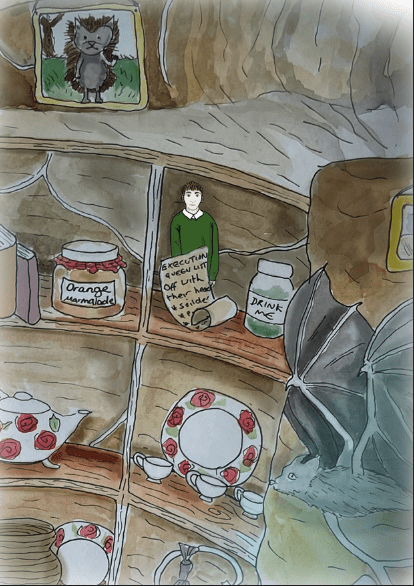

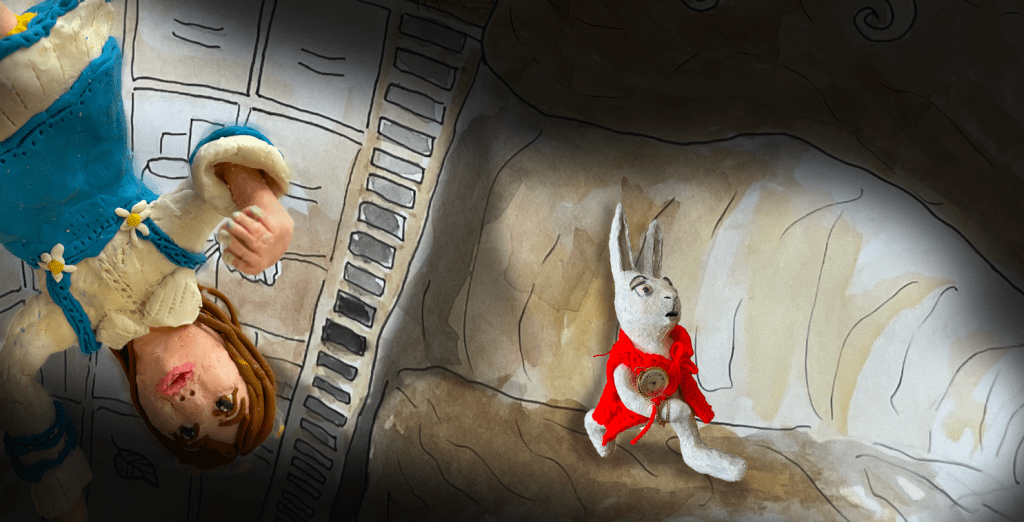
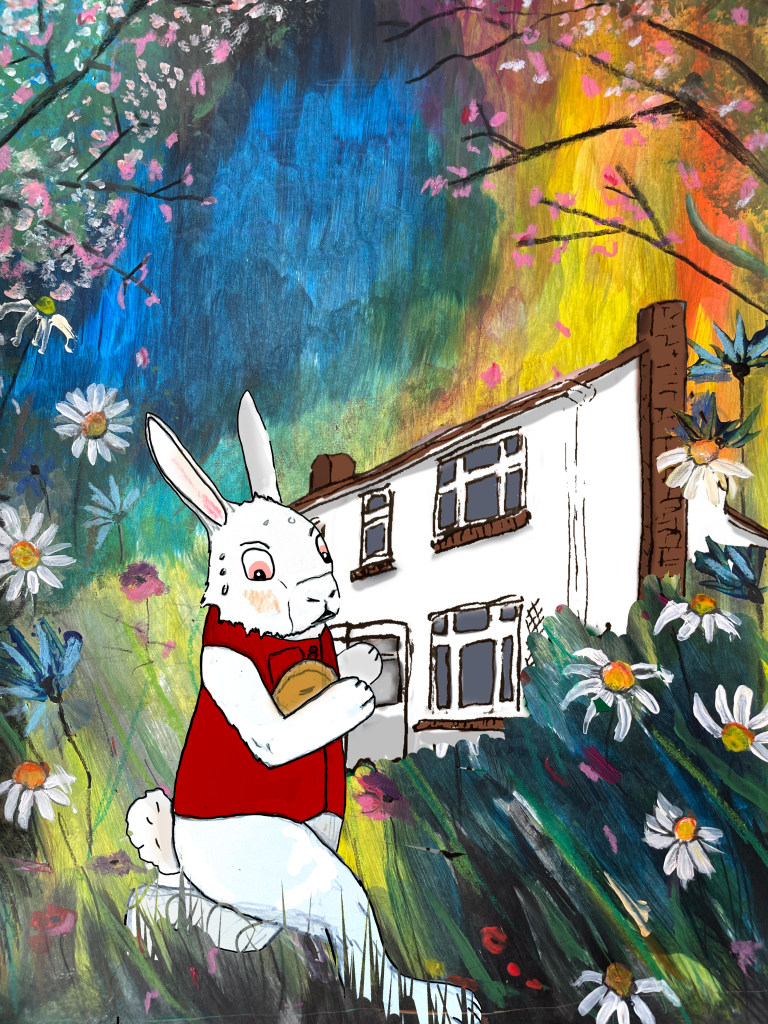
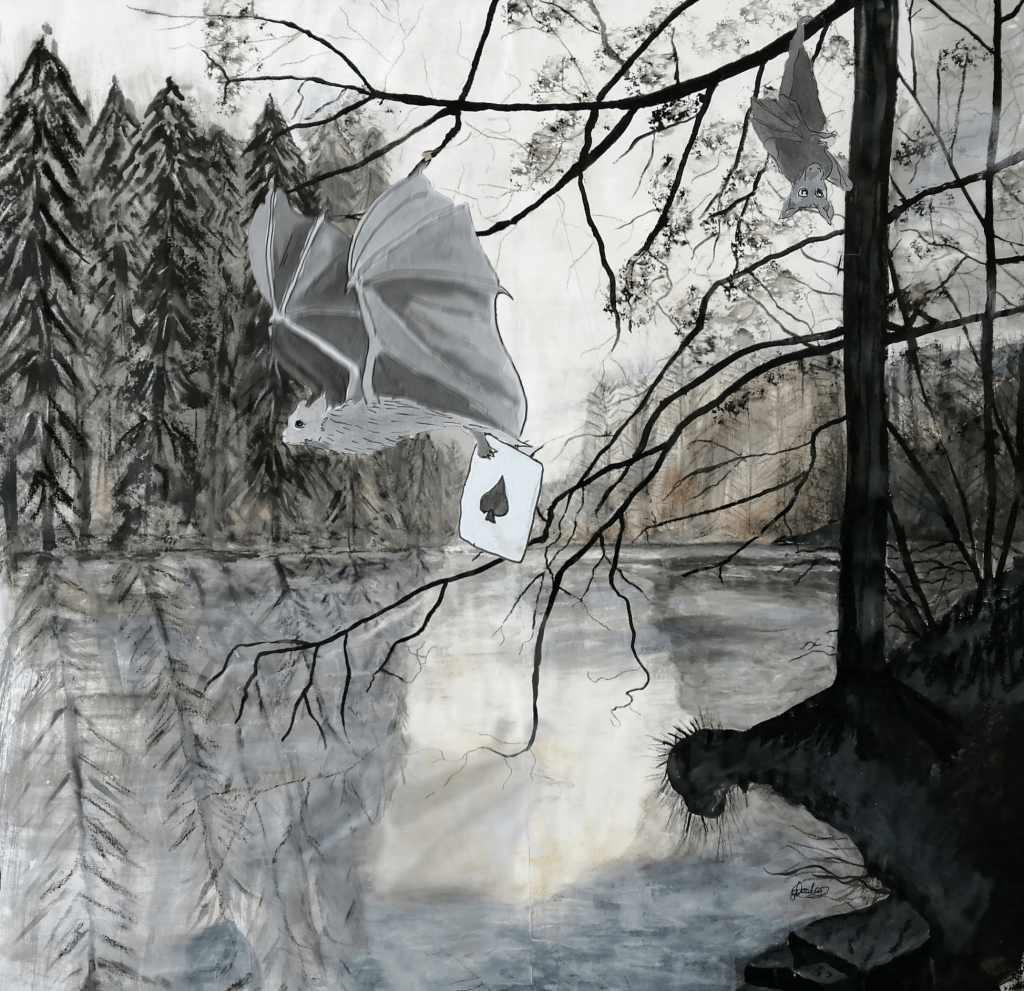
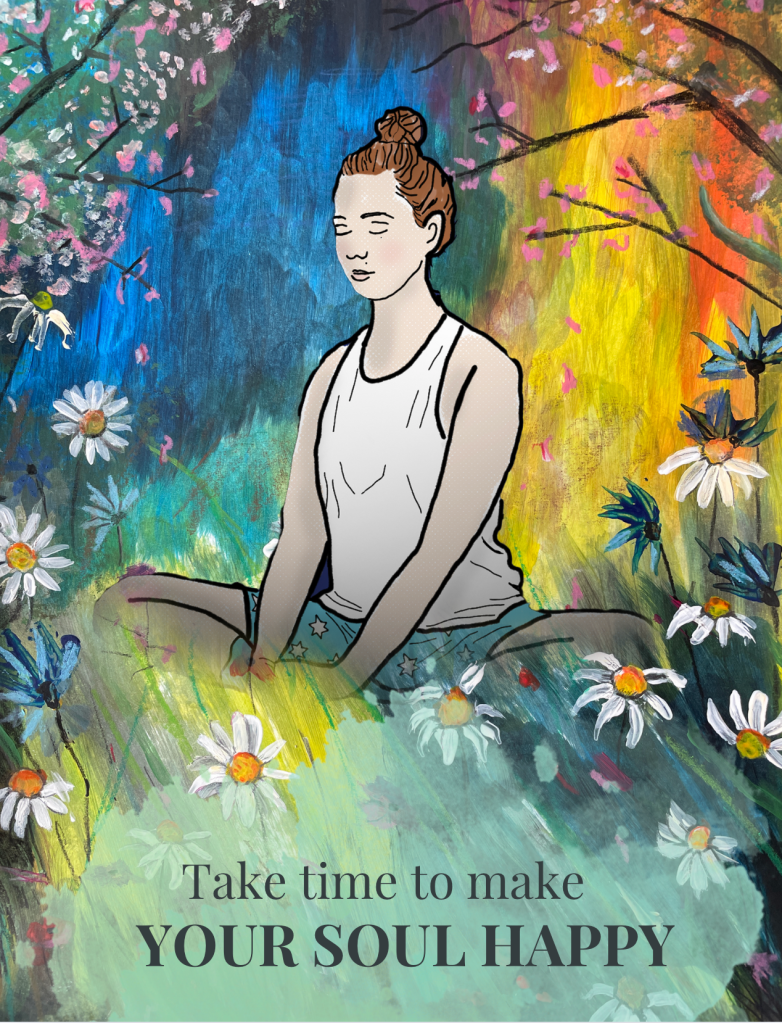
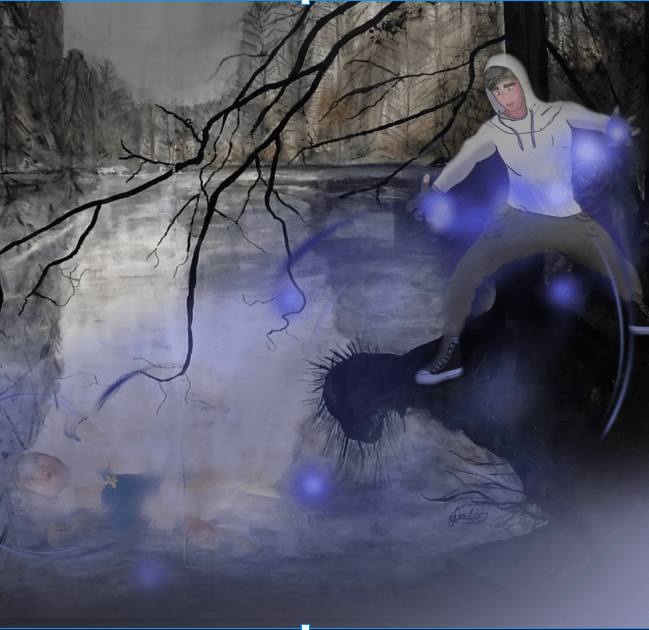
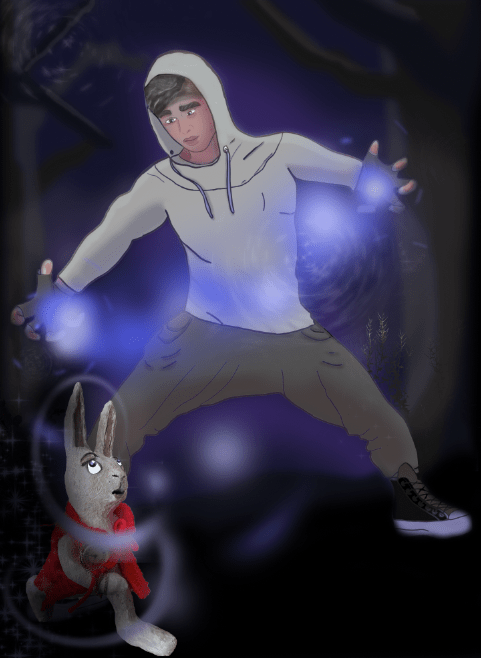
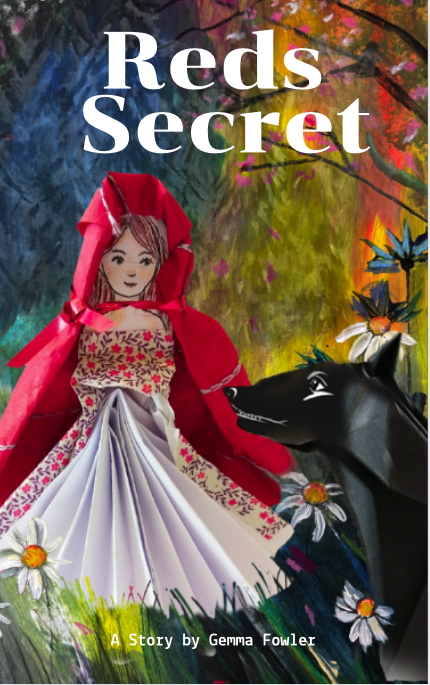
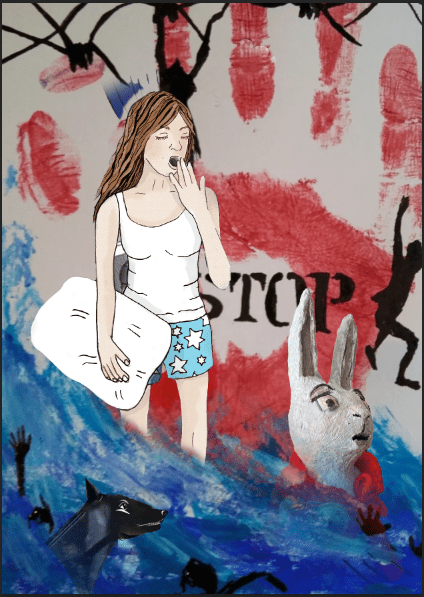
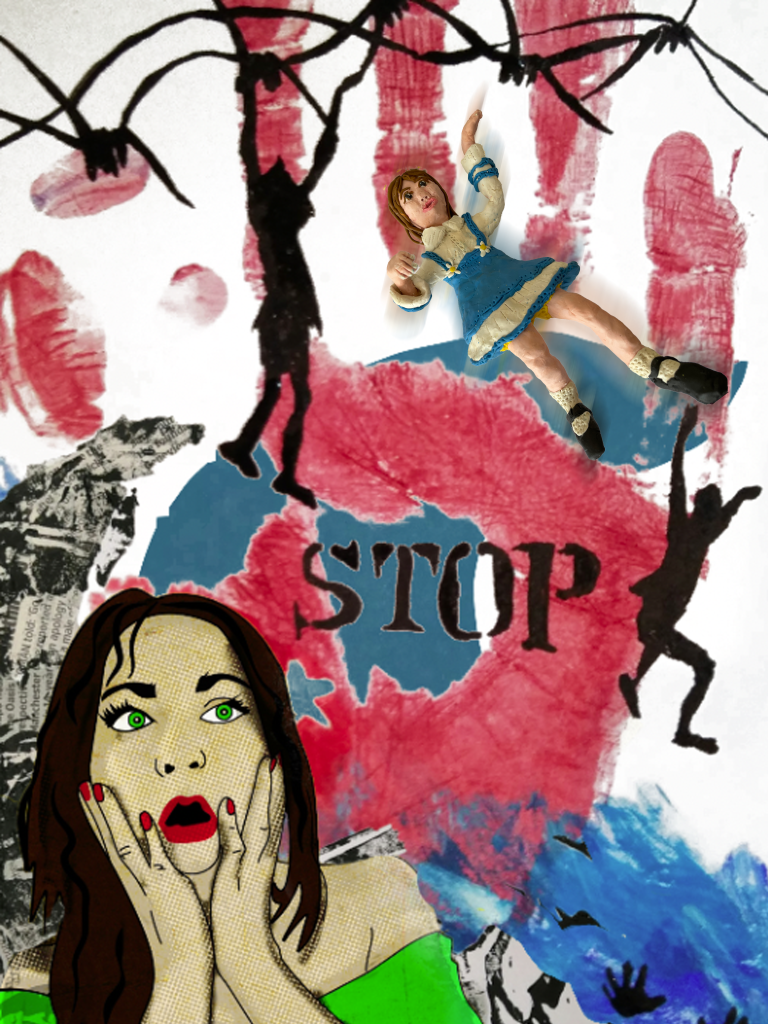
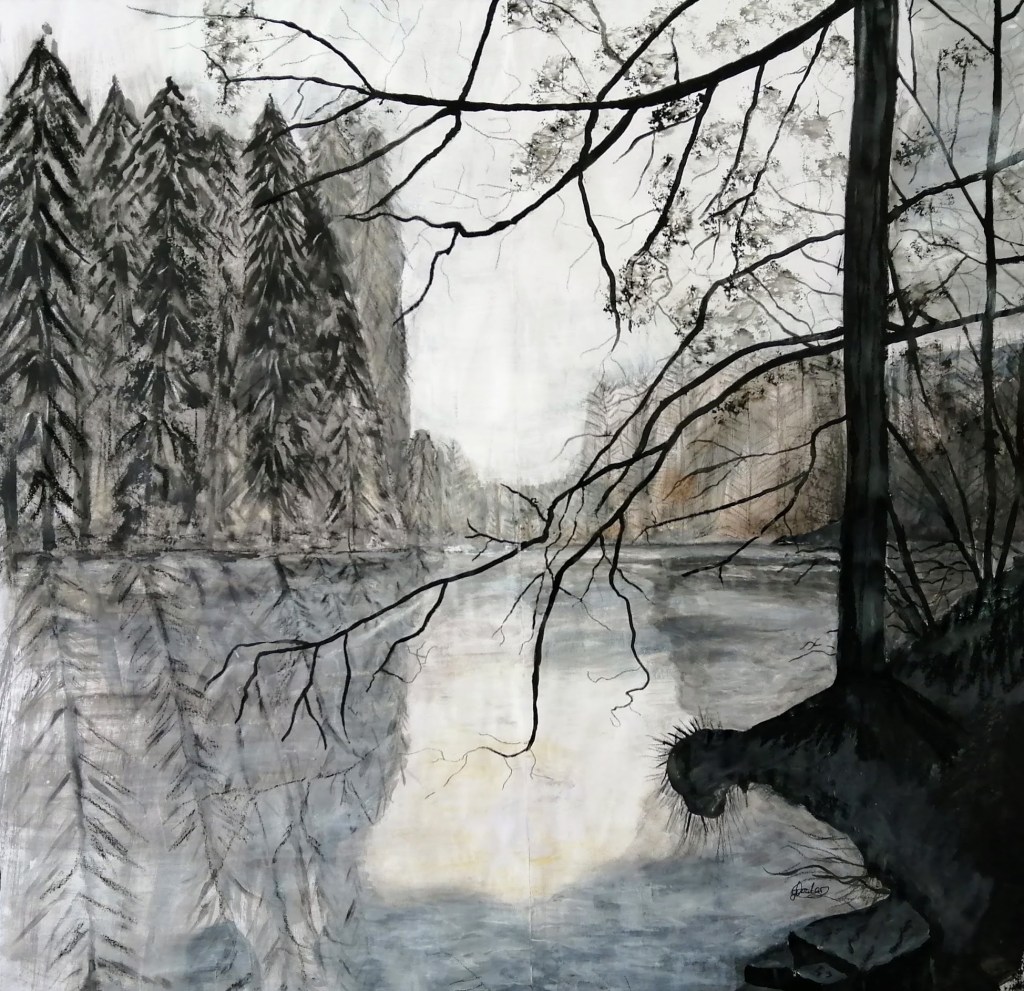
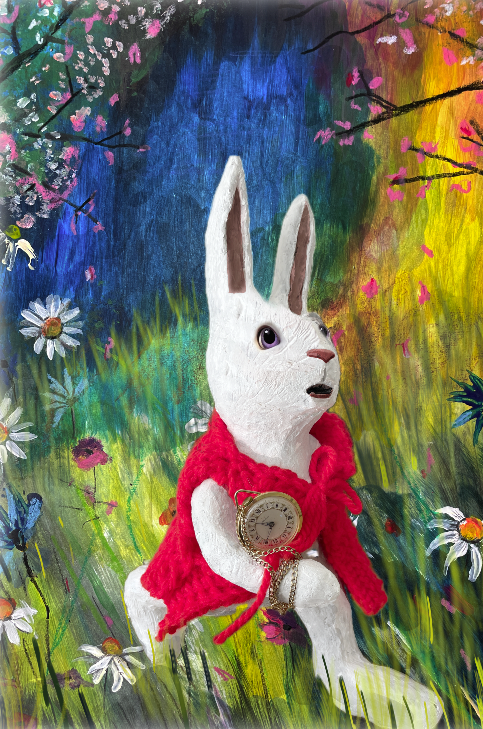
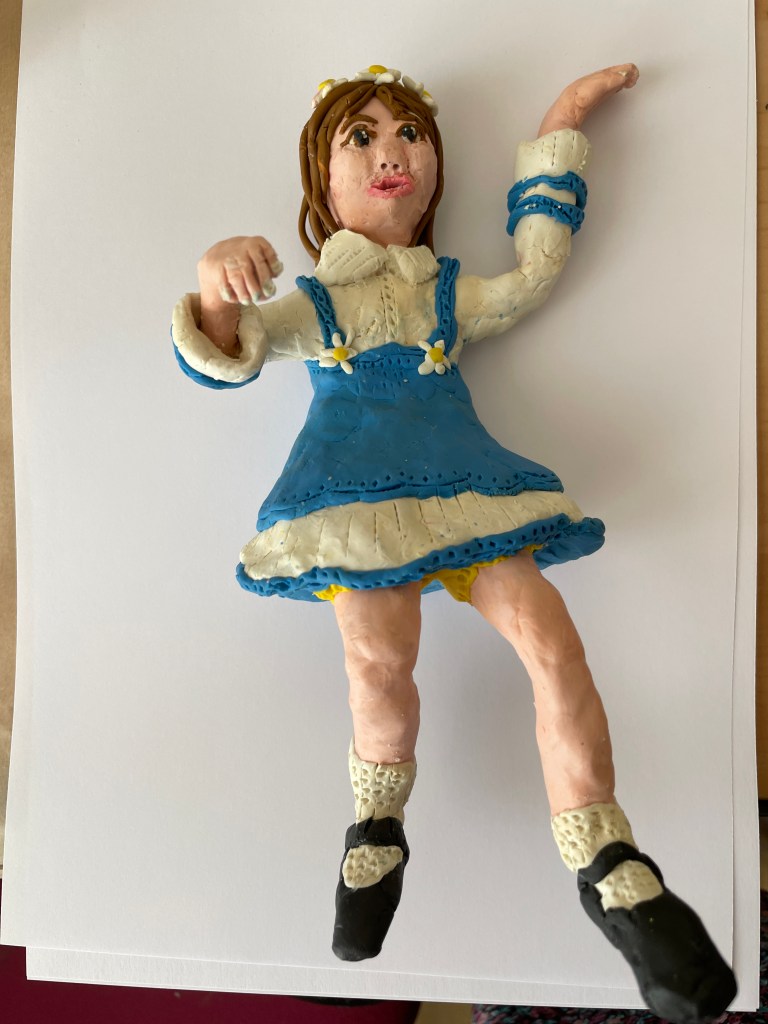

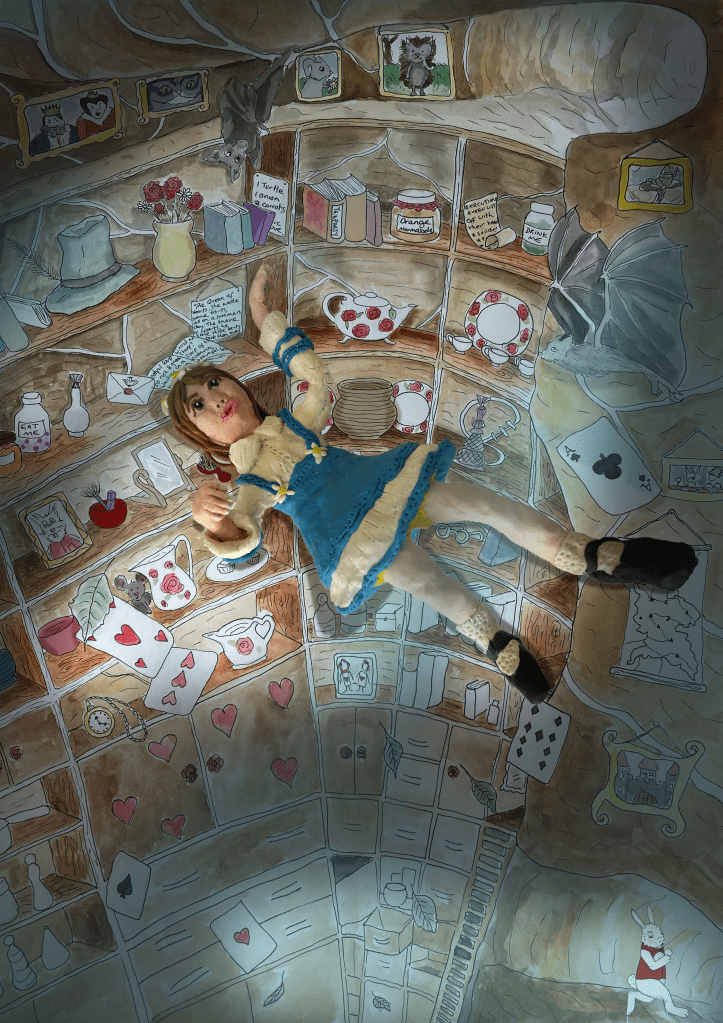
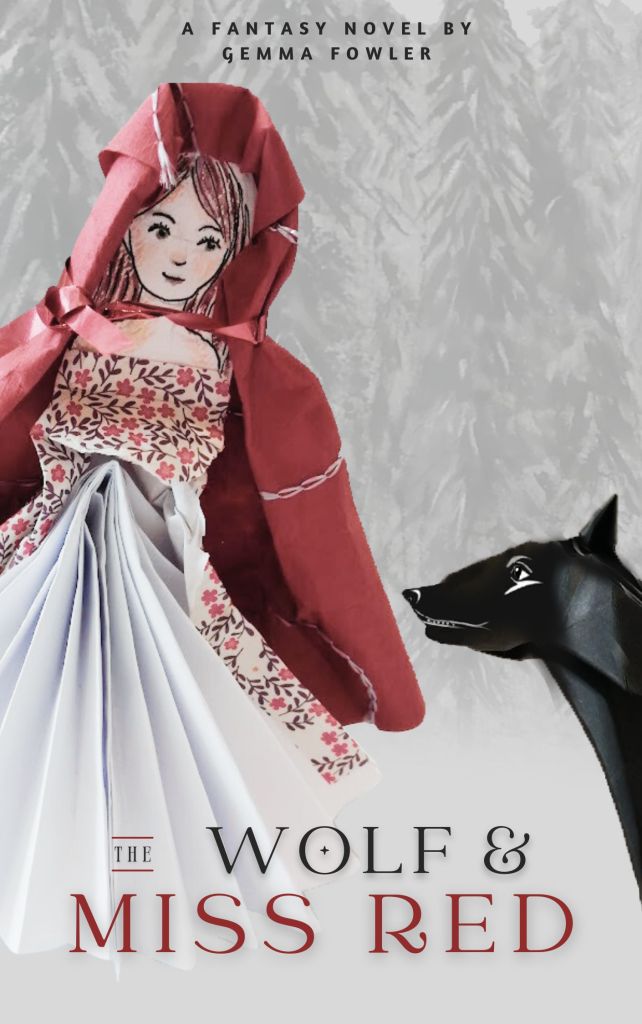
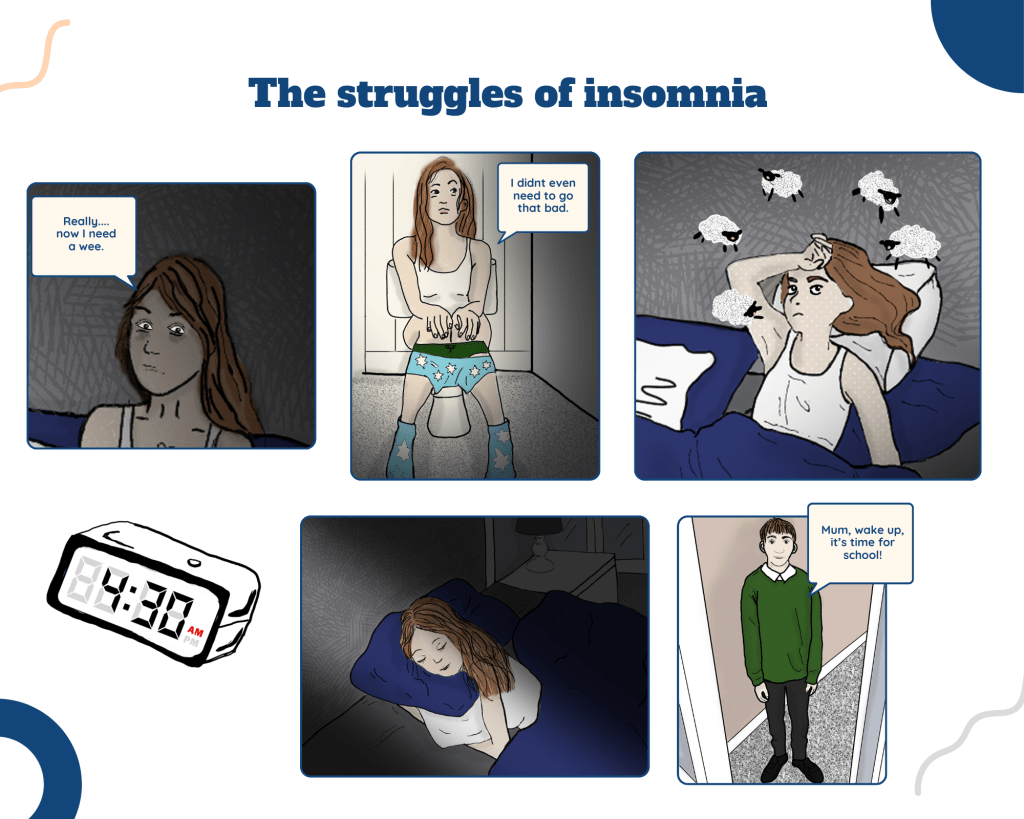
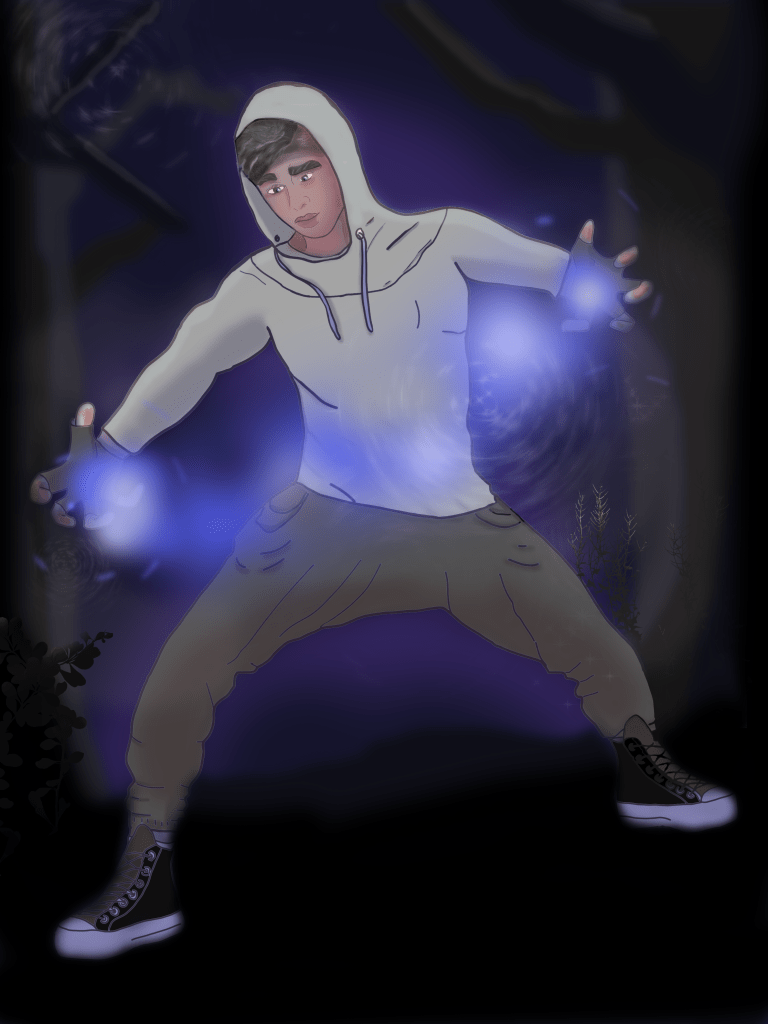
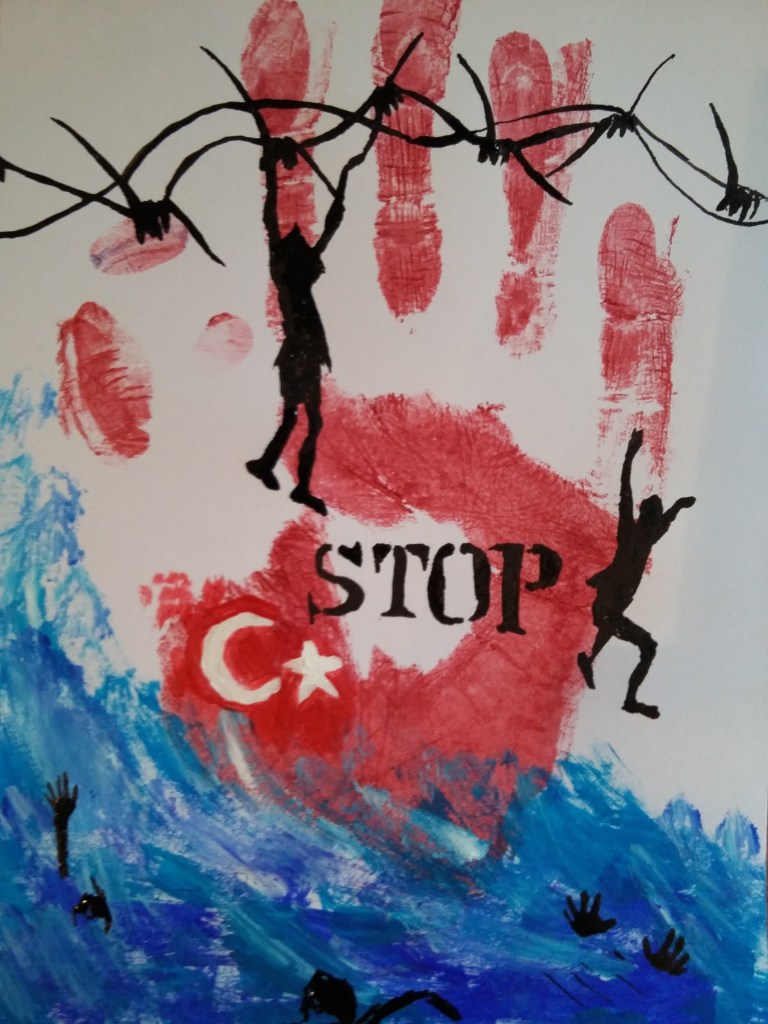
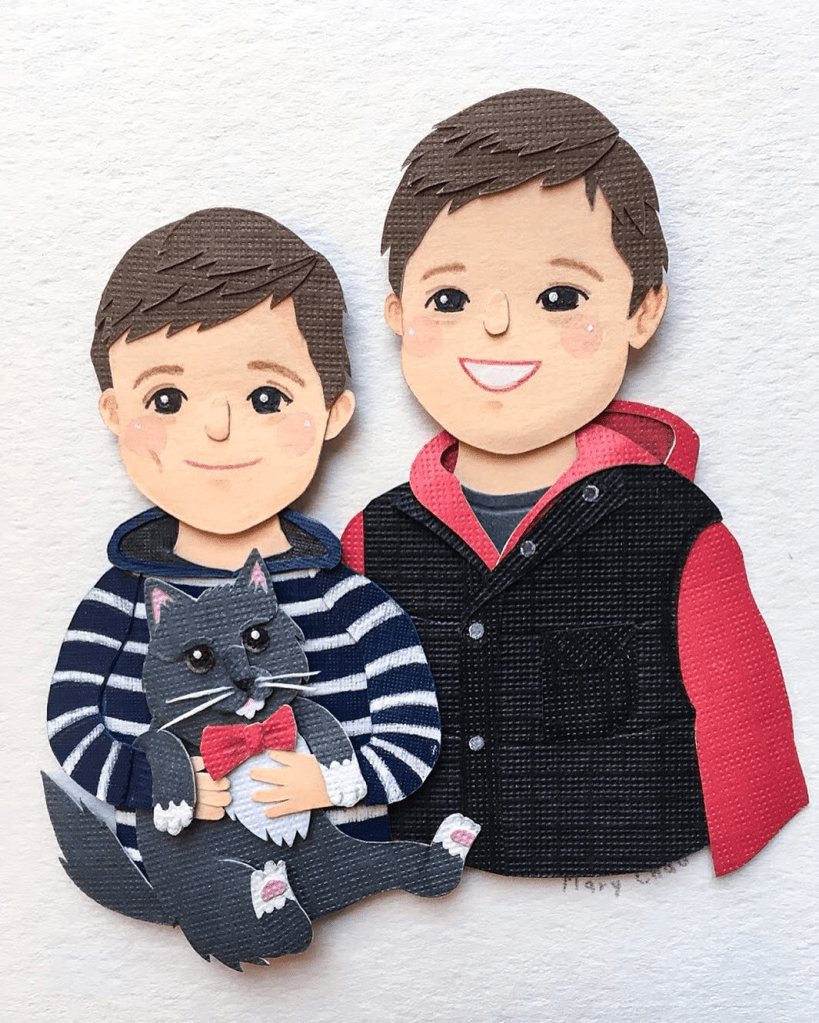
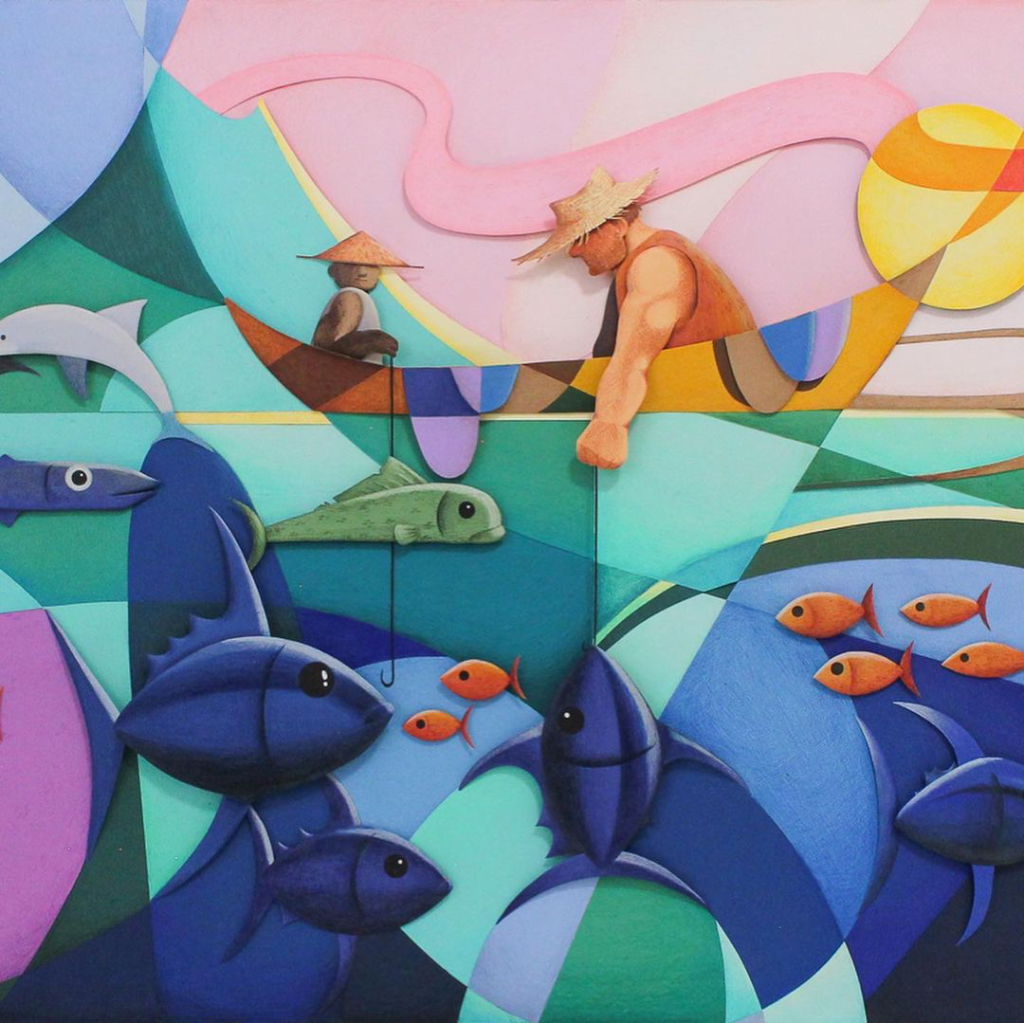
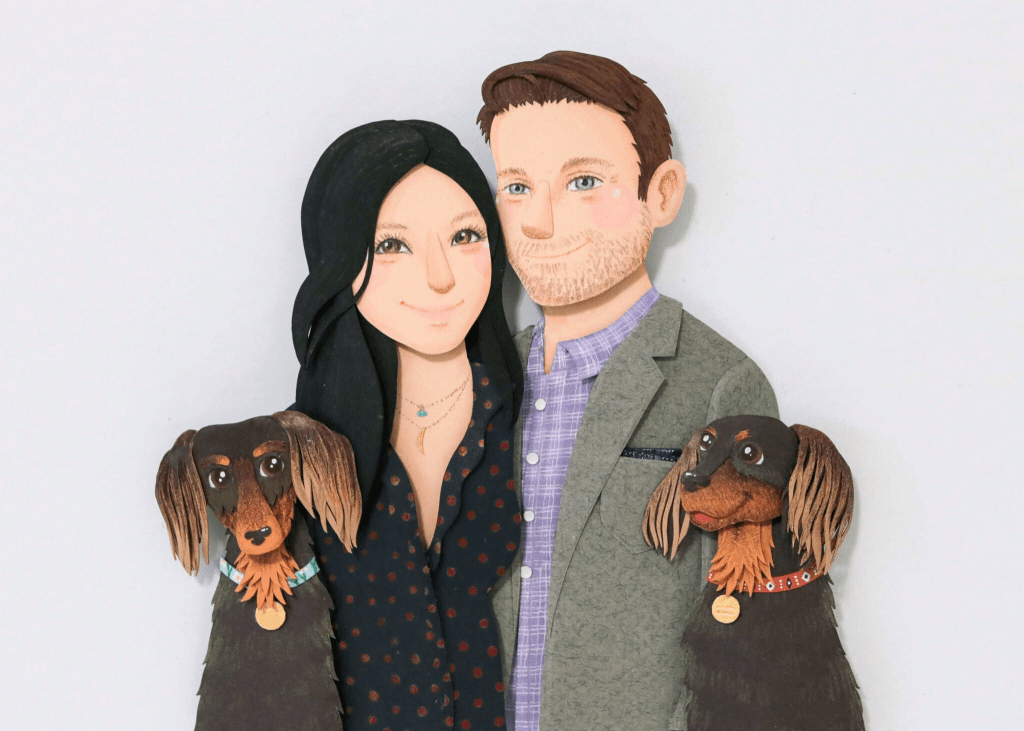
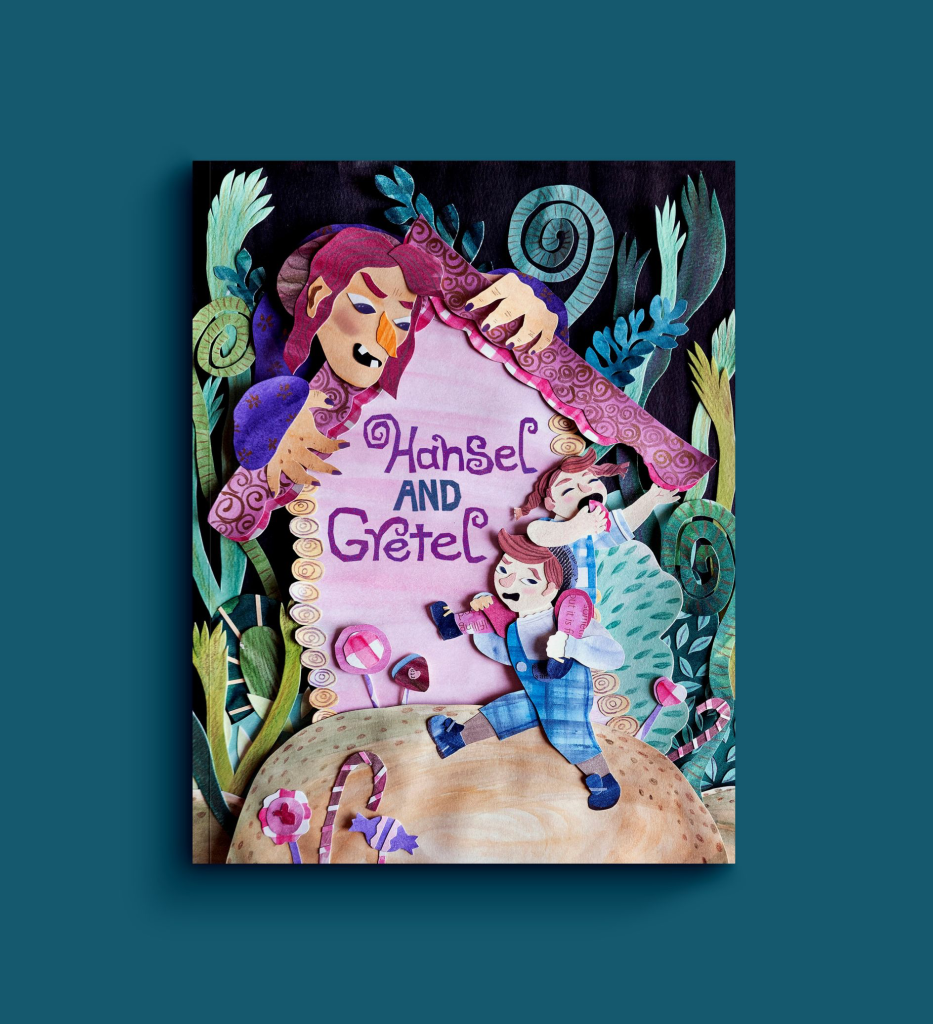
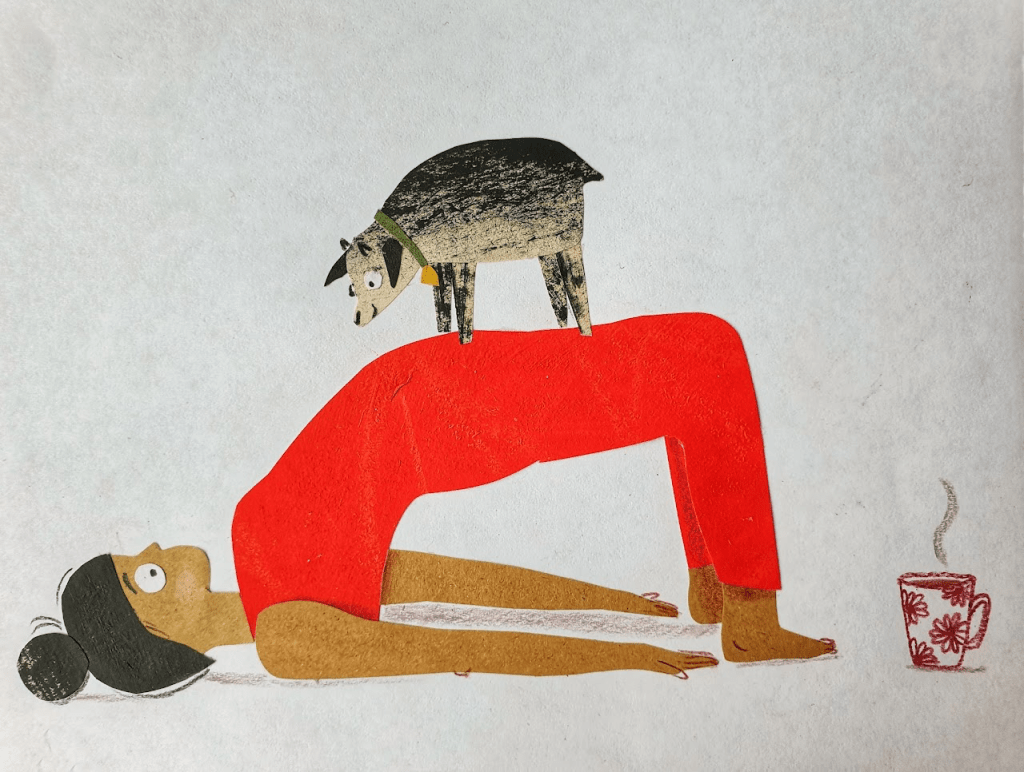


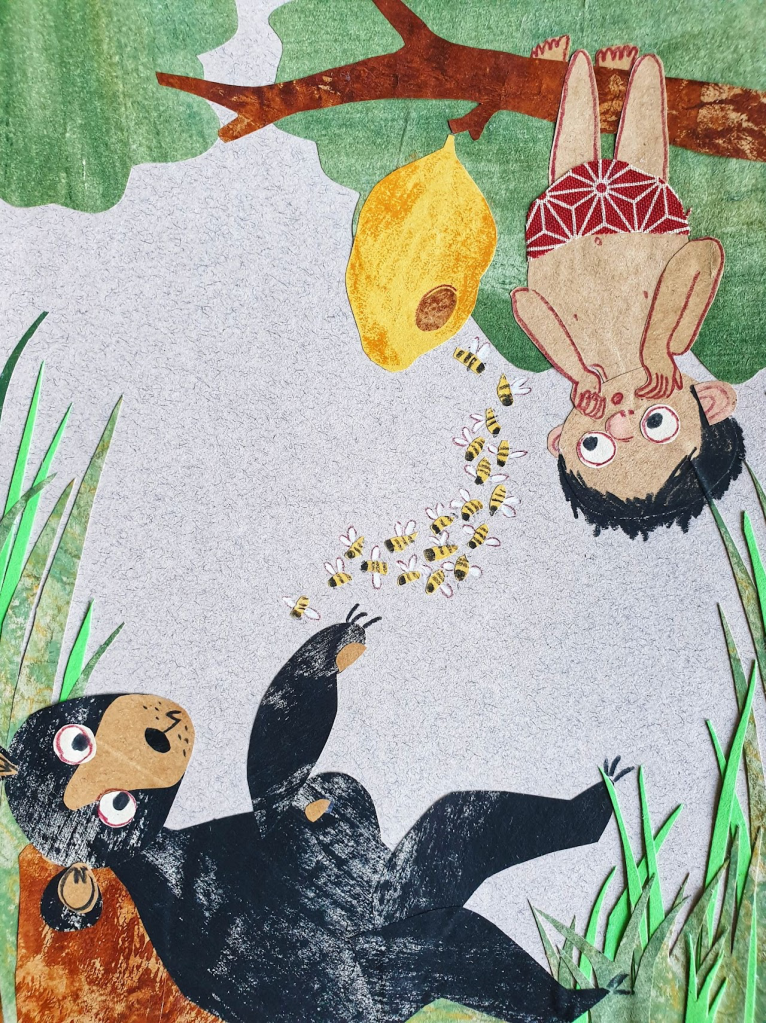
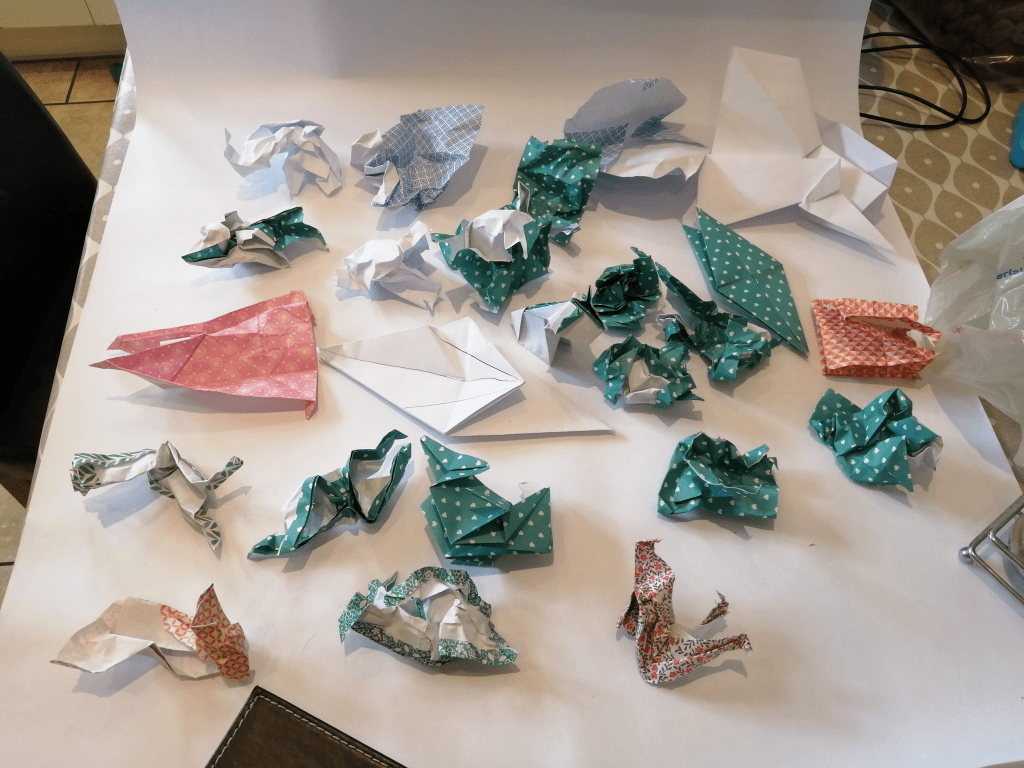
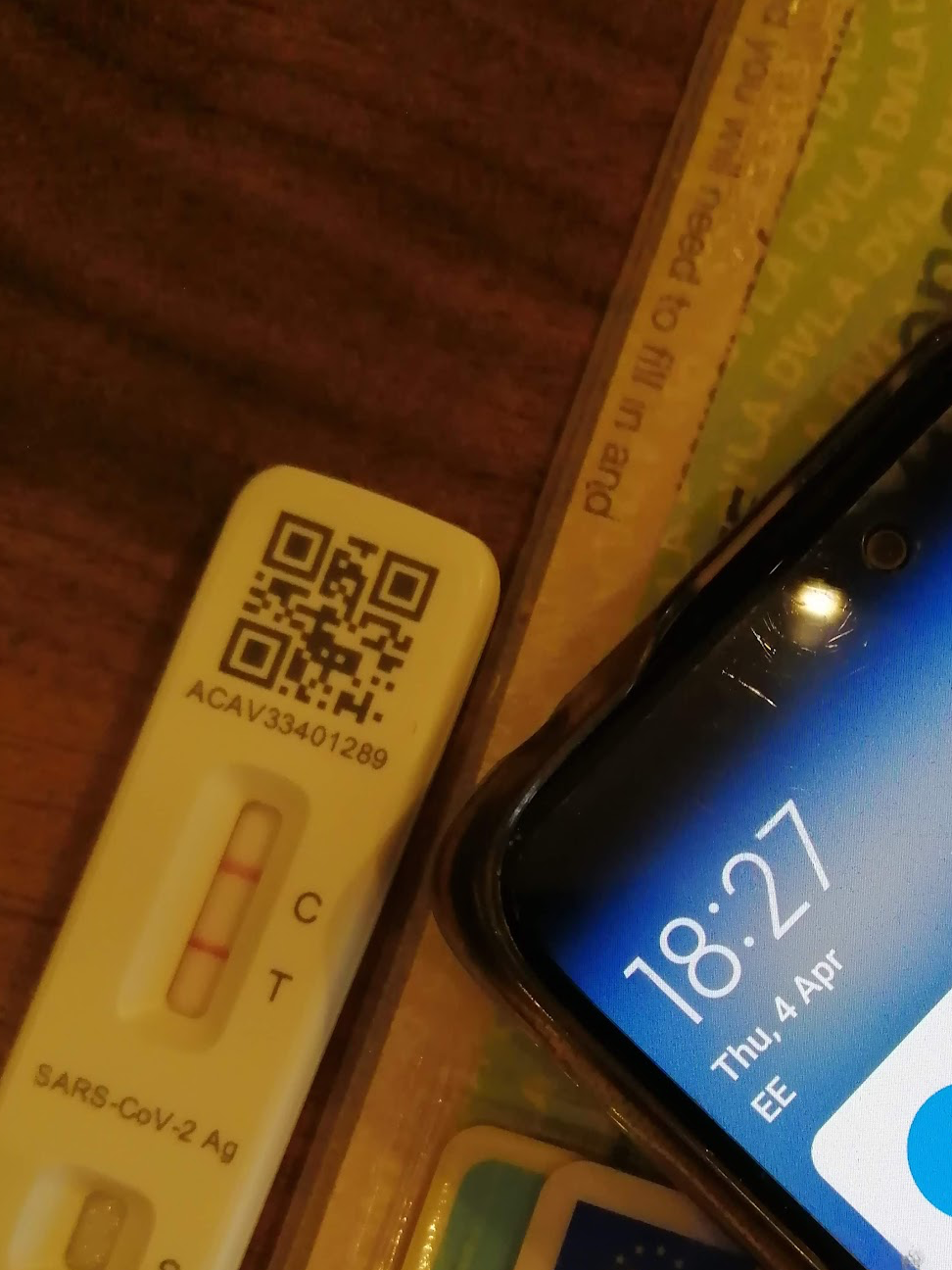
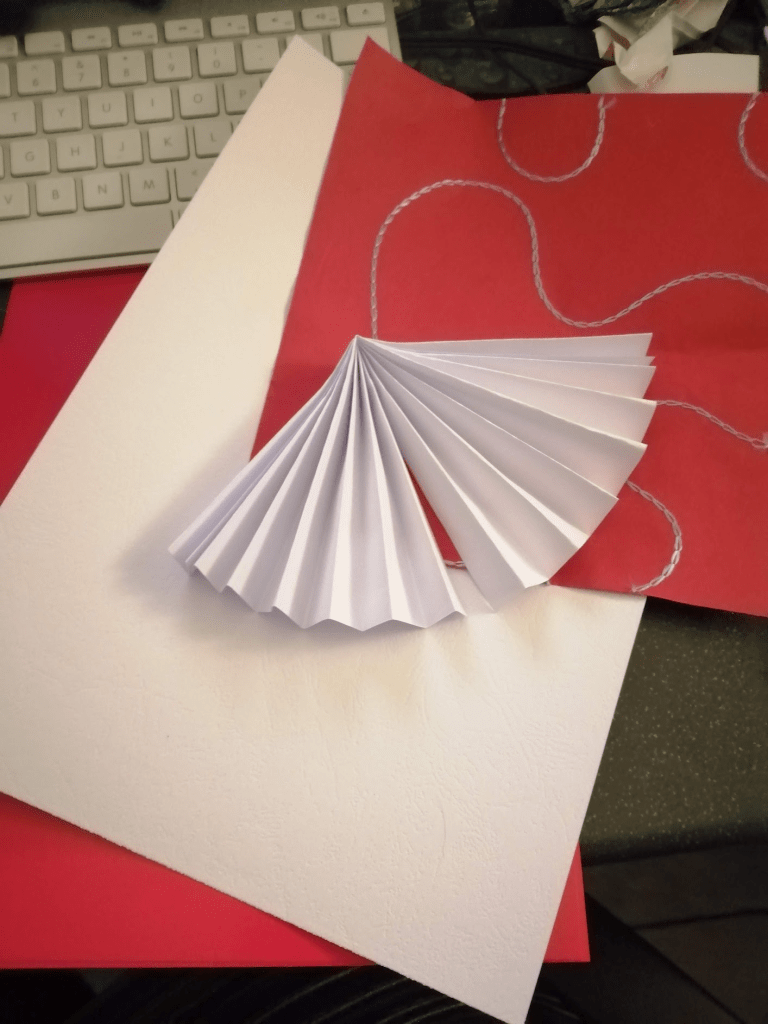
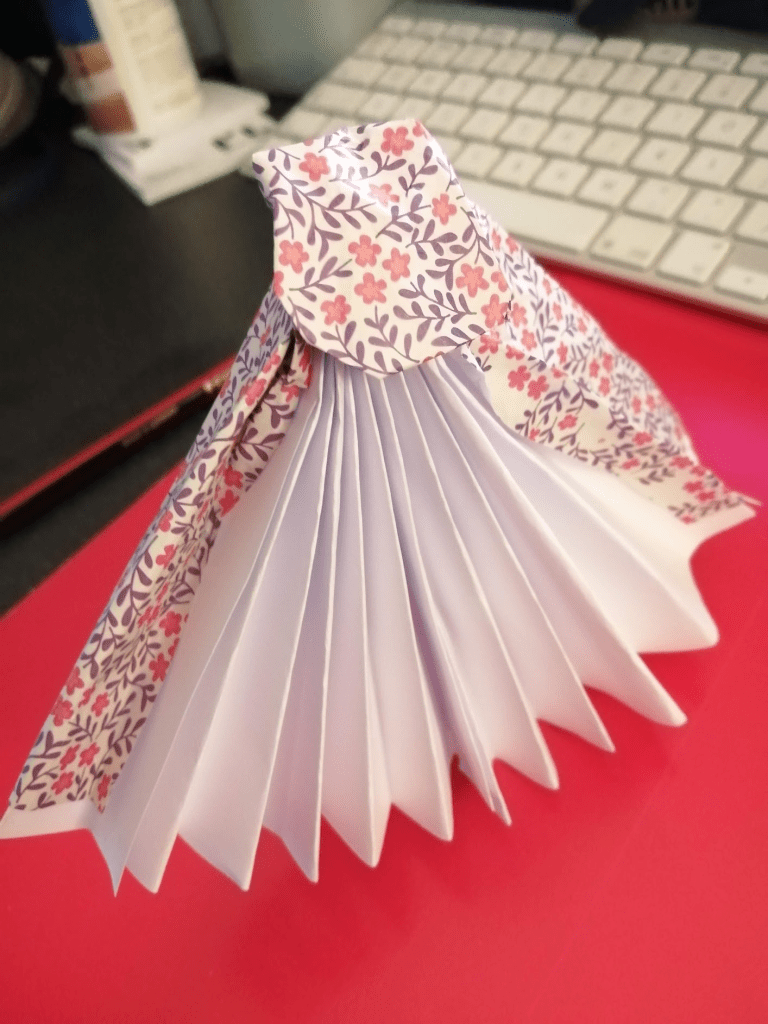
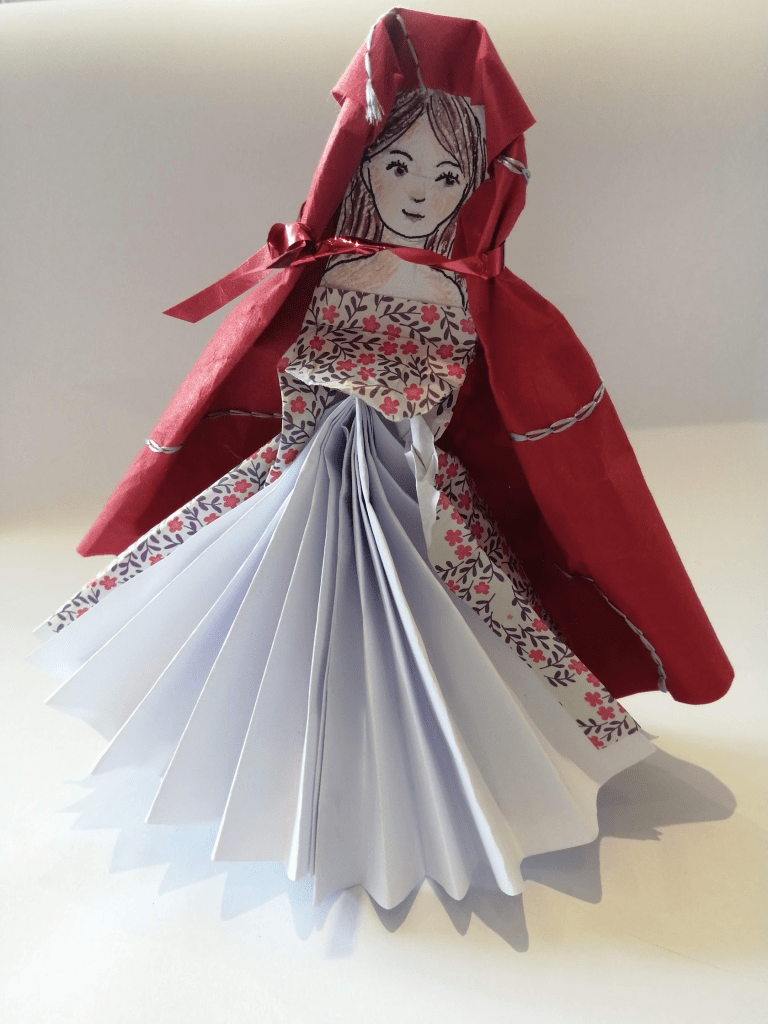
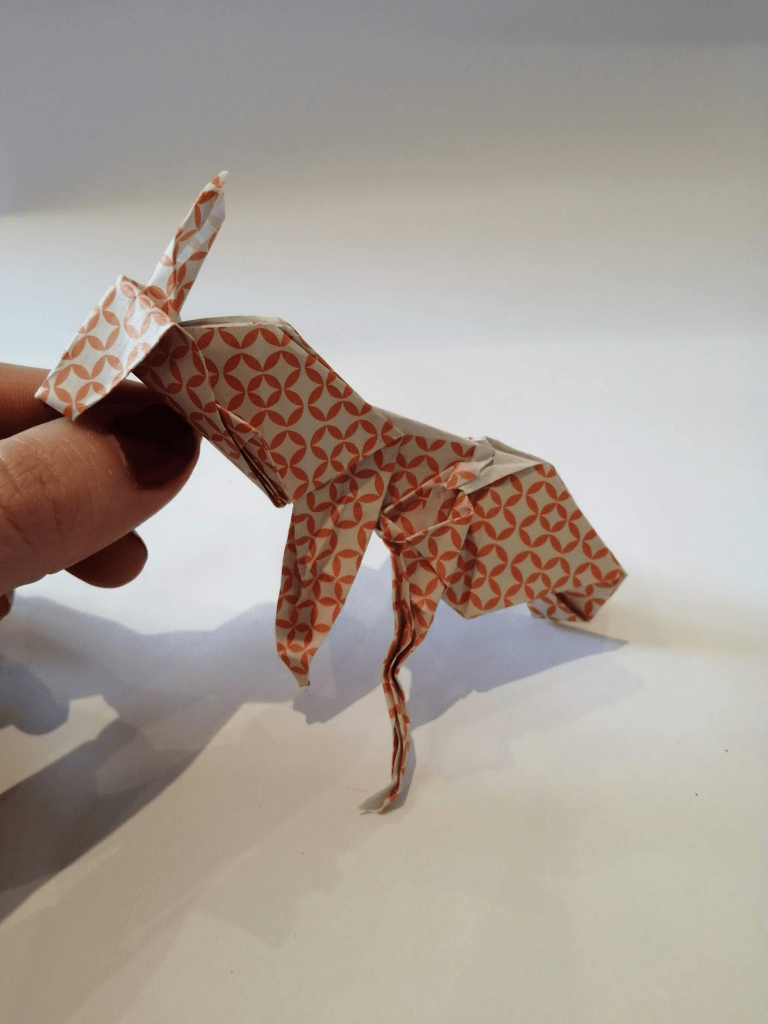

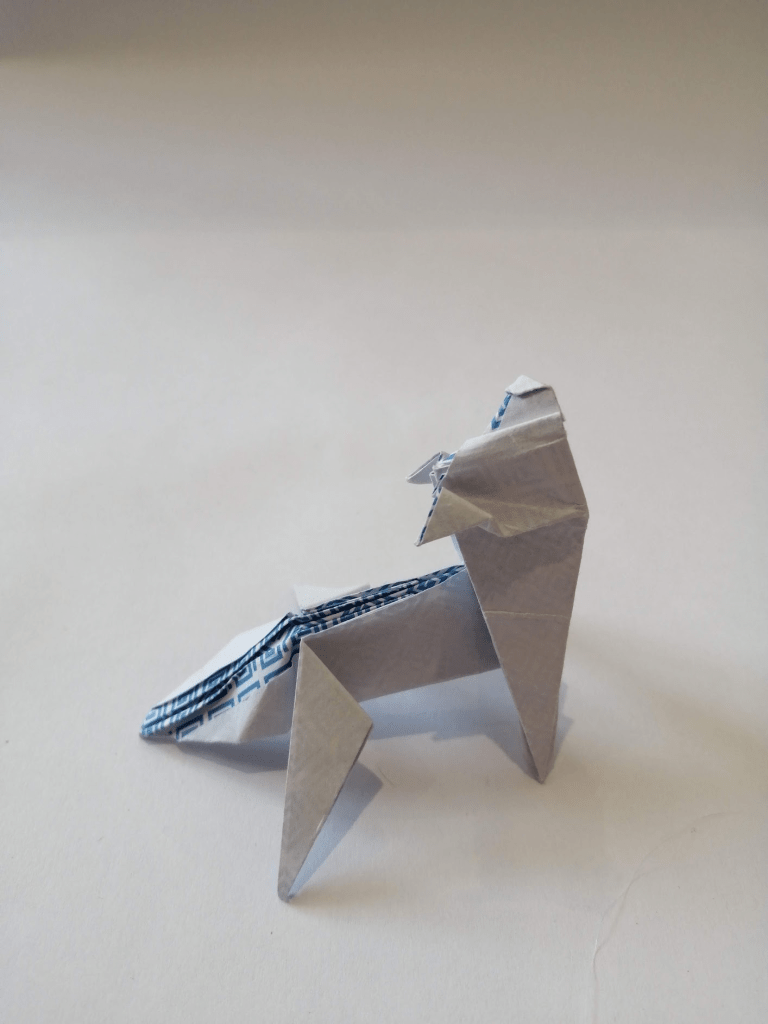
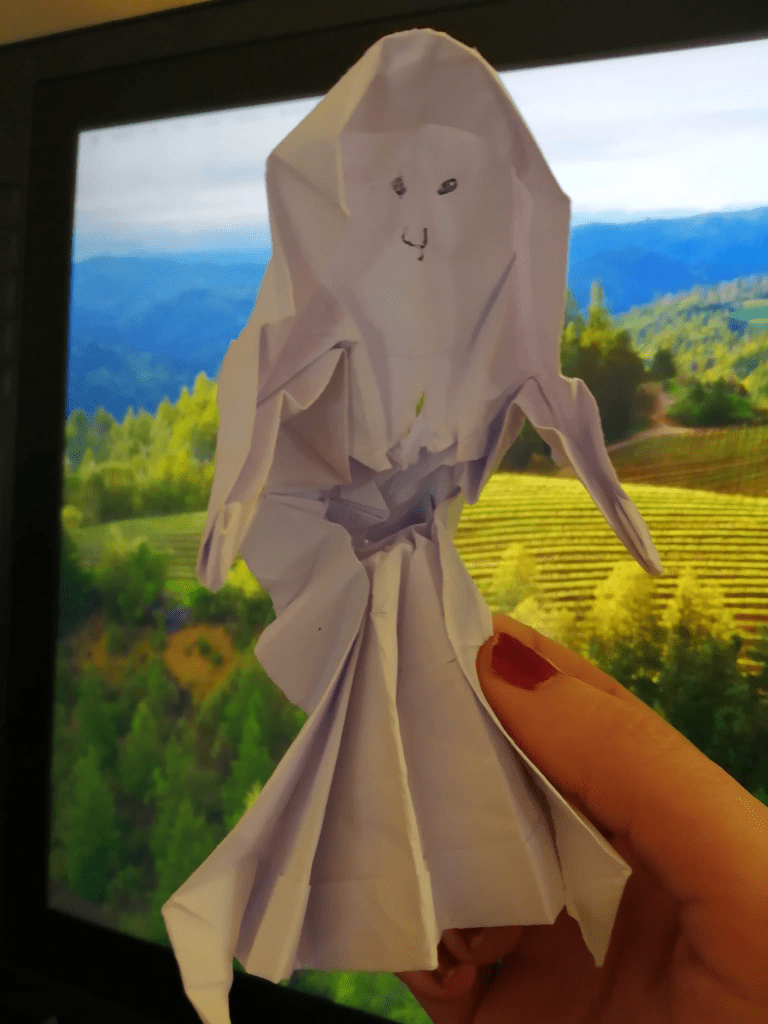
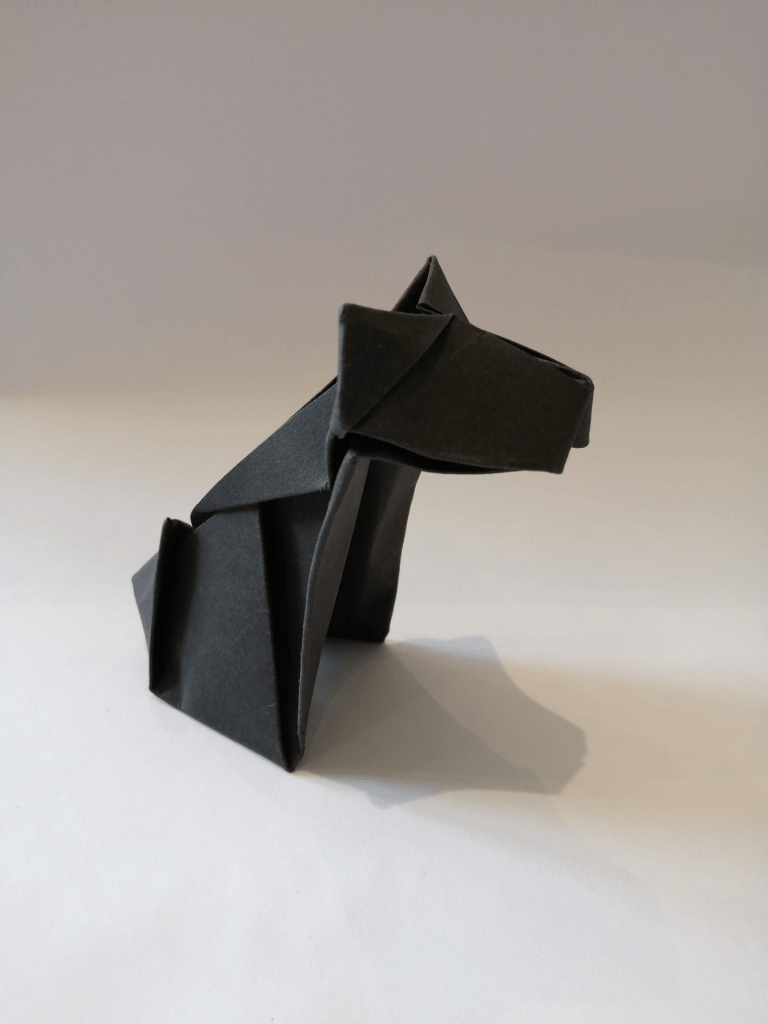
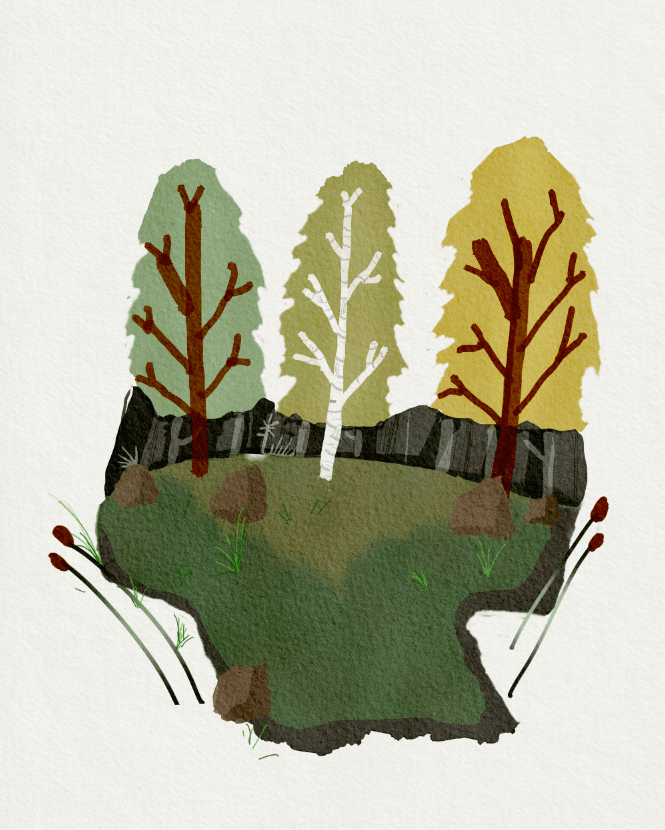

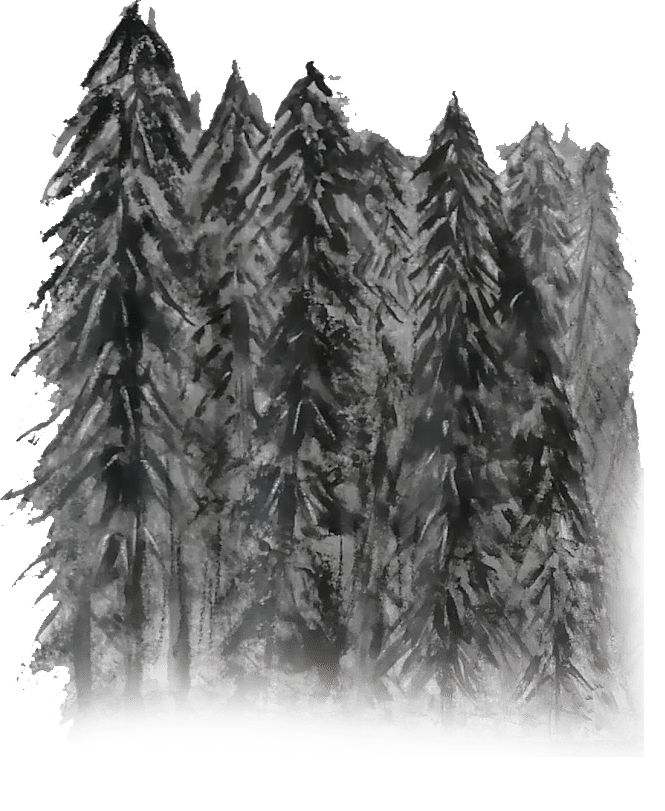
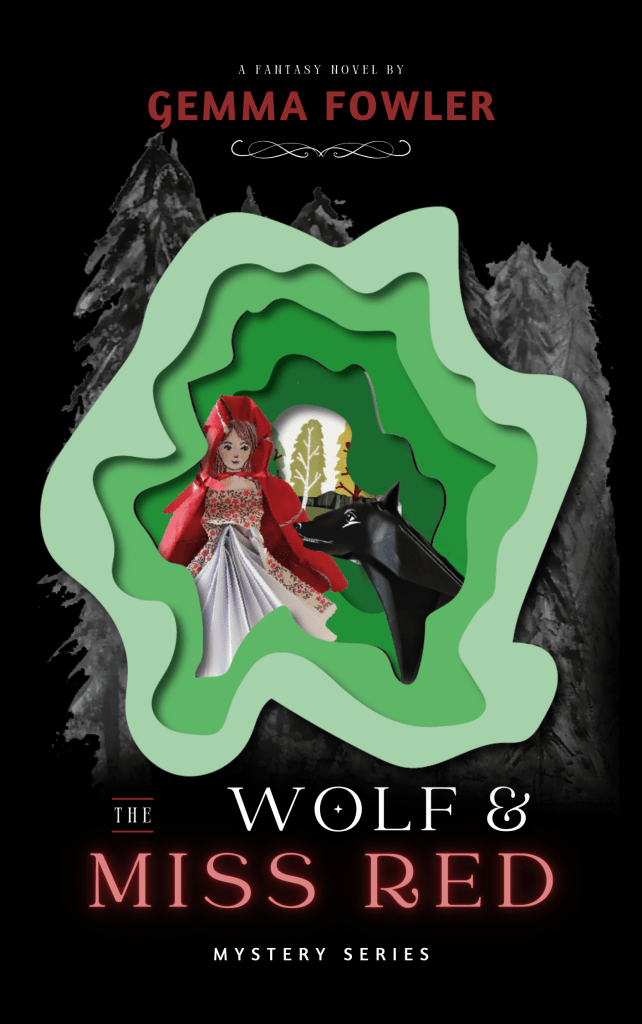
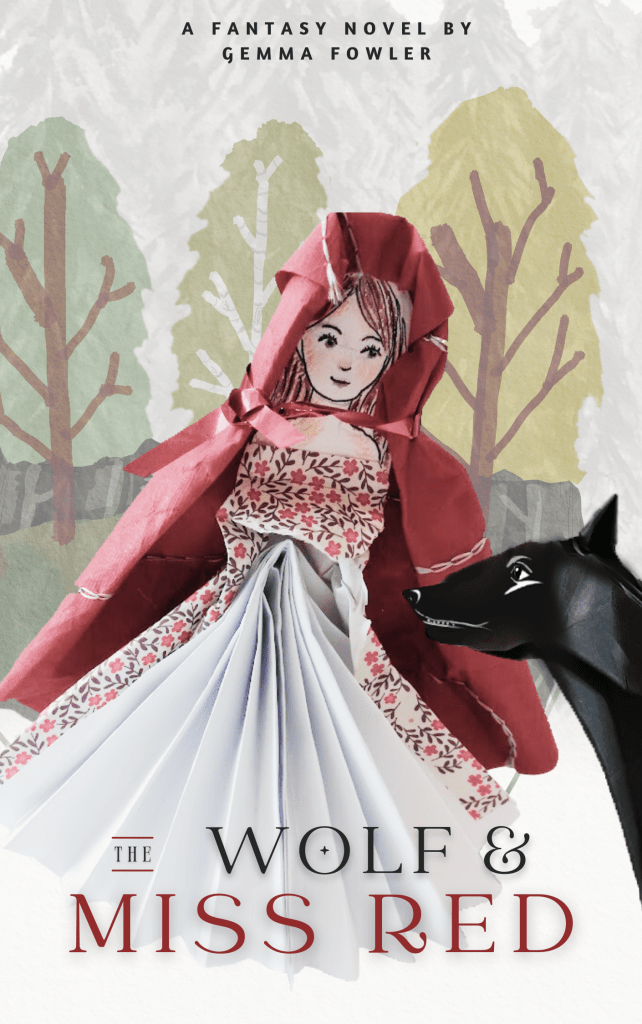
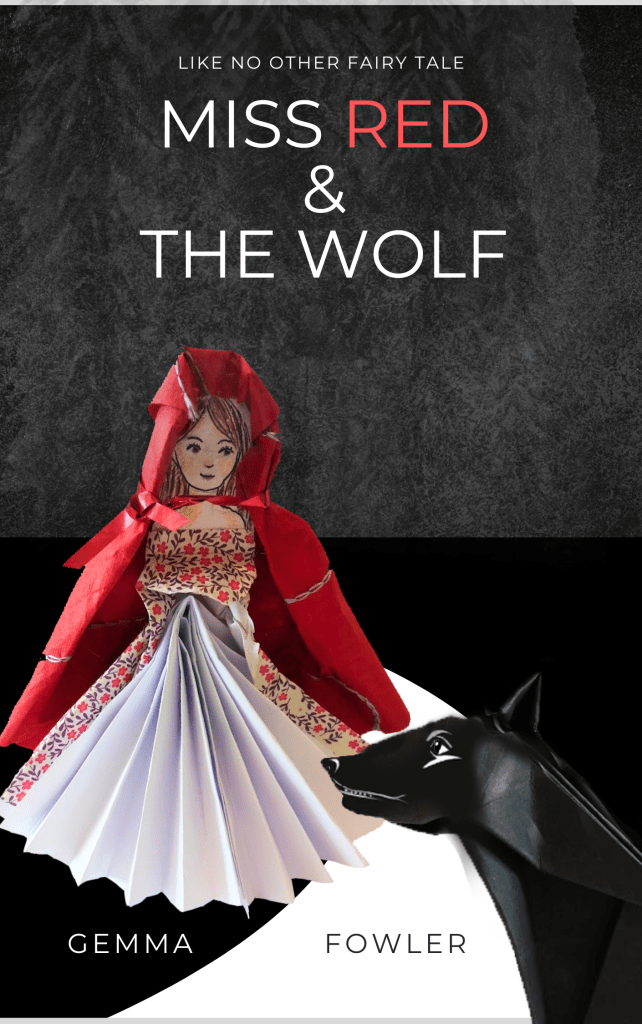
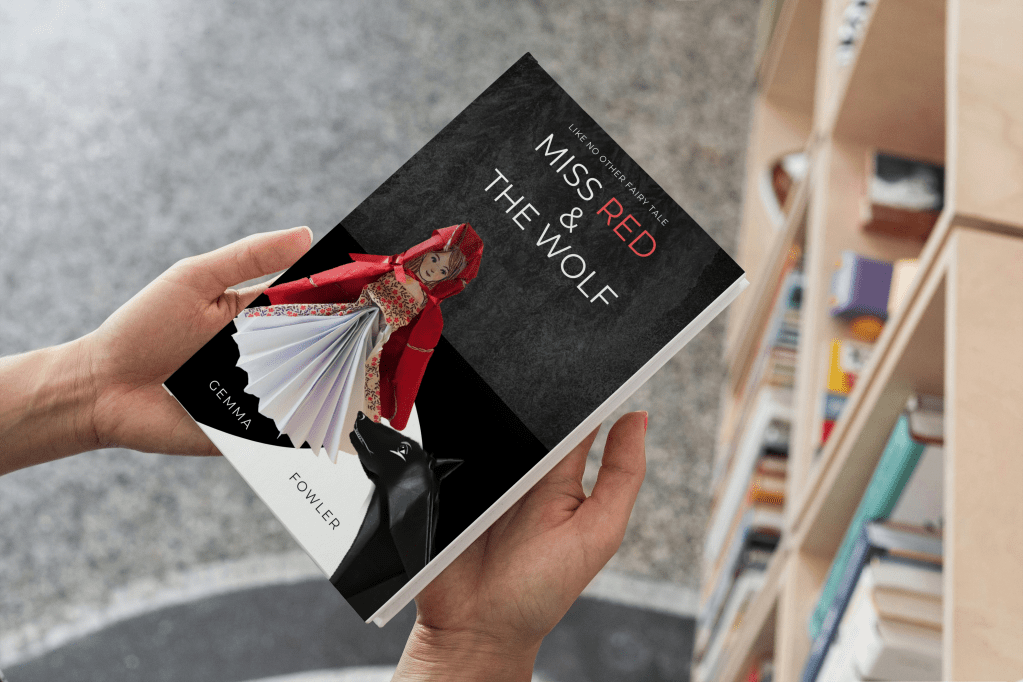
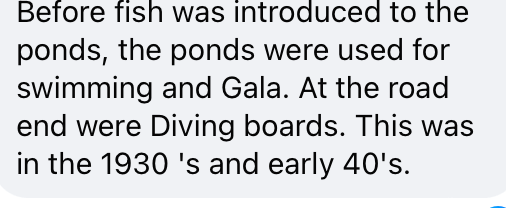
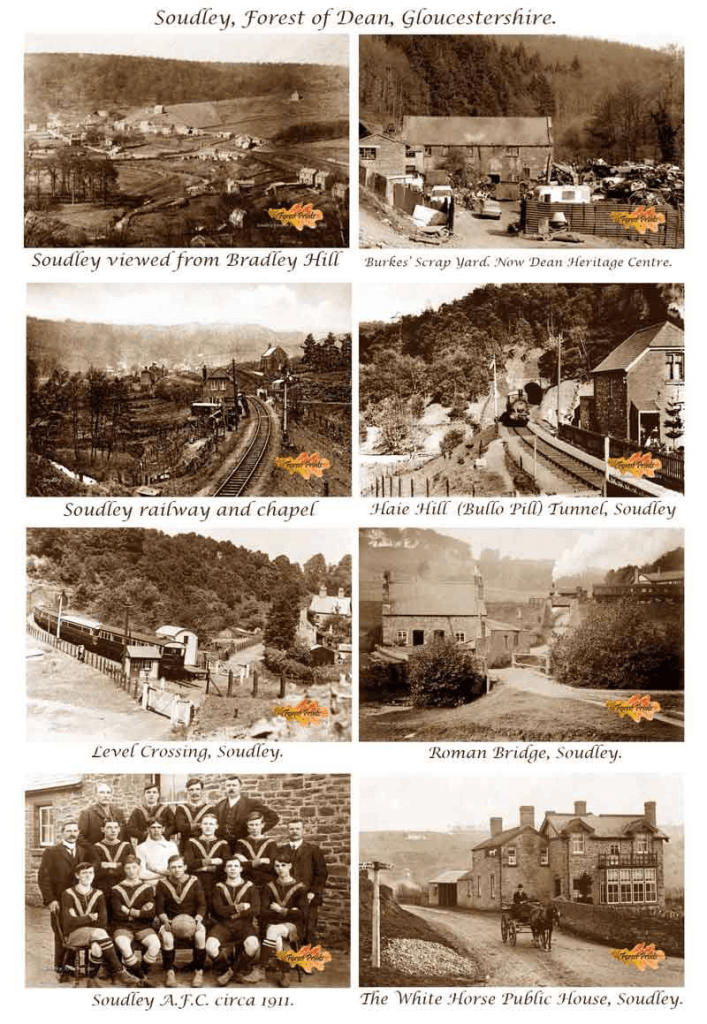
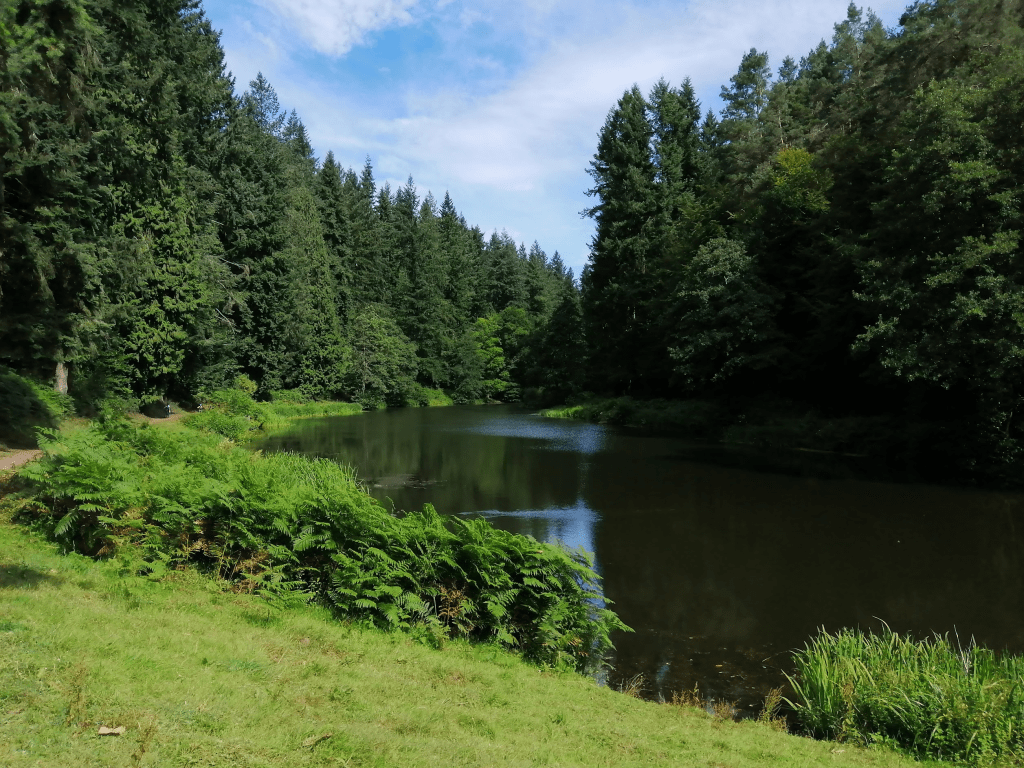

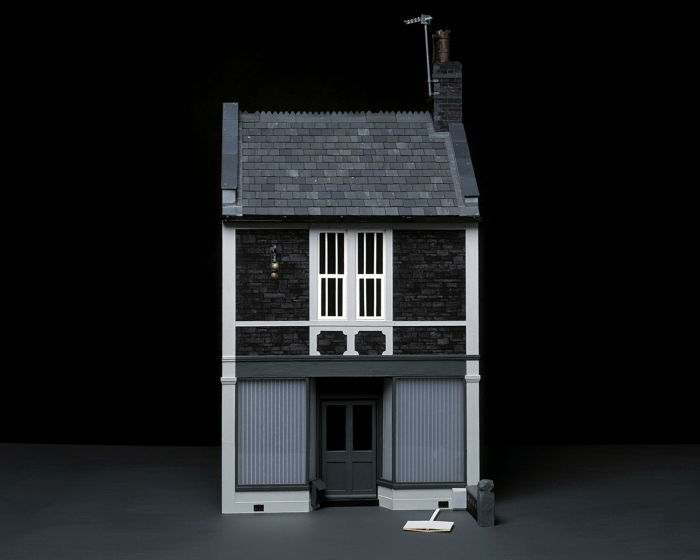
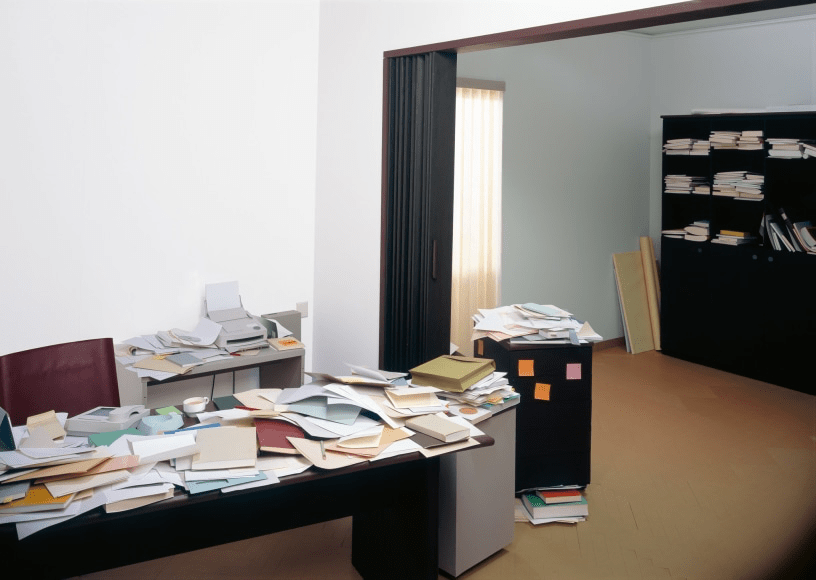
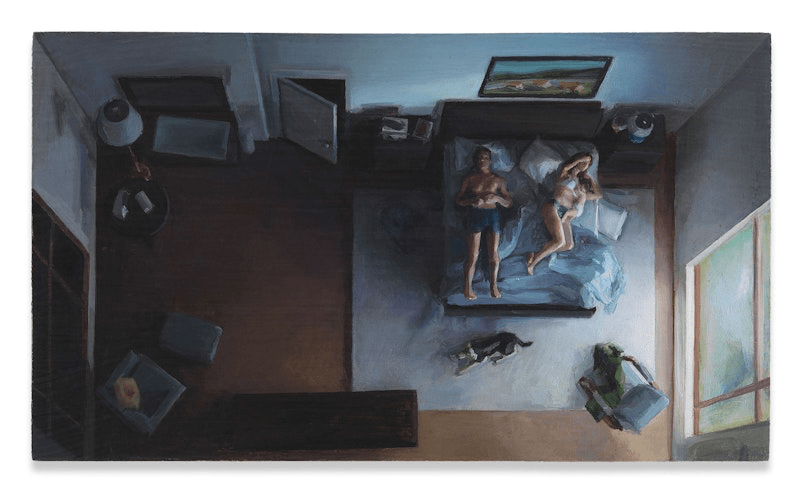
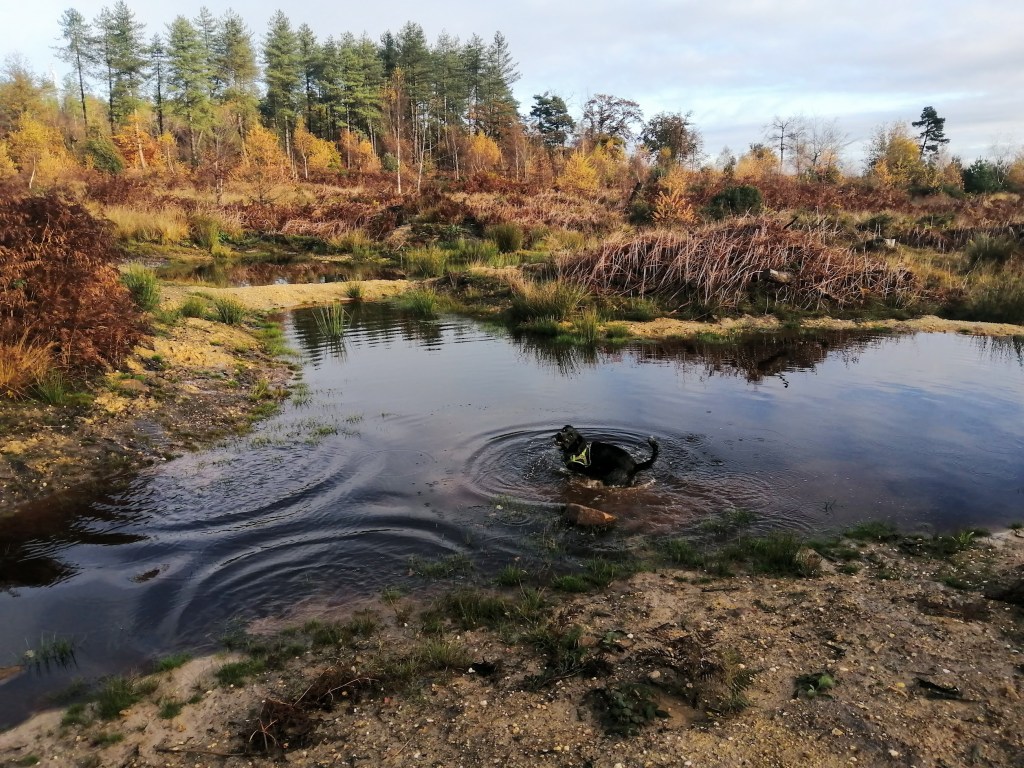
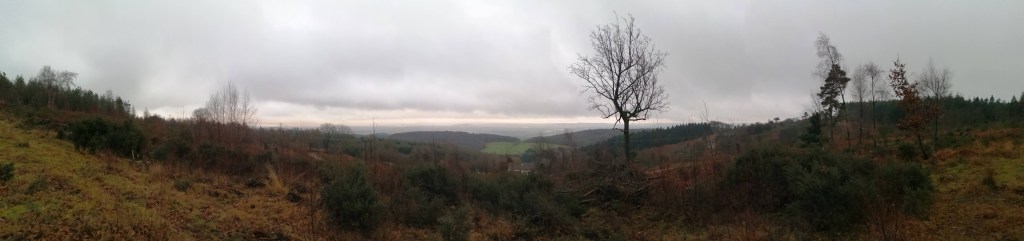

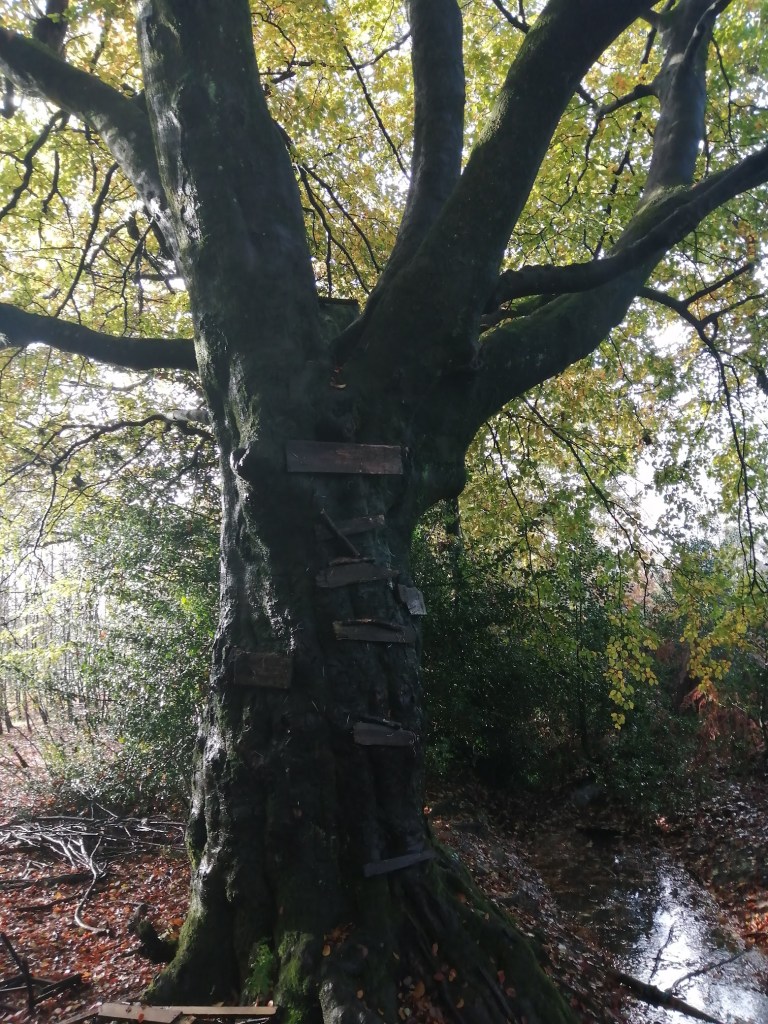
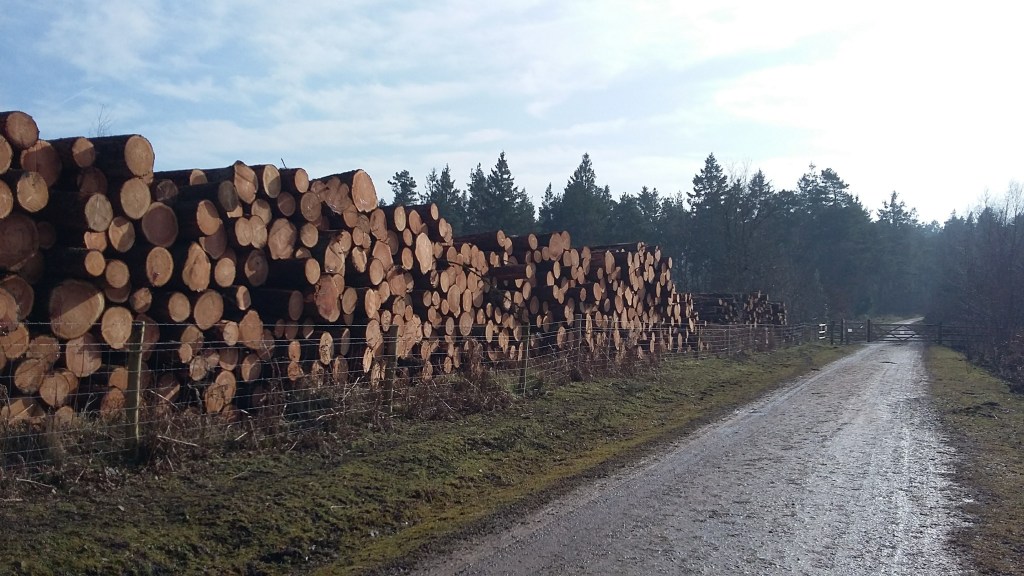
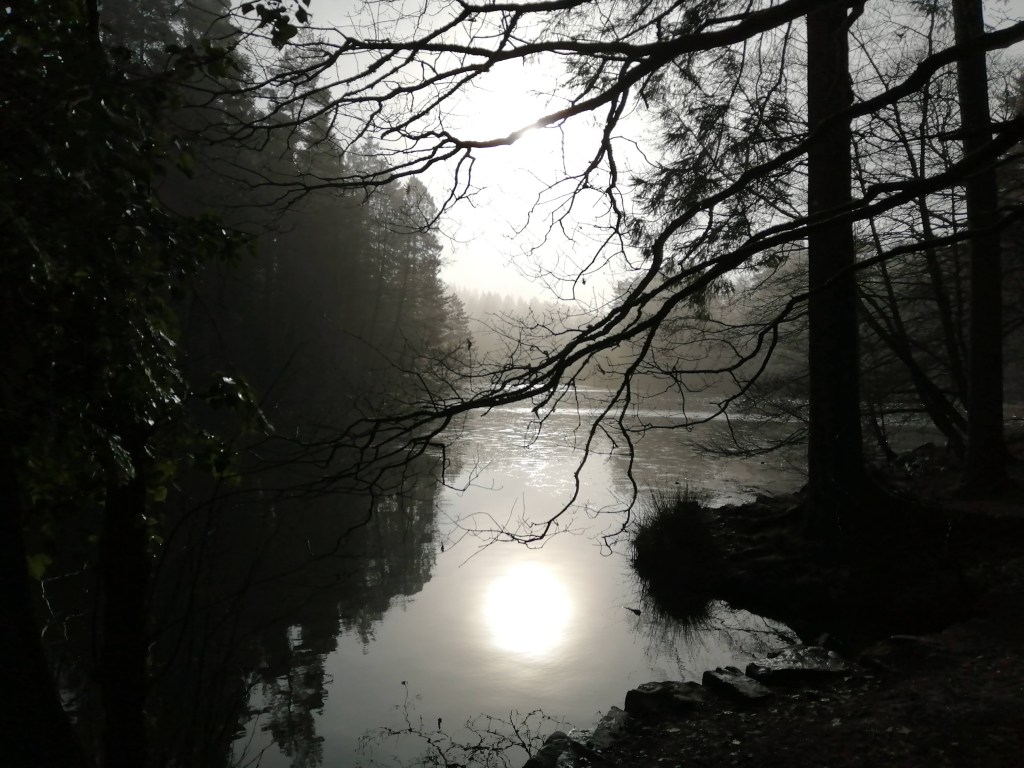

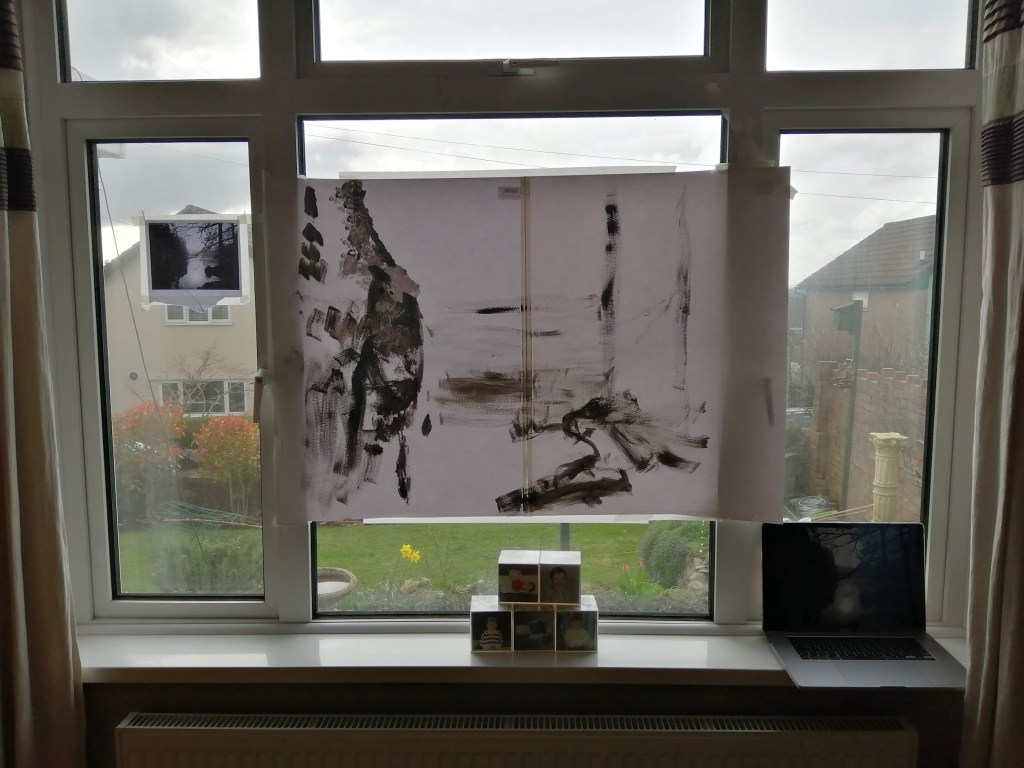
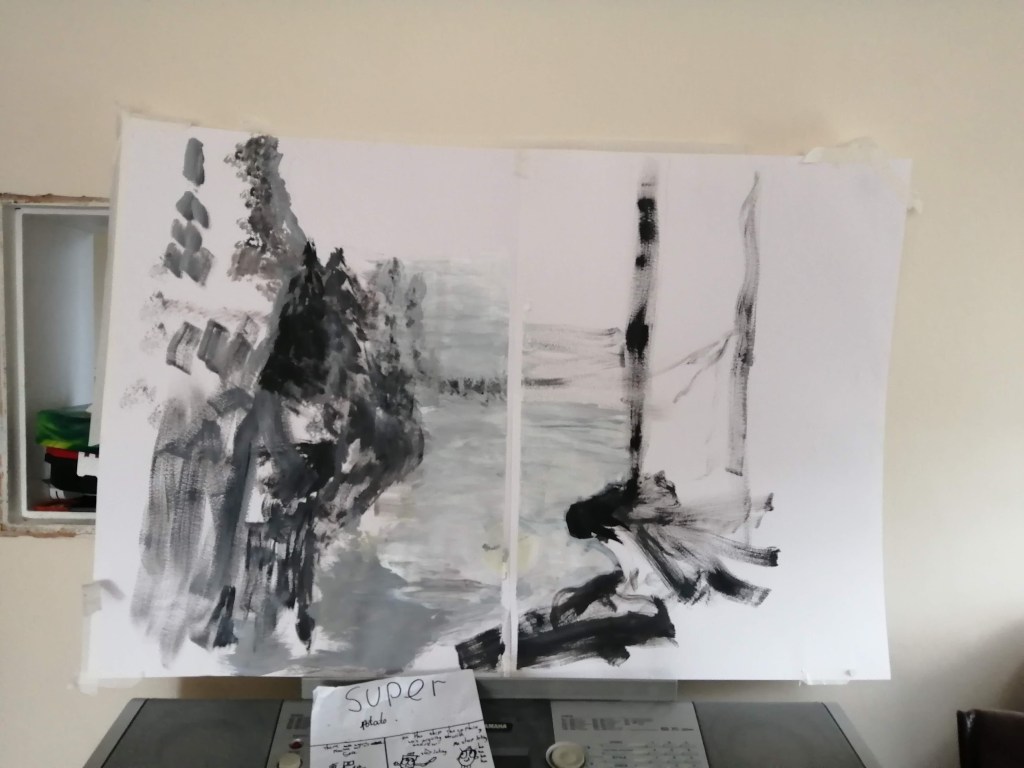

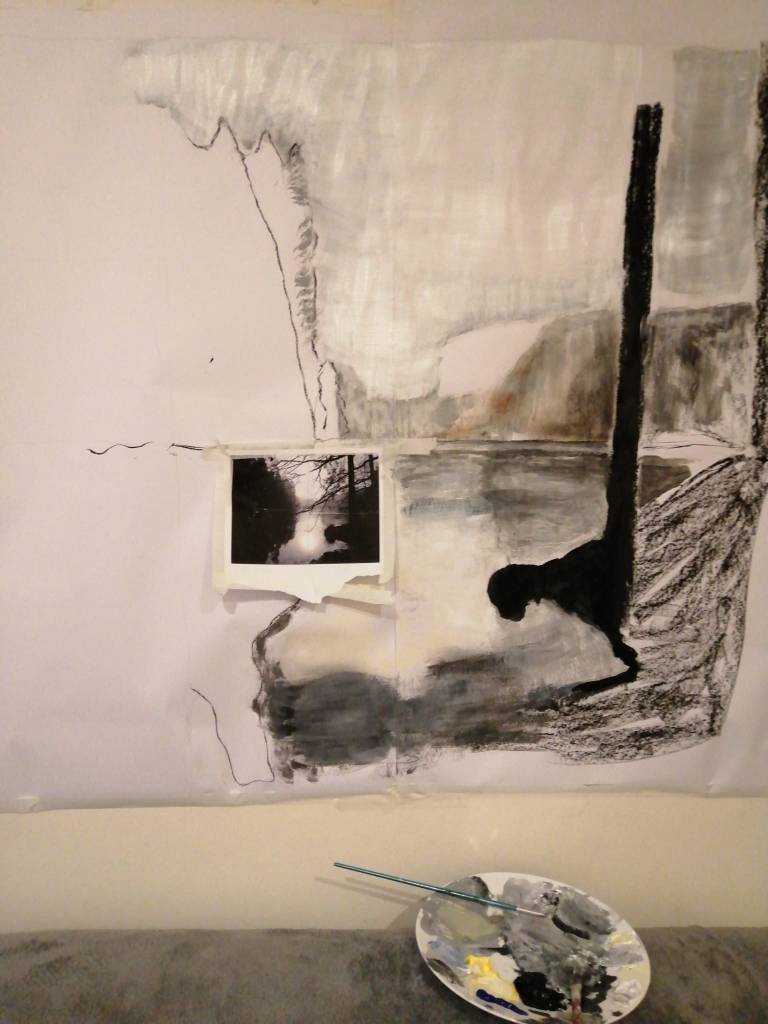
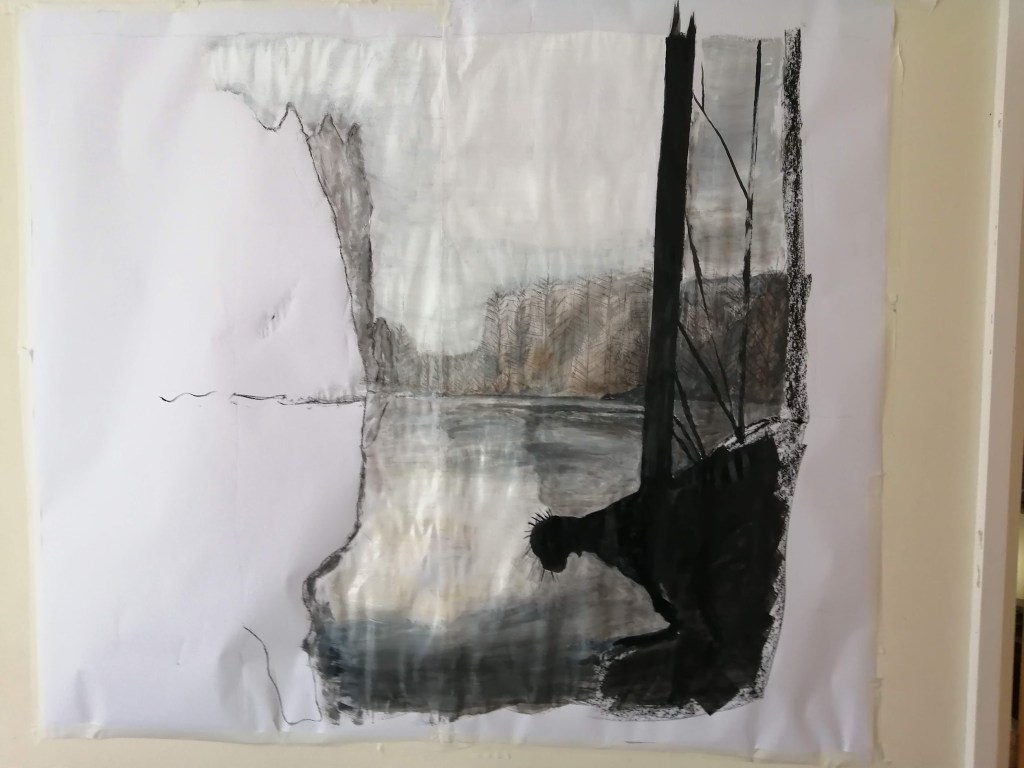
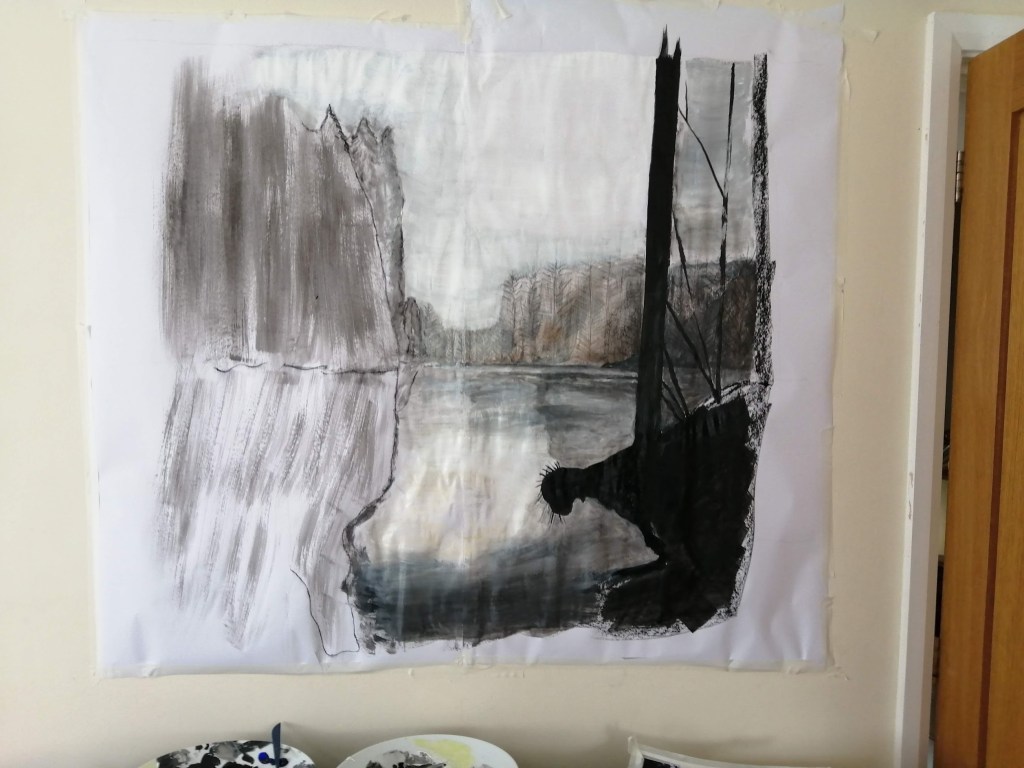
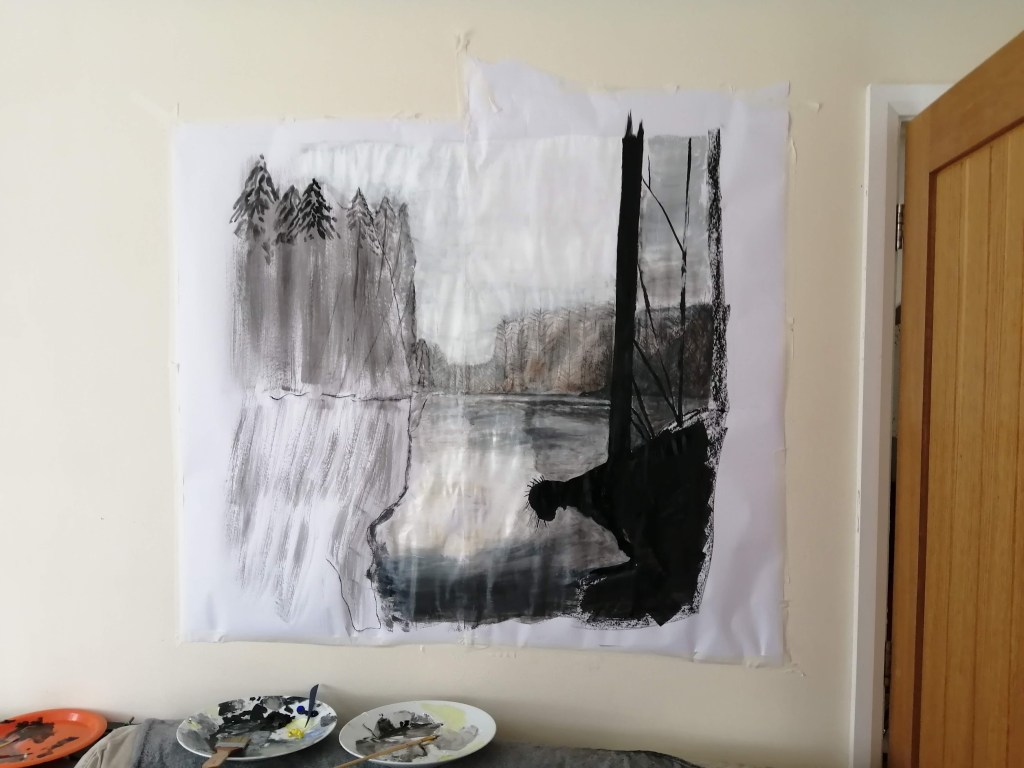
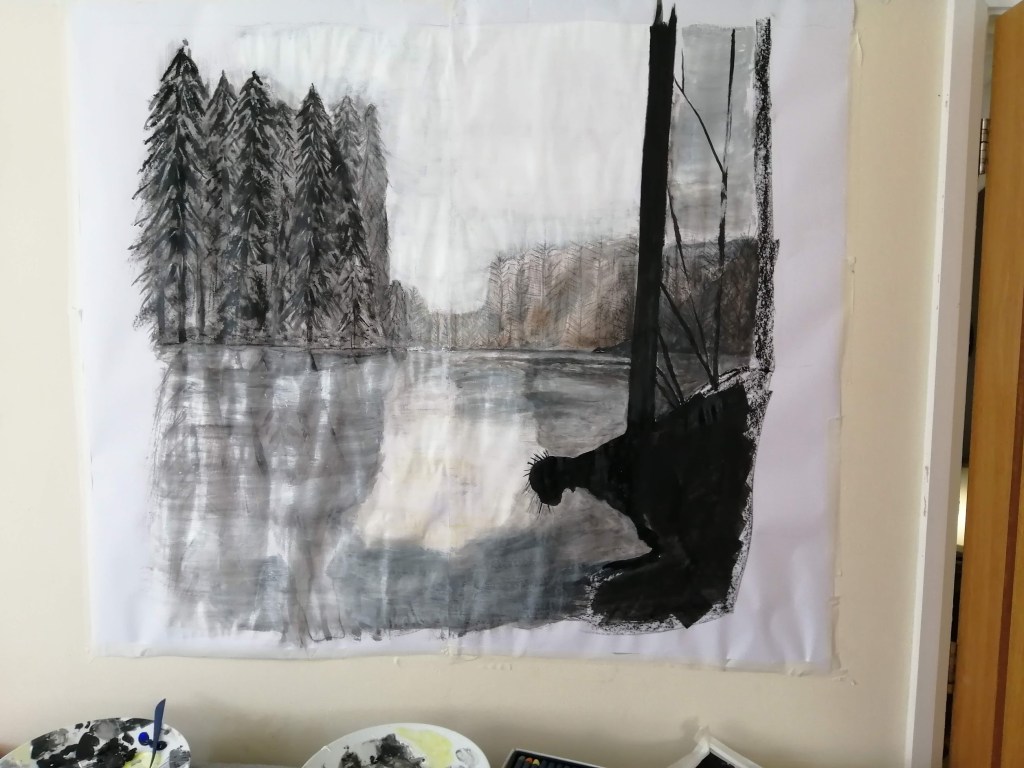
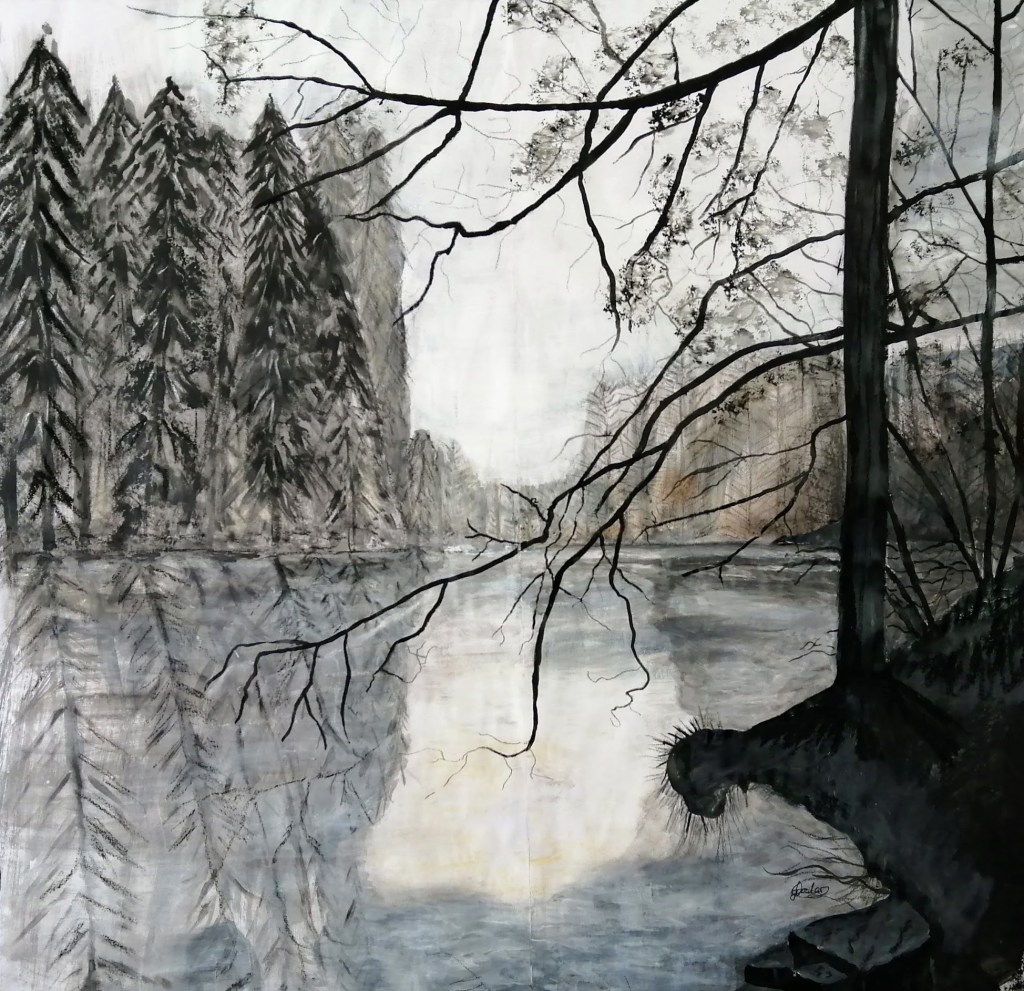
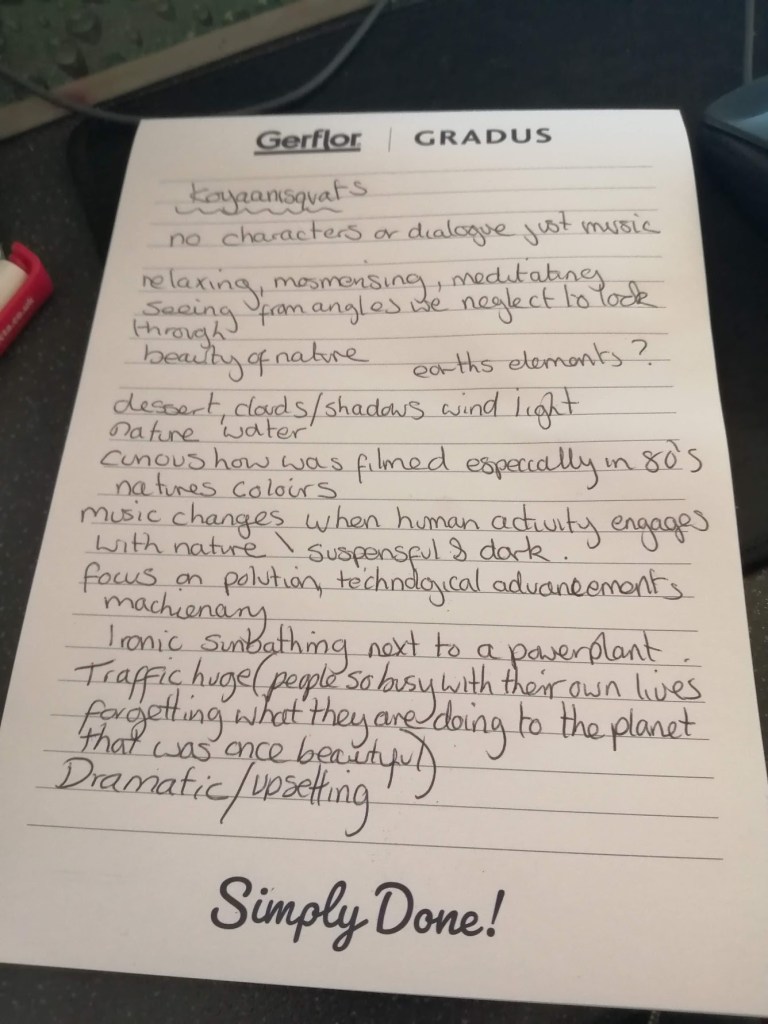
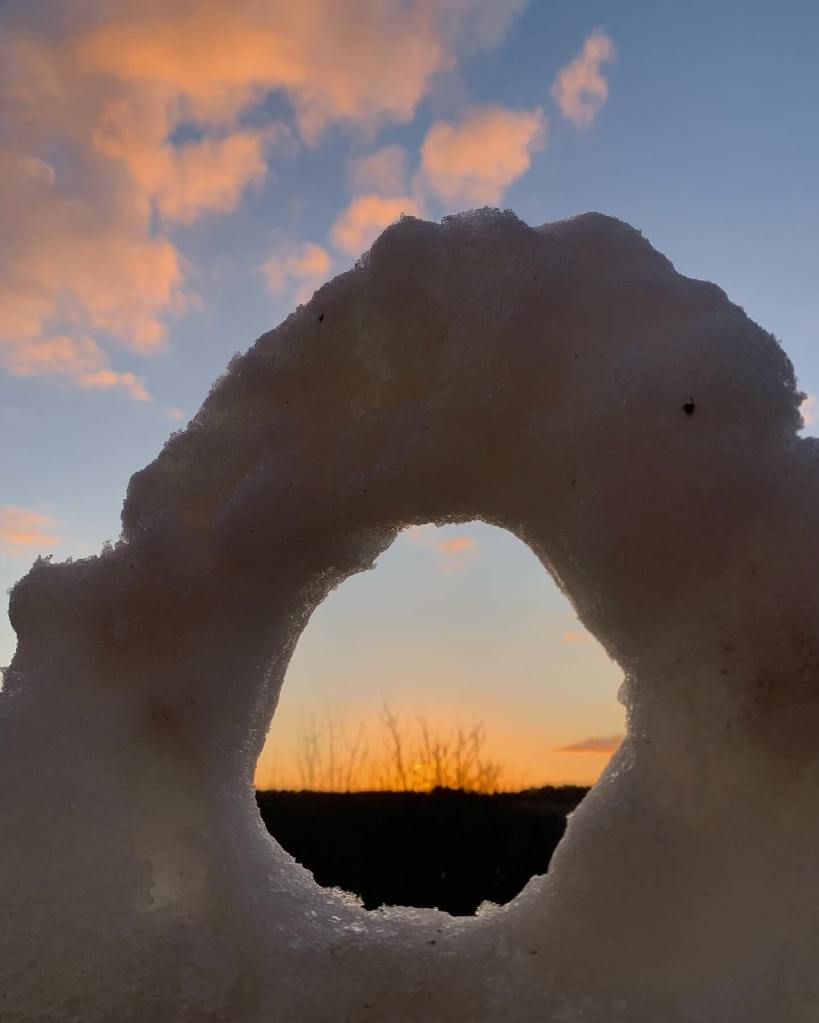
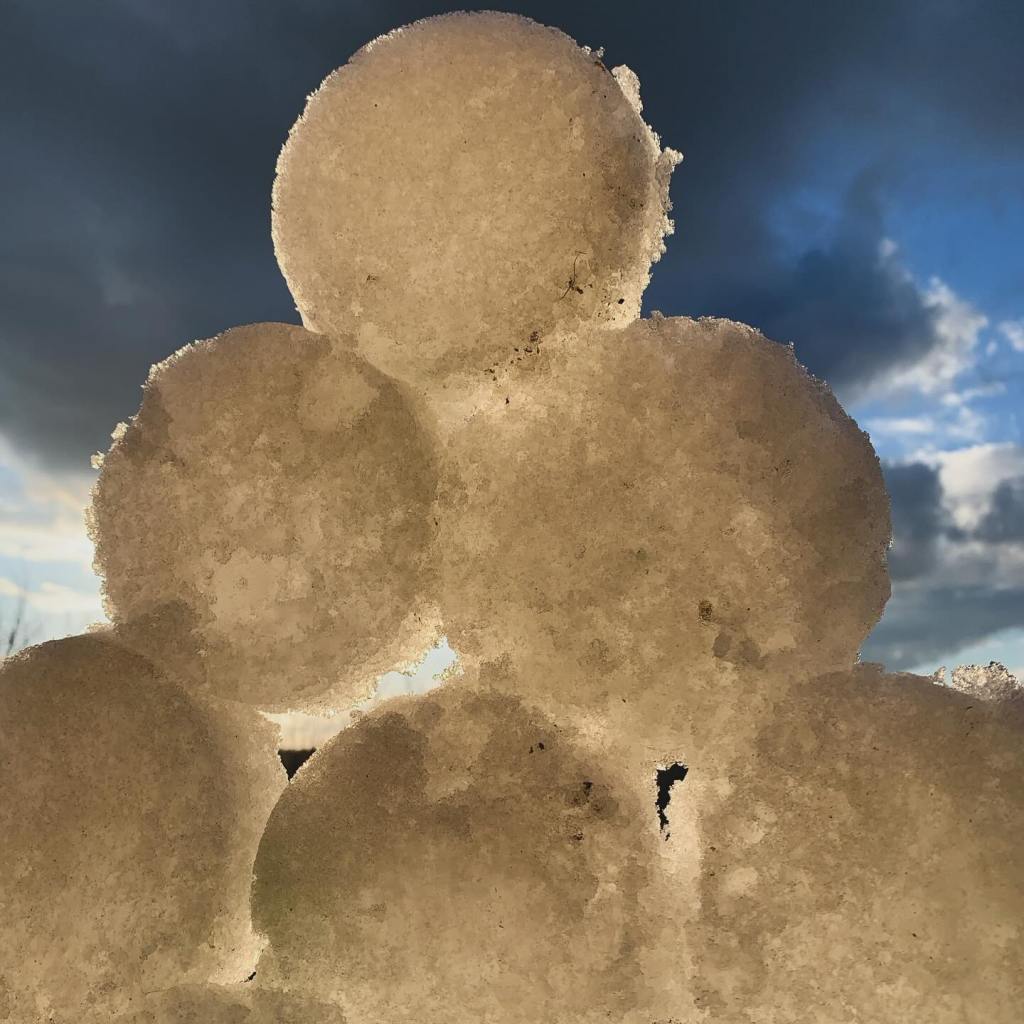
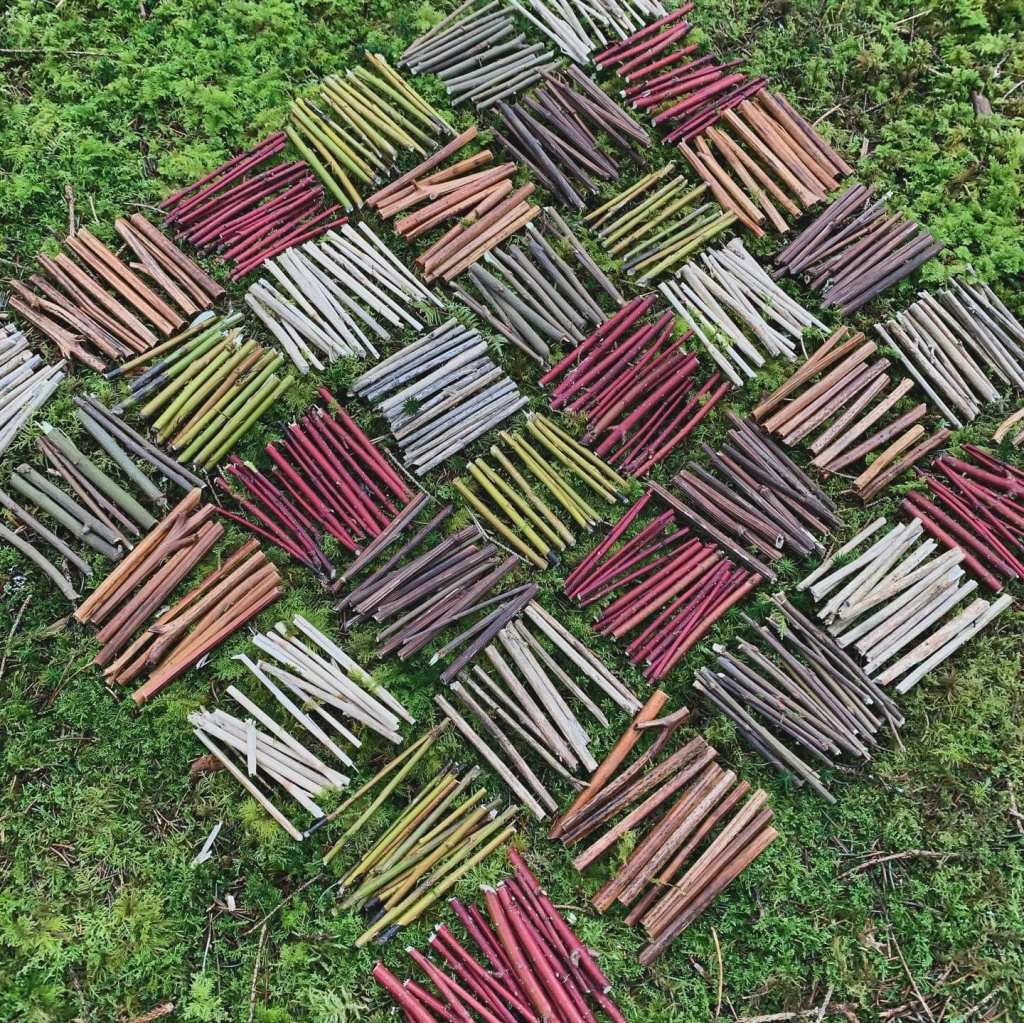
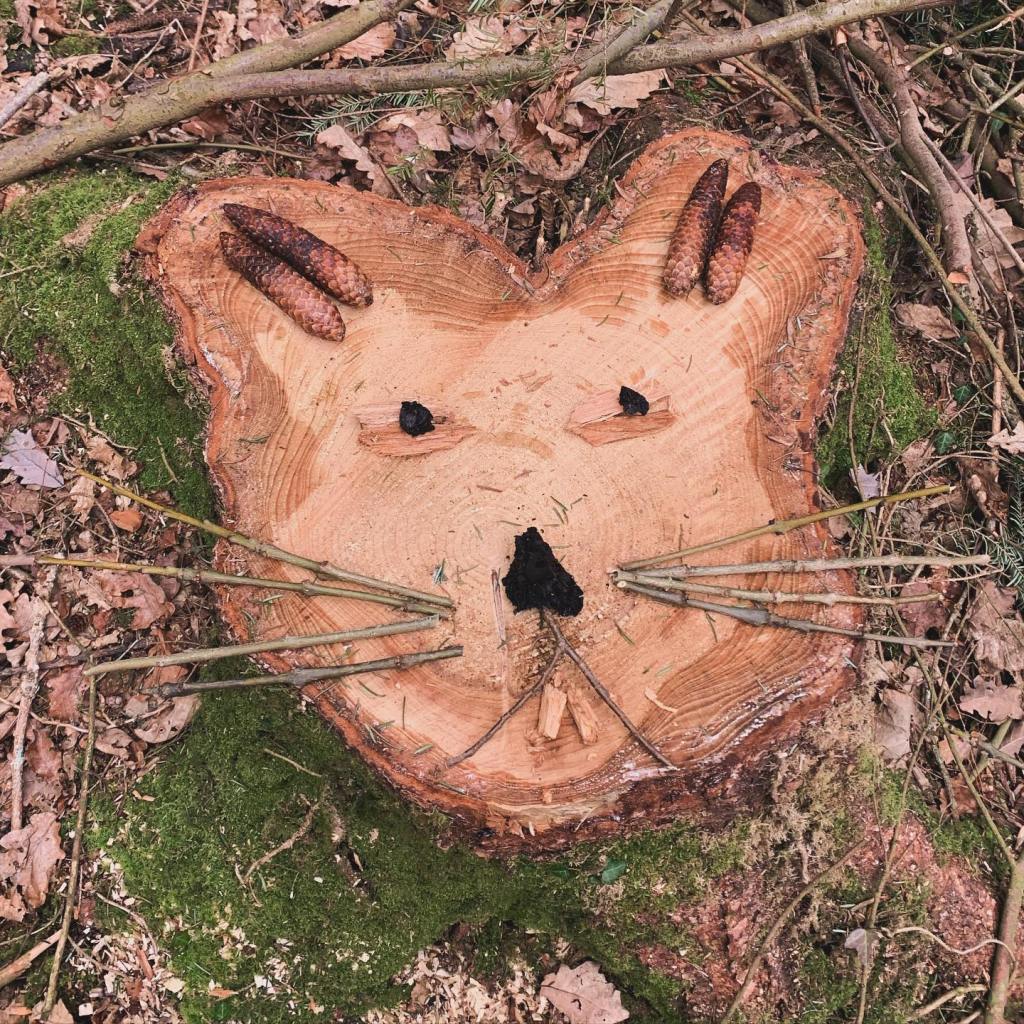
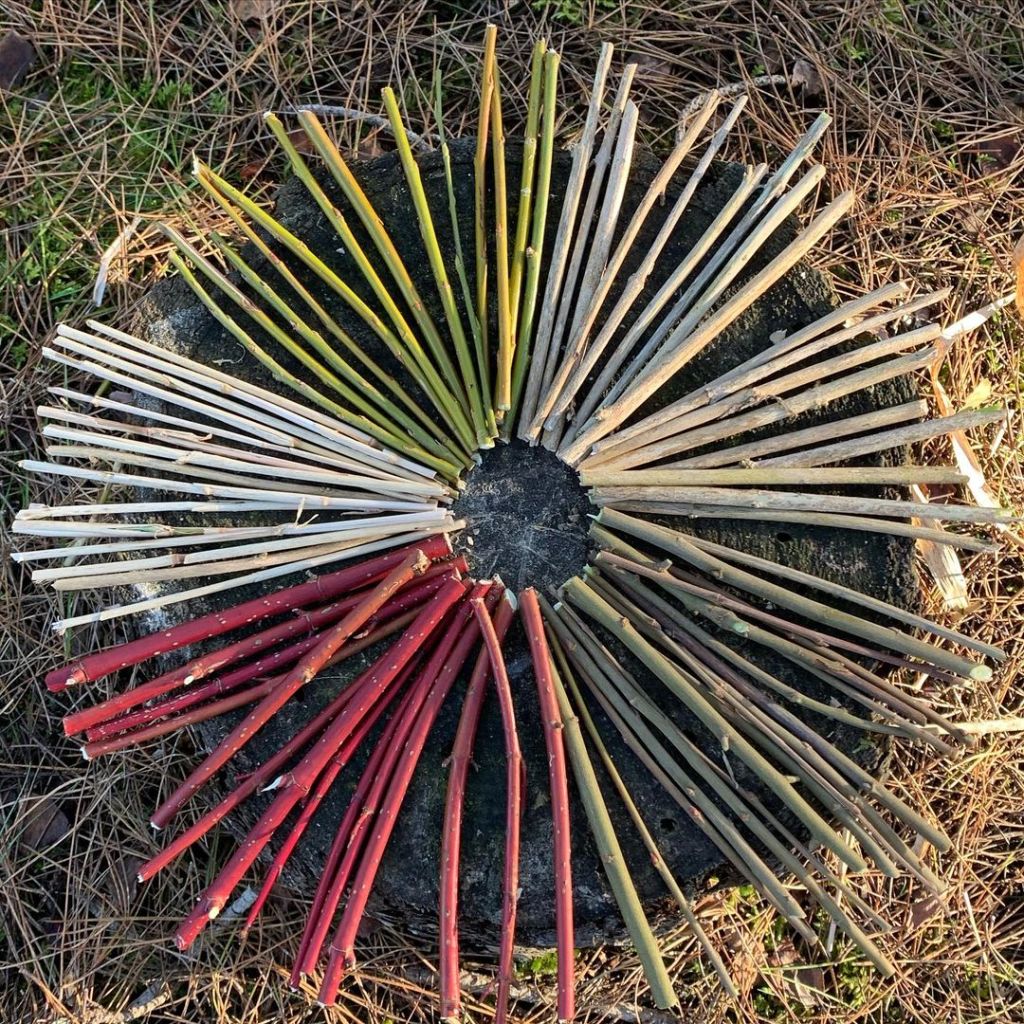
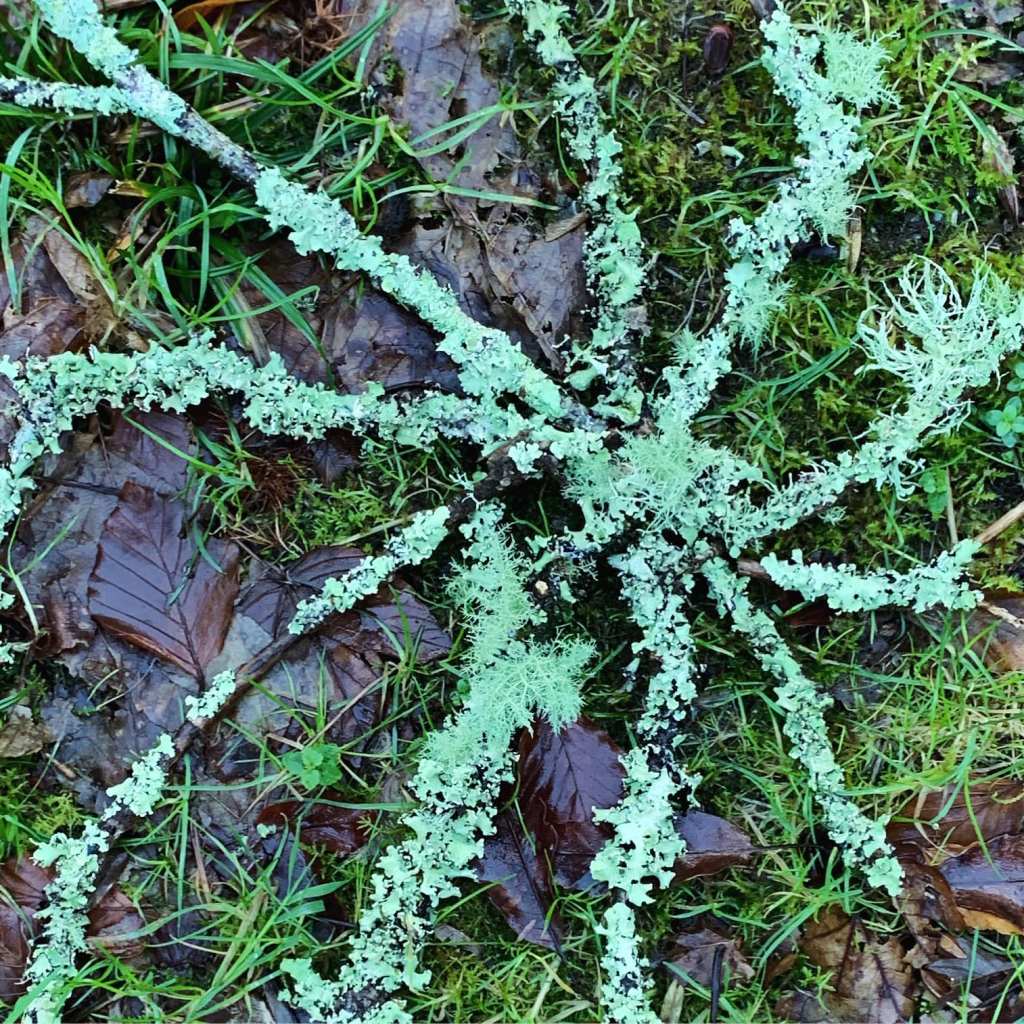
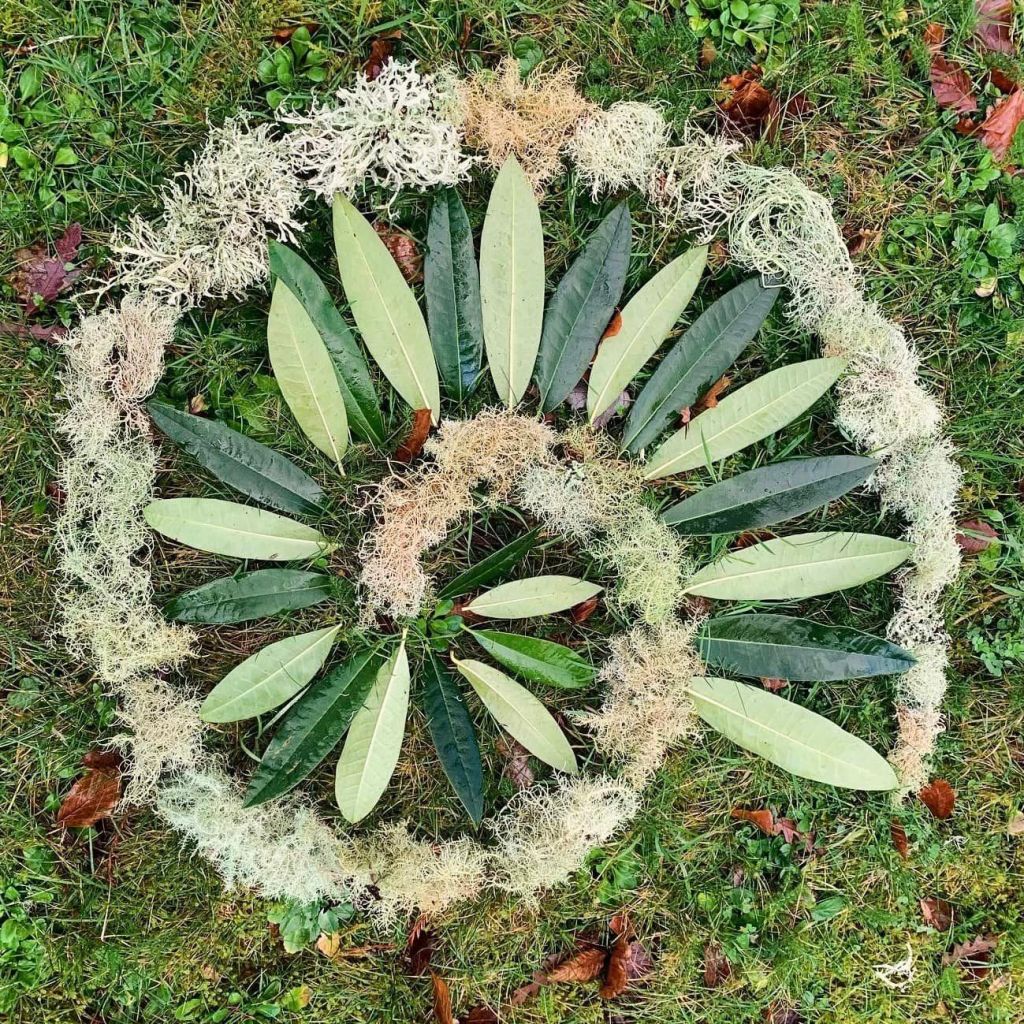
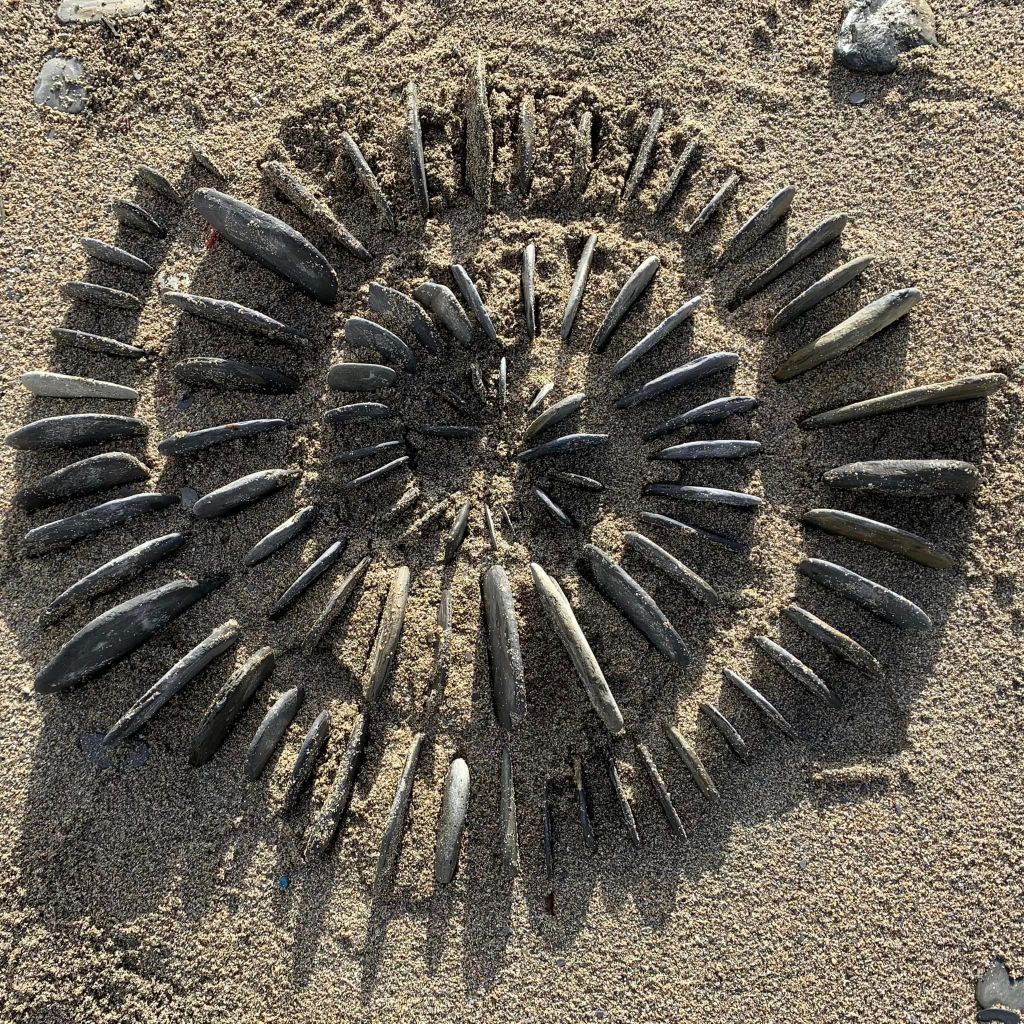
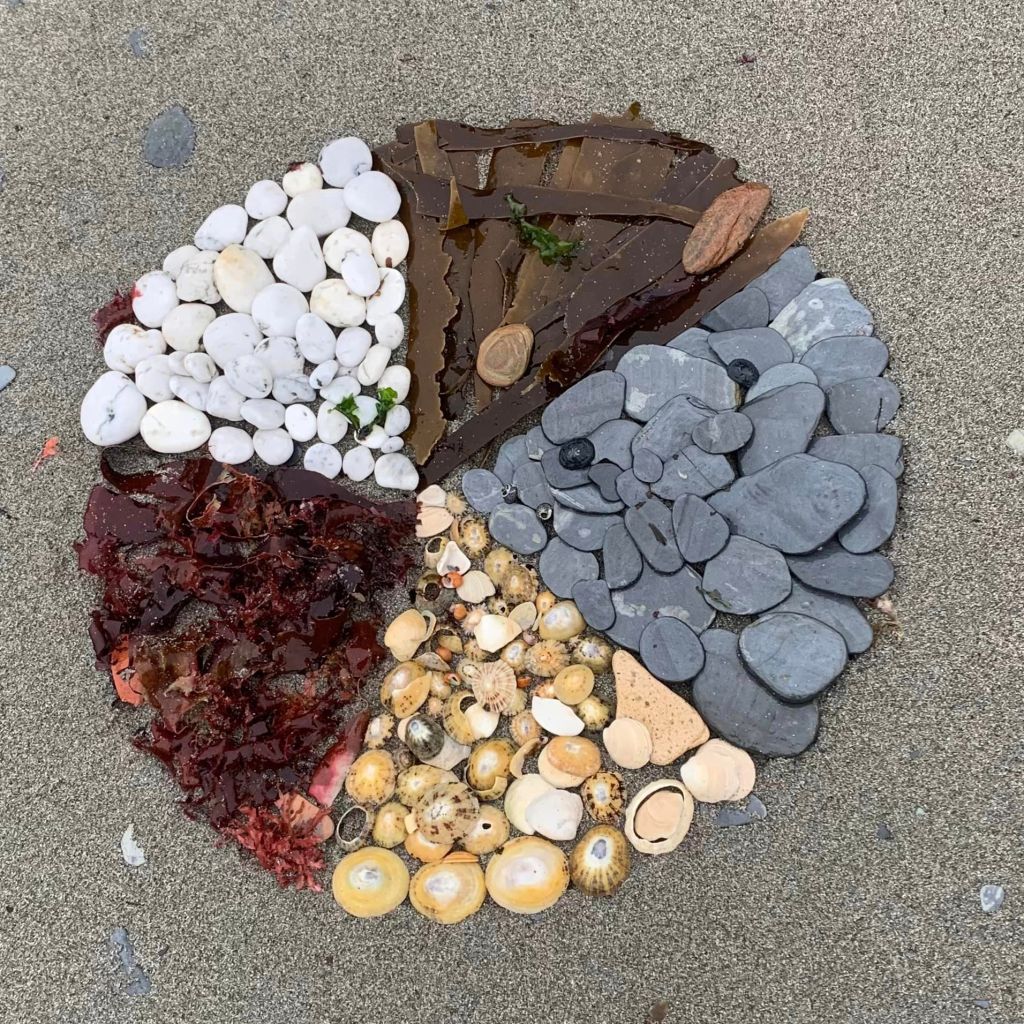
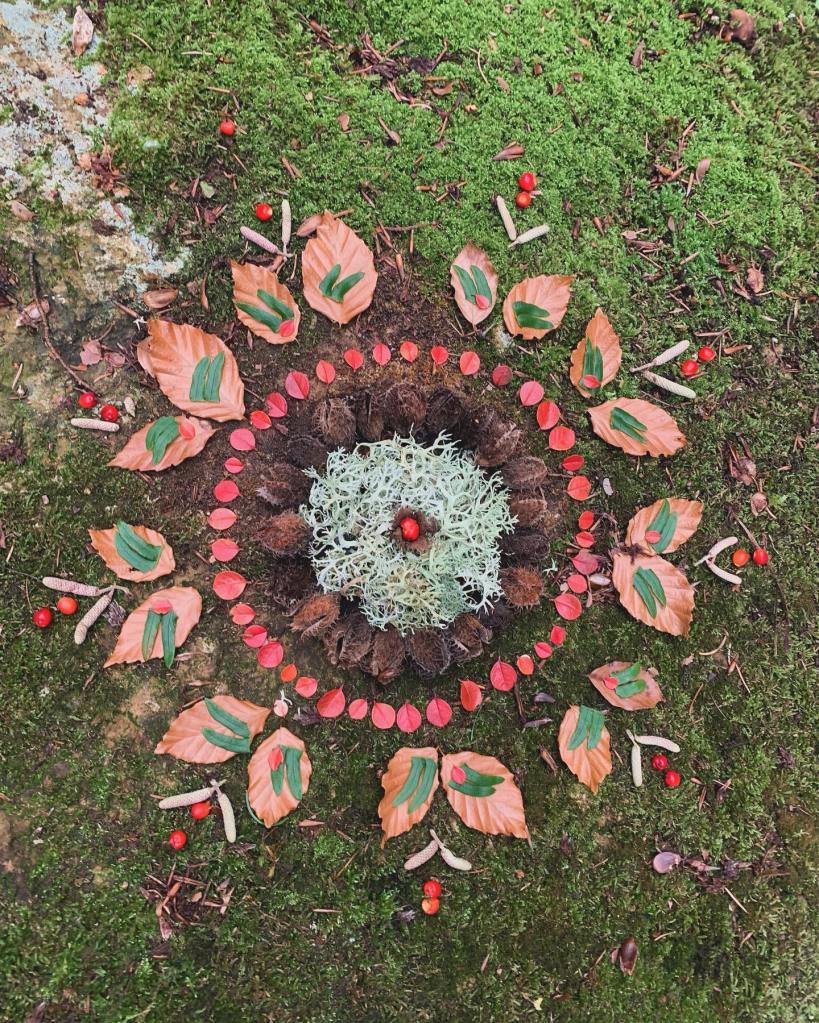
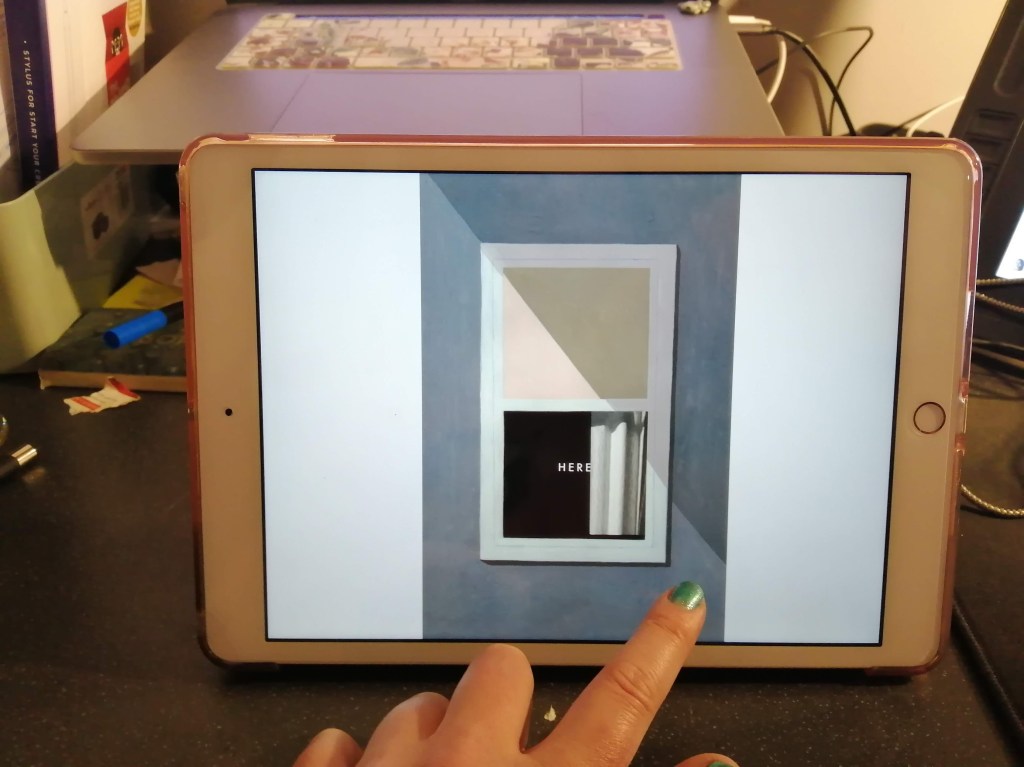


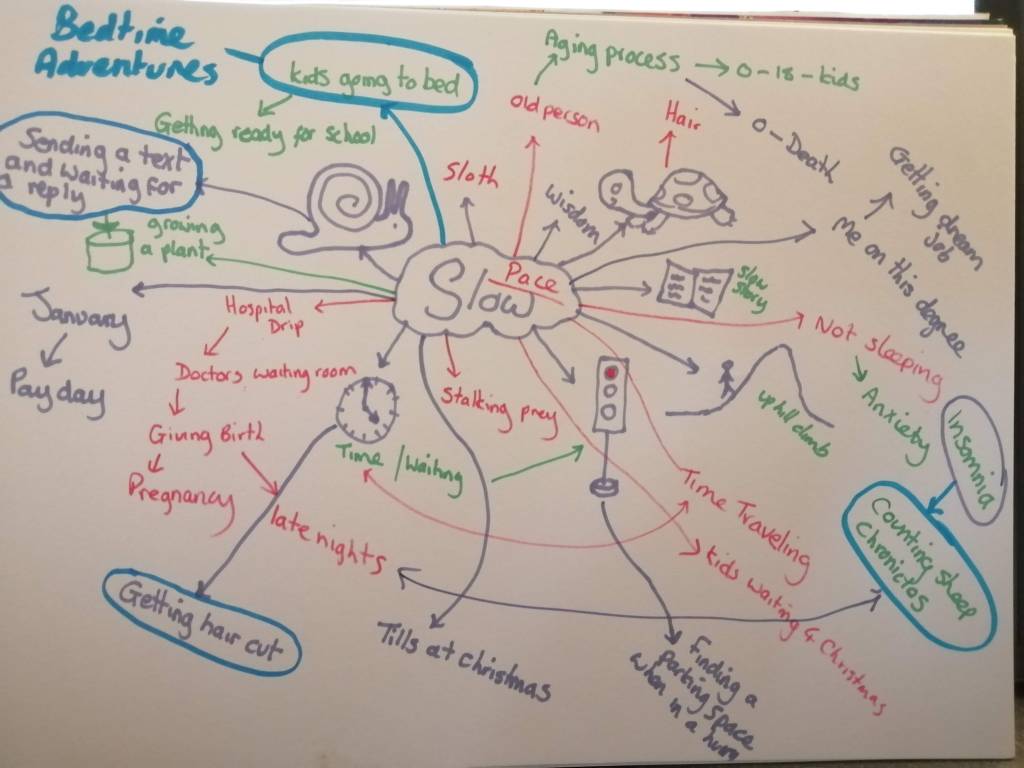
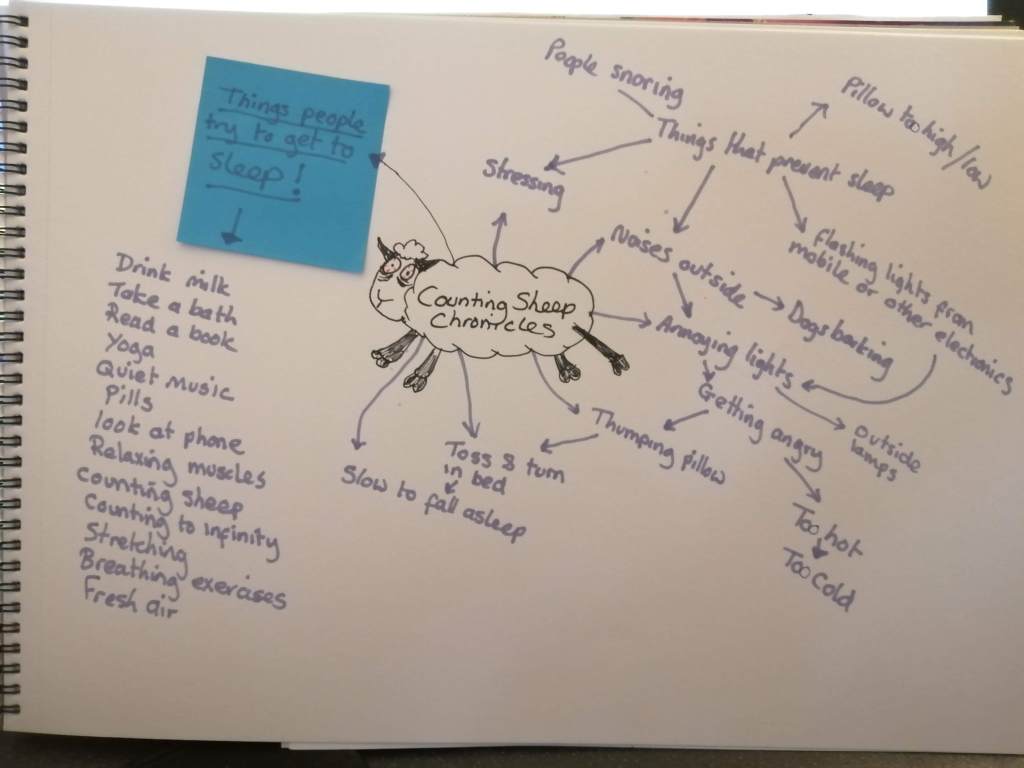
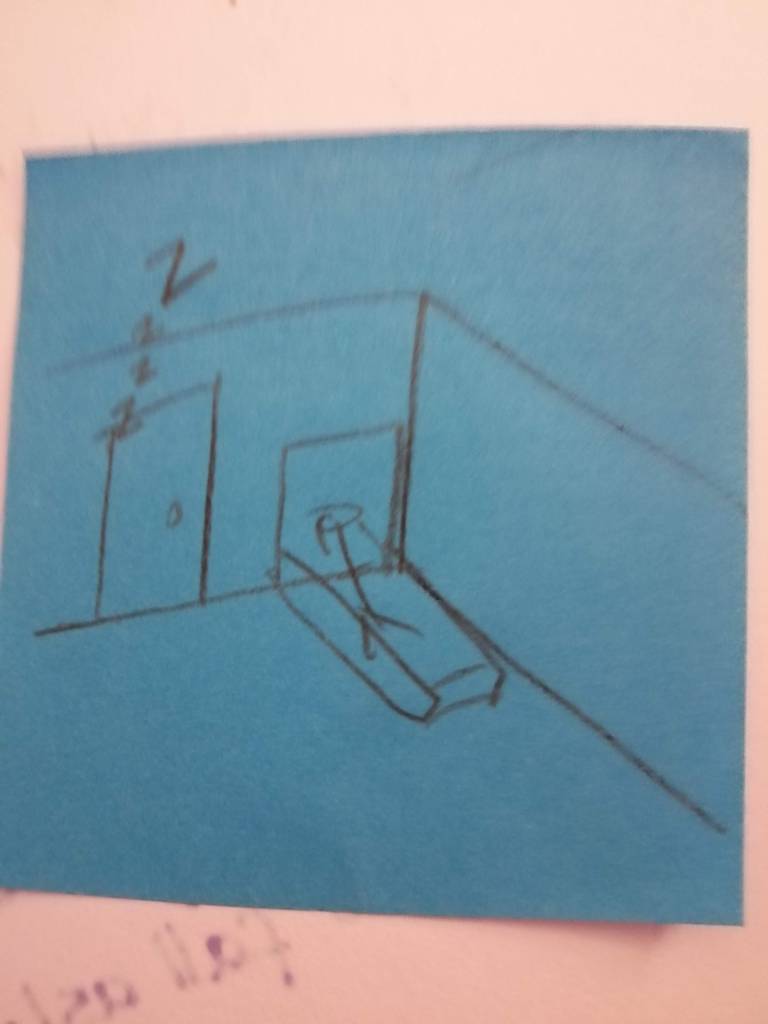
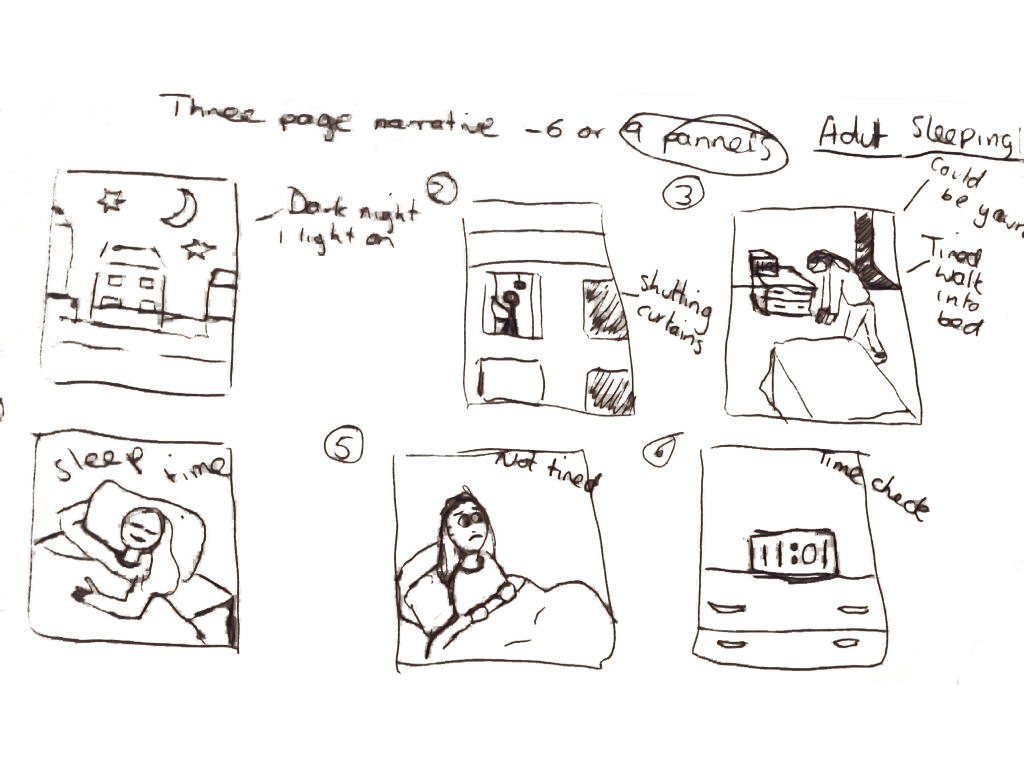
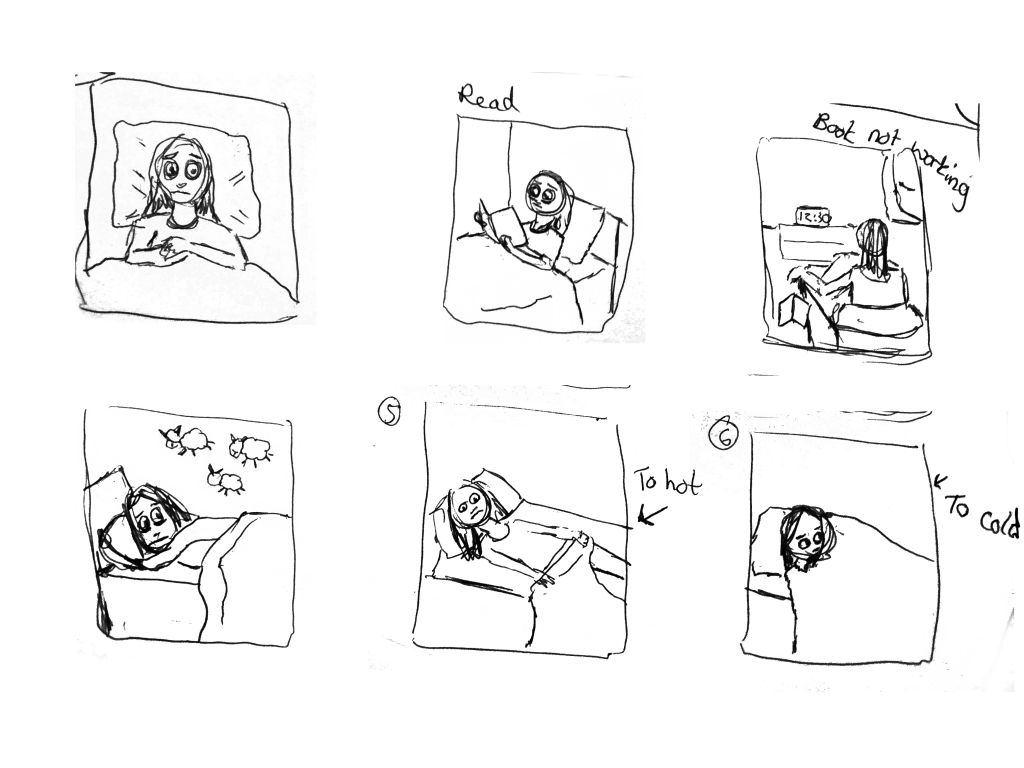
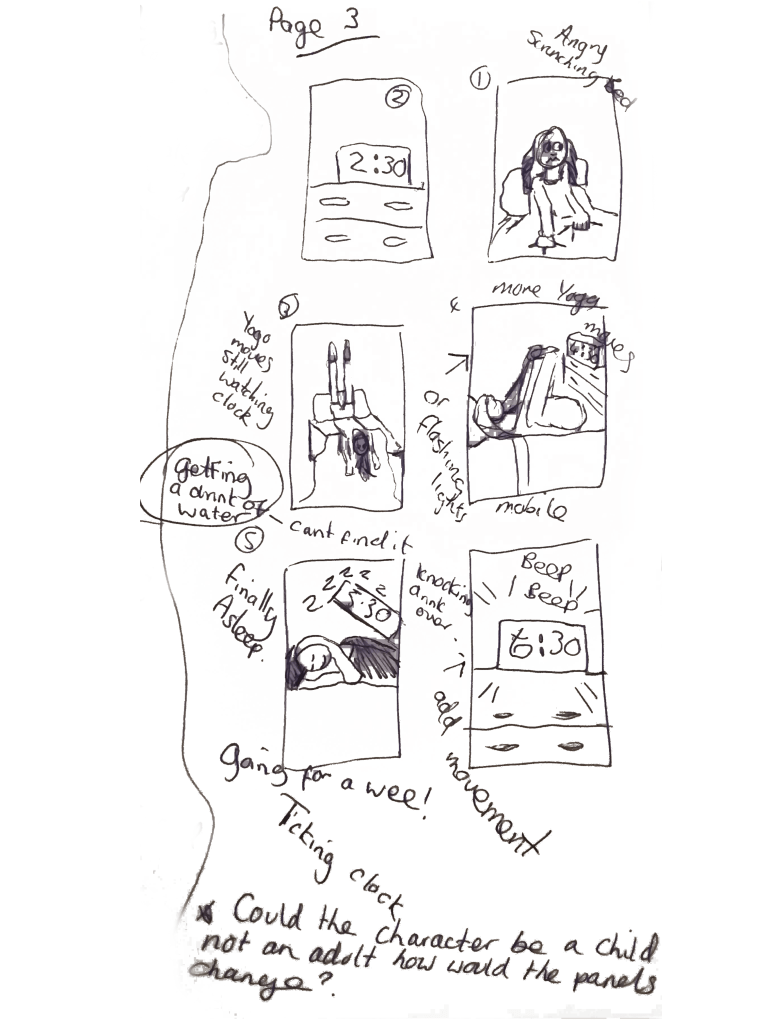
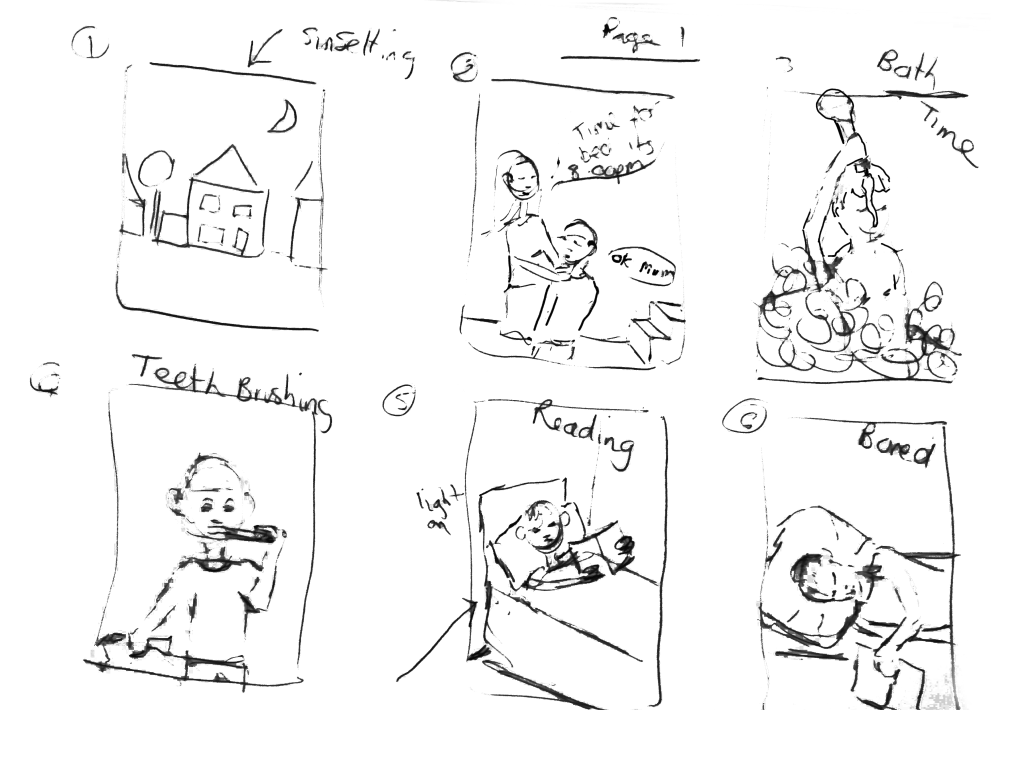
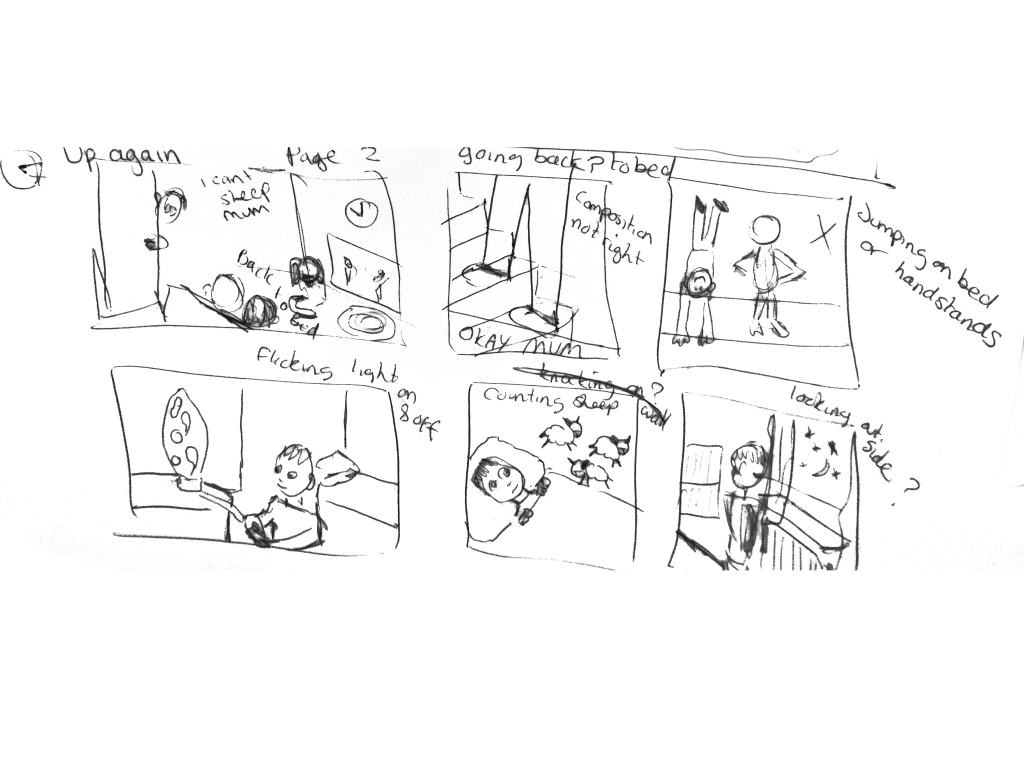
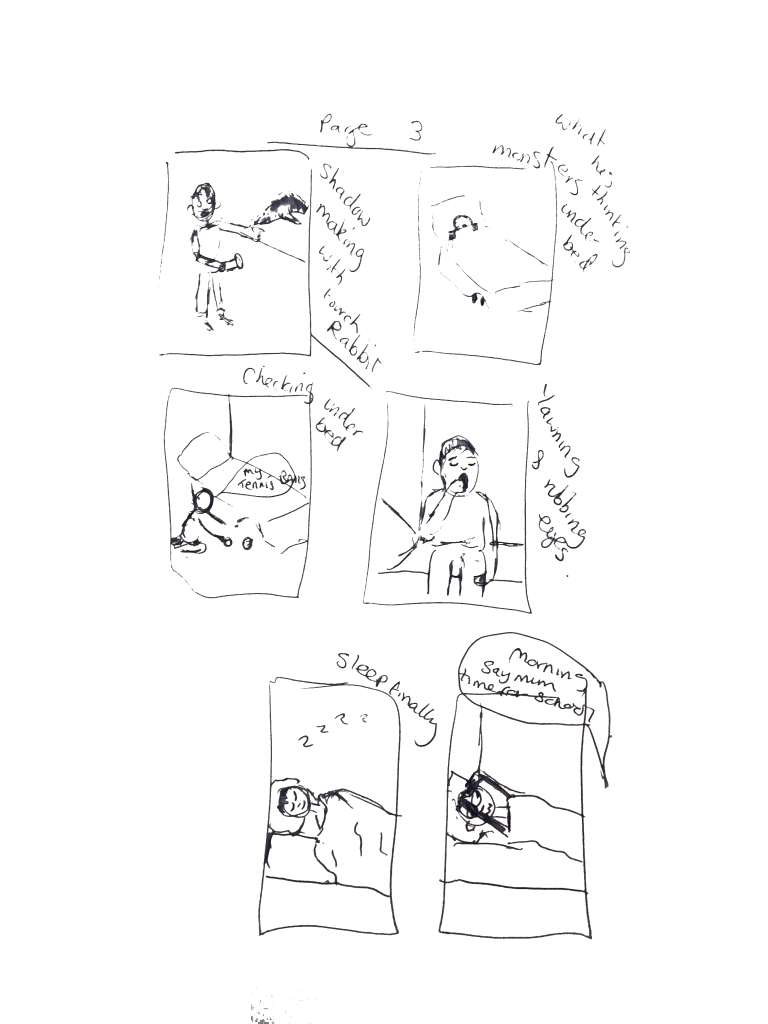
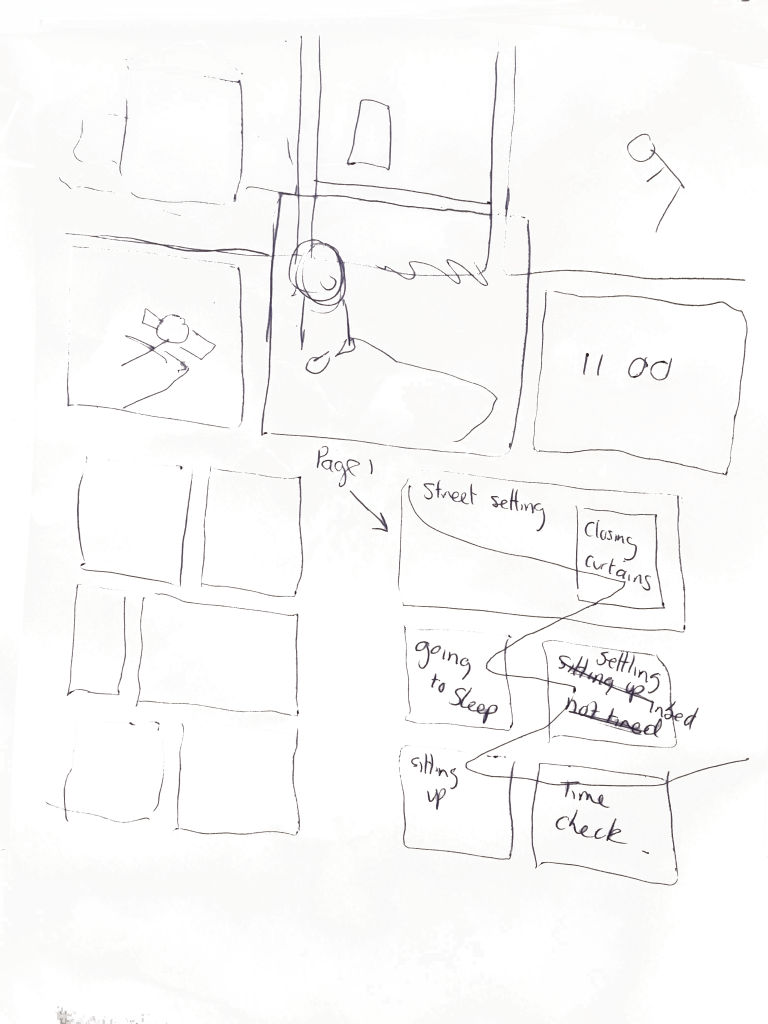
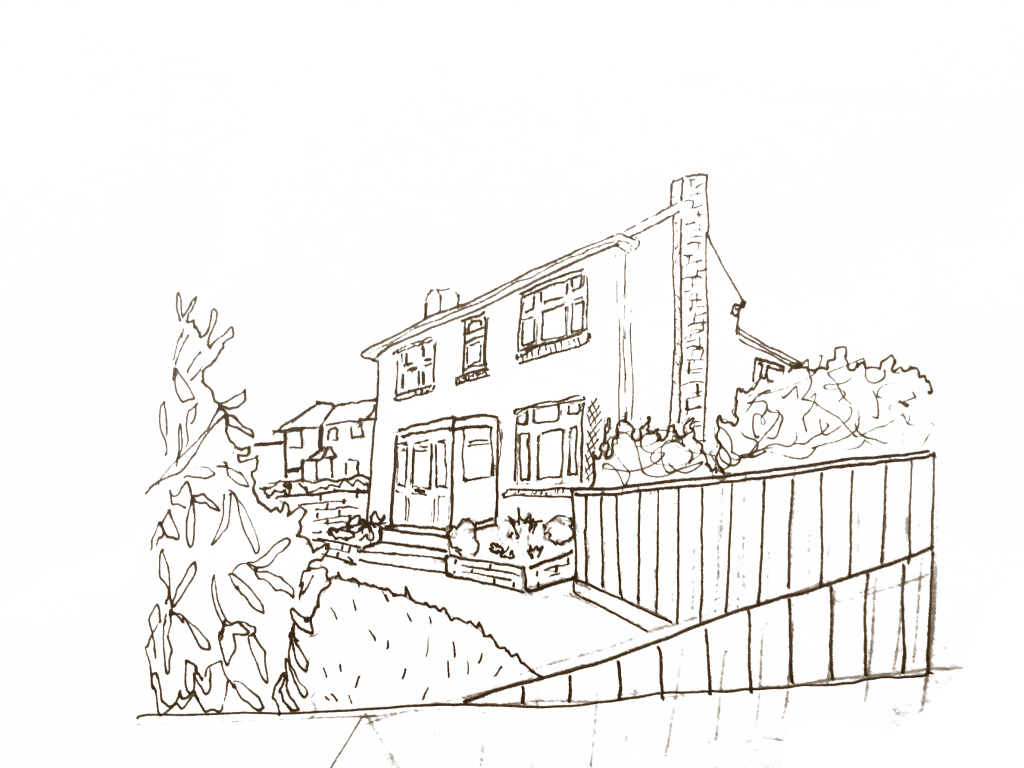
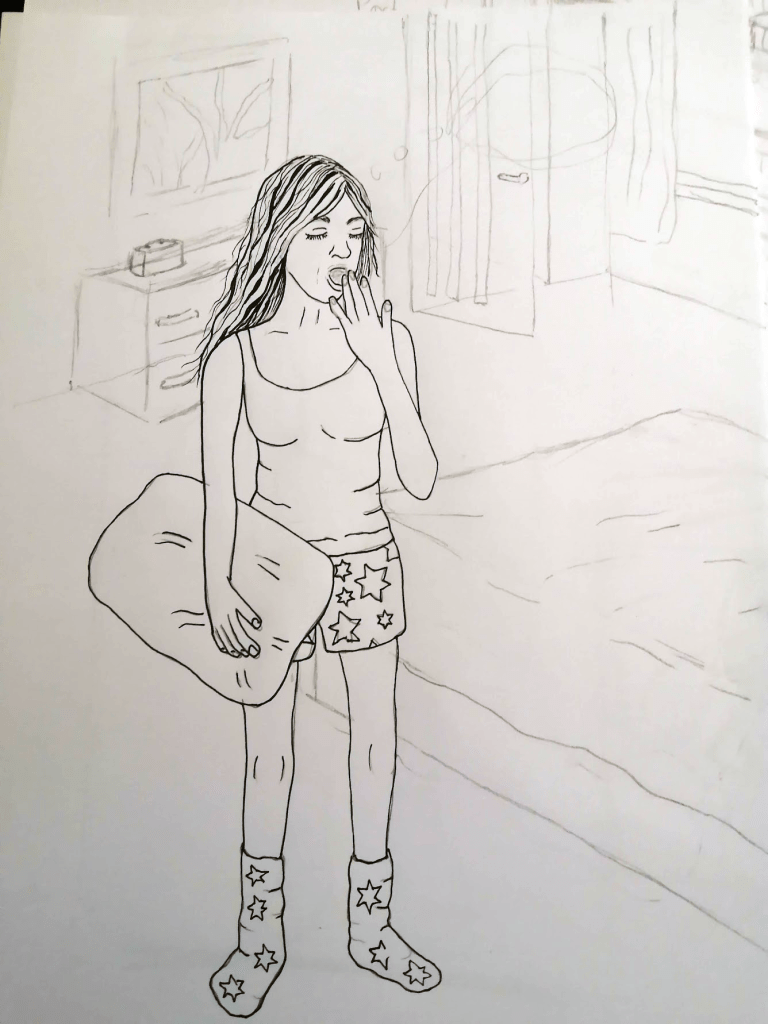

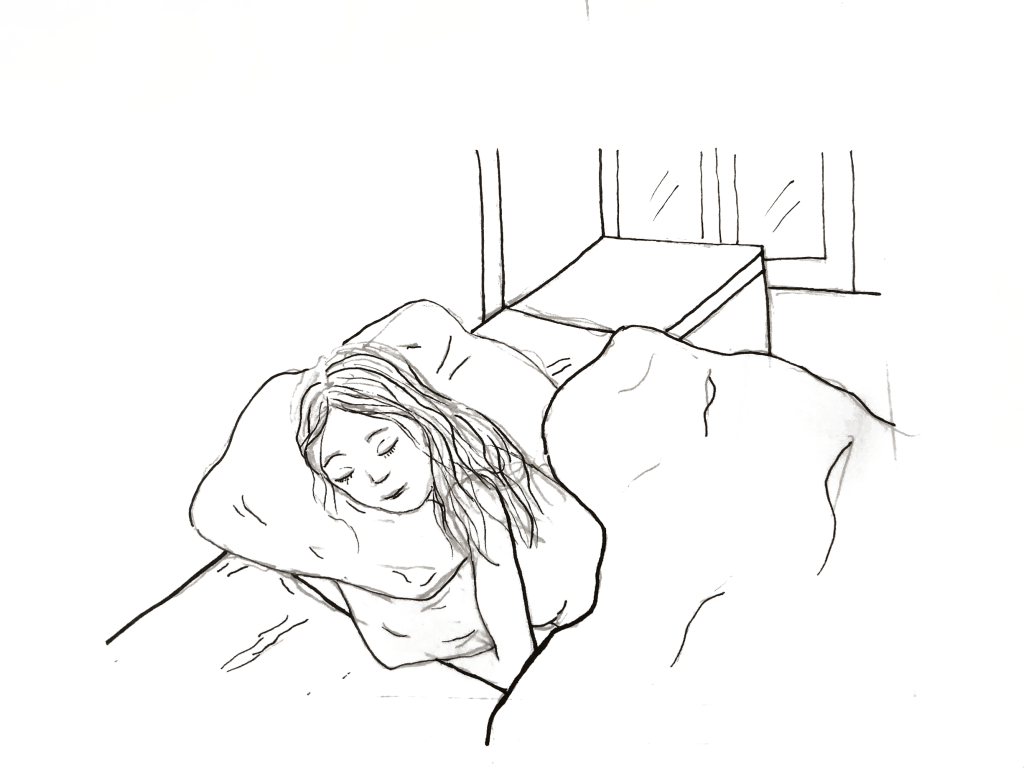
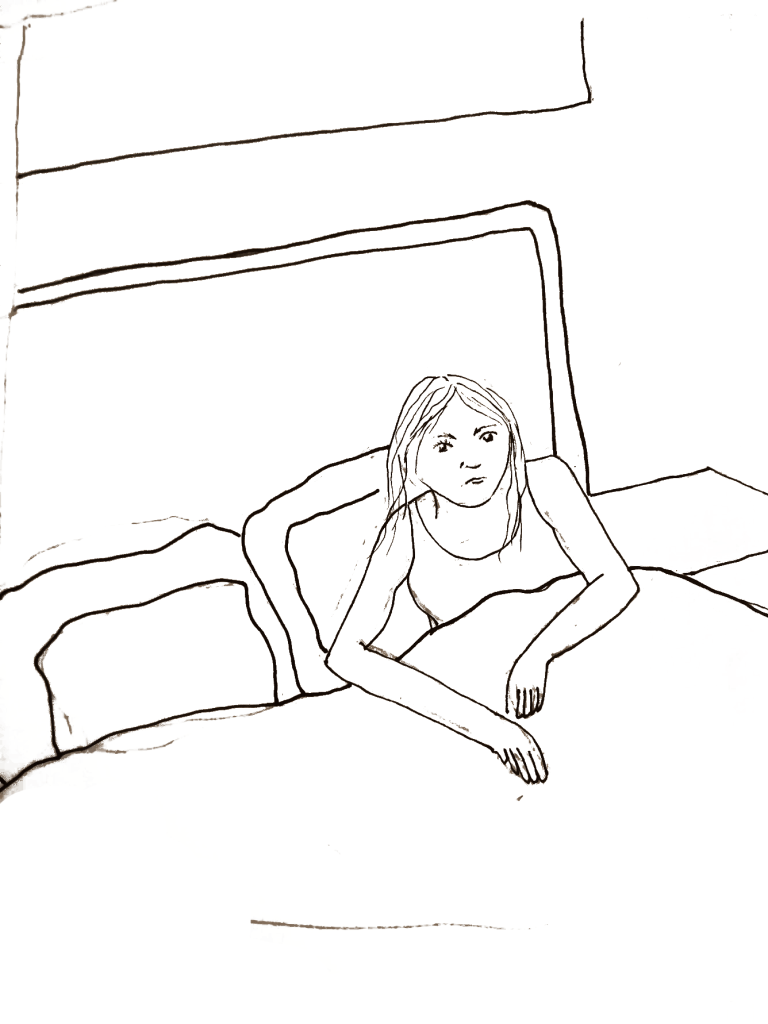
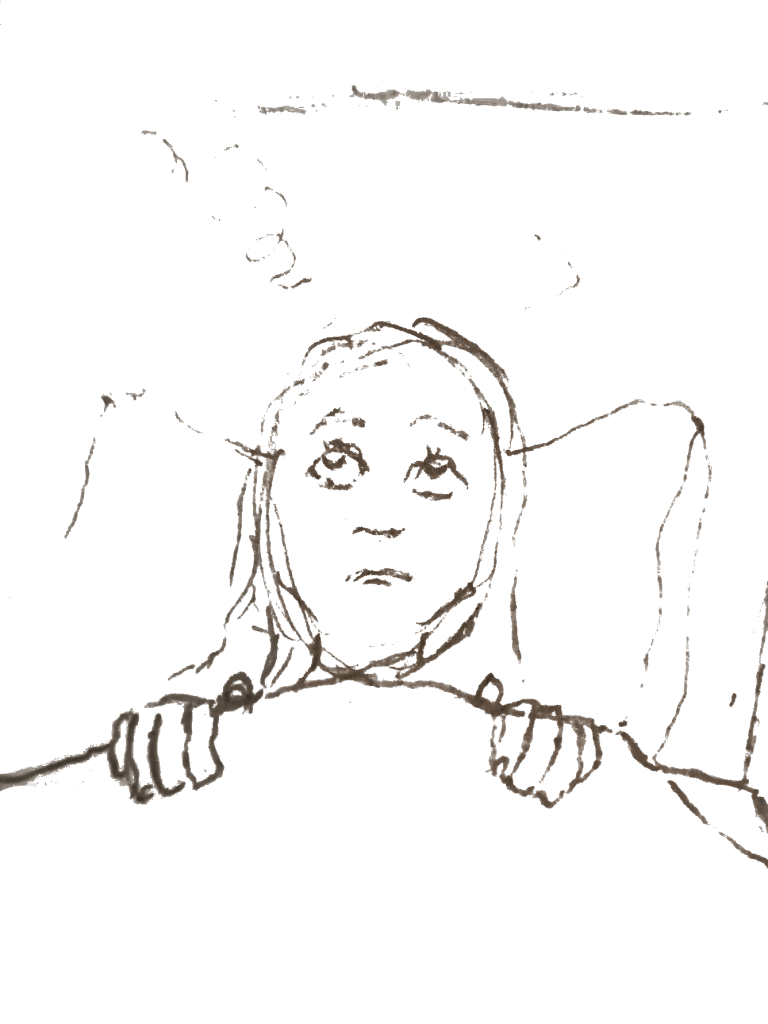
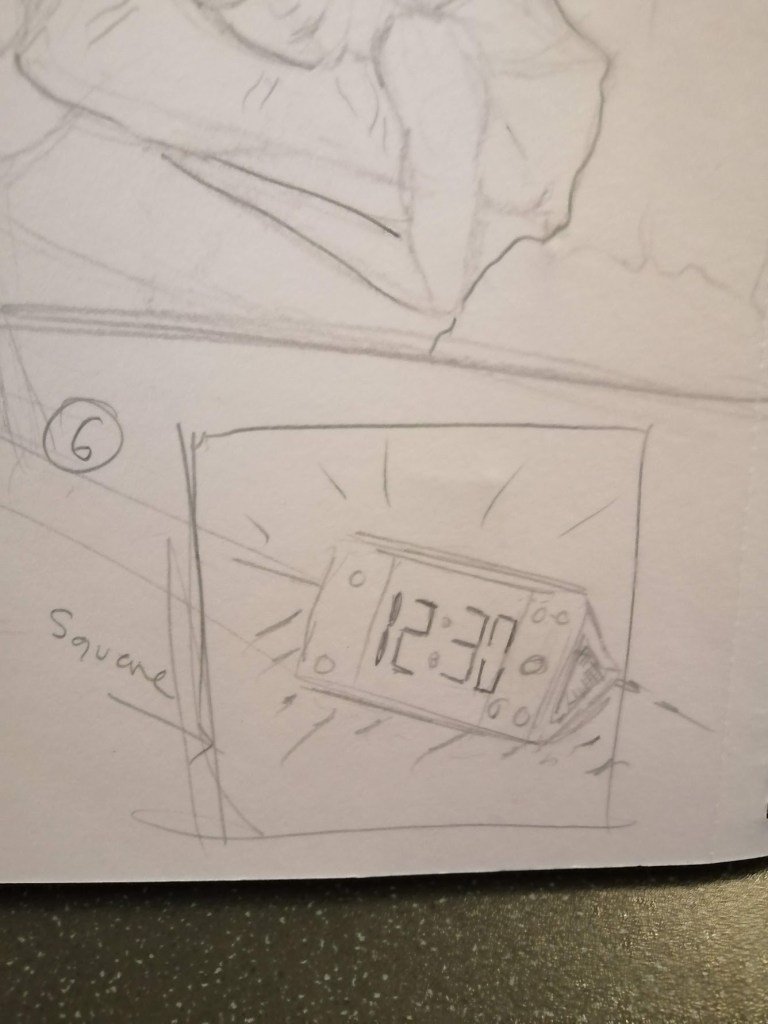
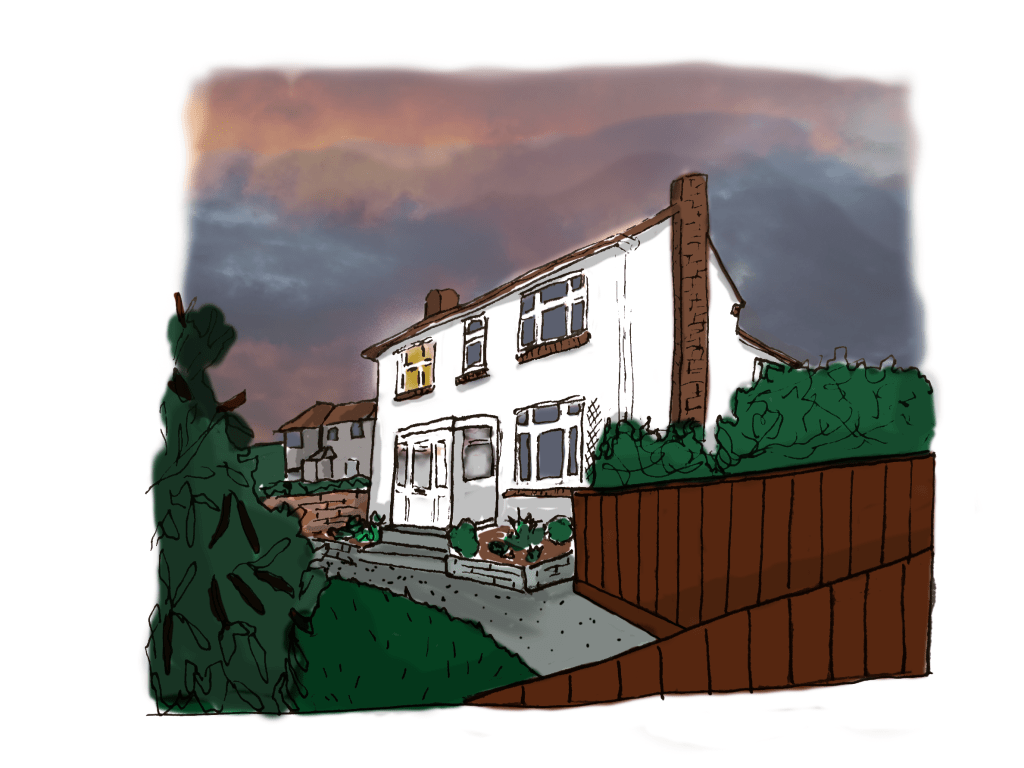
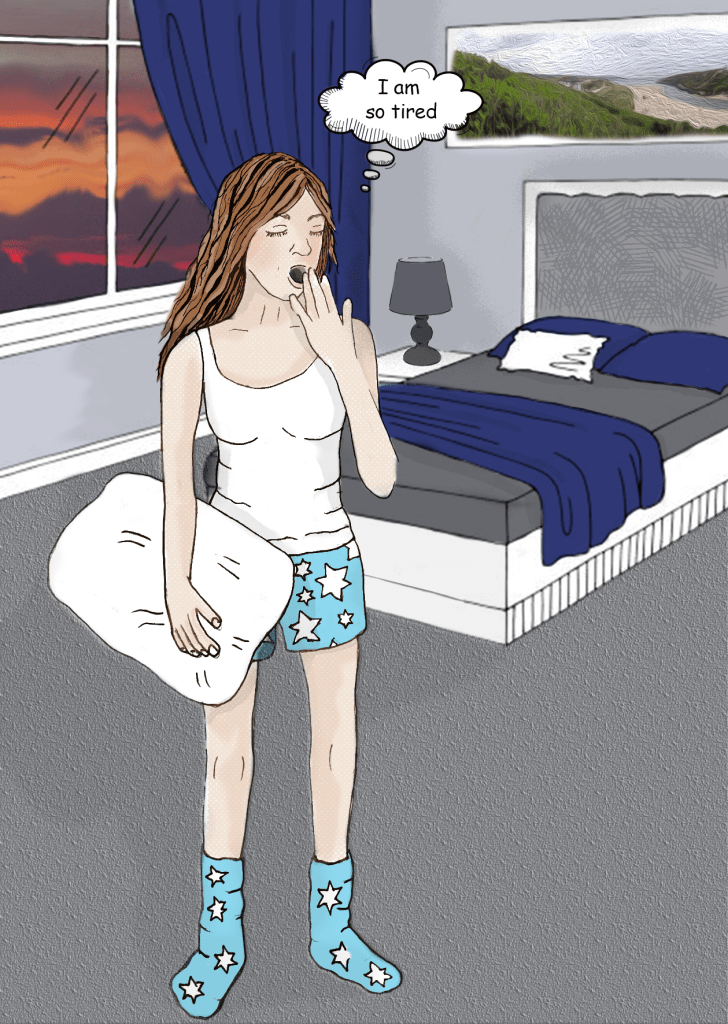

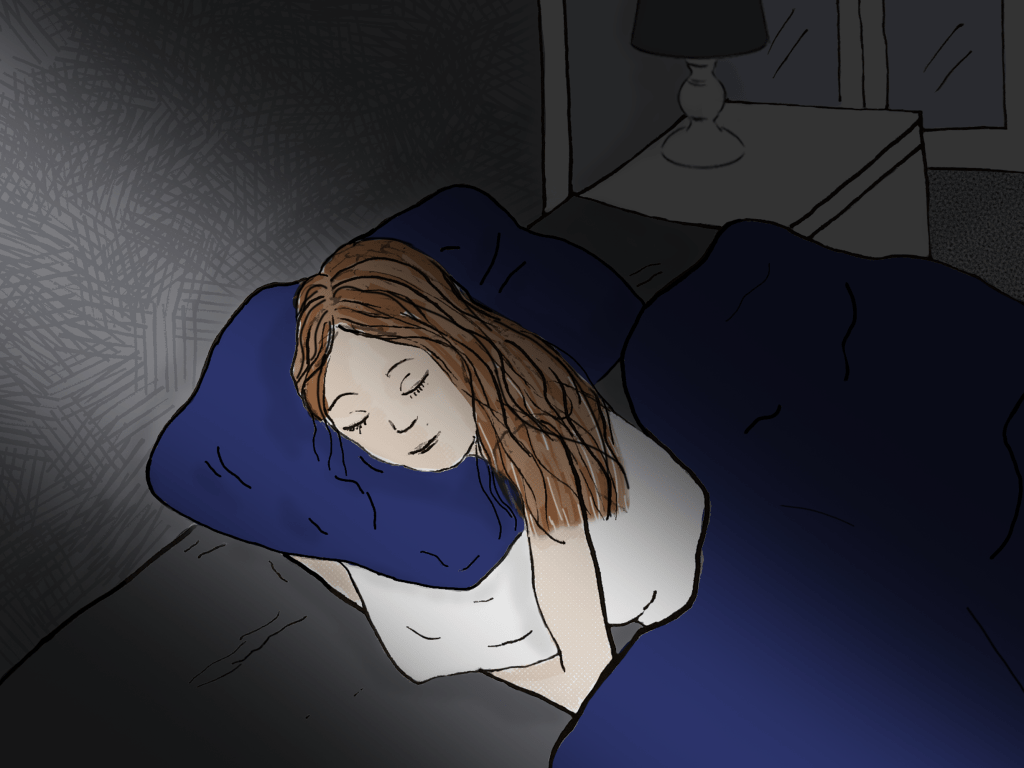
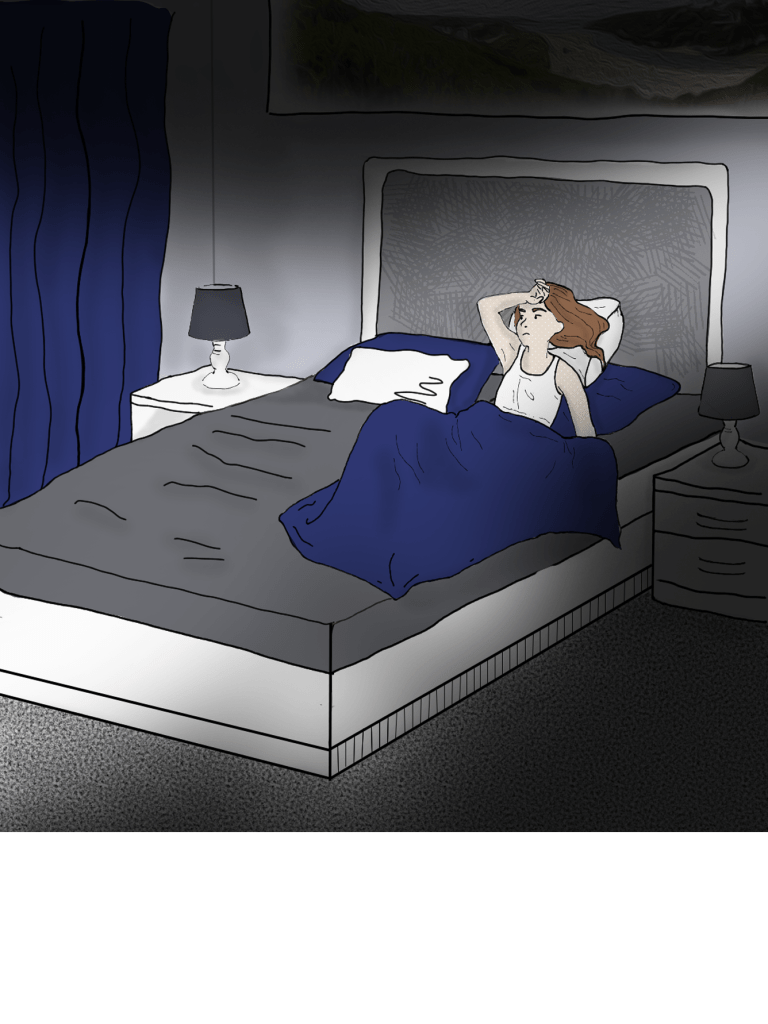
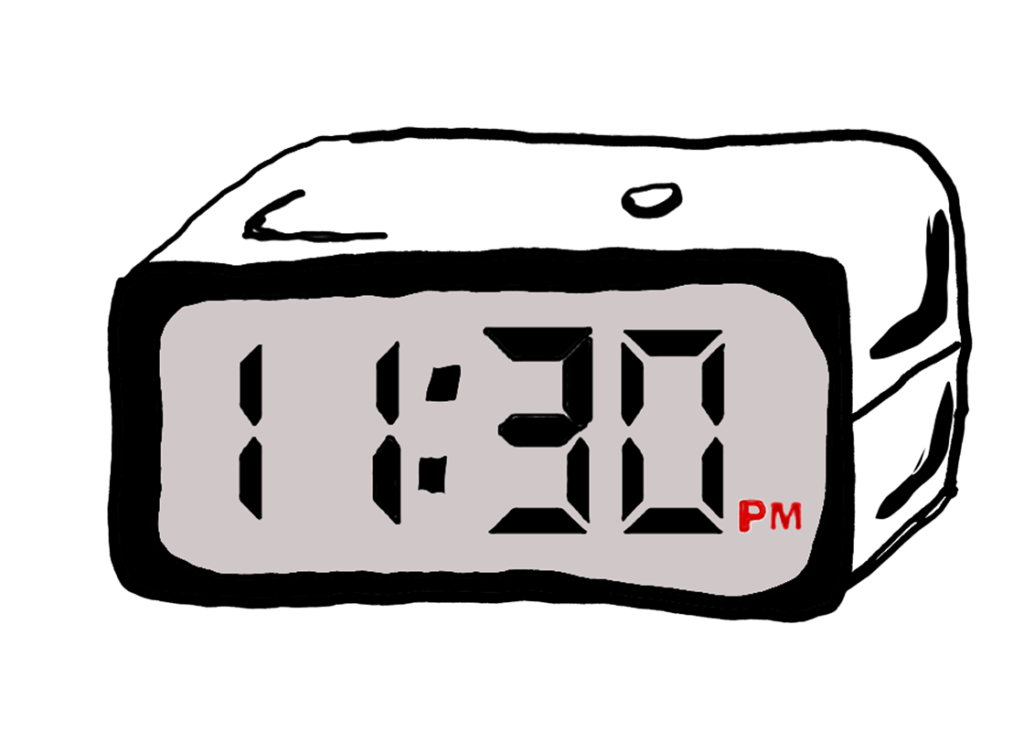
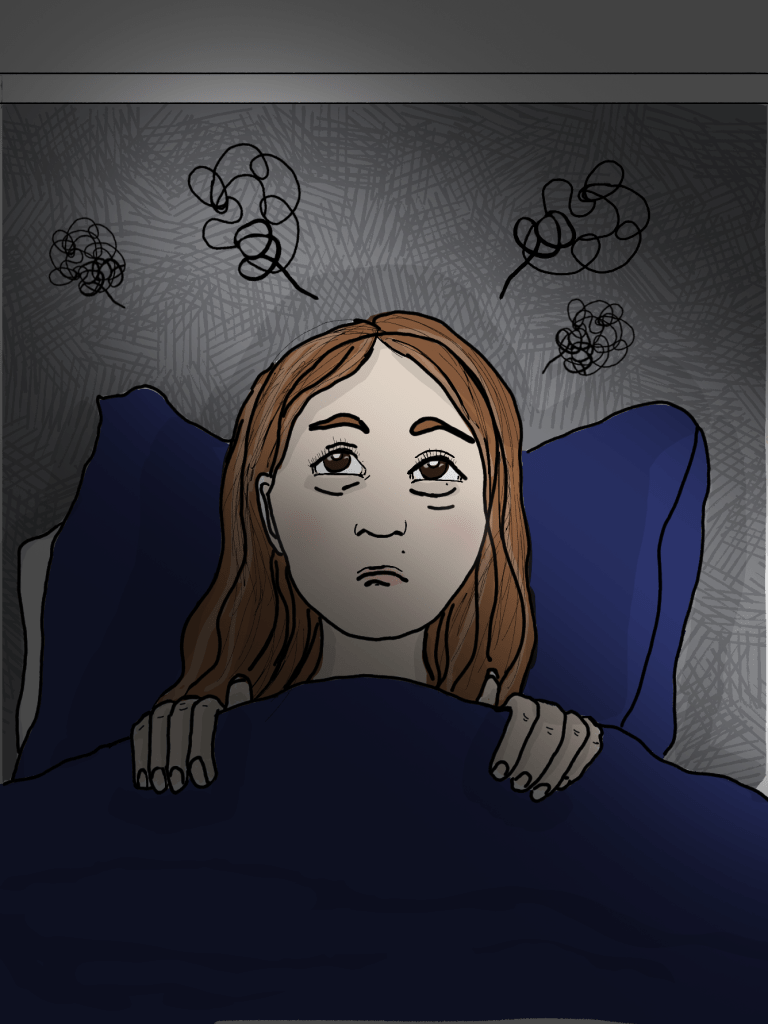
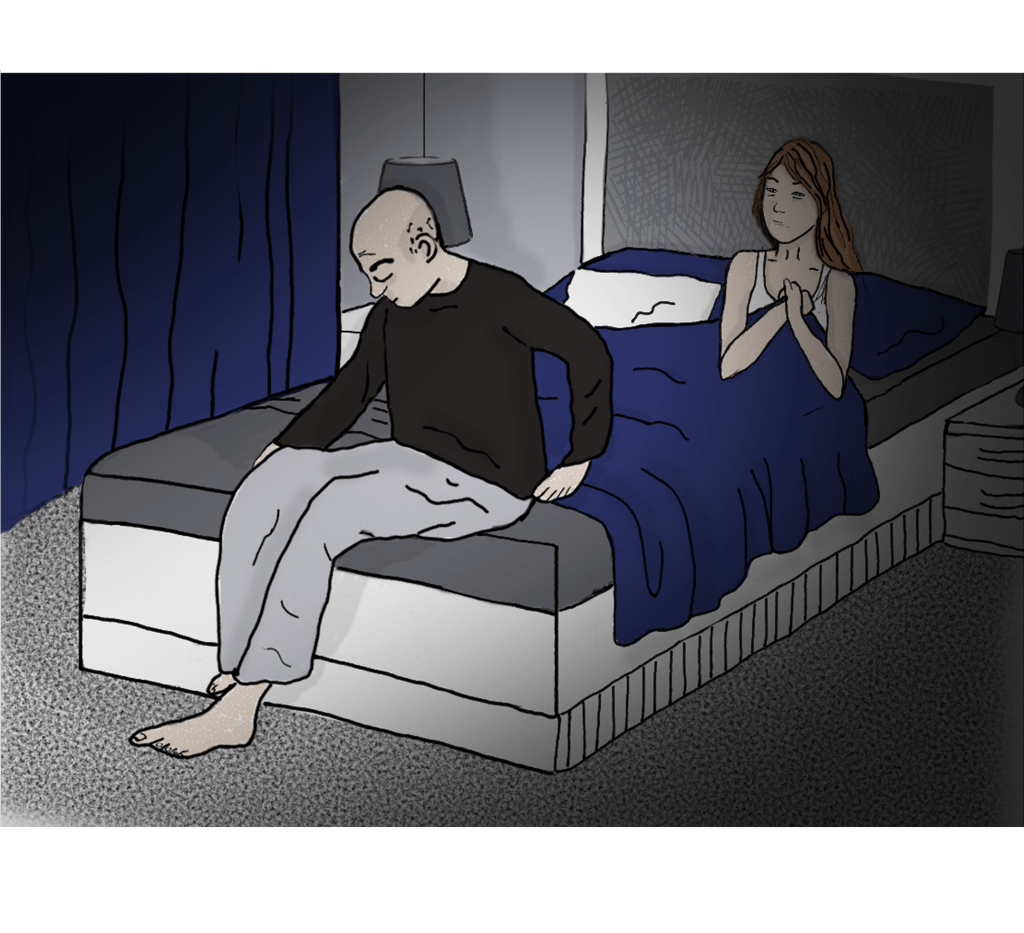
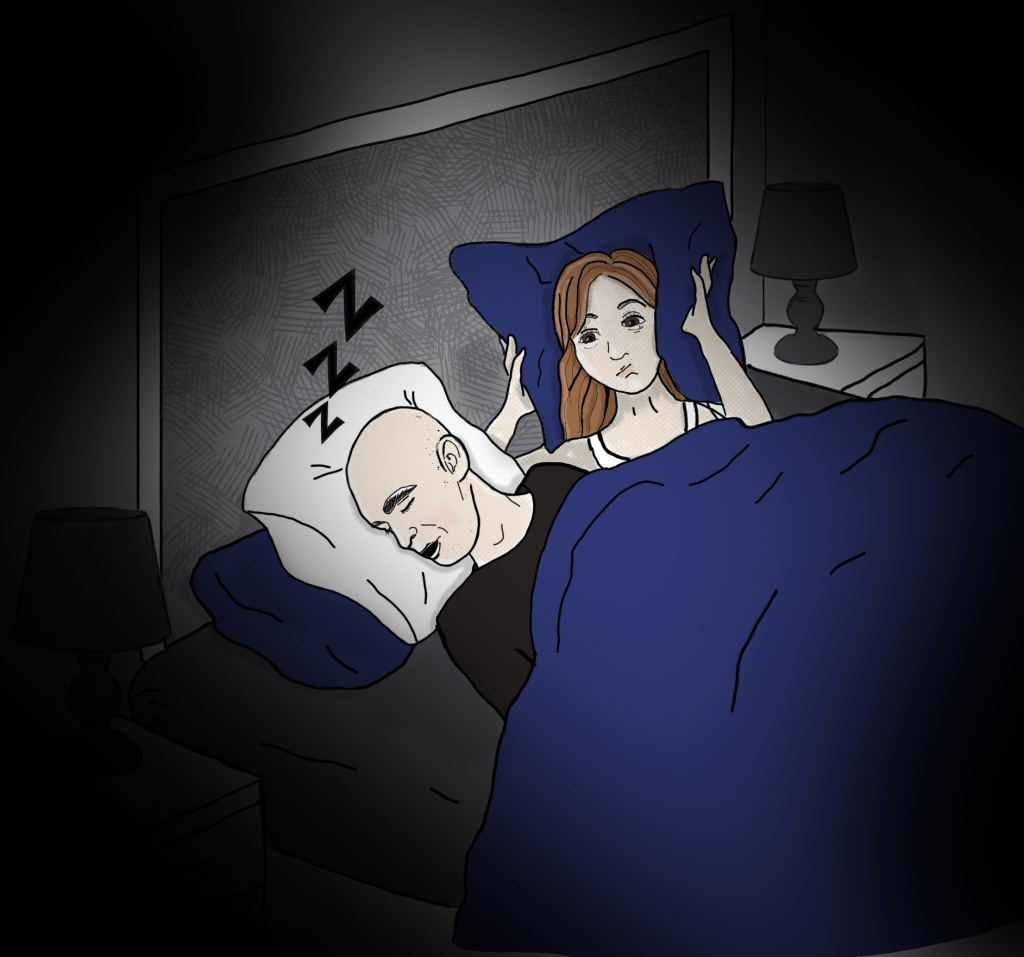
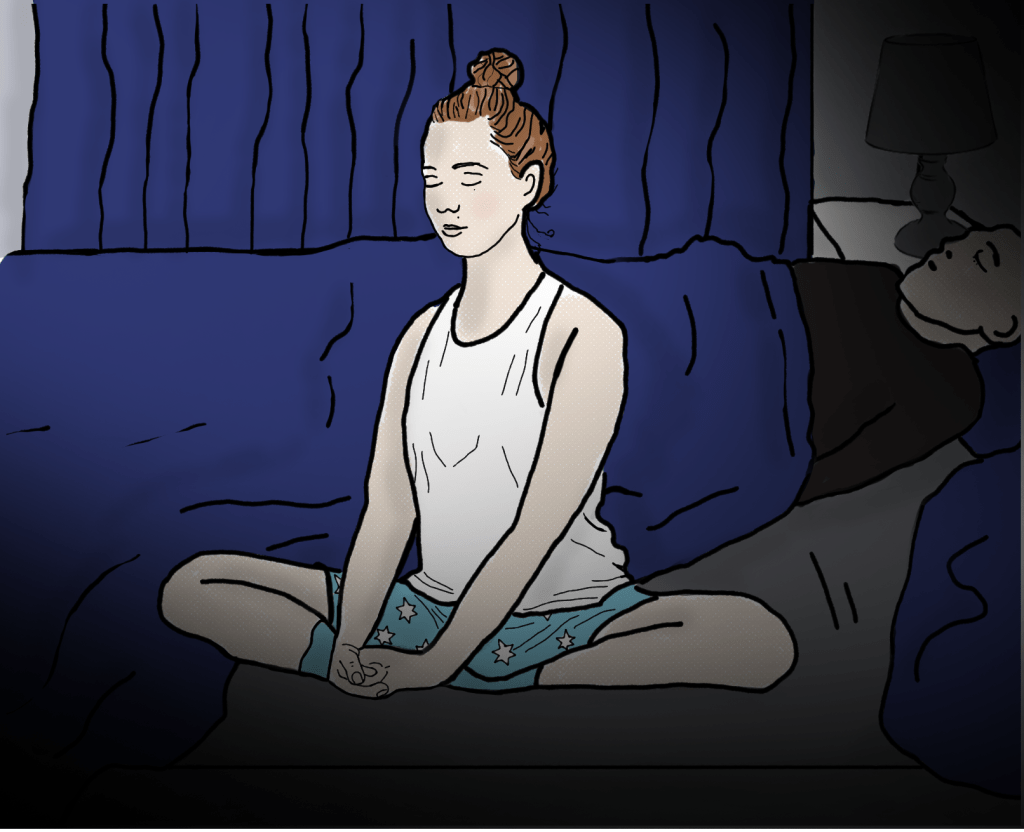
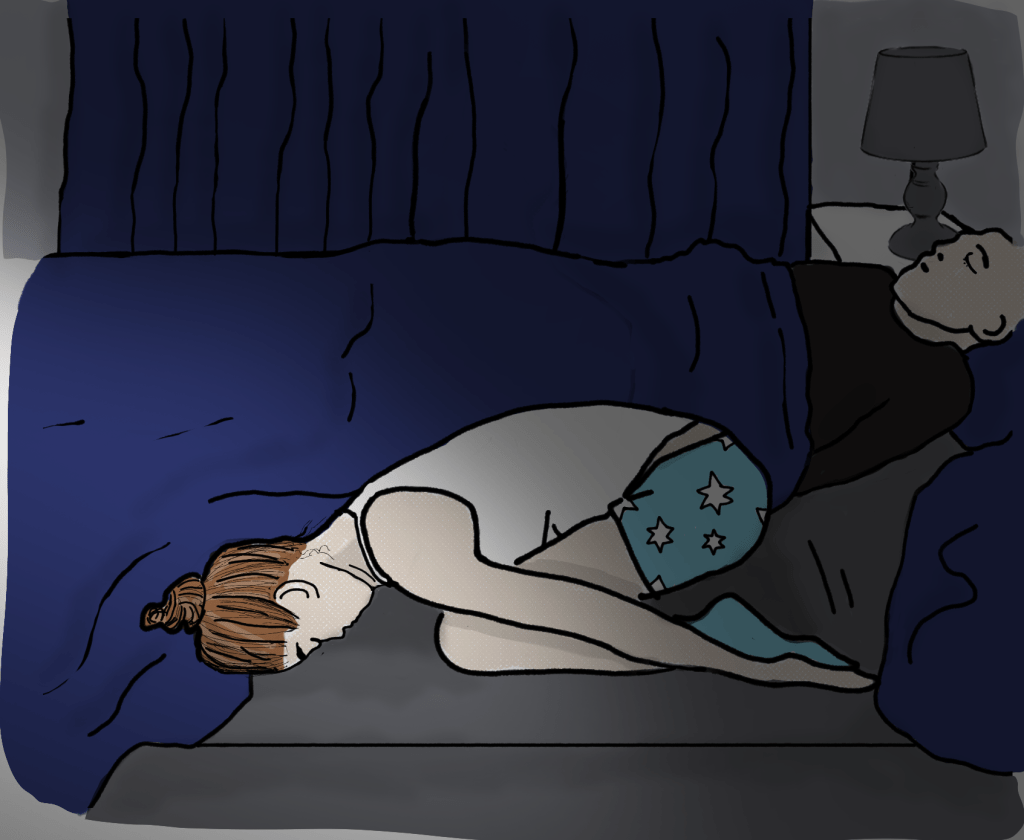

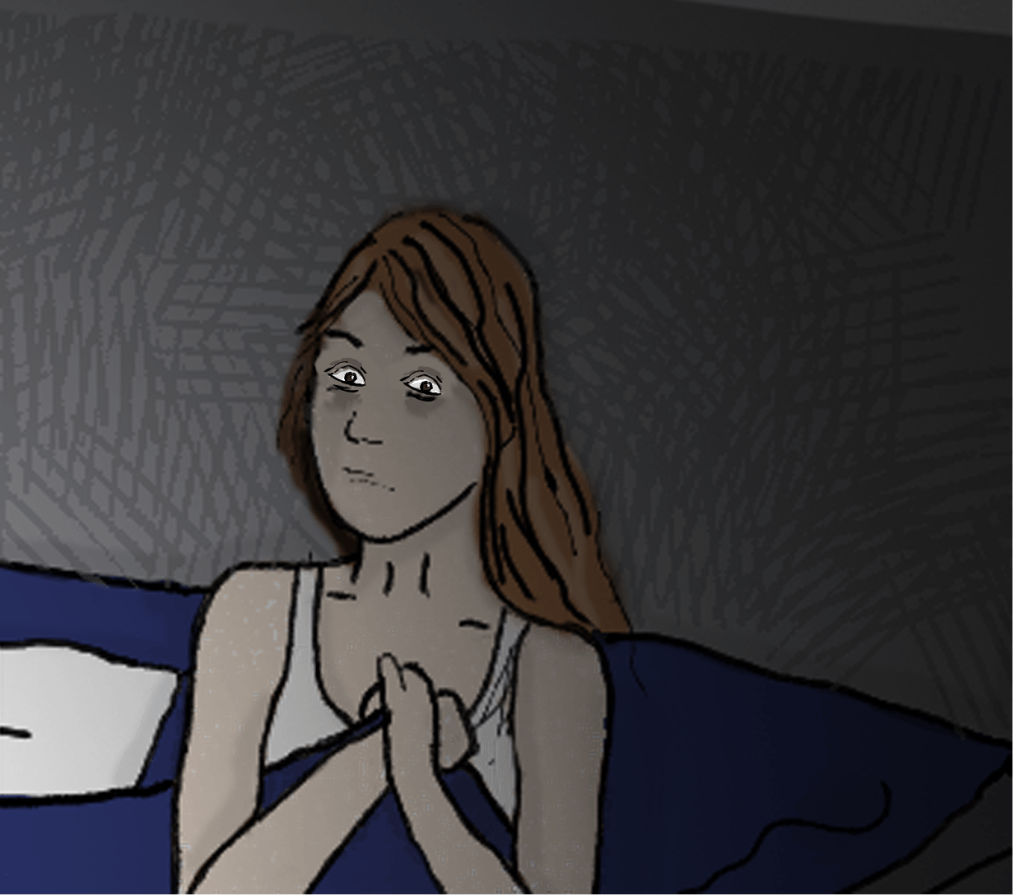
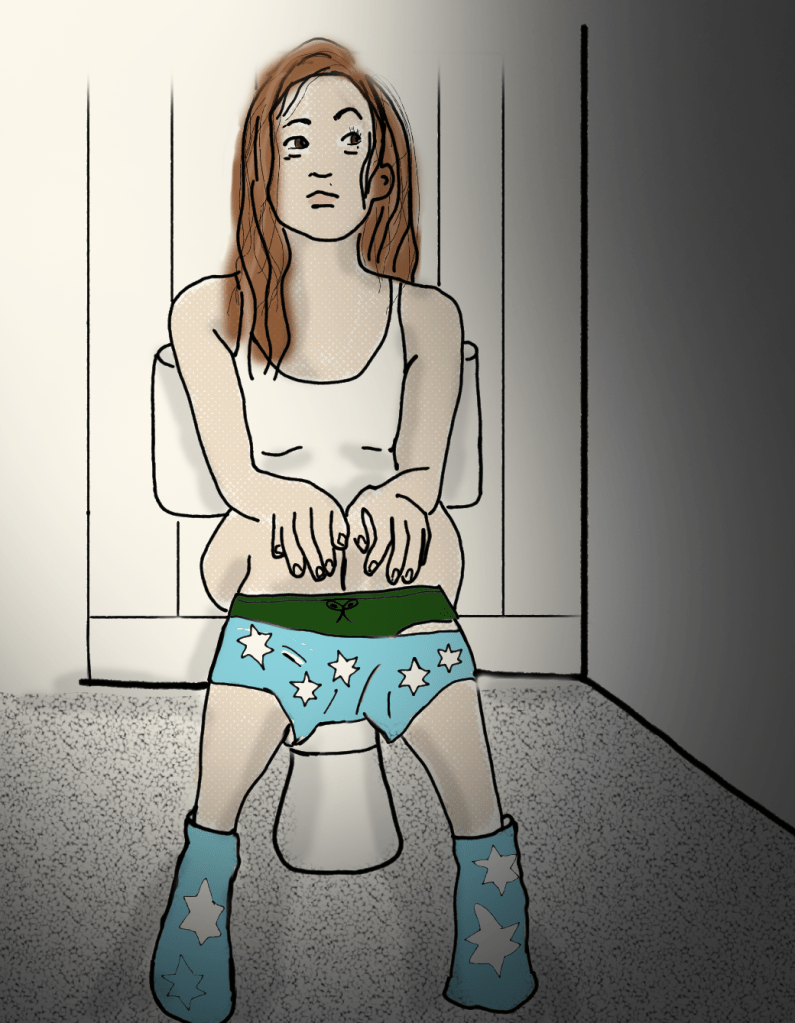
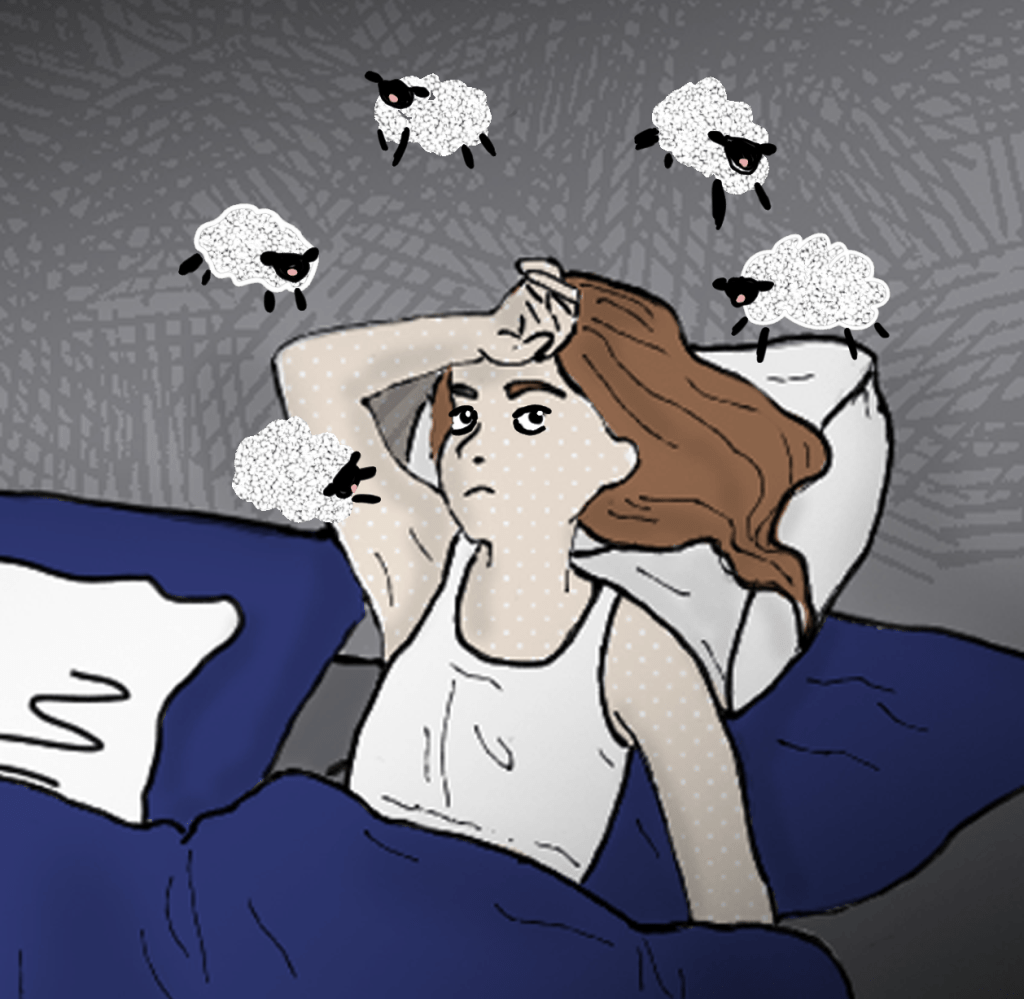
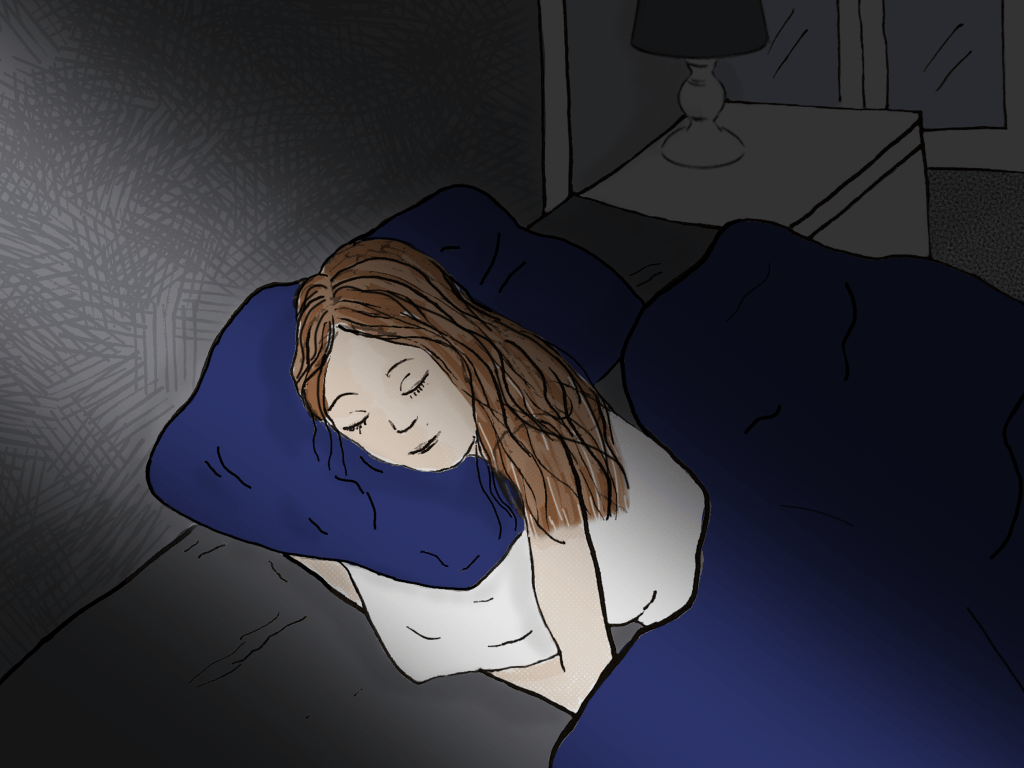

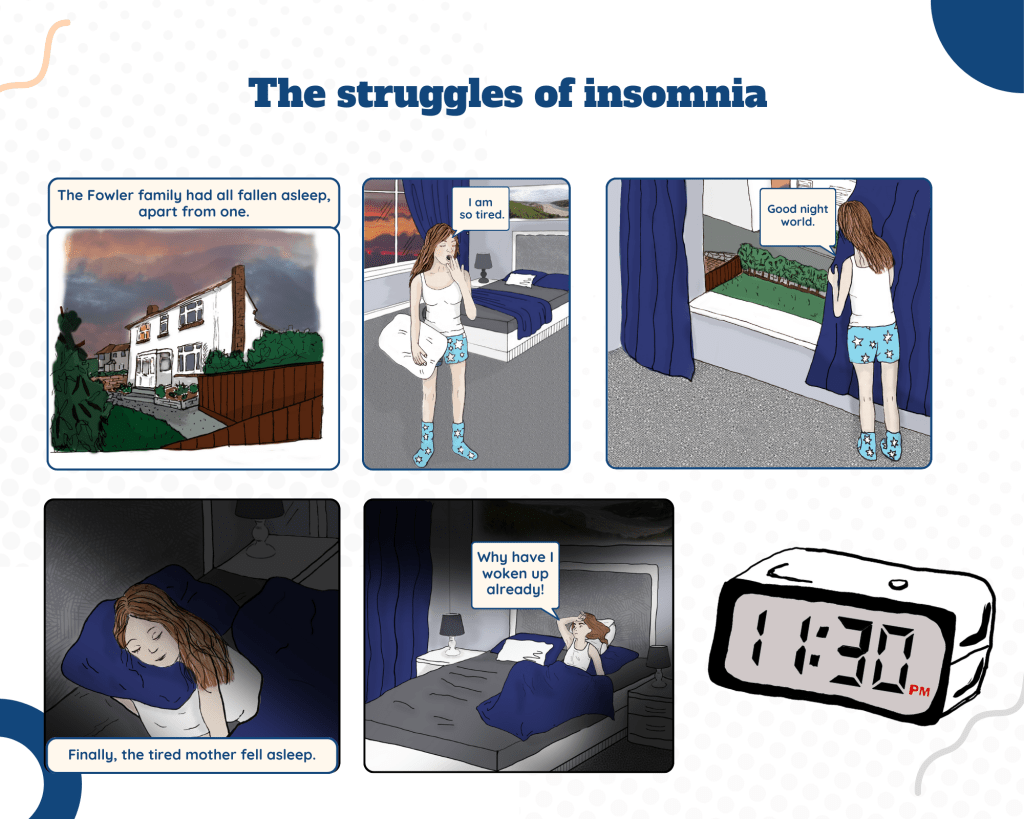
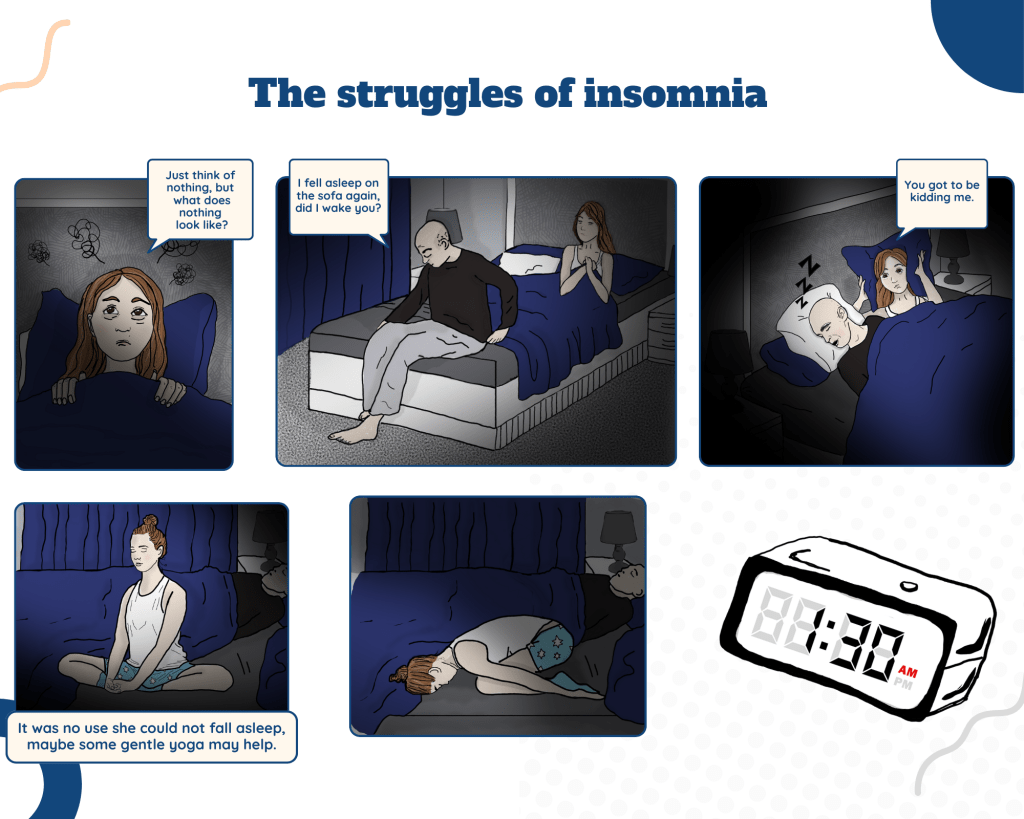
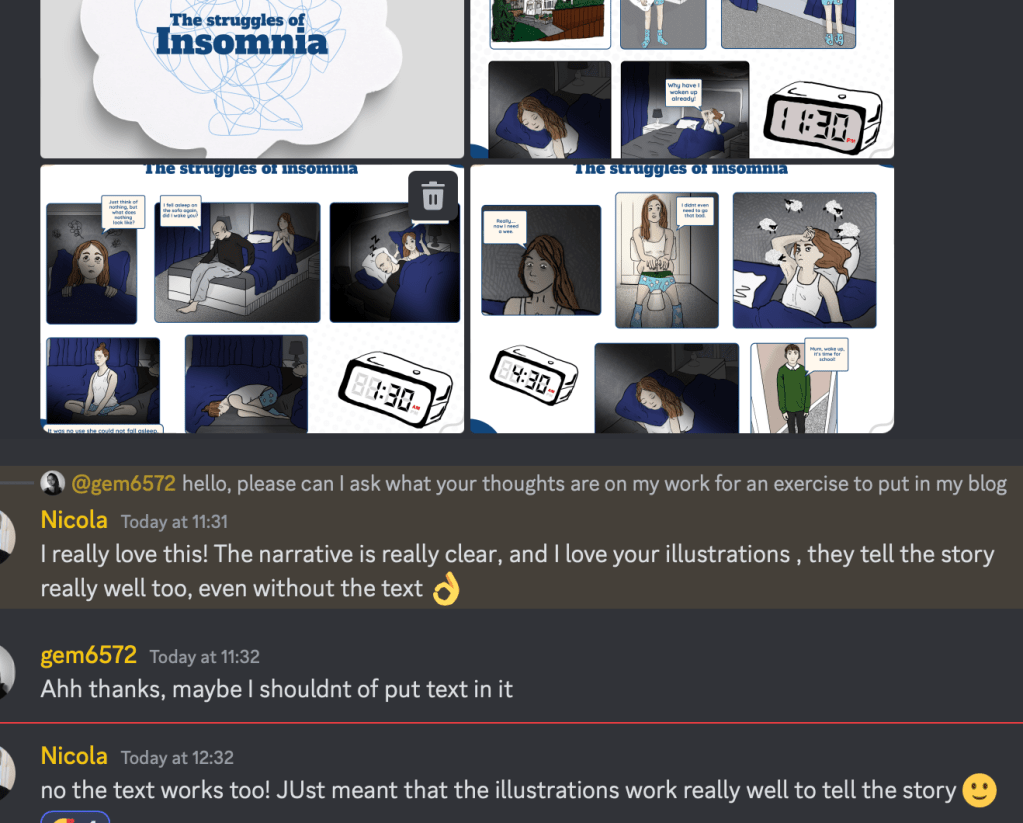

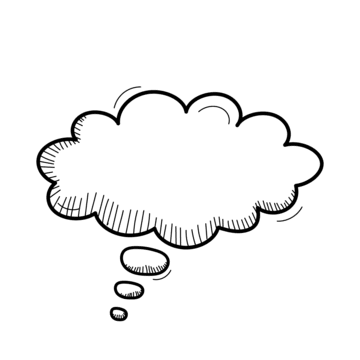
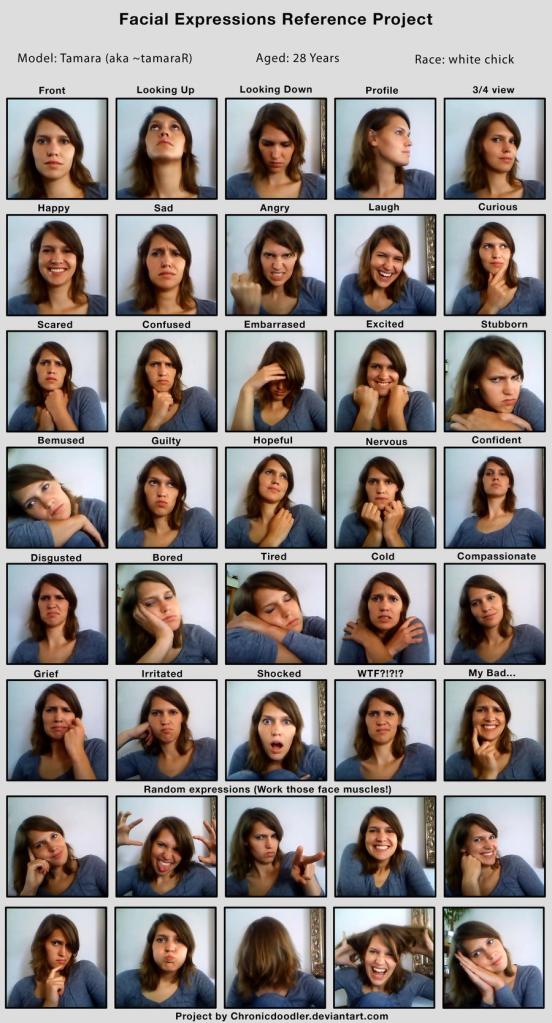
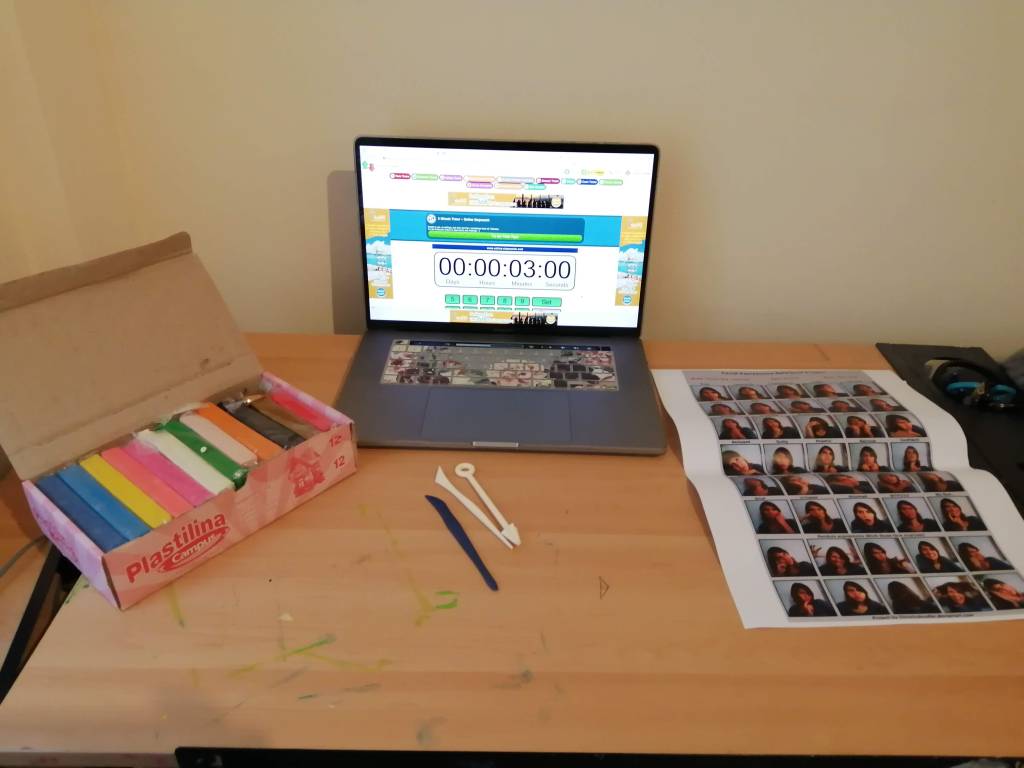
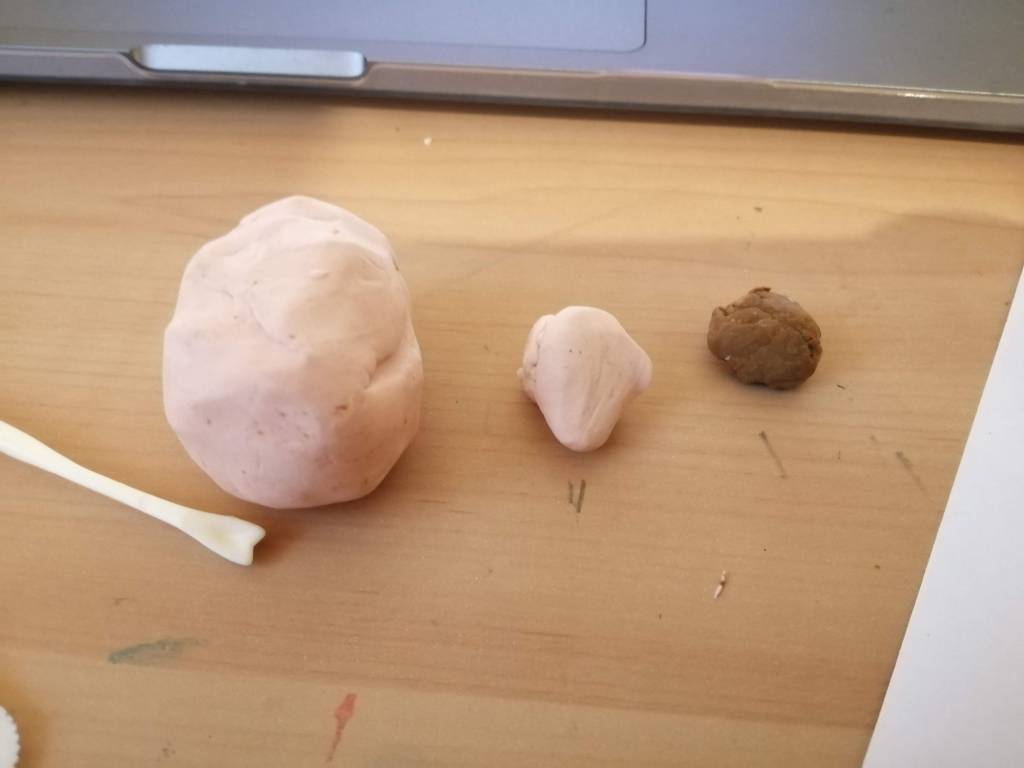


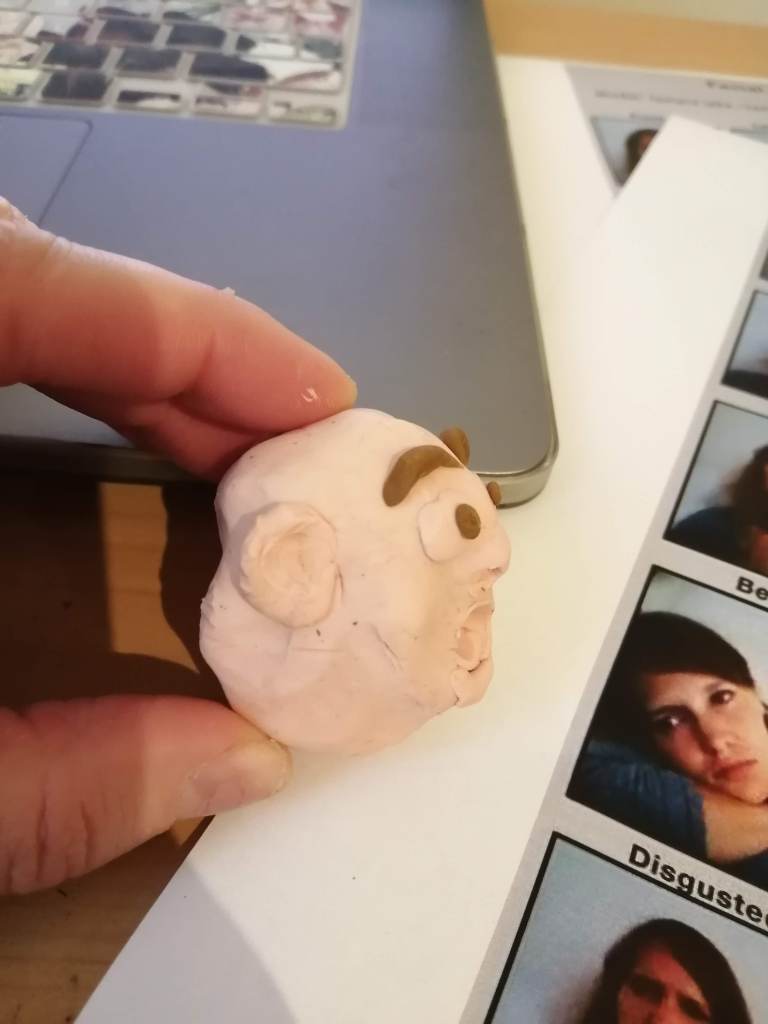
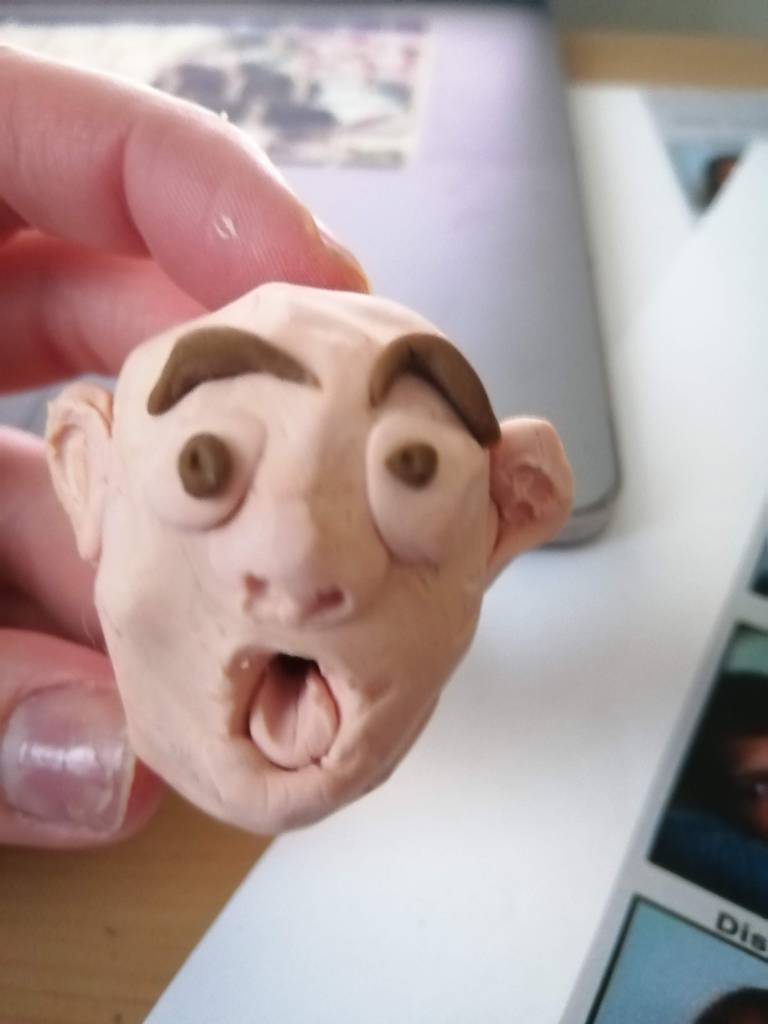
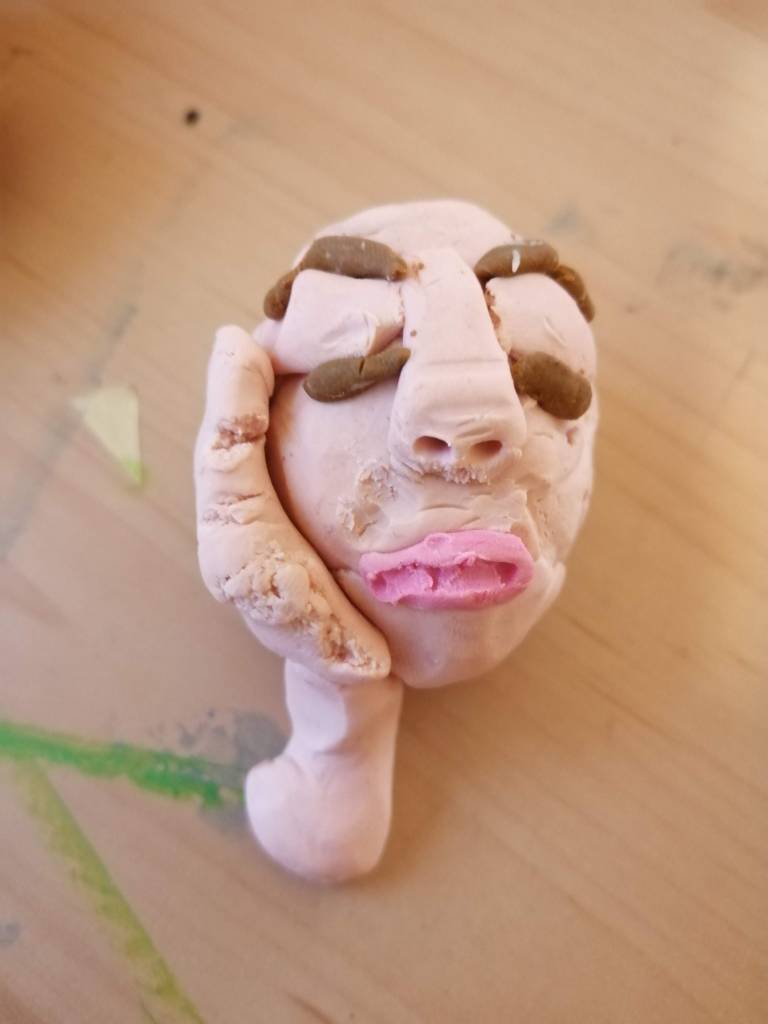
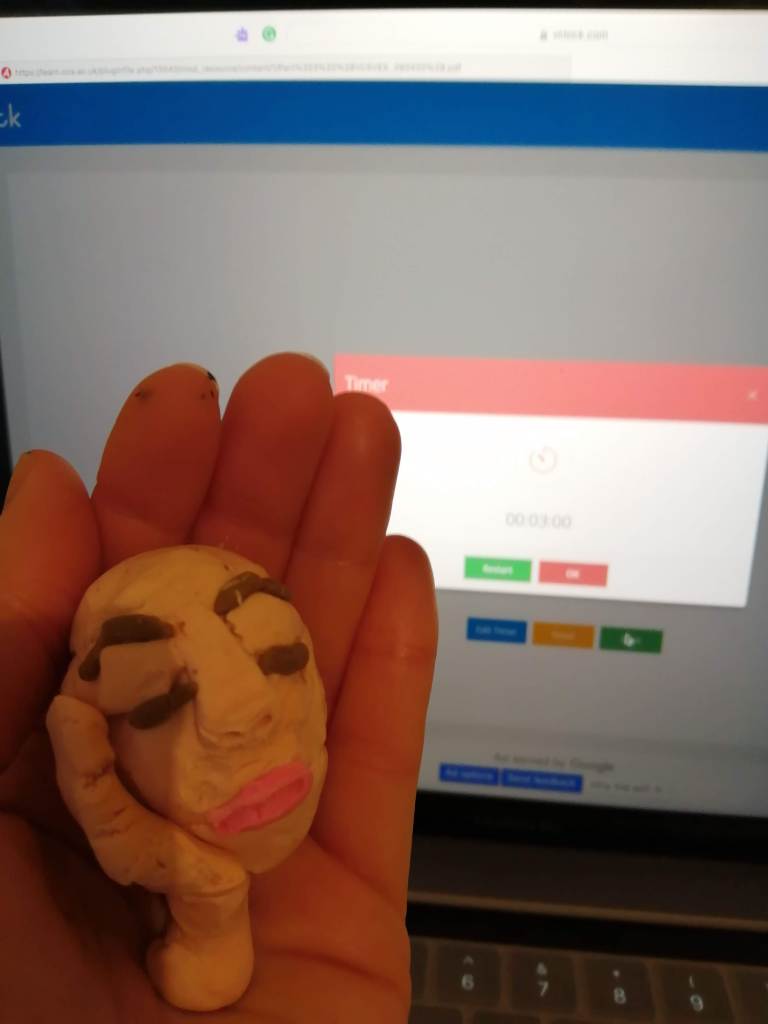
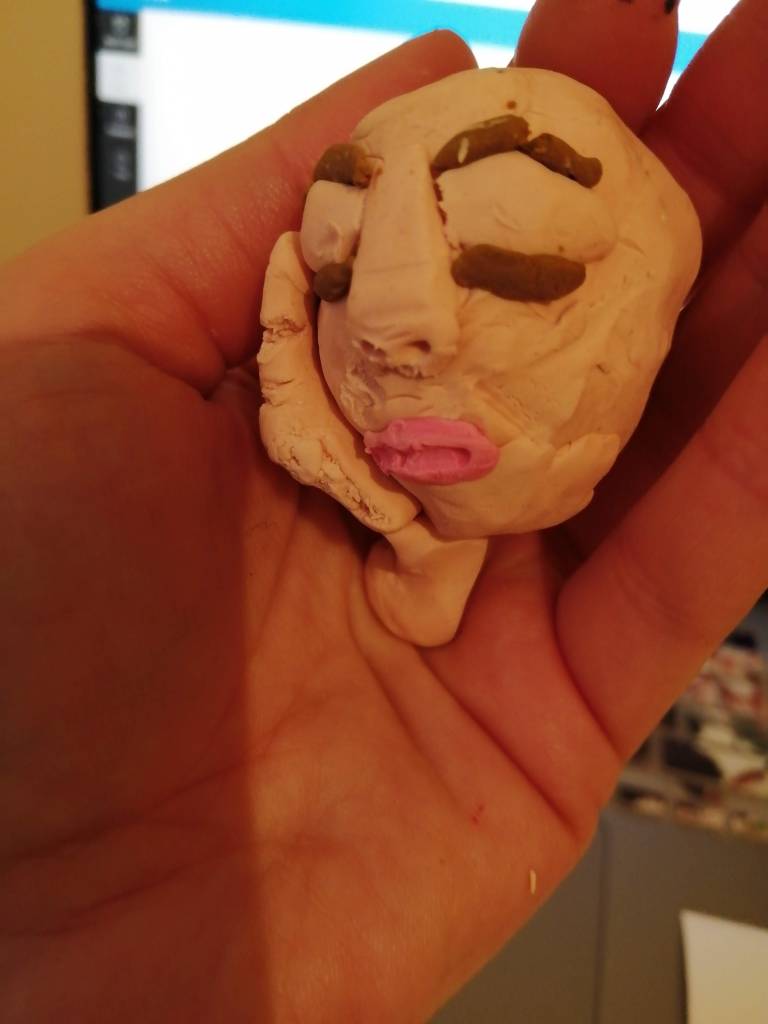
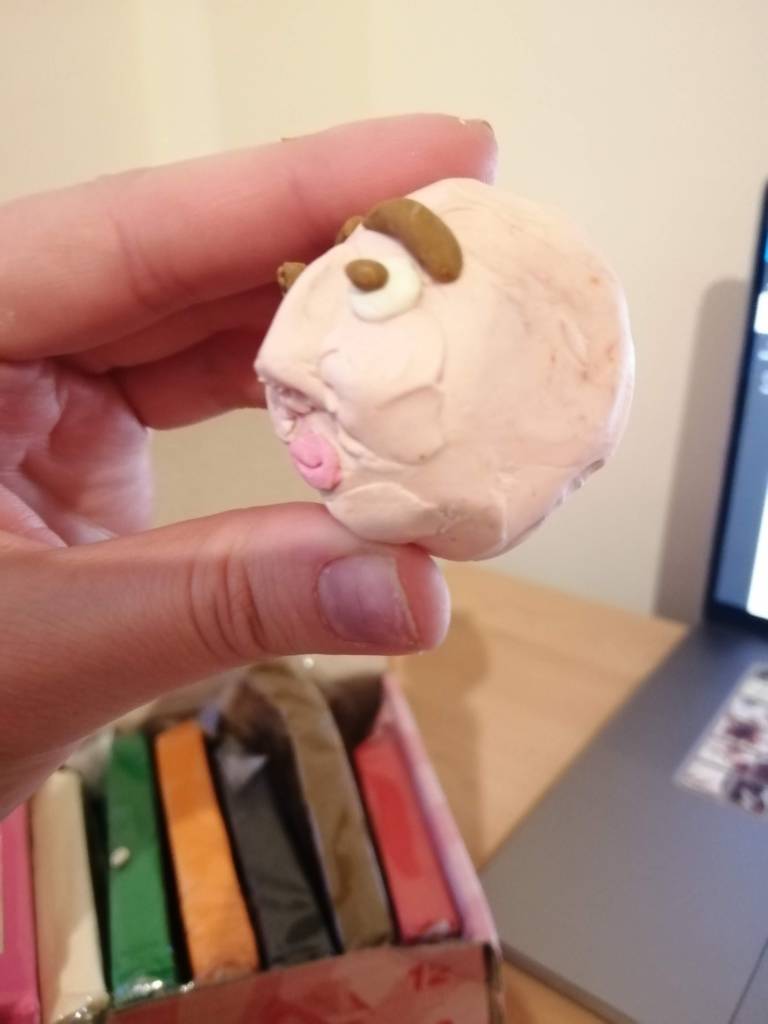
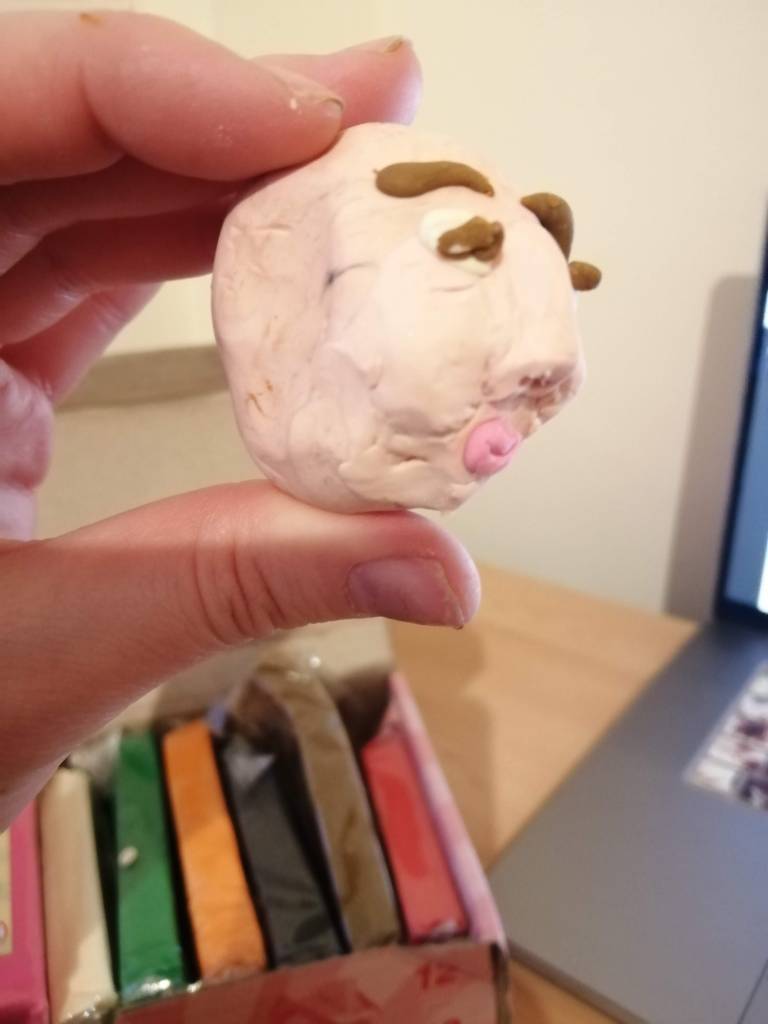

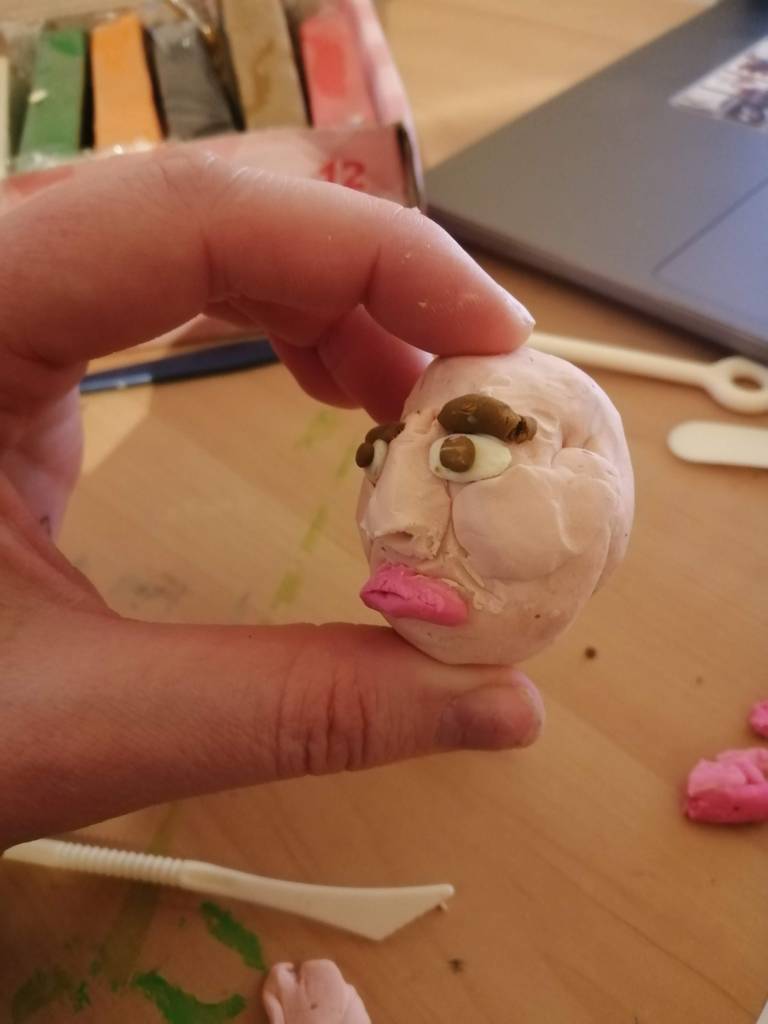
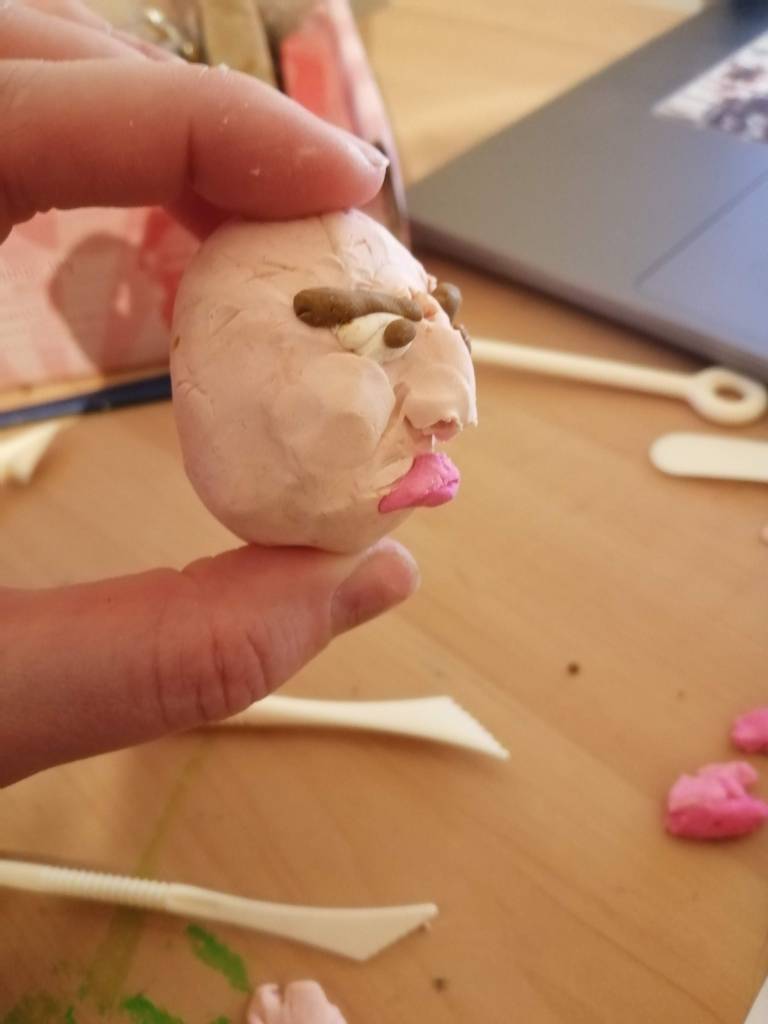
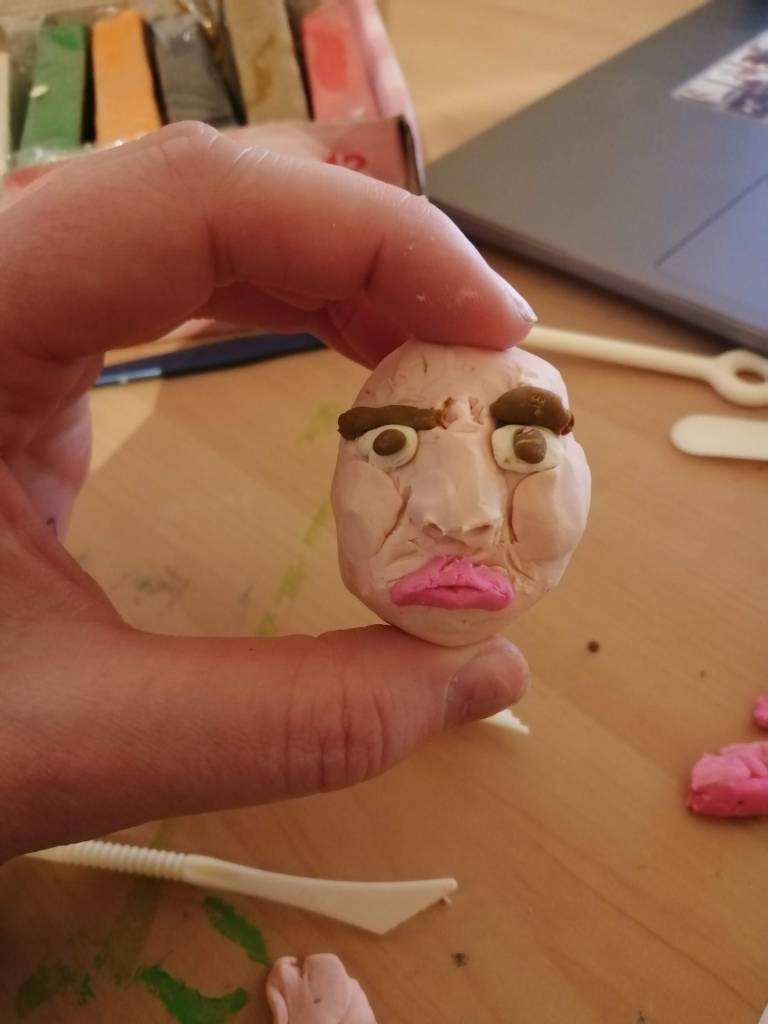
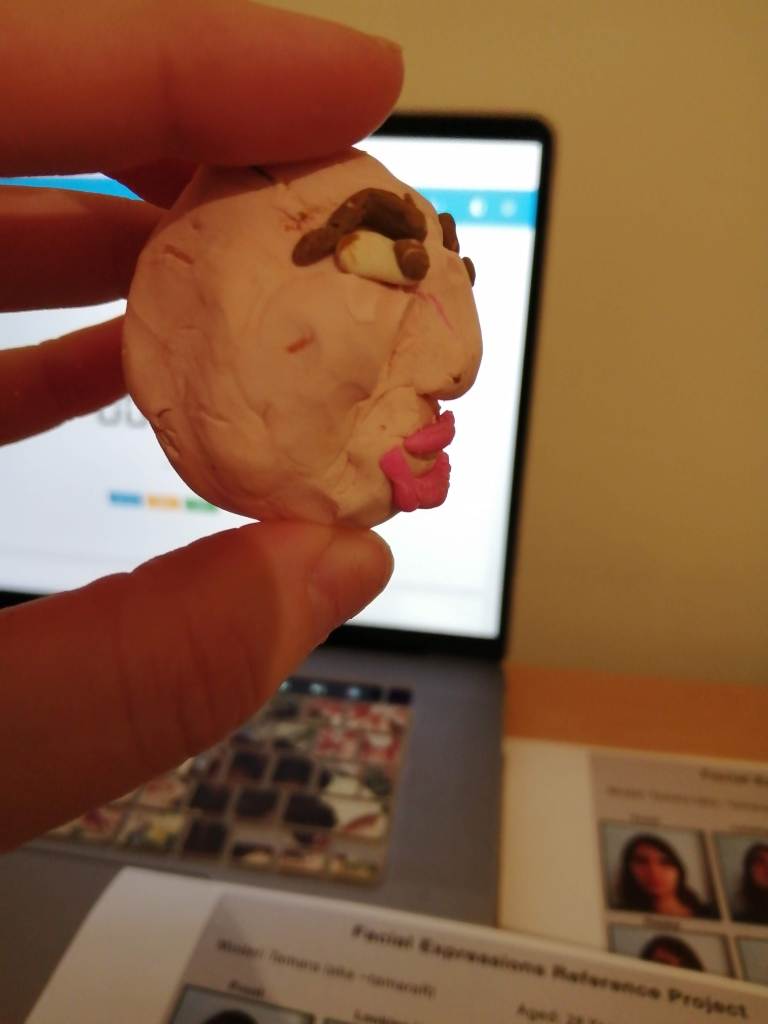
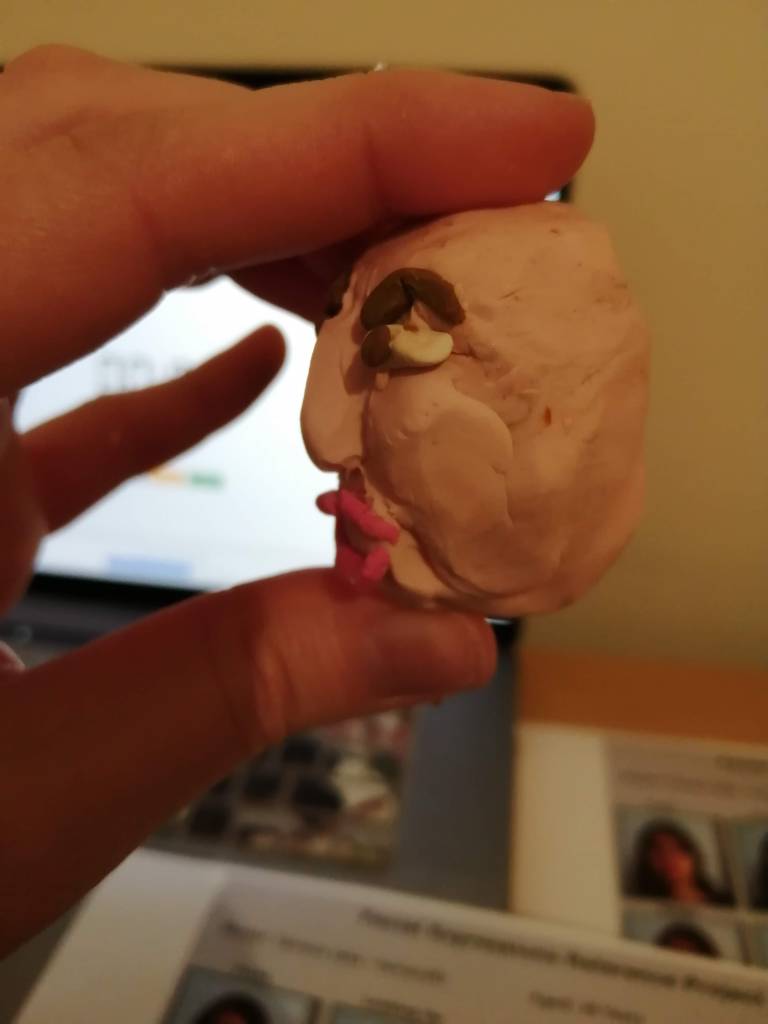

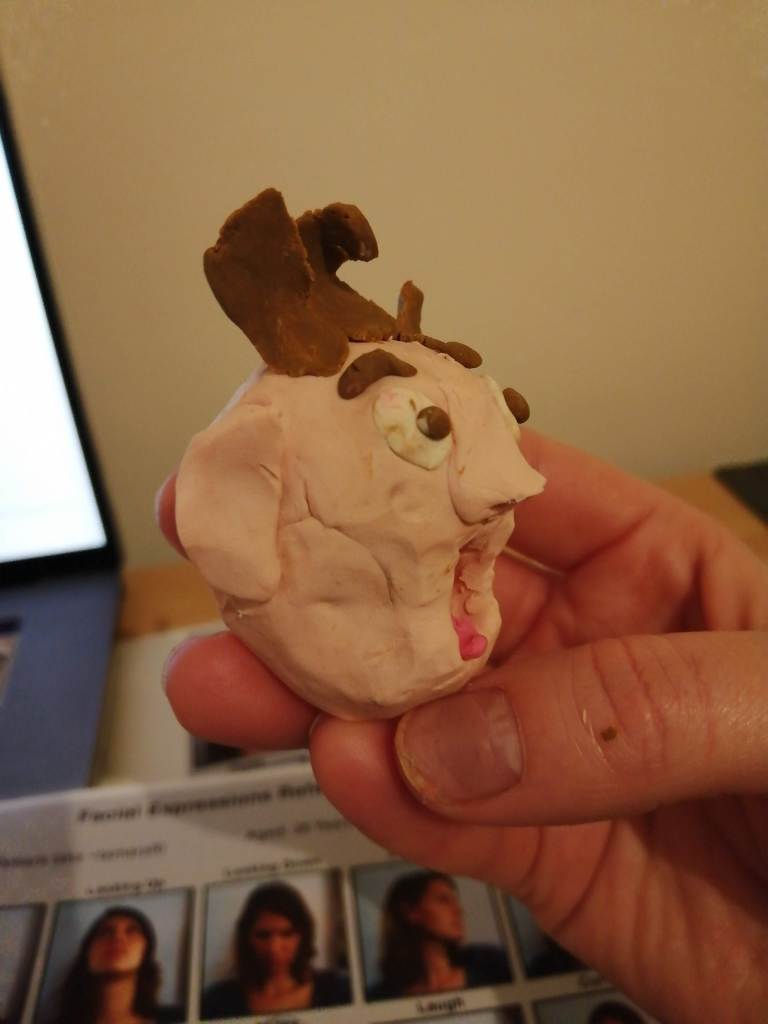
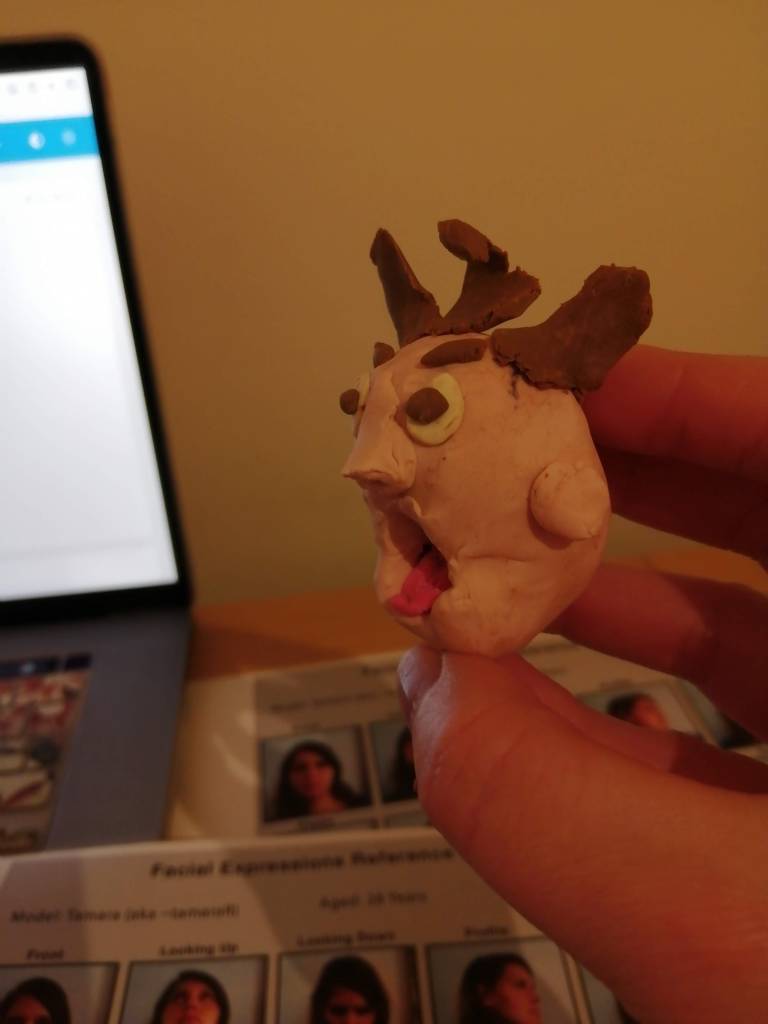

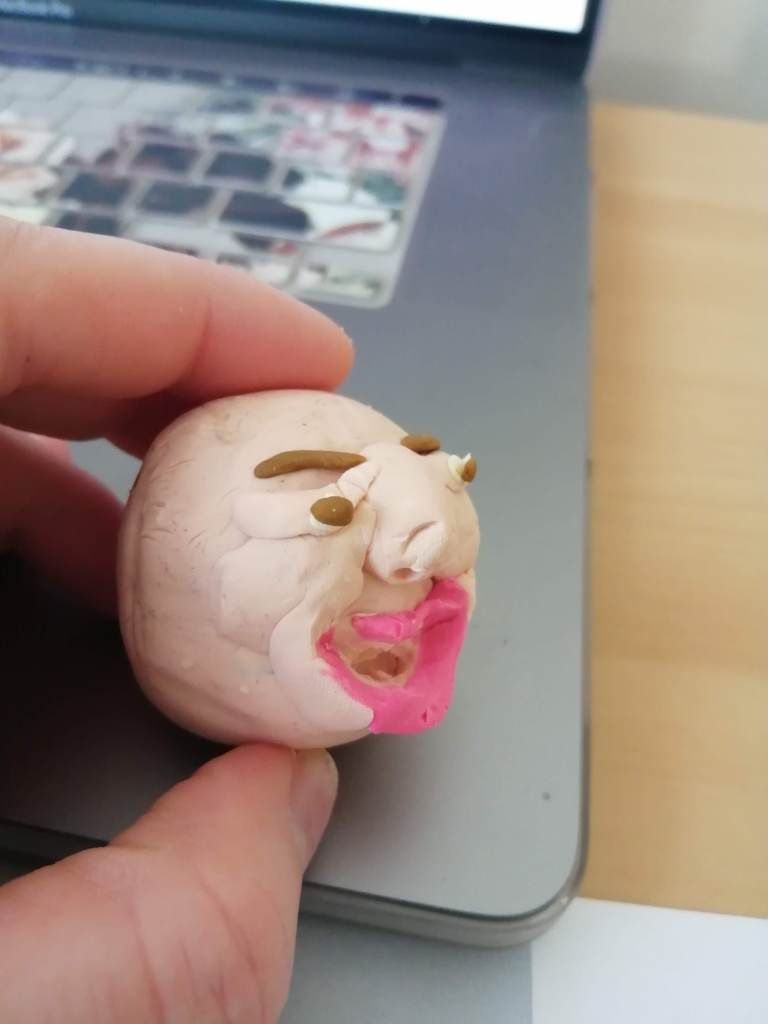
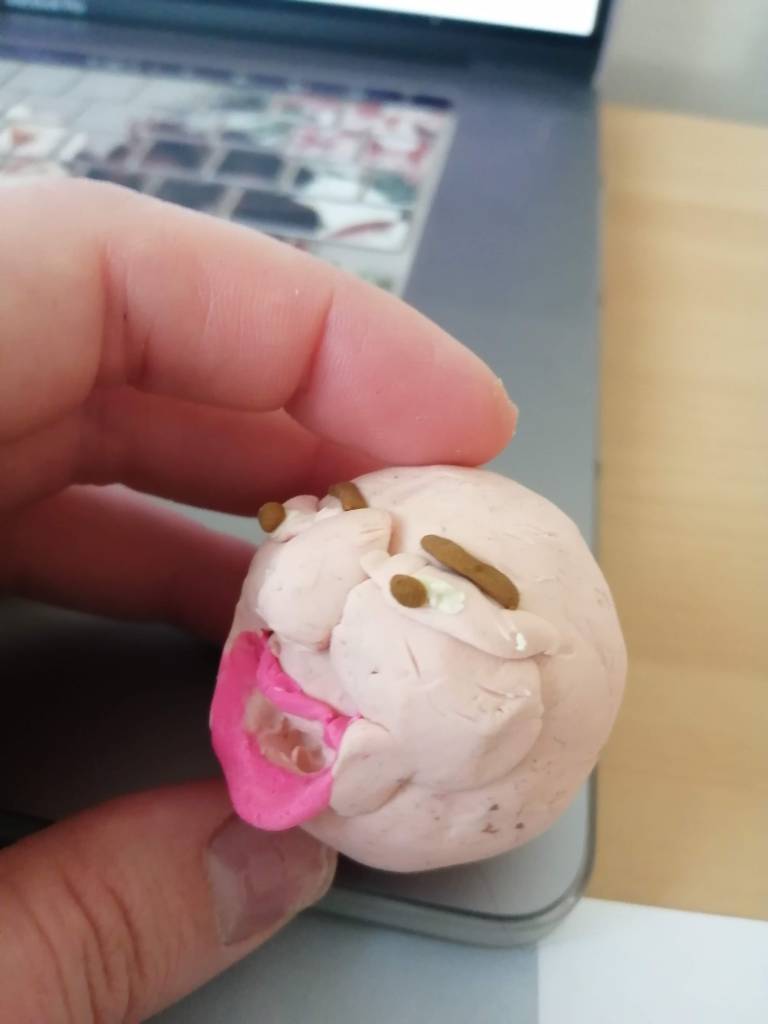

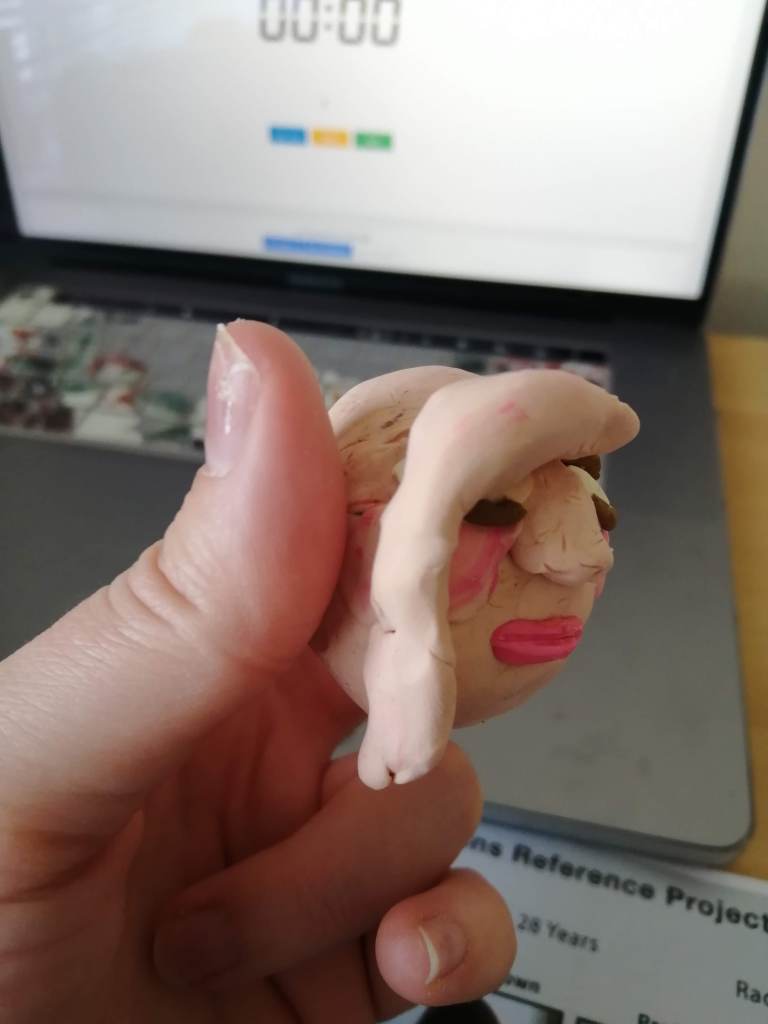
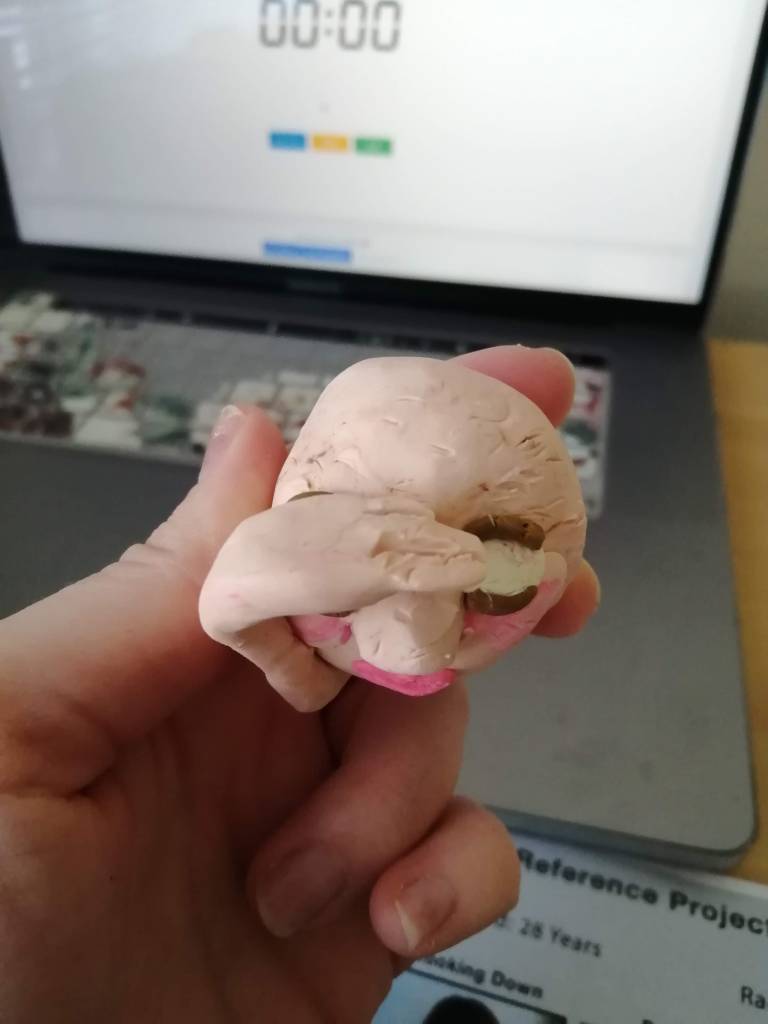
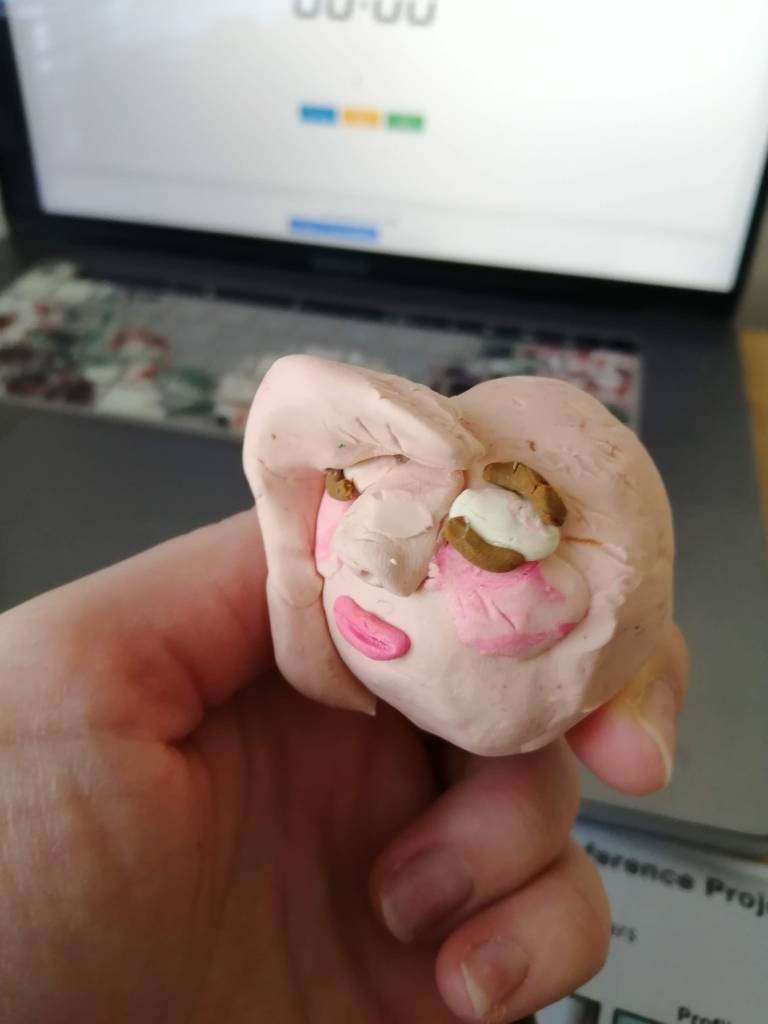
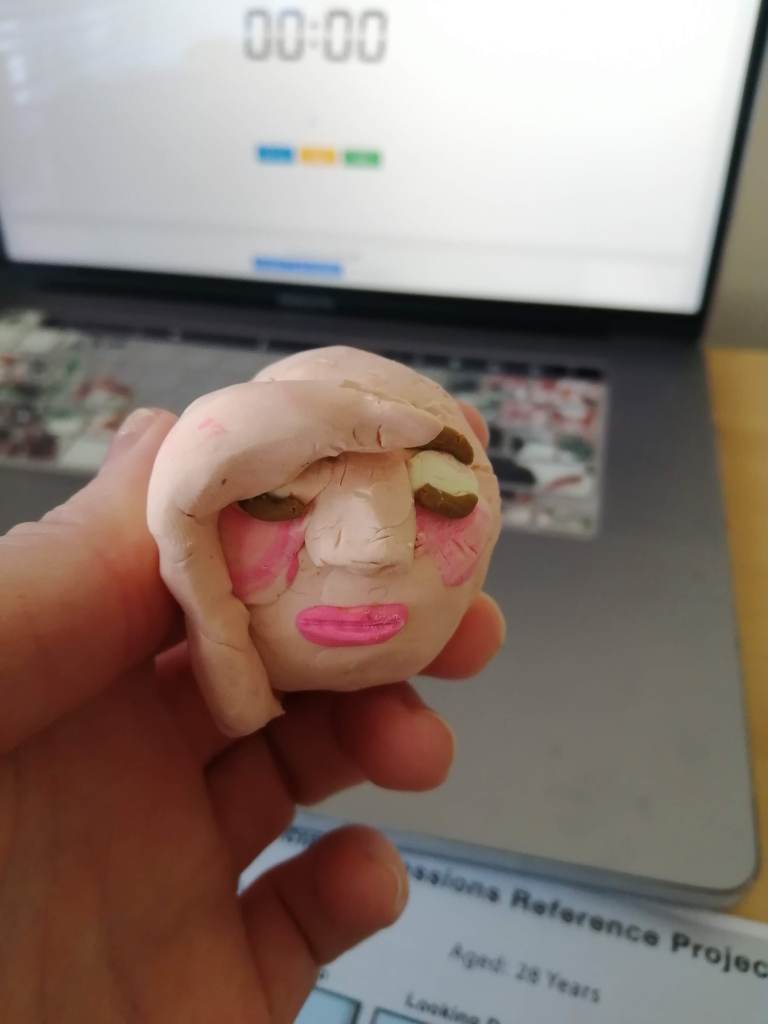
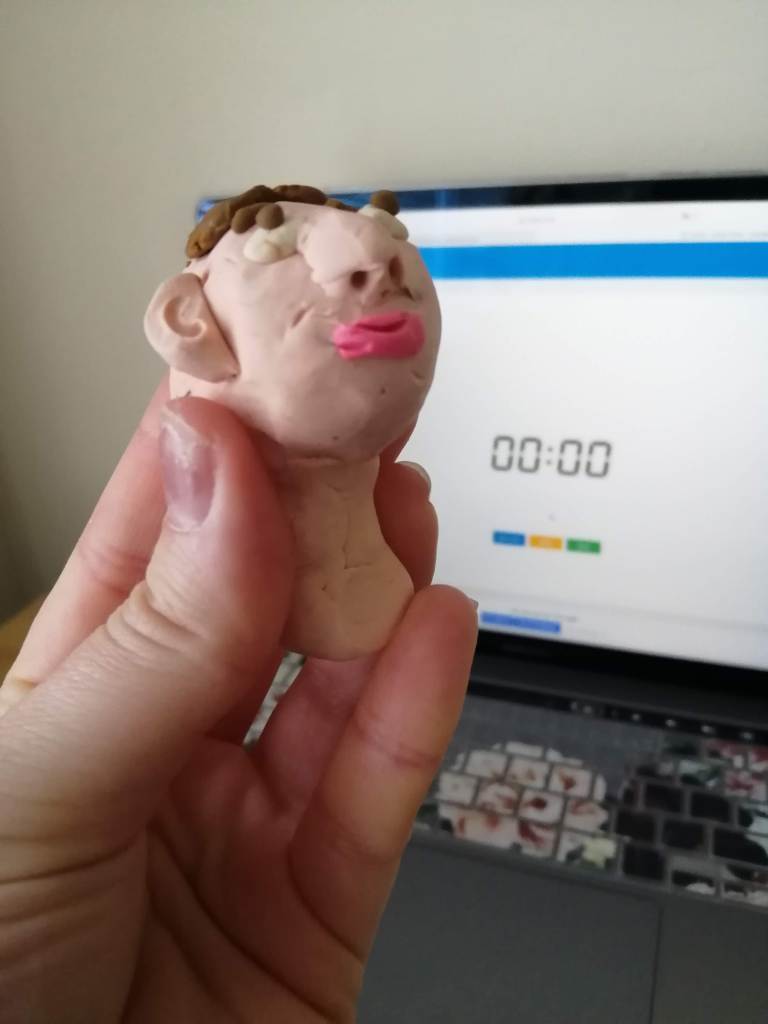
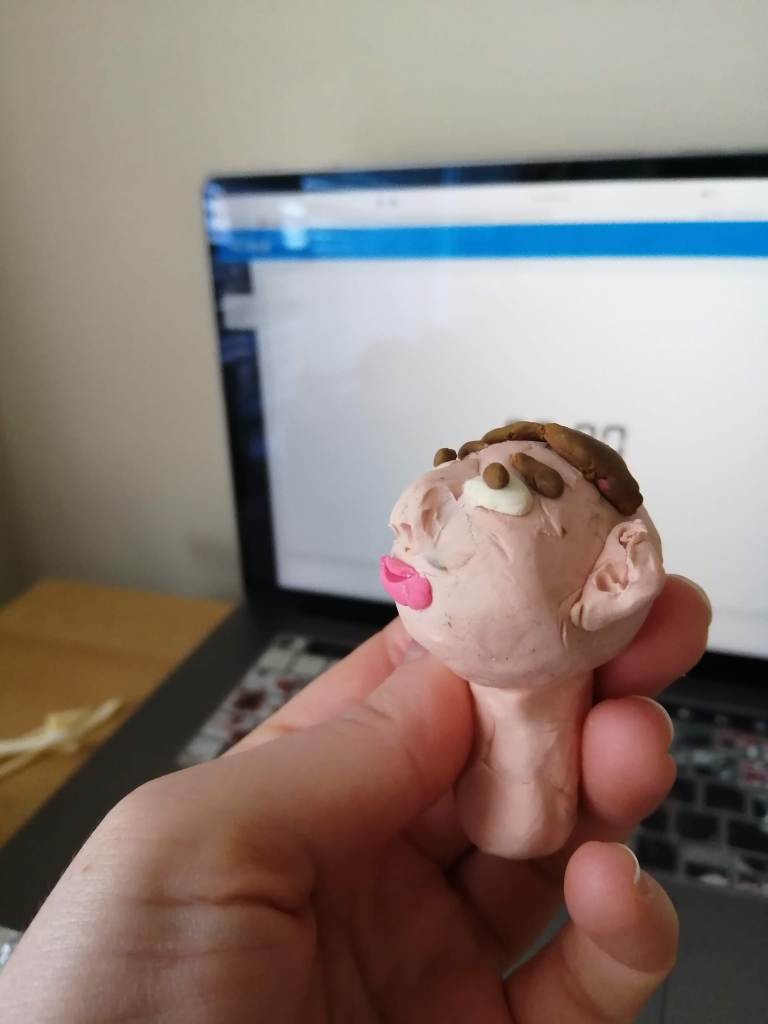
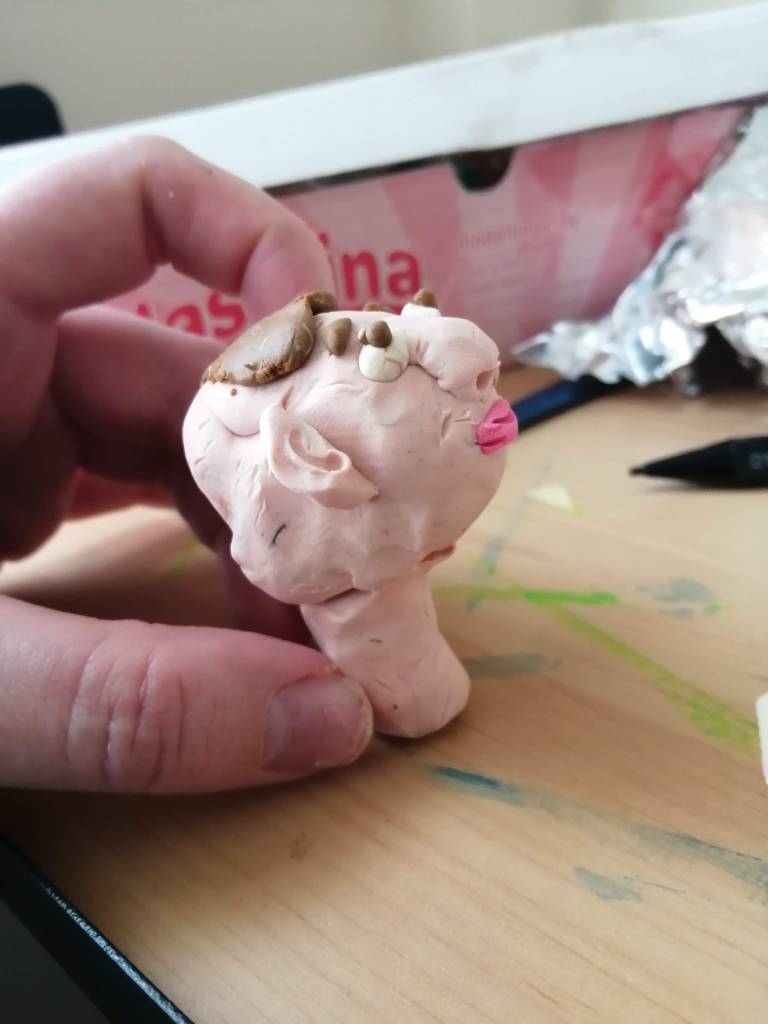
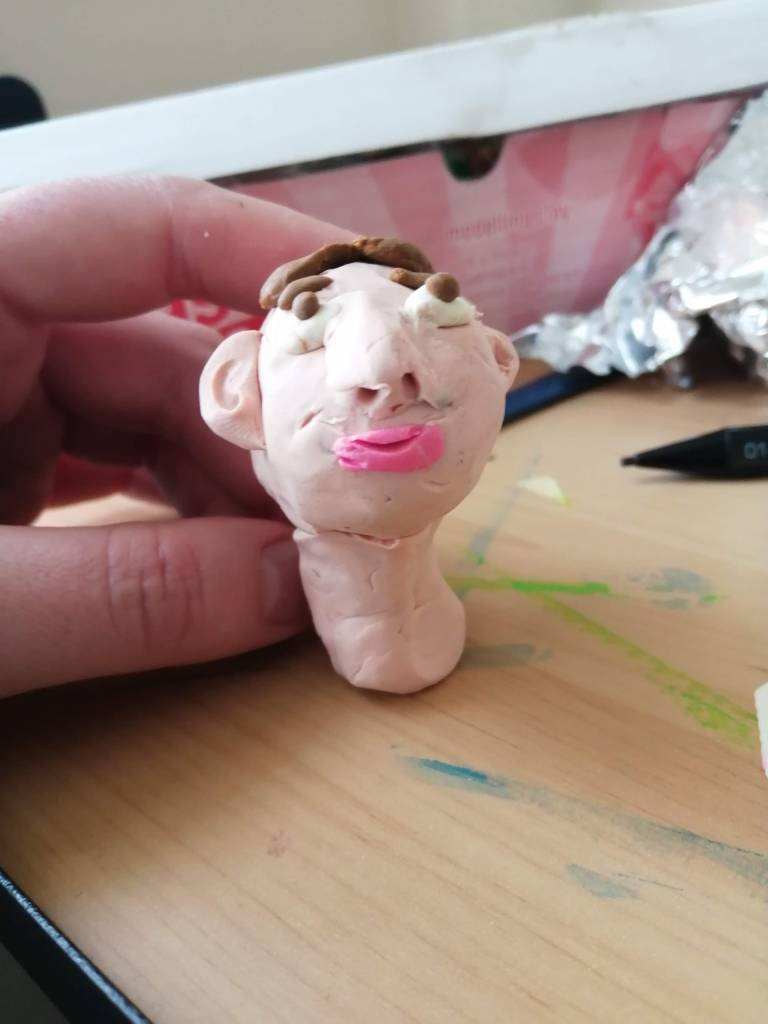

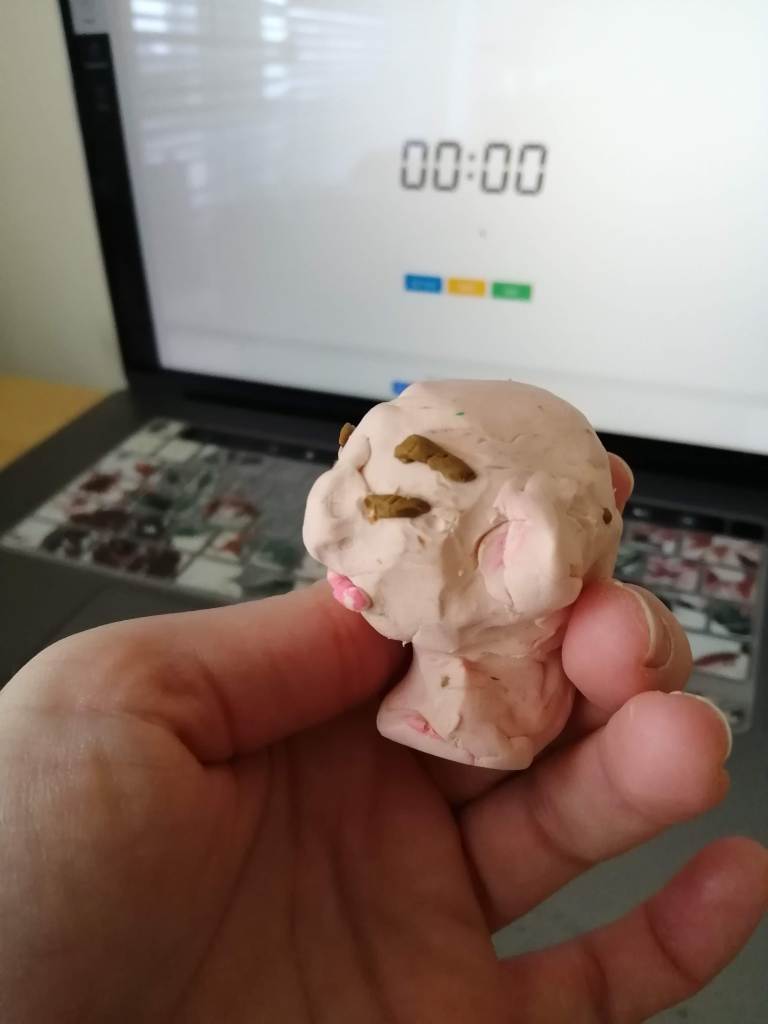
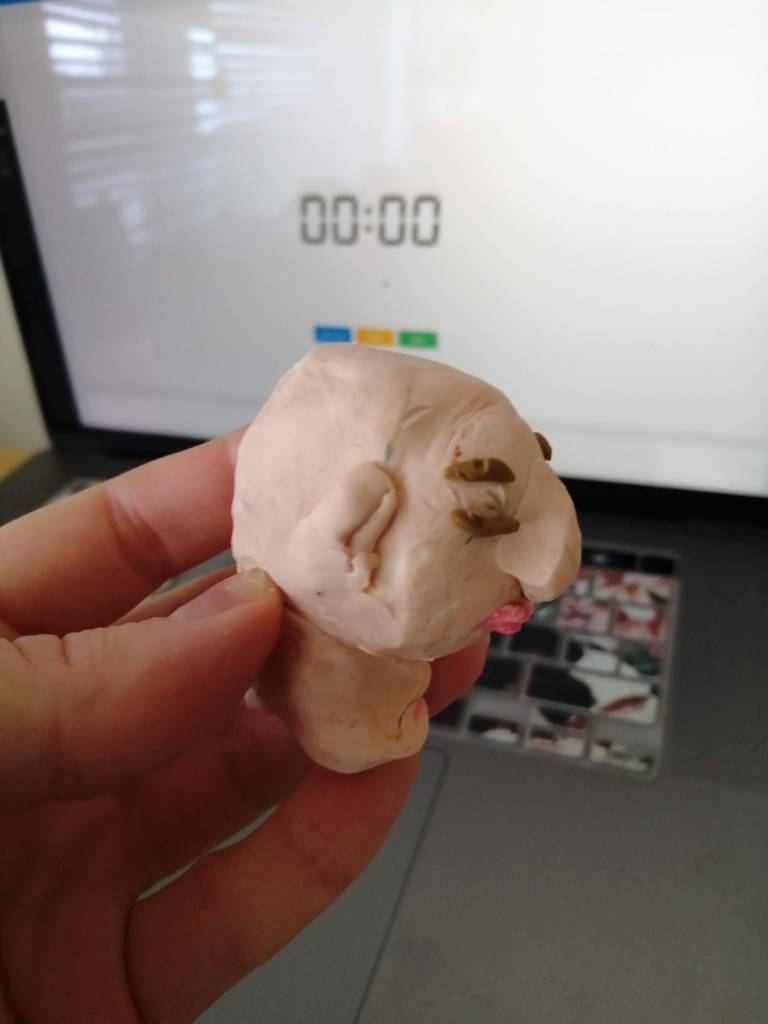
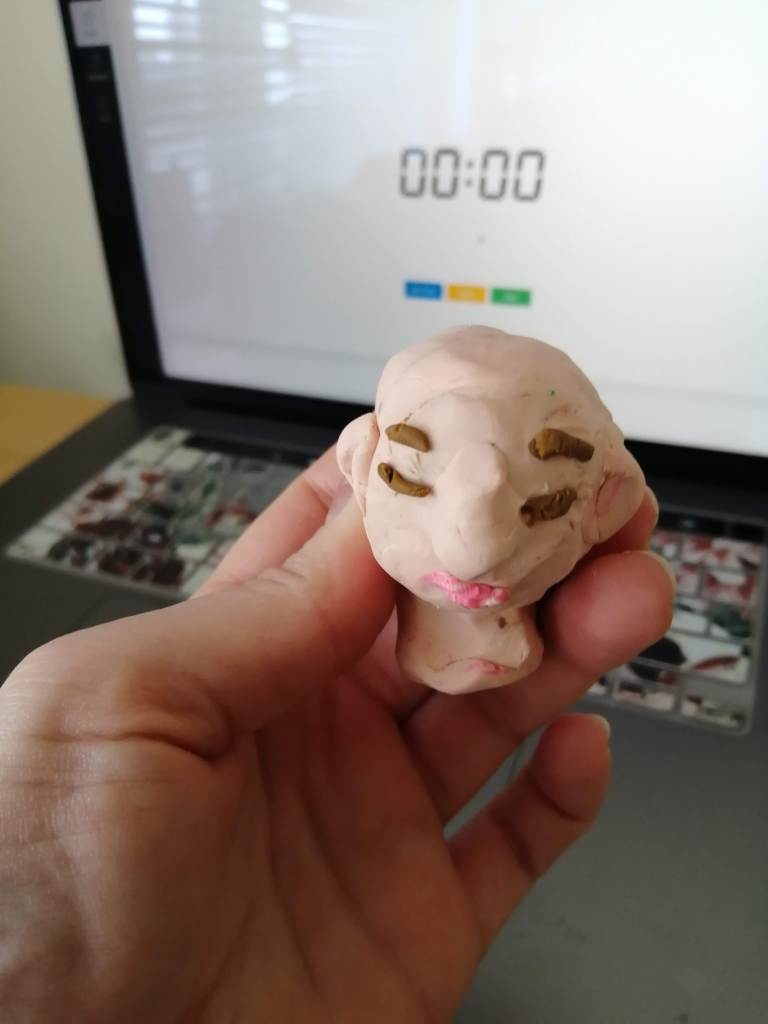
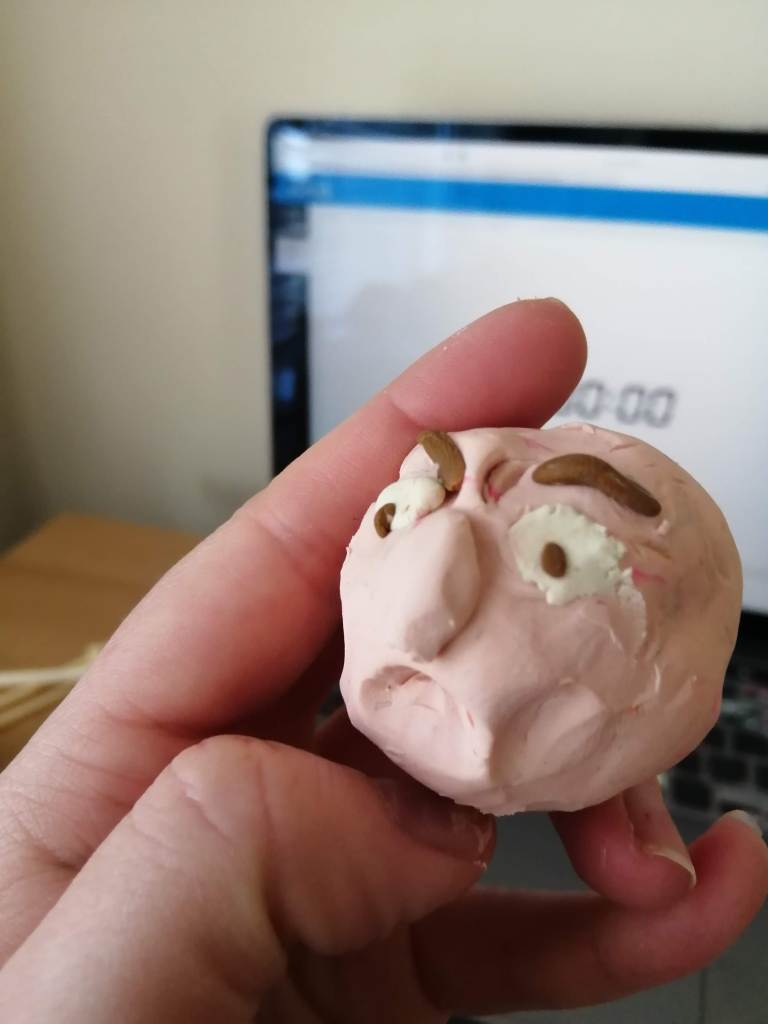
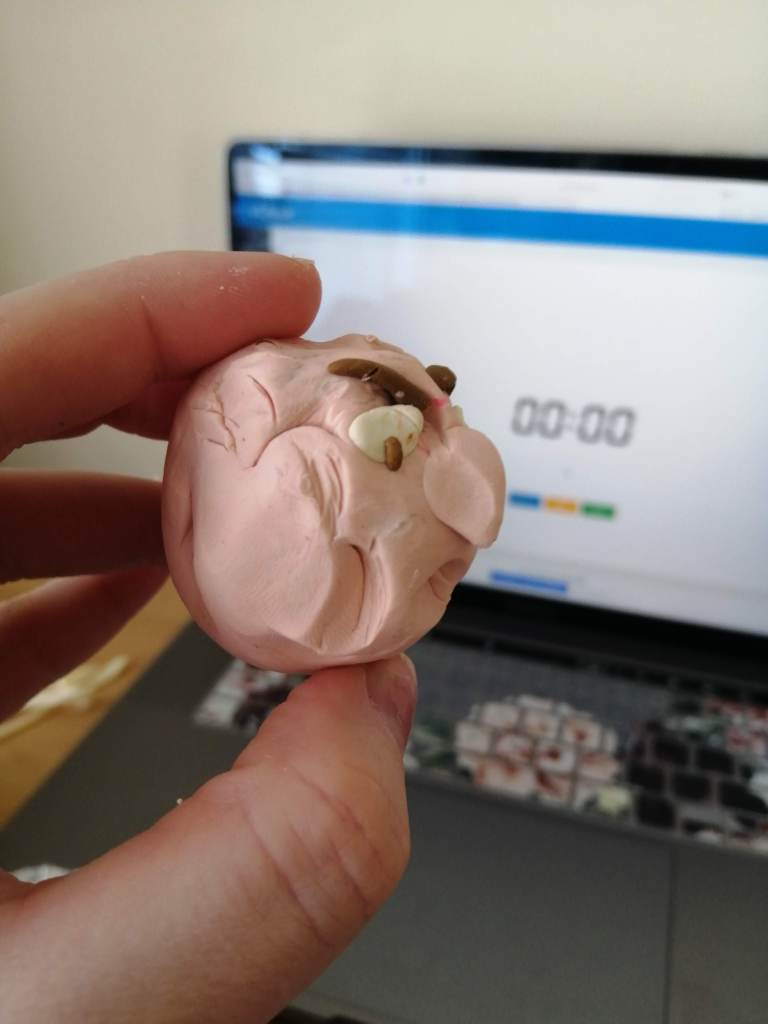
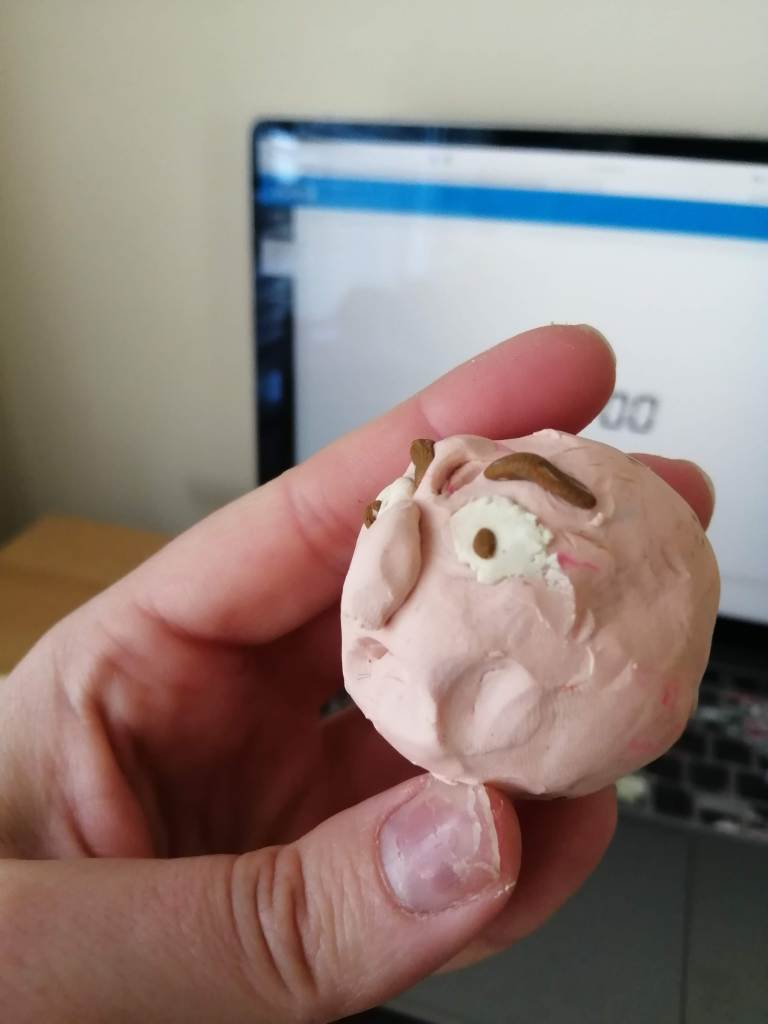
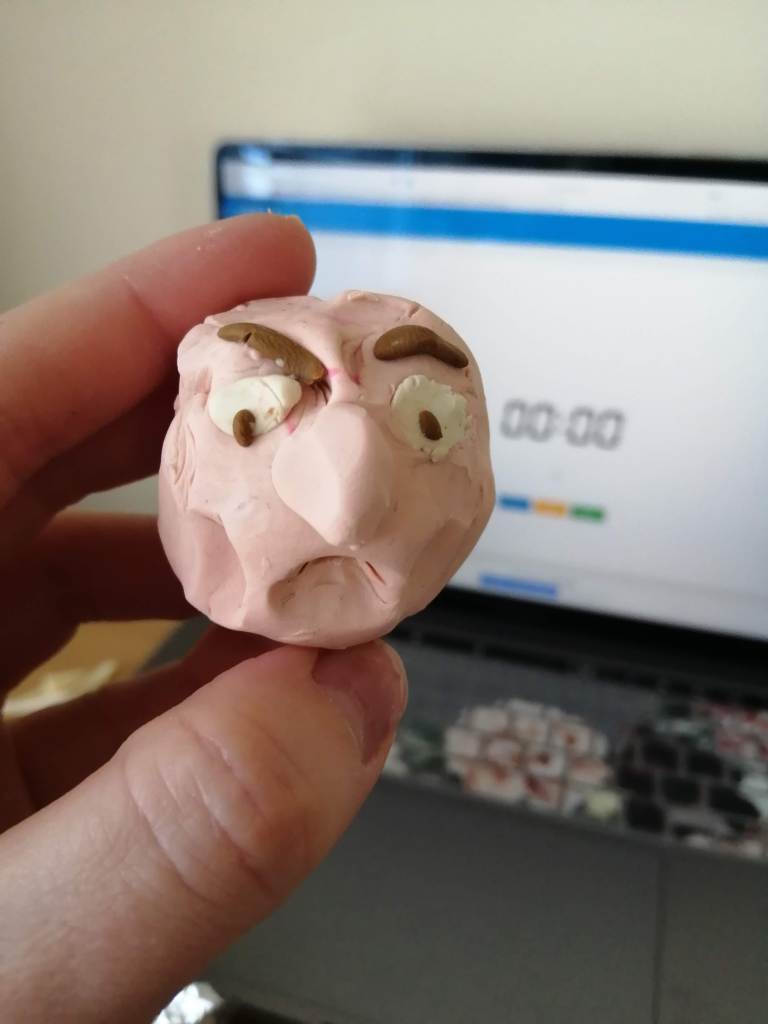
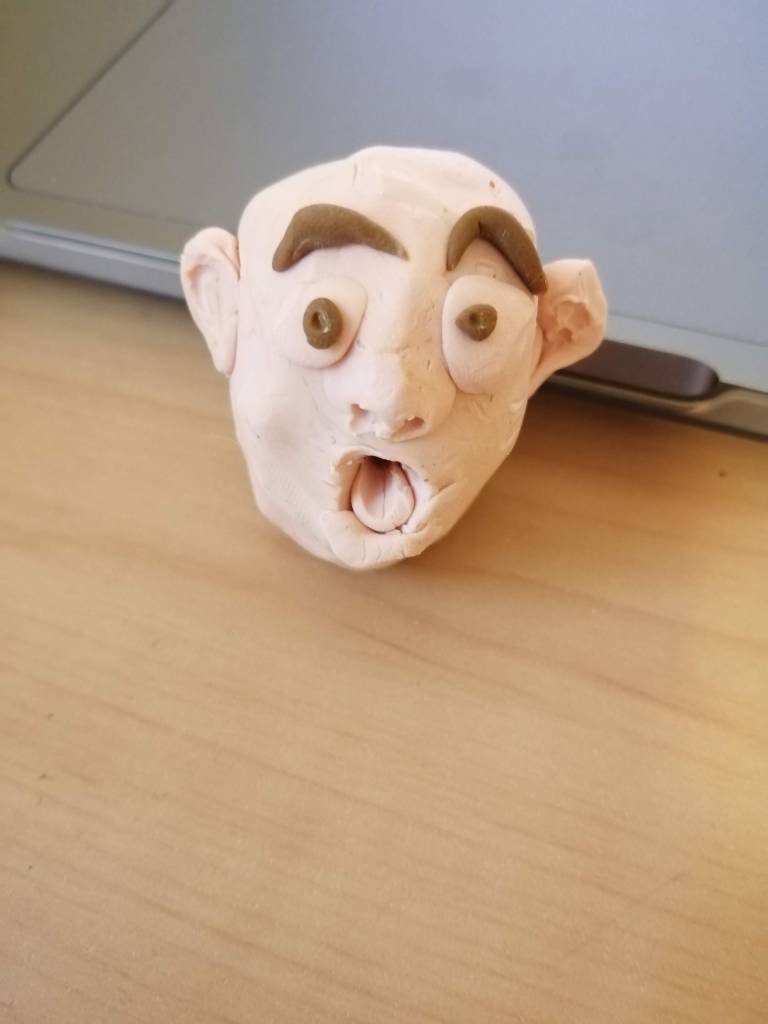
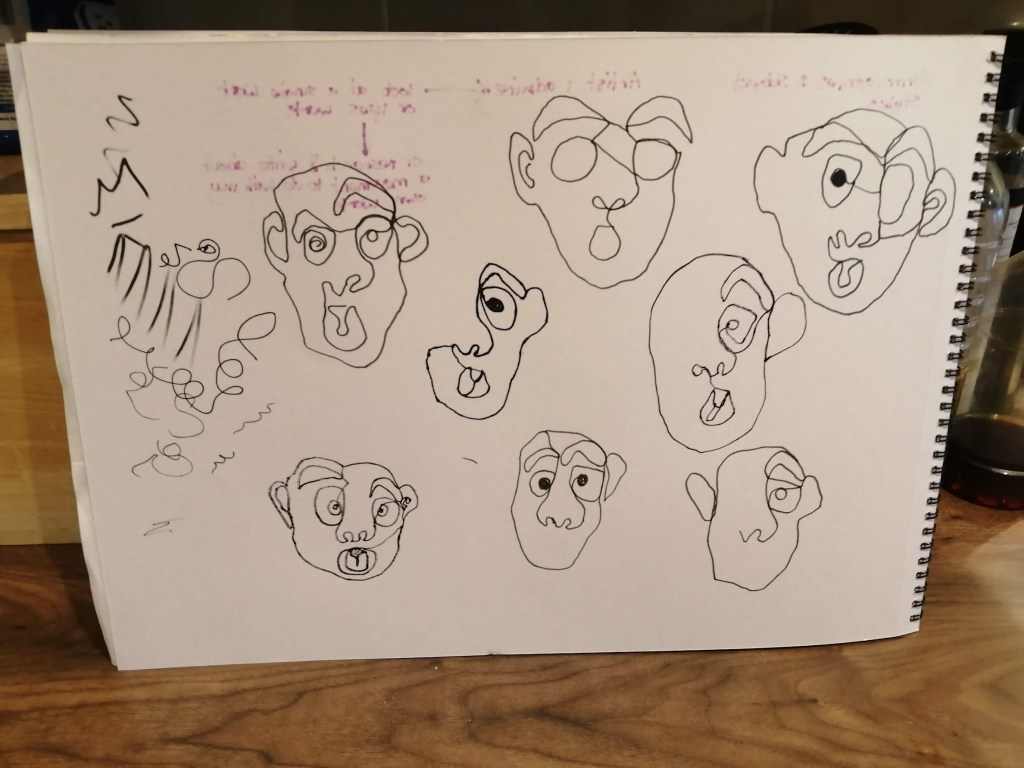
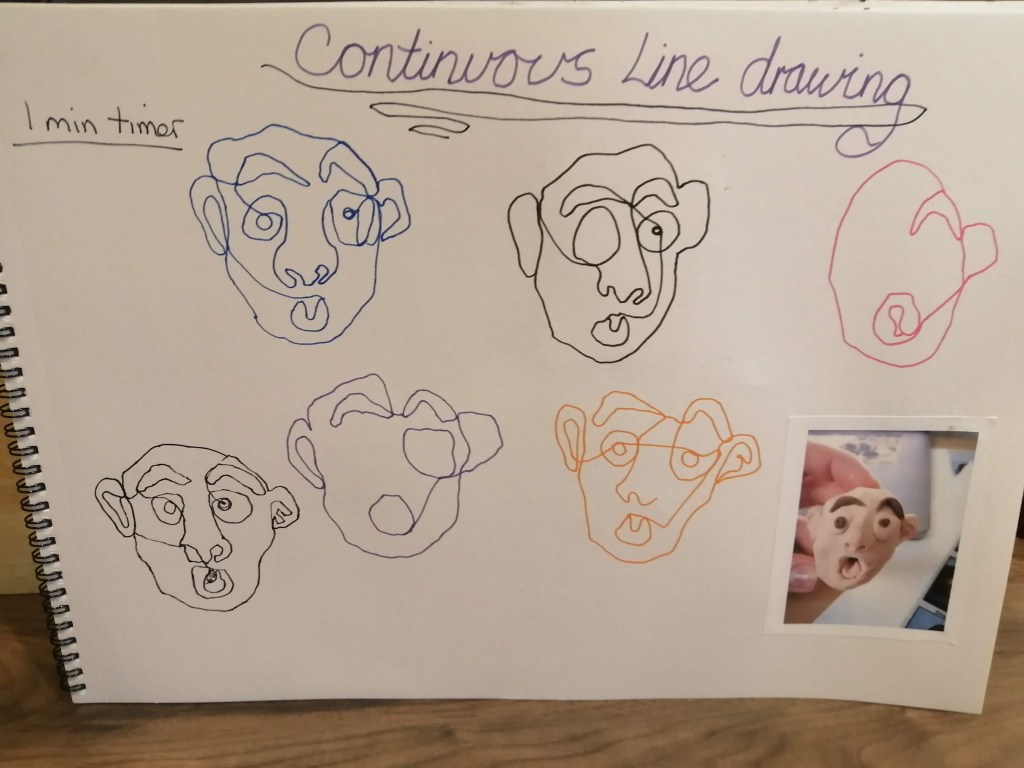

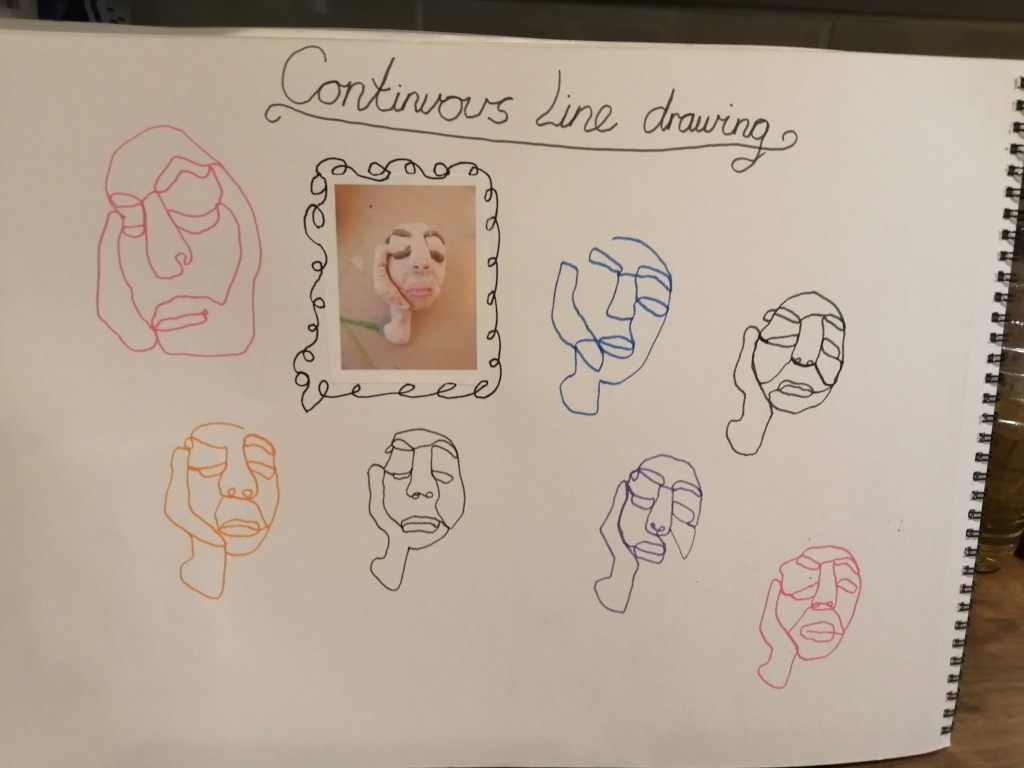
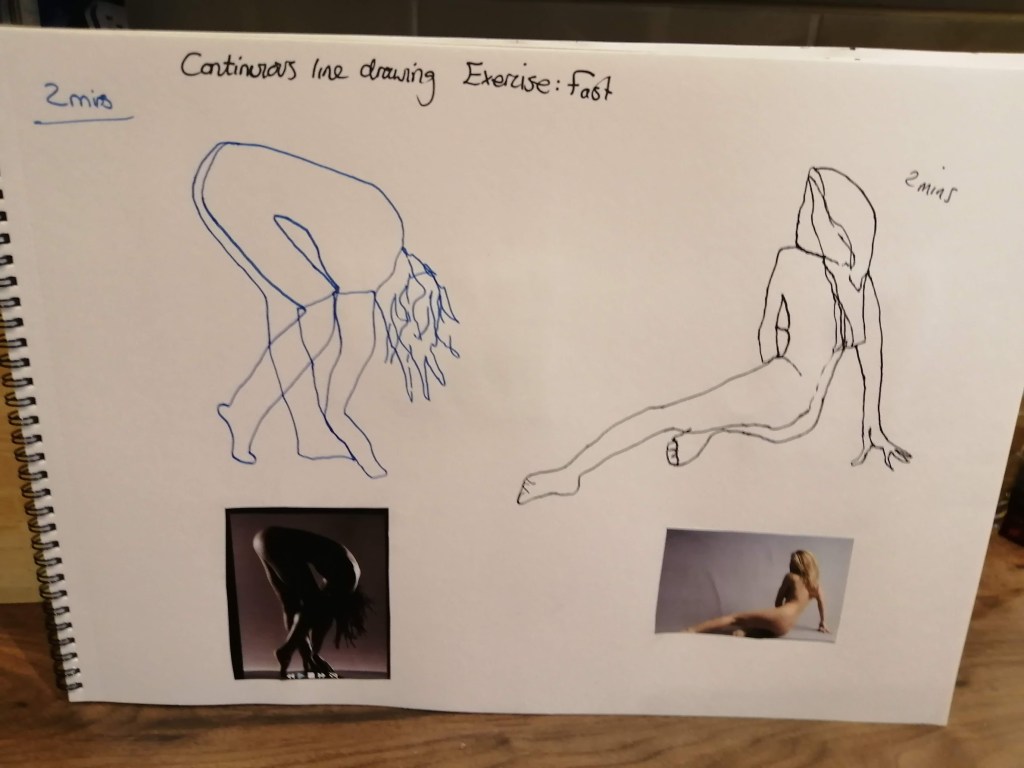
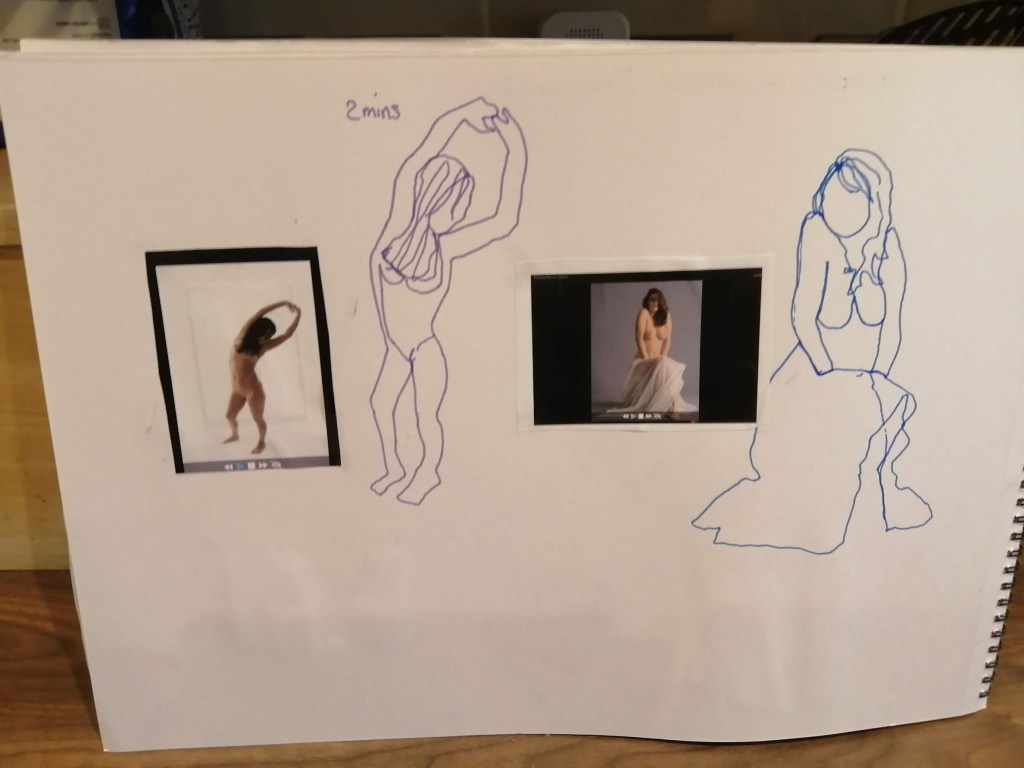
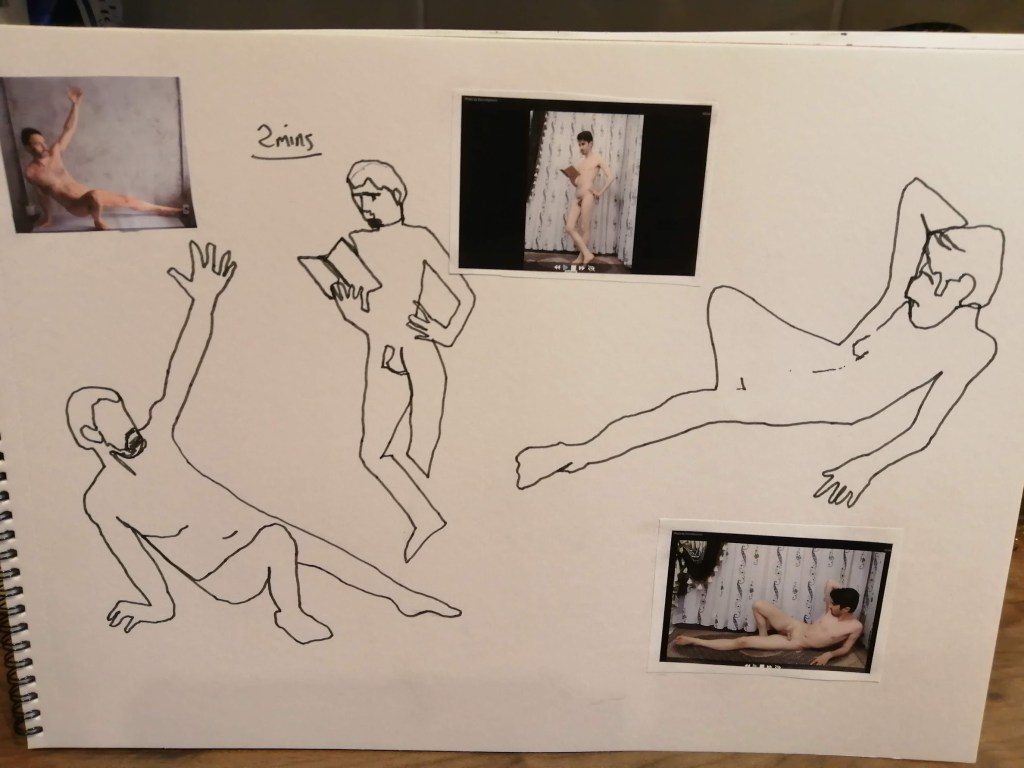
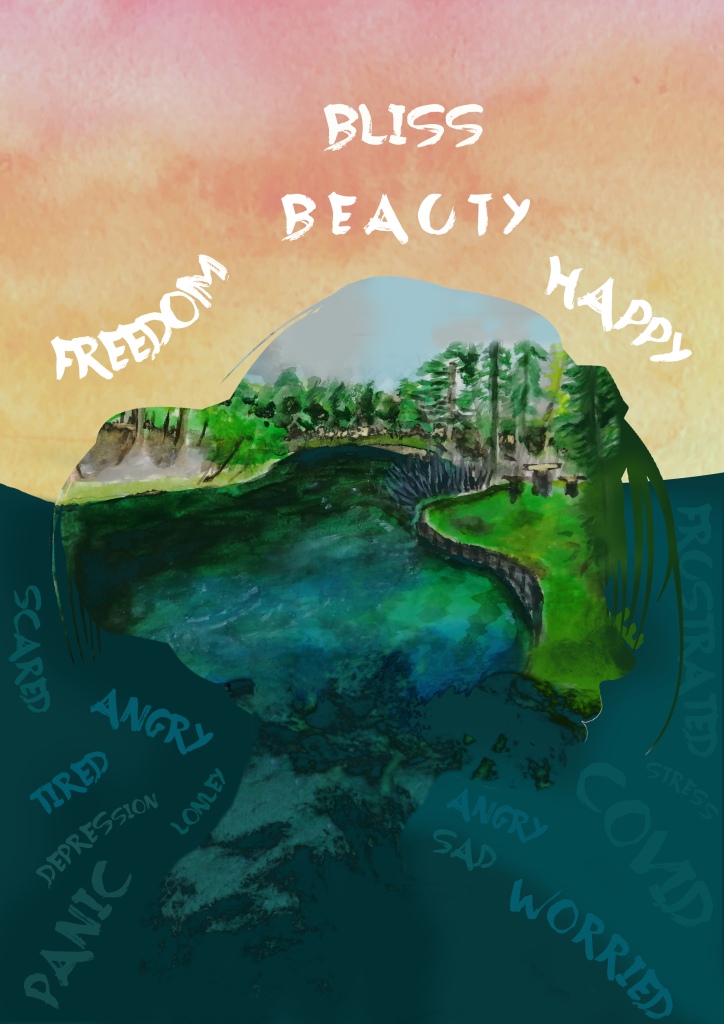
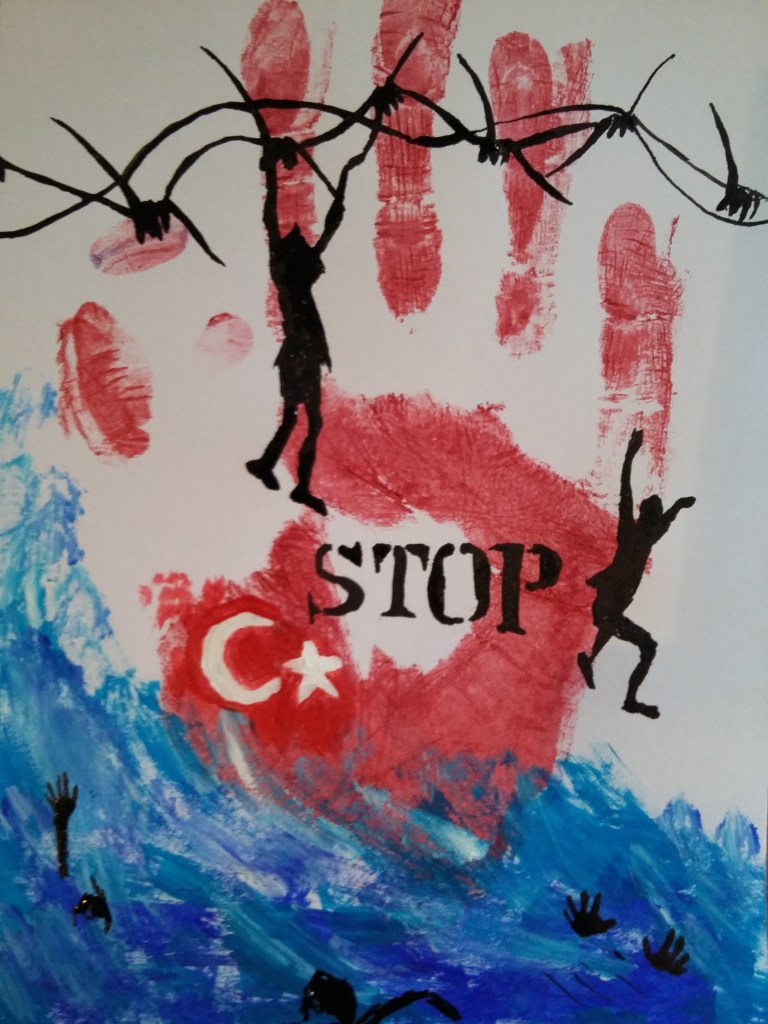


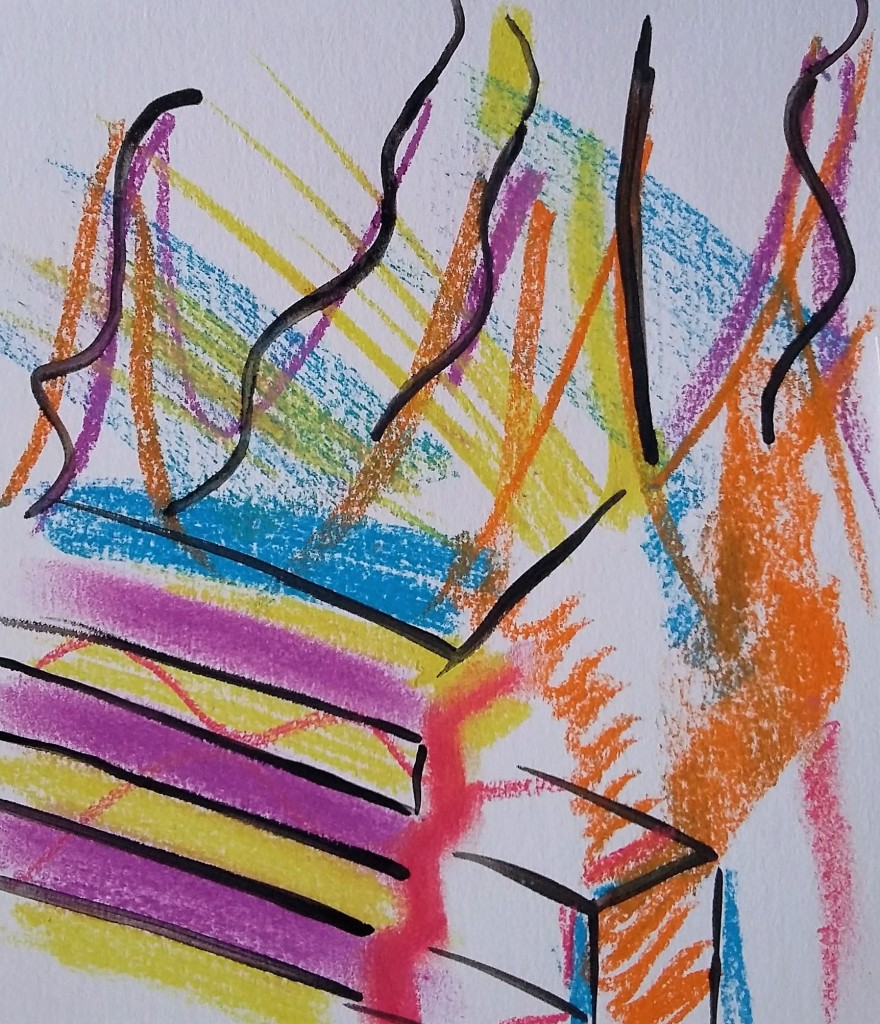
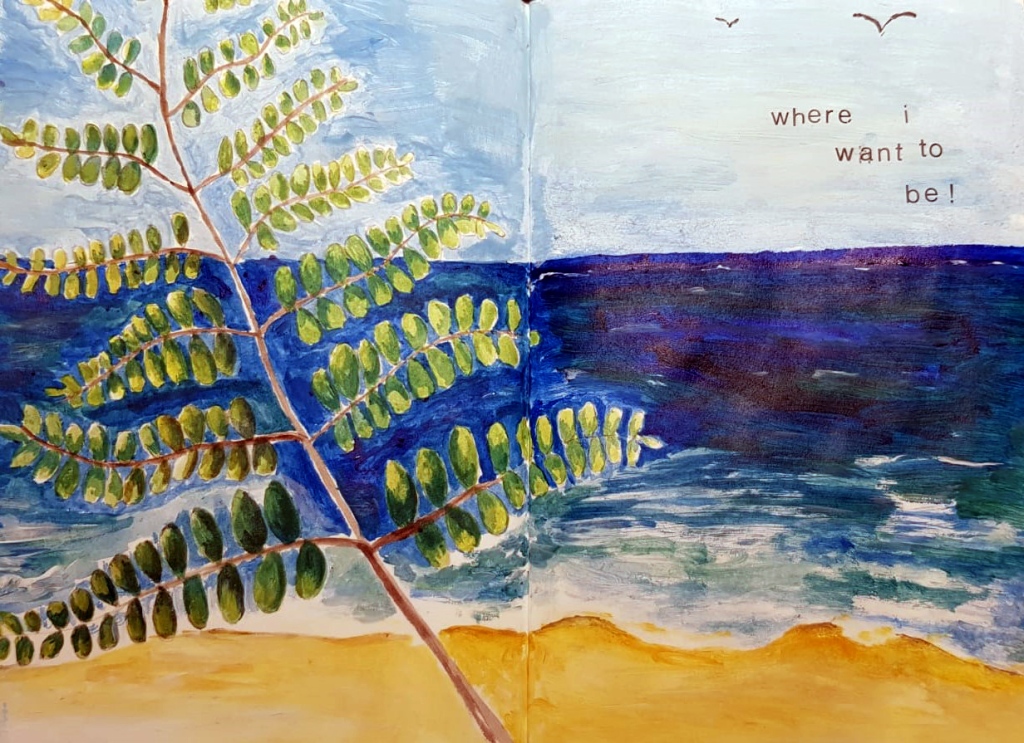
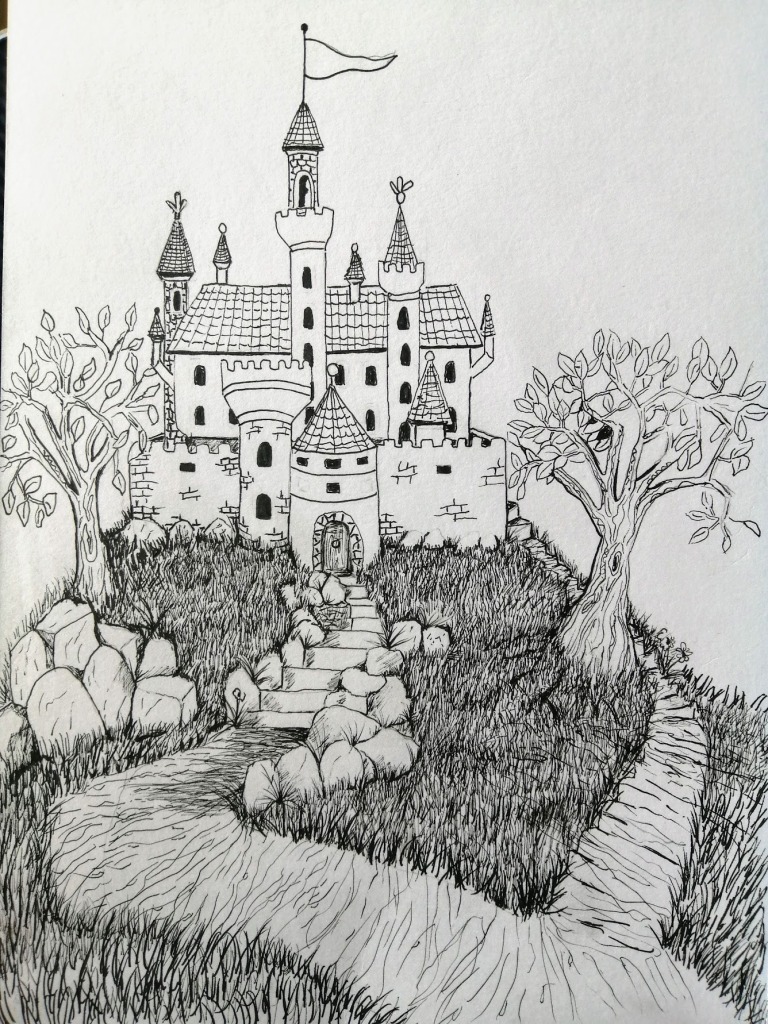
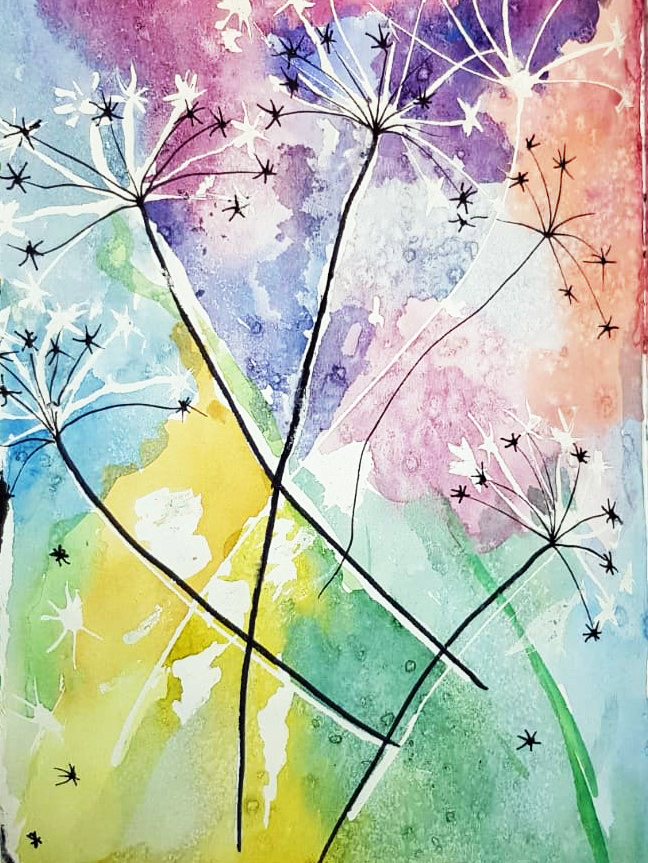
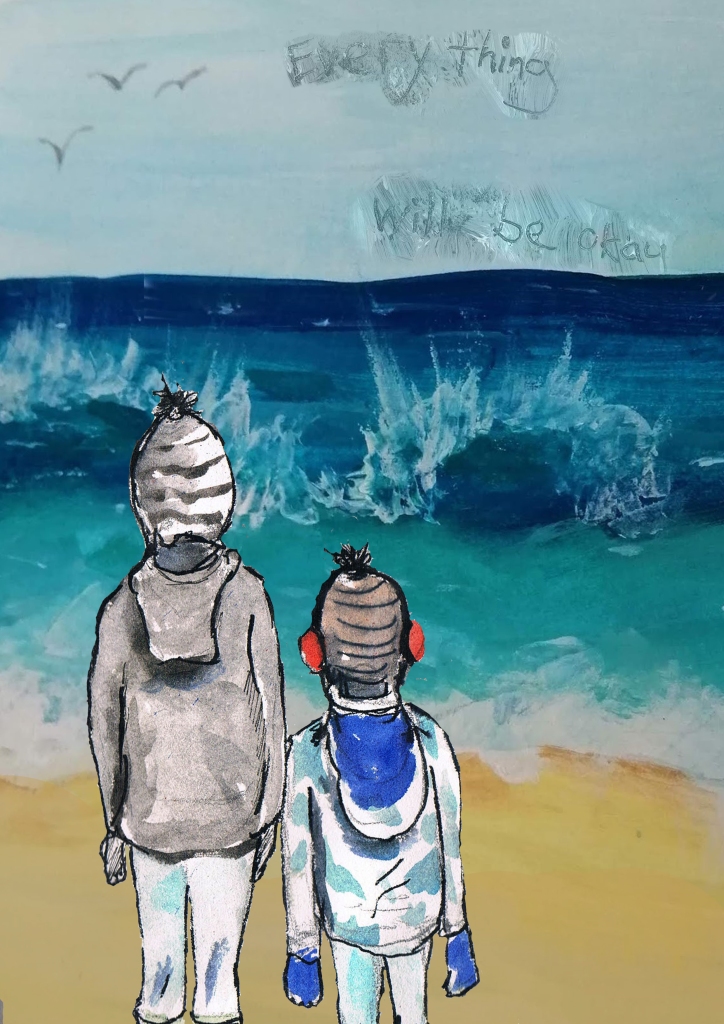
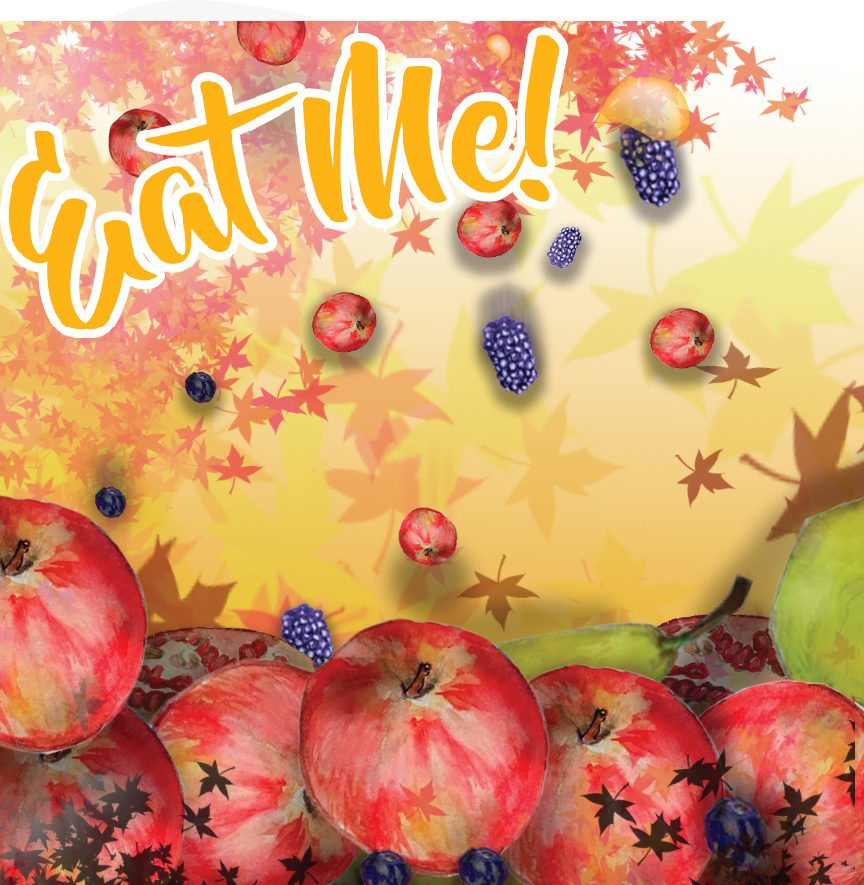
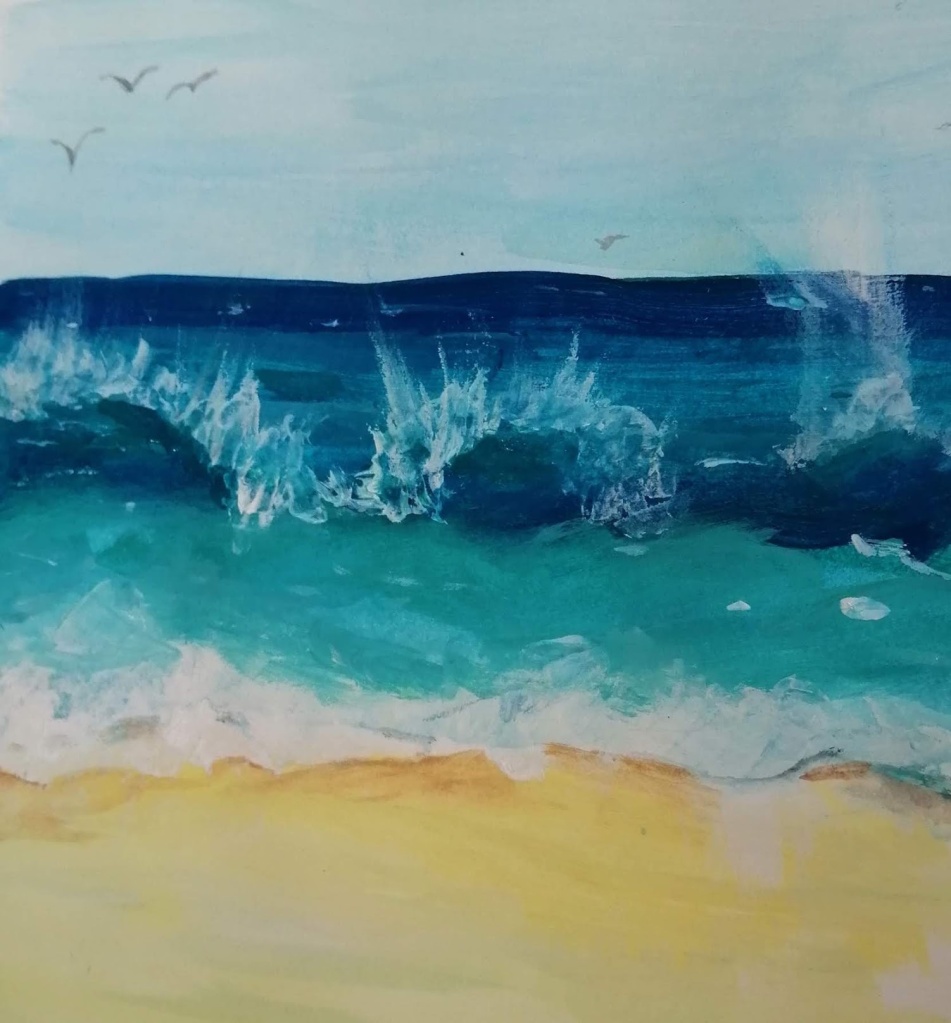
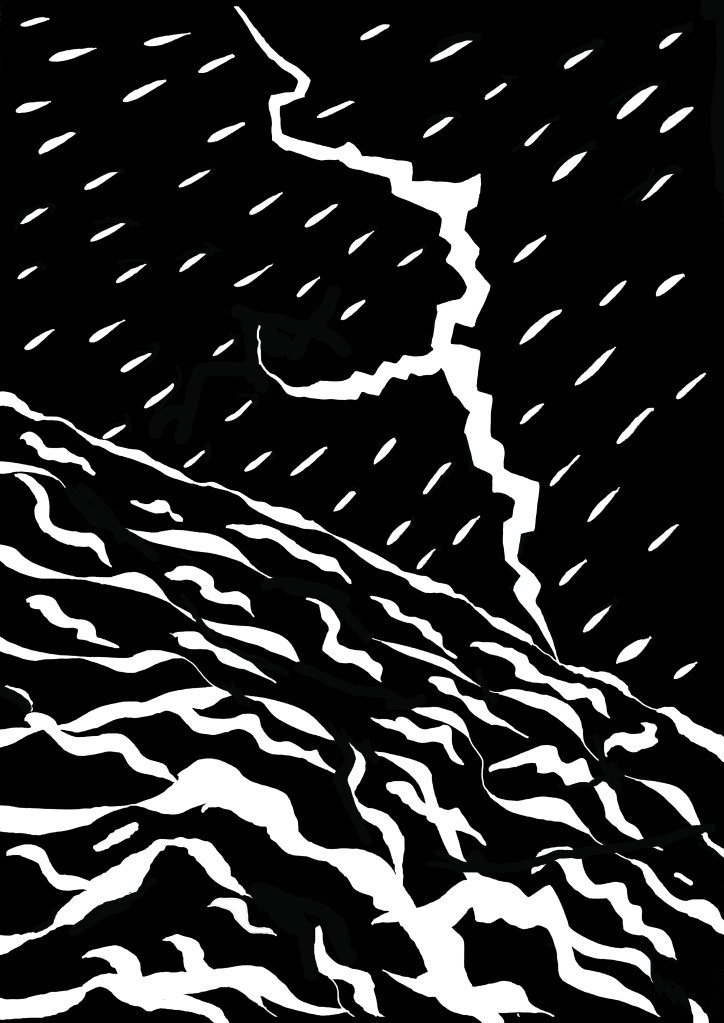
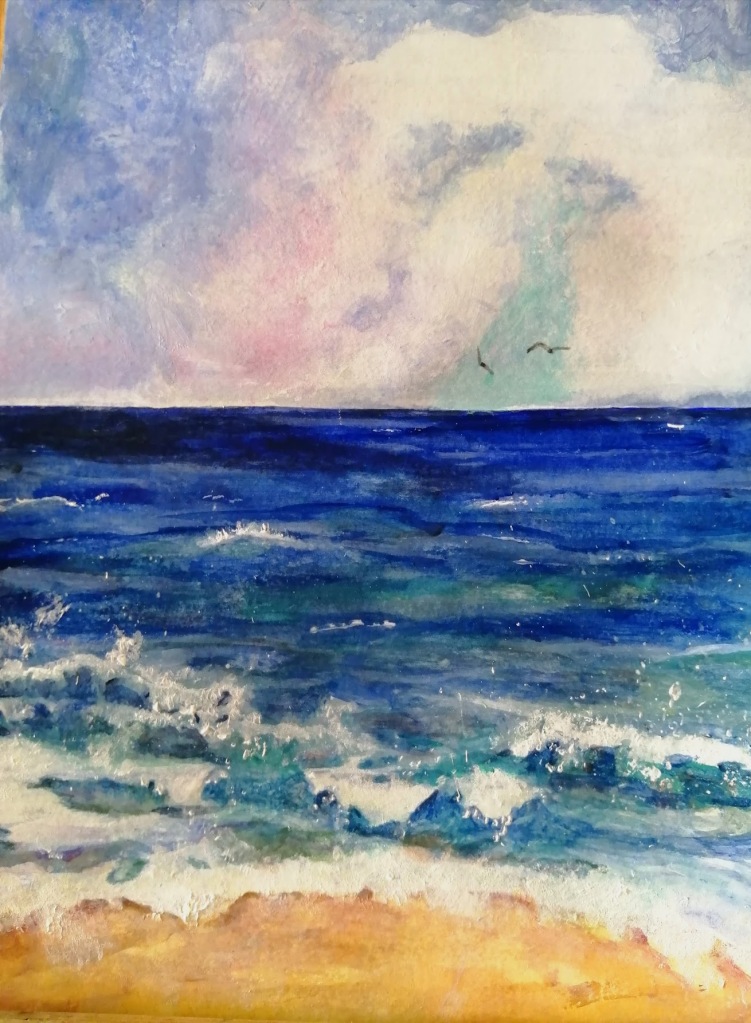
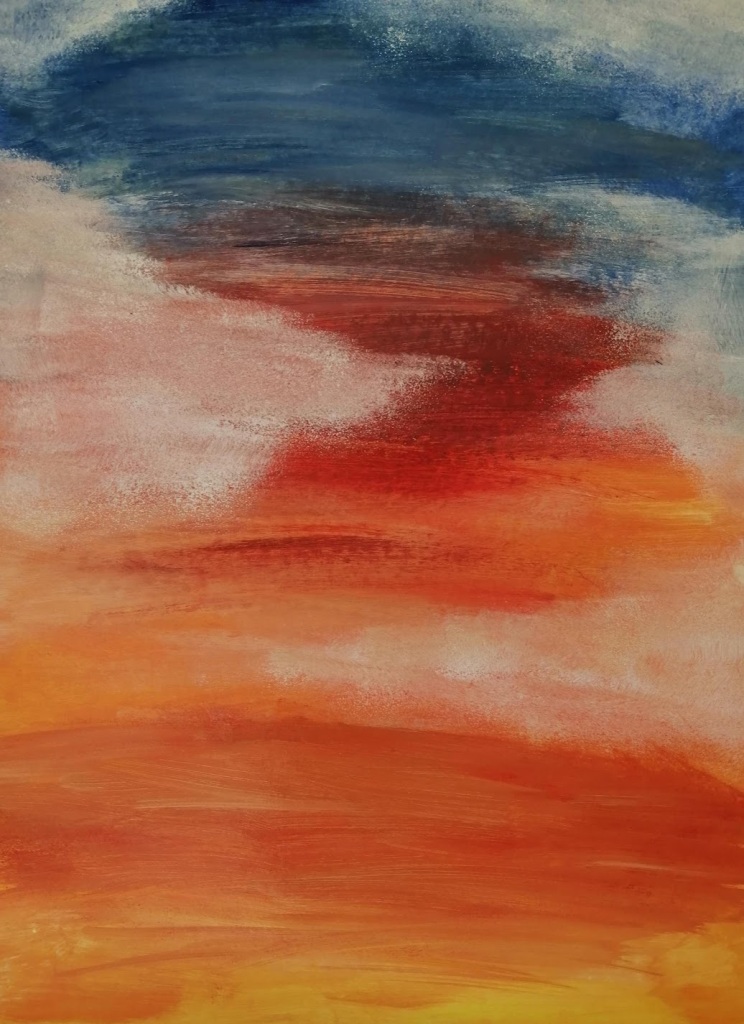

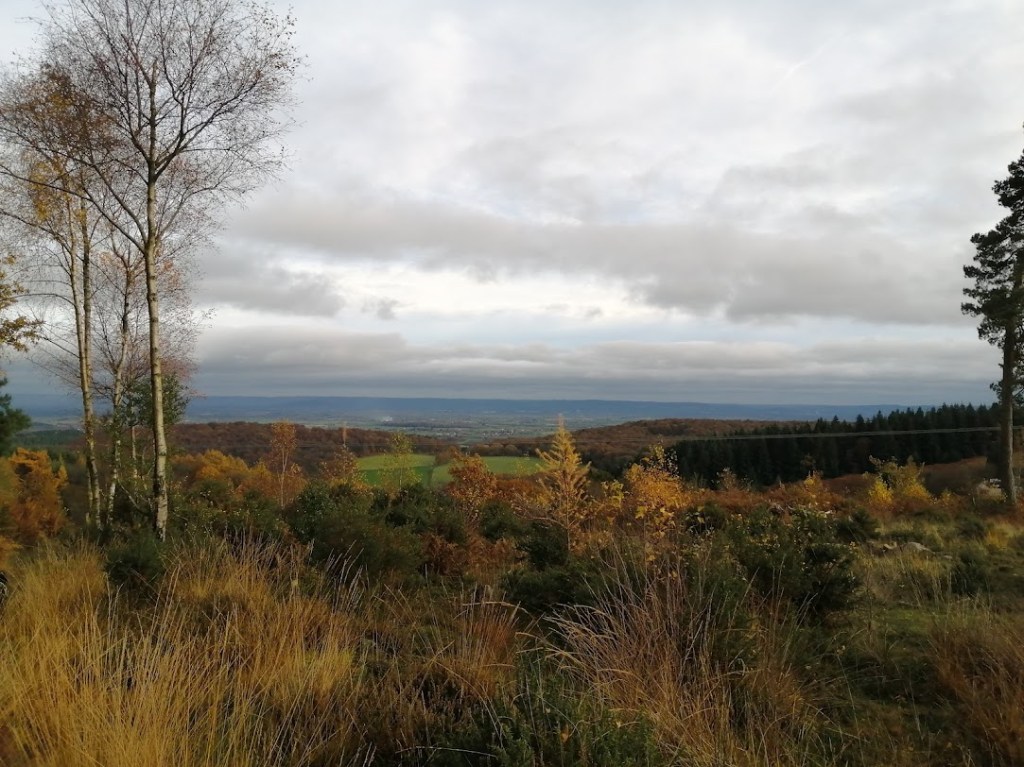
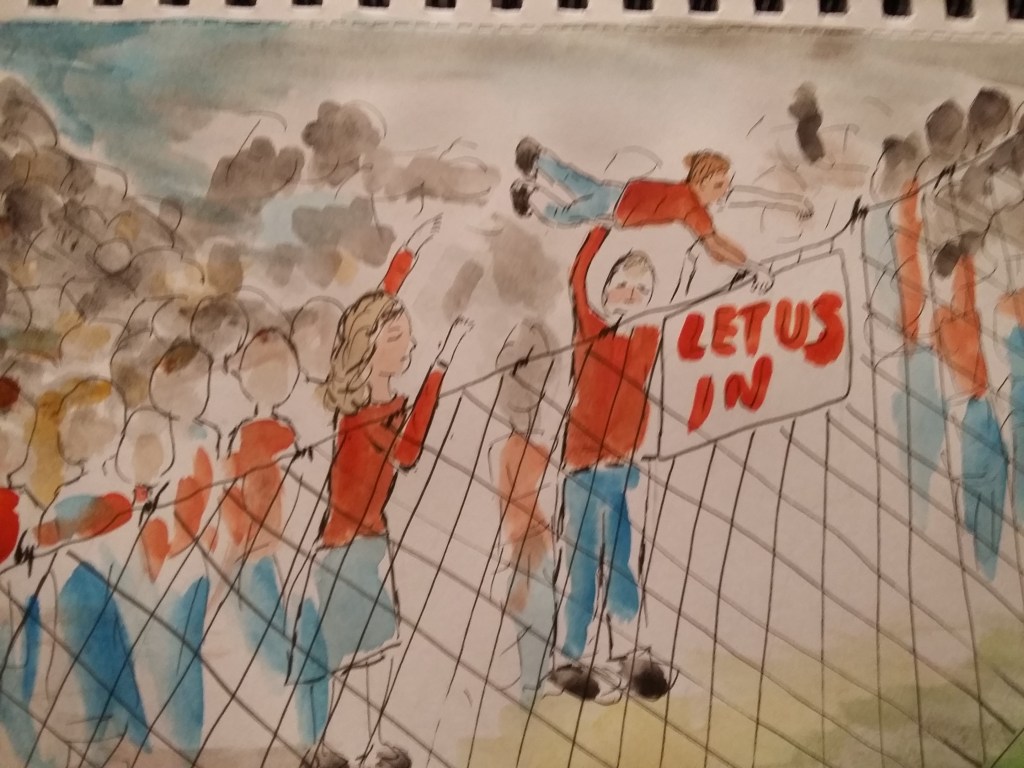
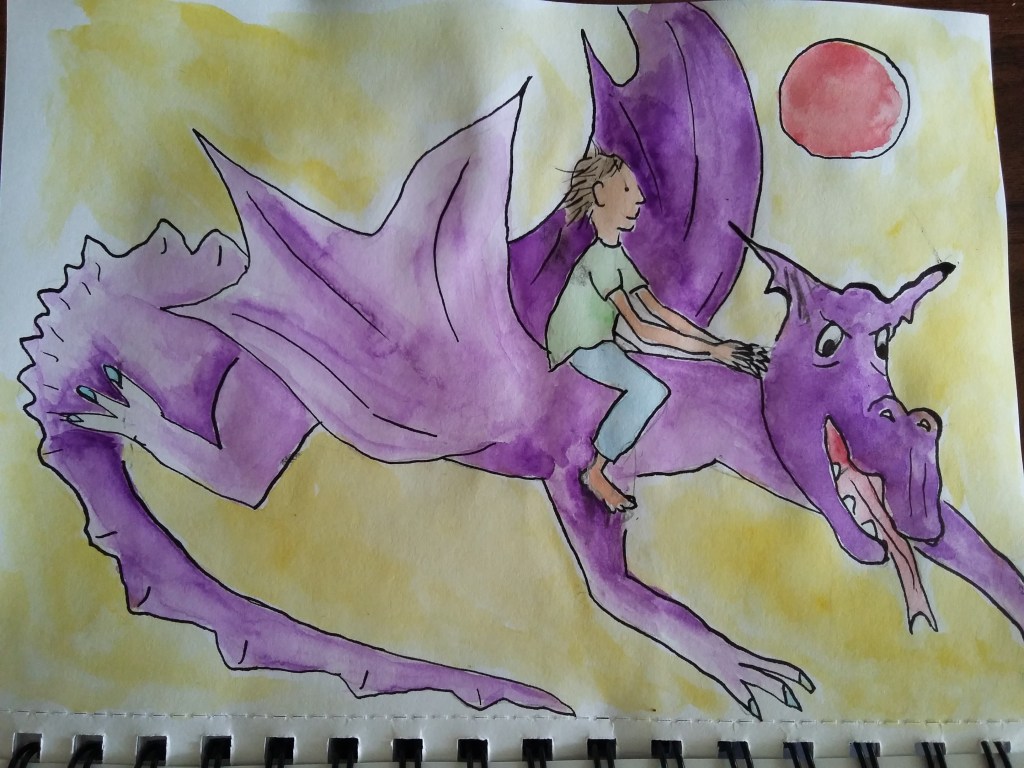


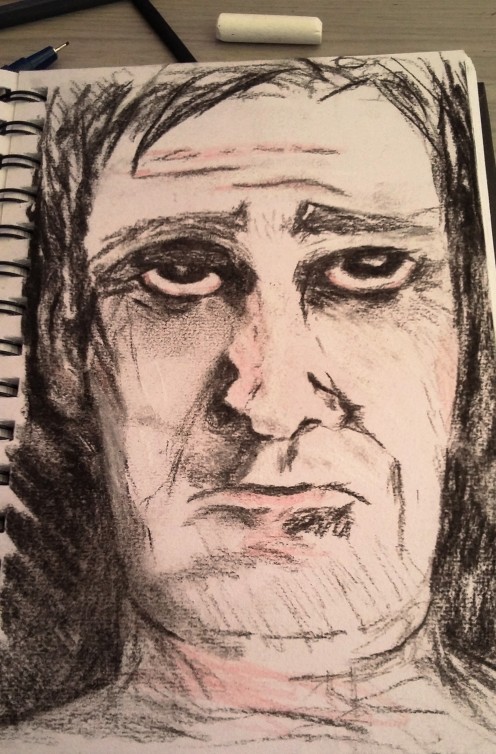
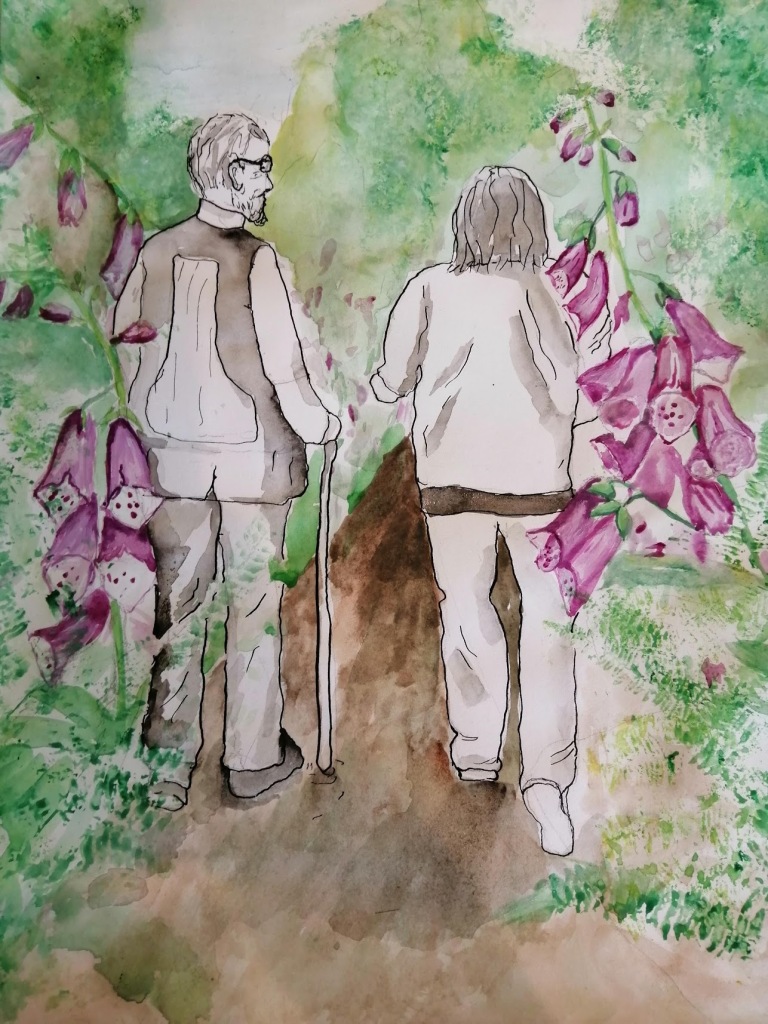
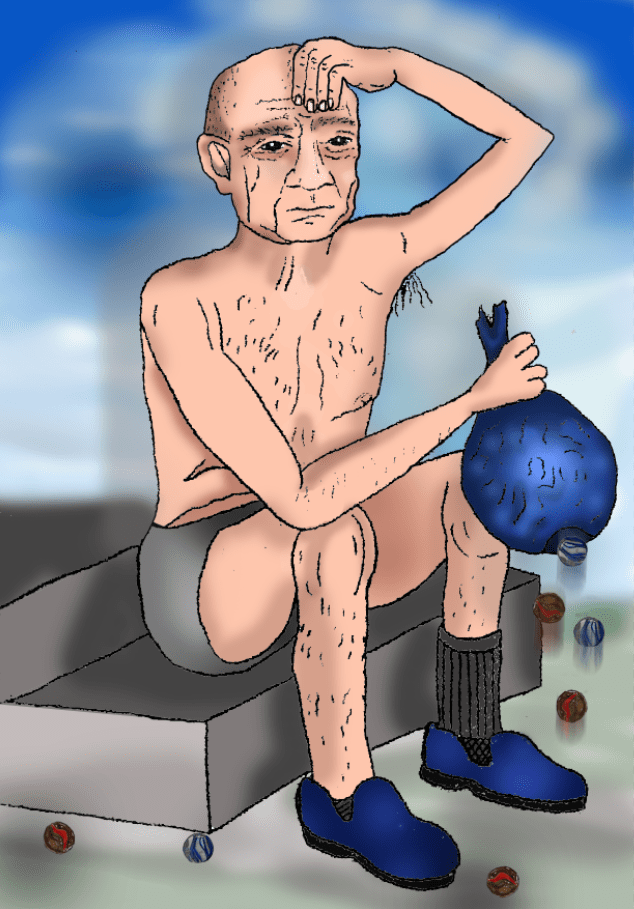
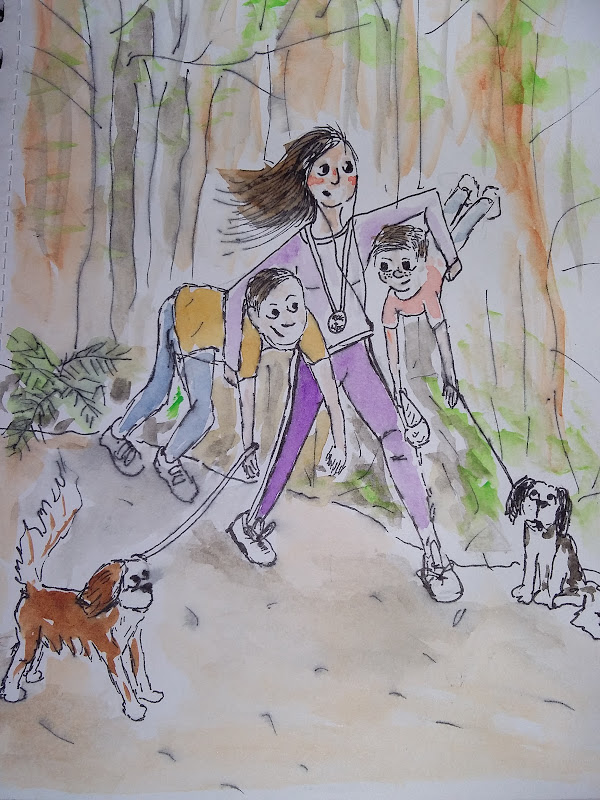
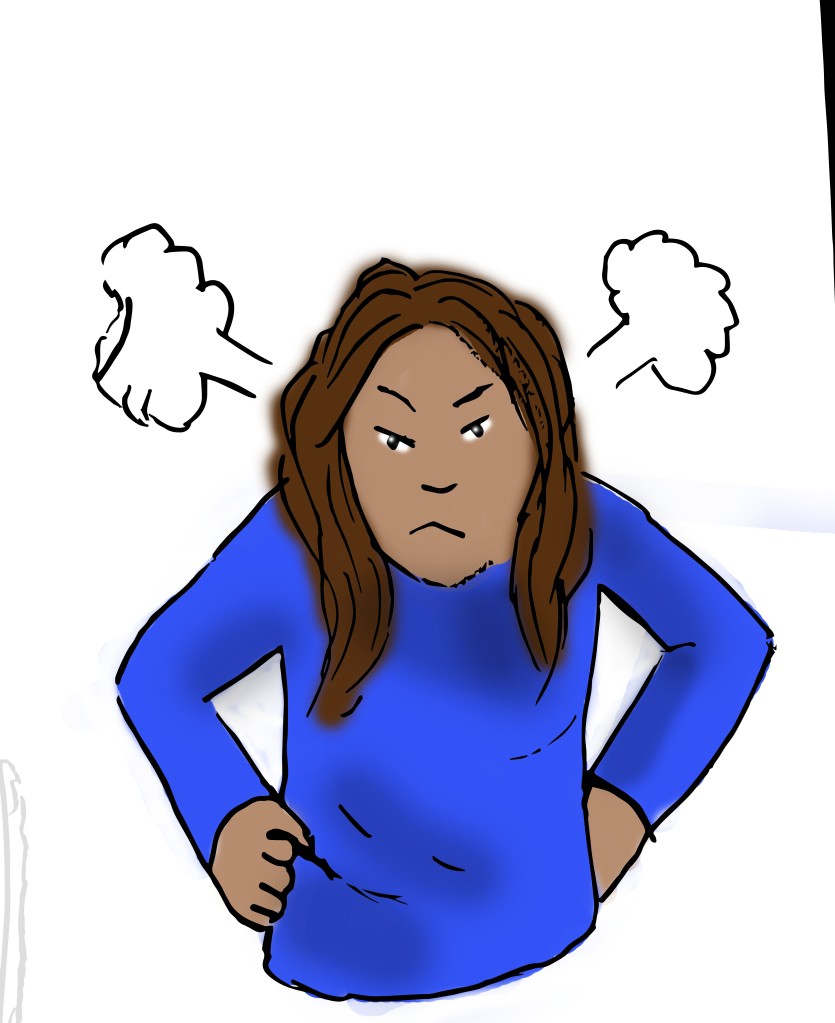
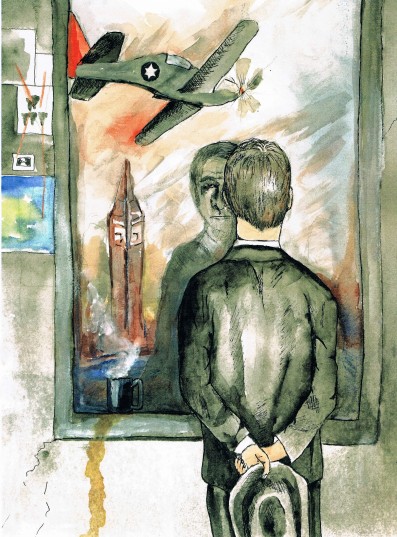
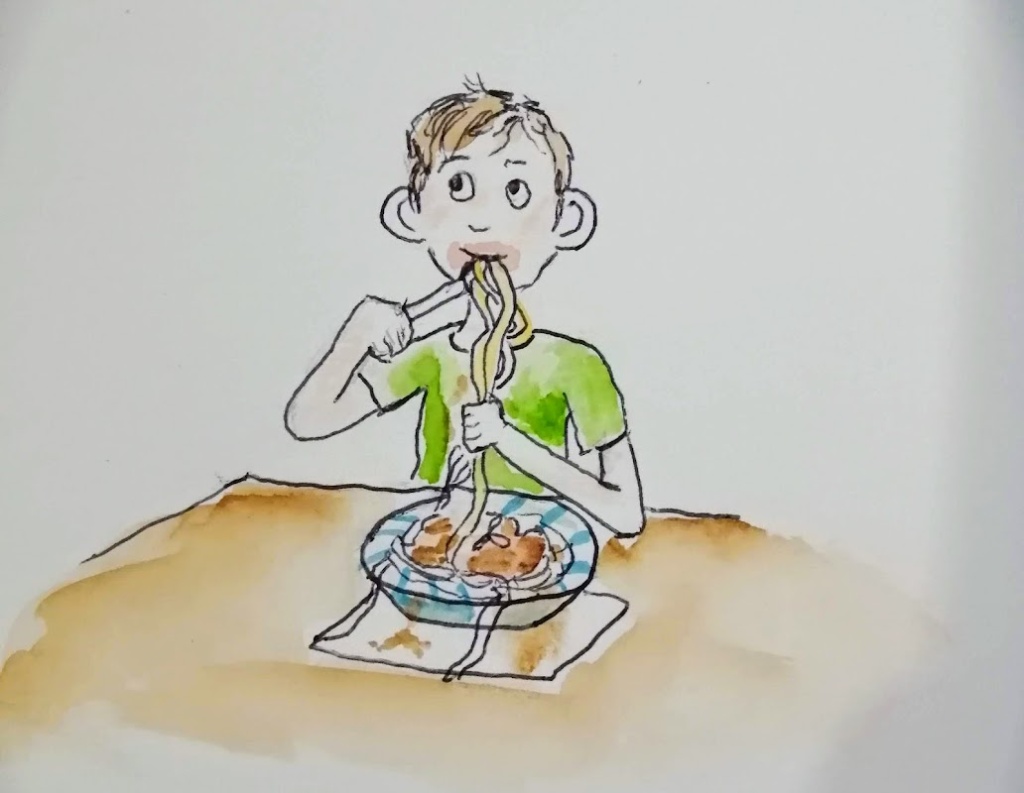
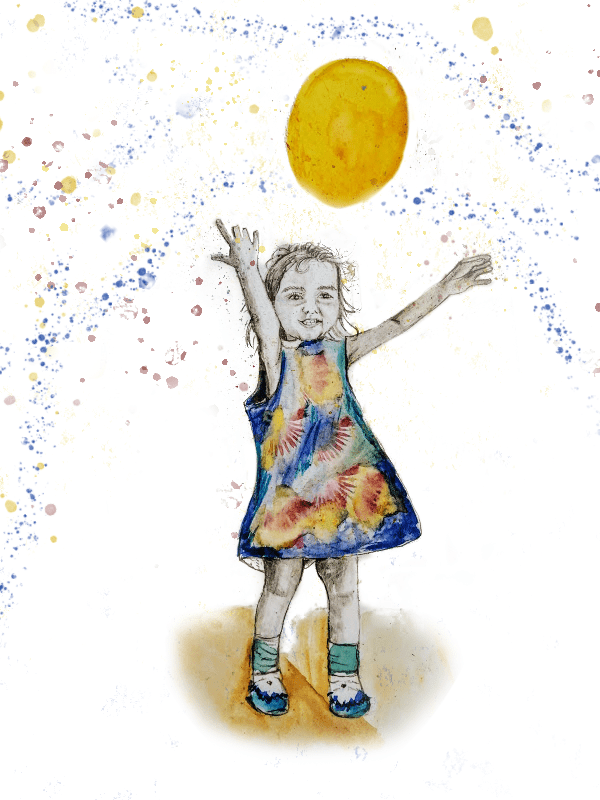
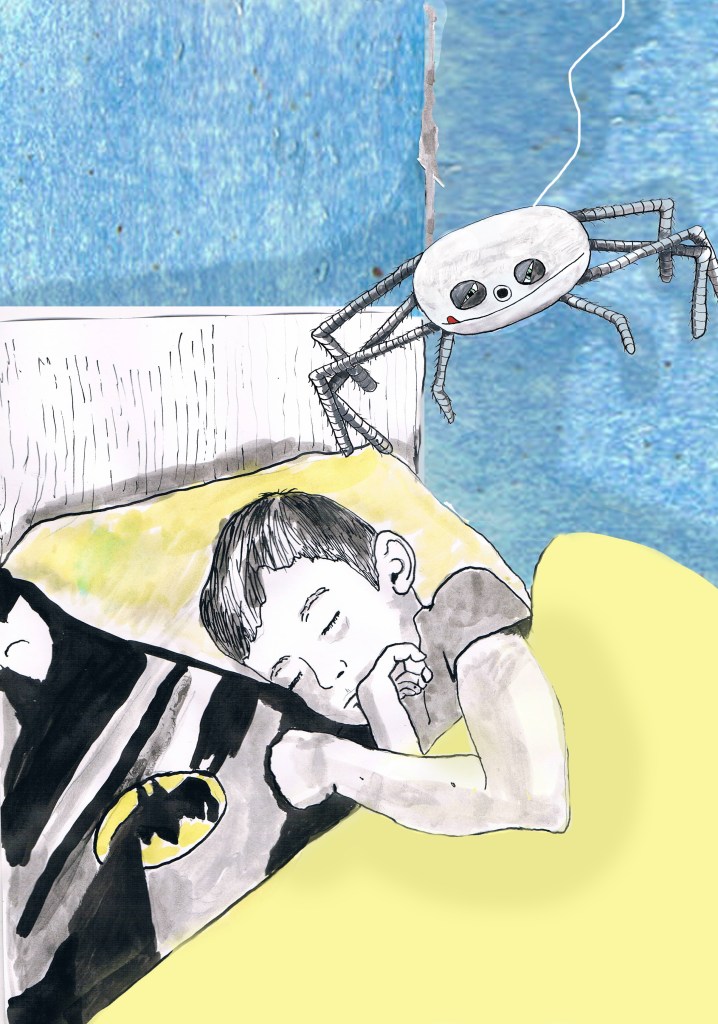
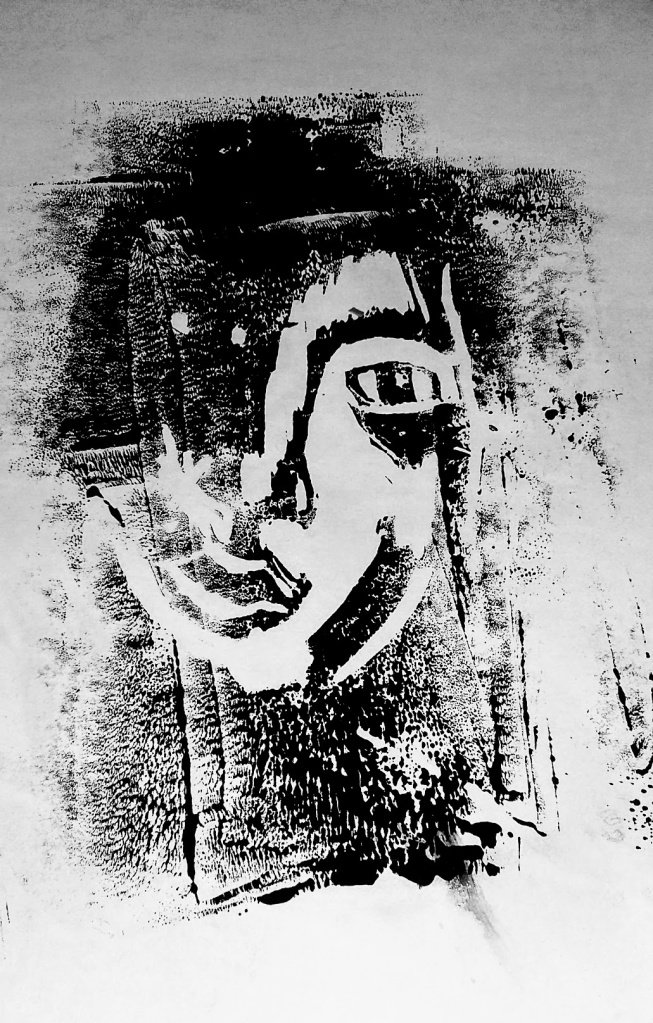
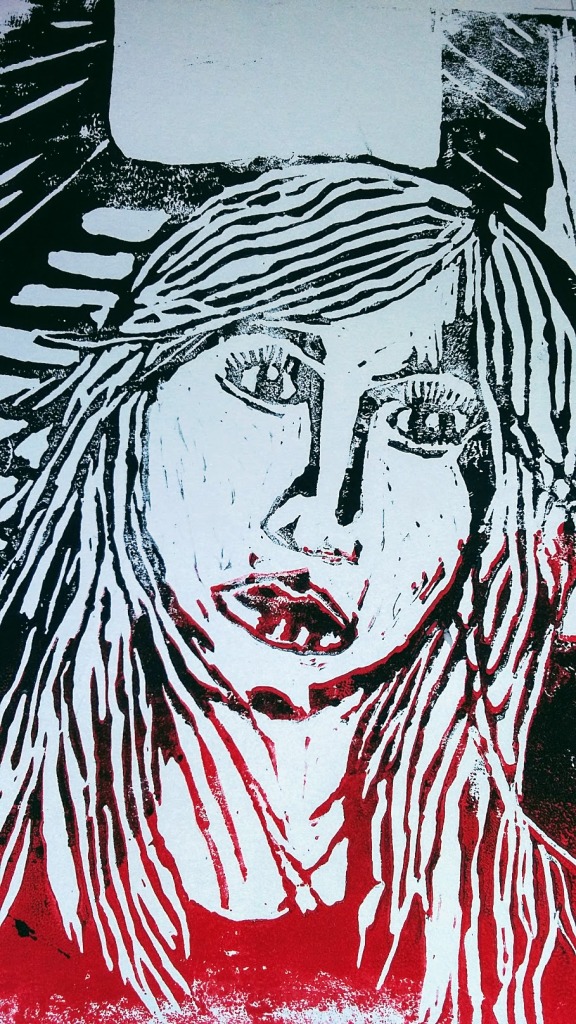
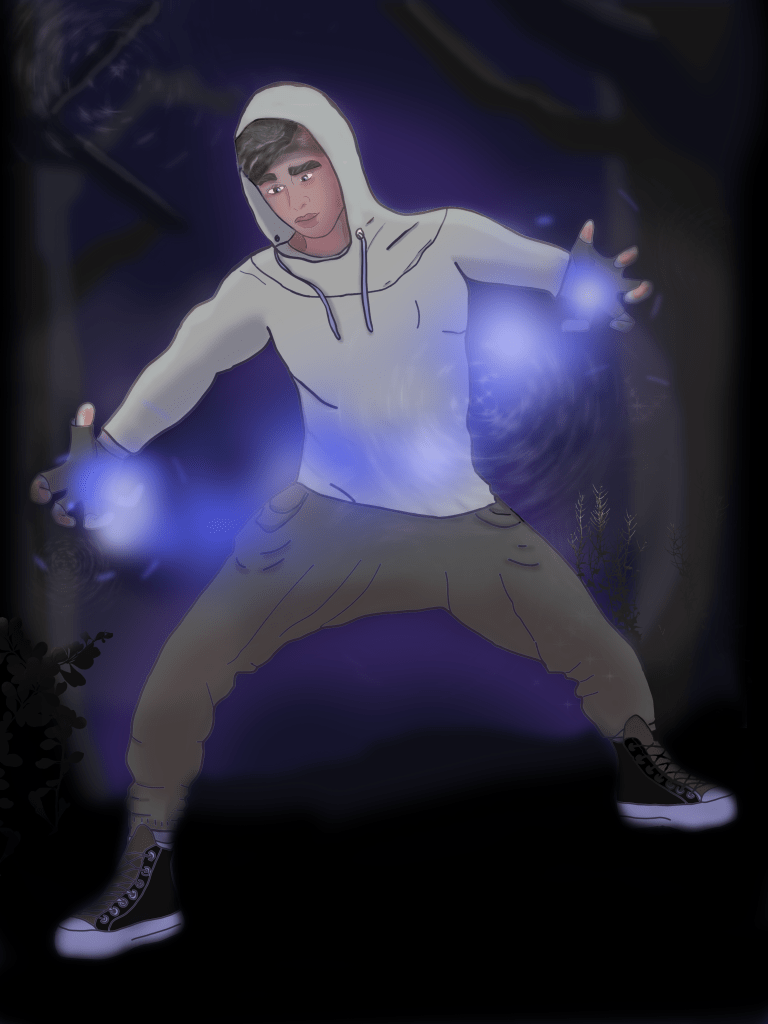
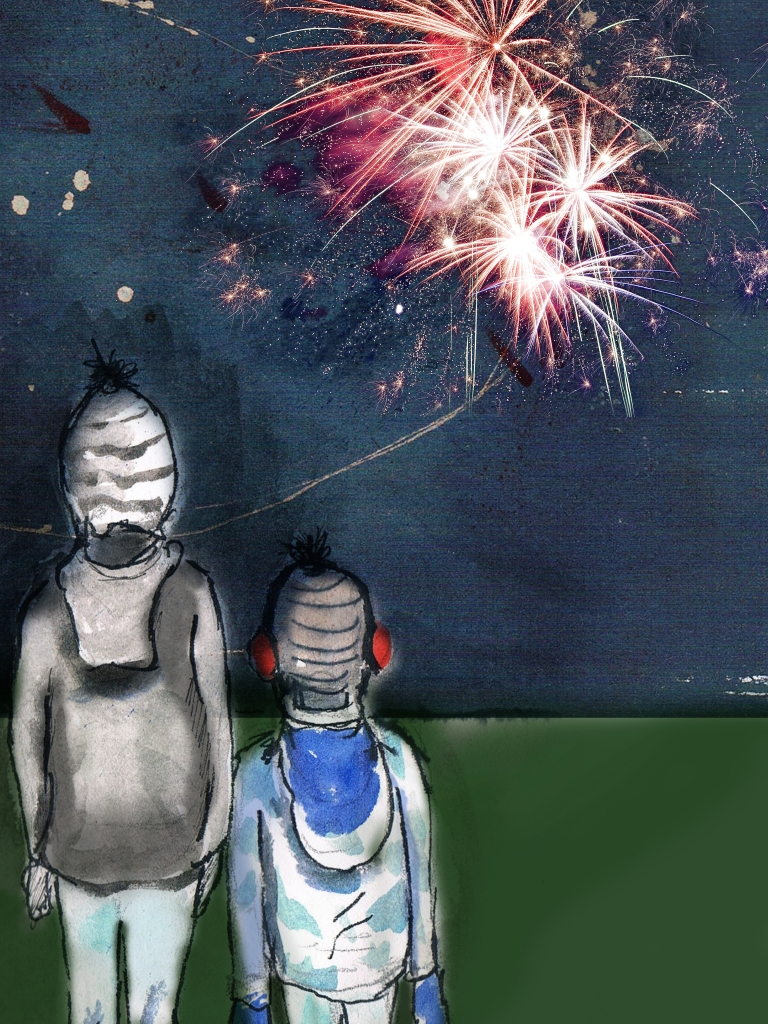
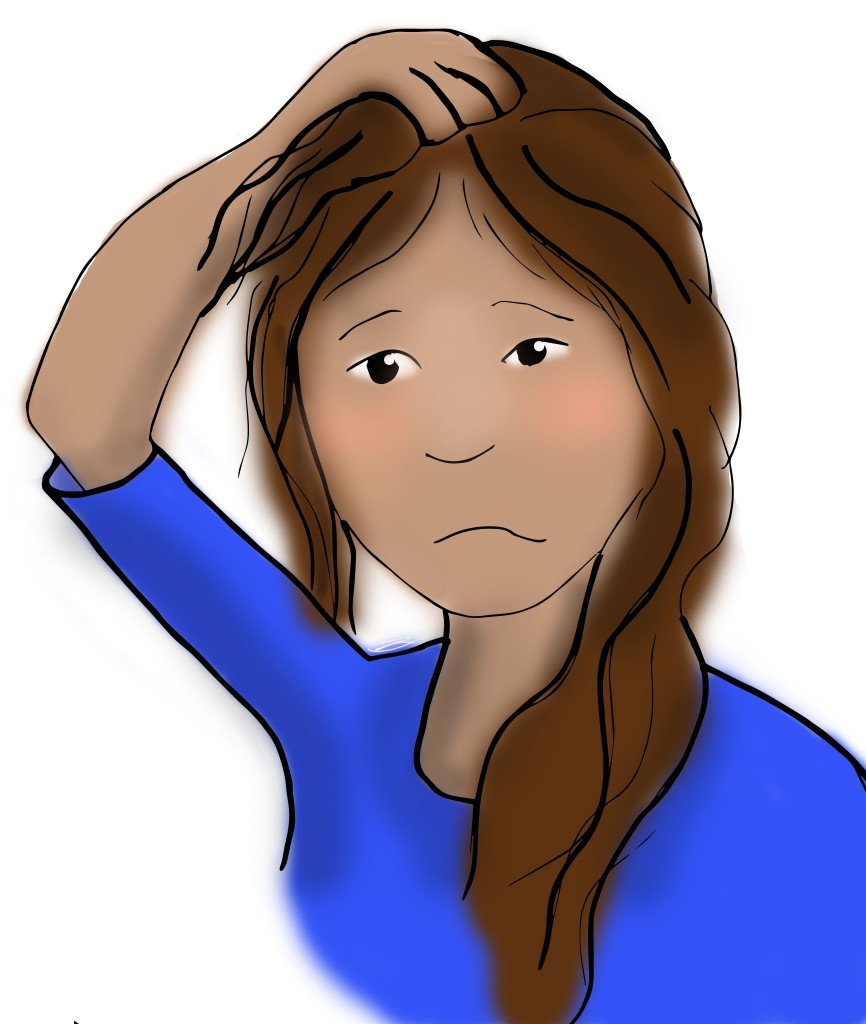
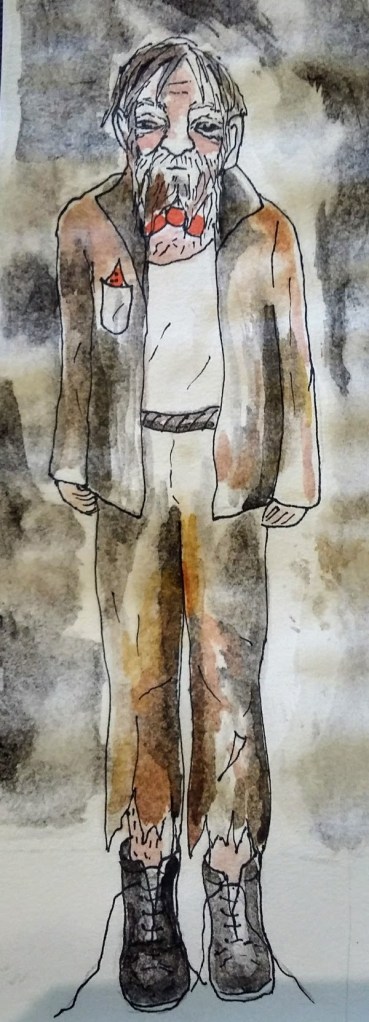
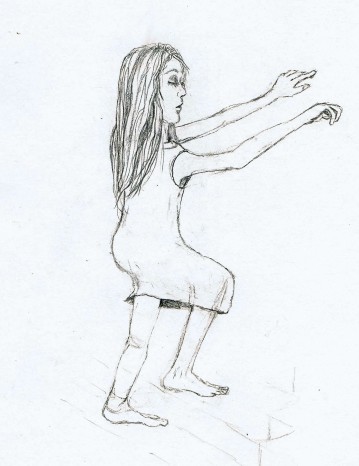


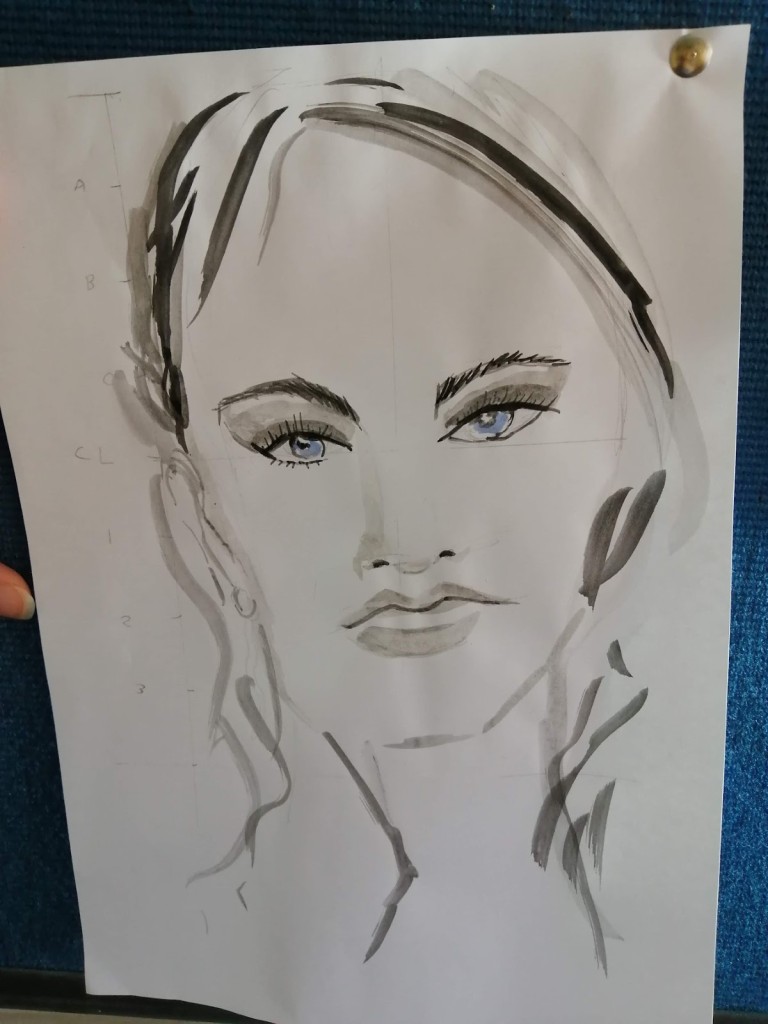
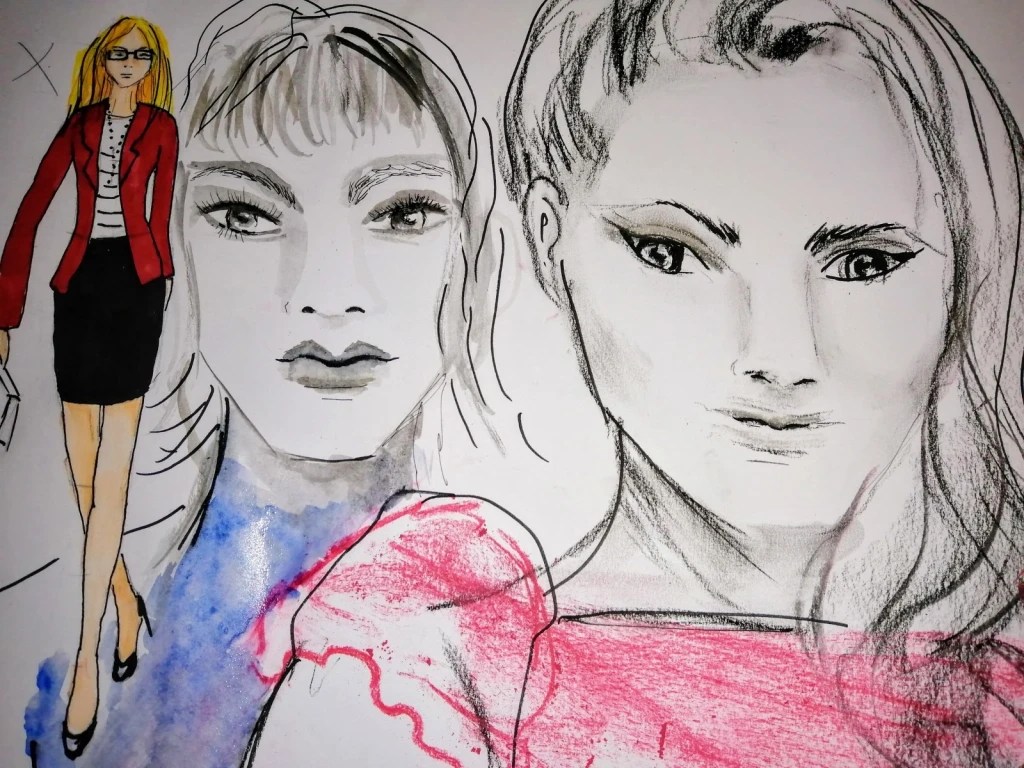

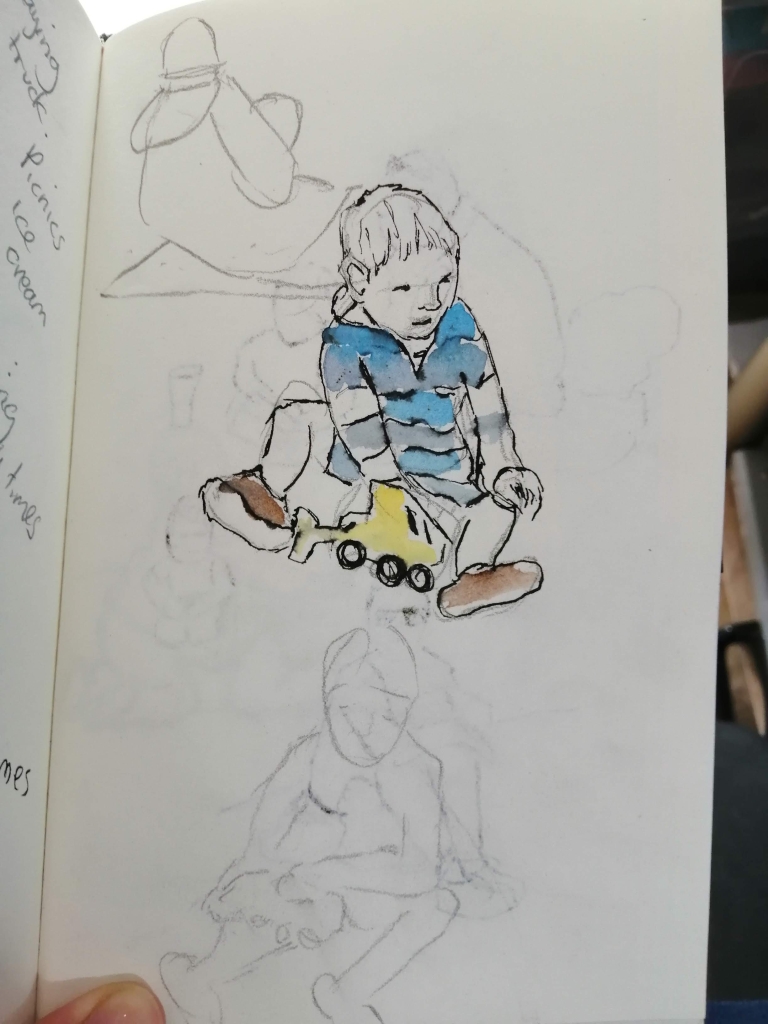


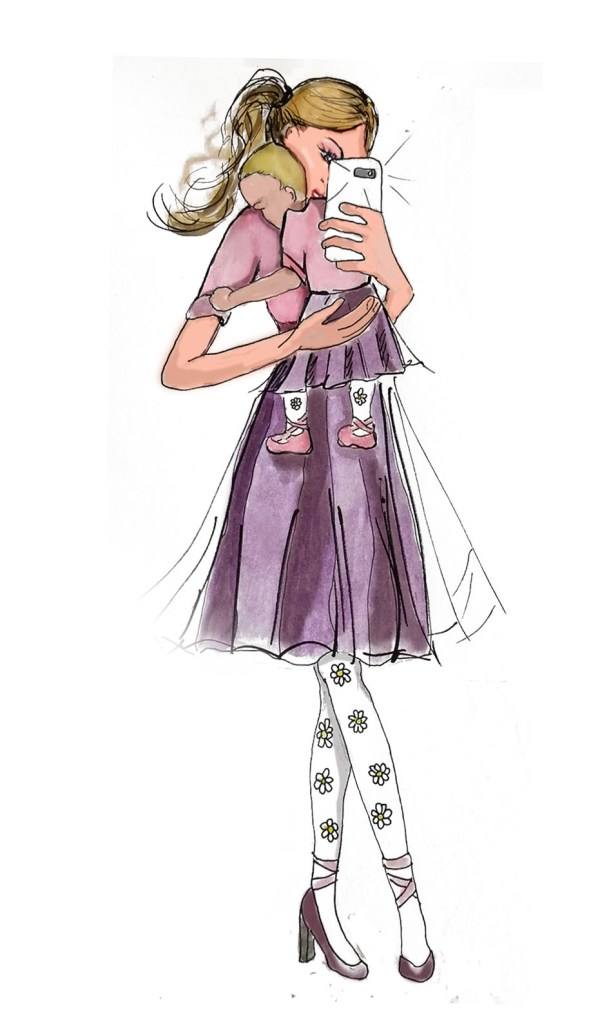
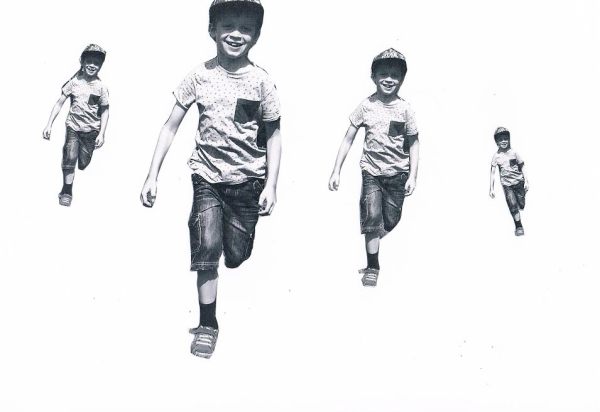

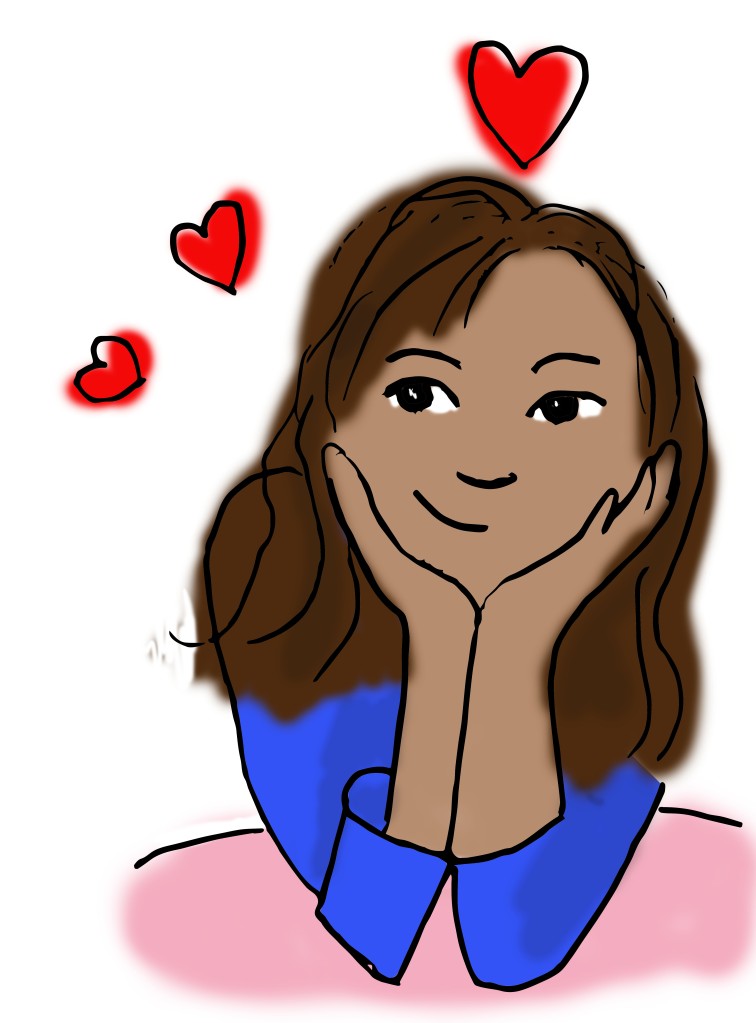


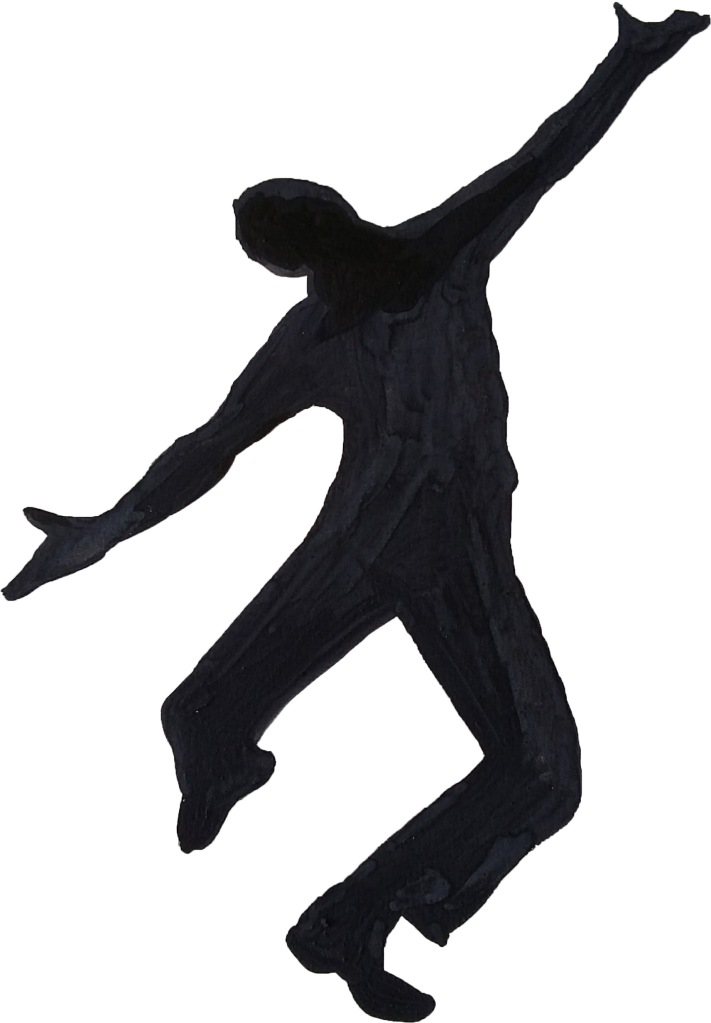


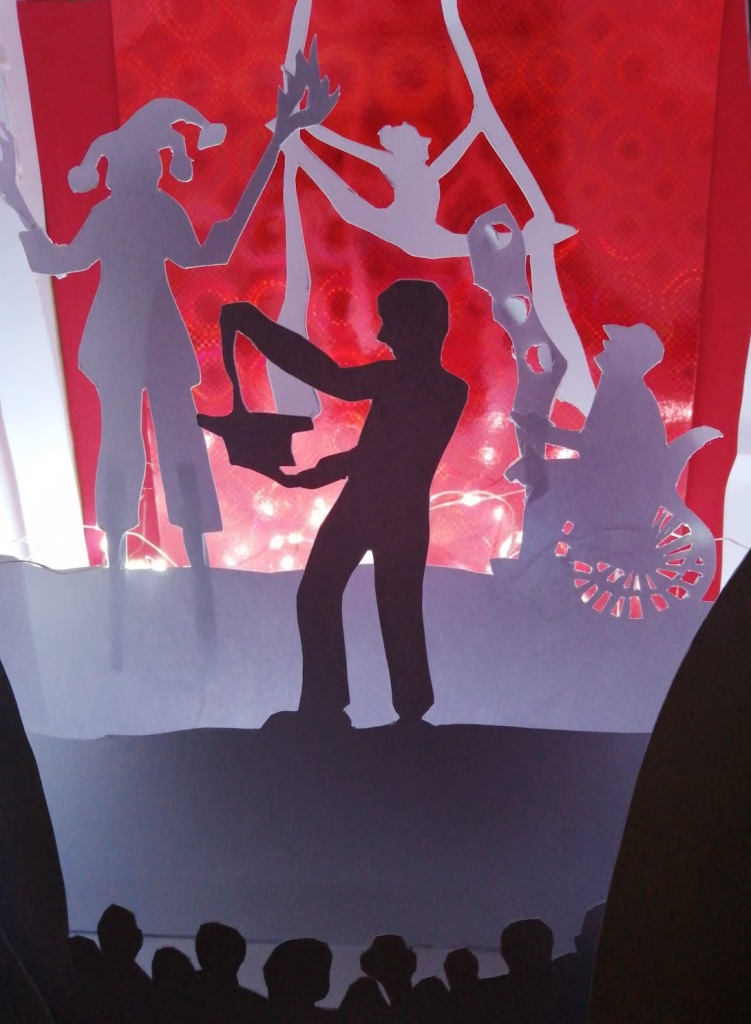
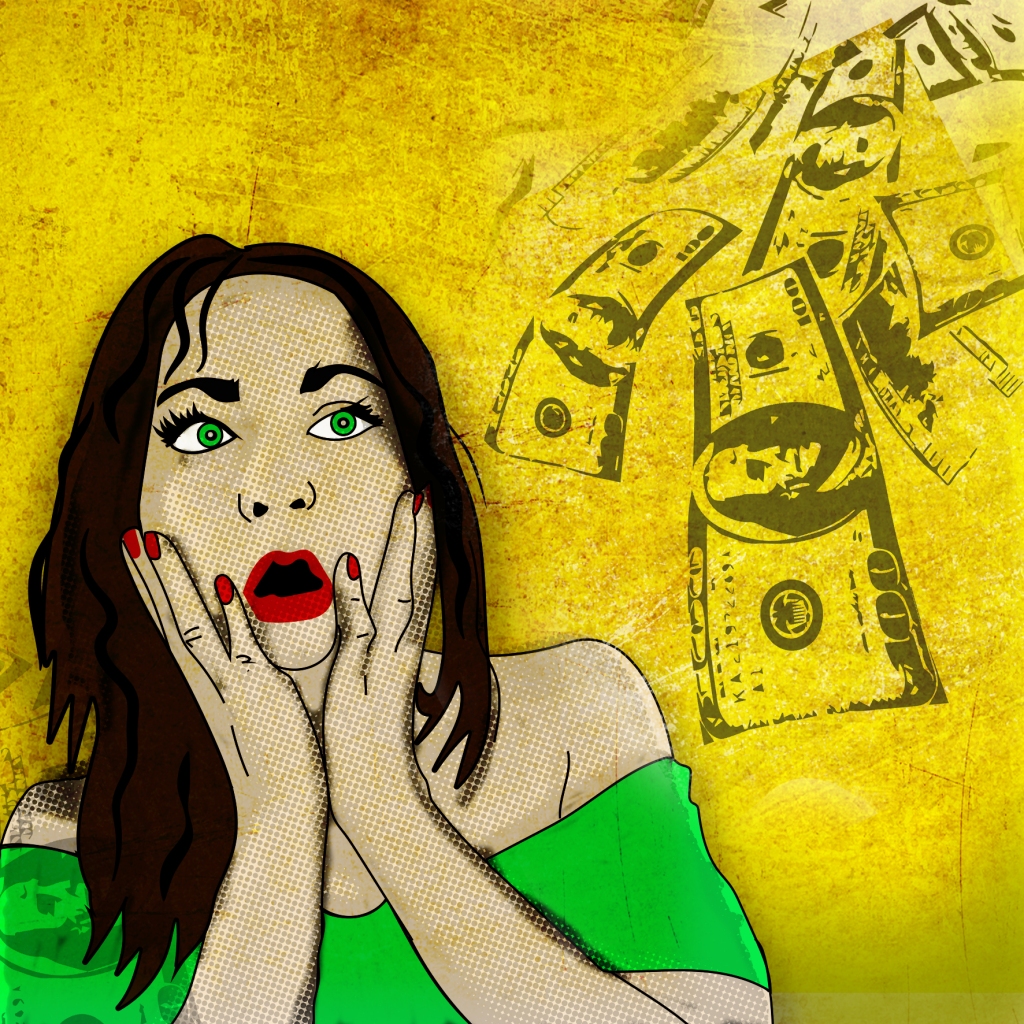
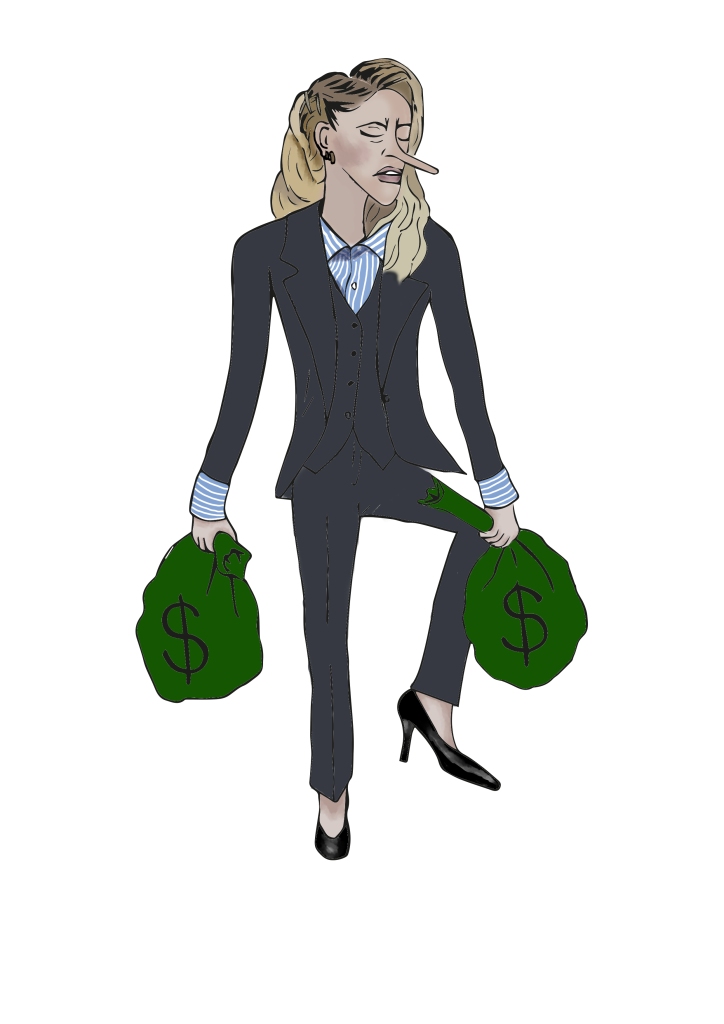
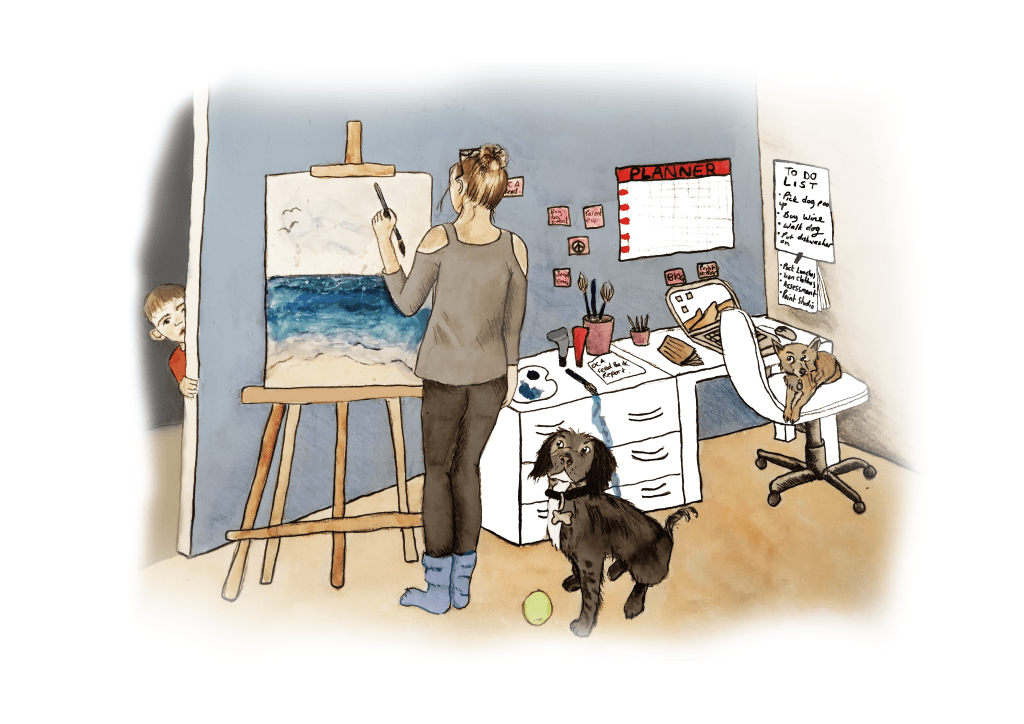
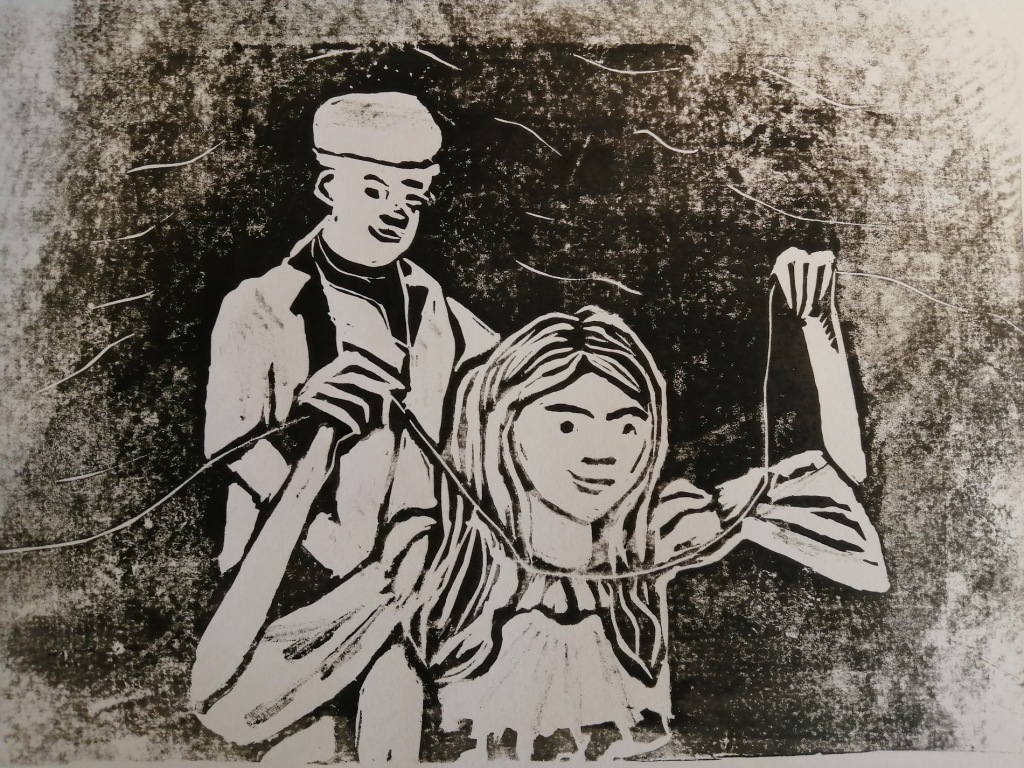

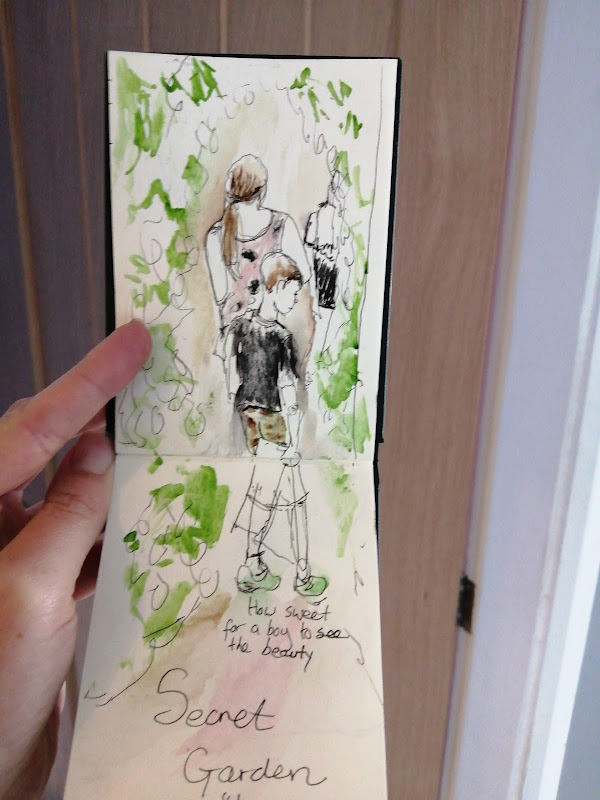
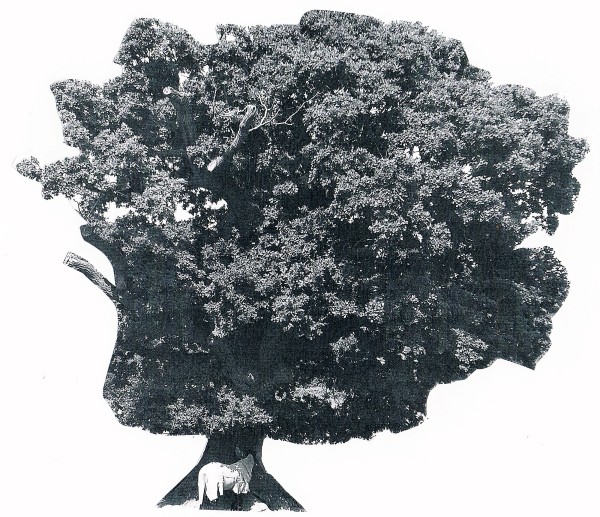


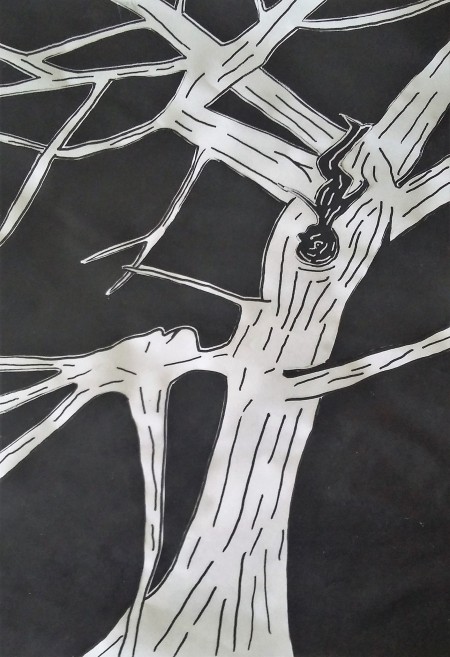
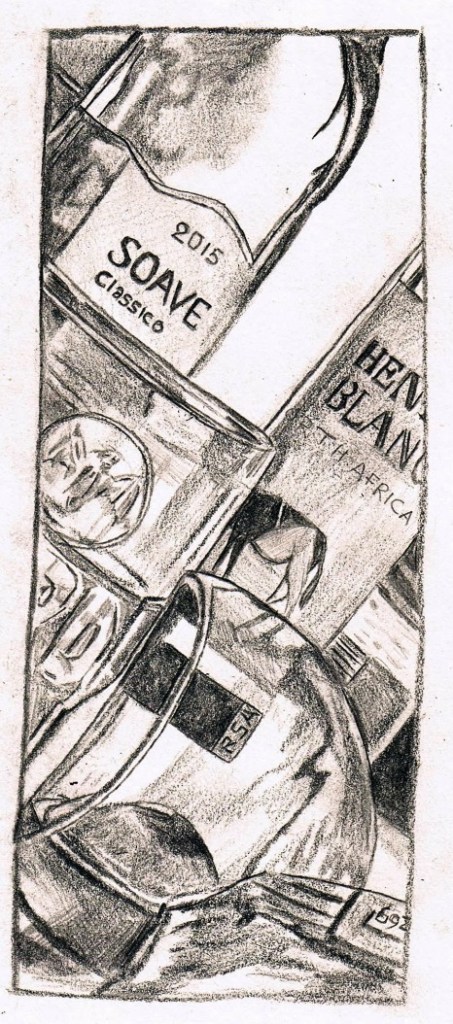
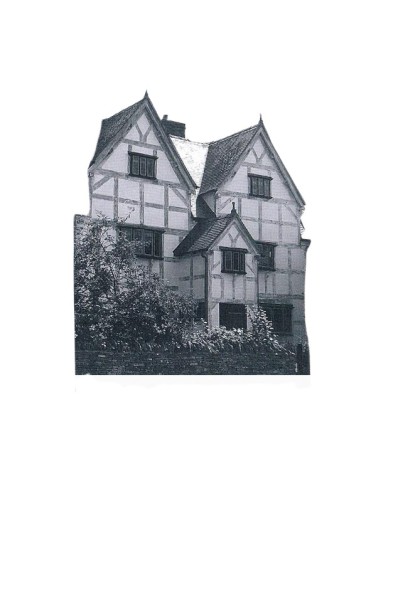
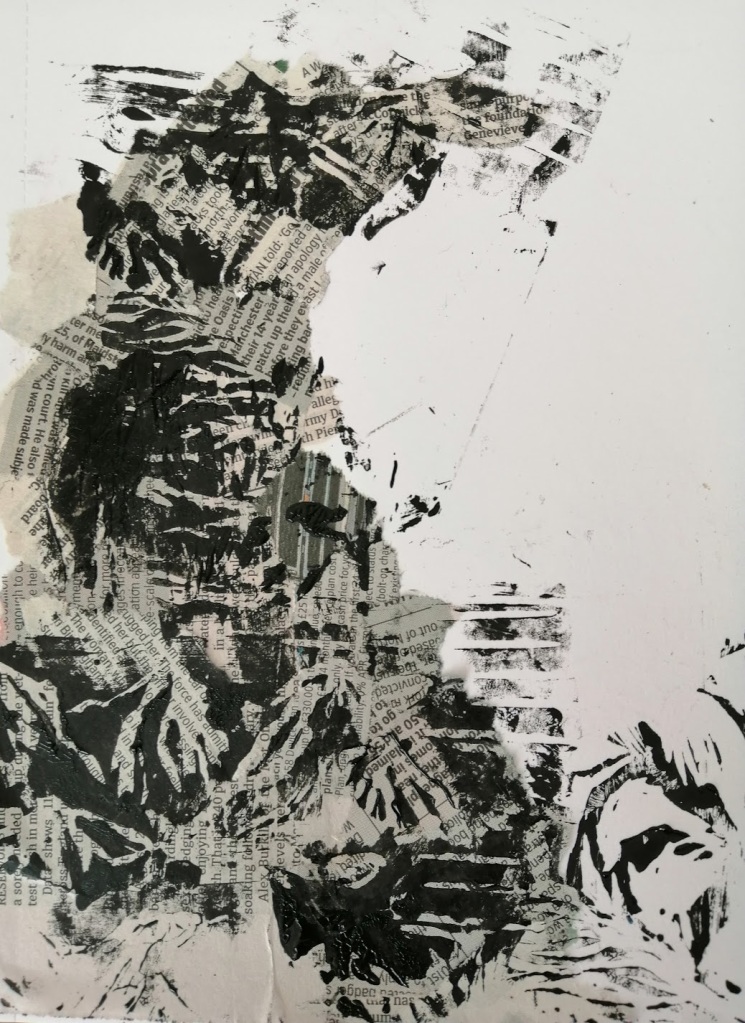
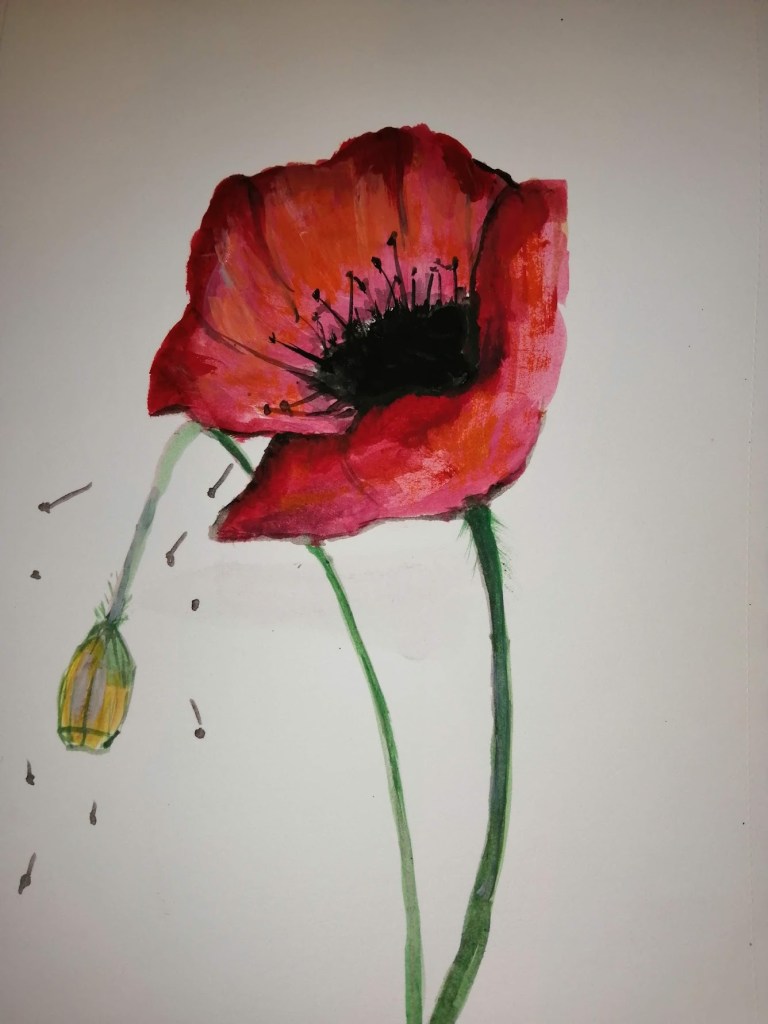
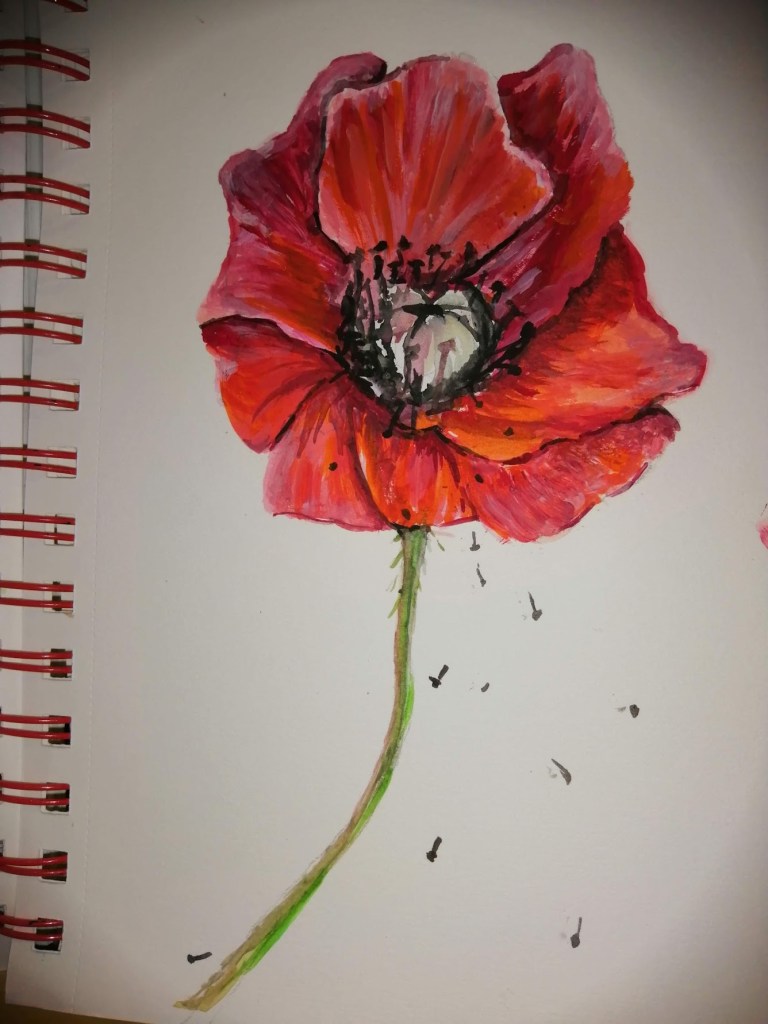
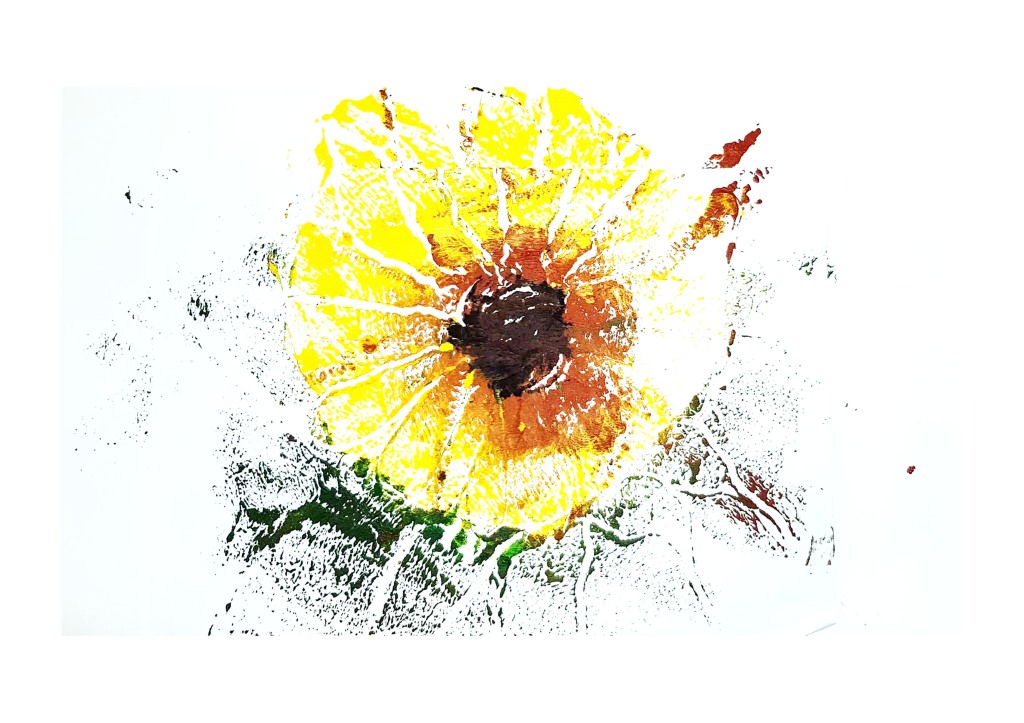
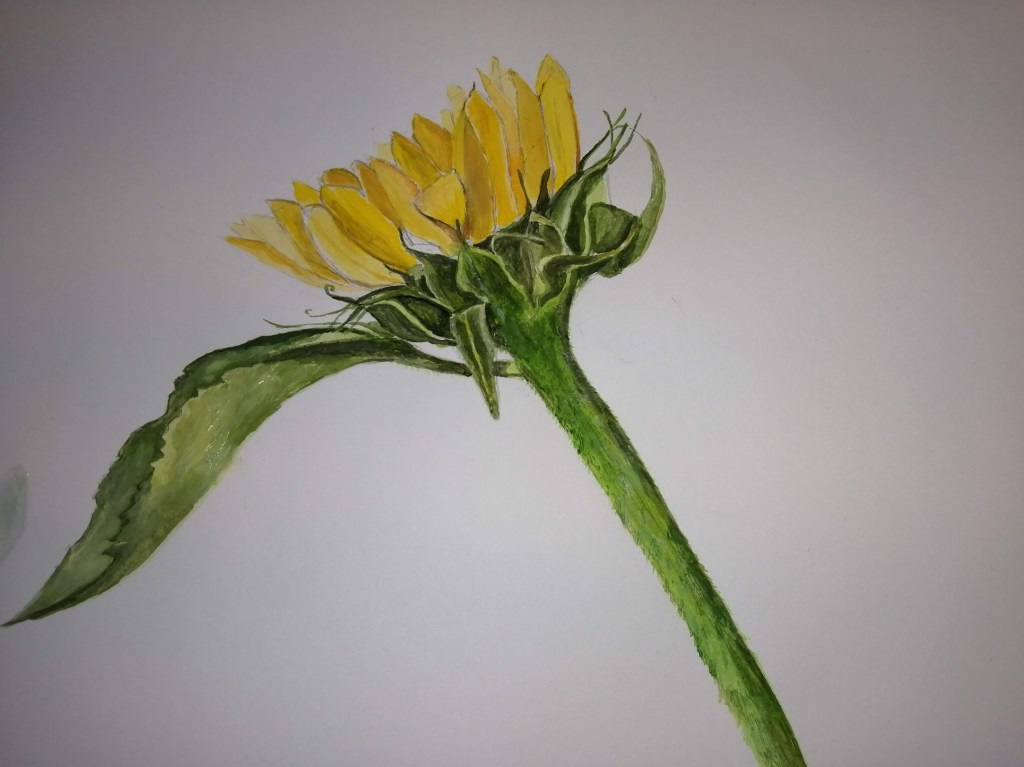
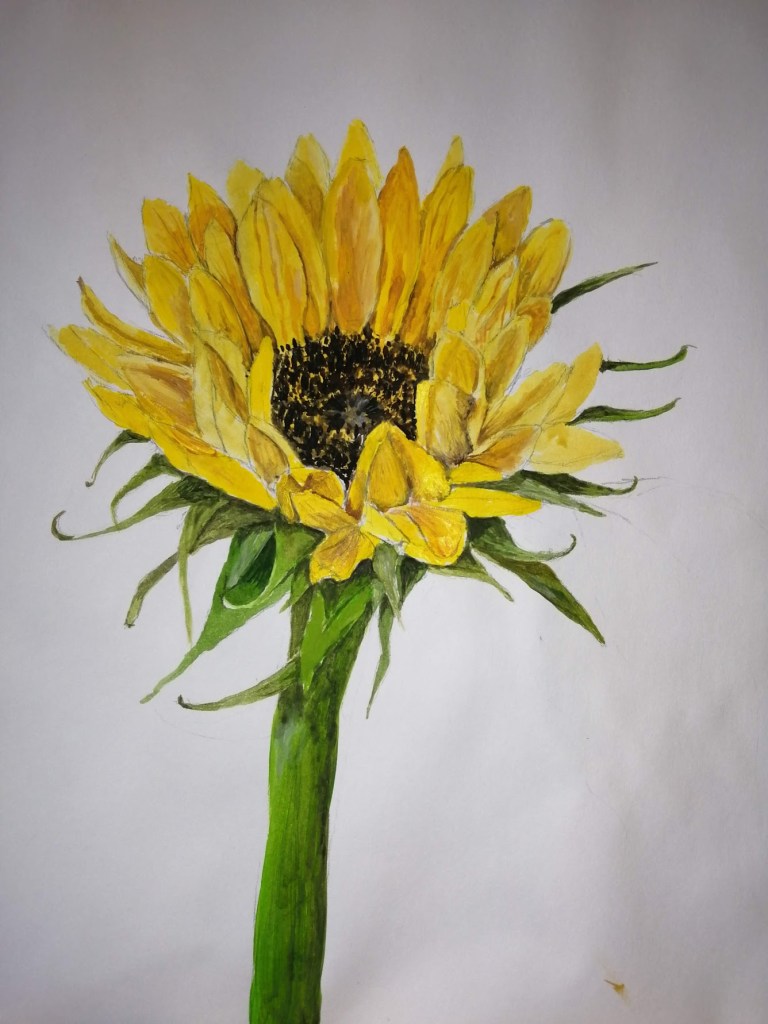
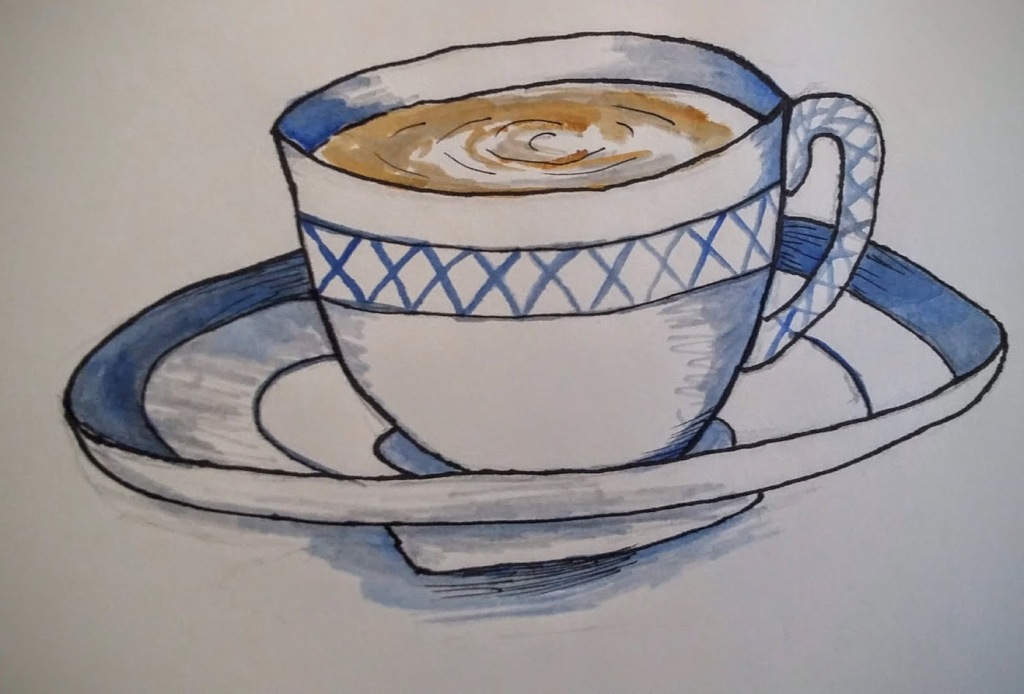


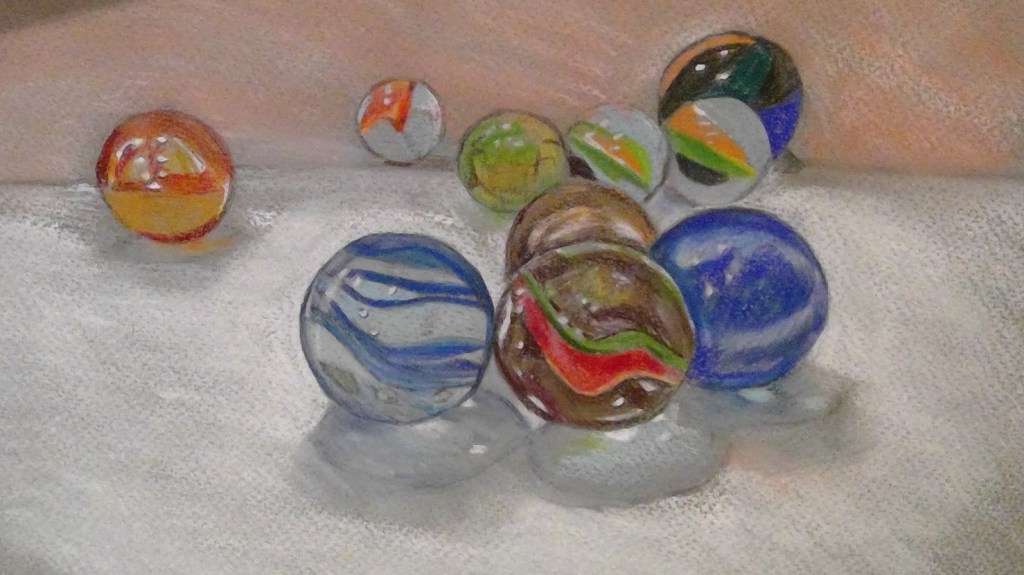


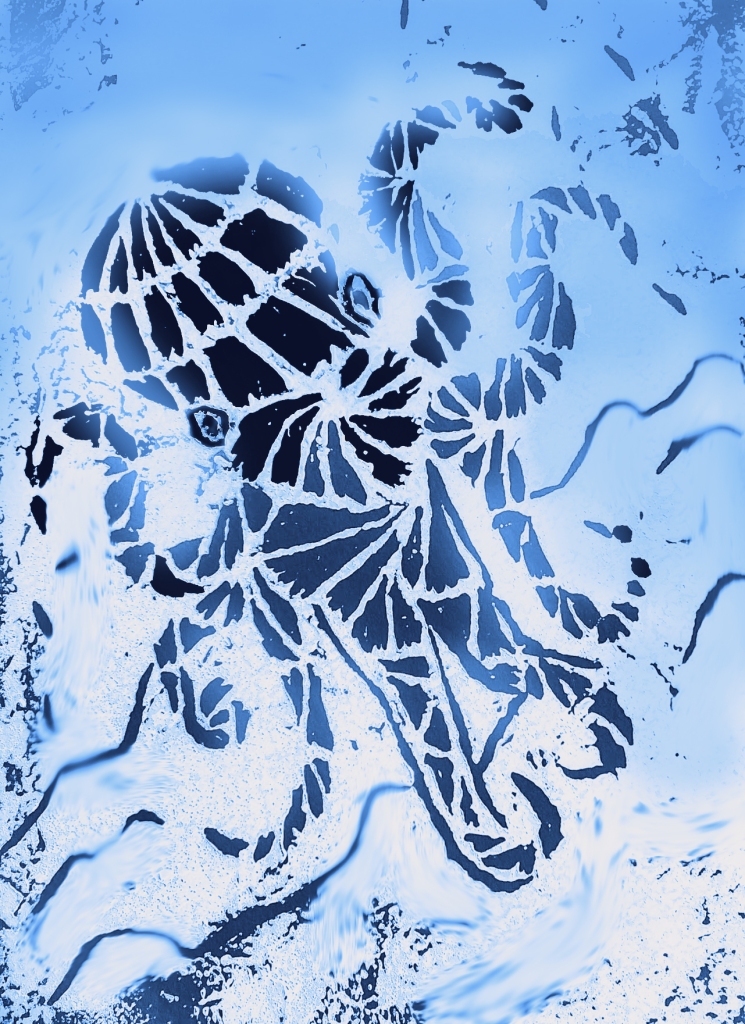
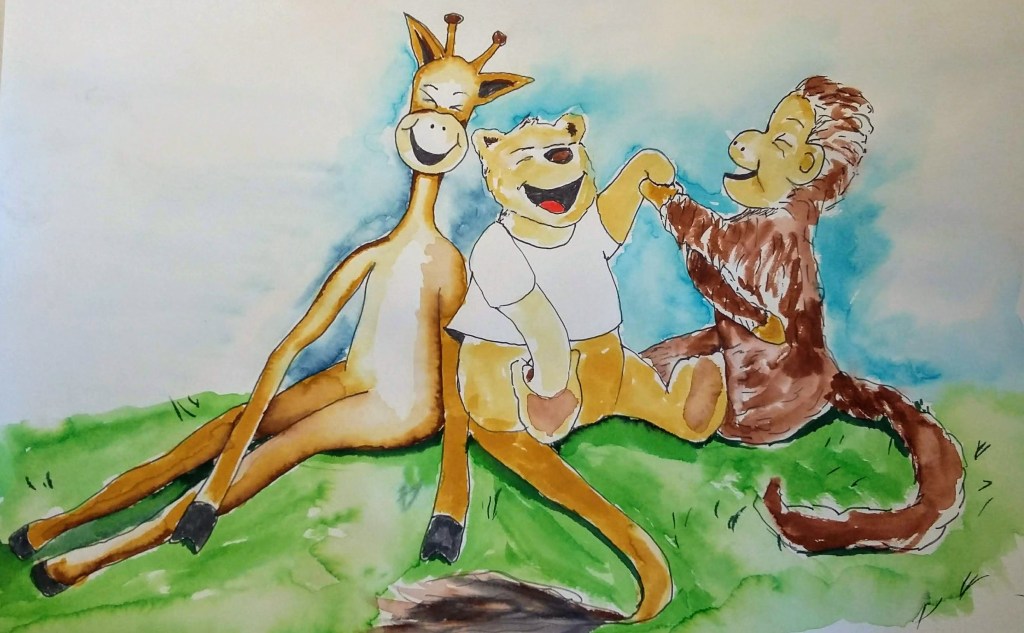

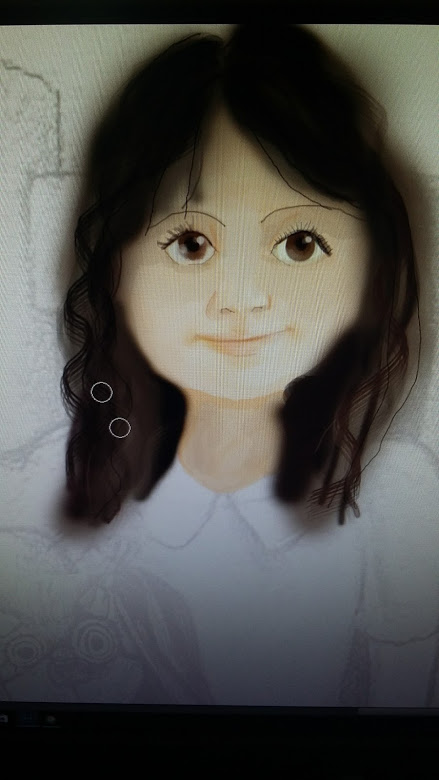
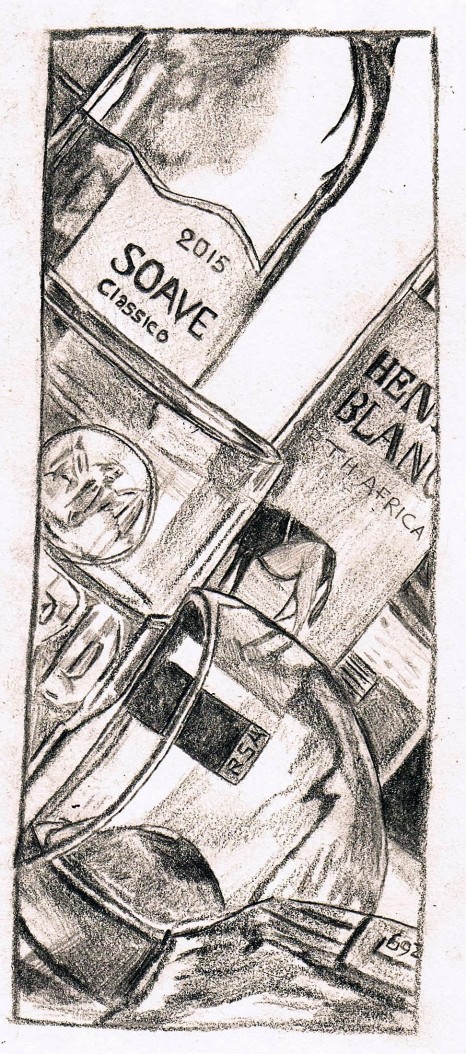

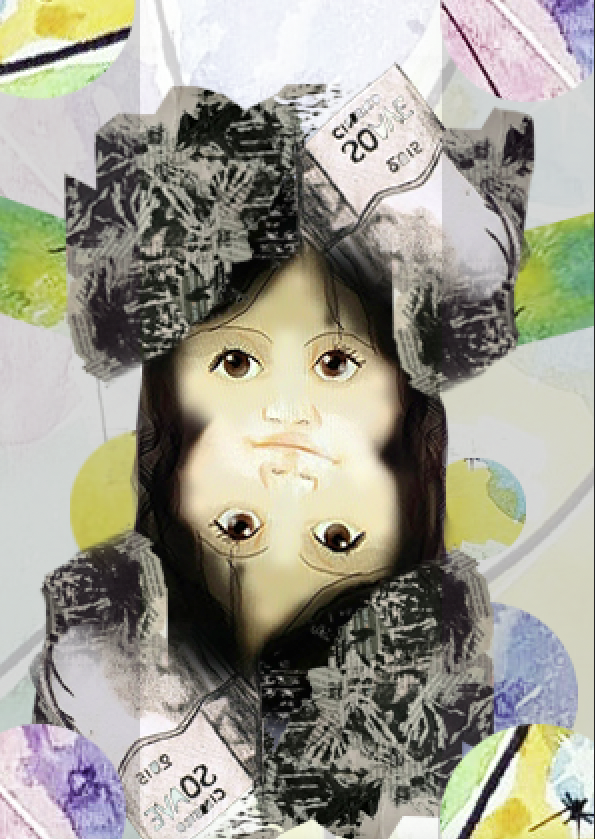
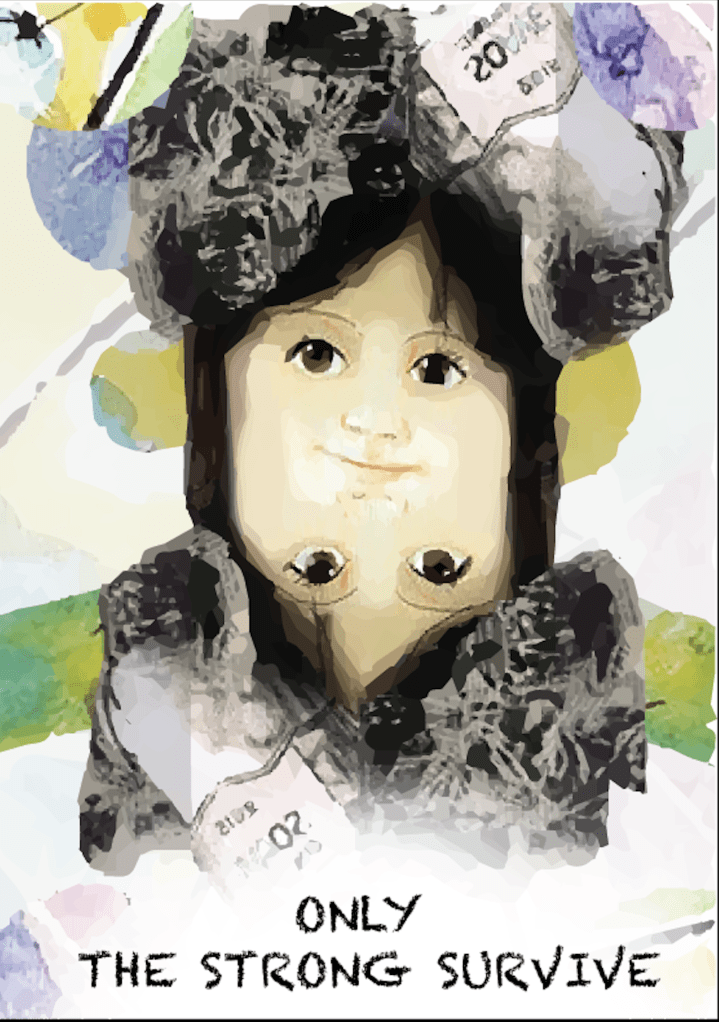
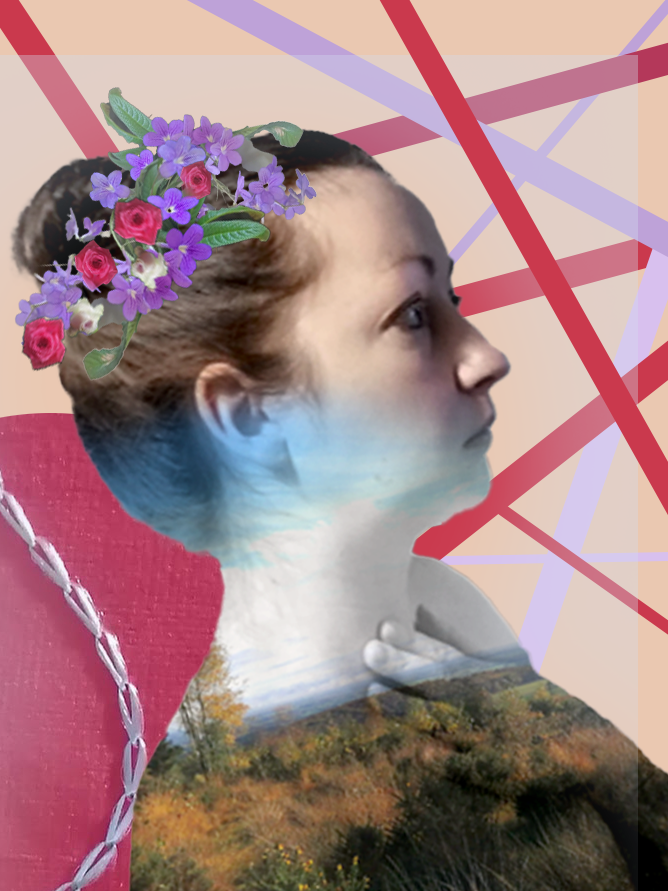
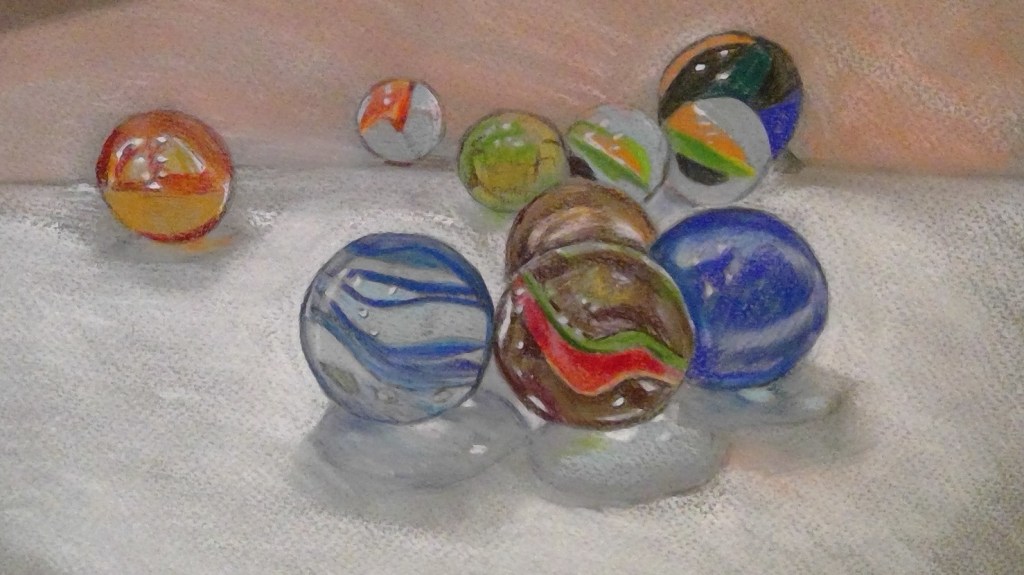

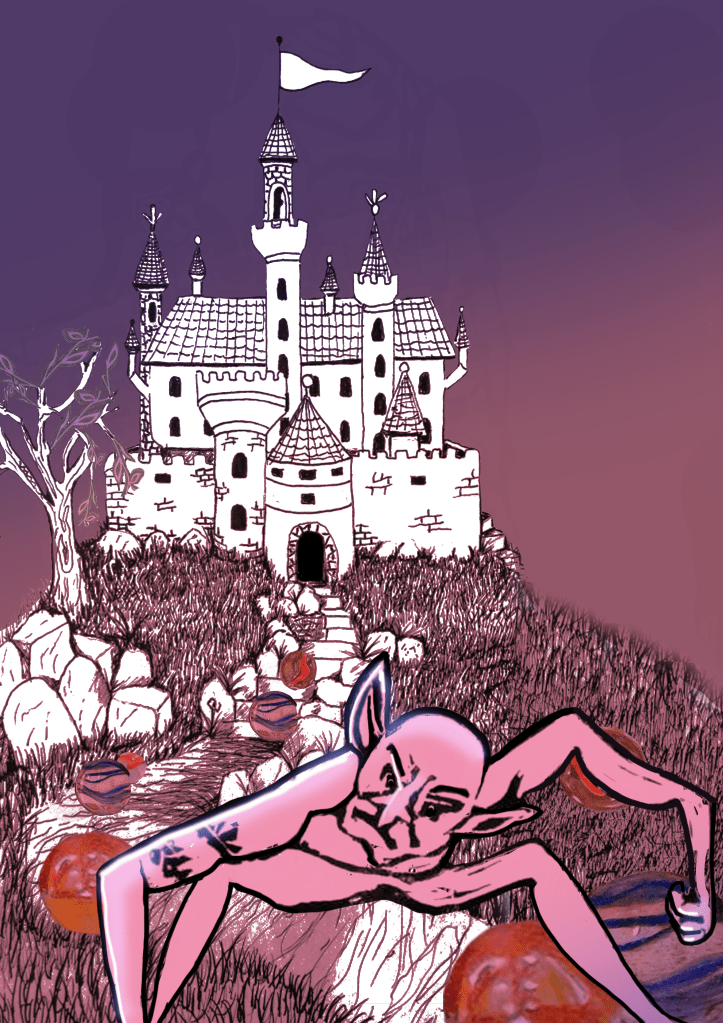
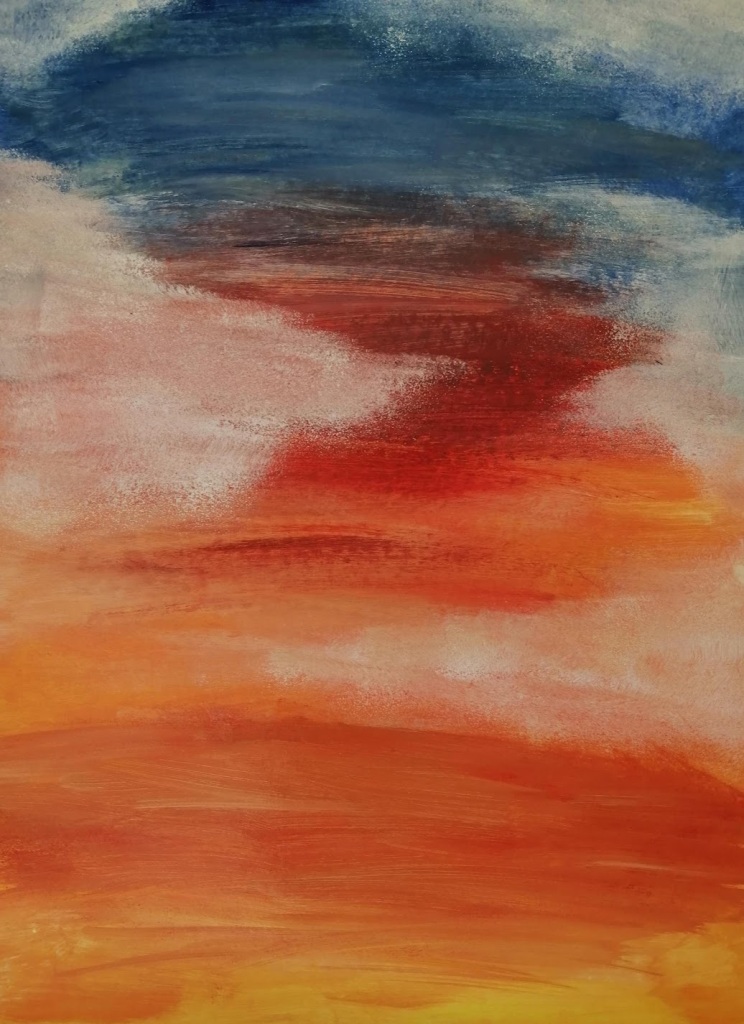
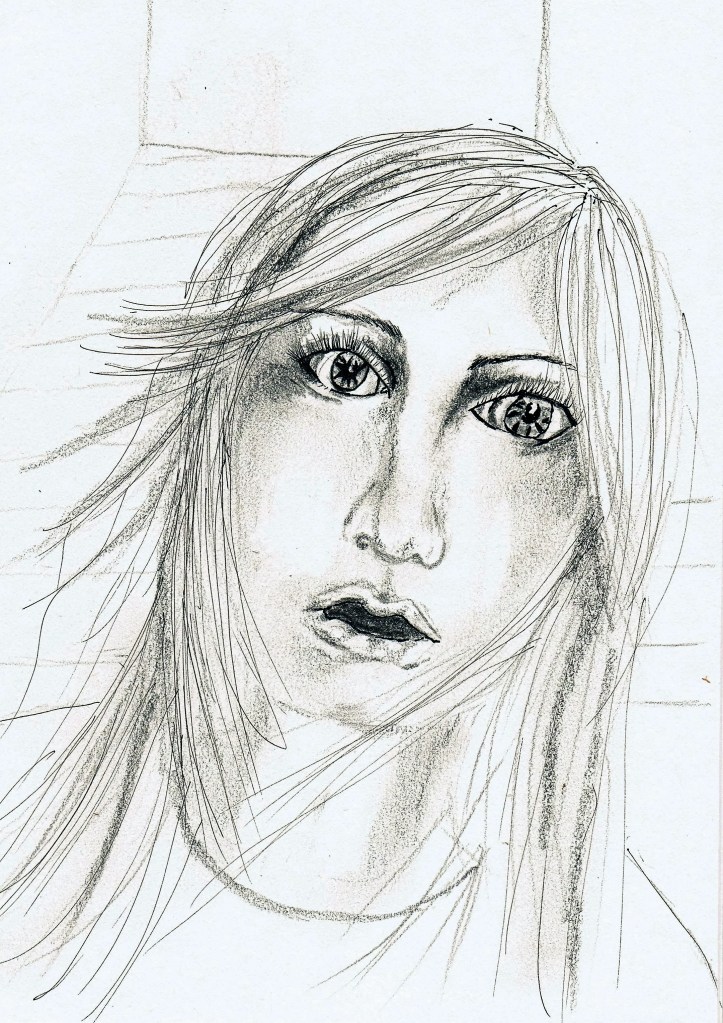
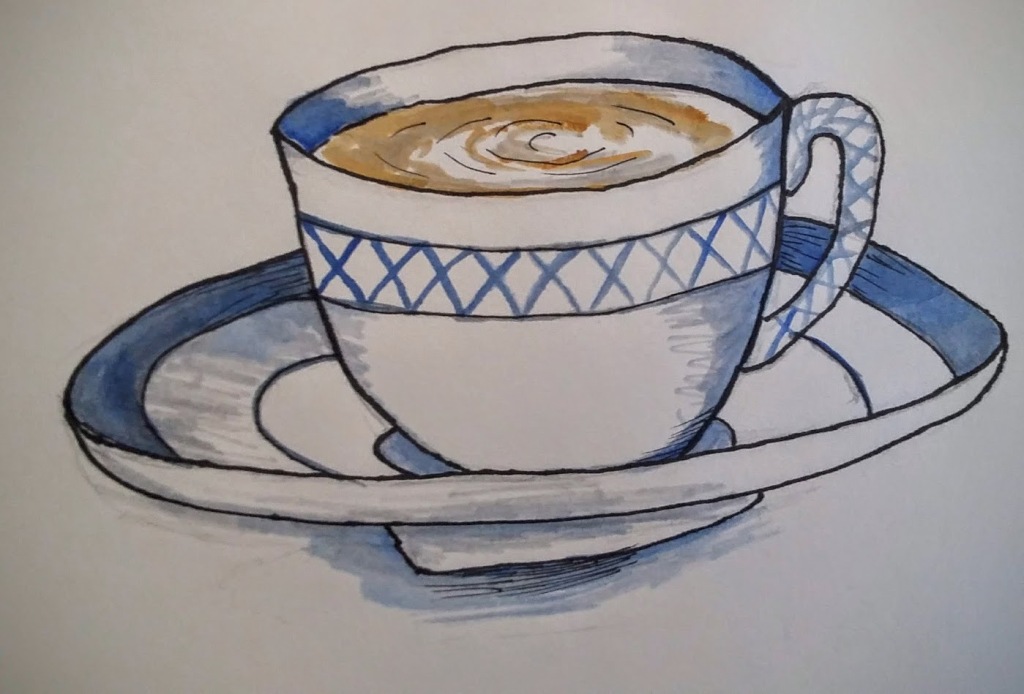
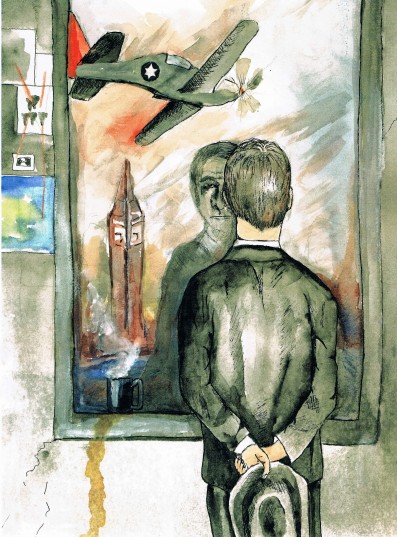
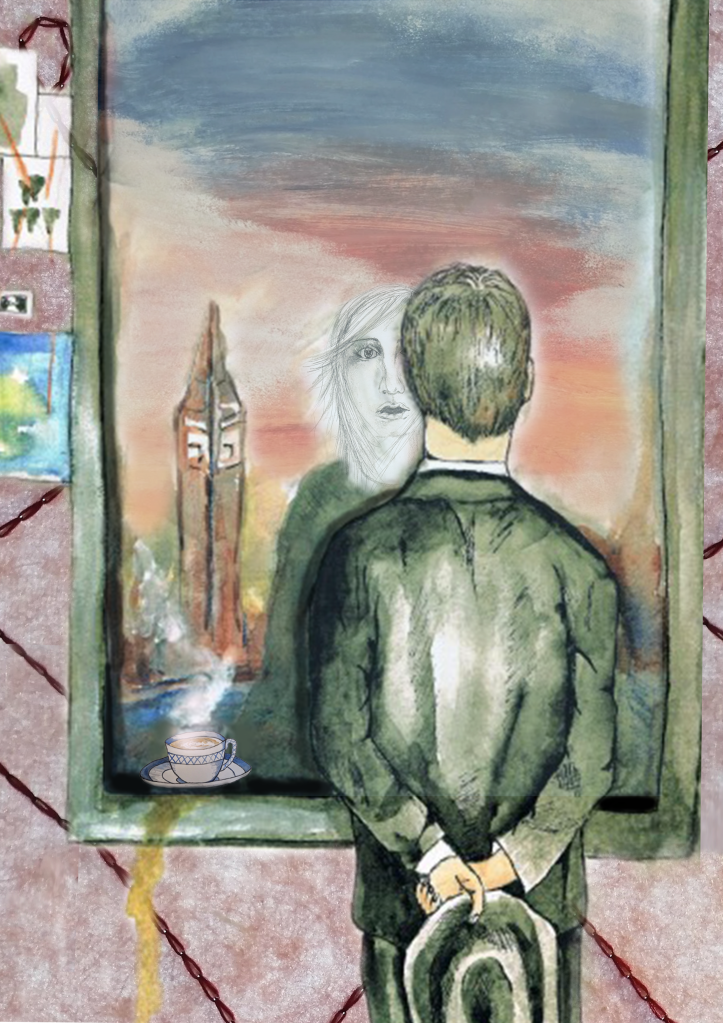


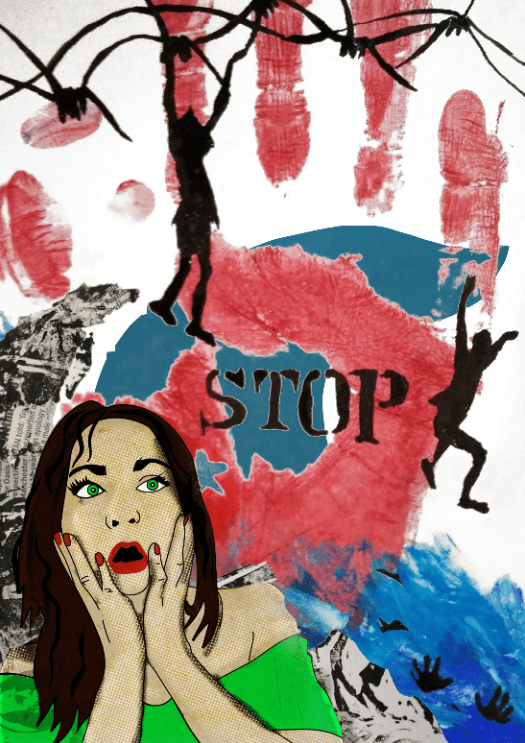
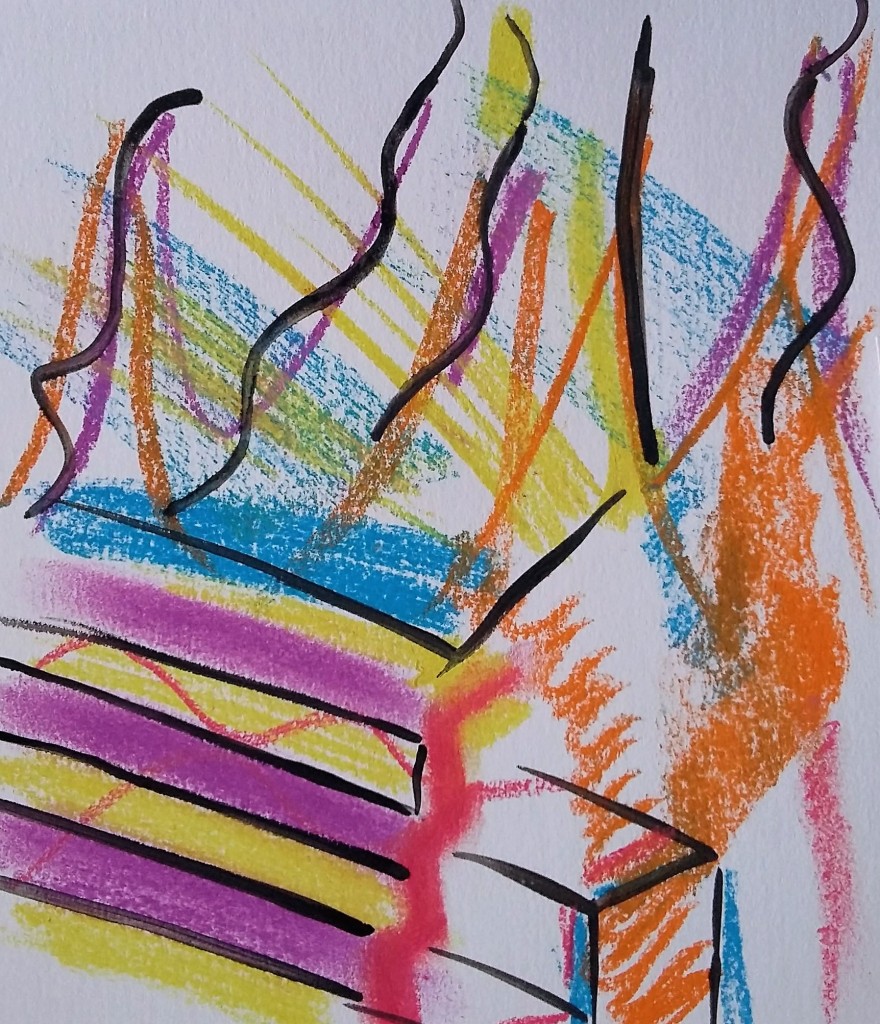

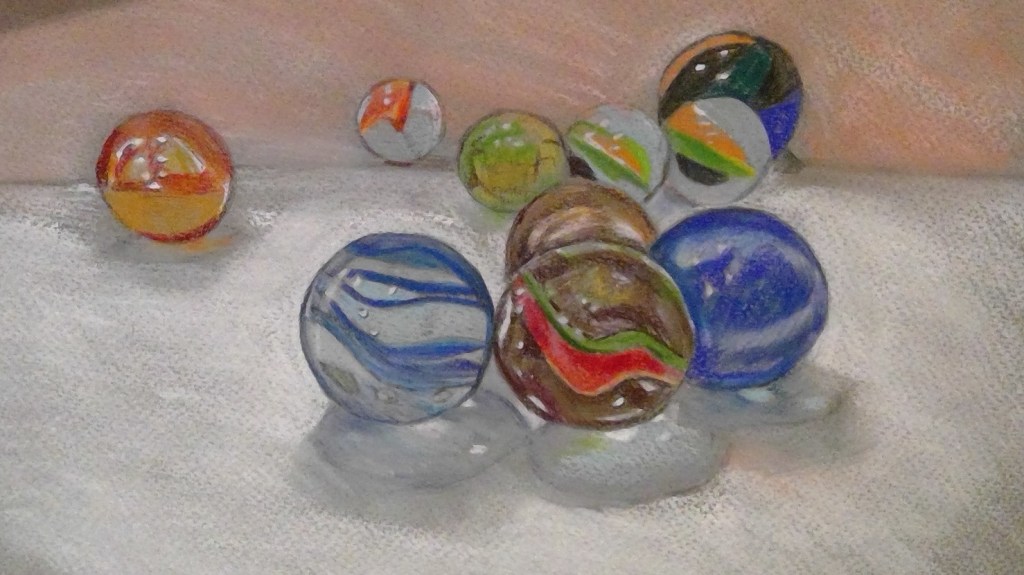
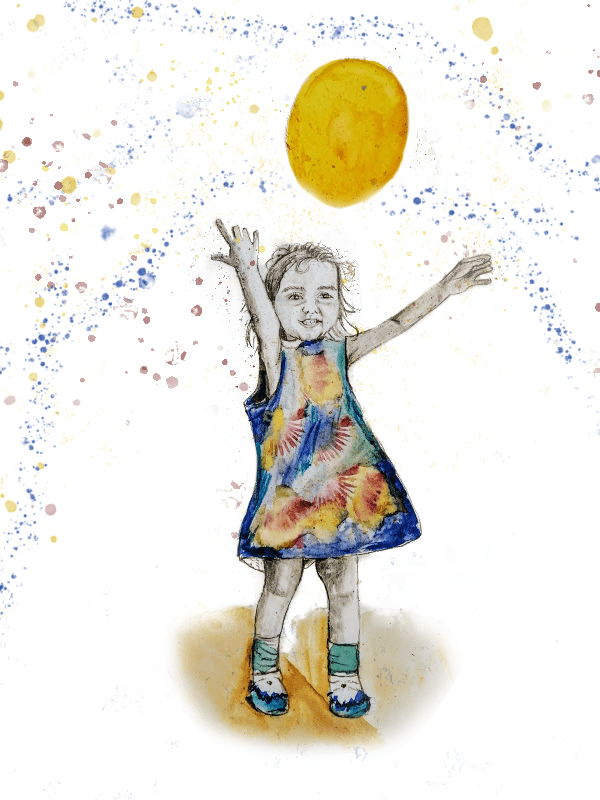
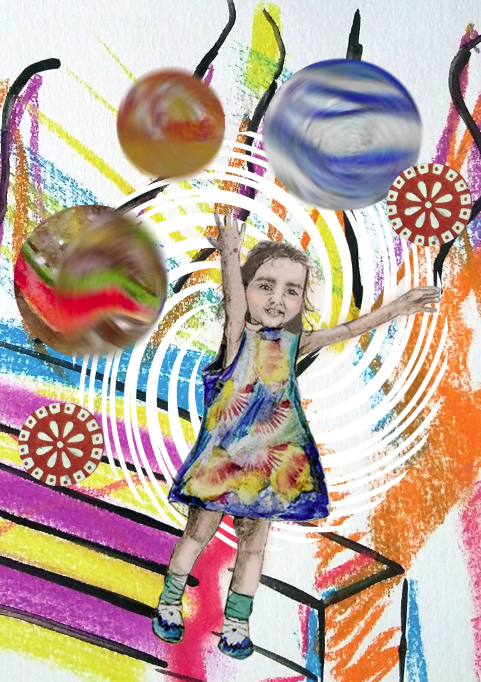
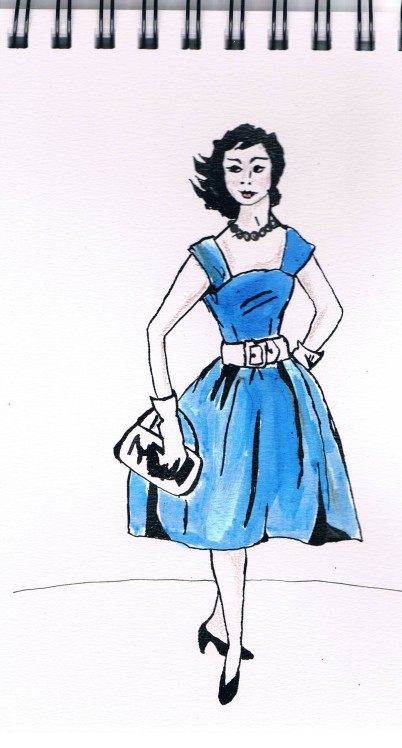
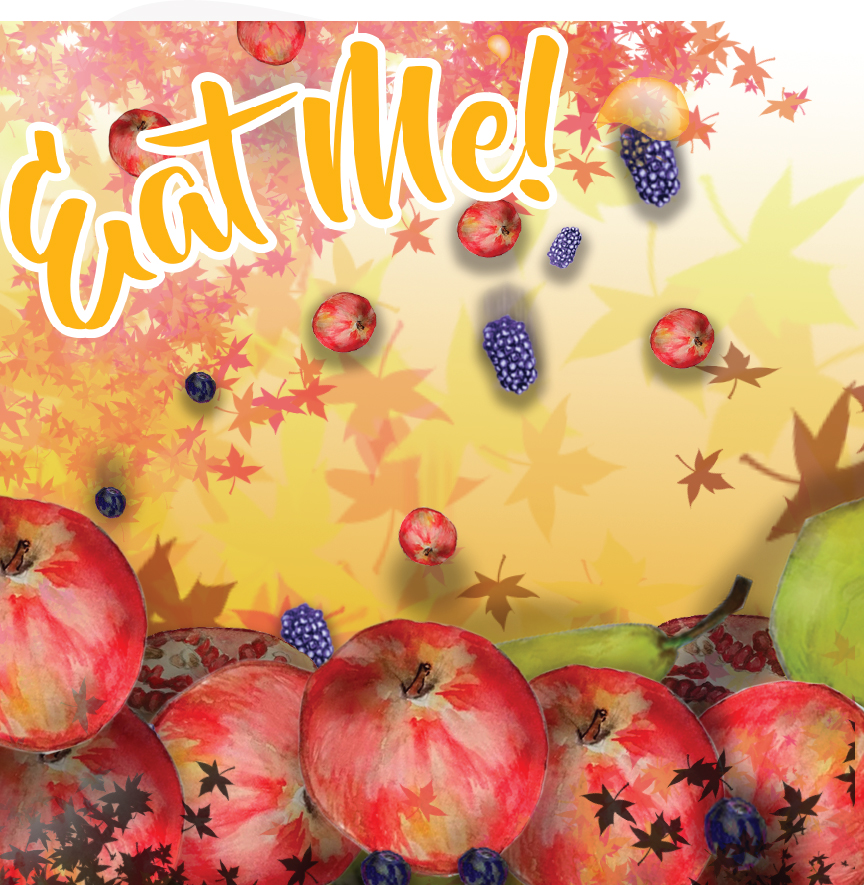

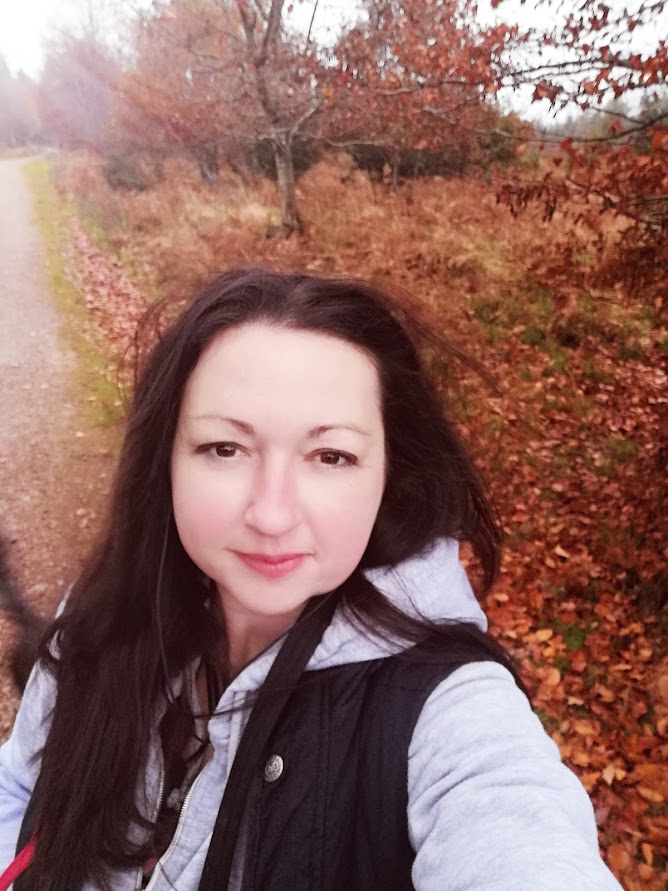

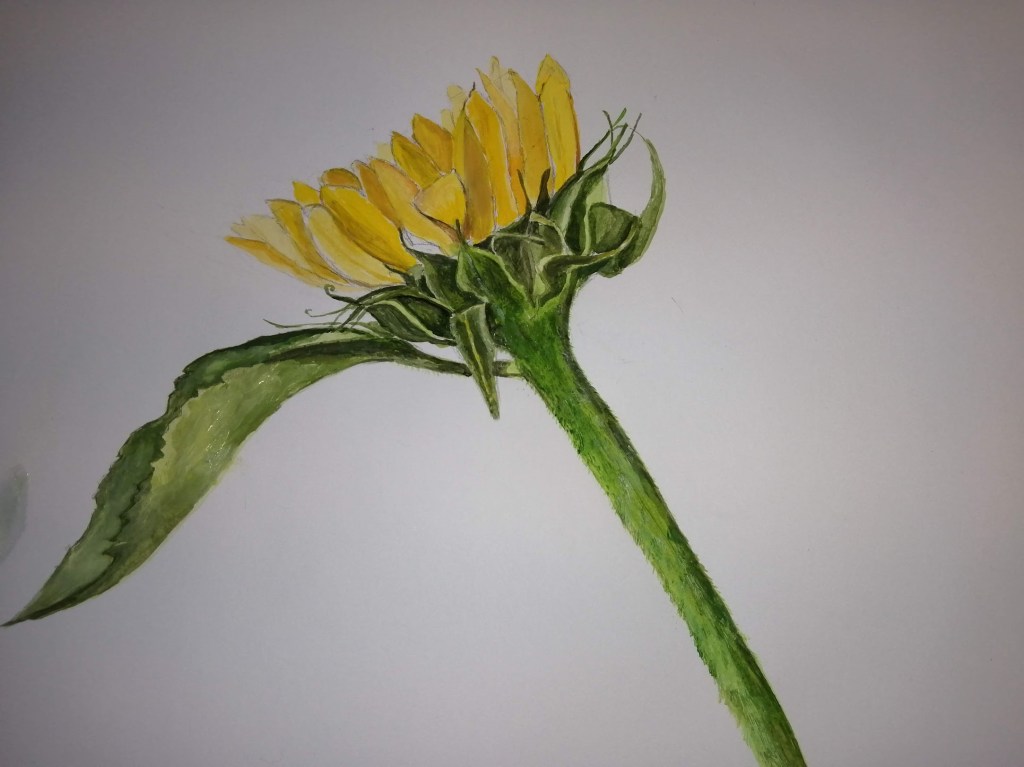
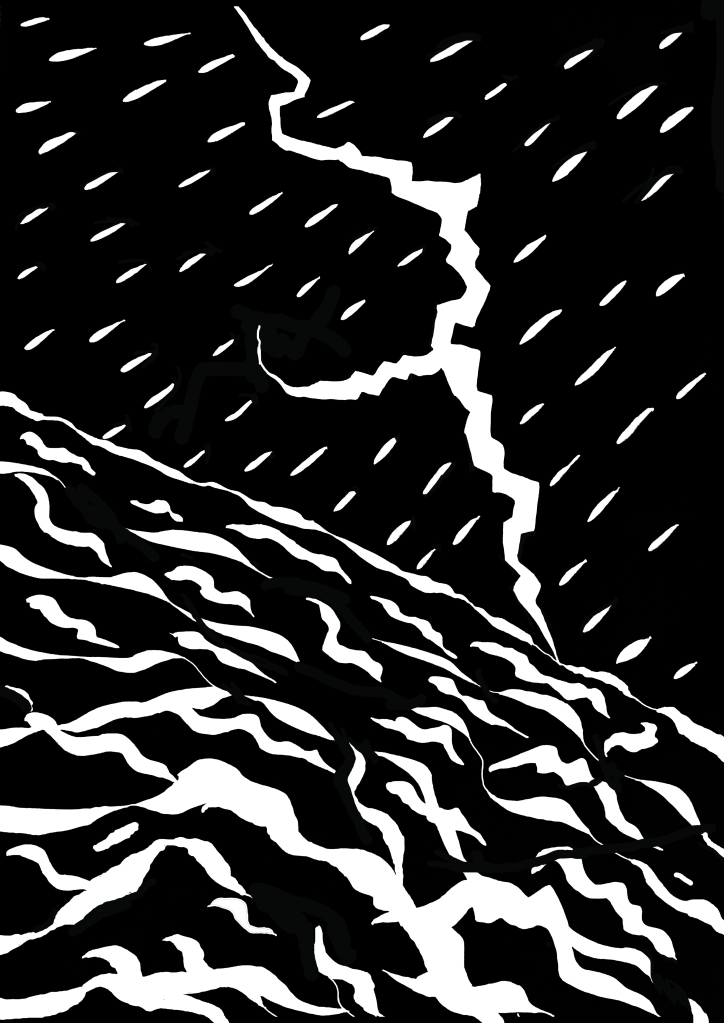

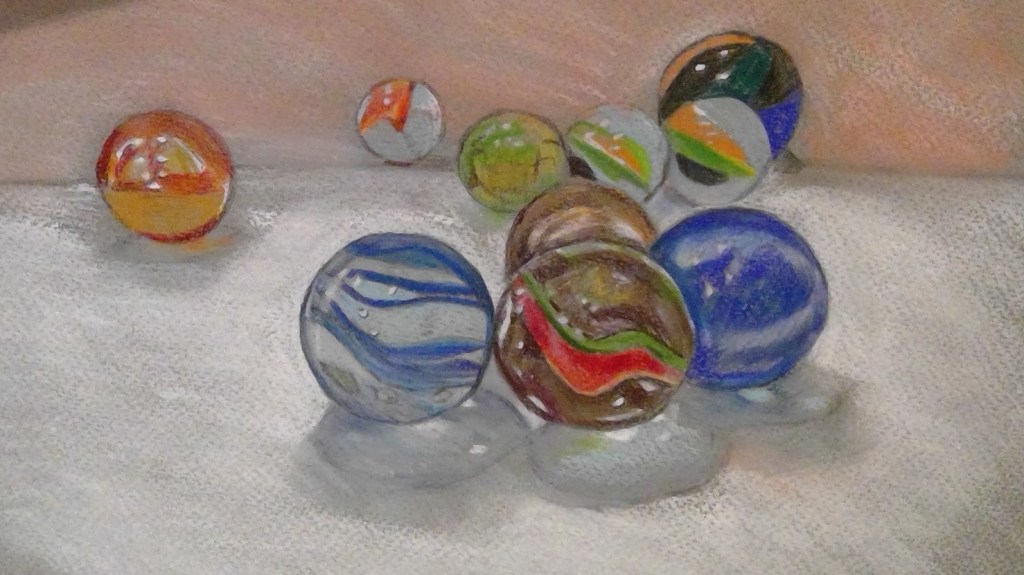
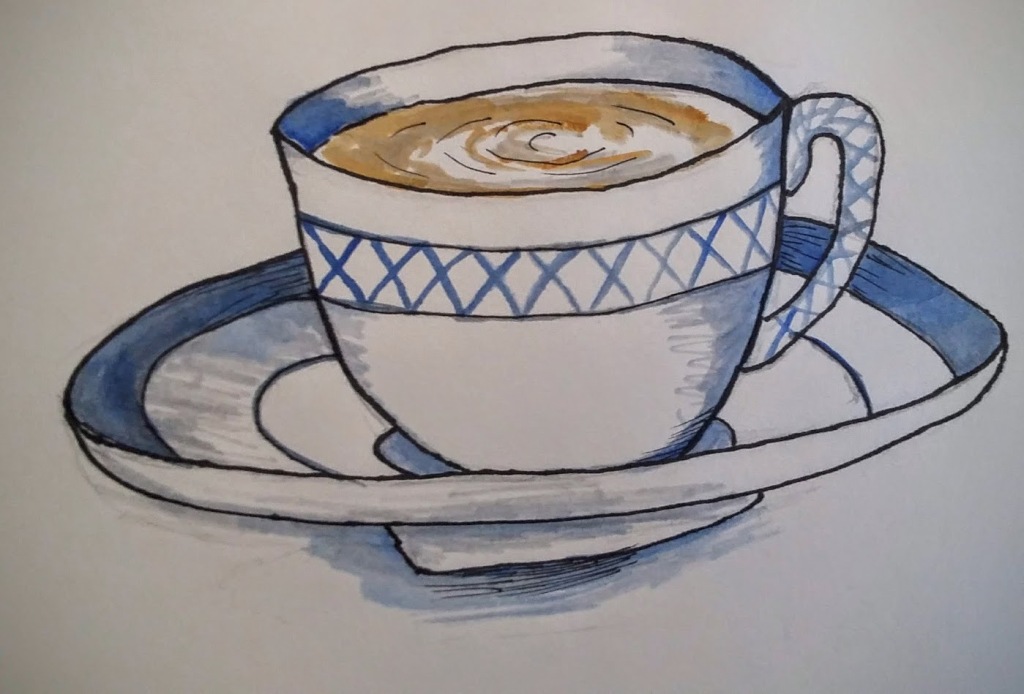
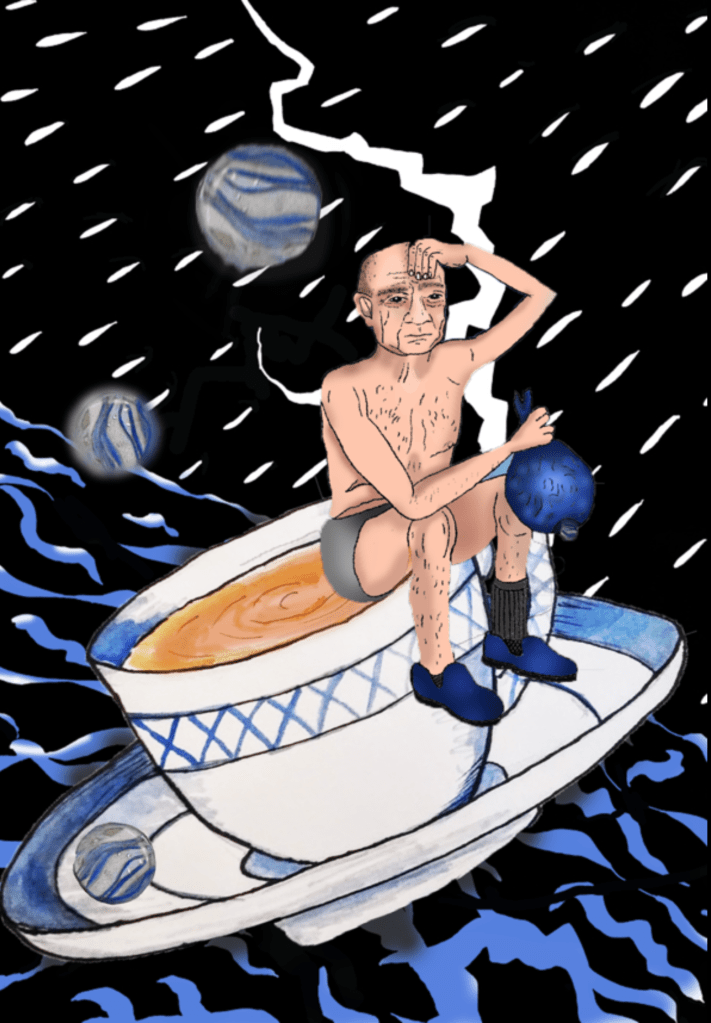
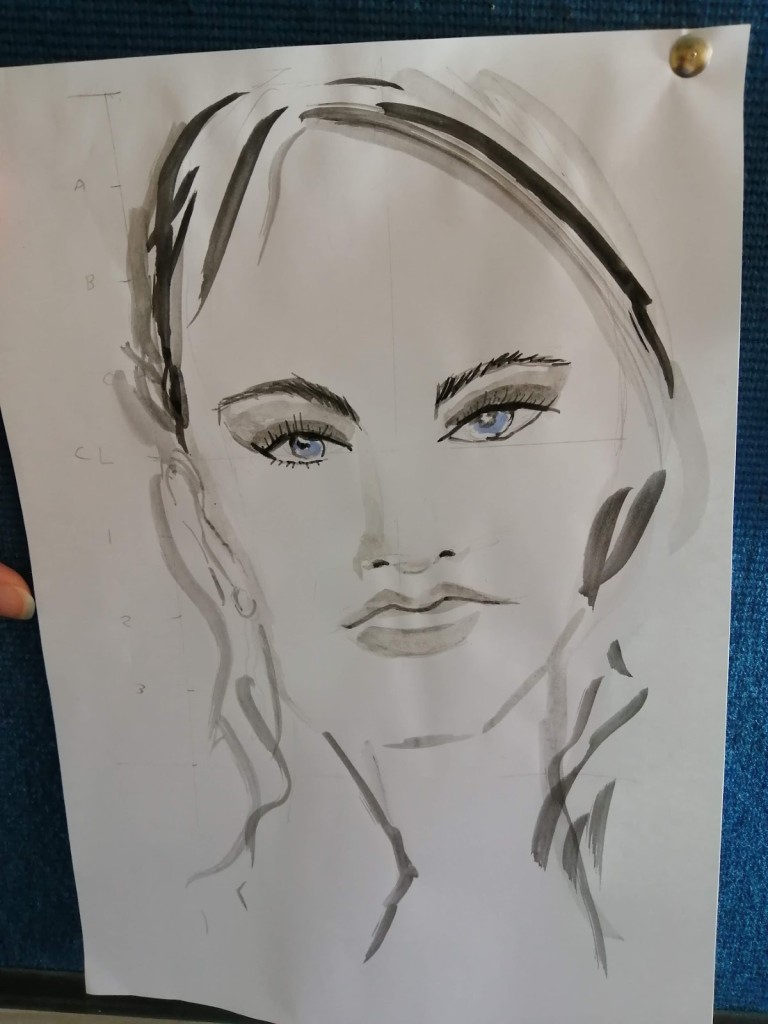
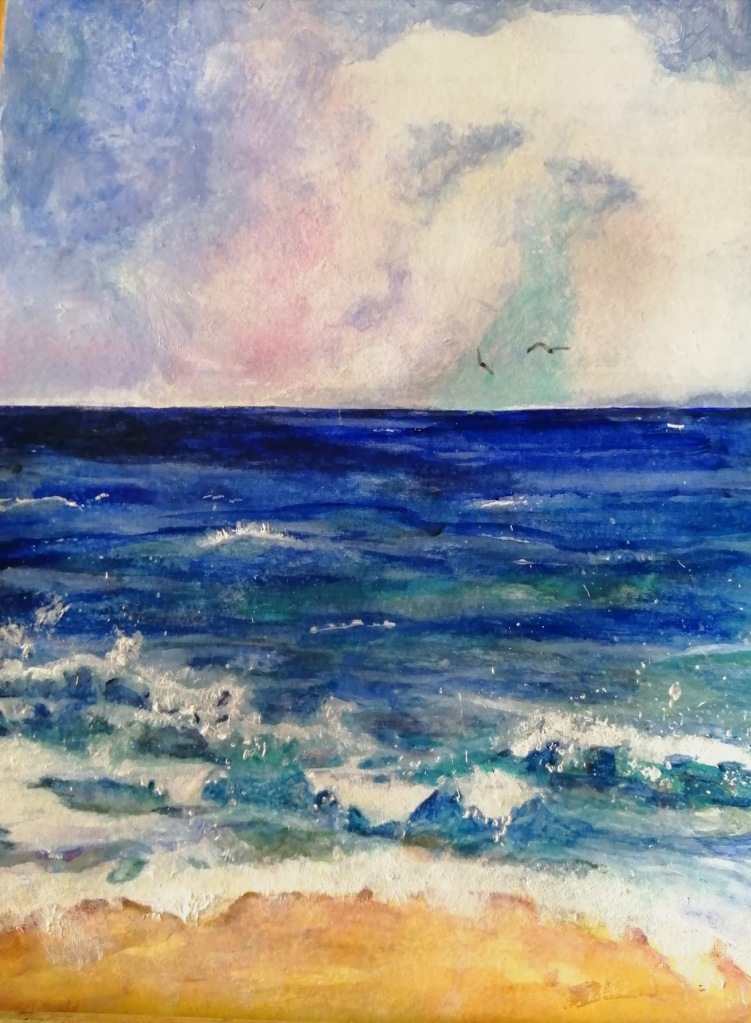

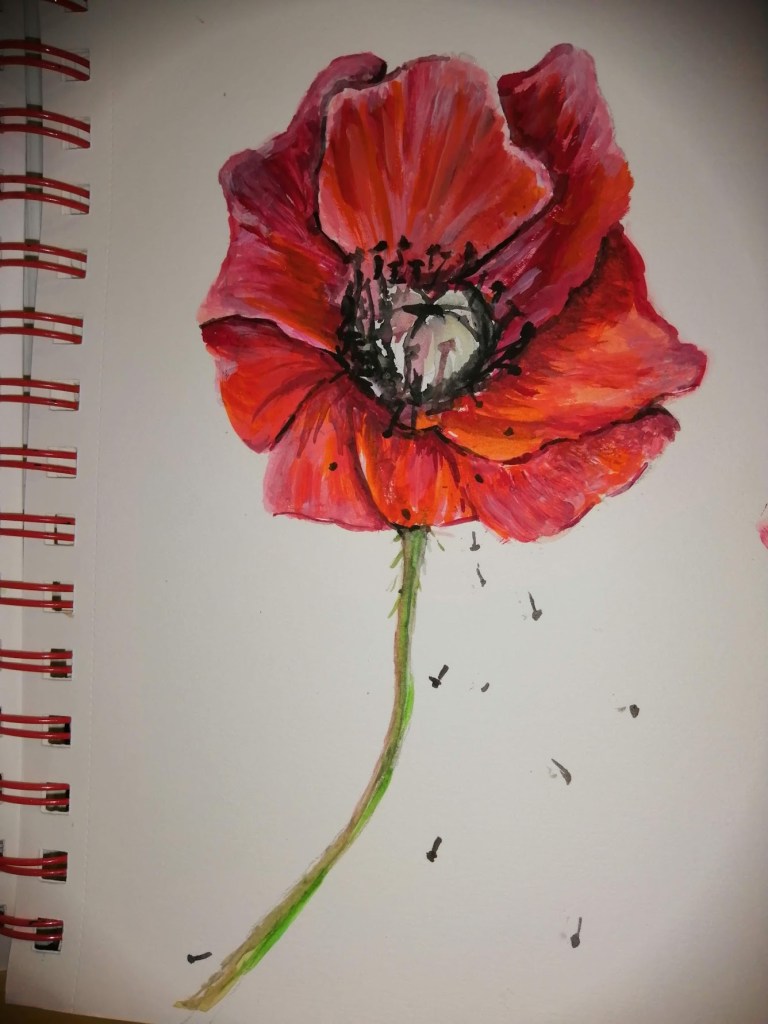
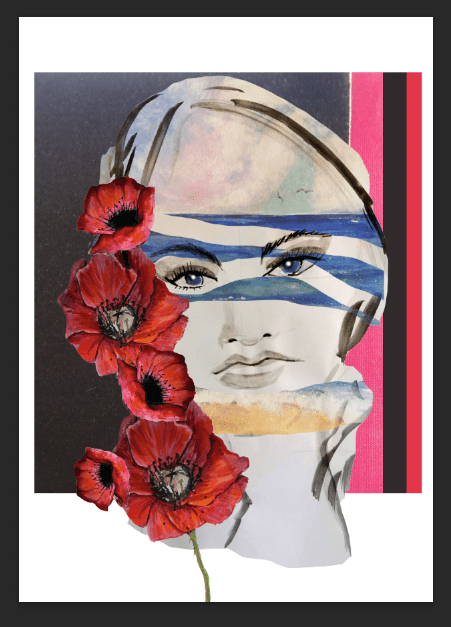
 Visual Skills 2