Take a recent copy of a newspaper. If you want to experiment with cut-up images then a daily tabloid with lots of pictures like ‘The Mirror’ or ‘Metro’ might be best, but if you want to experiment with text then a broadsheet like ‘The Guardian’ or ‘The Times’ might work better.
Using a pair of scissors or a craft knife, start to cut up some newspaper pages in various ways. For example, cut one page in half horizontally, one vertically and another page into four quarters.
Continue until you have a number of differently-sized squares and rectangles of paper.
Now simply begin to place them next to each other, in columns or in strips. If they are pictures, try out how they sit above or below each other. Are there light or dark areas that meet, or two landscapes that overlap to create a new hybrid picture? Perhaps photographs of two people can be put next to each other to create a new face or body. Take some time to experiment; perhaps two headlines cut in half can be combined to create a new story.
Keep experimenting until you have 5 cut-up collages that either spell out new phrases and texts or new composite images.
Scan or take photographs of your finished cut-ups and upload them to your learning log. Remember to document and reflect on the process and the outcome of the exercise.
OCA Visual Skills 2: Visual Exploration p62
To get started on this project, I went to my local supermarket and purchased a few newspapers. First, I went through each newspaper to see if there were any words or images that stood out.
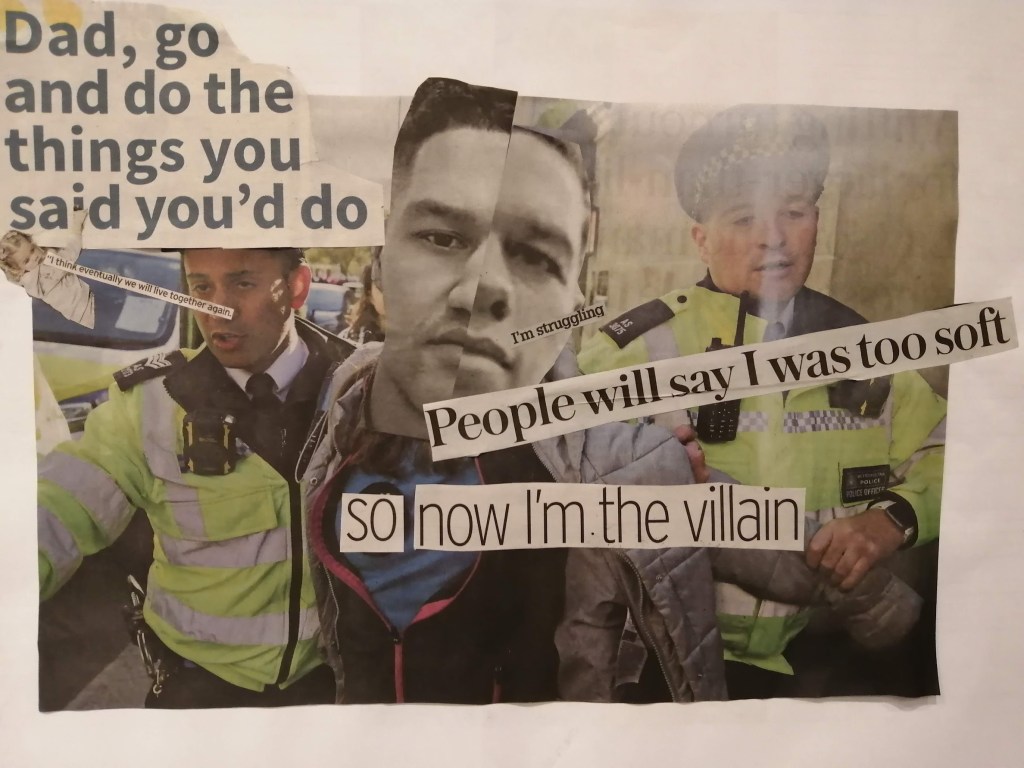
The first thing that caught my eye were two images of men who were arrested for robbery, and another image of police arresting a protester. I thought it would be fun to make a new narrative by rearranging the elements and incorporating text from other parts of the newspapers. The first collage I created is pictured below.
The image I hope now shows a new narrative which is a young man being arrested for something he did but maybe didn’t want to do but was put in a position he felt he had no alternative. In the left is a picture of a little girl holding on to the words ‘Dad go and do the things you said you’d do‘ and ‘I think we will eventually live together‘ this showing that she wanted her dad to succeed and will be waiting for him.
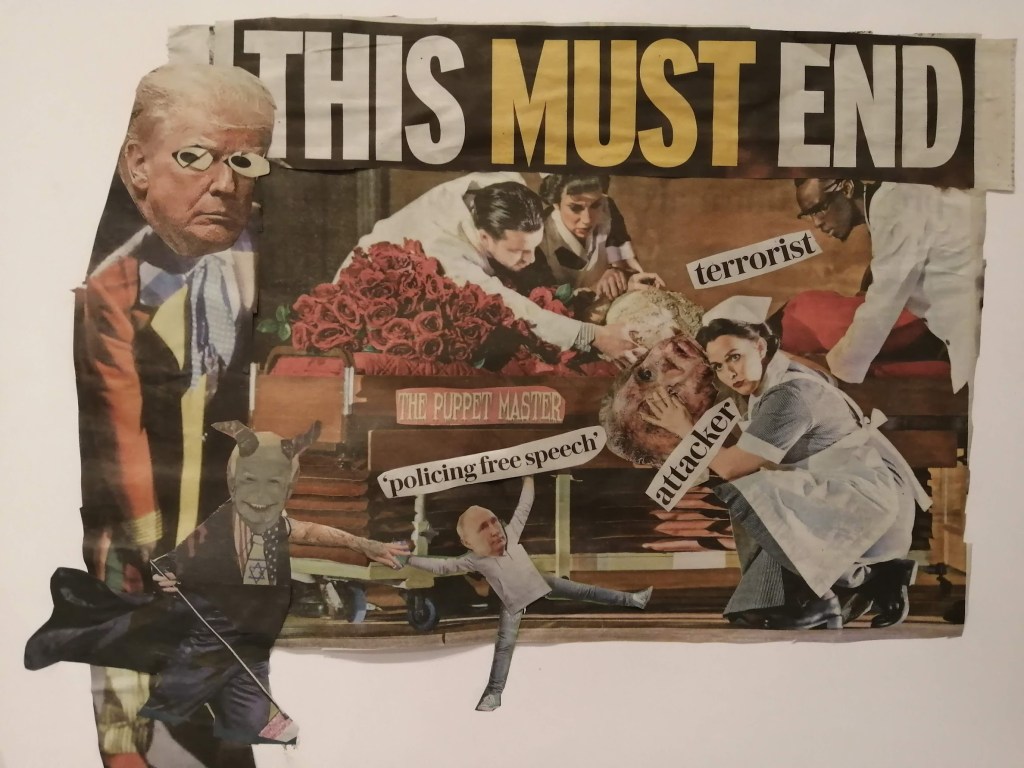
The next collage I created is shown below. I was quite surprised and excited at all the elements I found for this one.
In the background, there is an image of nurses and doctors. This was originally a theatre advertisement, but I changed the person on the table to a young girl who had been injured during the Ukraine war. Following that, I discovered images of Vladimir Putin’s face, Joe Biden dressed as the devil, and a magician’s body with Donald Trump’s face. I then put these pieces together to raise awareness of what is going on in Ukraine and to highlight the public figures who are causing torture to others. Other added elements are the words ‘This must end’,’Terrorist’, ‘Policing free speech’, and ‘The puppet master’.
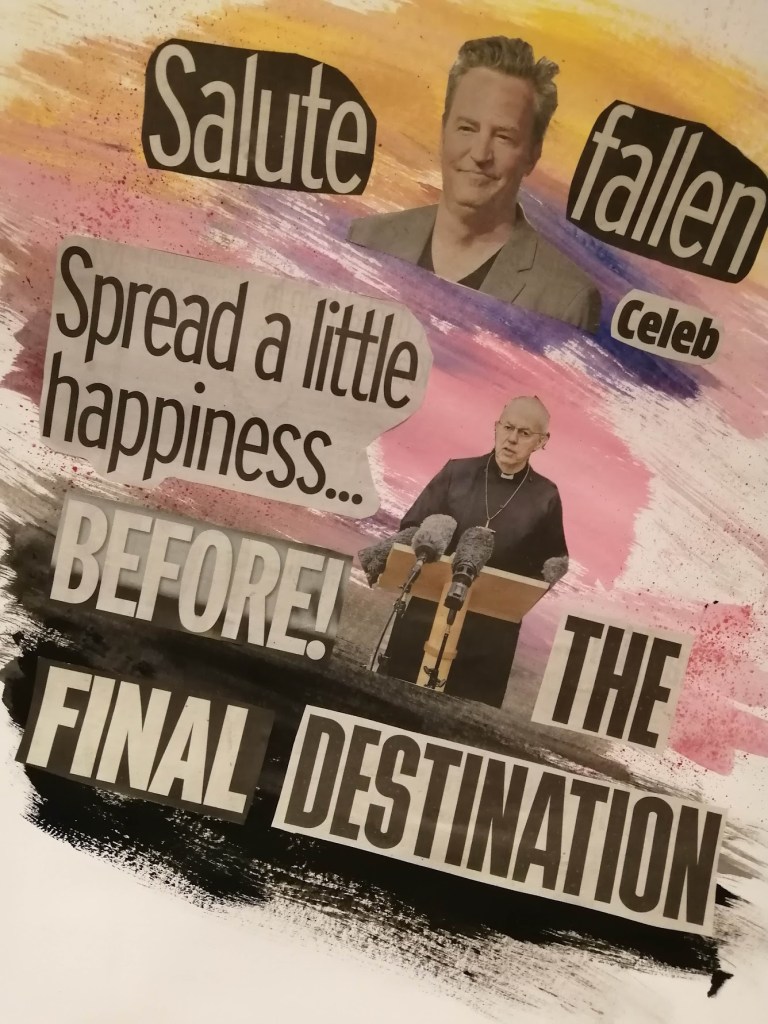
Mathew Perry sadly died recently, and there was a small article about him, so I decided to create the next collage with him in mind. First, I created an acrylic background with soft colours at the top to represent happiness and black at the bottom to represent death. The words Salute and fallen were originally intended for a Poppy Day article. However, I changed it to Salute Fallen celeb and found additional text and imagery in another piece of paper to complete the collage.
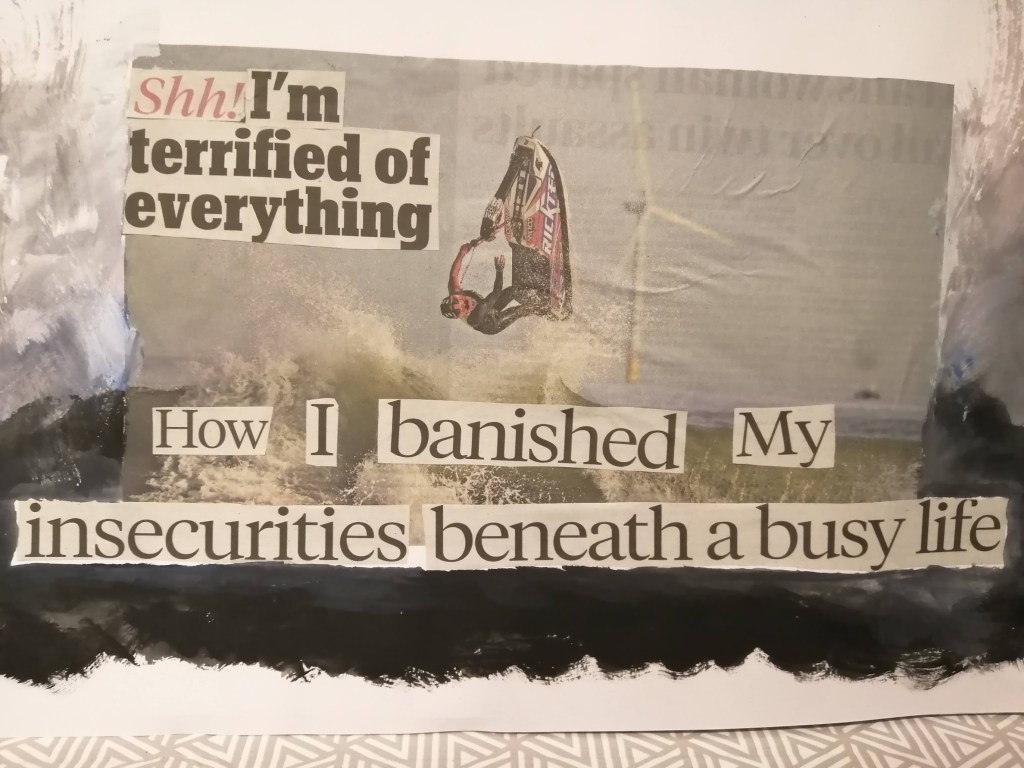
Going through the papers repeatedly started to become difficult for ideas until I saw a photo of a man doing crazy stunts in the water. On the next page in an ‘Agony Aunt’ column the words read I’m terrified of everything. It made me laugh at the idea of combining these words and pictures because it was so ironic.
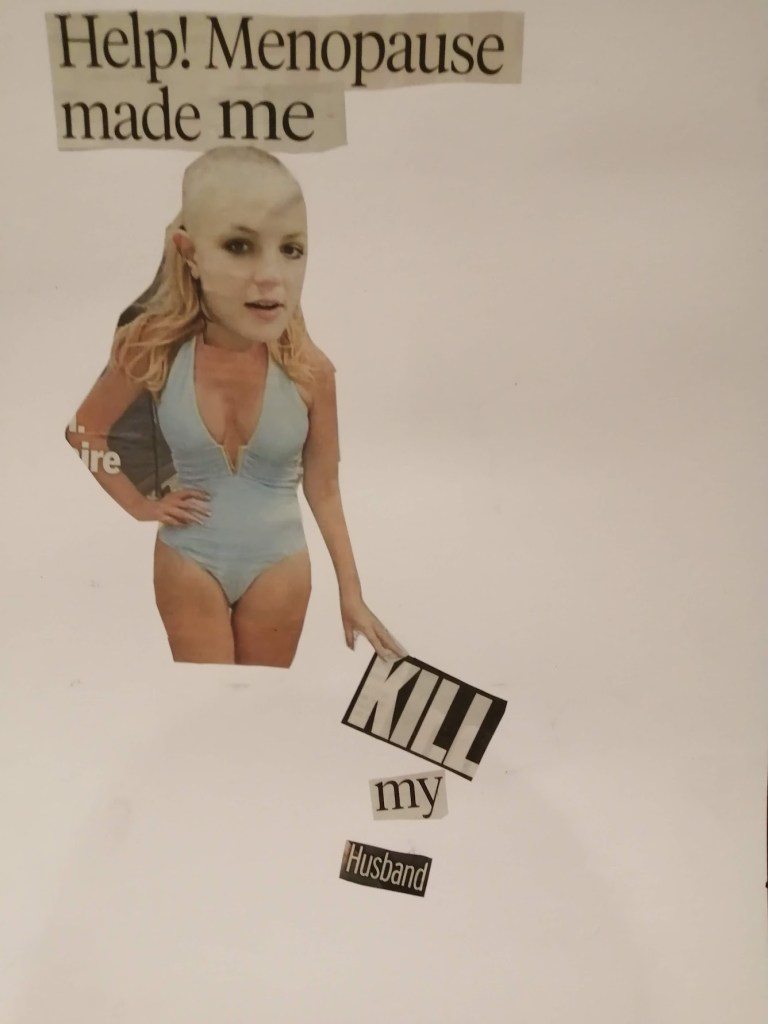
Finally, I discovered a photo of Britney Spears when she shaved her hair because she was depressed. On another page, I read an article about menopause, and I know that many women during menopause suffer from depression. As a result, I attempted to reassemble these elements in order to tell a new story about the effects of menopause while also injecting a little humour about killing my husband.
Reflection
To be honest, I have never enjoyed doing collage work; it has never caught my interest. However, I found this enjoyable because I was attempting to create new narratives from old material.
I’ve realised now that approaching a creative task with a different mindset can completely transform my experience with an exercise, and I’m glad I spent some time playing and exploring.
By completing this exercise, I discovered a way to express ideas and narratives in ways I would never normally work. It’s fascinating how the process of reinterpreting and repurposing old materials can spark new ideas. However, I am aware that some of the topics I have discussed are sensitive, and it would never be my intention to upset people but only to raise awareness on a matter.
In the future I will try and not disregard collage work and keep more of an open mind when creating new work.
For this exercise you need to have access to a computer with Microsoft Word or a similar word processing programme with a thesaurus (if not you could use a standard dictionary for this exercise but it will take longer). In Word the Thesaurus is the second option in the ‘Tools’ drop-down box. The starting point for this exercise is an automated word association game.
Here is an example of how to play the word association exercises.
● Choose a word to examine – the example here is the word ‘grass’ as a starting point. Type the word ‘grass’ in a new Word document.
● When you highlight and look up ‘grass’ in the thesaurus you are given the alternative words ‘sward’, ‘grassland’, and then the third definition of grass which is the word ‘meadow’. Now type that word in after ‘grass’:grass meadow
● If you then look up ‘meadow’ on the thesaurus then ‘lea’ is the third alternative word, making:
grass meadow lea
● After continuing this process of looking up and adding the third alternative word for a while, you will eventually develop a word poem like this:
● After a while you will reach a point where the alternative word begins to loop and repeat and you can’t take the exercise further. In this case you could switch to the fourth alternative word, or the fifth if you then start repeating again.
Now think of your own word and try the experiment. Sometimes you might begin to repeat very quickly, but experiment with a few words until you achieve a list you find interesting.
Once you have reached a 20-30 word text or ‘poem’, draw pictures or take photographs of each of the words in the sequence. These can be quick sketches or snapshots, but keep the order the same as the ‘poem’. These don’t have to be perfect drawings or photographs, more a visual record of the text, maybe structured as a comic strip or storyboard. Here is an example of the ‘grass’ poem:
OCA Visual skills 2 – P57
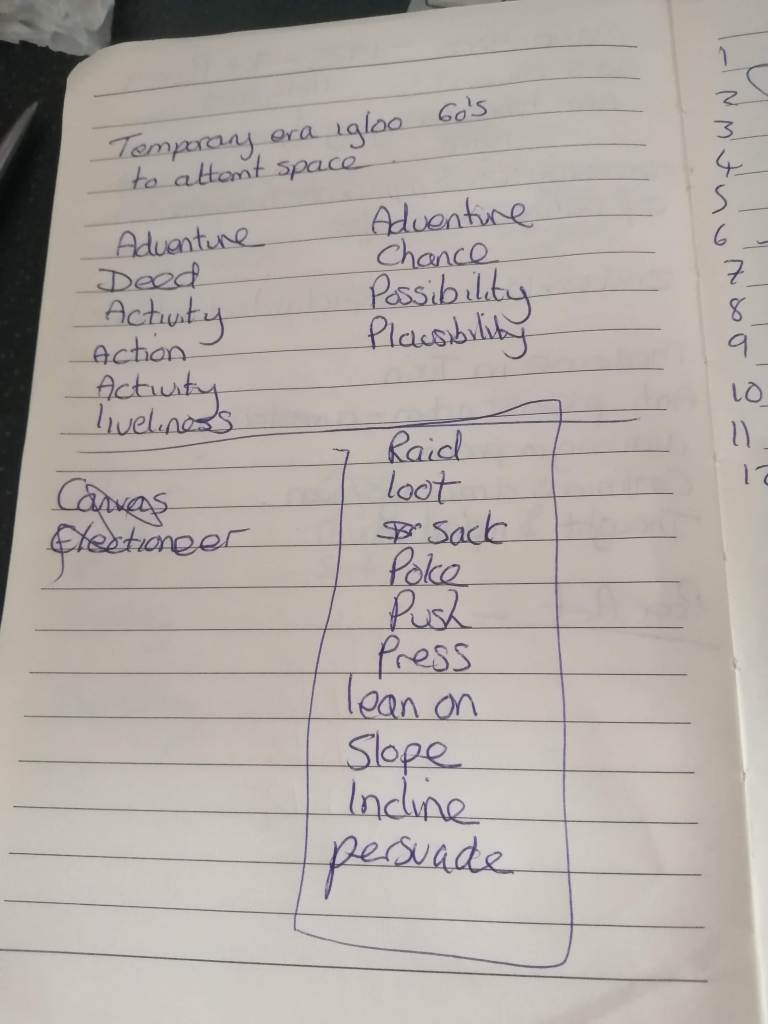
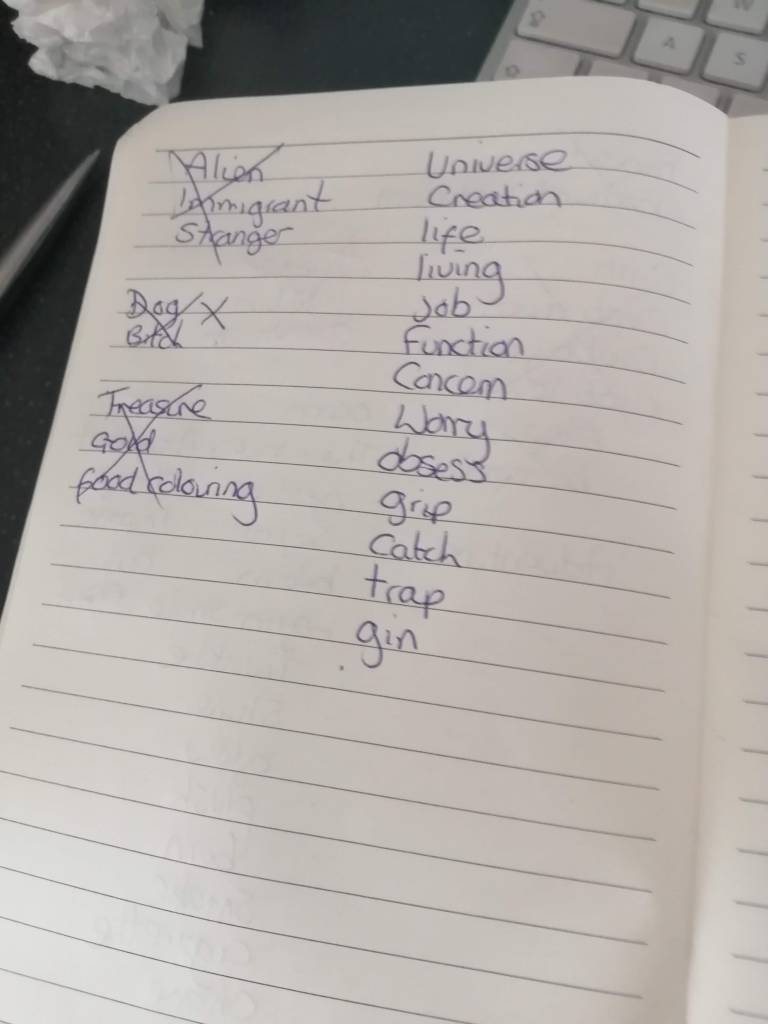
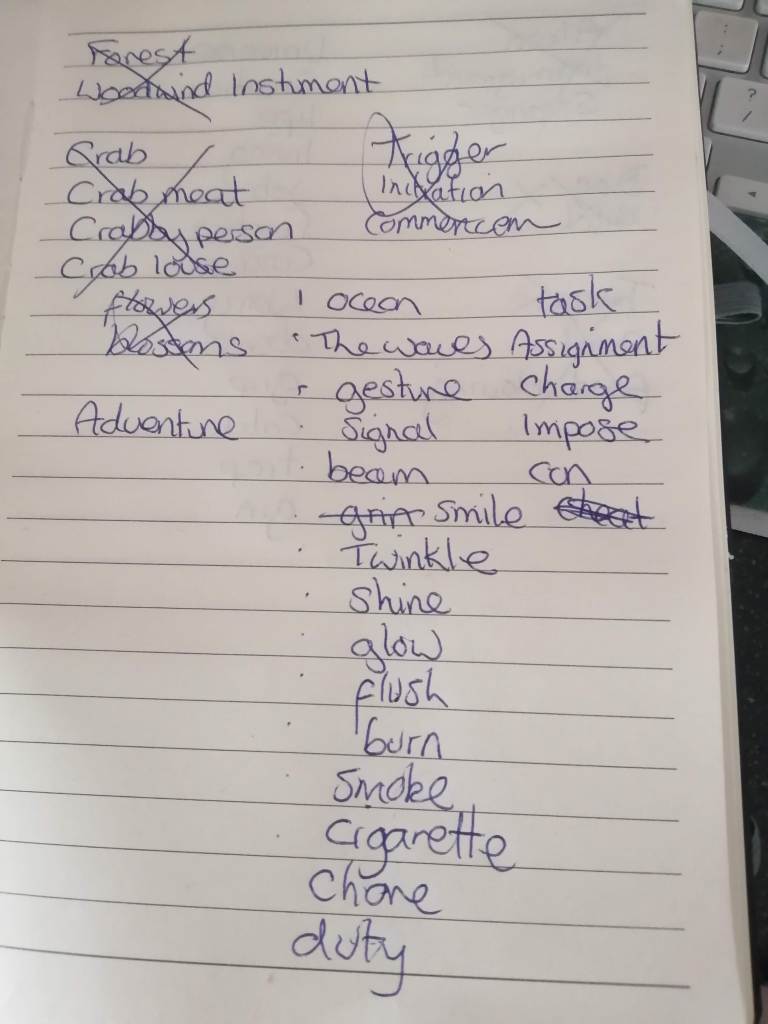
I began typing words into Word but found it quite frustrating as each word wouldn’t generate enough new words to make the word poem.
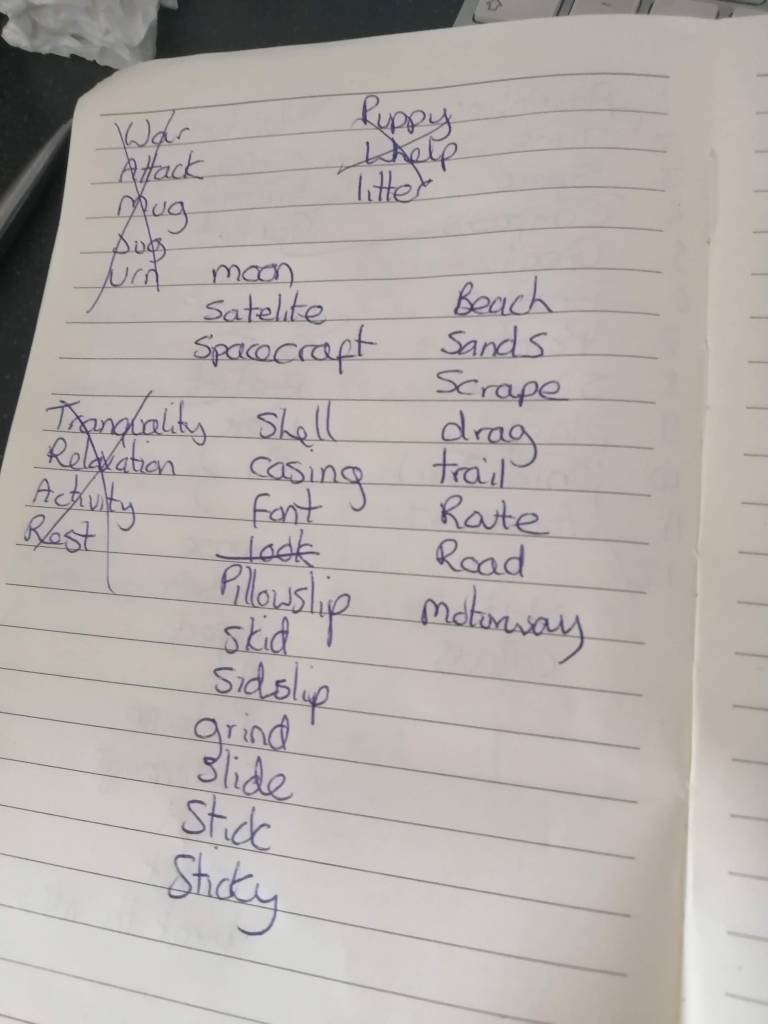
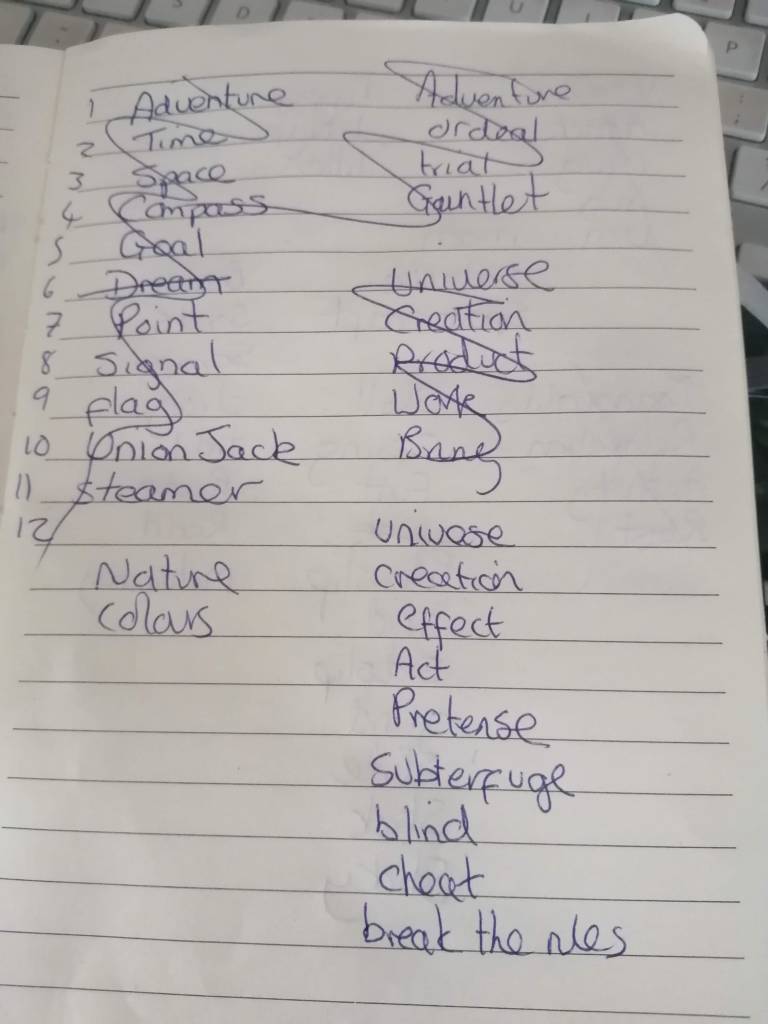
Below are images of words I attempted.
Eventually I found a word that worked and this was Ocean.
This word poem is:
Ocean
Waves
Gesture
Signal
Beam
Smile
Twinkle
Shine
Glow
Flush
Burn
Smoke
Cigarette
Chore
Duty
Task
Assignmment
Charge
Impose
Con
Below are the individual illustrations I created for the poem.
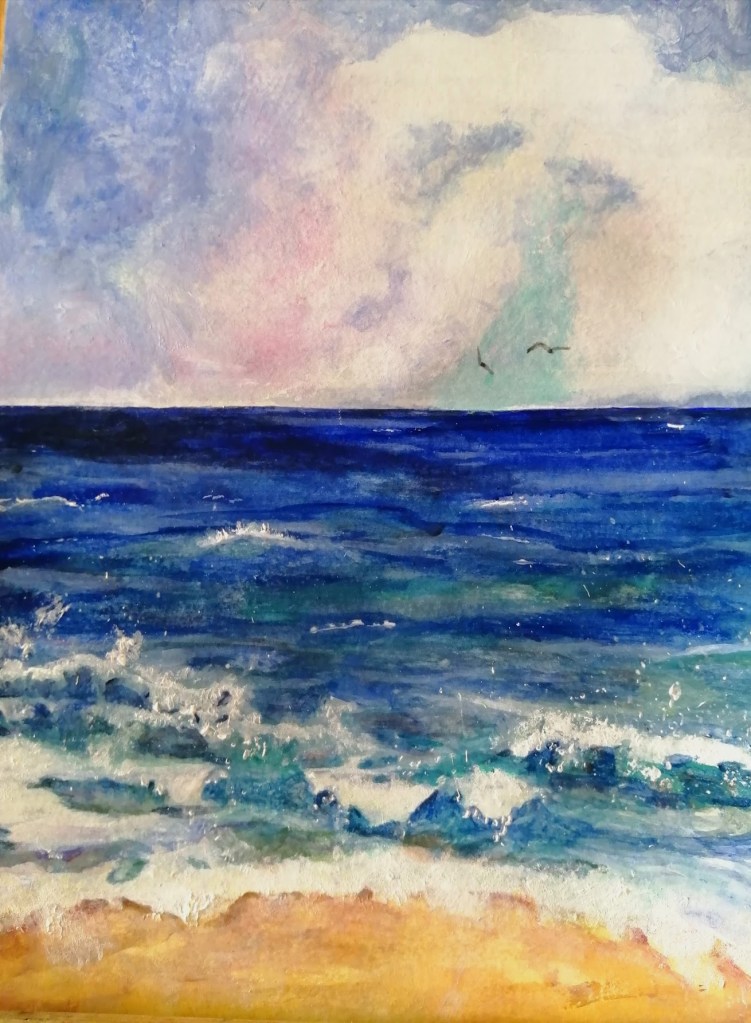
Ocean & Waves
For these words, I painted an image of the ocean with crashing waves. This was created with acrylic paint.
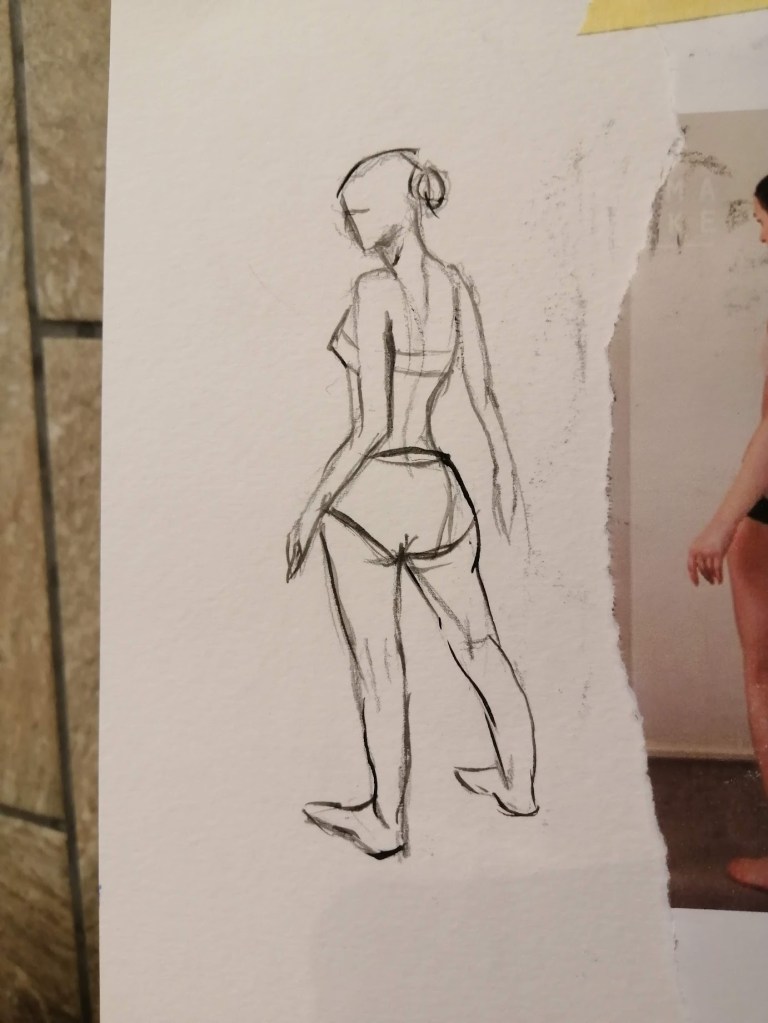
Gesture
For this word, I decided to create a gesture drawing.
Signal
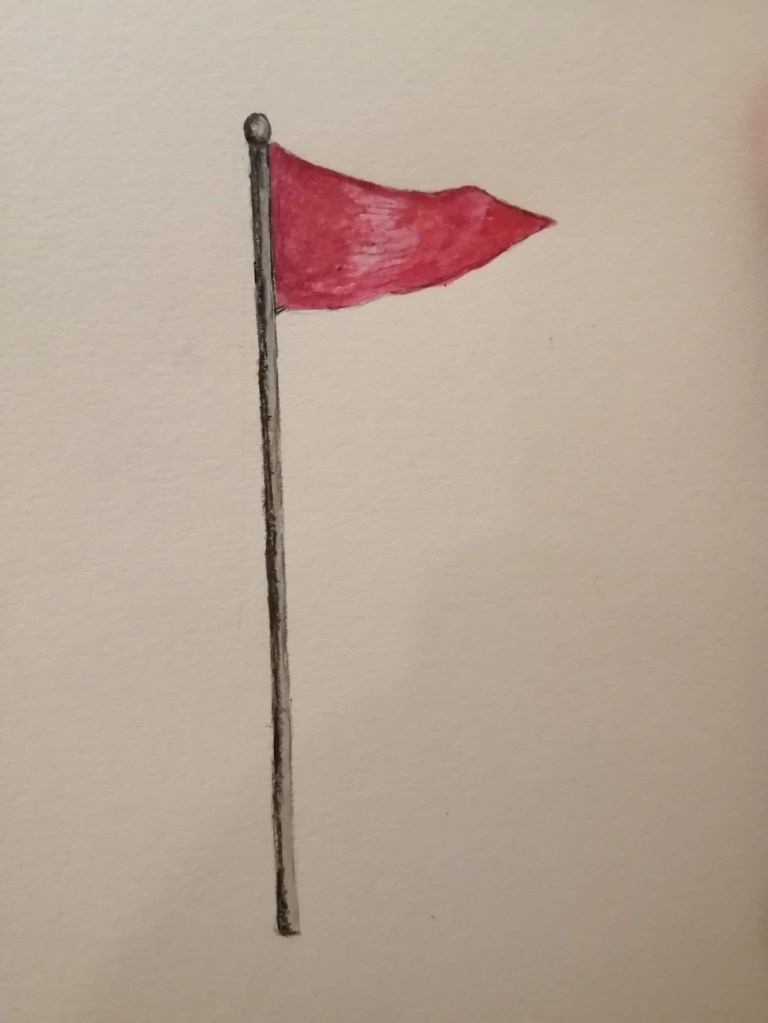
For this word, I created a flag which is a signal to say there is a danger of strong currents.
Beam
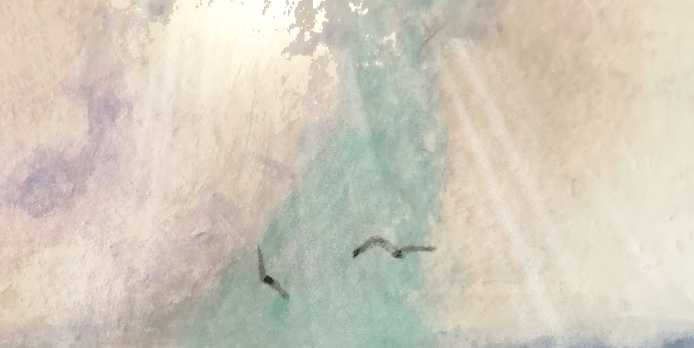
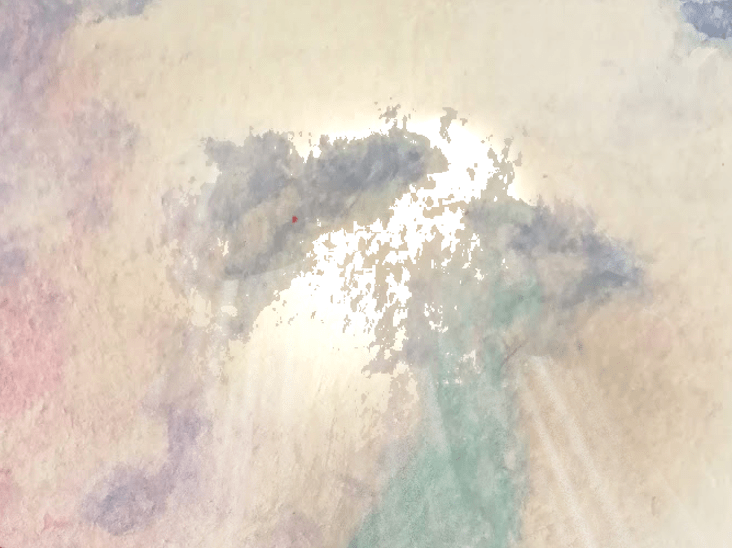
For this word, I used Adobe Photoshop to add a beam of light to the sea painting.
Smile
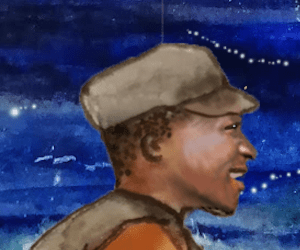
For this word, I created an illustration of a man smiling using pen and water colour paints. Then I enhanced the illustration using Adobe Photoshop using various brushes and the smudge tool.
Twinkle & shine
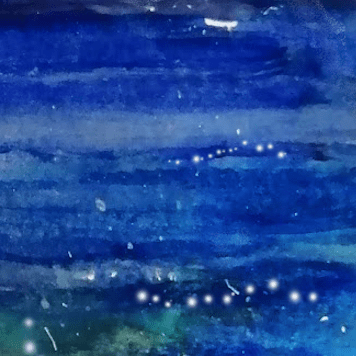
For these words, I added shine and twinkles to different parts of the sea painting using various brushes in Adobe Photoshop. Below is an example of part of the painting.
Glow
For this word, I added the sun to the painting and creating a warm glow using Adobe Photoshop.
Flush
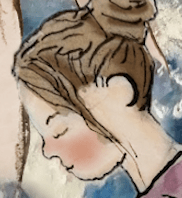
For this word, I drew a lady looking flushed using a dip pen with black Indian Ink and watercolour then enhanced the illustration using Adobe Photoshop.
Burn, smoke & Cigarette
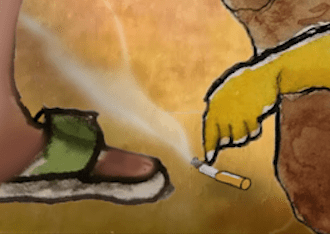
For the words burn and cigarette, I created an illustration of a lit cigarette and then added smoke using brush tools and blurring the marks using Photoshop.
Duty
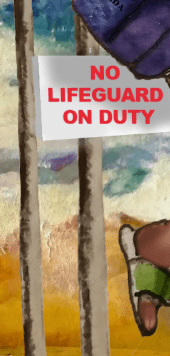
For this word, I drew an illustration of a sign warning the public that there is no lifeguard on duty.
Chore , Task & Assignment
For these words, as they were very similar I decided to think about them as one and drew an illustration of a lady litter picking.
Charge
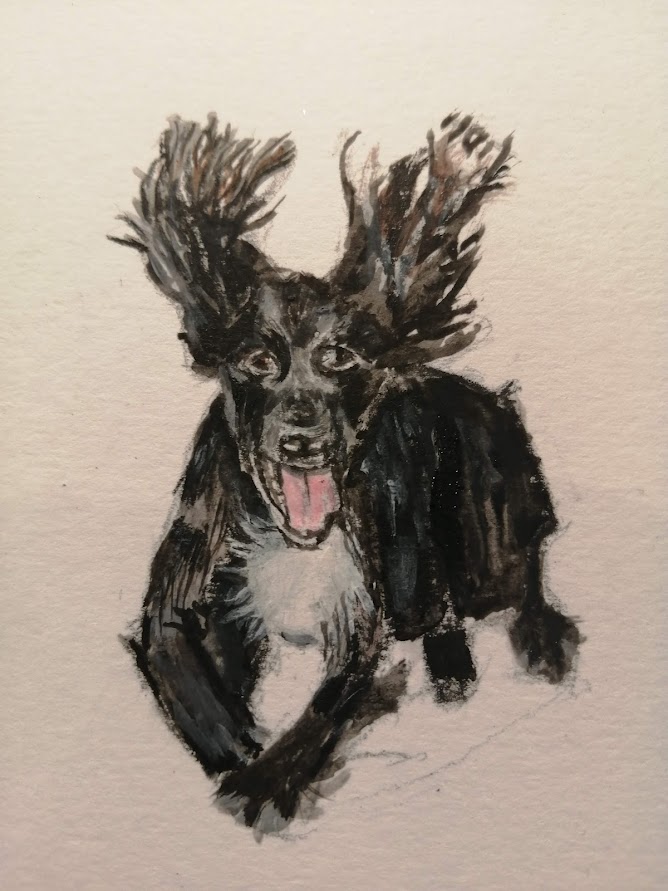
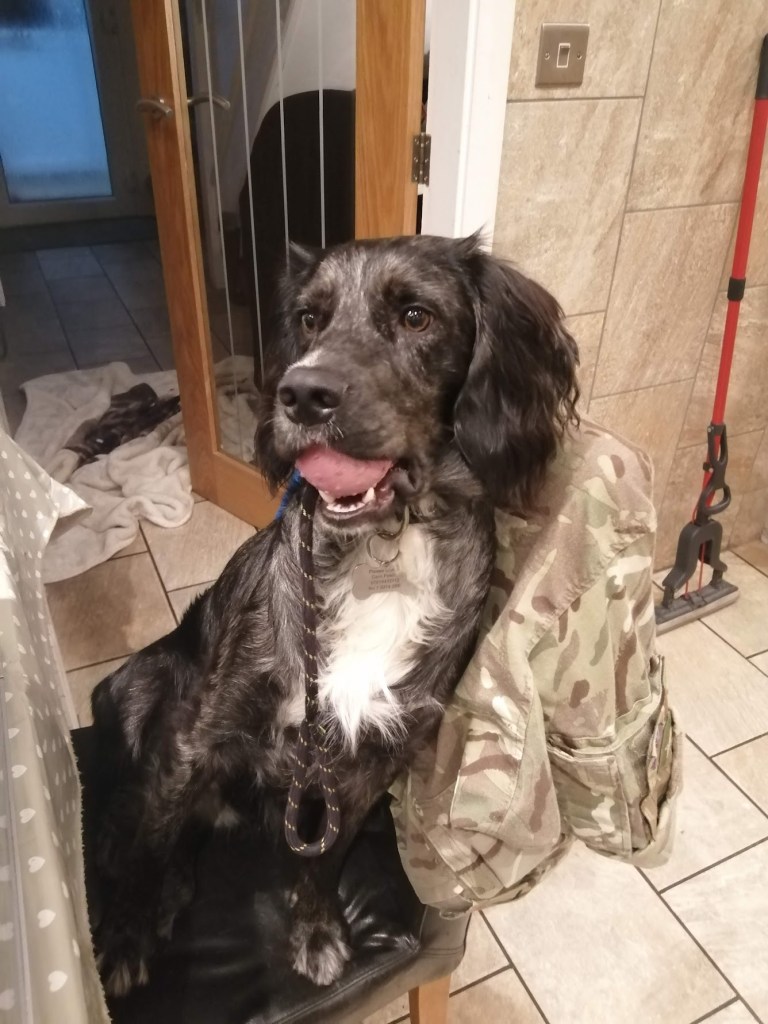
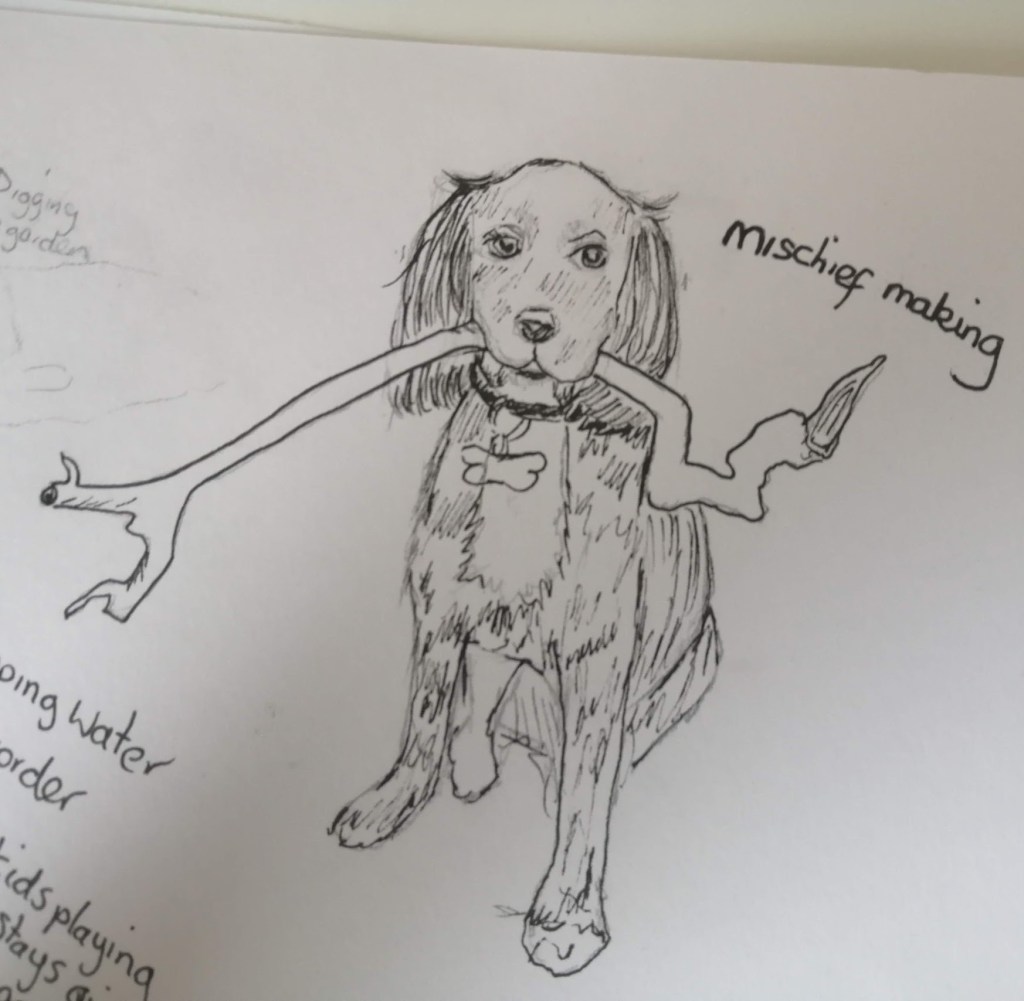
This was my favourite word of all them because I got to draw my pet dog charging towards me. The illustration was first drawn and painted with acrylic paint.
Then using a reference photo of him shown below, I then enhanced and added further detail to the drawing using Photoshop.
Impose
For this word, I painted a picture using acrylic paint of a sign imposing no alcohol.
Con
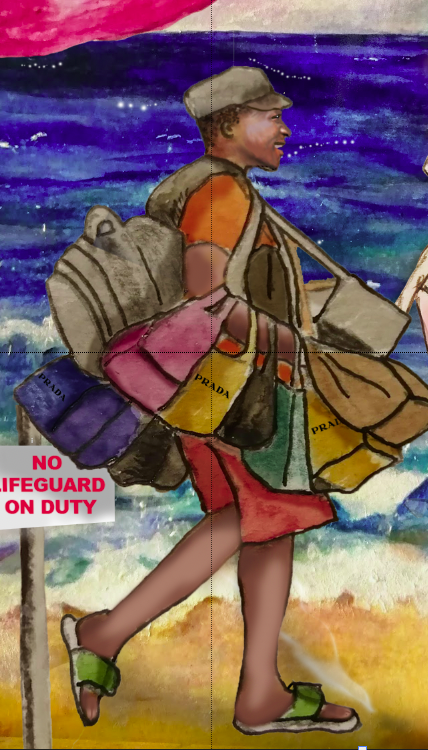
For this word I decided to create an illustration of a con artist. This particular con artist is an individual who tries to trick people into believing or investing in something that is not what it appears to be. Such as selling fake designer goods to tourists on the beach.
I like to think the illustration serves as a creative way to highlight the issue and remind people to be cautious when encountering such situations while traveling.
This illustration was created with pen and water colour and enhanced using Photoshop to add detail to the face and skin using various size brushes and the smudge tool.
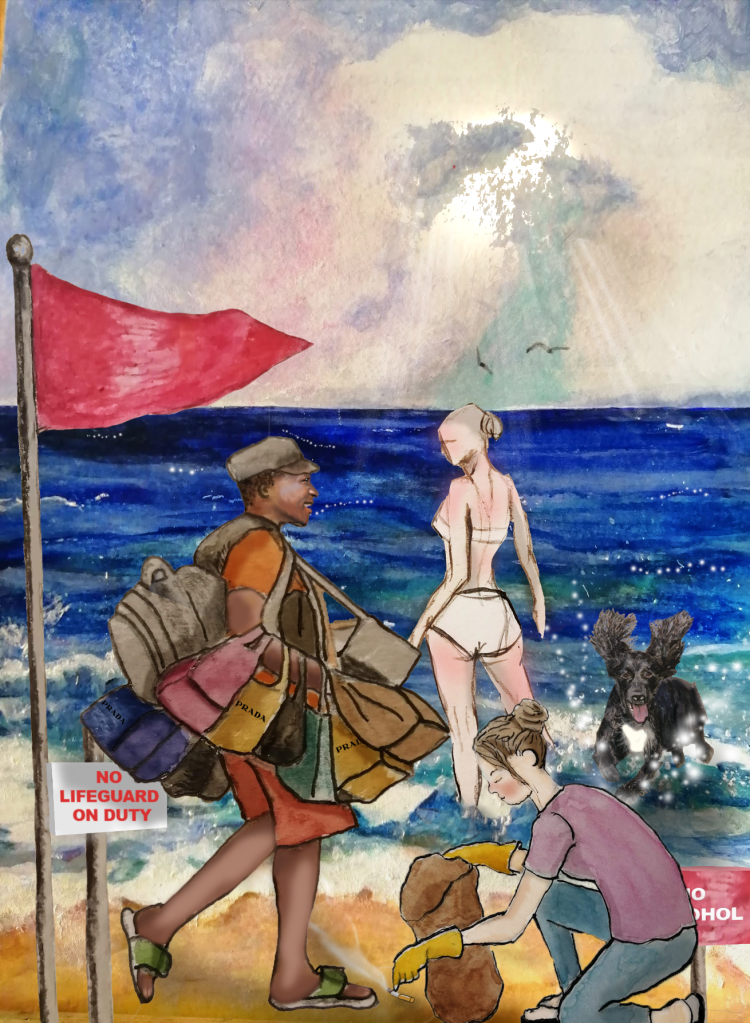
All the individual illustrations I compiled into a final illustration which can be seen below.
Final illustration
Reflection
This task took me longer than I expected, partly because I made some images in great detail. I knew it wasn’t necessary for the exercise, but I wanted to challenge myself and see what I could come up with.
Generating images for each word was challenging to begin with. However, the more I thought about it, the more I could envision an interesting final illustration.
Putting all of the various sketches together helped me to create one cohesive artwork that visually tells a story. For example, combining the con artist’s illustrations generates a visually appealing image.
This exercise enabled me to put complicated ideas into one single image. The final illustration allowed me to express an idea while also displaying my artistic creativity. I hope it engages viewers and provokes thought and emotion.
Many fine artists have developed systems and processes to create their work, and these approaches often cross boundaries between drawing, painting, sculpture and photography. Some famous ones are:
Robert Morris
Mario Merz
Agnes Martin
Bruce Nauman
Eva Hesse
Overall, Joseph Kosuth’s working process is characterized by a rigorous commitment to conceptualism, an emphasis on intellectual engagement, and a careful consideration of language and its relationship to art. His work challenges viewers to think deeply about the nature of art and language, making it a significant and influential part of the conceptual art movement.
Research some of these artists’ work and working processes and reflect on these in your learning log.
OCA text book- Visual skills 2- Visual Exploration
Robert Morris
Robert Morris (1931-2018) was an American artist known for contributions to minimalist and post-minimalist art movements. His work consisted of many forms, dance performance, minimalist sculpture, earthworks, drawing, painting, film, photography, collage, readymades and theoretical essays.
In his works, Morris frequently used industrial materials such as plywood, fibreglass, aluminium, steel and felt. These were used to make simplified geometric forms.
Robert Morris’s Process with Sculpture.
While researching his approaches and focusing on some of his sculptures, I realised that his most famous works appeared in the middle of the 1960s, and Morris had a unique approach to this medium that began with minimalism. He would distance himself from his artwork while working in order to concentrate on the process of creation. which he continually highlighted as a significant component of his work. He once quoted:
“There’s information and there’s the object; there’s the sensing of it; there’s the thinking that connects to process,” he once explained. “It’s on different levels. And I like using those different levels.”
(Morris, 1960, as cited in The Art Story, 1915).
Morris appears to be discussing a process of engaging with and understanding the object he is constructing.
There is a distinction, for example, between what the artwork is about and what it shows. During his working process, Morris would investigate the artwork using his five senses.
Morris then goes through a cognitive process in which he reflects on, analyses, and interprets the artwork. When employing this working style, it is important to distinguish between each of the cognitive processes because it is this way that helps him to have a better understanding of his work.
Mario Merz
Mario Merz (1925-2003) was an Italian artist who was part of the Arte Povera movement which began in Italy in the late 1960s.
Following WWII, the fast development of industrialisation and advanced technology in Italy (and Europe) prompted the country’s transition to modernism. Other movements welcomed the modern age, but Arte Povera saw it as a threat. Mario Merz and other artists rebelled by frequently creating work from cheap-to-hand materials like mud, rags, glass, neon lights and twigs. This creative process is intended to push the boundaries of art in the modern day.
Merz’s work frequently incorporated these everyday objects to create sculptures, installations, and paintings that addressed topics of nature, culture, and society. His artistic process used a mix of mathematics, geometry, and the natural world.
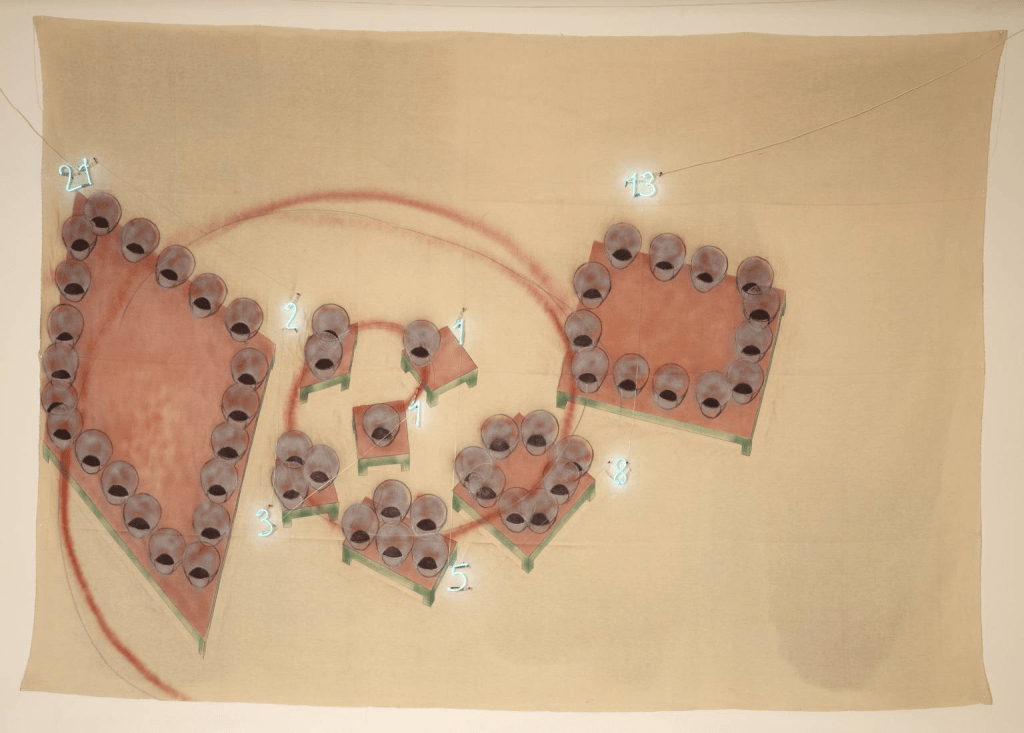
I found it interesting that he frequently used the Fibonacci sequence in his work. This is a mathematical sequence found in nature. This influence can be seen in the image shown below where he has used spirals and numerical patterns.
Fig 1 – Fibonacci Tables (1974-1976)
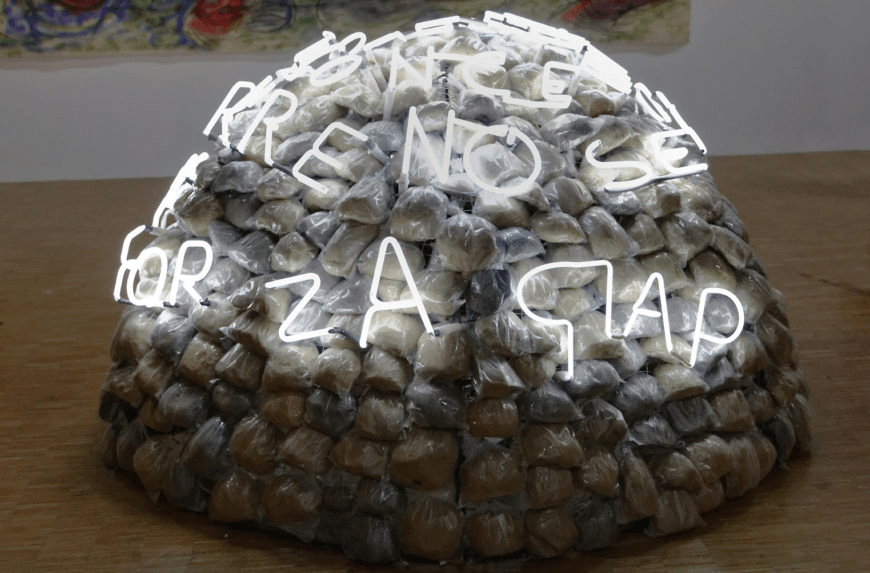
One of Merz’s most iconic works is his igloo series. From the 1960’s until his death, he made thirty of these sculptures. These igloos are made from various materials, including clay, glass, and metal, and again they often incorporate the Fibonacci sequence in their construction. The use of the igloo symbolises the idea of shelter and the interconnectedness of human beings and nature.
Merz’s artwork also included political and social satire. Merz once phrased on one of his sculptures “If the enemy masses his forces, he loses ground; if he scatters, he loses strength,” The phrase prompts viewers to think about Giáp (who was the general of the Peoples Army of Vietnam.), and other Vietnamese’ conduct throughout the Vietnam War, which had been going on for over a decade when Merz produced this sculpture. At the same time, the sculpture encourages viewers to think about their behaviours in the present day by engaging with the object. He was a critic of modern society’s excesses, and his art frequently attempted to question it. So he could promote a more environmentally friendly and peaceful interaction between humans and the environment.
Fig 2 – Igloo di Giap (1968)
Overall, Mario Merz’s creative technique was defined by the combination of mathematics, nature, and everyday materials and an in-depth study of humanity.
Joseph Kosuth
Joseph Kosuth is an American conceptual artist best known for his investigation of language and philosophy through visual art. He has made numerous contributions to the conceptual art movement that started in the 1960s and has continued to create thought-provoking art throughout his career.
His working process involves research, careful selection of language and texts, and careful consideration of the context in which his artworks will be shown.
Neon text installations are one of Kosuth’s most renowned types of art. He displays words, phrases, or quotes in neon lights, frequently in a language or script other than the viewer’s, encouraging people to consider the meaning of the words. He often displays definitions or lists of synonyms to investigate how language affects our views of reality and objects.
Below are some examples of his work
Overall, Joseph Kosuth’s working process is characterized by creating conceptual art, which focuses on engaging the viewer with careful thought about the language he uses and its relationship to the artwork.
Reflections
It was interesting to learn about these artists because they are not the type of artists I generally study. It was fascinating to learn about the purpose behind each artist’s work, their creative process, and how intellectually perceptive some of the pieces are once you know what they are about. Overall, all these three artists employ a minimalist approach, carefully selecting and analysing their medium and artwork.
It’s great to see how different artists begin their work, how they decide when a piece is finished, and what they hope to achieve.
Undertake a series of mind-maps or spider diagrams to generate associations based on a single concept. Try and develop a process that moves your thinking through the obvious, to find more subtle, subjective, specific, or unusual motifs.
Use a mind-map or spider diagram to generate associations based on one of the following concepts:● CUTTING ● GROW ● HIDE ● SEED ● WOBBLE or another concept that relates to your current practice: Place the word in the centre and radiate your ideas outwards.
Try introducing images to your map or diagram as a way of offering new possibilities and ideas. Use quick drawings or snapshots as a way to do this on your spider-diagram, or move to your sketchbook to develop ideas further.
Introduce new ideas to your map or diagram to help broaden your associations, for example, thinking about the sound, smell, touch, or movement of your concept/ideas as much as their image. Think about how you can use lateral thinking techniques as further prompts.
Identify concepts/ideas in your spider diagram that you feel are the furthest or most divergent from your starting point. Amend or start a new diagram that aims to find connections between these divergent ideas and your original starting point. Alternatively, add new words or ideas, alongside your original and start to develop a more complex, rhizomatic set of connections. New words could include:● HISTORIC ● OVERLOOKED ● MUNDANE ● EXTRAORDINARY
Identify which single idea/concept or lines of connections you feel have possibilities or are the richest in terms of how you might start developing a visual piece of work in response.
Use your learning log to identify these and reflect on the process and the exercise as a whole.
Visual Skills 2 – Visual Exploration – OCA
Keywords from the brief:
Use a series of mind maps or spider diagrams to generate associations based on a single concept.
Introduce images to the mind maps.
Use lateral thinking techniques as further prompts
Identify a concept from these spider diagrams that has the best possibility for starting a visual piece.
A series of mind maps or spider diagrams
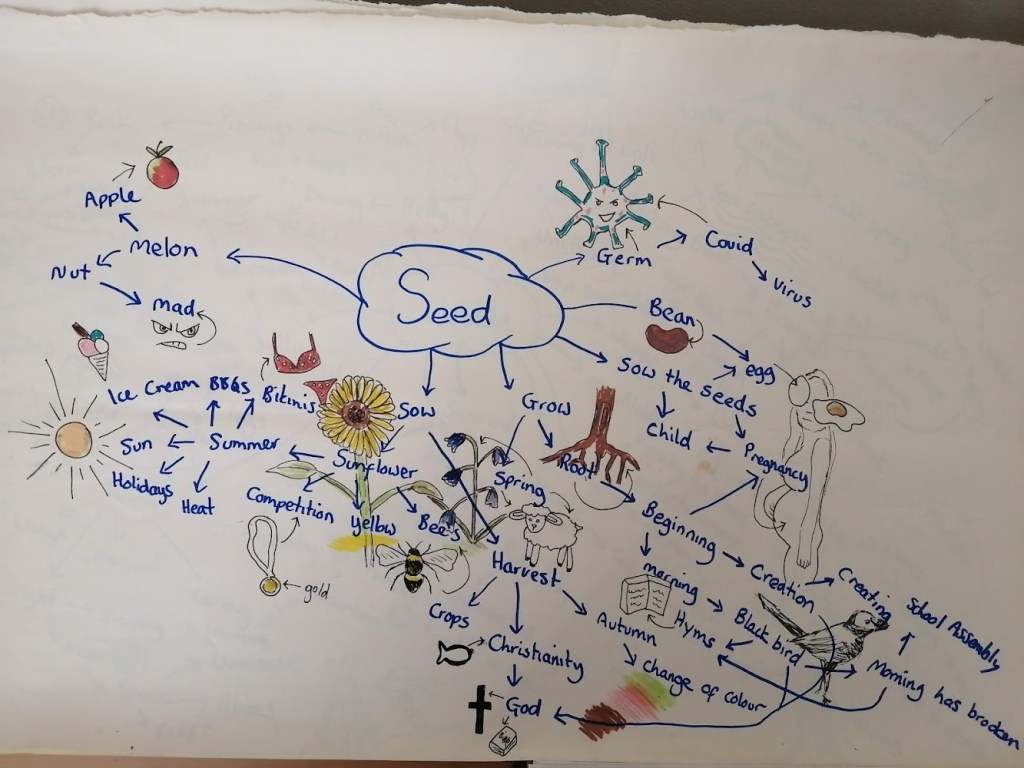
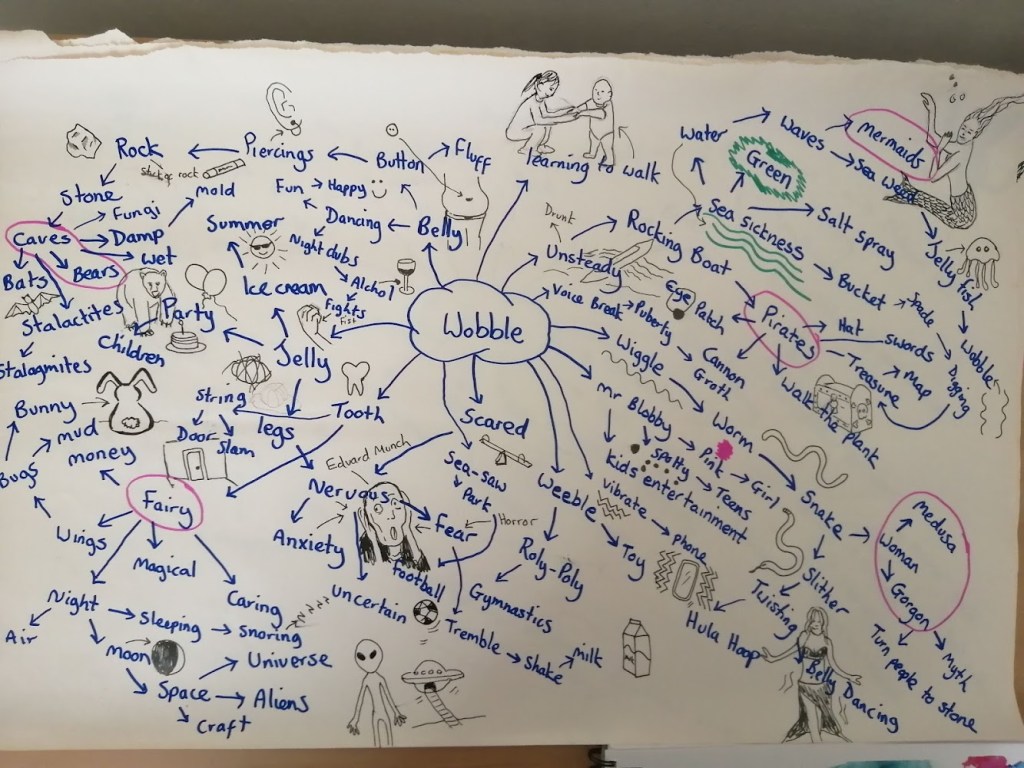
To start this exercise, I made spider diagrams for each of the mentioned words to see what ideas I could come up with for each topic.
Cutting
The first word to investigate was cutting. Initial thoughts included cutting the grass, cutting hair, and cutting a piece of cake. However, when I thought about each new idea, I found myself deviating from the initial notion and coming up with some quite distinct thoughts such as self-harm, mental health, mystery, and pampered pets.
Grow
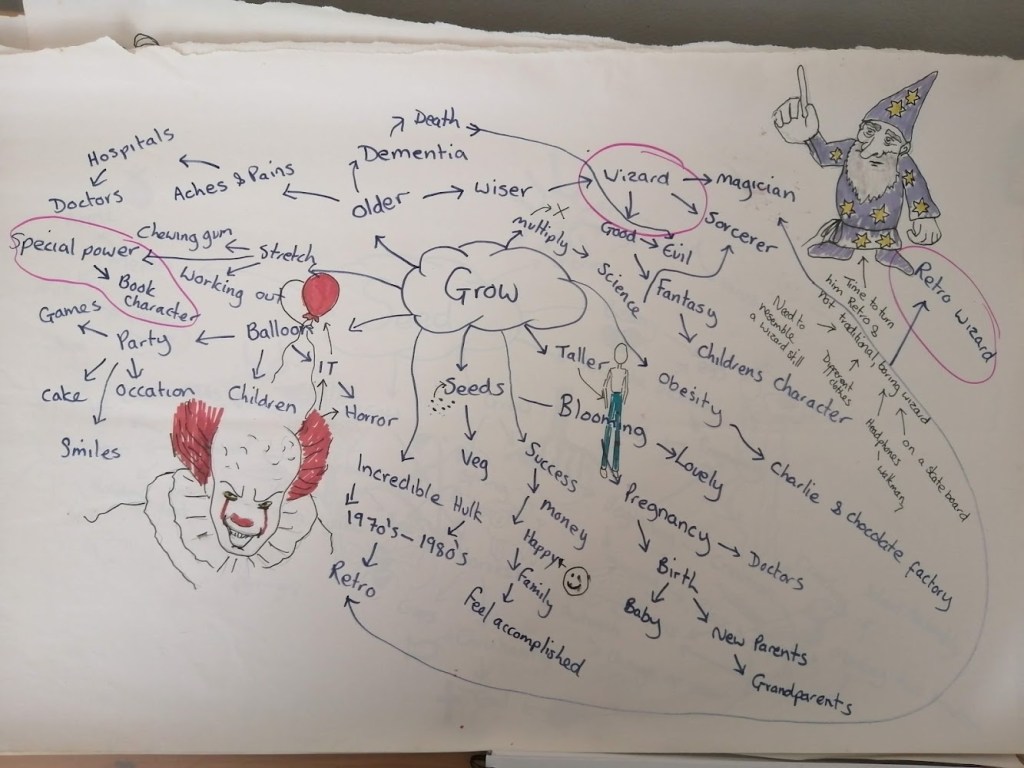
The second topic to look into was grow. Again, I began with simple terms like “growing older,” “growing taller,” and “growing seeds.” These ideas, however, produced some unusual concepts such as wizards, horror, and special powers.
Hide
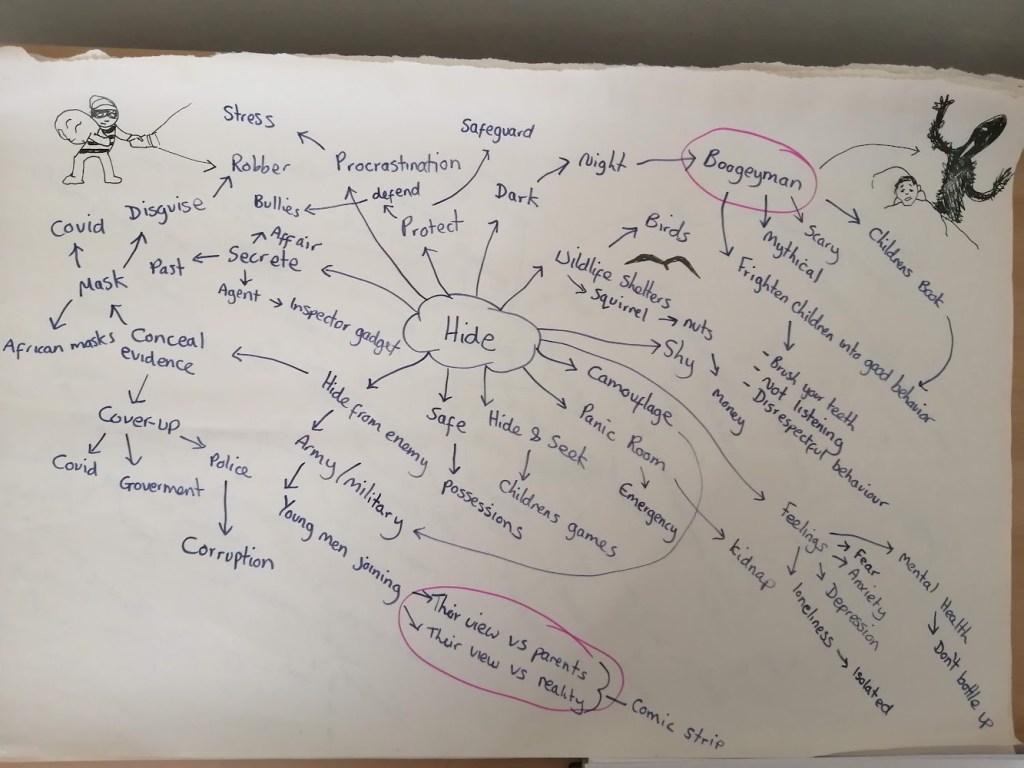
The third theme was hide. This was a little more difficult for me to think of words at first, yet I soon got terms like hide and seek, hide from the enemy, and protect. This sparked three ideas for future projects: Boogeyman, Robber, and a comic strip depicting the realities of joining the military against the parents’ perspective. This final project idea probably came to me because my son is planning to enlist in the Royal Air Force.
Seed
The fourth topic was seed. This was my least favourite notion, and I had the most difficulty coming up with fresh words for it. Each of the words was self-explanatory, such as sow, grow, and harvest. God, COVID, and Mad were the most far from my starting point for the word seed. However, when compared to the earlier spider diagrams, I didn’t believe these were viable ideas for a new project.
Wobble
Wobble was the final word to be investigated. This word inspired the most ideas for me. I started out with words like teeth, jelly, scared, and unstable. However, the more I brainstormed, the more bizarre concepts I came up with, such as mermaids, bears, fairies, wizards, and Medusa, which surprised me.
Using images within the mind-maps.
I tried to incorporate little thumbnail sketches of what I was thinking about in each spider diagram; the more I did it, the easier it became. As shown in the diagram above, sketching out concepts helped me produce more ideas.
Looking at each of the spider diagrams side by side I looked at what I thought would be the most interesting words to use as a starting point for a new project and circled them in pink.
The ideas I liked the most were:
Caves/bears
Tooth Fairy
Mermaids
Pirates
Medusa
Boogeyman
Wizard
Looking over the list, I was amazed to discover that I had thought about fantasy characters for each spider diagram. However, being happy in children’s illustration is what I hope to achieve in the future, and I believe I’m on the right path to achieve this.
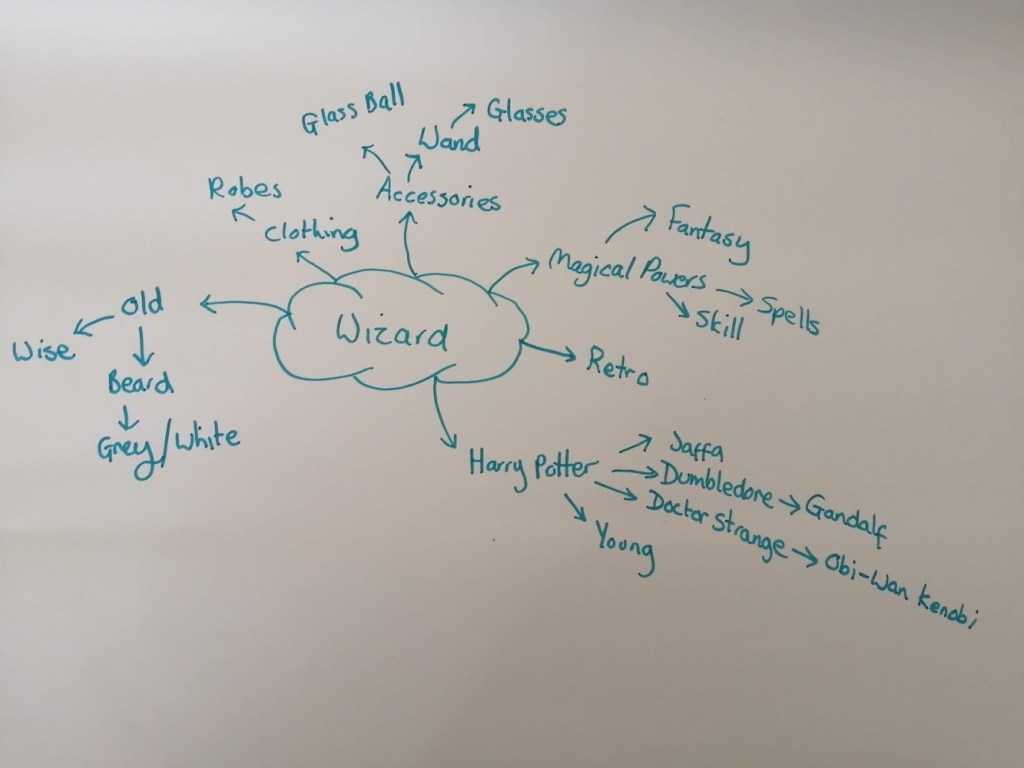
I wanted to play with each of the concepts right away, so I chose Wizard to experiment with just for fun.
First, I made a new spider diagram based on this topic.
After thinking how I could distinguish a traditional wizard from a standard drawing of one. I imagined what a modern-day wizard would look like. Especially if he was a young man. I didn’t want to make the mistake of recreating Harry Potter’s appearance (glasses, robe, and wand). Using Pinterest, I created a mood board with ideas for a young wizard.
As this was only for enjoyment and not for a final assignment, I figured it would be a good opportunity to learn some digital skills. I’ve attempted to draw digital illustrations a few times, but because I lack the necessary skills, the drawings never turn out as I would like.
This time I watched a Skill-share class to try and learn some new skills and I then applied it to my own drawing. The class I watched is called:
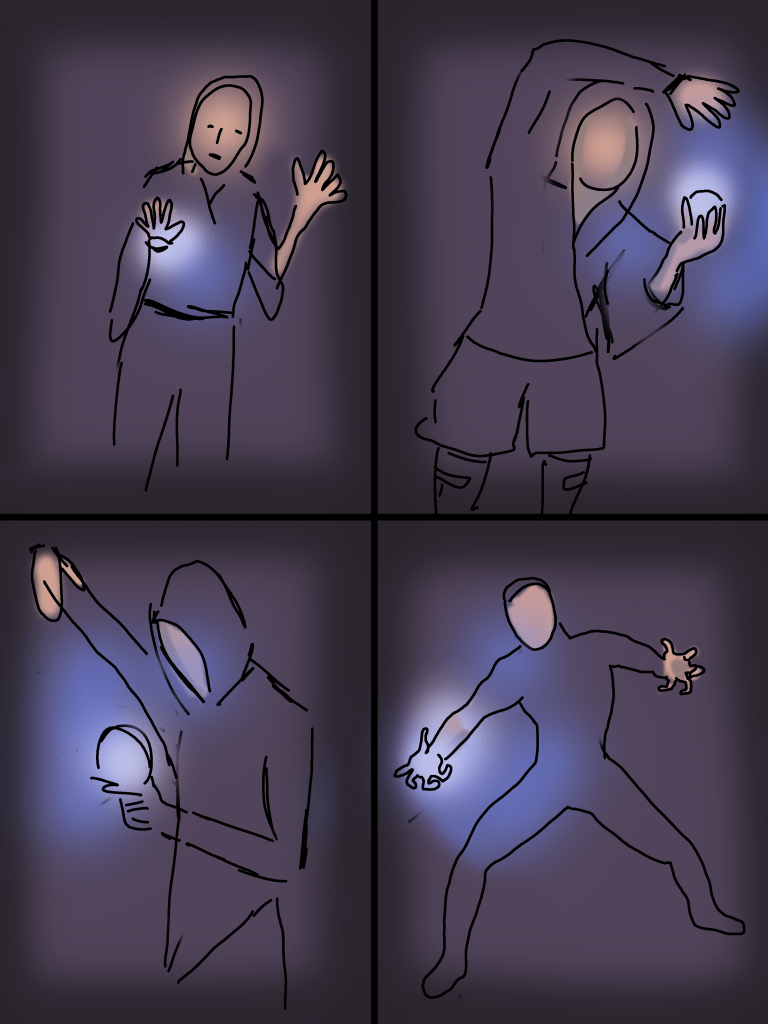
Following along with the classes and techniques but using my own inspiration I began by starting my illustration with a few thumbnail ideas.
Next, I chose the bottom right thumbnail idea to work on as my new illustration.
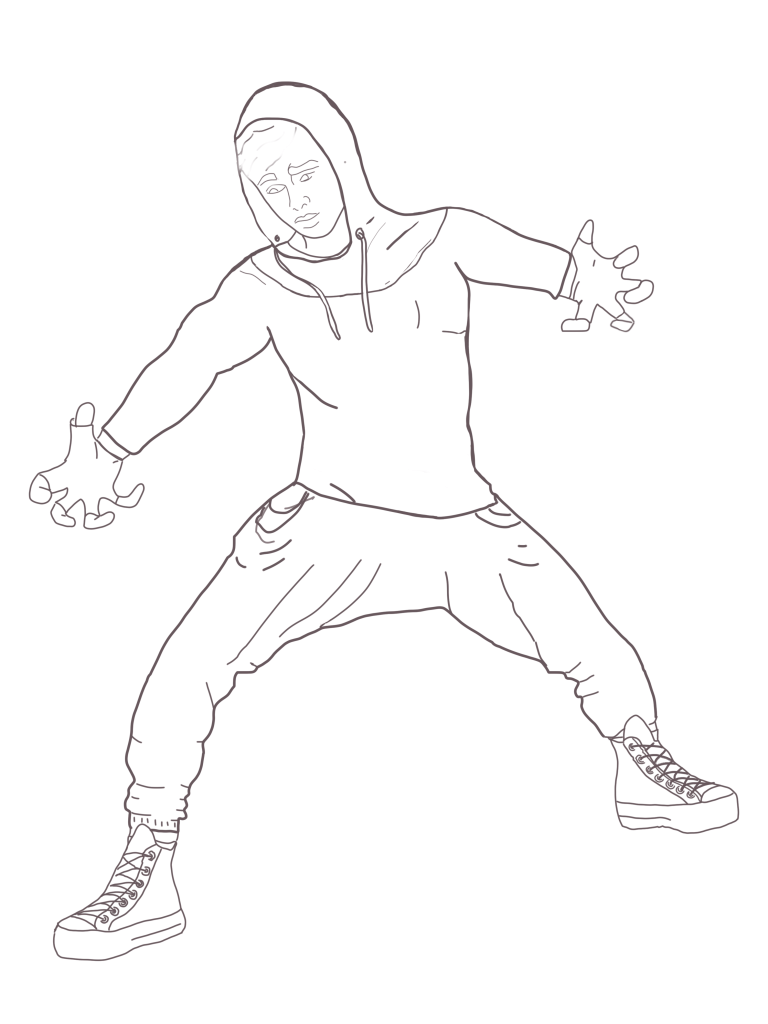
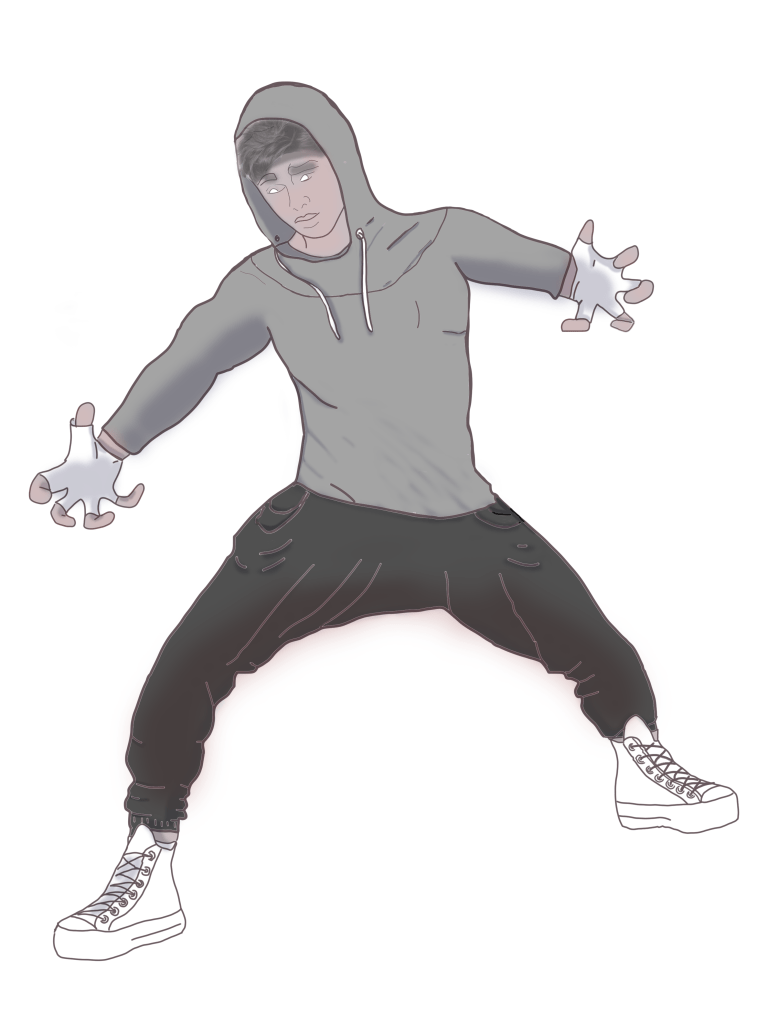
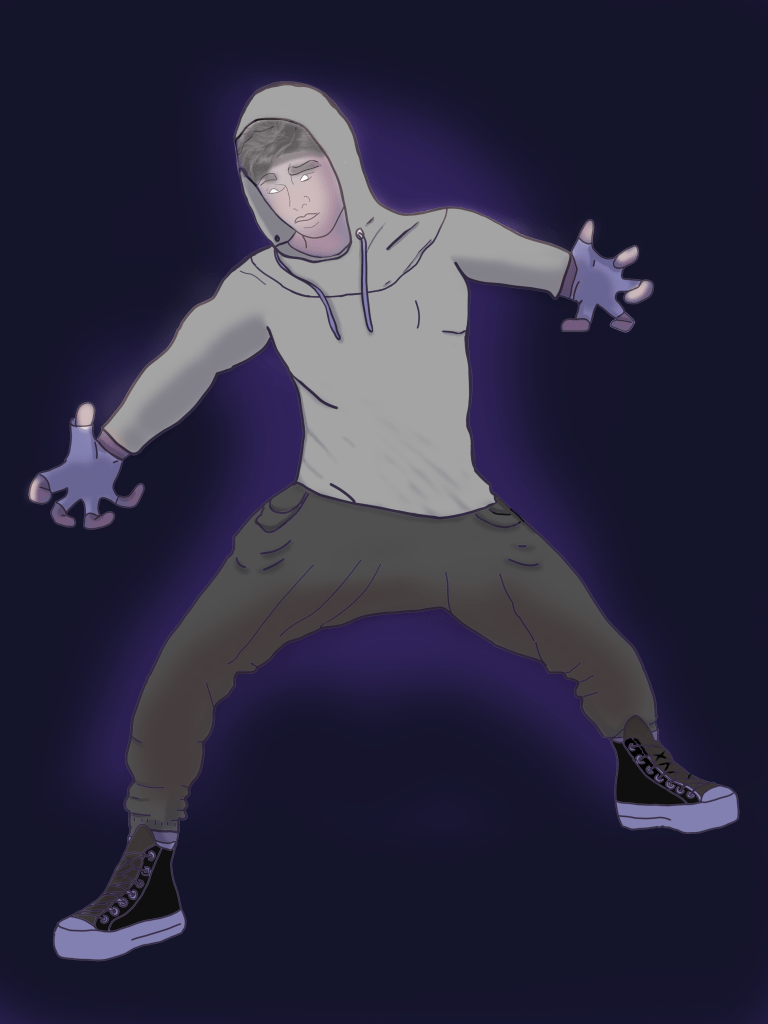
Selecting the brush tool in Adobe Photoshop I sketched out a more detailed drawing of the young wizard. I wanted him to be young and trendy so dressed him in a hoody, skater gloves, baggy trousers and Converse trainers.
Next, I started to colour the illustration again using the brush tool.
Then I began adding further detail and started to add the background.
I continued to add detail to the background, including shadows and highlights, after receiving colour guidance from the Skillshare class, and I added a magical element to the artwork that the young wizard is conjuring.
Reflection.
This was a fun activity that turned out to be a surprisingly useful tool. It has allowed me to come up with new and intriguing project ideas that I would not have thought of otherwise. It was fascinating to observe how brainstorming may eventually transform my initial ideas into something altogether different.
It was enjoyable to experiment with digital painting and to gain new skills, but I am disappointed that I still have a lot to learn in this area. Due to my lack of technical understanding in this field, it will take some time for me to make a digital drawing that I am proud of. However, I will continue to practise this whenever possible.
I am also excited to come back to the list of fantasy characters and experiment with other mediums to illustrate soon.
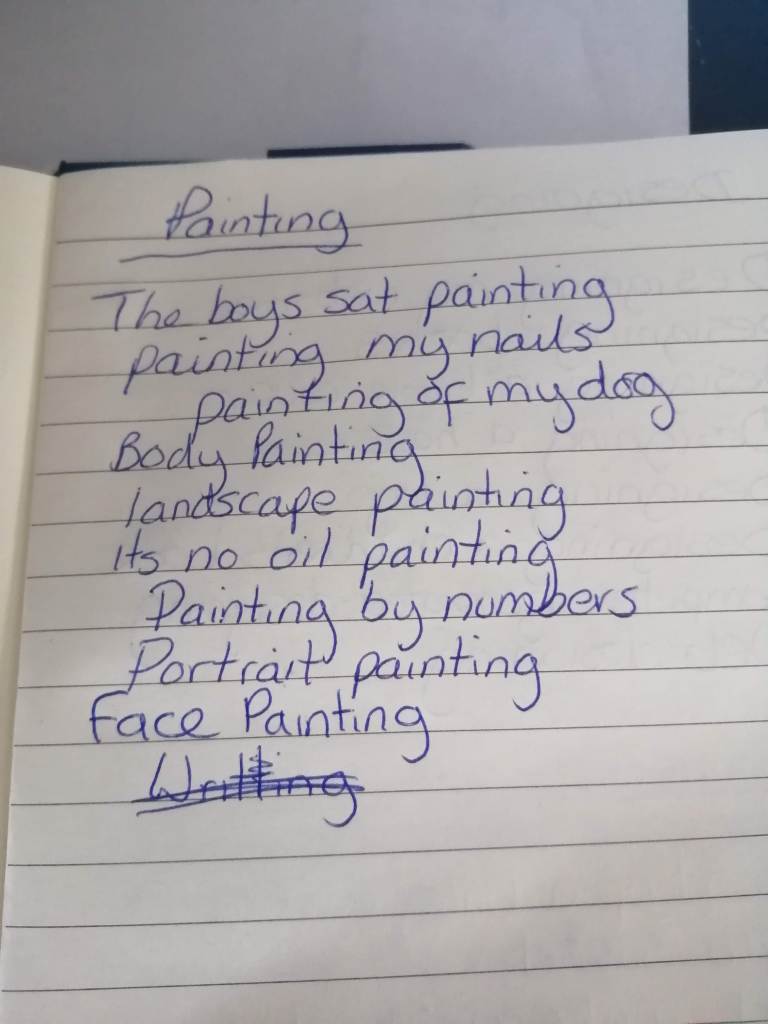
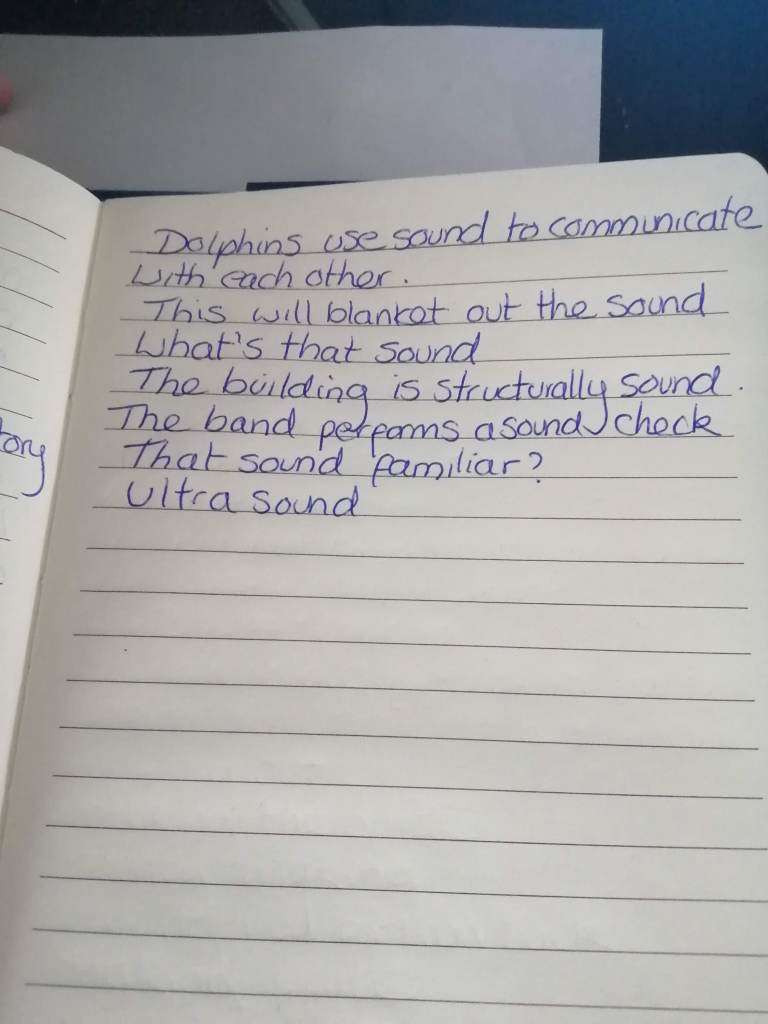
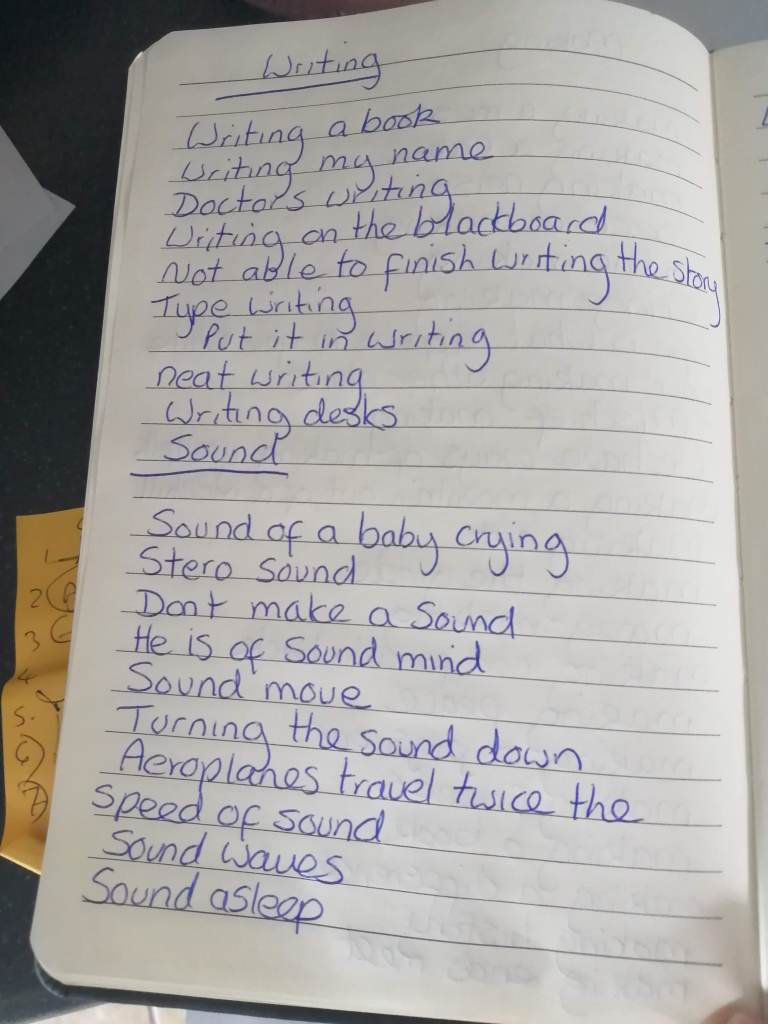
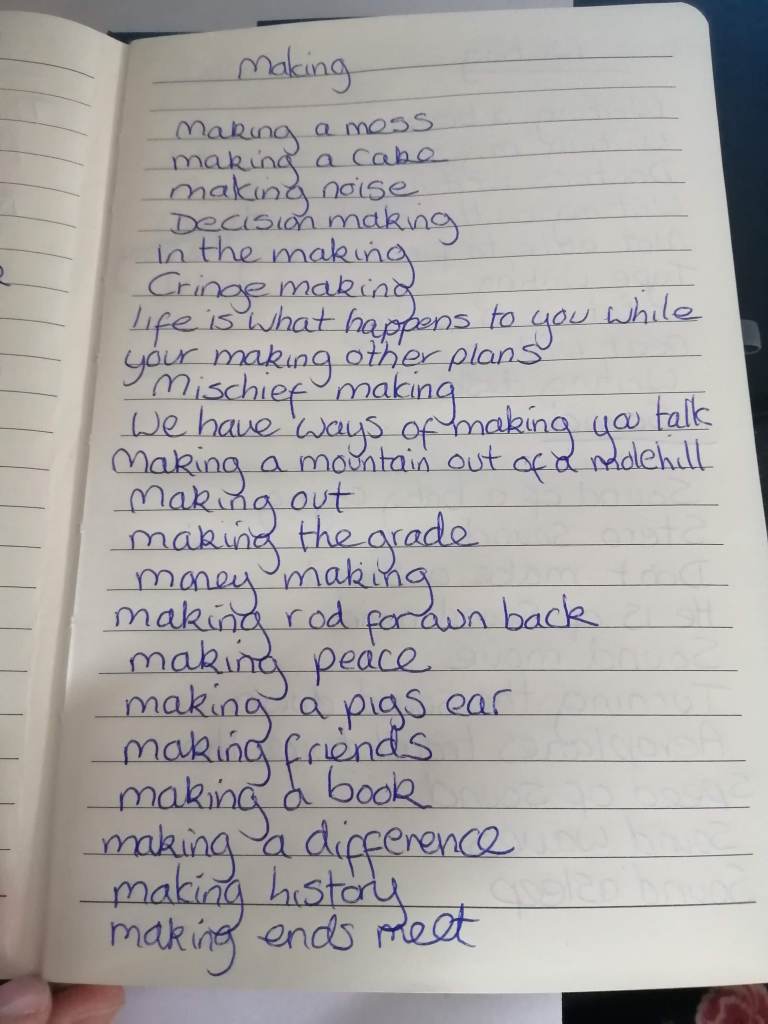
For this exercise I was asked to choose a word and make a list of the different manifestations that the word can take.
Here are some keywords describing concepts:
PAINTING
WRITING
SOUND
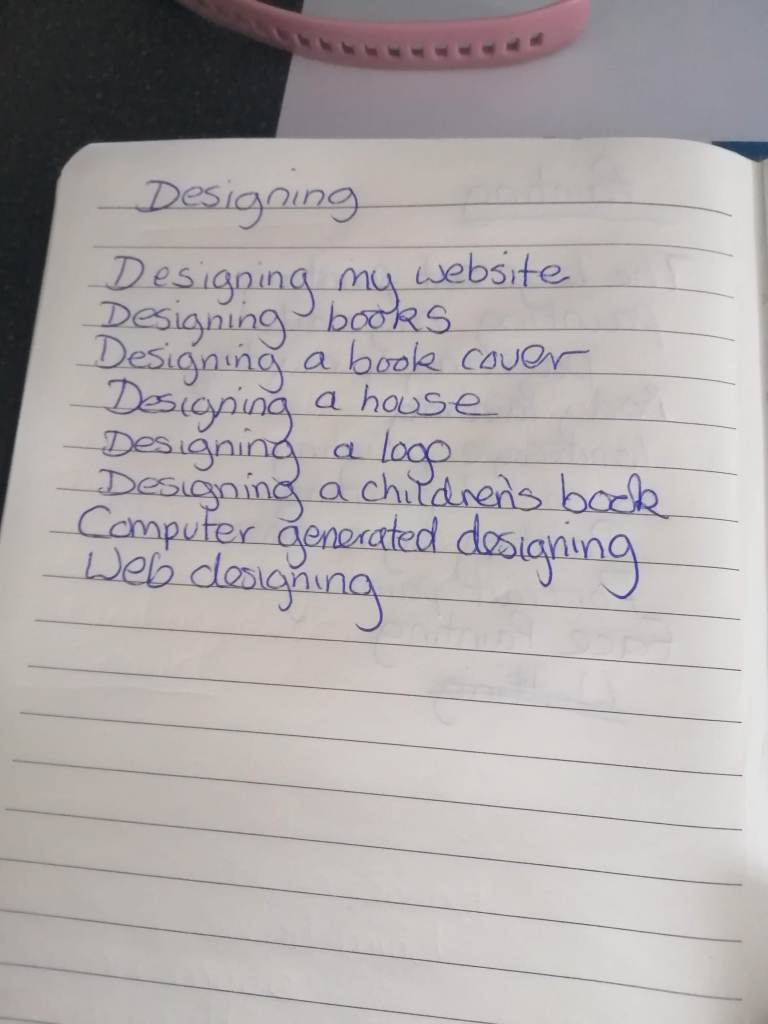
DESIGNING
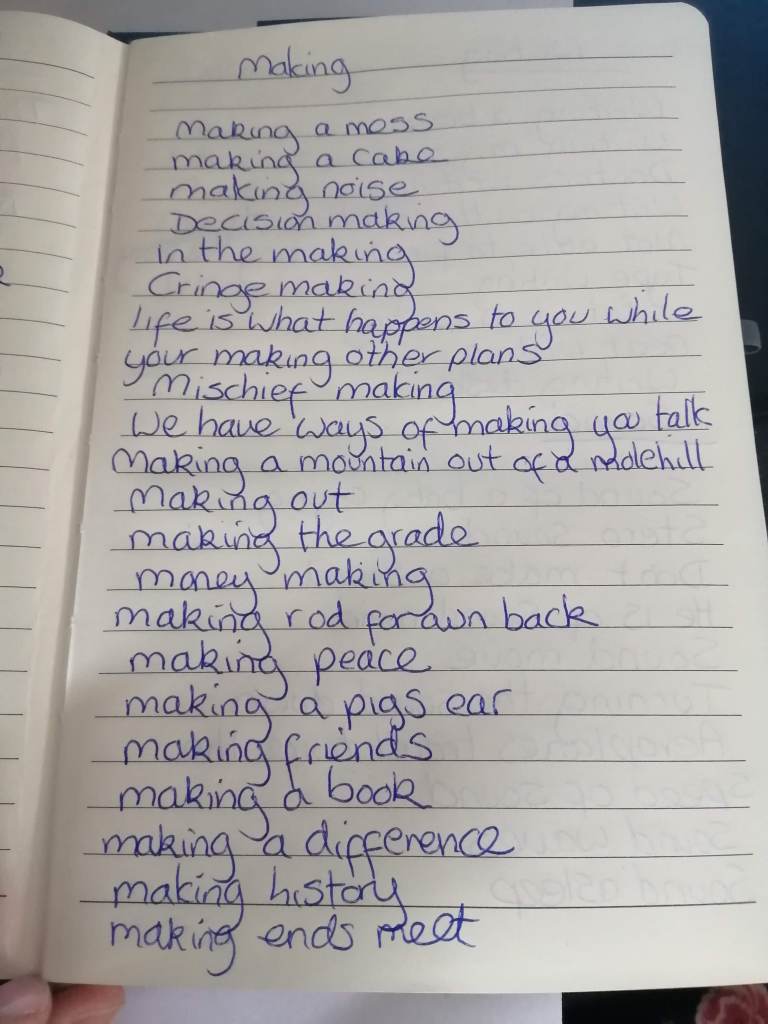
MAKING
Next, I was asked to visualise this written list by drawing thumbnail sketches of each of the words and phrases.
Once I have made a collection of sketches I have been asked to incorporate some or all of them into one A2-size image.
Keywords from the brief
Choose one of these words and make a written list of the different manifestations that the word can take
Draw thumbnail sketches of each of the words and phrases of your own list.
Observational studies of objects or people
Incorporate some or all of the sketches into one A2-size image.
Redraw or collage copies of your drawings
Organise your icons into a design, or cut up and combine copies of your photographs
Reflect on the process and the exercise.
Written list
As I was not sure which word to choose, I began the exercise by making lists for each of the words.
From all the words, the most interesting lists came from the words sound and making. I finally choose the word making.
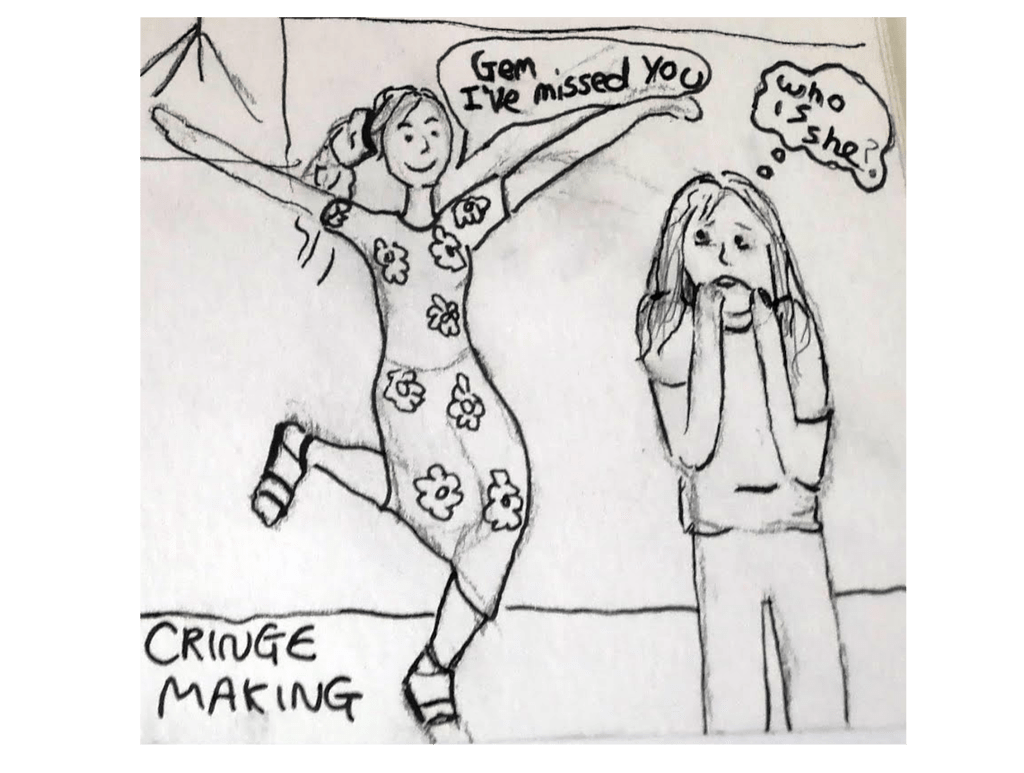
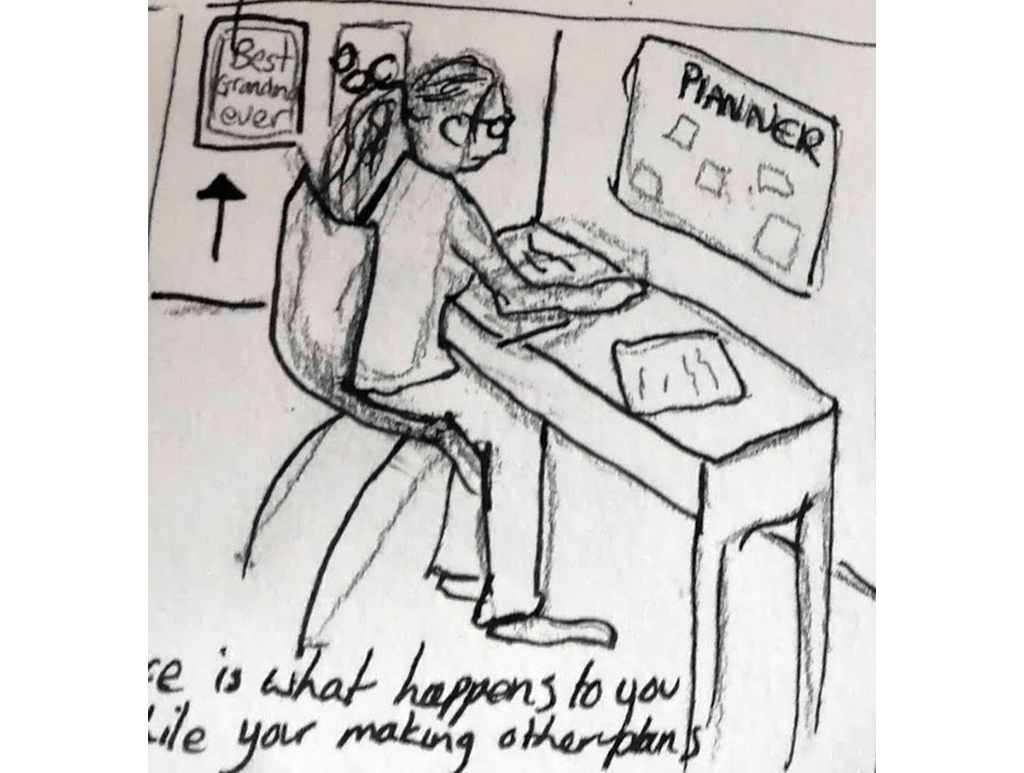
Thumbnail sketches
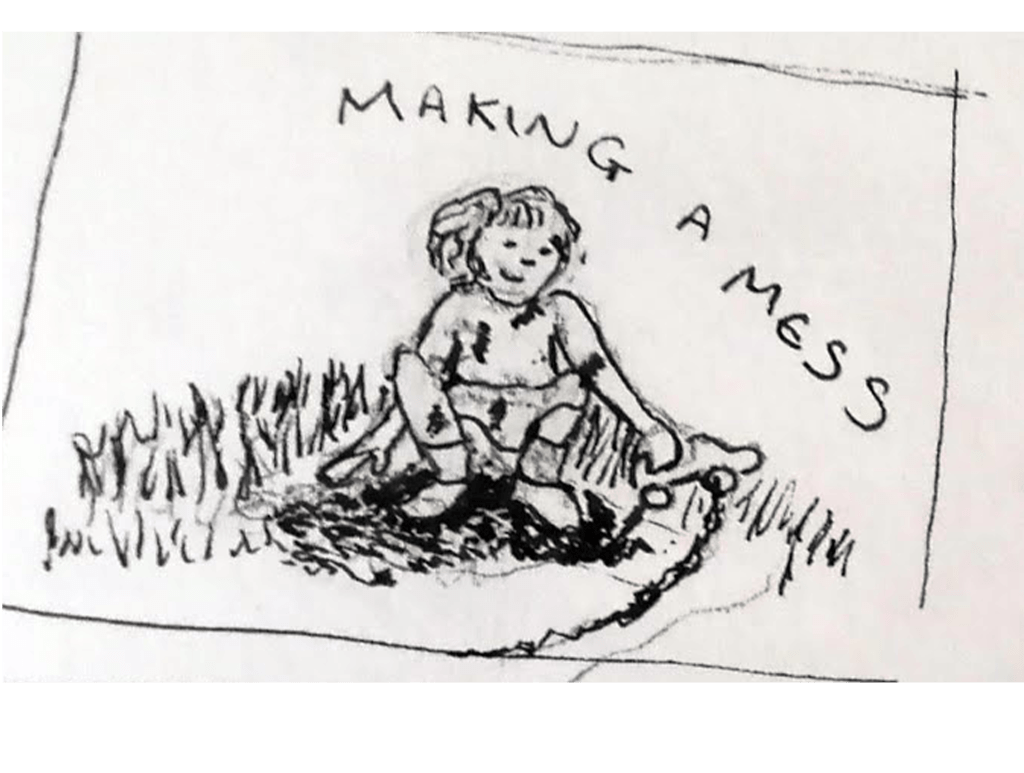
Below are my thumbnail sketch ideas for each of the sentences.
Observational studies
Visual experimentation
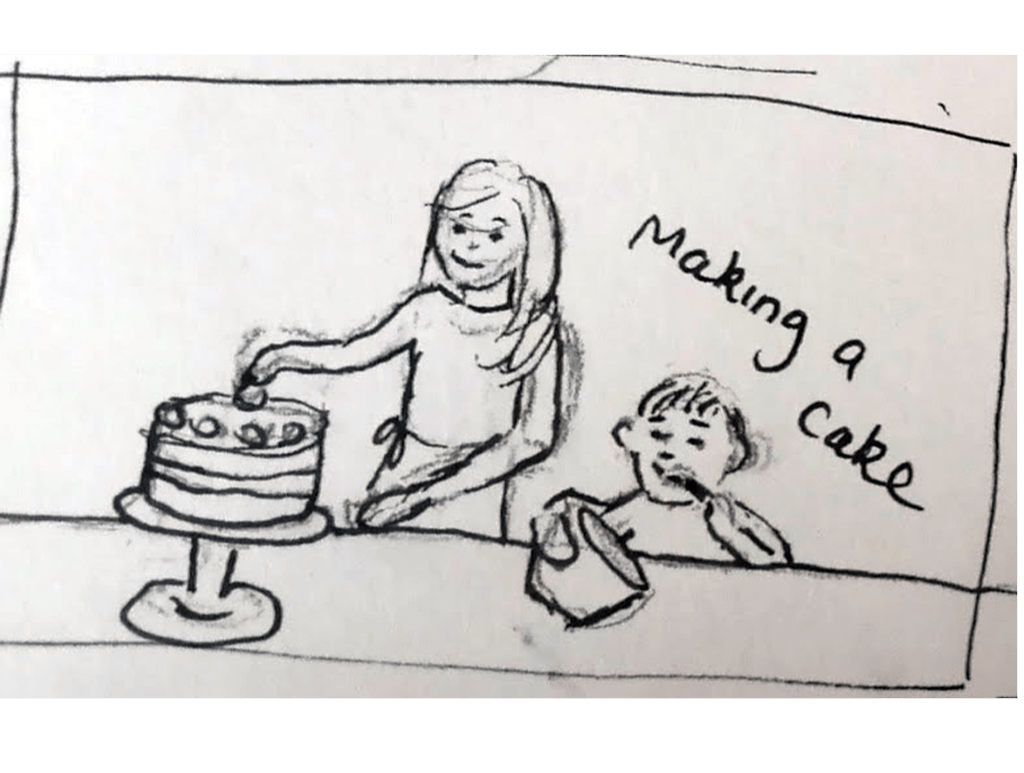
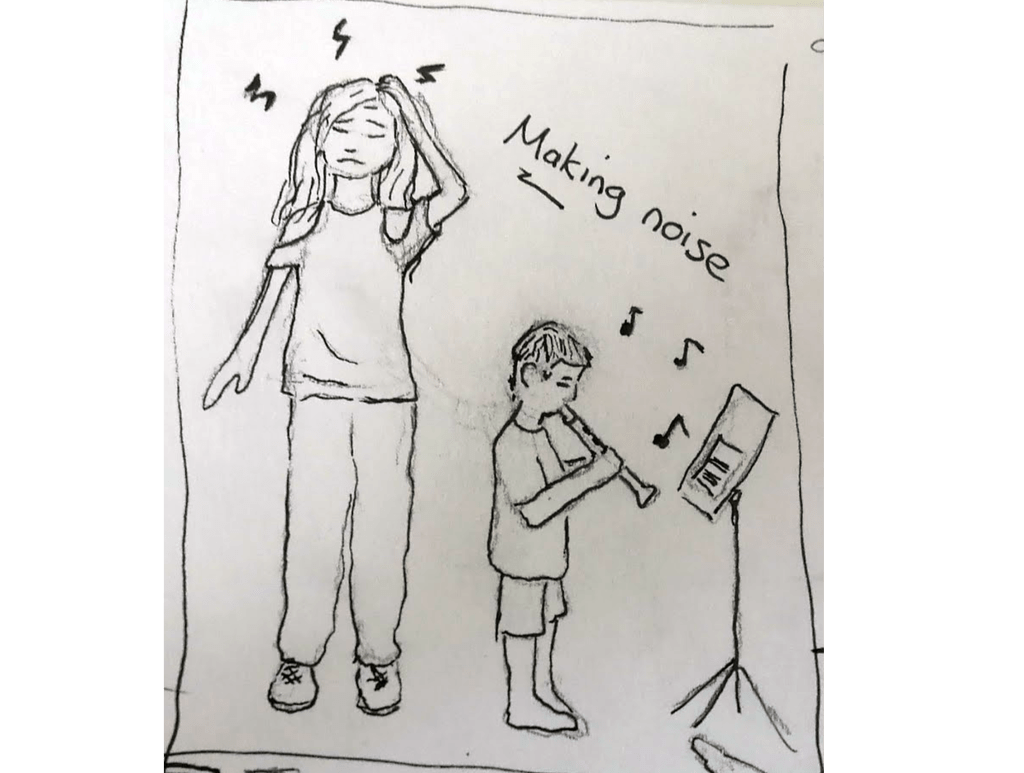
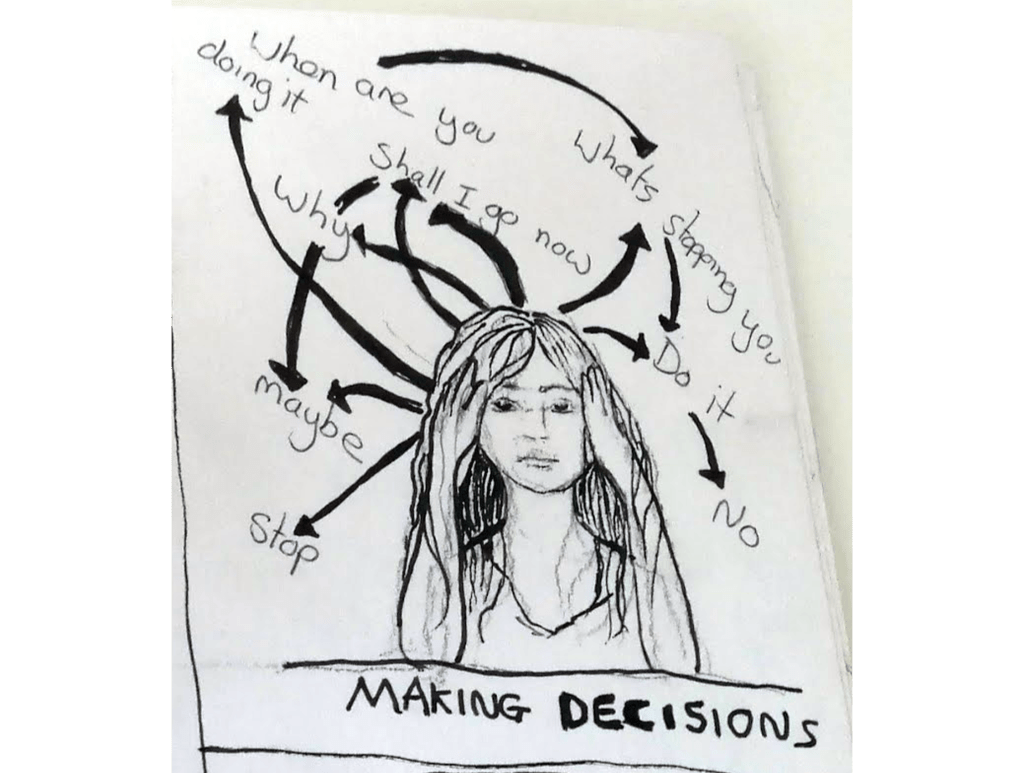
Next, I selected some of the sketches and experimented roughly what they may look like when used together to form a new illustration. Below are these ideas.
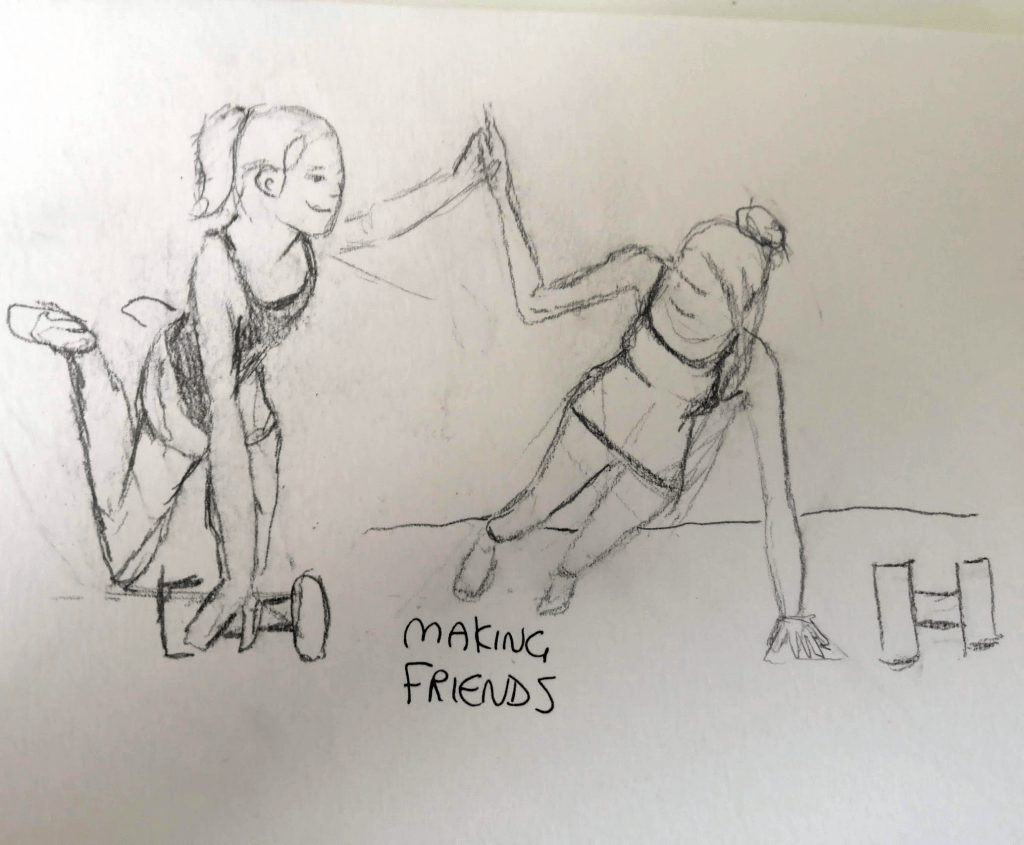
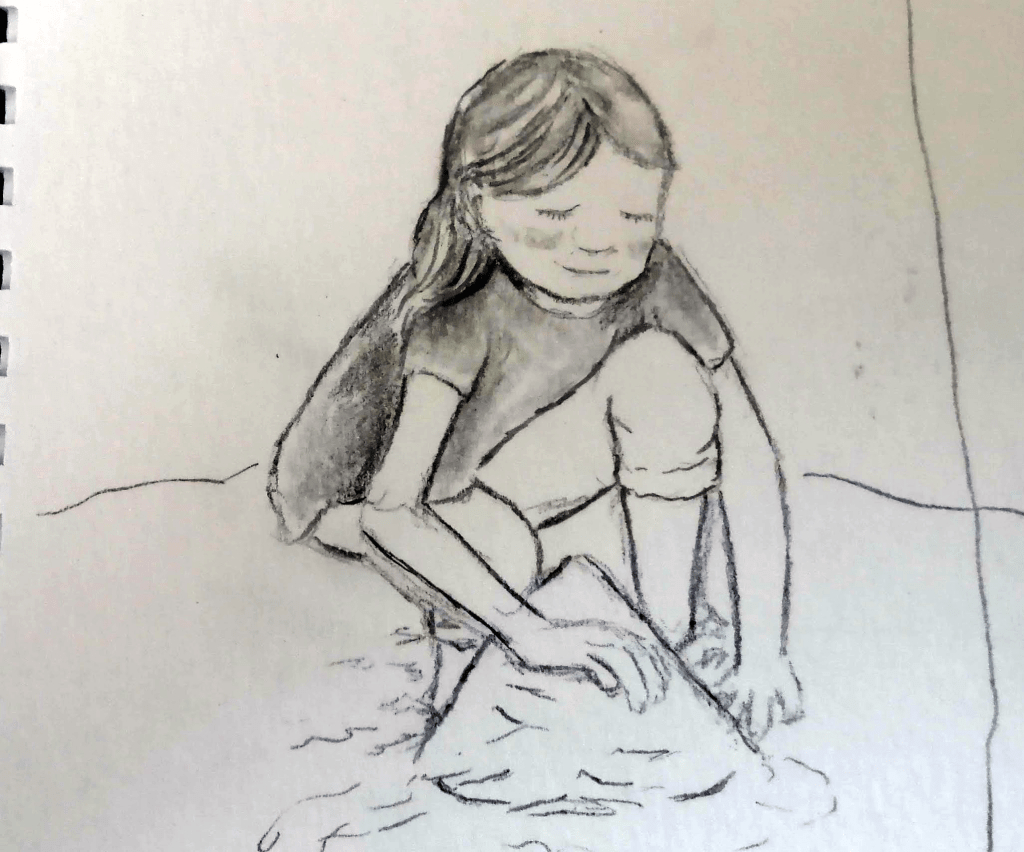
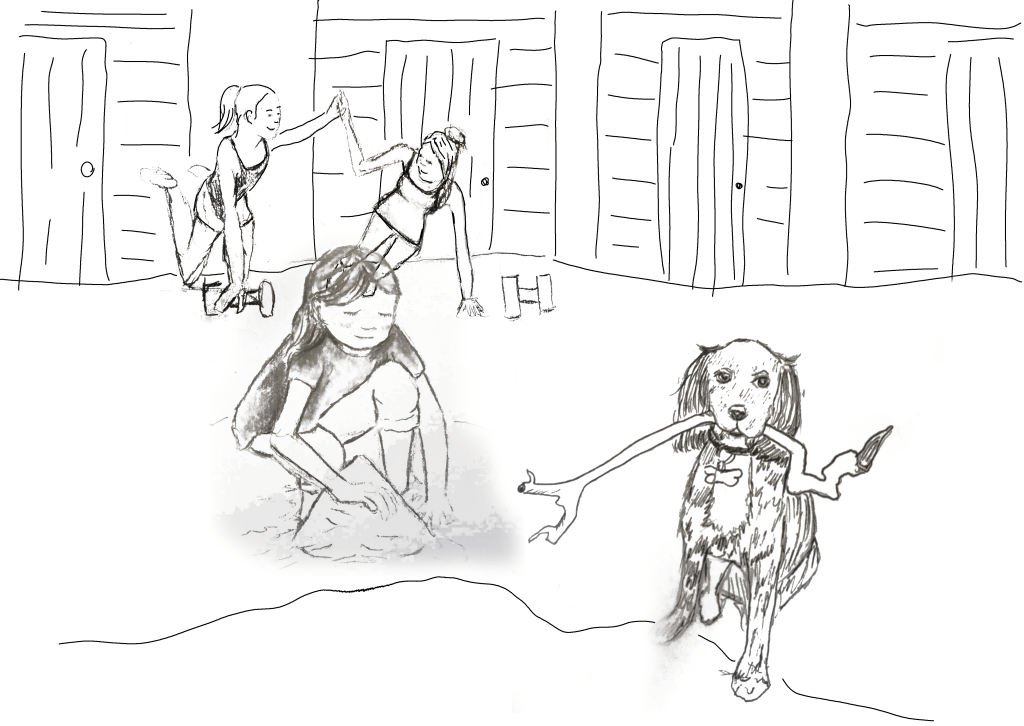
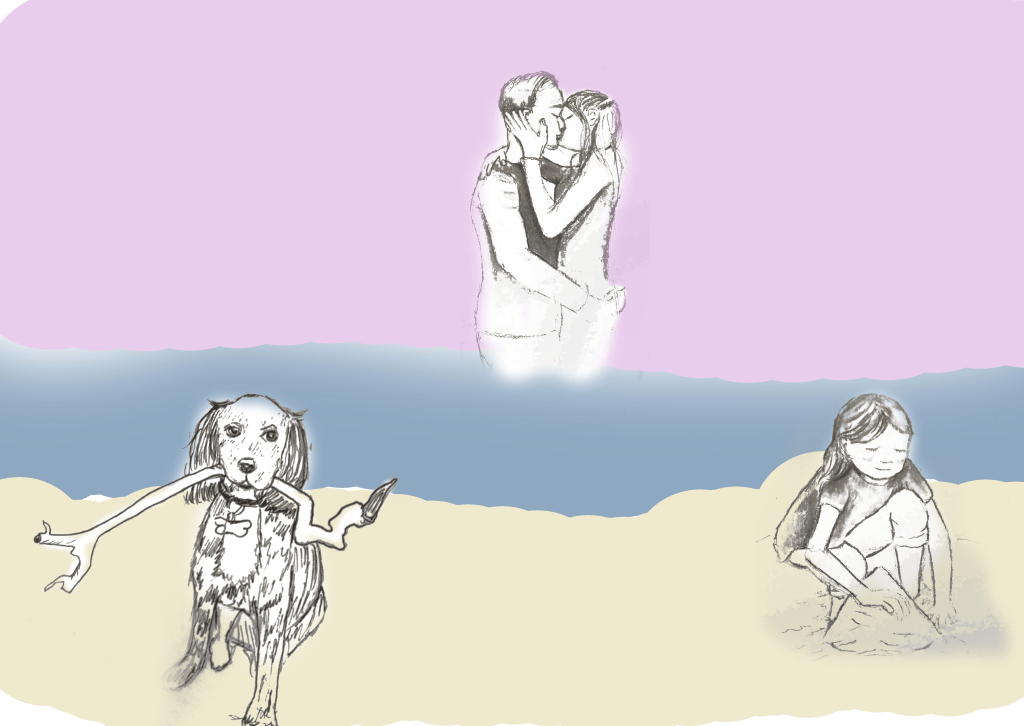
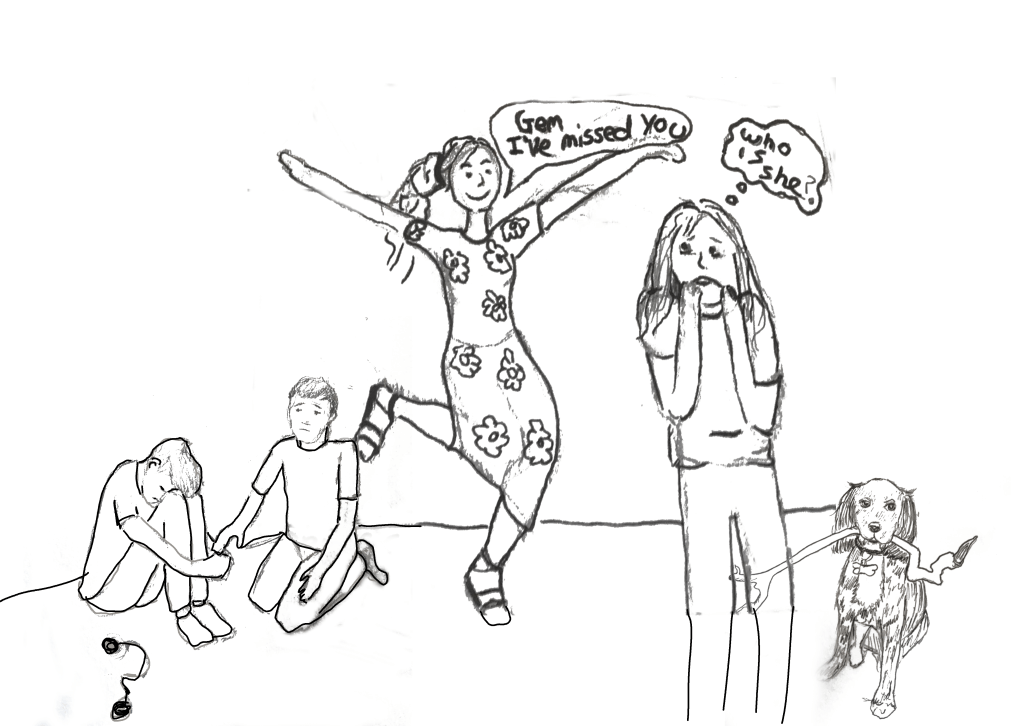
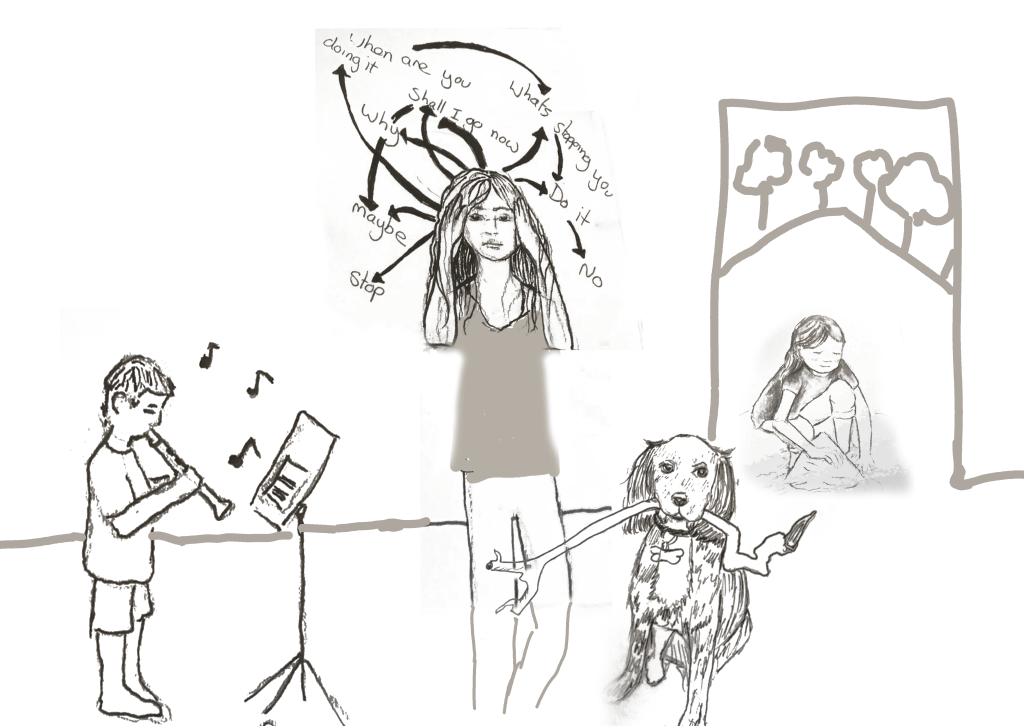
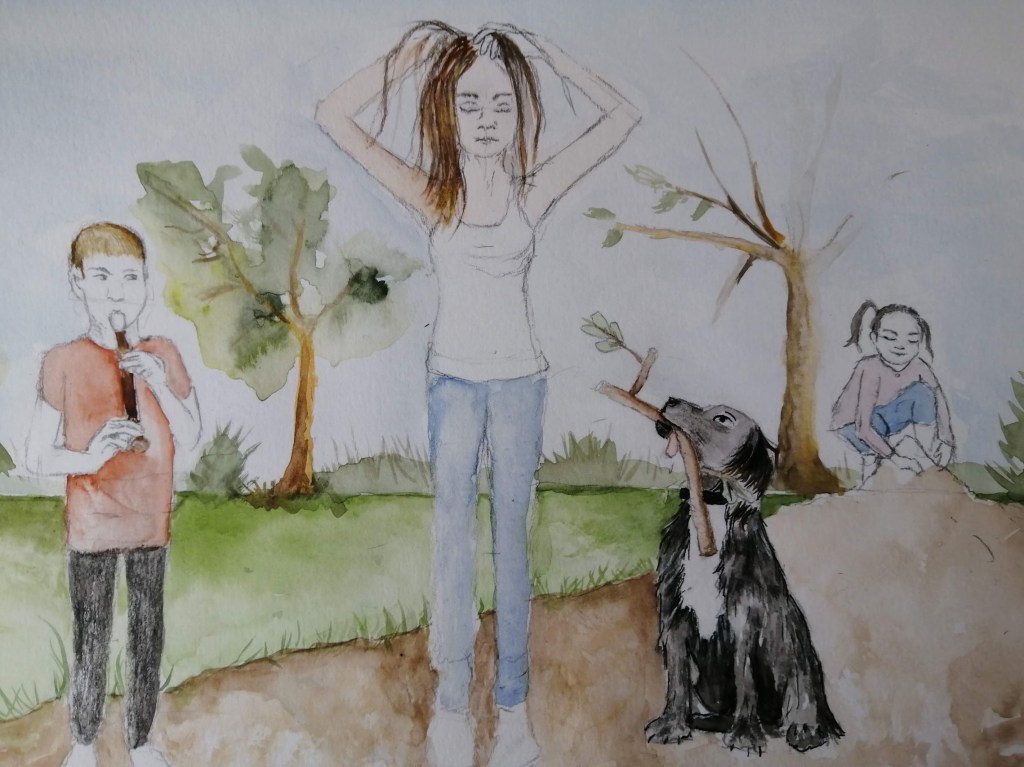
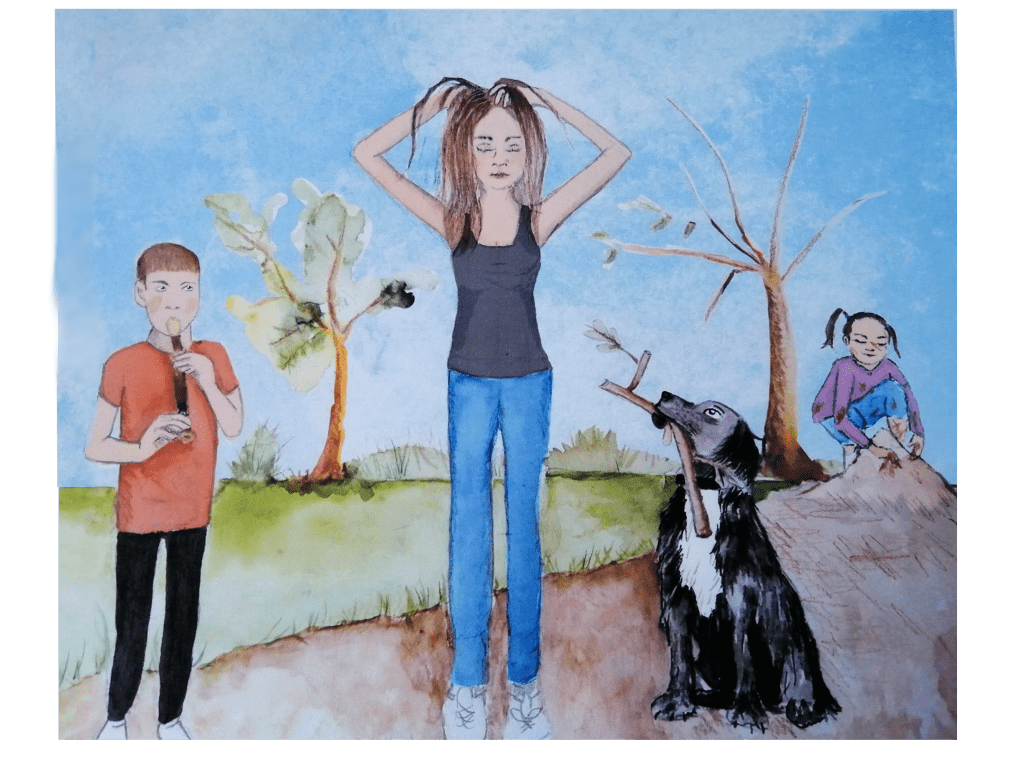
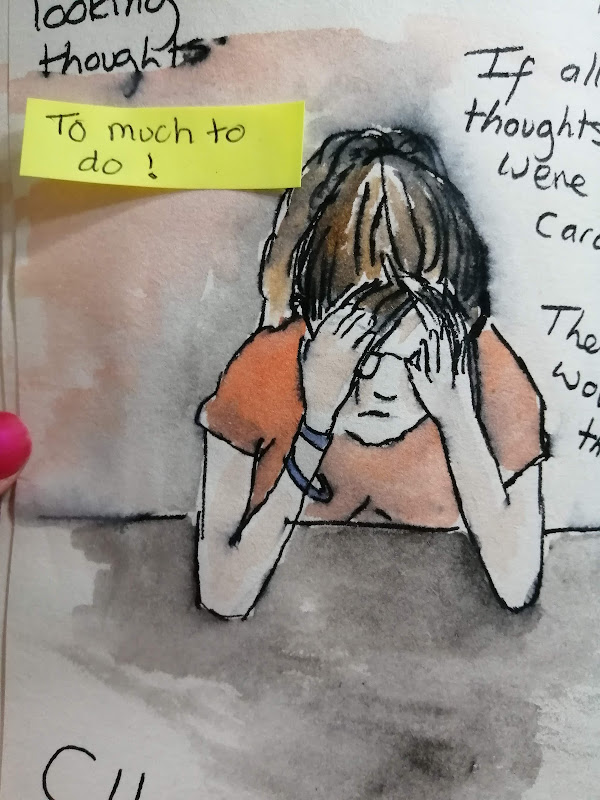
The final sketch reminded me of a day when everything becomes too much for me. For example, having too many decisions to make and too many errands to run while juggling family life. It seemed to have a story to it, so I decided to recreate the drawing into a complete image.
I started by redrawing the thumbnail sketches into more proportioned characters and painting them in watercolour.
The illustration was then modified in Photoshop by making the image have more vivid colours and adding shadow and shade.
Final illustration
Reflection
To begin with, I thought this exercise was a little random and didn’t see the value of drawing random scenarios. However, after sketching thumbnails, I realised how it opened up my thought process and led me to interesting concepts. It’s a creative practise that could come in handy if I ever get stuck illustrating for a project and don’t know where to start. I felt relieved after finishing the final illustration. Reflecting on it I thought It captured me on a day when I felt overwhelmed because I didn’t know where to start with a project and I enjoyed the illustration I created of my beloved dog Cody since I thought it portrayed his likeness beautifully.
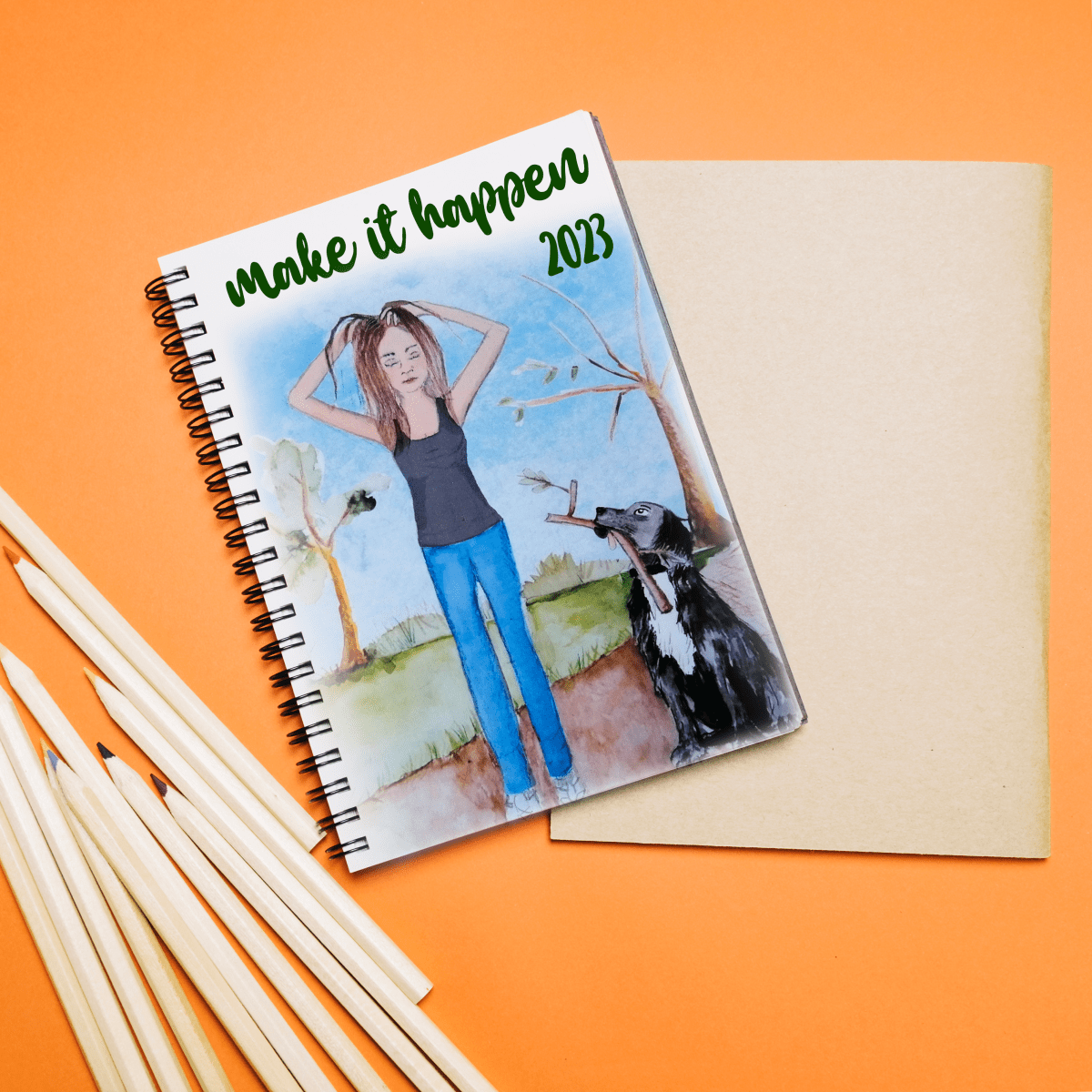
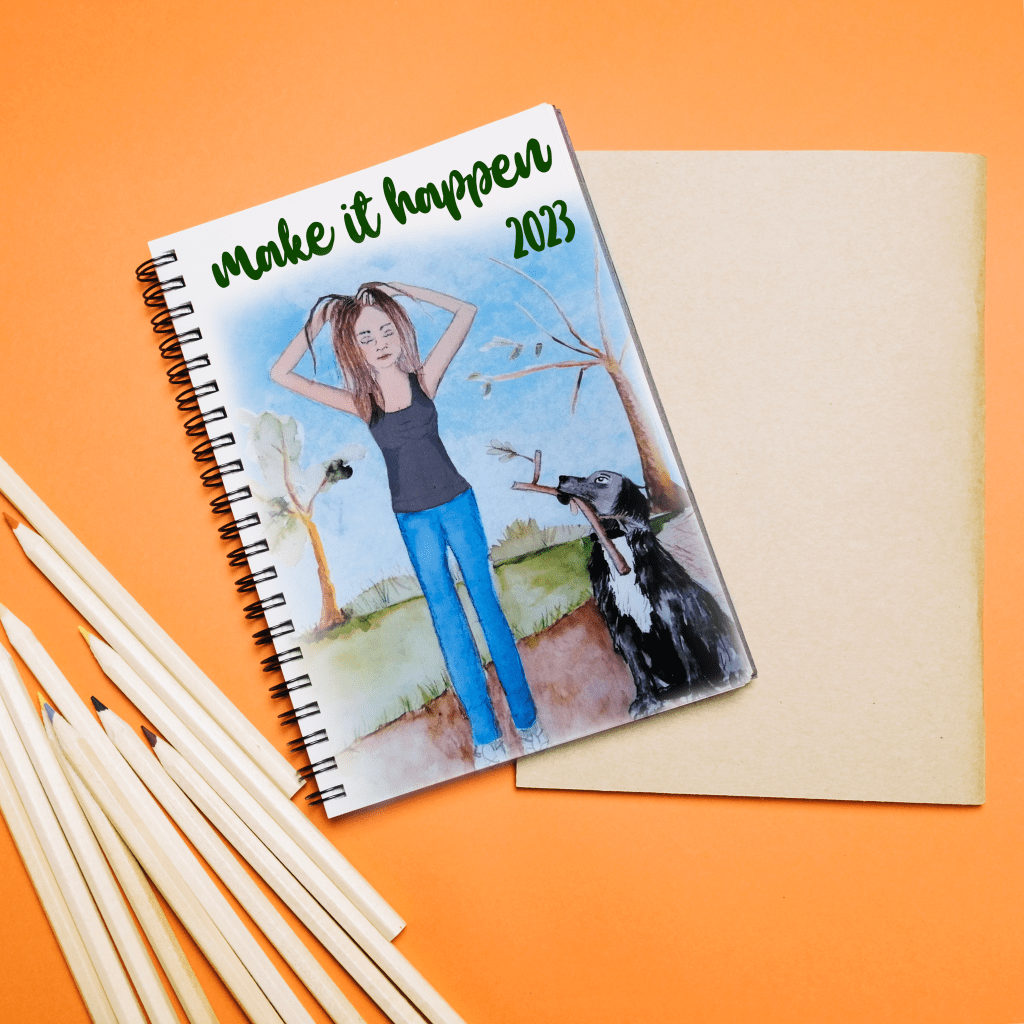
After completing a project’s final illustration, I frequently examine whether it could be used productively in the future for another venture. After staring at the artwork for a while, I decided it would be amusing to use it as the front cover of a notepad for my academic work. To remind me to avoid procrastinating and get things done. This was a fun exercise that I may repeat in the future. Below is a mock-up of the note pad.
This exercise should take you a couple of hours to complete. As with Assignment One ‘Flow & Play’, begin with a blank sheet of A2 paper. Start by making random dots across the paper with the point of a pen or pencil, as if you are creating an elaborate dot-to-dot picture. Once you have filled the page with a couple of hundred dots, begin to connect them to make shapes and forms like squares, triangles and rectangles. As you begin to fill the page, think of how to connect these shapes to each other. Start to think three-dimensionally and in round and non-linear shapes, as if you are designing a landscape, or a city or park. Slowly start to think visually’ perhaps a cluster of dots resemble a tree, or a building, or a person. From your map of points, try to create the territory within that map.
Keywords from the brief
Couple of hours to complete.
A2 paper.
Start by making random dots across the paper
Begin to connect them to make shapes and forms like squares, triangles and rectangles.
Think visually’ perhaps a cluster of dots resemble a tree, or a building, or a person.
Try to create the territory within that map.
I started by making dots with a black fine liner pen, on an A2 piece of paper as directed. When the paper had over two hundred dots, I sat back and looked at it. I was initially a little lost and believed that I could only draw squares and triangles. Yet, after connecting a few of the dots, I noticed the beginnings of an image, so I kept on with the visual form emerging. It shocked me to see how much my drawing matched Charlie, my late dog. I kept adding forms to the drawing that would fit the narrative, such as a ball, trees, houses, and grass.
Below is the finished drawing.
After I scanned it into Adobe Photoshop and added basic colouring to see what it would look like.
This exercise has taken me by surprise and made me wander how and why I drew my dog that passed away last year.
I now recognise that this is yet another excellent activity to perform, perhaps when I am lacking project ideas.
Take an A1 (59 x 84cm) sheet of paper and draw a circle about 30cm in the middle of the sheet. Write inside the circle a list of things you like, experiences you enjoy or feel comfortable with. For example, these could be ‘sunshine’, ‘cities’, ‘lying in bed’ or ‘green salads’. Now draw two larger circles 40cm and 50cm diameter around the first circle, as if you are drawing a dartboard. Now in the large circle write things you don’t like and that stress you. These might be the opposites (or ‘antonyms’) of the things in the centre like ‘moonlight’, ‘the countryside’, ‘exercise’ or ‘bacon sandwiches’, but they also might be completely different things. Try to be as expansive as possible, so name experiences, objects, cultural phenomena, etc. Do you dislike all the things in the outer circle, or are they simply the opposites of the things in the centre?
After you have completed this exercise, reflect on your current creative practice and begin to identify what new things you’d like to develop through this course. Below are a series of prompts to help you, feel free to select which questions are most useful or add new questions of your own:
● What do you feel comfortable doing?
● What do you feel uncomfortable doing?
● What areas would you like to develop further?
● What thoughts do you have about your work and where it might develop?
● Where would you like to begin?
● How can you develop ways of working that allows for the new to emerge?
● How are you going to document and reflect on your progress?
Write your responses to these questions and upload them to your learning log.
Keywords from the brief
Draw a circle about 30cm in the middle of the sheet. Write inside the circle a list of things you like, experiences you enjoy or feel comfortable with.
Draw two larger circles 40cm and 50cm diameter around the first circle, as if you are drawing a dartboard.
In the large circle, write things you don’t like and that stress you.
Be as expansive as possible,
Reflect on your current creative practice and begin to identify what new things you’d like to develop through this course.
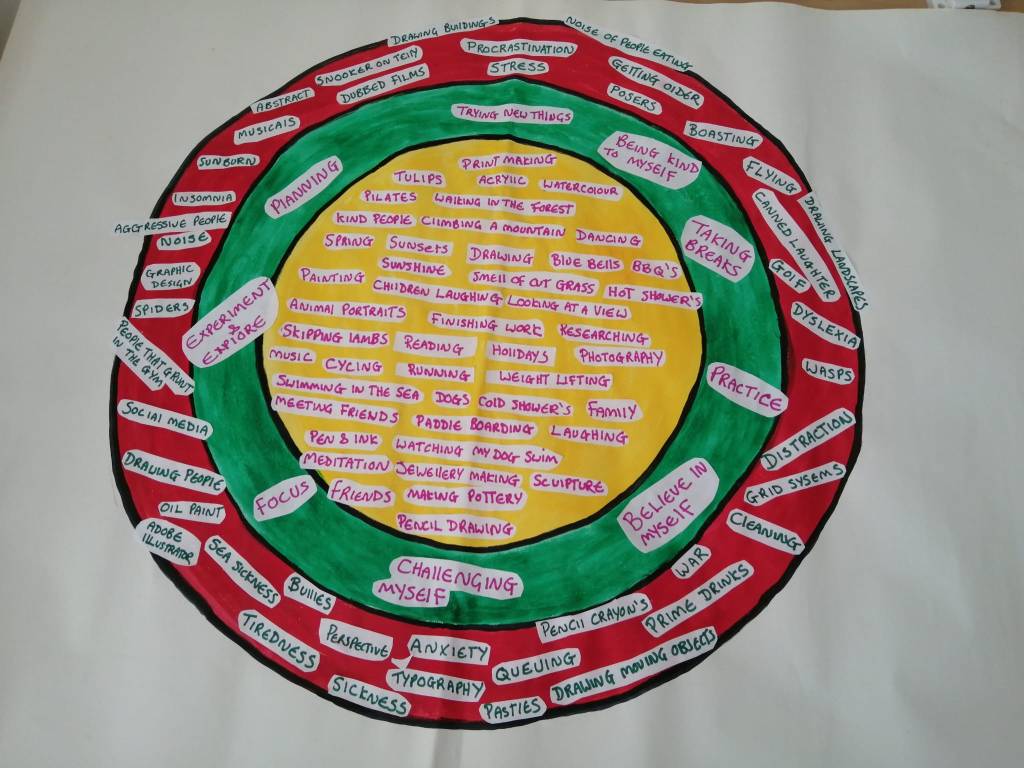
I began by drawing three circles in pencil on an A1 sheet of paper. After that, I coloured each circle a different colour. My danger zone is represented in red, my maximum performance zone in green, and my comfort zone in yellow. I know it wasn’t essential, but colouring them helped me visualise my ideas better.
I began writing everything I am happy and comfortable doing on another piece of paper. Then I wrote down anything that makes me nervous, caused me concern, or caused me stress. After that, I cut up all the text and put them in the appropriate circles.
As the green circle became empty, I began to consider what I had written in both the comfort and risk zone. While reflecting, I recognised areas in my working practises that, if maintained, will allow me to perform better. So I wrote these ideas down and put them in the green zone.
Below is a photo of the finished work.
Fig 1: Comfort zone (2023)
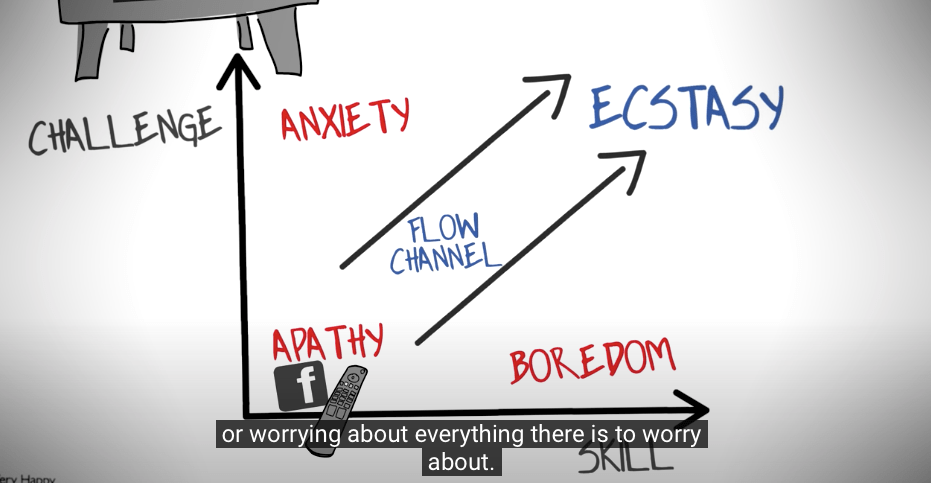
Prior to beginning this exercise, there was some information in the OCA textbook that described flow and play, as well as a psychologist named Mihaly Csikszentmihalyi, who explains ‘flow’ as a mental state also known as getting into the zone. (Csikszentmihalyi, 1990). As a result, I did more study and viewed an amazing short film that illustrates the concept of flow. This is shown below. (Flow by Mihaly Csikszentmihalyi animated book, 2015)
Below is a screenshot from the video that helped me understand how I can get into a flow state.
Fig 2 : Screenshot of a flow model (2015)
I then watched a TED Talk by Mihaly Csikszentmihalyi, which is presented here.
He explains what the state of mind can be during an activity and what causes our moods to change.(TED, 2008) The next diagram depicts this flow mode.
Fig 3: The FLOW Model (1997)
Reflecting on the comfort zone drawing I did I decided to see where some of my topics sit within a graph like the one above.
Flow / attention, enjoyment.
Reading
Running
Lifting a new personal best at the gym
Painting
Sculpture
Drawing
Learning new Photoshop techniques
Control / enjoyment, confident.
Printmaking
Planning
Pen and ink
Sketching
Thumbnail ideas
Spider diagrams.
Relaxation / confident.
Playing with my dogs
Walking
Cooking
Taking a bath
Meditation
Matching a sunset
Watching waves crash at the seaside.
Boredom / relaxed, depressed.
Being confined to a grid system when designing
Drawing detailed buildings
Same daily routine
Collage
Contour drawing
Studying a topic I am not interested in.
Distraction
Choosing the right typography
Designing my own typography
Apathy / distracted, depressed.
Watching television,
Scrolling social media.
Stoping my children arguing
Worry / stressed, distracted.
Not being good enough
Dyslexia
Procrastination
The white page
Juggling study with family commitments
Not experimenting enough
Time management.
Will I be a success or is this a waste of time?
Am I too old to start this?
Anxiety / alert, stressed.
Social situations
Presentations
Talking to a crowd
Adobe Illustrator
Pencil crayons
Oil painting
Abstract art
Drawing movement
Making mistakes
Arousal / Alert, focused.
Blogging
Researching
Discussing ideas with family and fellow students.
Putting my topics into flow model titles has helped me understand my working mindset. It has shown me I spend too much time worrying about doing the work and trying to create perfection. However, if I spent more time in the areas of control, arousal, and flow, it would help me produce more work and most likely work that is of a higher standard. I need to believe in myself more, which I can do if I push myself but not too hard.
Studying Csikszentmihalyi’s theory and completing the comfort zone diagram helped me identify what I’m comfortable with and areas I want to work on, like building confidence, trying new things, having fun, and enjoying the course. Checking in with the flow model to see if I’m directing myself in the right places is one of my future goals. An Adobe Illustrator course, a confidence-building course, and getting feedback on my work will all help me gain confidence in the near future.
By making sure I spend more time in the three areas of flow, arousal and control, I think I will see a new progression in the speed and quality of my work. This exercise has been an invaluable exercise for me and one that I will continue to use and reflect on with future work.
List of Illustration
Fig 1:Fowler, G. (2023) Comfort zone. [Painting] The author.
For this question, I had to read and answer the following questions.
What do you need to be creative?
I have always had a strong will to be creative. I used to create clay sculptures, Fimo jewellery, write stories, create games, and make pottery on my kick wheel potter’s wheel that my dad and I had restored when I was a young child. Combined with continual painting, drawing, and reading. Yet, I had little skill or interest in anything academic, especially maths. Therefore a good imagination, which I inherited from my love of reading, is important to help be creative. Yet, it also demands perseverance and endurance. I can think of numerous occasions when a project I was creating failed. For instance, a pot I made on my potter’s wheel that was crooked. Or a painting where the paint merged in the wrong place.
I think what I am trying to convey is that to be creative; we need to be willing to attempt new things and explore new possibilities. A gorgeous sunset, a stroll through the woods, a recent artist piece, or something that happened throughout the day can all serve as inspiration for me to get started on my work.
Are there certain factors that are important for you to develop your work?
During this degree I have learnt a lot and have realised many factors that help me to develop. I have gained a lot of knowledge and have realised a lot of things that help me improve my work effectively. I wish I had known these things earlier, but that is progress all by itself.
Below is a list of the factors I have realised help me to develop my work.
Experimenting
The secret to discovering anything that works is experimentation. Regrettably, I do not do enough of this. Usually, this is because I did not allow enough time to include this into my practise.
Time management
This leads me to my next topic, which is time management. It is imperative I ensure that I provide enough time for study, blogging, experimenting, and creating. To allow myself time to take a break from my work. This is crucial because occasionally, after a break, when I return to my work, I can find fresh perspectives or a method to advance the project.
Research
I always undertake extensive study before starting any work, and it helps me to produce fresh ideas.
Environment
I need a comfortable workspace because I find it difficult to produce ideas while my kids are yelling and frequently fighting behind me. In addition, with my pets demanding my attention. This is the reason I am currently converting my children’s old playroom into a studio. It will improve my progress by having a room set up with inspiration boards, relaxing music, a creative workplace, and a peaceful environment to work in.
Collaboration
I was quite shy at the start of the course and did not want to share any of my artistic attempts. I thought I was not good enough and was afraid of other people’s judgements. Now, I no longer think in this way. It is crucial to share my work, and I frequently do this by uploading images of my projects to the Discord chat site. I also send pictures to my loved ones and friends. My peers’ feedback is extremely helpful to me. Yes, it is a little intimidating when I first upload my work because I obviously want people to appreciate it. However, they may spot something in the creative piece that does not work. It might be the composition, alignment, or typeface, and by showing my work to others, they get a different viewpoint and can provide their ideas. I may incorporate their ideas into my work and develop it accordingly.
When, where, and how do you work? How might you develop this approach further?
I work primarily under my stairs as was previously mentioned. Here, I conduct research, write blogs, and create computer-generated designs. I will, however, utilise the kitchen table or an art table that is in my children’s playroom when I need to be creative. I work primarily during my children’s school hours, but I also try to squeeze it in whenever and whenever I have free time.
Given your creative process, how do you best document your work? What kinds of questions do you use to reflect on your work?
Any time I finish a piece of creative work, I will take photos of it and post it to my WordPress blog. I will describe what I did followed by a reflection on what worked and what did not during the creative process. I have a lot of questions for myself when I consider my work, some of which might be as follows:
What inspired me in the project, and how did that influence me?
What method did I use, what techniques did I use?
What were the biggest challenges I faced during the project and how did I overcome them?
What about this work do I like the most, and how could I make it better if I were to do it again or work on something similar in the future?
What did I learn while creating this piece, and how can I apply what I have learnt to future work?
What do I want to explore or experiment with in future works, based on what I learned from this piece?
How can I challenge myself creatively in my next project, and what new techniques or approaches do I want to try?
Does the work contain a message or meaning and what impact do I hope it will have on others? (Depending on what the artwork is)
How important is reflection to your process?
In my process, reflection is important. But when I first started the degree, I did not understand why it was so helpful; instead, I just thought it was a hassle. However, I now realise that it helps in my ability to comprehend my own artistic process. It makes me aware of my weaknesses and strengths, which help me produce new strategies to use in future projects. Also, it reveals to my tutor where I am having trouble, so they may offer me advice. It is helpful to reflect on my work so I can explain to people why I did what I did and what the meaning was. Overall, it helps me grow my skills and artistic expression.
Can you develop new questions or prompts?
One question I realised I forgot to include above is, did I achieve what I set out to do? And if not why? This question then leads to, has my plan shifted or changed since starting, and if so, how?
What feedback have I received from people? Did this assist me in the development of the project?
How does this reflection help feed back into your making? How would you describe your creative process?
I am a little confused by this question because I feel like I have already answered it, but to sum up, the reflection process is helpful because it gives me a way to move forward. I can strengthen my weaknesses and develop skills that I might not have known I had if I had not thought about the project in detail.
What sort of stages do you go through to initiate and develop your ideas and work?
Understanding the brief
To start a project, I will read the brief, then create a list of keywords from the brief. This helps me to understand what the problem is and how to find the solution.
Collect information
Next, I will collect relevant information. These could be books, photographs or anything that will give me inspiration.
Research
I will research the topic first, but along the way sometimes my ideas shift and develop in a way I didn’t imagine. Therefore, I will need to continue to research throughout the project.
How important are restrictions to the process?
It is crucial to have limitations during the project. It is easy to get distracted by something and run out of time to do the remaining tasks on the project. For instance, as said above I spend a lot of time researching, which helps me produce ideas, but because I do it for too long, I frequently run out of time to experiment and explore.
Do you start with an idea or proposal, start making and see where it takes you, or work in a different way?
I would say yes, that is how I work. I do start with an idea and see what happens, but sometimes I wish I would explore more avenues.
Do you have any strategies to deal with creative blocks or obstacles? What does experimentation look like to you?
I need some help with this. I frequently get creativity blocks, at the start of a project. I do not handle it very well. I get discouraged and put off dealing with the obstacle. I am aware that this is not helping me.
Where do you work, what kind of physical spaces do you need? When do you work, and how best can you structure your time?
As said before, I am in the process of setting up a studio and work when my children are at school.
How do you draw on inspiration to feed your creativity?
I currently get inspiration from books, the internet, and Pinterest. I am aware, though, that I need to widen the places I find inspiration, such as museums and art galleries. Nevertheless, I have a tough time scheduling time for this because I squeeze study time into the week around collecting the children from school. Plus, I do not live close to any art galleries and the children’s activities fill the weekends. I could do with some tips on this from my tutor.
For this research task, I had to look at a range of artist and designers that have developed projects over-time.
Bryan Eccleshall
The first person I researched is Bryan Eccleshall. I started by watching a short video of Bryan Eccleshall talking about his challenge that he set himself which was to create a drawing a day for a year.
After years of employment, it was great news to discover Bryan has returned to his artistic pursuits and is now a renowned artist and tutor at OCA.
Whilst watching the video, I discovered he created drawings that he purposefully did not want to be too showy or dramatic but a catalogue of illustrations as part of his self-challenge, and when they are viewed all together, they become a work of art.
Below is a quote from his video:
“If I just do something, and keep doing it, something will happen.” (Parry, 2013)
This quote has been a source of inspiration for me as I am often scared to begin something and will put it off. As he said, I just need to act and keep at it, and hopefully something will happen in my creative process. Through his challenge, he has noticed an improvement in his drawing ability, a quickening of his workflow, the addition of new techniques, and the creation of a catalogue of illustrations.
Christian Marclay
I then did research on the movie “The Clock” by Christian Marclay and I watched a portion of the movie on the internet, which in full is a 24-hour-long montage of motion picture and television clips.
We can see part of the film below.
Each clip reflects or refers to a certain time of day. The movie keeps pace with real time, and each clip appears at the same moment it depicts, creating a captivating experience for the viewer.
The movie contains snippets from a variety of genres and eras. He and his team have arranged the footage to give the feeling of a continuous story. His group of six assistants spent years looking through film footage to discover the ideal snippets to use in this movie.
As I watched part of the movie, I noticed that Marclay and his team put clips from different films together in a clever way, making the audience think about the past, present, and future. This lead me and possibly other people too feeling anxious about our lives. Are we utilising our time in the best way possible? It made me think how many times I look at a clock each day? I think about making sure to get my children to school and to their after-school clubs, cook dinner, and start the bedtime routine, all according to a timely schedule. I am always aware of time in many other circumstances as well. What would life be like when not conforming to the clock? The film most importantly underlines the importance of the present.
Overall, the movie experience is very intriguing and is a clever work of art which will cause viewers to think about how they spend their time.
On Kawara
On Kawara was a Japanese conceptual artist that explored time, language, and human existence. He was born in 1933 in Kariya, Japan, and lived and worked in various cities around the world until his death in 2014.
Below is an interesting video I watched where three art curators discuss Kawara’s artwork. The artwork was exhibited at the Guggenheim Museum.
The “Date Paintings,” which Kawara started in 1966 and lasted up until his death in 2014, are what make him most famous, according to the film. Each painting is based on the passage of time, is painted in monochrome and have the creation dates on top of the canvas for each work. The dates are painted by hand in either white or black letters. The paintings frequently represent their place and culture by being made in many time zones and languages.
It was pleasing to see that the exhibition was held at the Guggenheim Museum, as this was a particularly significant venue for On Kawara’s work, as he had long admired the building’s architecture and believed that its spiral design and open interior space emphasised the passage of time.
Kawara’s other notable works include the “I Got Up” series, in which he sent postcards to friends and colleagues every day for two years, each one stamped with the time he woke up that day. He also created the “One Million Years” project, which consists of two sets of bound volumes, each containing pages upon pages of printed years and dates. The first set lists the years from one million years ago to the present day, while the second set lists the years from the present day to one million years in the future.
Douglas Gordo
Douglas Gordon, like On Kawara, is an artist known for conceptual works that explore time. His other works explore memory, identity, and perception.
One of Gordon’s most famous works is, “24 Hour Psycho,” a video presentation of Alfred Hitchcock’s classic film “Psycho.” It was first shown at the Tramway gallery in south Glasgow in 1993. The film was played in slow motion for twenty-four hours. By stretching the film’s duration, it encourages viewers to consider the emotional as well as psychological impacts of time and memory, Gordon has created a sensation of paused time.
Overall, Gordon’s work frequently uses perception, repetition, and distortion to question traditional ways of seeing. By doing this, he is encouraging viewers to question their own perceptions and assumptions.
Tatsuo Miyajima
Japanese modern artist Tatsuo Miyajima is known for his use of digital technology and his exploration of time, space, and life cycles. He enjoys creating performance artworks to create interactive experiences for his audiences.
His work is motivated by three ideas: “keep Evolving,” “connect with everything,” and “continue forever.” He has produced many long-term projects one which he is most famous for is “Counter Void”: This project features a room filled with LED counters that count down from nine to one. The subject and purpose of this project is to question “life and death.”
Below is a video where Tatsuo takes you through one of his sketch books and explains the meaning behind his work.
Alfredo Jaar
Alfredo Jaar is a Chilean-born artist who is known for his socially and political works of art. He has created numerous projects throughout his career, but one of his most famous and influential projects is “The Rwanda Project” which he began in 1994.
When I investigated this project more, I learned that it was a project in response to the 1994 genocide in Rwanda. I did some further study because I was unfamiliar with the history of the genocide and the reasons it occurred and thought this would help me to better understand Alfredo’s thought process.
I started by doing some research on Google, then I watched some films about the genocide in Rwanda.
One video of such is displayed below.
I was shocked and saddened to learn what had occurred. I learned that the Rwandan genocide claimed the lives of about a million innocent individuals in just 100 days. Two ethnic groups, the Hutus, and the Tutsis, were battling over the land they shared for many years. Many Tutsis fled the nation after the Hutu community overthrew the Tutsi monarchy in 1959. Later, to help the Tutsis community with their return to their homeland, they established the RPF and signed a peace treaty with the Hutus in the 1980s. Yet, on April 6, 1994, a Hutu president was killed along with everyone else on board the aircraft that had been shot down.
Extreme Hutu groups in revenge planned to massacre the Tutsis people in large numbers after blaming them for the crash. Women and girls were seized as sex slaves and many Tutsis were killed with machetes. Three months were spent with their bloodshed.
After the genocide, Jaar visited Rwanda to record the destruction and produce a body of work that would bring attention to the catastrophe. The project had several parts, including a collection of images, a video display, and a public engagement.
The video below displays a portion of Alfredo’s creation. I teared up a little when I read about what happened in Rwanda and when I saw Alfredo’s response in his artwork.
The film mentioned above shows a record of 17 front covers from Newsweek issues published between April and August into Alfredo’s exhibition. None of the front covers, save for the last, refer to the genocides taking place in Rwanda. At the base of each cover, Alfredo writes a brief caption outlining the events in Rwanda. The last cover of The Seventeen honours individuals who have perished in genocides. This serves as an emotional ending to his artwork.
His work is quite straightforward but incredibly moving and thought-provoking as a tribute to the Rwandan victims. Together, the covers demonstrate how art can be used to speak out against political and social injustices as well as to bring attention to human rights crimes. It also serves as an example of what journalists should not do.
“I don’t like, and I do not except the term political artists. We are all artists and we all critically engage with the world because we act in the world so everything, we do represent a conception of the world in that sense we’re all political. When it is not critical, when there is no conception of the world, that is not art, that is decoration.”
(Louisiana Channel, 2013b)
This remark spoke to me since, after finishing college, I battled for years to rediscover my love of art. The purpose of drawing seemed pointless since a camera could capture every detail. After thinking about it I realised and understood that I wanted to produce work that had a purpose and a meaning rather than merely a drawing.
With all the artists I have looked at, his is my favourite and most inspirational body of work.
Next, I answered the following questions from the OCA textbook
How might you produce a similar daily project?
As Alfredo inspired me the most out of all the artists, I have thought about how I could produce a similar project to his but based upon a different topic.
First, I would need to identify the issue that my project will address. It could be a social issue, an environmental issue, something based upon current news. I would then need to research the subject to understand the problem better and think about potential solutions. I would need to think about what I wanted to achieve from creating this artwork. I would start with a mind map of ideas and then develop selected ideas further into a detailed plan.
What could the subject or content be?
As said above the subject content could be based on social issue, an environmental issue, something based upon current news. Having a quick look at what is happening in the world today I realised sadly there will always be something I could create. For instance, as a starting point the subject could be about any of the following below.
Poverty
Knife crime
Racism
Ukraine War
Think of things that happen regularly but might change slightly, like going to the shops, or reading a newspaper, or a domestic routine.
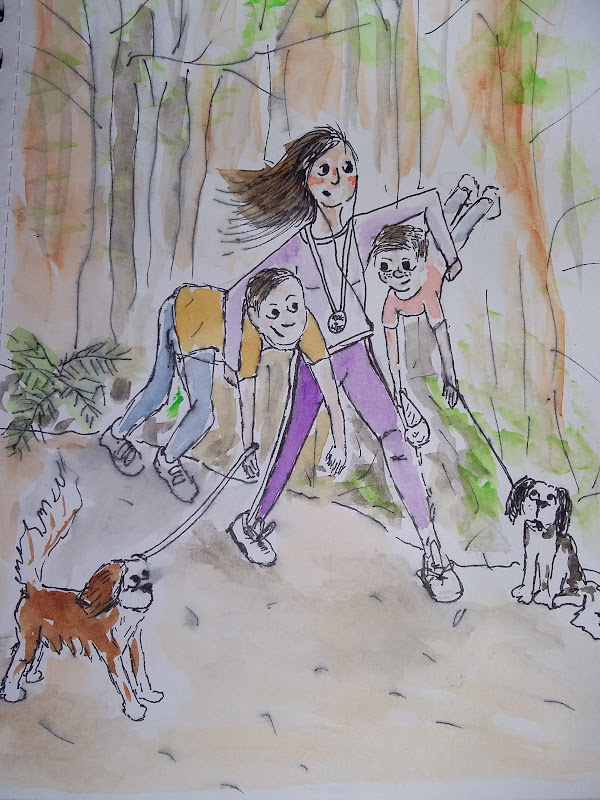
I have always wanted to make a daily diary of what has happened in my day using illustrations, this is thinking very differently from the ideas above. I often consider how bizarre something was and how my life would make an excellent comic book. For instance, one time when I was walking through the woods near my house, a middle-aged woman dressed all in red came skipping towards me singing before she vanished into the distance. This kind of thing is unusual, therefore would be an interesting starting point.
Here is an illustration I created while I thought back on a walk I took with my children. As you can see, it was not as relaxing as I had hoped and is the sort of thing that I would put into the diary.
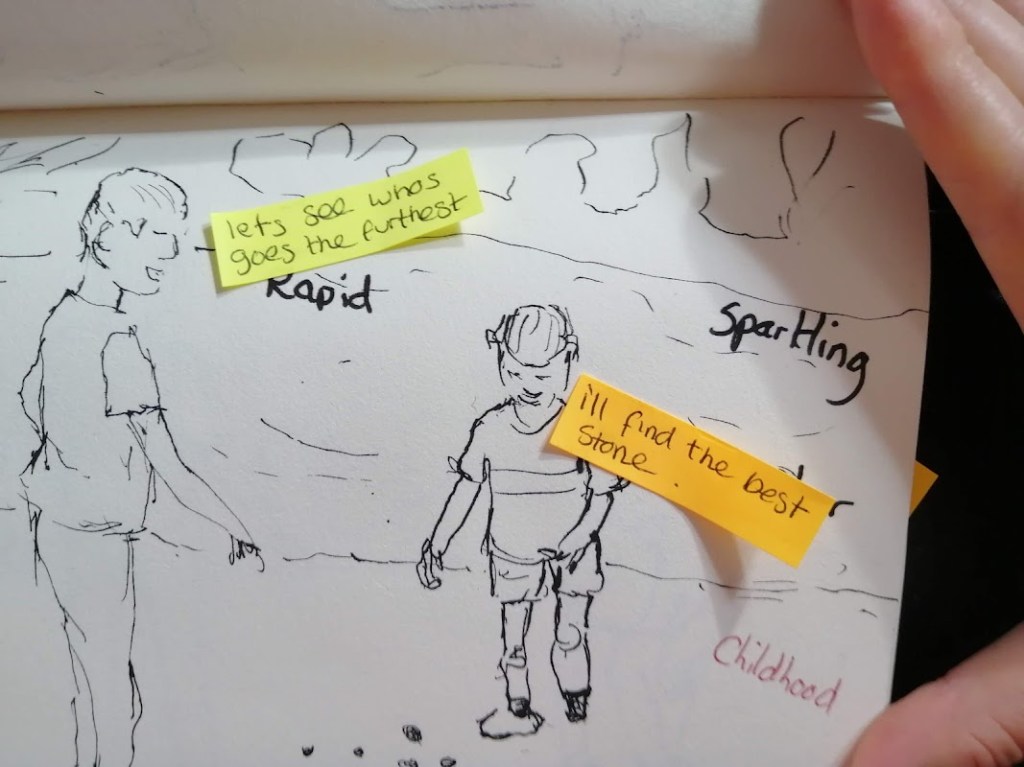
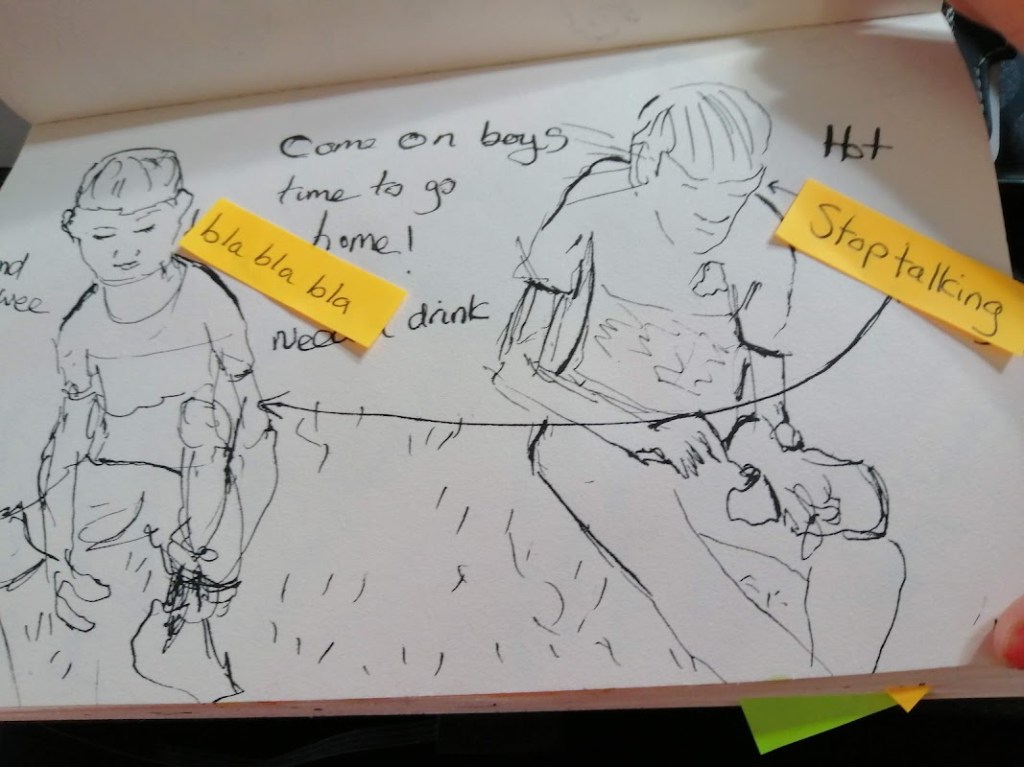
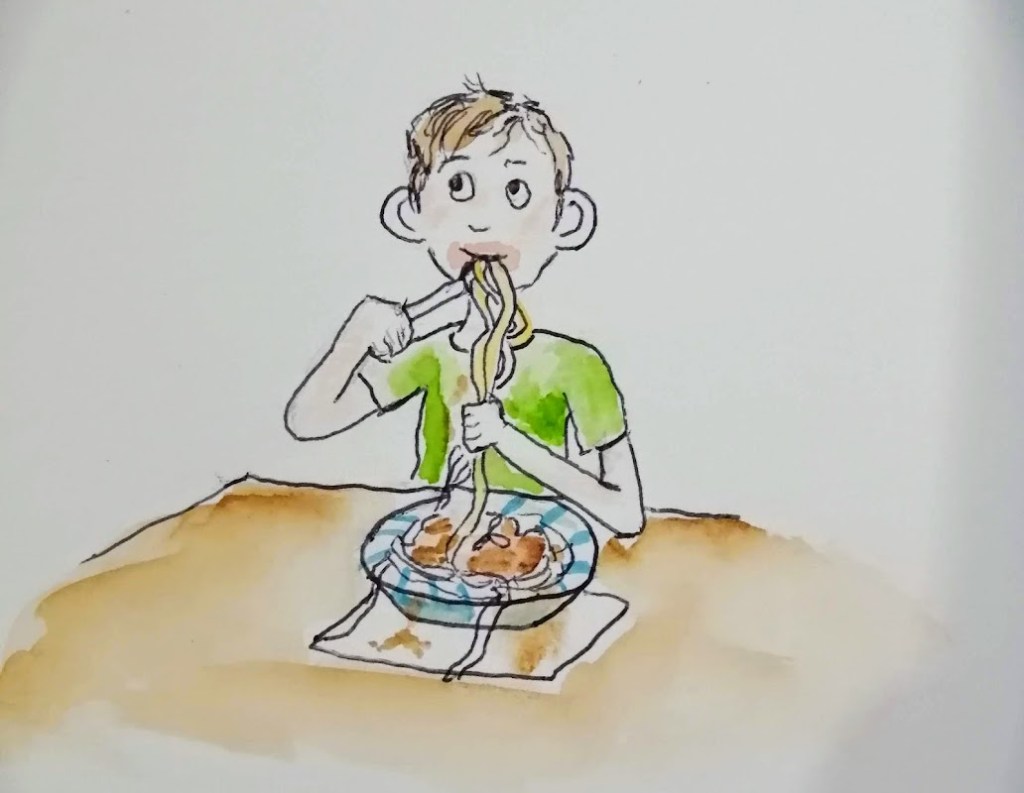
Below are some other examples of the type of illustrations I could include.
How could the way you record it vary, or what form might your record of it take? Could it be drawn in a diary, or as a calendar? Could it be 365 photographs of the view outside your window, or a series of collages from the daily newspaper?
As previously said, I intended to compile a diary of incidents that happen in my daily life. This diary may be illustrated in the way shown above using watercolours, but it could also contain photographs and handwritten notes. A few collages from my daily newspaper might also be added so I could refer to the day and other events that were occurring on that day.
I like the concept of keeping a diary since it serves a purpose. I can use it to reflect on what has happened over the year, see how my children have changed over time, practise sketching, and create a special memory to pass down to my children.
For this exercise, the OCA asked me to think about my creative workspace and answer the following questions.
Do you already have a studio or a space where you can creatively experiment and make your artwork?
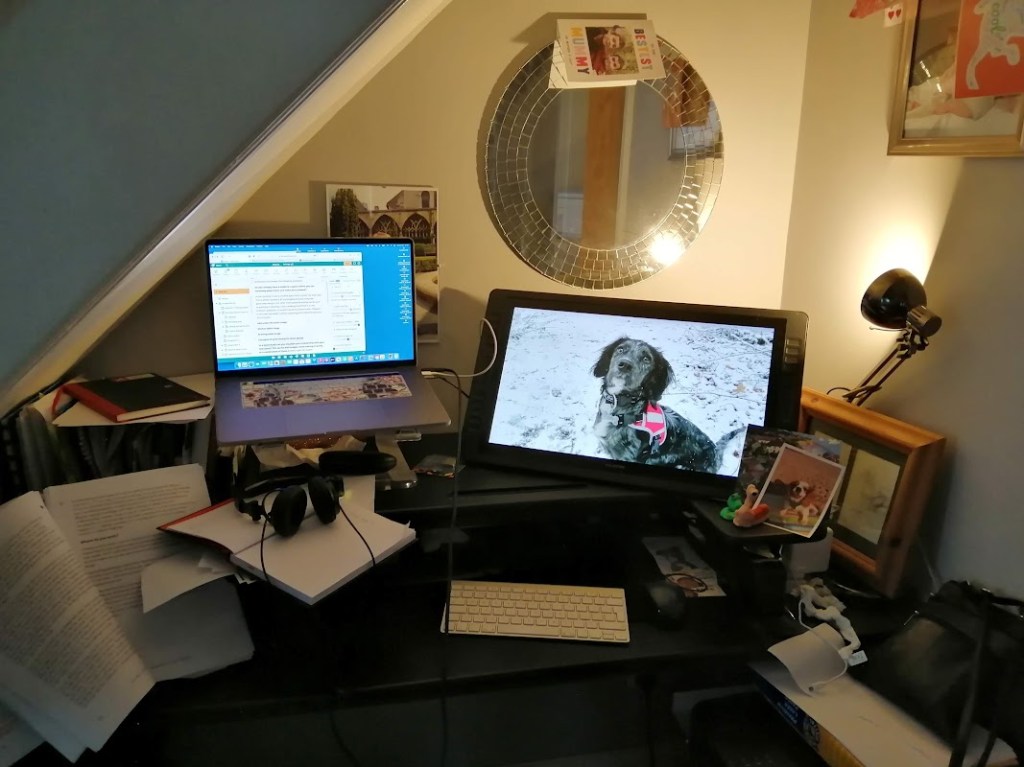
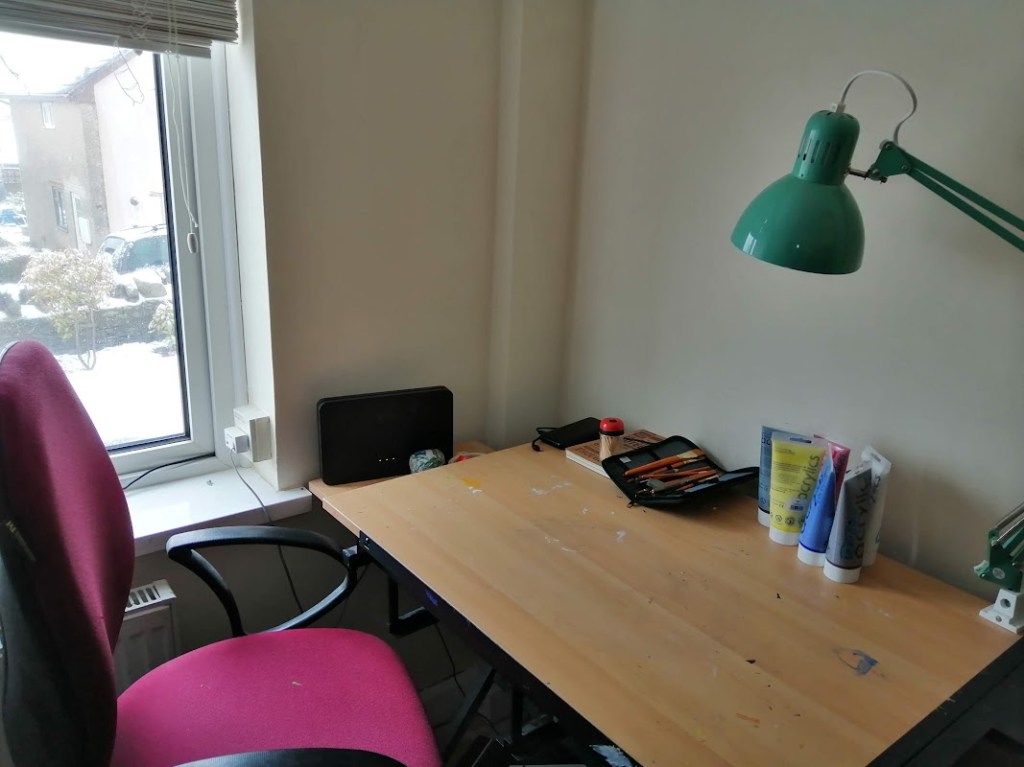
At the moment, my creative space is under my stair case. This is where I produce all my blogging and any computer generated designs. For other more practical creative works such as painting or drawing, I use a drawing board that is in my children’s playroom or sometimes at the kitchen table. However, in the next few weeks I will be converting the children’s playroom in to a studio.
Below is an image of my studio-space that I use most of the time. This is under my staircase and although it is small it fits my laptop, Huion drawing tablet, some reading books, sketchbooks, a daylight lamp and note-pads.
Under the stairs office
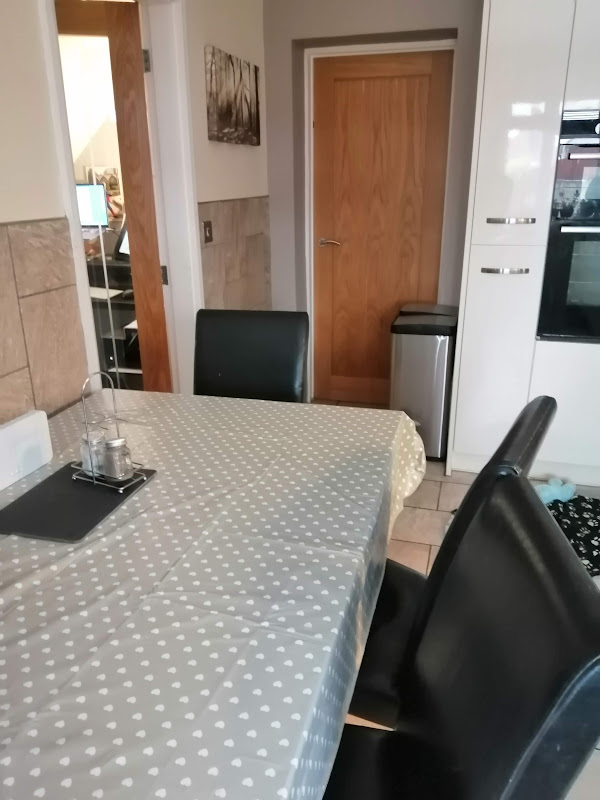
When I need to have a creative space to draw or paint, I either will set up my drawing table or work at the kitchen table.
Kitchen table
Drawing table
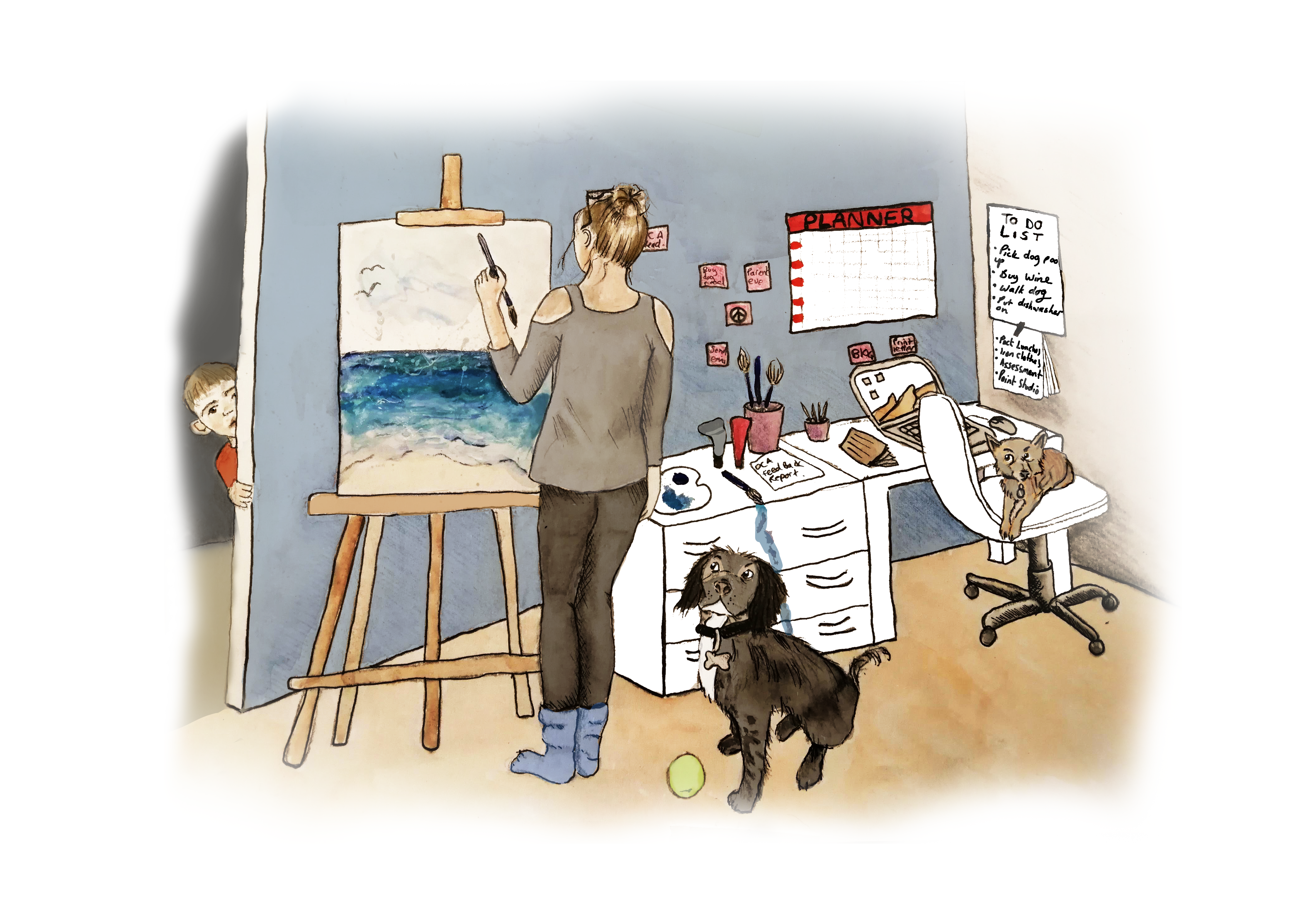
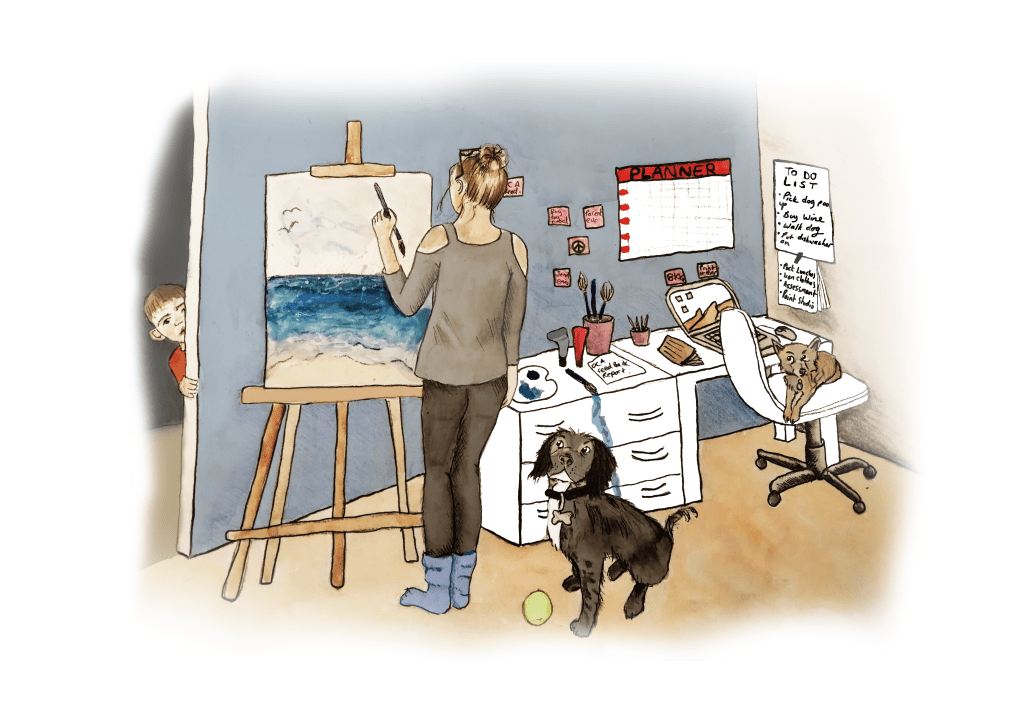
Below is a sketch I drew to show what my typical day working in my studio can be like.
I then developed the sketch further with water colour and pen and changed a few things such as the scale and positioning of my dogs and added my youngest son who is never far from me.
I have been thinking about what type of art I’ll produce in my new studio and the items I’ll need to make a comfortable workspace. Below is a list of things I have considered for the new room.
Good Lighting. I have blinds which I can open to allow natural light in but it can get quite dark so will need to think about alternative artificial lighting too. A bright light that won’t create shadows in my workspace.
Comfortable Seating: I have an office chair which is adjustable, but I would also like to get an adjustable stool to support me while I work at an easel.
Storage: Currently I have a kallax unit from Ikea but it is old and needs replacing. I will probably will get the same as it has lots of storage to organise my art supplies and tools. Around the room, I’ll also be adding lots of shelves. I would like to get a drying rack too, as I have found it difficult to find places for prints to dry.
Inspiration Board: Around the room I am going to hang artist’s work that inspire me and put up a corkboard to display my ideas, sketches, and images that inspire me.
Sink and water: Thankfully, I have a utility with an old sink where I wash all my pallettes and brushes.










 Visual Skills 2