The brief
Option 1: Illustration
Take a blank piece of paper, ideally A2 size, and an ordinary HB or 2B pencil and begin to make marks in the top left-hand corner of the paper. At first make small, short marks, but as you begin to work across the paper start to make them larger, stronger, and more varied. Continue to work across the paper and begin to fill it with these gestural marks. Vary the length, density, and shape of the marks as much as possible as you draw across the sheet of paper. Perhaps small ‘zones’ of the paper will consist of short, vertical marks, while another area might be formed of curling doodles or small circles. Fill the whole sheet of paper with marks, lines, and shapes, although you may need to sharpen the pencil as you go. It might take some time, maybe a few hours or even a day or two, to completely fill the paper. Don’t try to fill the sheet of paper in one go, you can take breaks and return to the paper over a period of time. The intention of this exercise is to reach the point where you are not thinking about the next mark, but simply enjoy letting the pencil and the marks you have made guide you along with no conscious effort.
When you have finished, and the sheet of paper is filled with detail and variation, take two ‘L’ shaped pieces of card and frame five sections of the paper, about 12-15cm square. Think about the variation of marks, density and visual content of each of the five selected squares. Take photographs of them and give them one-word titles that relate to the emotional or sensational affect you think they have.
OCA Text book, Visual Skills 2, Assignment one, option 1.
Keywords from the brief
- A2 paper
- Make marks top left corner
- Small short marks
- Then make marks larger stronger and varied.
- Very length, density, and shape of marks
- take two ‘L’ shaped pieces of card and frame five sections of the paper
- Take photographs of them and give them one-word titles that relate to the emotional or sensational affect you think they have.
Despite the fact that the brief stated that this task should be completed with a pencil. I did not want to because that is my safety net, something I am used to and find simple to use. Pencils are also my safety net because they allow me to erase any mistakes. As a result, I wanted to test myself by making marks that I could not erase.
Looking around, I picked up some coloured markers and sat down in front of the card.
As you can see in the photo below, it was quite intimidating.
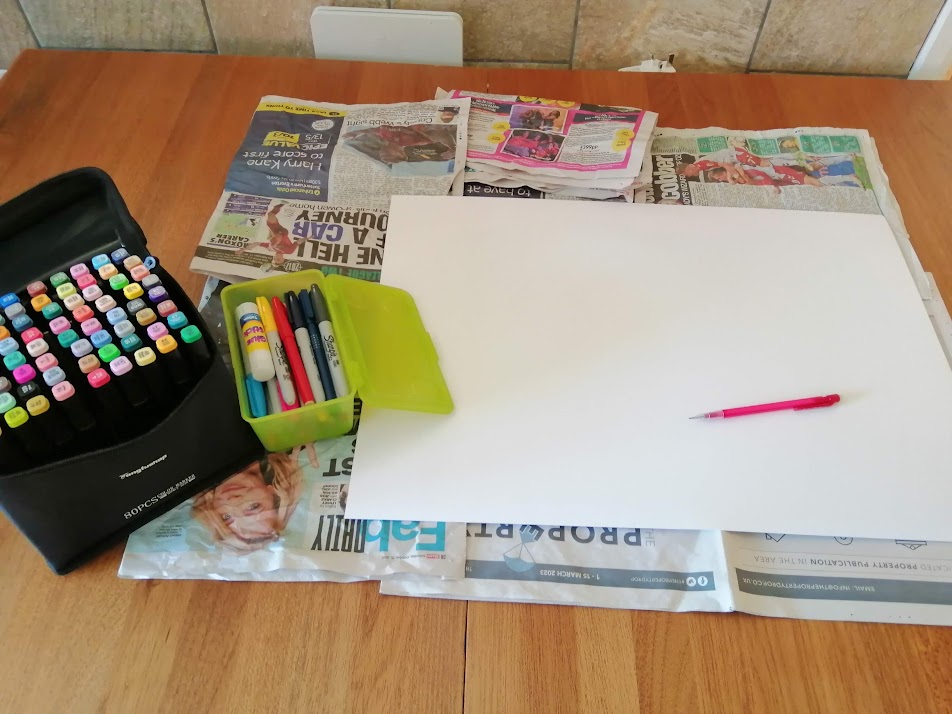
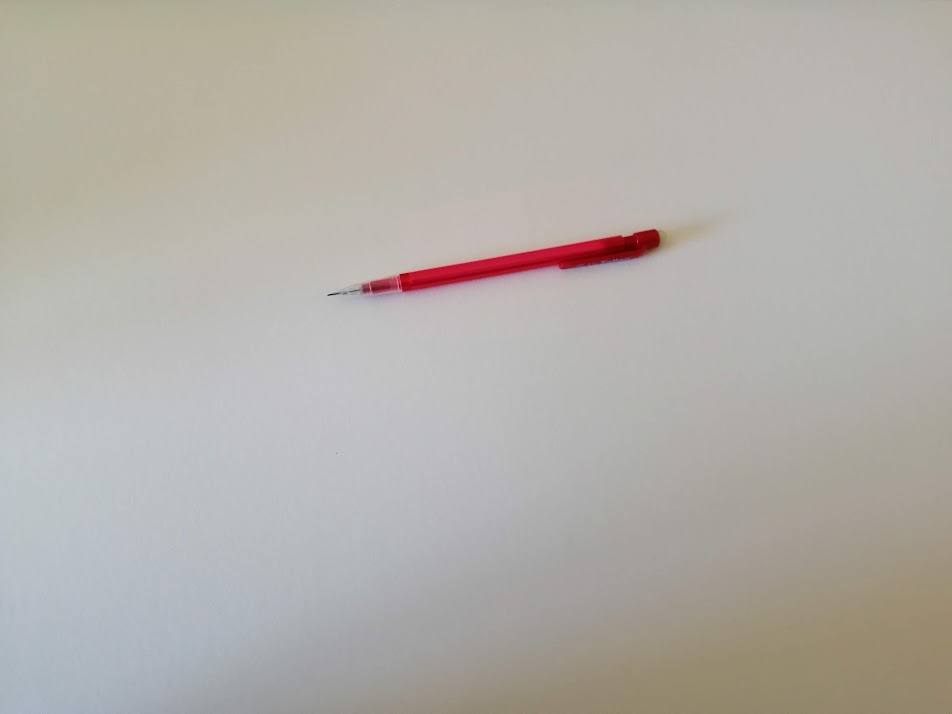
However, when I reread the brief, it stated to begin in the upper left corner and make small marks. I did this by making small dots, and as I did so, I became more daring to try different strokes, patterns, and shapes. I also listened to music and occasionally made marks in relation to the song’s beat. Below is a photo of the filled-up card.
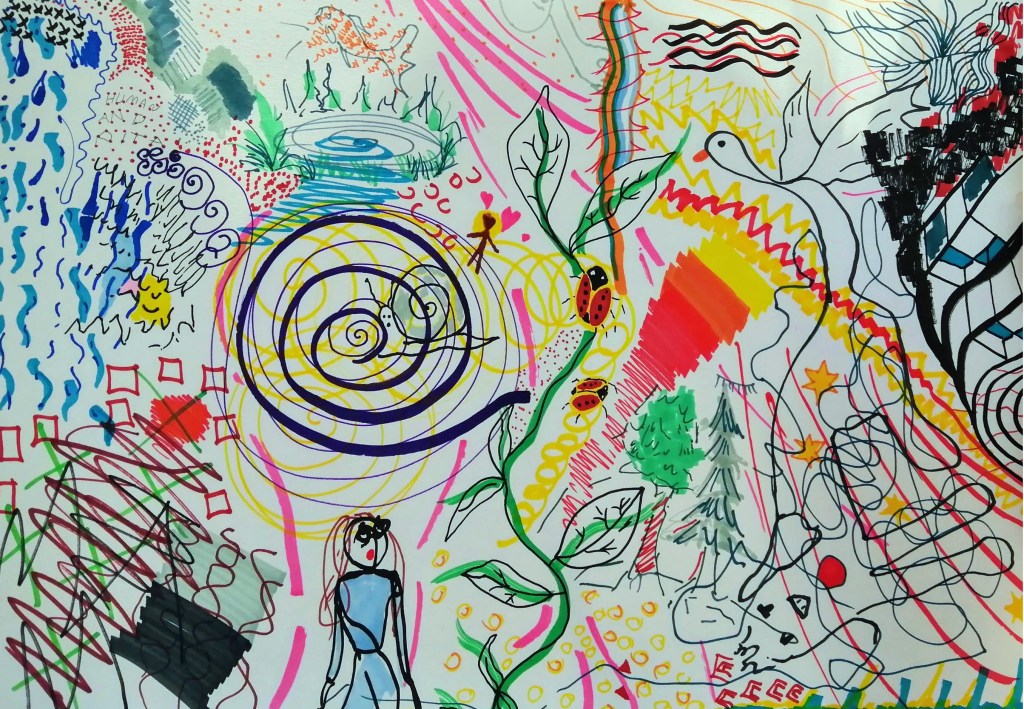
I then scanned in the drawing and cropped five sections of the image in Photoshop. I used Photoshop to measure and rotate the canvas because it was easier.
The selected five images and one-word titles I have given them are listed below.
Anger
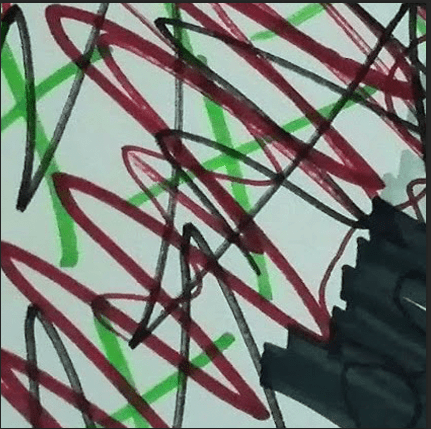
Depression
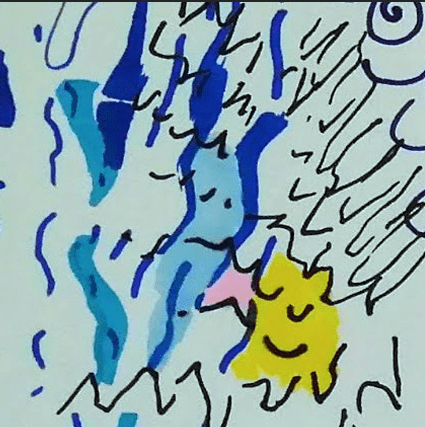
Happiness
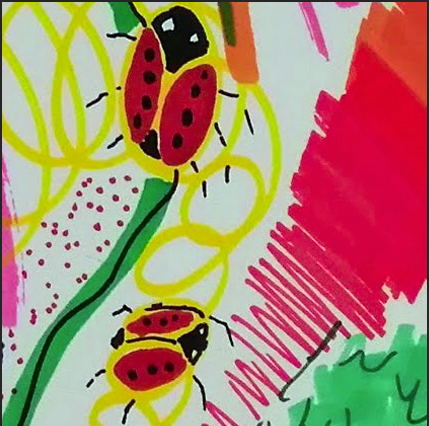
Dizzy
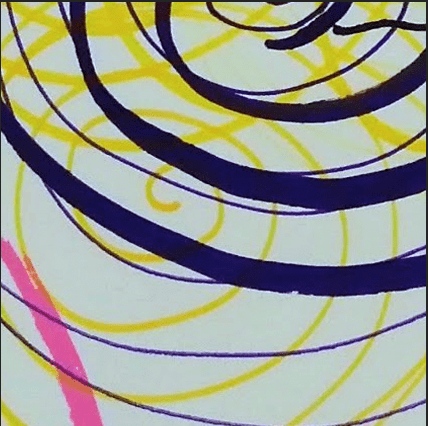
Stress
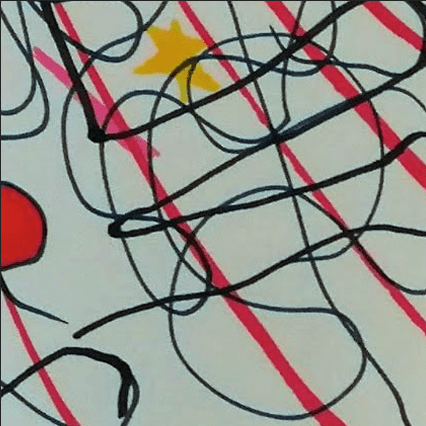
Reflection
While drawing, I kept thinking about the artists I had previously researched and tried to remember that this was a playful exercise, not a beautiful drawing.
As previously stated, I purposefully used pens to challenge myself not to be afraid of making mistakes. This was a significant challenge for me. However, once I put pen to paper, I realised it was not as bad as I had imagined, and it did not matter what mark I made anyway.
What I liked about this work was that it took what I thought was a lot of scribble and turned it into some interesting. Smaller images were made that now show deep emotion. These smaller images could be developed further in the future, for example, the image of Dizzy could be used on a mug that says Don’t worry, it is almost Friday. Alternatively, the happiness image could be printed on children’s tops.
It would be interesting to compare it using different mediums if I did it again.
I have learned from this assignment that being playful can open my mind to innovative ideas and creativity, as well as help me not be afraid to start a project. This is something I will keep doing when I am stuck for ideas.
It was fascinating to see how, when I created new images from one drawing, there could be an emotional response to the image that had not previously existed.

 Visual Skills 2