Writing this is not exactly part of my course work, but I have realised when you stumble across someone that hits something deep within your heart, it needs to be acknowledged, for me this was discovering Charlie Mackesy, who may just have woken me back up to my passion of illustration.
At the beginning of this course, Visual Exploration, Visual skills 2, I met my new tutor via google meet. During our introduction to each other, I mentioned I liked Quentin Blake as an artist. My tutor advised I may like another artist called Charlie Mackesy, which I had not heard of.
Intrigued by this suggestion, I researched Charlie’s website and looked at his portfolio of work. Each piece of his work took my breath away, and I have fallen in love with his magnificent illustrations, paintings and sculptures.
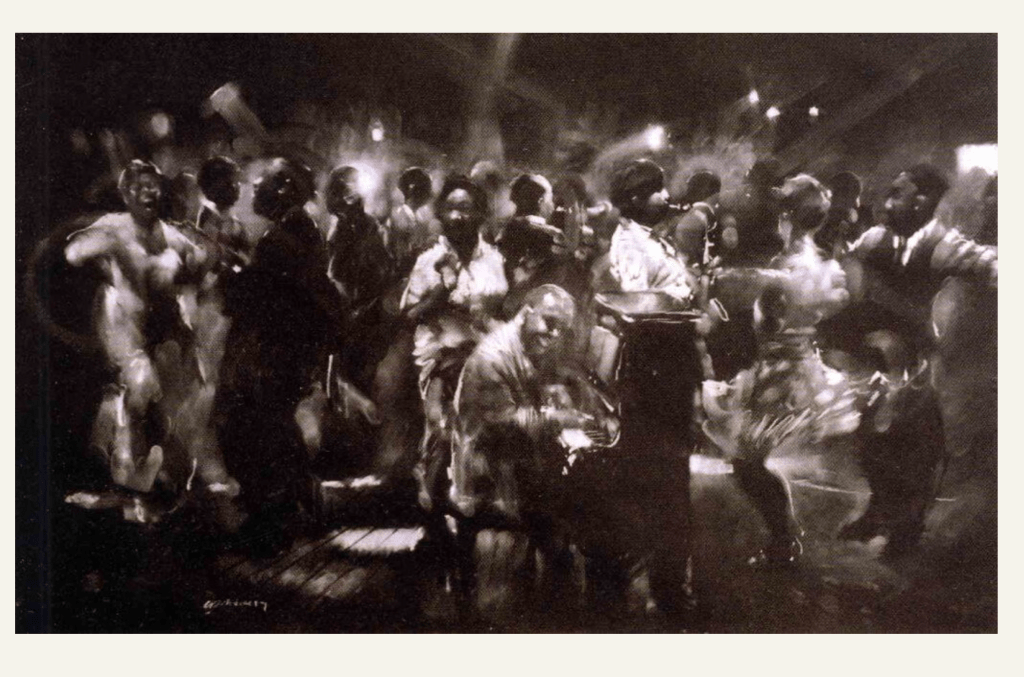
On part of his website, he showcases black and white drawings of jazz bands playing. One drawing can be seen below:
https://www.charliemackesy.com/drawings
There is an element of realism in the image, but the atmosphere he has captured in each of his drawings has mesmerised me. I felt like I can hear the music and see the people dancing.
Next, I looked at the illustrations he created for the book he wrote called The Boy, the Mole, the Fox and the Horse. It is a beautiful, emotional story about a young boy who meets three animals whilst on his journey to find home. Whilst on this journey, he learns many life skills, one being the act of kindness.
These drawings are completely different in style to the jazz illustrations, in that they are cartoonish, loose ink drawings. Yet, they are still filled with the same amount of energy and expression. Next to these illustrations, Charlie has written the surrounding narrative using the same dip ink pen he uses for the drawings. Which to me gives a unique, personal reading experience. Almost like I’m reading his diary pages.
The book The Boy, the Mole, the Fox and the Horse was published in 2019 just before the pandemic hit. This story has since brought a lot of comfort to people as parts of the narrative are relatable to what we went through during the pandemic, but also other life scenarios.
Below are a few of my personal favourite illustrations because of the simplicity, fluidity and expressive quality of the line used.
After looking at his webpage, I then read the book via the YouTube link shown below. This gave me the opportunity to see the book in its entirety.
Next, I watched the animated film via the link below.
https://www.bbc.co.uk/programmes/m001gn7t
It was lovely to see the illustrations come to life on screen. The animated film reminded me of the Snowman by Raymond Briggs, especially when the horse is telling the boy that he can fly, of which the horse takes the boy up into the sky and they fly above the beautiful countryside just like the snowman did. Both stories have a magic that children enthral upon.
After, I then watched a documentary about his book being turned into a film.
https://www.bbc.co.uk/programmes/m001gnqz
It was interesting to see what a nice natured man he is and that he genuinely wanted to create the book in order to help people have a sense of inner peace.
For example, these quotes below are from the book and could mean so much to people of all ages.
“One of our greatest freedoms is how we react to things”
“Doing nothing with friends is never doing nothing.”
“What is the bravest thing you’ve ever said? Asked the boy.
‘Help,’ said the horse.
‘Asking for help isn’t giving up,’ said the horse. ‘It’s refusing to give up.”
“The greatest illusion,” said the mole, “is that life should be perfect.”
And these are just a few of the quotes from the book.
During part of this interview, he showed large boxes and sketch pads that were filled with illustrations that he had created with the possibility of them being used in the book. There were so many! He pointed to them and said,
“All these pads are full of mistakes, if you keep going your find something.”
This really made me think that this is what I need to keep doing. It does not matter if I make mistakes, I just have to keep trying and working hard.
It was interesting to hear that he was born in Northumberland, as I think he may have taken inspiration from growing up there and used memories to help generate some of his illustrations.
It was very emotional to watch him talk about the loss of his best friend. I could feel his pain watching him during the interview, having also lost people close to me. I think he has thrown himself into creating art as a way of escapism and a way of giving him peace, but also a way of coming to terms with what life can throw at us and helping others with what he has had to endure. He has created a piece of happiness that can be read globally.
After writing this, I stumbled across an article from the Guardian. It confirmed that Charlie was working out his own feelings whilst drawing the boy talking to a horse. It shows this in the quote below from Charlie.
“I drew the conversations between the characters from conversations I’ve had with my friends about what life really means, what’s important; it was a way for me to think aloud on paper with words and drawings.”
Publishers of the book intended to sell 10,000 copies, but to everyone’s surprise, it exceeded this. The total sales of the book in 2021 were 1,967,949 copies. Making Mackesy book to be the UK’s bestselling hardback book since records began.
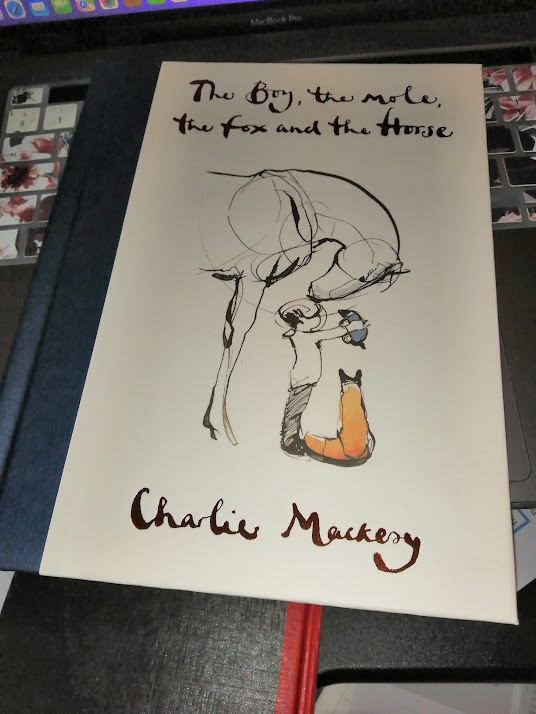
I have just purchased the book as it is so inspirational and want it next to me to encourage me on my journey as an illustrator but also for my youngest son to read.
References
(no date) “https://www.theguardian.com/books/2019/nov/09/boy-mole-fox-horse-christmas-bestseller-charlie-mackesy.”
Drawings (no date) Charlie Mackesy. Available at: https://www.charliemackesy.com/drawings (Accessed: February 15, 2023).
Mackesy hit named bestselling UK hardback since records began (no date) The Bookseller. Available at: https://www.thebookseller.com/news/boy-mole-fox-and-horse-becomes-bestselling-uk-adult-hardback-ever-1295275 (Accessed: February 15, 2023).
Mackesy, C. (2019) ǂThe ǂboy, the Mole, the Fox and the horse. London: Ebury Press.
 Visual Skills 2