Brief
Search for and record your thoughts on the production of both ‘Fast’ and ‘Slow’ artworks in your learning log. What are some of the arguments for and against this kind of real-time viewing? Research these artworks and artists for different approaches in different creative contexts:
89
Visual Skills 2: Visual Exploration
I started doing research on the list of artists provided in the brief by googling them online.
Koyaanisqatsi
The first person I researched was Godfrey Reggio, who directed a film called Koyaanisqatsi in 1982. The title of the film I did not understand so I researched what the word Koyaanisqatsi means and discovered it is taken from the Hopi which are the westernmost group of Pueblo Indians, situated in what is now northeastern Arizona. The word means “life out of balance”.
Next, I watched the film that is available at this link, https://watchdocumentaries.com/koyaanisqatsi/ and made notes whilst watching it.
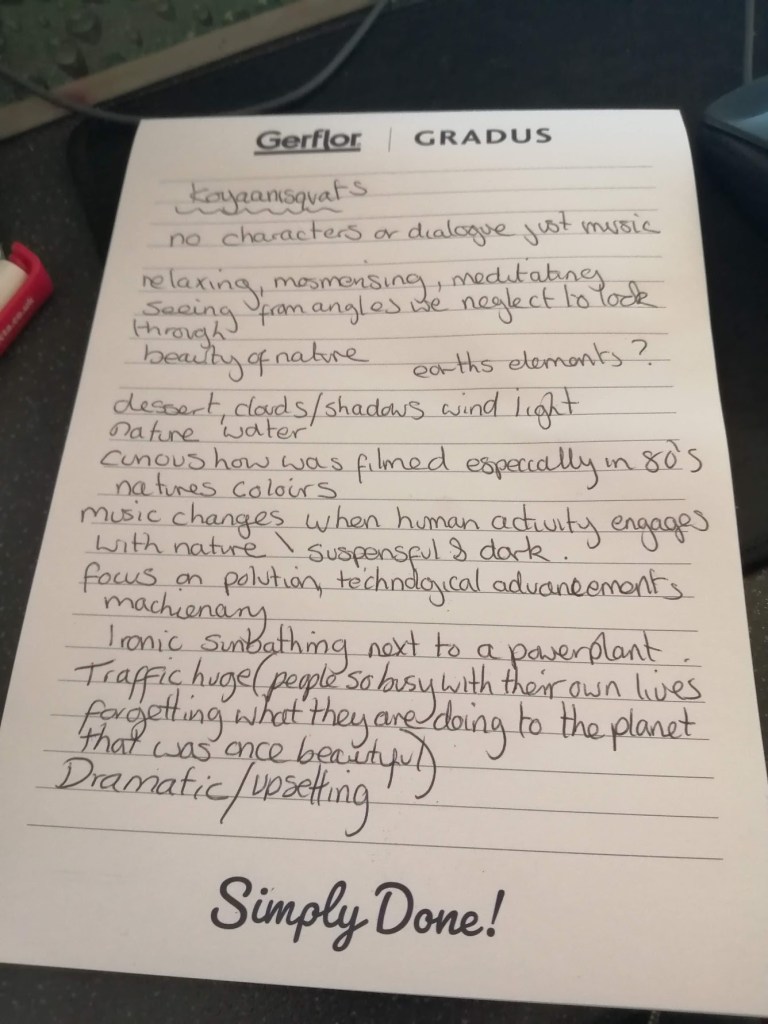
The film is about a collection of visuals that capture a mix of natural landscapes, displaying all the different elements on our planet. It then transitions to scenes of human civilisation. From striking architecture to various technology advancements. The imagery I felt emphasises the profound impact of human activity. Throughout the film, there is a saddening emphasis on the damaging effects of pollution, warfare, and sights of abandoned structures. Sometimes parts of the film are sped up or slowed down which made it even more dramatic. Initially, I was apprehensive about how long the film is especially with it being only visuals and music. However, I found myself fascinated by the united relationship of the visuals and music.
Upon reaching the end of the film, I had a sense of sadness. It dawned on me how unknowingly, some of our actions over the years have brought devastation upon our world.
Next, whilst researching I found a documentary with Godfrey Reggio and Philip Glass explaining the making of the film.
It is an interesting video and it is clear Godfrey is a clever man with a high intellect. It was mentioned during the video “It is up to the viewer to decide on what they think about the film”. Godfrey also said “We live technology it is the air we breath, we are no longer conscious of its presents.” (Reggio, 2018).This statement is true and its is saddening to realise how we are so proud of our technological advancements but neglect to see the implications they are having.
Longplayer
Next, I looked at the work of Jem Finer’s project ‘Longplayer’.
Researching the project Longplayer I discovered it is a unique piece of music designed to last 1,000 years, composed by Jem Finer, who is a musician and artist. It began playing by an algorithm played through a computer and was first played on 31st December in 1999 and will continue to play without any repetition until the year 2999. Apparently, the idea of the project was not about music but more about the experience of time. Longplayer resides in a lighthouse in Trinity Buoy Wharf in London.
Given the length of time this project is expected to last for causes various arguments for and against real-time viewing of Longplayer:
Arguments for real-time viewing of Longplayer.
Having music played nonstop for a millennium and considering the countless individuals who will have come and gone, who have heard and seen the music is quite remarkable. It’s a truly unique experience. Throughout the next millennium, viewers will be able to observe its progress. Experiencing Longplayer in real time might help people establish a relationship with time, as well as giving people space to reflect. It is evident from online research that people frequently travel great distances to visit Longplayer.
As can be seen in the video above, people are sitting about the bowls, enjoying the music, and even meditating there. As such, it provides a chance for people to join together and it makes it possible for people to gather, listen to the music, and converse about it. As a student myself, it is also a valuable educational tool allowing students to investigate and evaluate the artwork.
Arguments against real-time viewing:
Although I hope the project works, I don’t think the concept will last a millennium. People’s time will need to be dedicated to maintaining it. It’s also questionable if people will grow tired of the concept. One of the biggest issues I can see is the technical challenges that will come up. For instance, ensuring that it continues to play, adjusting to new technologies, and maintaining Longplayer.
Andy Goldsworthy’s sculptural practice.
Andy Goldsworthy is a British sculptor, photographer, and environmental artist known for his distinct sculptures and land art projects. His creations are often created in natural settings, including forests, riversides, and coastlines, and he frequently works with the environment, using materials sourced directly from the landscape such as rocks, leaves, branches, and ice. Through his art, Goldsworthy explores themes such as the relationship between humanity, nature and the passage of time.
Arguments For real-time viewing of Andy Goldworth’s artwork:
Goldsworthy’s art is about the concept of not lasting forever. People who viewing his work, with such a short time frame are reminded of the beauty of nature and its lifecycle and are given time to appreciate the natural world around them. Watching Andy work in realtime allows the viewer to understand his working practice and therefore gain an appreciation for his art. Also, stumbling across his work would create more of a sense of excitement. A friend of mine has been doing similar art whilst on her walks in the Forest of Dean, people are always excited to see and find her designs.
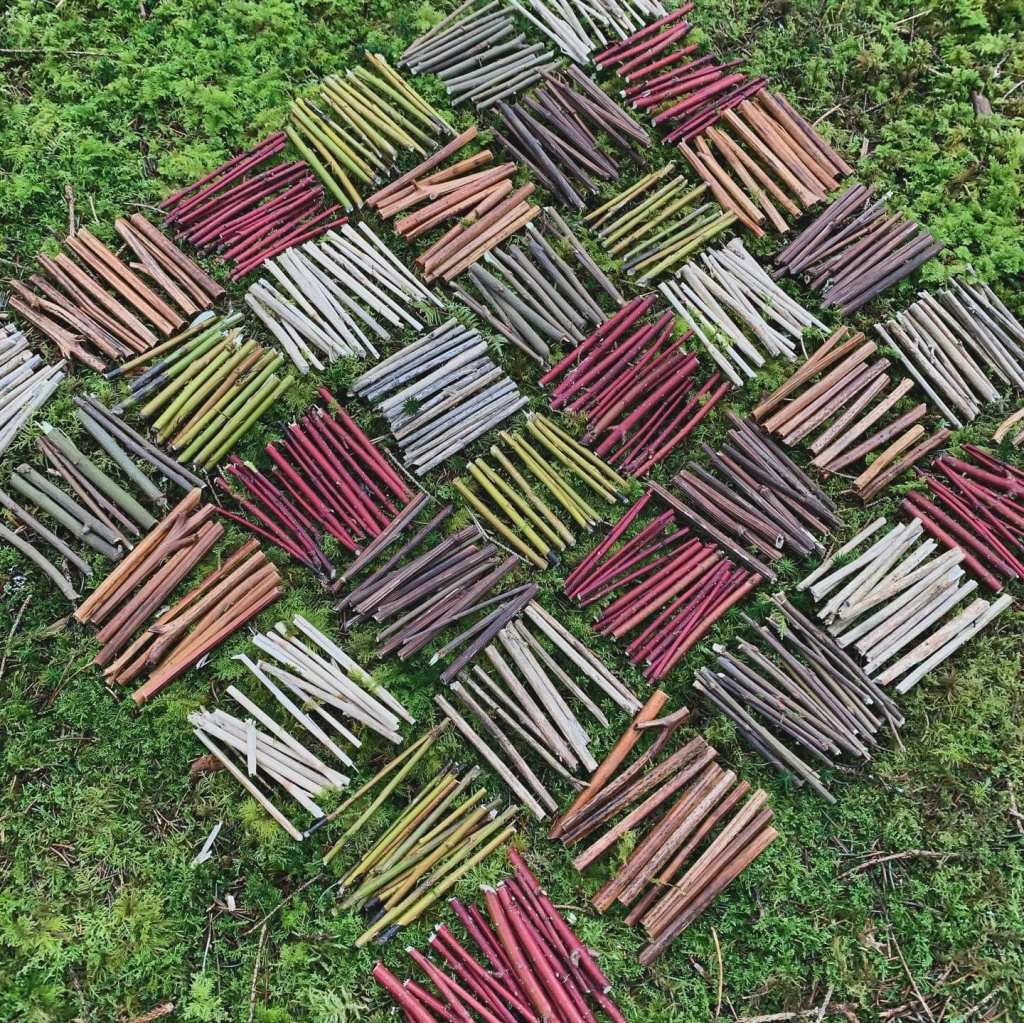
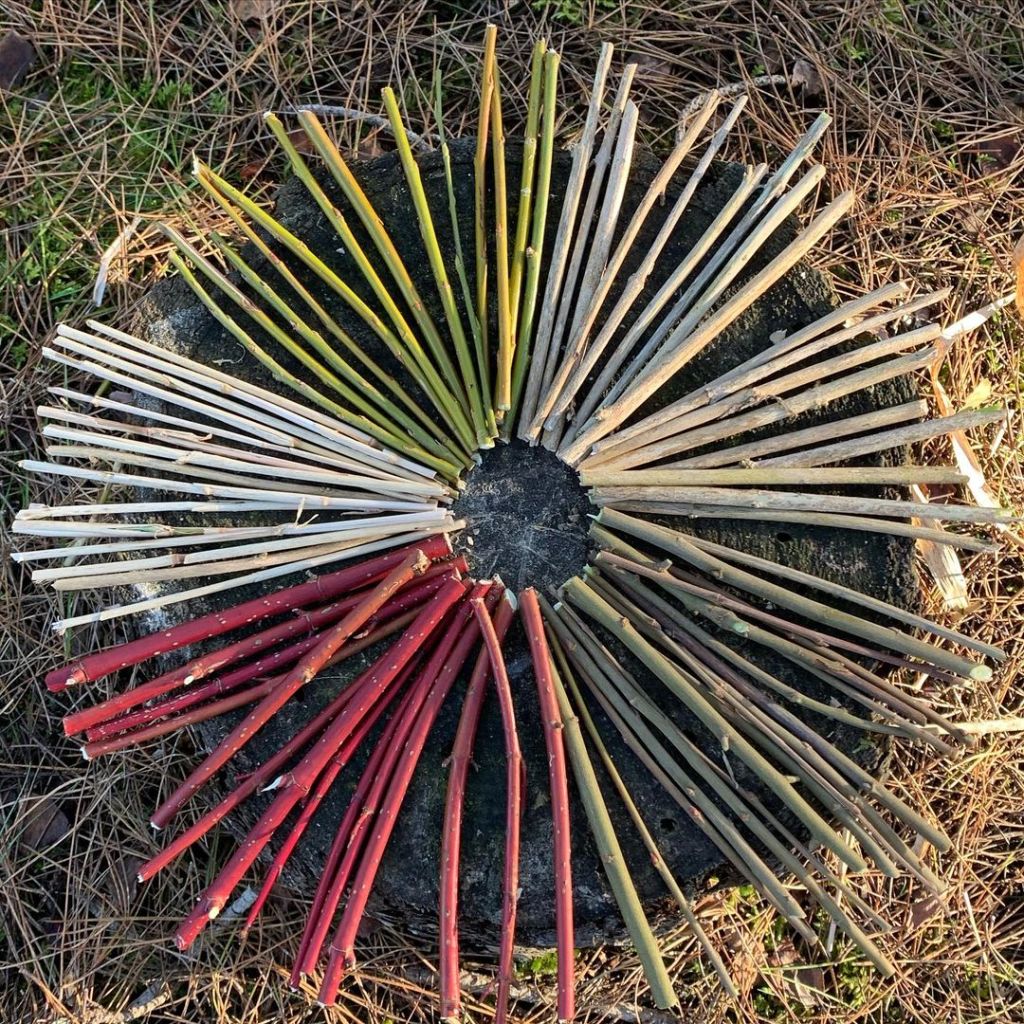
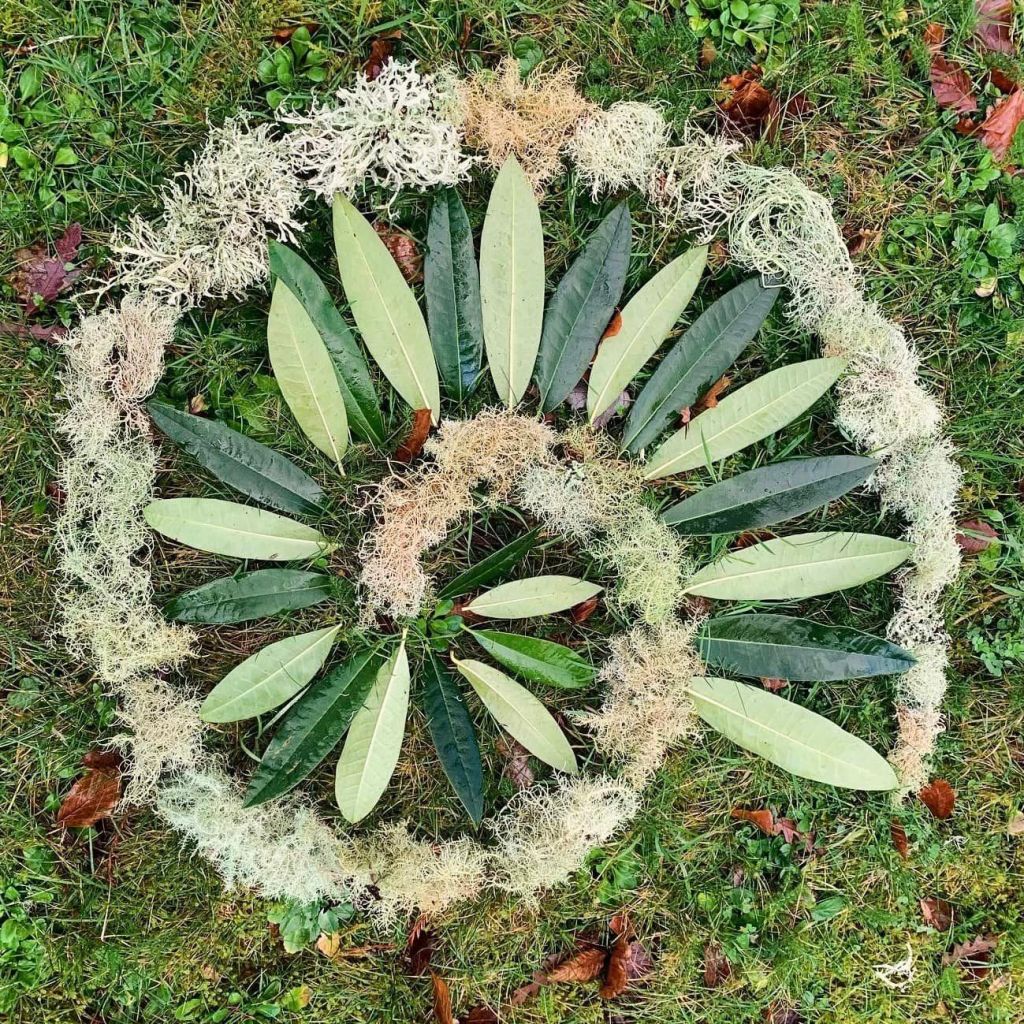
Below shows photographs of my friend Alisa Swanson’s artwork which I think is similar to Andy Goldsworth’s style.
Alisa Swanson’s artworks




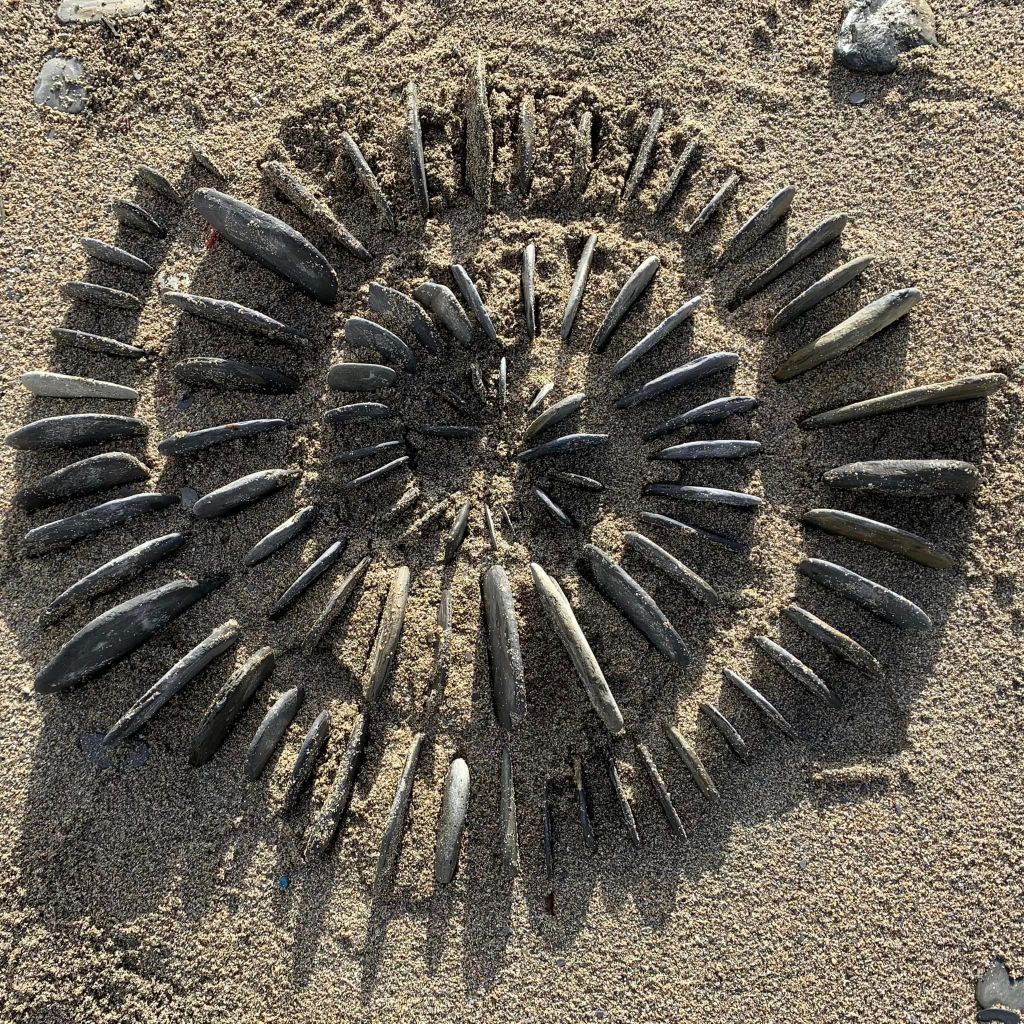
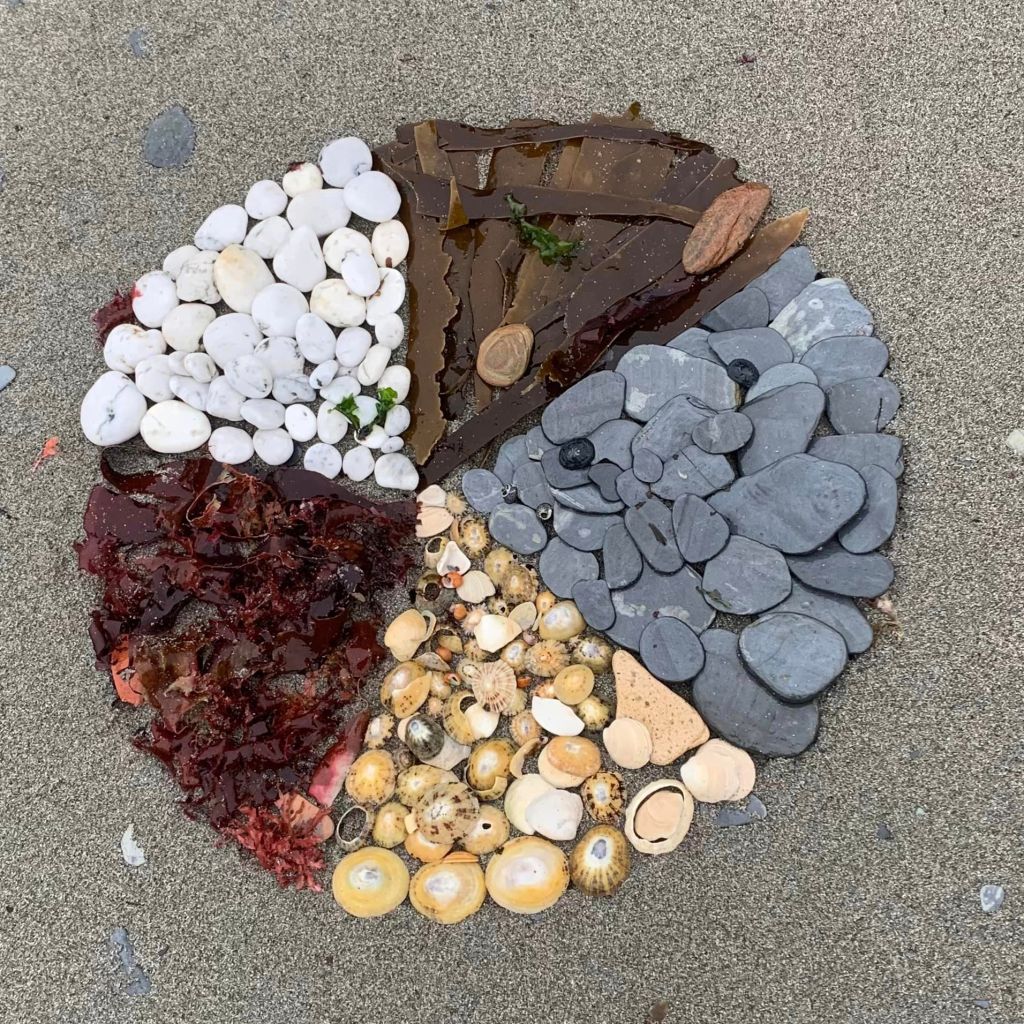
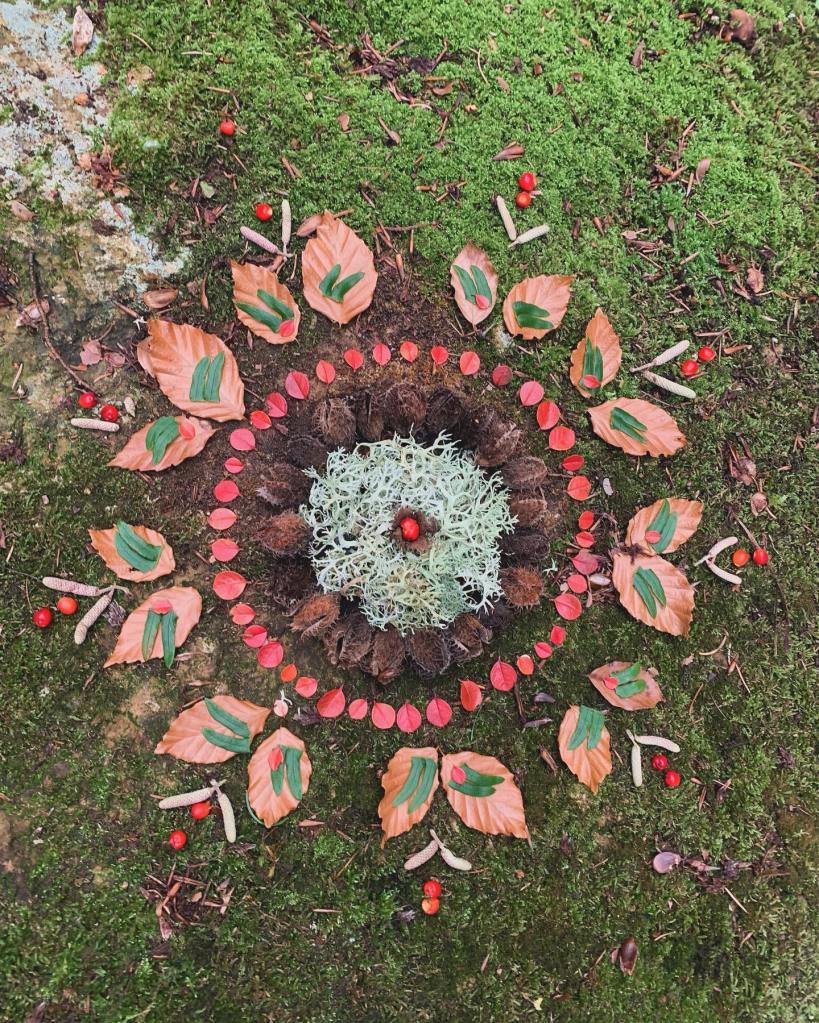
Arguments Against Real-Time Viewing:
Focusing on Goldsworthy’s real-time process may distract from the final artwork itself. Instead of appreciating the completed piece, viewers may become fixated on the artist’s actions.
From my own experience when I have had people watch me in real time create art work I have found it disrupting and distracting. Which possibly could affect his final artwork. The presence of an audience or observers may influence the artist’s decisions or alter the intended outcome of the artwork. However, this is a personal thought, and he may not feel this way when creating his works. Also, by watching him work there would be no mystery or excitement compared to stumbling upon it.
Marina Abramovic performance ‘The Artist is Present’
Out of all the people and creations I have researched this one personally is the most bizarre. The artist Marina Abramovic, sat motionless at a wooden table in a museum located in New York City, in 2010. Visitors were invited to sit across from her one at a time. The visitors were free to sit with her for as long as they wished, and they were encouraged to make eye contact with Abramović during their time together. This performance lasted 8 hours a day for three months.
However, when I watched the clip below, it made me reconsider my initial impressions of the performance. It was truly emotional and made me think is there more about the whole process of this project then I first thought. As Marina sat ready to meet her first guest she was unexpectedly greeted by her ex boyfriend and they sat for a minute gazing into each other’s eyes.
After careful consideration, I now believe through her art she is teaching people to be present in the moment, quiet their minds and to find time to connect with themselves and others. As most of the time people are so busy in their own fast pace lives they do not experience times like these. I also think it shows dedication and endurance from Marina to do such a project. After the effects of Covid it would be good to see how the same experience would affect people if they took part in the performance in 2024.
While I was researching, I discovered some of Abramovic’s earlier works. One was her performance in the 1974 production of Rhythm 0. This performance scared and stunned me possibly even contributed to a nightmare I had the following night of reading about it. Without getting into specifics of the performances, I can say that she is devoted to her work as a performance artist and is willing to push herself to the limit.
Tehching Hsieh
Again, I was surprised by the next artist and his dedication to his art. Tehching Hsieh, is a Taiwanese artist most known for his five ‘One Year Performances’ These works are known as the following:
- Cage
- Time Clock
- Outdoor
- Rope
- No Art
Time Clock
Below is a small documentary, discussing the work produced while creating the project, Time Clock. For this performance Tehching, punched a time clock every hour, for a whole year. Each hour he photographed himself which resulted in thousands of photos documenting the process. These photos were then sped up using film, that gave a better idea of the hardships he faced. Such as never having slept longer than fifty minutes, in a whole year. The philosophy of this piece was to document the passage of time. In his own words “You consume time until you die, every minute, every hour is different, you cannot go back, every time is different but also the same thing.” (Hsieh, 2014). In all of his performances he has pushed the boundaries of art and endurance, provoking viewers to consider the nature of time.
Next, I watched an interesting documentary of Tehching Hsieh, talking about all of the above works and his life story.
Reflection
From researching all of the above creators, a similarity can be seen between them all which is, their intention for the viewers to slow down and engage in a moment of shared presence, allowing for a deeper exploration of either the environment, time elapsing or the human experience within our world.
References
Berry, M. (2022). The Path of Performance: in Conversation with Tehching Hsieh. [online] http://www.youtube.com. Available at: https://youtu.be/DI7TjiHdEOQ [Accessed 11 Mar. 2024].
Blumberg, N. (2018). Andy Goldsworthy | Biography, Art, & Facts. In: Encyclopædia Britannica. [online] Available at: https://www.britannica.com/topic/Andy-Goldsworthy.
Borges, D. (2023). Marina Abramovic and Ulay – a Minute of Silence / the Artist Is Present (MoMA 2010 Performance HD). [online] http://www.youtube.com. Available at: https://youtu.be/op_AGbEBMro [Accessed 11 Mar. 2024].
Cohen, A. (2023). Andy Goldsworthy: Co-Authorship With the Earth through Land Art. [online] TheCollector. Available at: https://www.thecollector.com/who-is-andy-goldsworthy/.
Lader, R. (2013). The Artist Is Present and the Emotions Are Real: Time, Vulnerability, and Gender in Marina Abramovic’s Performance Art» Writing Program» Boston University. [online] http://www.bu.edu. Available at: https://www.bu.edu/writingprogram/journal/past-issues/issue-6/lader/.
Levin, J., Eshun, K., Wertheim, C. and Wertheim, M. (2019). Longplayer. [online] Longplayer.org. Available at: https://longplayer.org.
Mramoeba (2023). Longplayer. [online] Wikipedia. Available at: https://en.wikipedia.org/wiki/Longplayer [Accessed 10 Mar. 2024].
O’Hagan, S. (2010). Interview: Marina Abramović. [online] The Guardian. Available at: https://www.theguardian.com/artanddesign/2010/oct/03/interview-marina-abramovic-performance-artist [Accessed 11 Mar. 2024].
Payne, C. (2009). LongPlayer Live. [online] http://www.youtube.com. Available at: https://youtu.be/NhEI3FEvxU0 [Accessed 11 Mar. 2024].
Qatsi, K. (2001). Koyaanisqatsi. [online] Wikipedia. Available at: https://en.wikipedia.org/wiki/Koyaanisqatsi [Accessed 10 Mar. 2024].
Reggio, G. (1982). Koyaanisqatsi (1982) | Watch Free Documentaries Online. [online] Watchdocumetaries. Available at: https://watchdocumentaries.com/koyaanisqatsi/.
Reggio, G. and Glass, P. (2018). Godfrey Reggio & Phillip Glass on ‘Koyaanisquatsi’. Filmschoolarchive. Available at: https://youtu.be/PK03KKcdzl0?si=rRnSmHL67r0hbLLg [Accessed 10 Feb. 2024].
Royal Academy of Arts (2023). Marina Abramović | Exhibition | Royal Academy of Arts. [online] http://www.royalacademy.org.uk. Available at: https://www.royalacademy.org.uk/exhibition/marina-abramovic [Accessed 11 Mar. 2024].
Sheetz, K. (2019). Hopi | People. In: Encyclopædia Britannica. [online] Available at: https://www.britannica.com/topic/Hopi.
Tehching Hsieh: One Year Performance 1980-1981 (201). Tehching Hsieh: One Year Performance 1980-1981. [online] YouTube. Available at: https://youtu.be/tvebnkjwTeU.
Tehching Hsieh: One Year Performance 1980-1981 (2014b). Tehching Hsieh: One Year Performance 1980-1981. [online] YouTube. Available at: https://youtu.be/tvebnkjwTeU.
Illustration list
Fig. 1 Fowler, G (2024) Notes. [Photograph] In possession of: Fowler, G: Forest of Dean, Gloucestershire.
Fig. 2 Swanson, A (2024) Snow circle. [Photograph] In possession of: Swanson, A: Forest of Dean, Gloucestershire.
Fig. 3 Swanson, A (2024) Snowballs. [Photograph] In possession of: Swanson, A: Forest of Dean, Gloucestershire.
Fig. 4 Swanson, A (2024) Patchwork sticks. [Photograph] In possession of: Swanson, A: Forest of Dean, Gloucestershire.
Fig. 5 Swanson, A (2024) Animal face. [Photograph] In possession of: Swanson, A: Forest of Dean, Gloucestershire.
Fig. 6 Swanson, A (2024) Coloured stems. [Photograph] In possession of: Swanson, A: Forest of Dean, Gloucestershire.
Fig. 7 Swanson, A (2024) Moss. [Photograph] In possession of: Swanson, A: Forest of Dean, Gloucestershire.
Fig. 8 Swanson, A (2024) Leaf snail. [Photograph] In possession of: Swanson, A: Forest of Dean, Gloucestershire.
Fig. 9 Swanson, A (2024) Pebbles. [Photograph] In possession of: Swanson, A: Forest of Dean, Gloucestershire.
Fig. 10 Swanson, A (2024) Seaside circle. [Photograph] In possession of: Swanson, A: Forest of Dean, Gloucestershire.
Fig. 11 Swanson, A (2024) Autumn. [Photograph] In possession of: Swanson, A: Forest of Dean, Gloucestershire.












































































 Visual Skills 2