Option 3: Paper Folding
Brief
For this exercise, you will develop a set of characters in 3D form using paper folding. You could use traditional origami techniques to develop your characters, or you could investigate more contemporary paper toys using your own designs, or you could make up your own form of origami!
Once you have made your characters, record and reflect on your results in your learning log, what did you find most challenging? Is this a technique that you have worked with before? Would you attempt this again and if so would you change your approach?
104 Visual Skills 2: Visual Exploration
Keywords from the brief
Develop a set of characters in 3D form using paper folding
You could use :
- Traditional origami techniques
- Contemporary paper using your own designs,
- Make up your own form of origami!
Originally, when reading this exercise, I imagined I would make some characters using the traditional folding techniques of origami. However, this is an art that can take years to learn, so I decided to research paper artists to see what other techniques could be used.
Mary Chau
The first artist I looked at was Mary Chau, who is a paper artist practicing in Vancouver, Canada. Her work consists of intricate layering of paper to create detailed paper characters and scenes that come to life with depth and dimension. Below are some examples of her work.
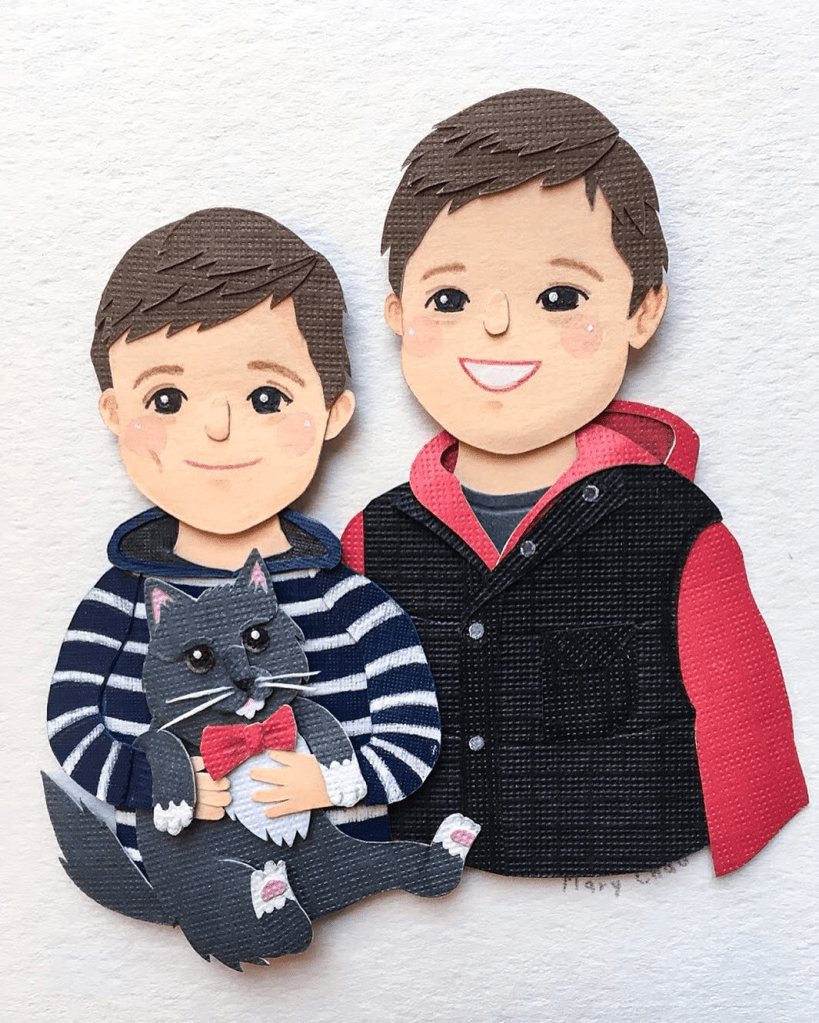
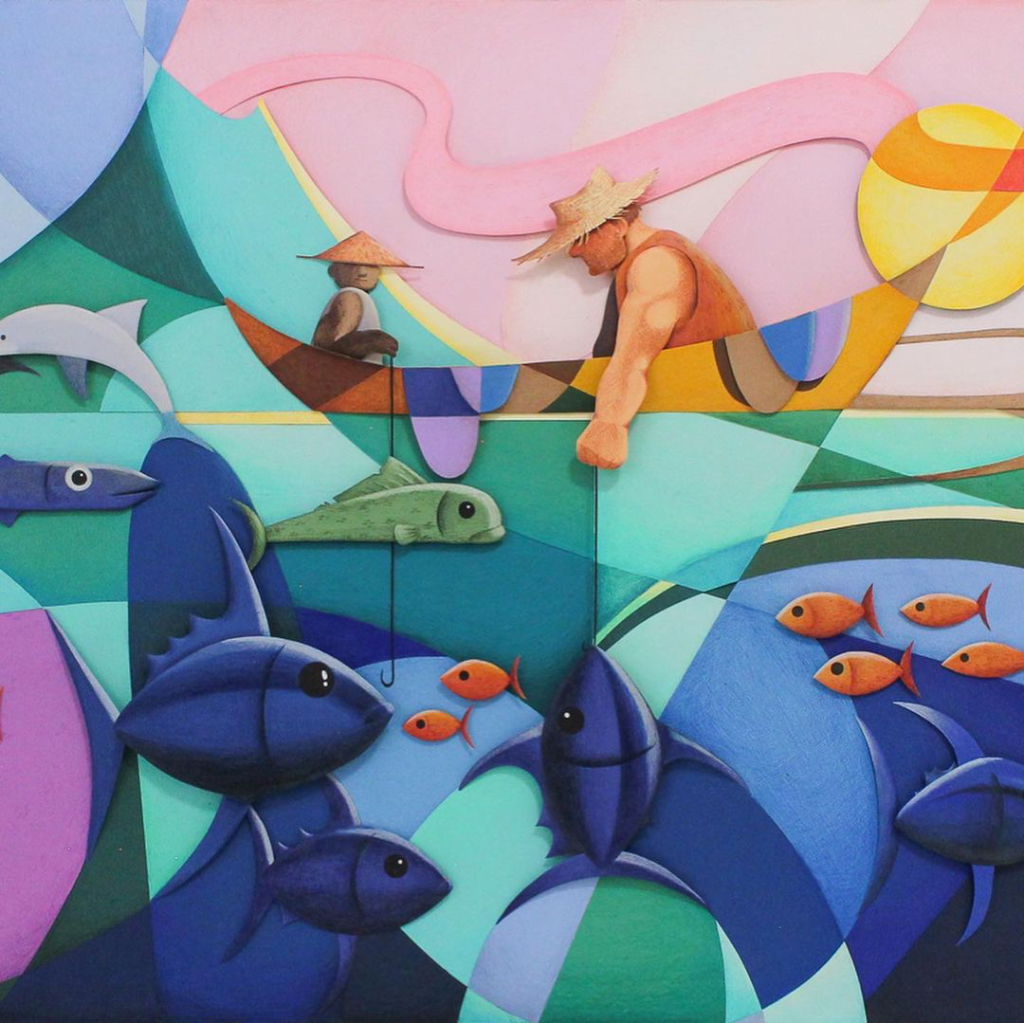
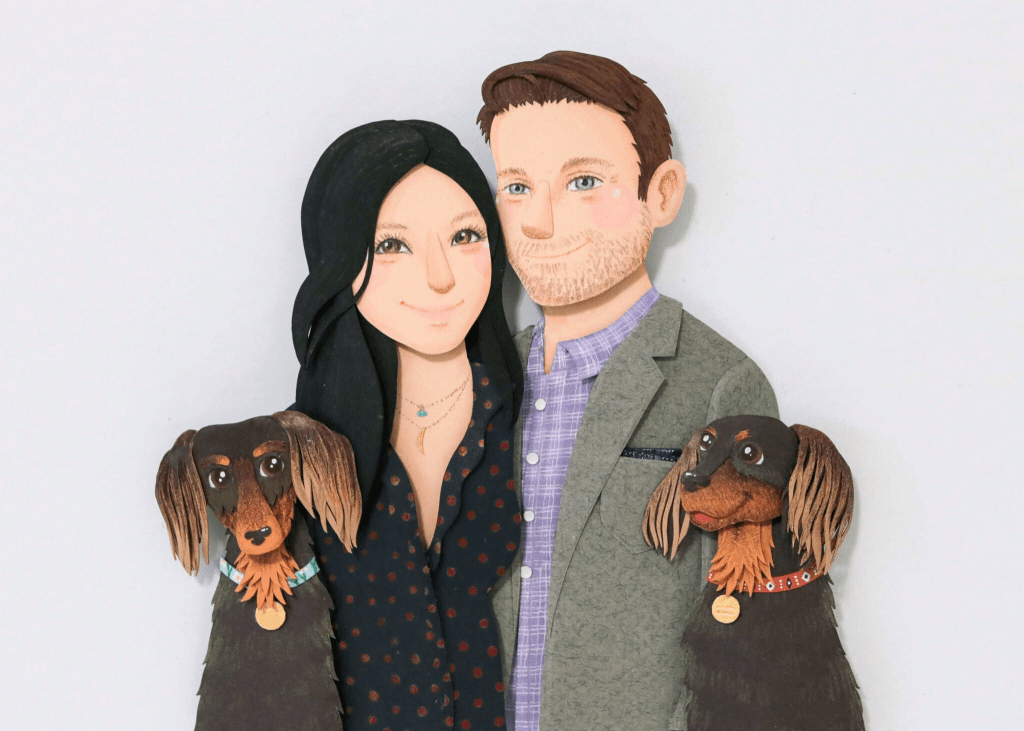
The next artist I researched was Shelly Hanmo.
Shelly Hanmo
Shellt Hanmo, a self-taught illustrator based in Indianapolis, is another paper artist who creates stunning sculptures with delicate details, textures, and vibrant colours. What I find great about her work is that she uses materials sourced from recycled materials, such as old calendars and paper bags. It was not until Shelly was eighteen that she moved to the US from China. Therefore, Asian influences can be seen in her work, especially in recreating Asian folklore illustrations.
One of my personal favourite stories growing up as a child was Hansel and Gretal. It was lovely to see her interpretation of the story through her creative paper illustration for the front cover of this book.
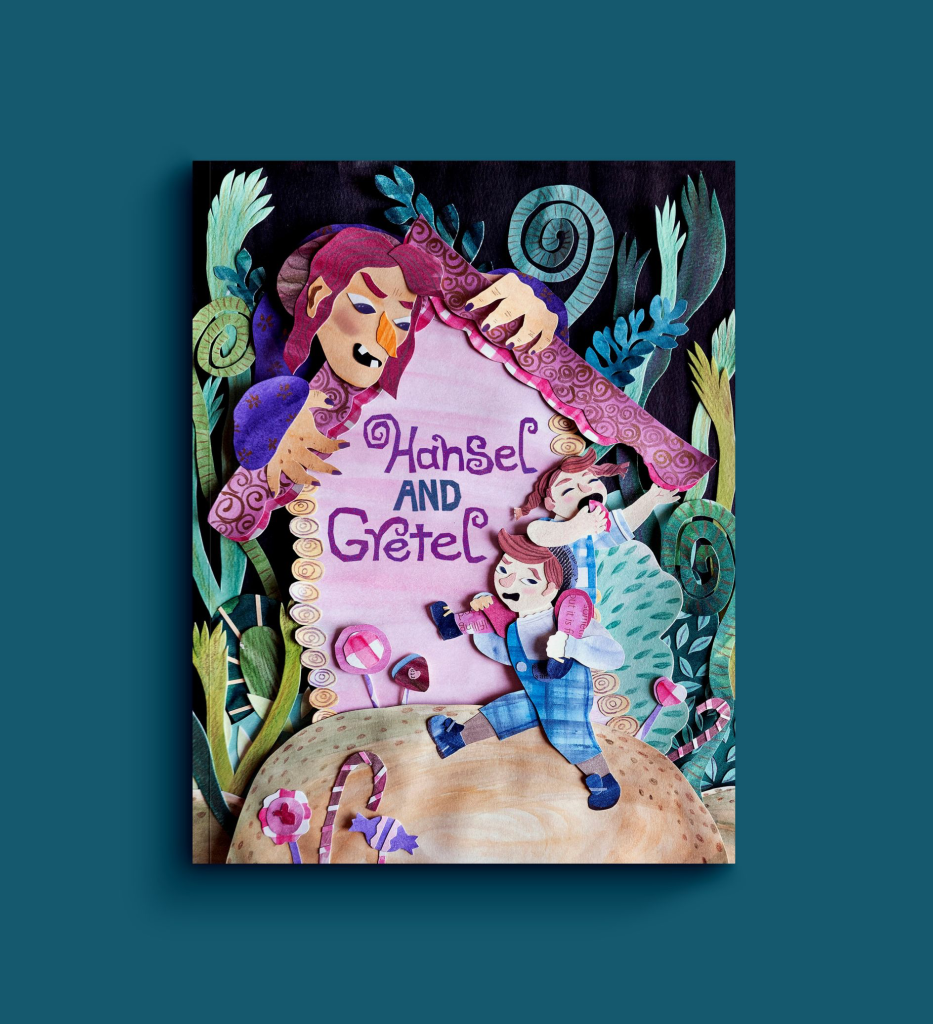
The attention to detail and vibrant colours truly bring the story to life in a way that I have never seen done before.
Martina Aiko
Finally, the last artist I researched is a Swiss illustrator and author called Martina Aiko. Again, this artist works in a very similar style to the previous two, creating illustrations entirely by hand. Her work consists of mixed media and collage. Like the other two artists, her style and intricate designs captured my attention immediately. Below are some examples of her work. You can see the attention to detail and creativity that go into each piece. The illustration below made me laugh, and I resonated with the image as it reminded me of doing pilates in my lounge, where my pet chihuahua Leo, he will often come and sit on me while I exercise.
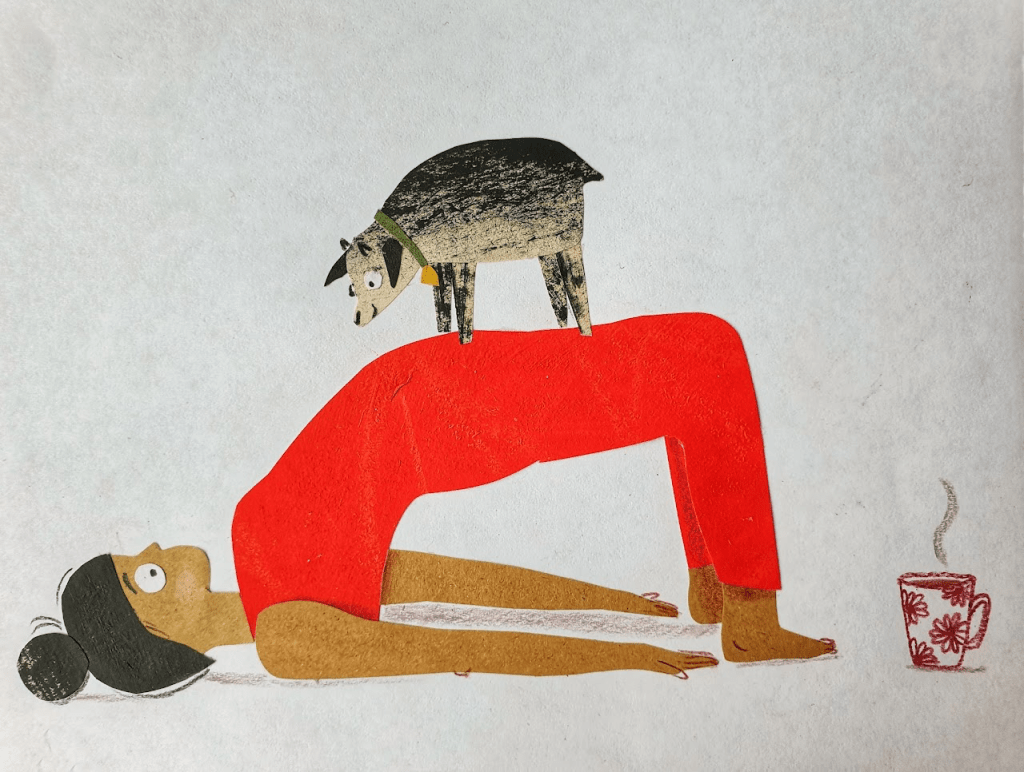

Other examples of Martina work.

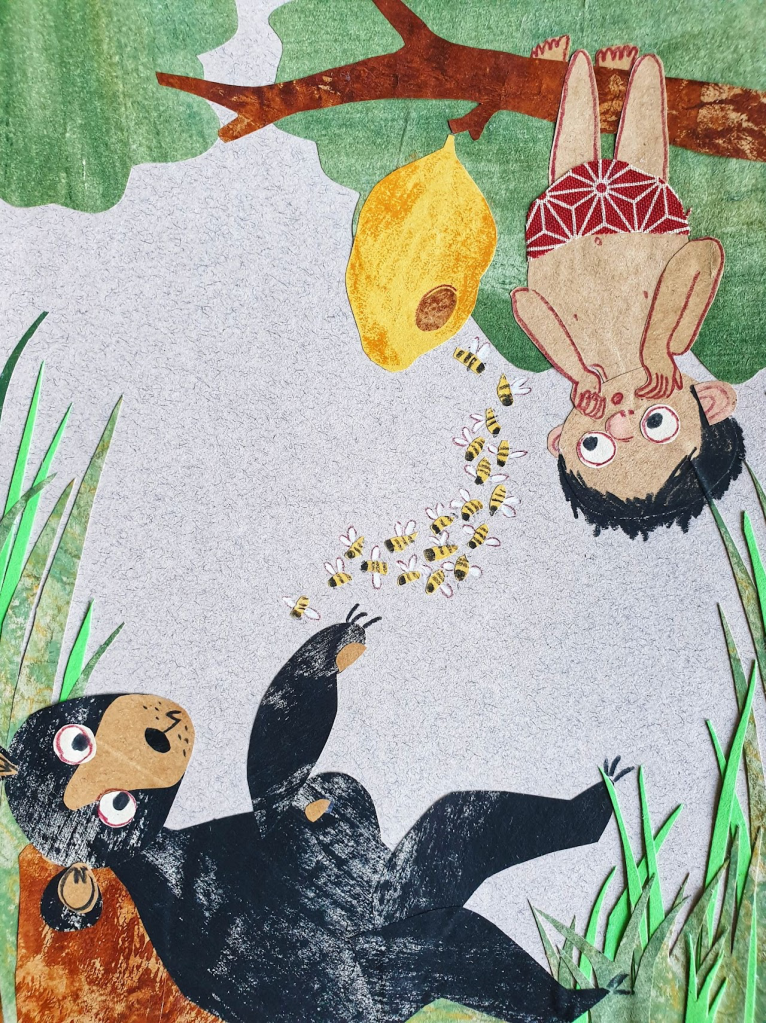
After looking at these artists’ works, I realised that, as much as I like them and their craftsmanship, their work is not quite 3D enough to use as an influence in my work. However, it is something I would like to try myself in the future. Therefore, I would like to experiment with more 3D techniques and incorporate them into my artistic style. I am excited to see how it will enhance my work and bring a new dimension to my art. Although I am a little nervous of this project I am determined to push my boundaries and hopefully evolve as an artist.
Going back to the brief I had For this exercise, it stated to create a set of characters in 3D form using paper folding. Therefore, I decided I wanted to attempt to make a human character out of origami. I looked at various tutorials and then settled on the one below to watch and follow. In the video, it explains the steps and techniques required to create the origami character.
However, I was a little naive, thinking it would be fairly simple. I quickly realised that origami requires a lot of precision, patience, and attention to detail to create intricate designs. I don’t know if it is a lack of practice or if having dyslexia plays a part in finding origami difficult, but I found it extremely hard to master the art of folding paper into complex shapes. However, being stubborn, I spent several days attempting to make the above character. The reason I liked this figure so much is because it reminded me of Little Red Riding Hood, and I thought if I could make it, then I could make other characters from the story and possibly create my own unique versions of the classic fairy tale.
Below are all my failed attempts at making the character.
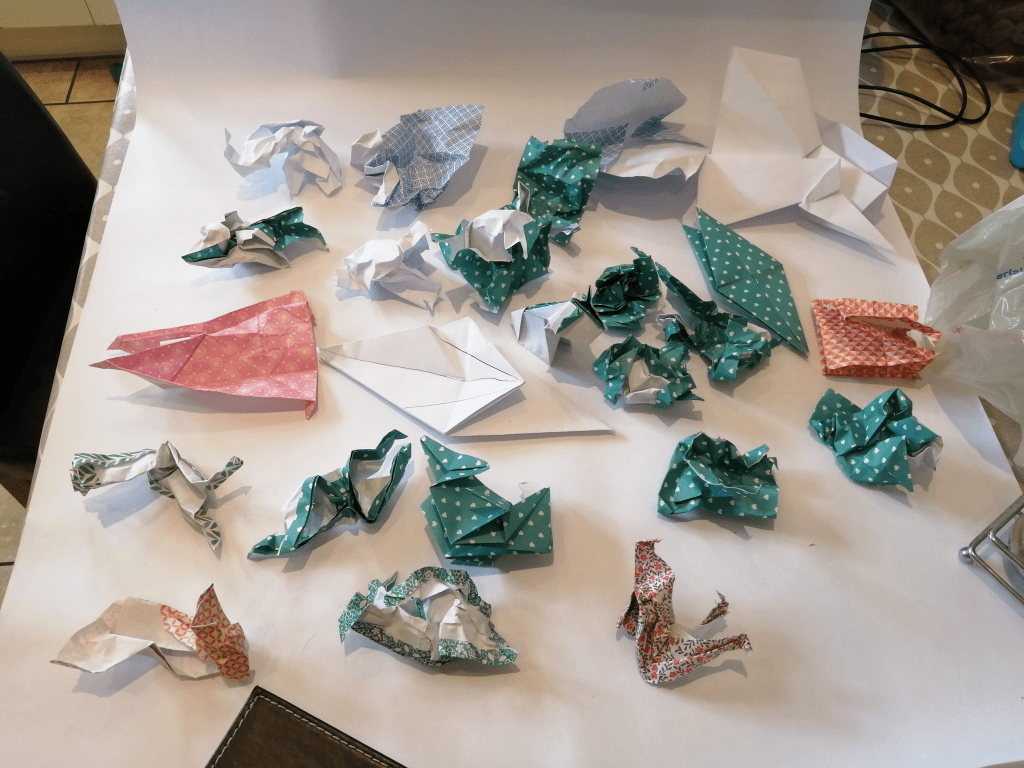
Although it is very frustrating, I am quite pleased with my determination and perseverance. Especially during half term when the children are at home and can be quite demanding, not only that I contracted COVID again.
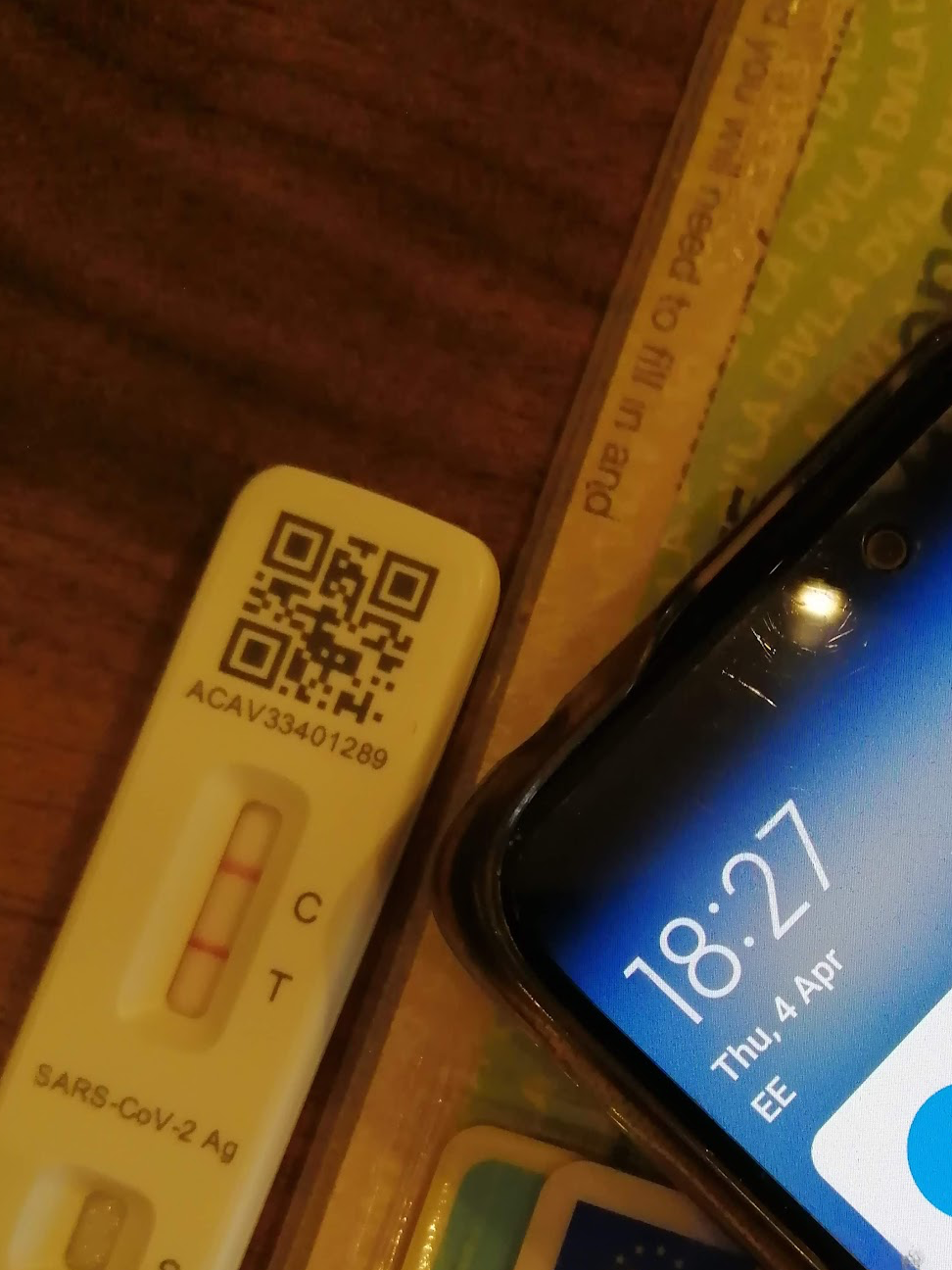
Having to abandon the work for a few days because I was too sick encouraged me to attempt something else. Rereading the brief, I noticed that it did mention that I may create my own origami designs. That’s what I ultimately chose to do. Upon opening my scrapbook cabinet and discovering some red paper and cards, I decided to give it another go at creating an origami figure in my own unique way.
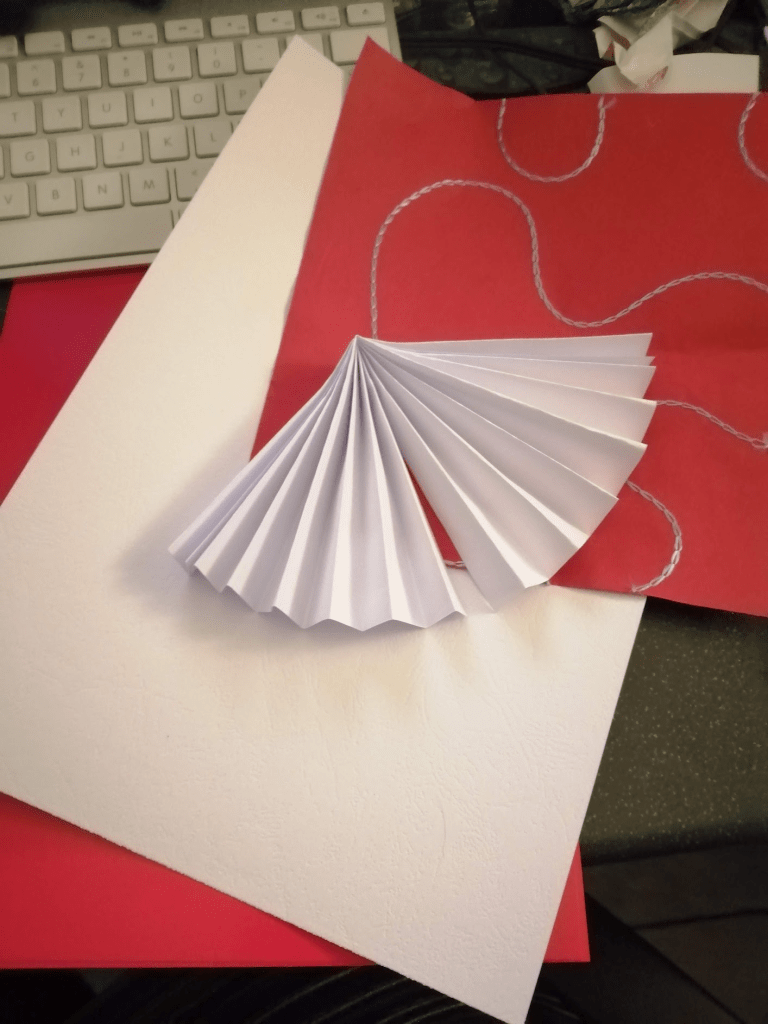
I started by making a paper fan, folding it in half, and then adhering the edges together. This looked like a skirt to me, so I covered a portion of it with origami paper that was decorated with lovely flowers and folded it into the paper.
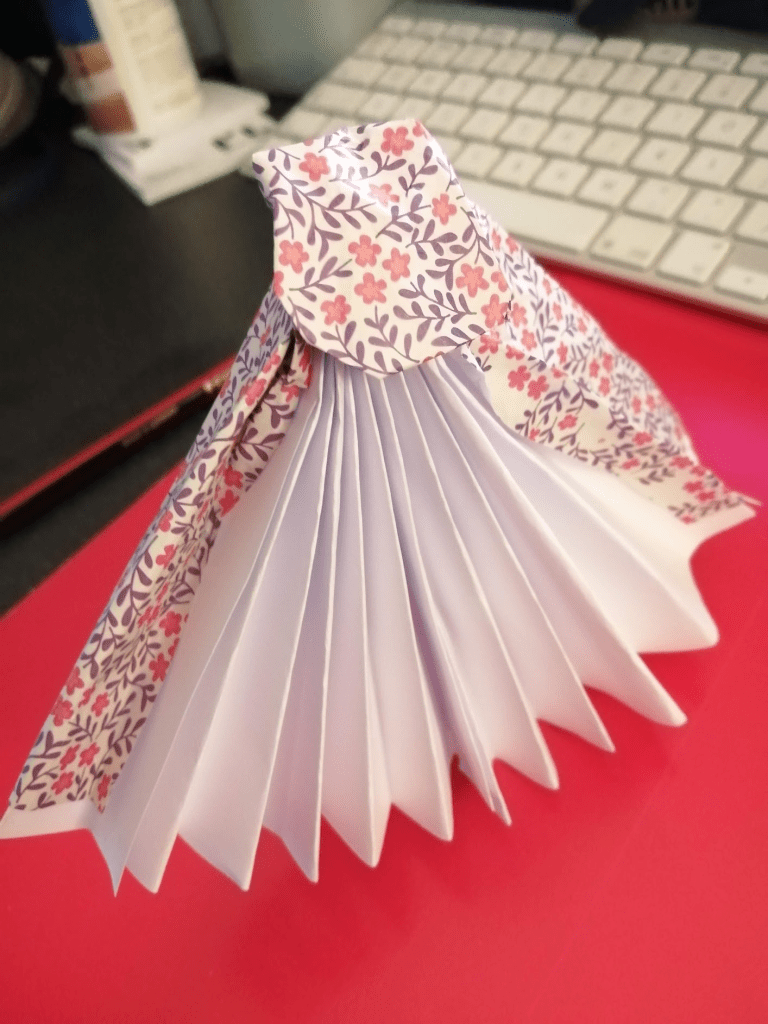
I then sketched the upper half of a little girl on a white card and attached it to the paper sculpture. Once dry, I then created a red cloke out of soft hand-made red paper and finished it off with a bow from my Christmas stationery.
Below is the final paper character.
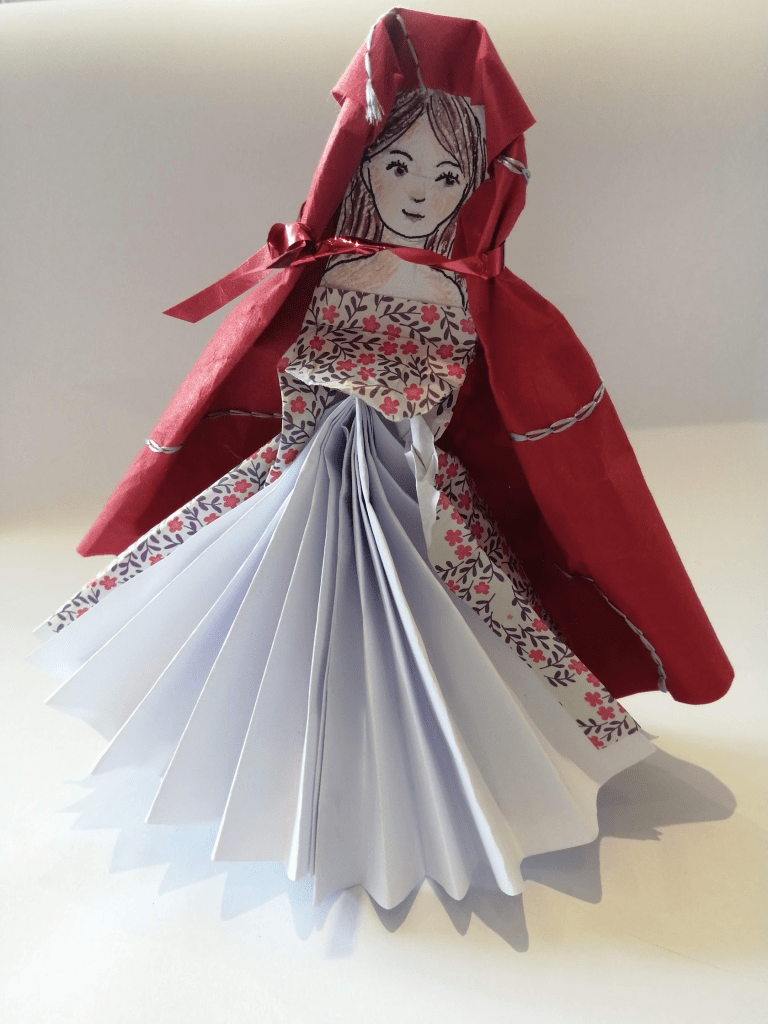
After being satisfied with the result I obtained earlier, I decided to try my hand at making an origami wolf. However, I underestimated the difficulty of the task again and ended up creating a sculpture that my husband thought resembled a cricket instead of a wolf. Nonetheless, I refused to give up and started again.
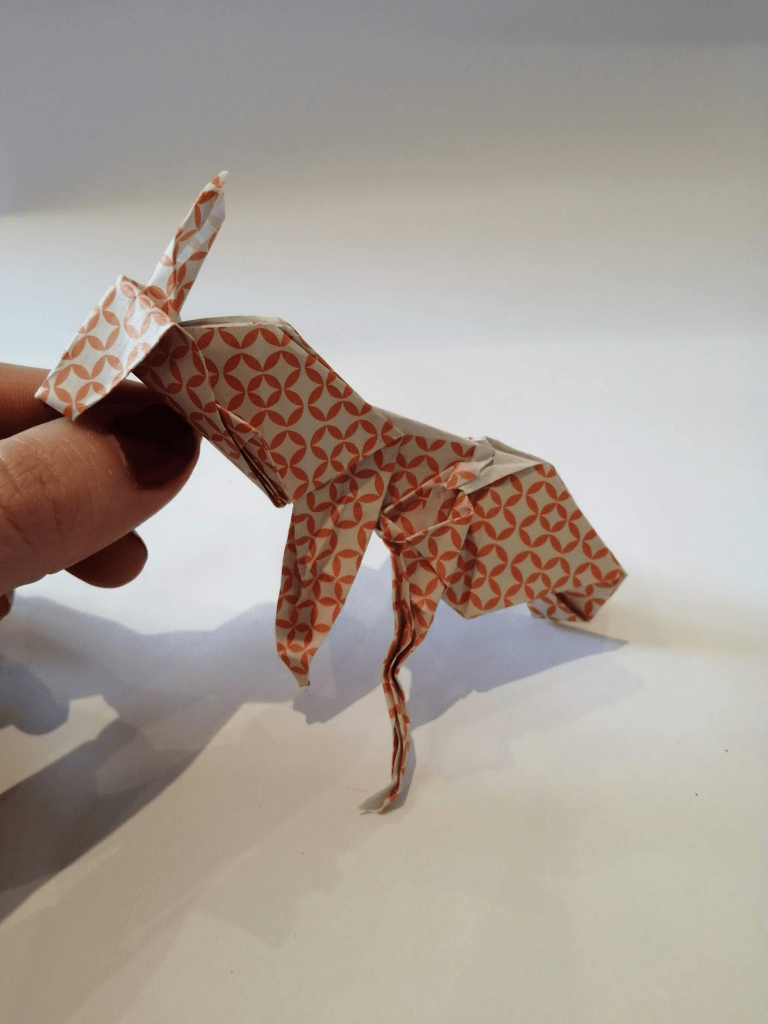
In the meantime, my eleven-year-old and sixteen-year-old children saw what I was doing and thought it looked easy. They decided to try creating the characters that I had found too difficult to make. To my frustration, both of them managed to create perfect origami sculptures in just one hour, despite it being their first attempt. Below are their sculptures.

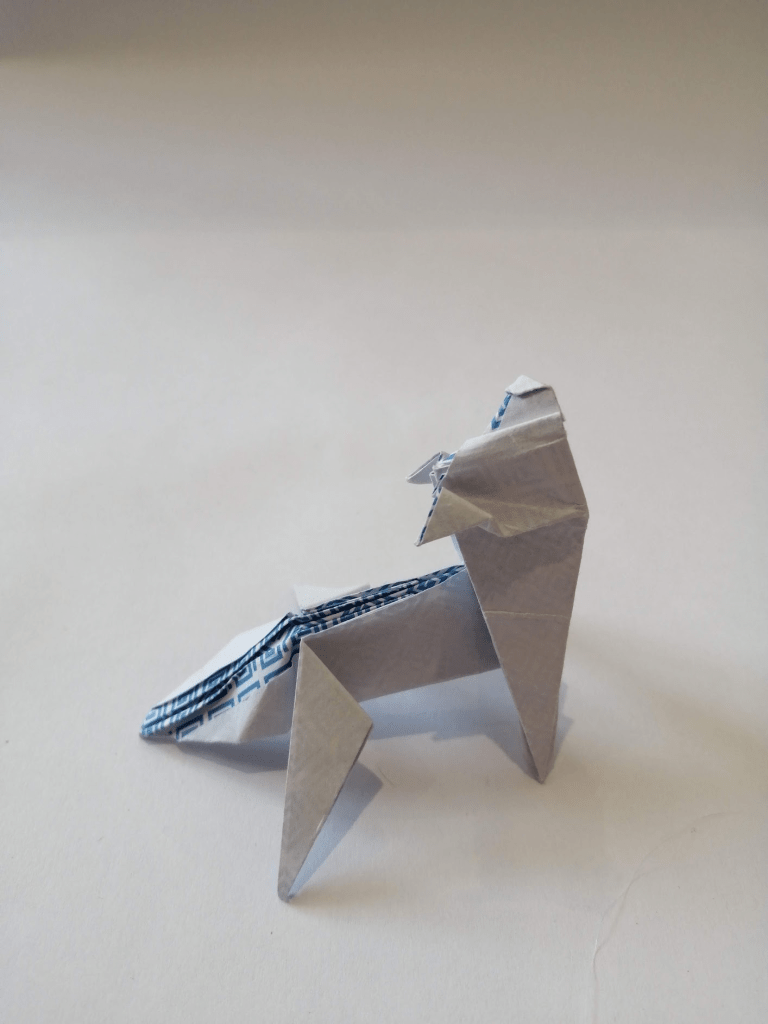
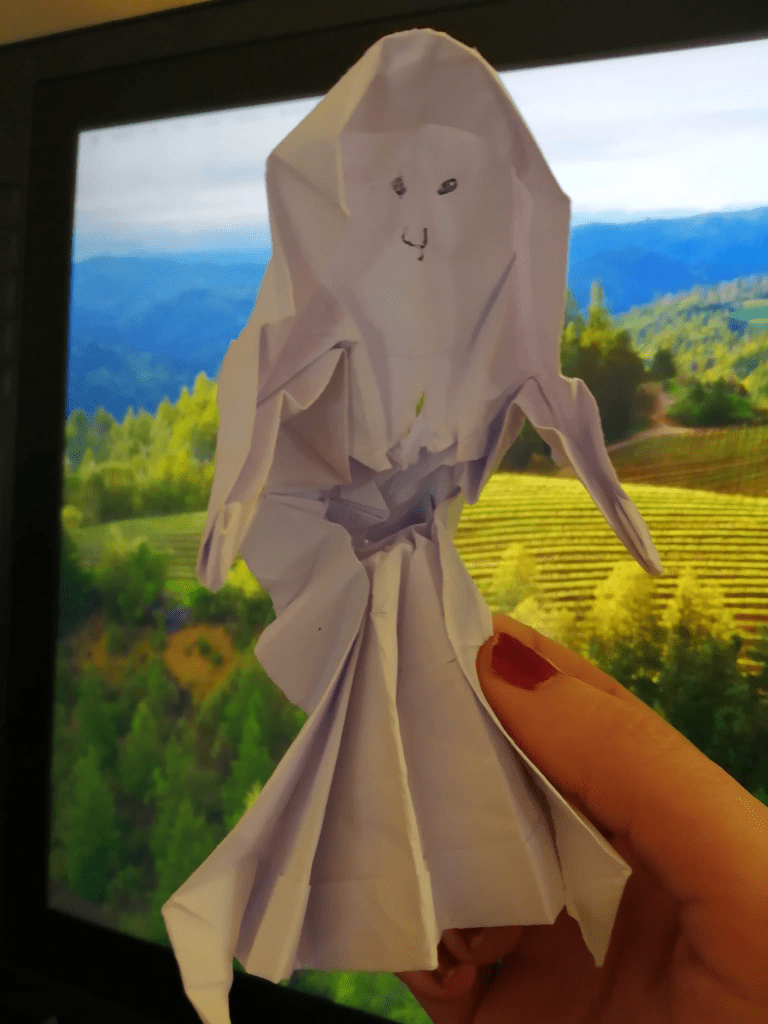
Jokingly, I said to them, “I don’t know whether to hug you or hit you.”
Not giving in, I decided to make one more attempt at making a wolf, and to my surprise, I managed it. I finally had a sense of accomplishment as I held up my completed origami wolf, or perhaps puppy?
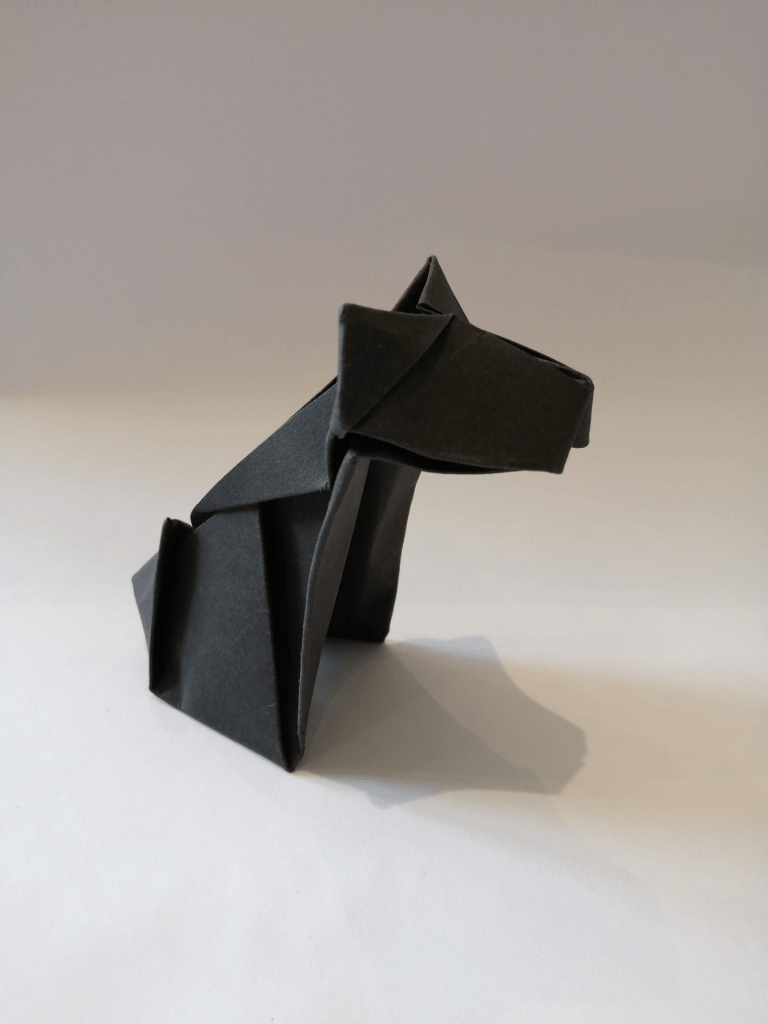
My children and I all laughed together at the irony of the situation, but deep down, I was grateful for the lesson in resilience that I had unintentionally taught them. While writing this, my youngest son is sitting in the other room, creating more origami figures. The sound of him folding the paper brings a smile to my face, knowing that he has learned the value of perseverance and determination from our previous experience.
Here is a short clip of what he has just made.
I realised it was time to stop making new characters after investing so much time in this exercise. I did, however, think back on the exercise and contemplate how having this skill would help me in the future with my creative work as an illustrator. Maybe I could make an illustration with the figures. This inspired me to learn how to make a woodland scene in Procreate. I noticed that as I dug deeper into learning how to utilise Procreate, my excitement for the possibilities it presented for my artwork grew. It excited me to think of my characters coming to life in a digital format, and I was looking forward to seeing them in a colourful forest scene. Below is the forest scene I created using Procreate.
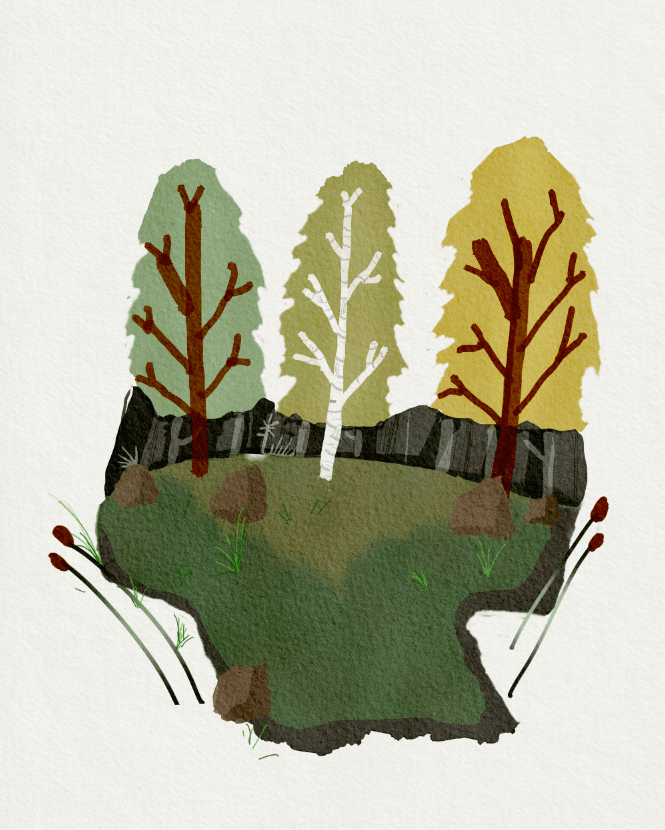
It also occurred to me that they may look good in a paper-cut design, so I created one in Adobe Illustrator to see what it looked like. Below is the result.

Finally, I had a little play with the different elements I have created including trees I painted in the previous exercise.
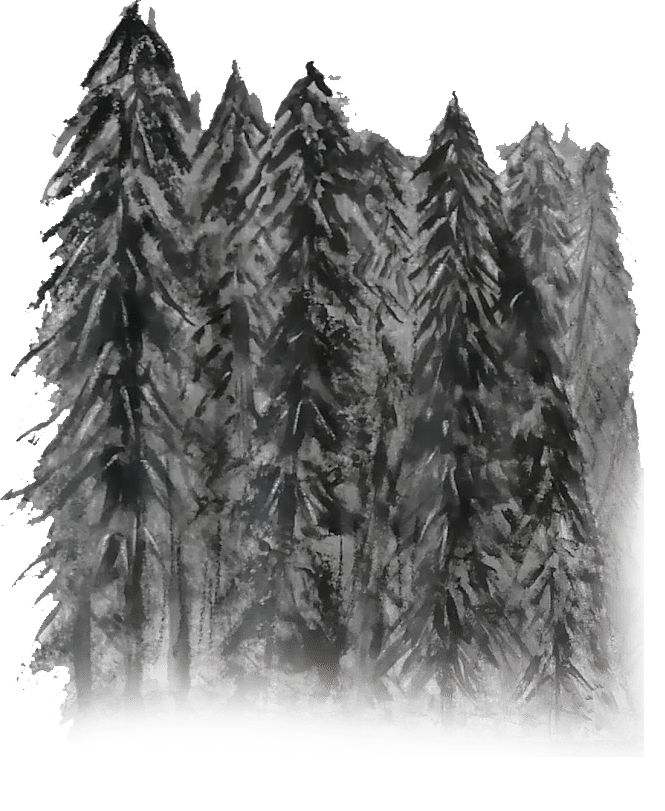
and made various cover designs for a children’s book. Below are different experiments with cover designs.
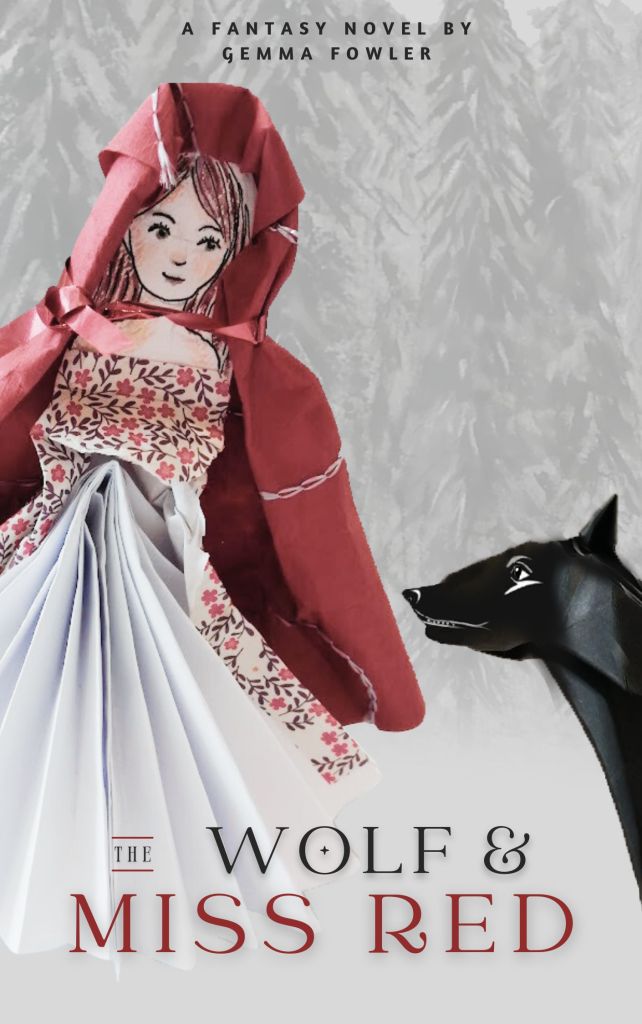
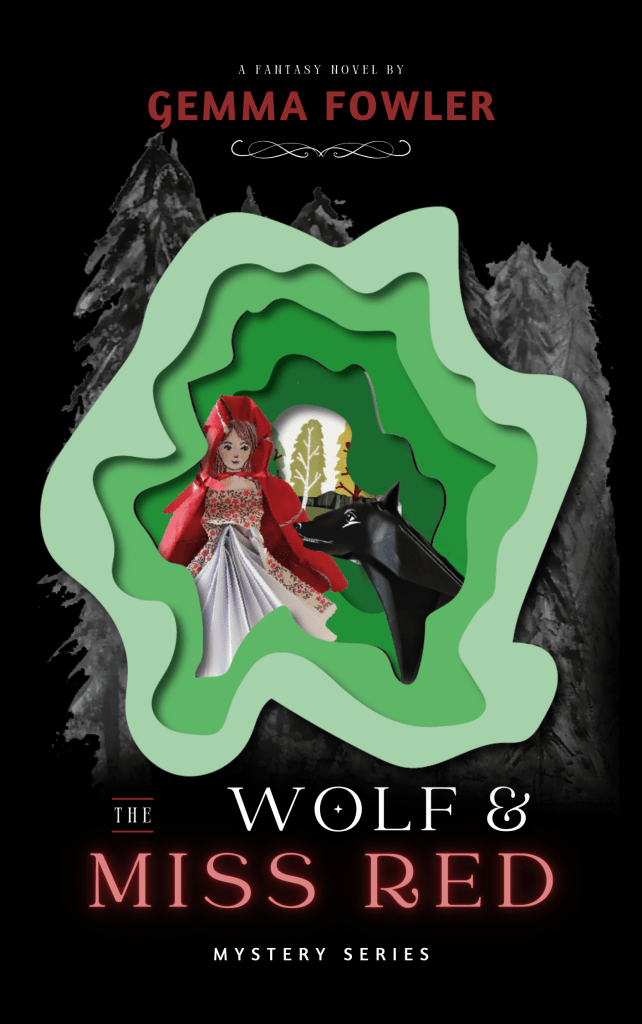
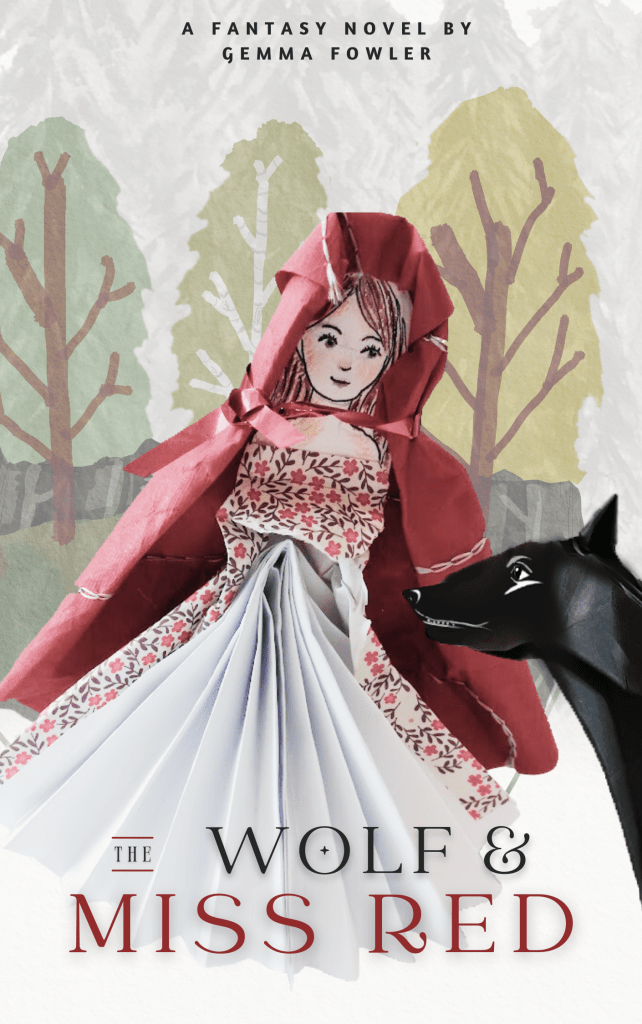
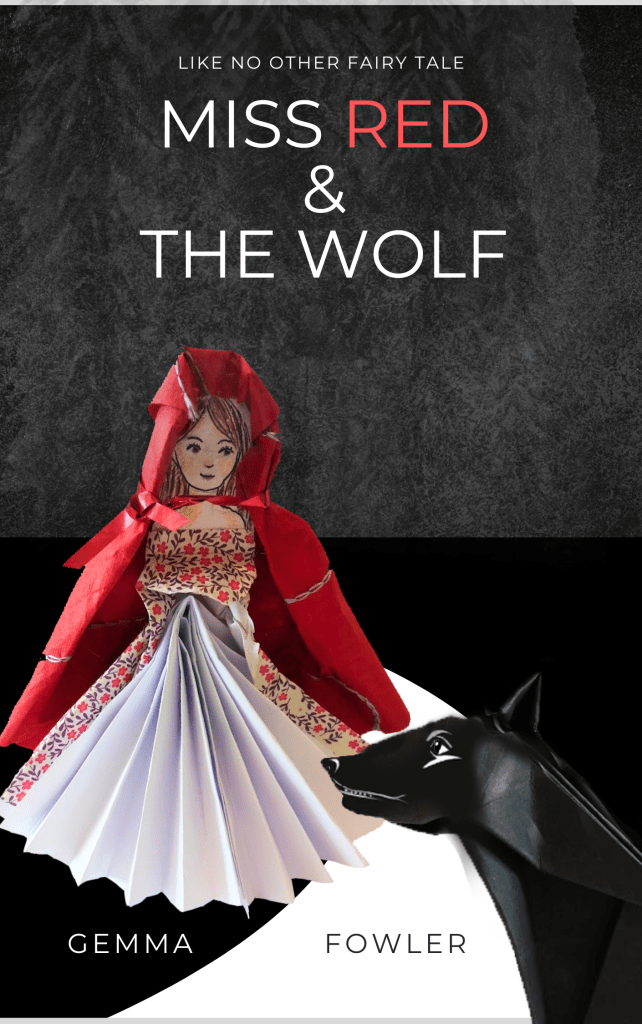
As I continued to experiment and play with different techniques, my excitement grew, and I created a final mockup design for an independent reader.
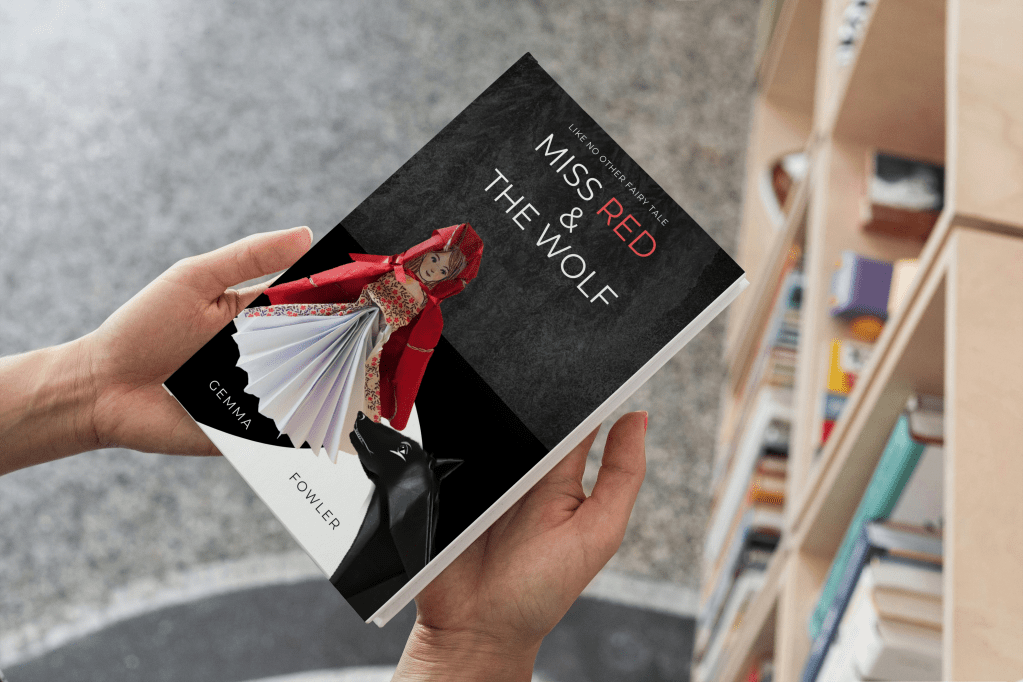
The process of bringing my characters to life in different contexts was incredibly rewarding. I found that each design sparked new ideas. I am surprised and inspired by how far this exercise has pushed me as an artist.
References
Aiko, M. (n.d.). Martina Aiko. [online] http://www.martinaaiko.com. Available at: https://www.martinaaiko.com [Accessed 7 Apr. 2024].
Arts to Hearts Project. (2023). Captivating works of 10 Paper Artists that will leave you Fascinated! – Arts To Hearts Project. [online] Available at: https://artstoheartsproject.com/paper-artists/ [Accessed 7 Apr. 2024].
Calvin (2020). Watercolor Forest Tutorial in Procreate. [online] http://www.youtube.com. Available at: https://youtu.be/yP1r6noB6Q4?si=JWHERTrJBIXpGPKN [Accessed 7 Apr. 2024].
Canva (2024). Canva. [online] Canva.com. Available at: https://www.canva.com https://www.canva.com/mockups/mockup/d79fpdOoIVD.
Fowler, G. (2024). Origami Fidget Cube. [online] http://www.youtube.com. Available at: https://youtu.be/S_6Na5VsvgI [Accessed 7 Apr. 2024].
May, T. (2023). Shelley Hanmo’s paper collage creations summon Asian folklore and her love of music. [online] Creative Boom. Available at: https://www.creativeboom.com/inspiration/shelley-hanmos-exquisite-paper-collage [Accessed 7 Apr. 2024].
Origami, W. (2020). How to make a Paper 3D Human Girl Figure 【ORIGAMI】. [online] http://www.youtube.com. Available at: https://youtu.be/mHEZLeFOV5U [Accessed 7 Apr. 2024].
Illustration list
Fig. 1 Chau, M. (2017) Two boys. [Paper collage] Available at: https://artstoheartsproject.com/paper-artists/ [Accessed 7 Apr. 2024].
Fig. 2 Chau, M. (2022) Fishing [Paper collage] Available at: https://artstoheartsproject.com/paper-artists/ [Accessed 7 Apr. 2024].
Fig. 3 Chau, M. (2021) Family portrait [Paper collage] Available at: https://artstoheartsproject.com/paper-artists/ [Accessed 7 Apr. 2024].
Fig.4 Hand, S. (N.D) Hansel and Gretel [Paper collage] Available at: https://artstoheartsproject.com/paper-artists/ [Accessed 7 Apr. 2024].
Fig. 5 Aiko, M (N.D) Yoga [Paper collage] Available at: https://artstoheartsproject.com/paper-artists/ [Accessed 7 Apr. 2024].
Fig. 6 Fowler, G (2024) Me and Leo [photograph, landscape] In possession of the author: Forest of Dean.
Fig. 7 Aiko, M (N.D) Open pool [Paper collage] Available at: https://www.martinaaiko.com/ [Accessed 7 Apr. 2024].
Fig. 8 Aiko, M (N.D) Beehive[Paper collage] Available at: https://www.martinaaiko.com/ [Accessed 7 Apr. 2024].
Fig.9 Fowler, G (2024) Failed attempts [photograph of origami attempts] In possession of the author: Forest of Dean
Fig.10 Fowler, G (2024) Covid [photograph] In possession of the author: Forest of Dean
Fig.11 Fowler, G (2024) Paper fan [photograph, of paper sculpture] In possession of the author: Forest of Dean
Fig.12 Fowler, G (2024) Decorated Paper fan [photograph, of paper sculpture] In possession of the author: Forest of Dean
Fig.13 Fowler, G (2024) Girl paper sculpture (2024) [photograph, of paper sculpture] In possession of the author: Forest of Dean
Fig.14 Fowler, G (2024) Wolf attempt (2024) [photograph, of paper sculpture] In possession of the author: Forest of Dean
Fig.15 Fowler, G (2024) Jake’s origami figure [photograph, of paper sculpture] In possession of the author: Forest of Dean
Fig.16 Fowler, G (2024) Jake’s origami Fox [photograph, of paper sculpture] In possession of the author: Forest of Dean
Fig.17 Fowler, G (2024) Elliott’s origami figure[ photograph, of paper sculpture] In possession of the author: Forest of Dean
Fig.18 Fowler, G (2024) Wolf [photograph, of paper sculpture] In possession of the author: Forest of Dean
Fig.19 Fowler, G (2024) Procreate forest scene [photograph, of paper sculpture] In possession of the author: Forest of Dean
Fig.20 Fowler, G (2024) Paper-cut design [photograph, of paper sculpture] In possession of the author: Forest of Dean
Fig.21 Fowler, G (2024) Trees [photograph, of paper sculpture] In possession of the author: Forest of Dean
Fig.22 Fowler, G (2024) Cover design 1 [digital illustration] In possession of the author: Forest of Dean
Fig.23 Fowler, G (2024) Cover design 2 [digital illustration] In possession of the author: Forest of Dean
Fig. 24 Fowler, G (2024) Cover design 3 [digital illustration] In possession of the author: Forest of Dean
Fig.25 Fowler, G (2024) Cover design 4 [digital illustration] In possession of the author: Forest of Dean
Fig.26 Fowler, G (2024) Mock-up book cover [digital illustration] In possession of the author: Forest of Dean

 Visual Skills 2