Brief
For this exercise I was asked to choose a word and make a list of the different manifestations that the word can take.
Here are some keywords describing concepts:
- PAINTING
- WRITING
- SOUND
- DESIGNING
- MAKING
Next, I was asked to visualise this written list by drawing thumbnail sketches of each of the words and phrases.
Once I have made a collection of sketches I have been asked to incorporate some or all of them into one A2-size image.
Keywords from the brief
- Choose one of these words and make a written list of the different manifestations that the word can take
- Draw thumbnail sketches of each of the words and phrases of your own list.
- Observational studies of objects or people
- Incorporate some or all of the sketches into one A2-size image.
- Redraw or collage copies of your drawings
- Organise your icons into a design, or cut up and combine copies of your photographs
- Reflect on the process and the exercise.
Written list
As I was not sure which word to choose, I began the exercise by making lists for each of the words.
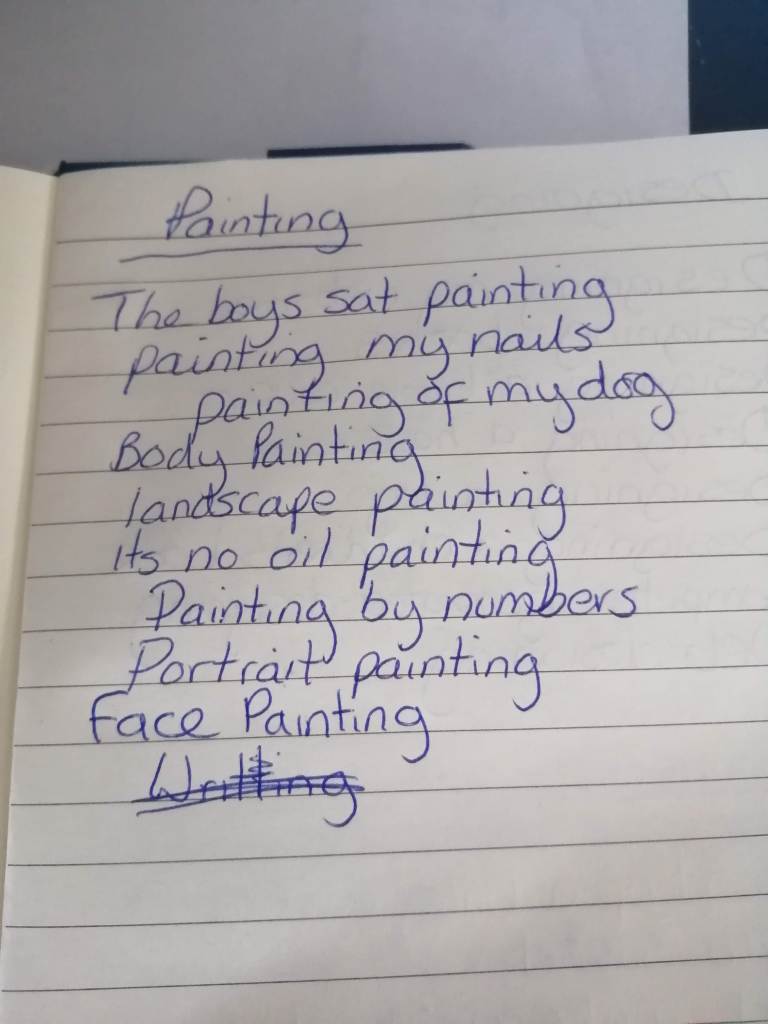
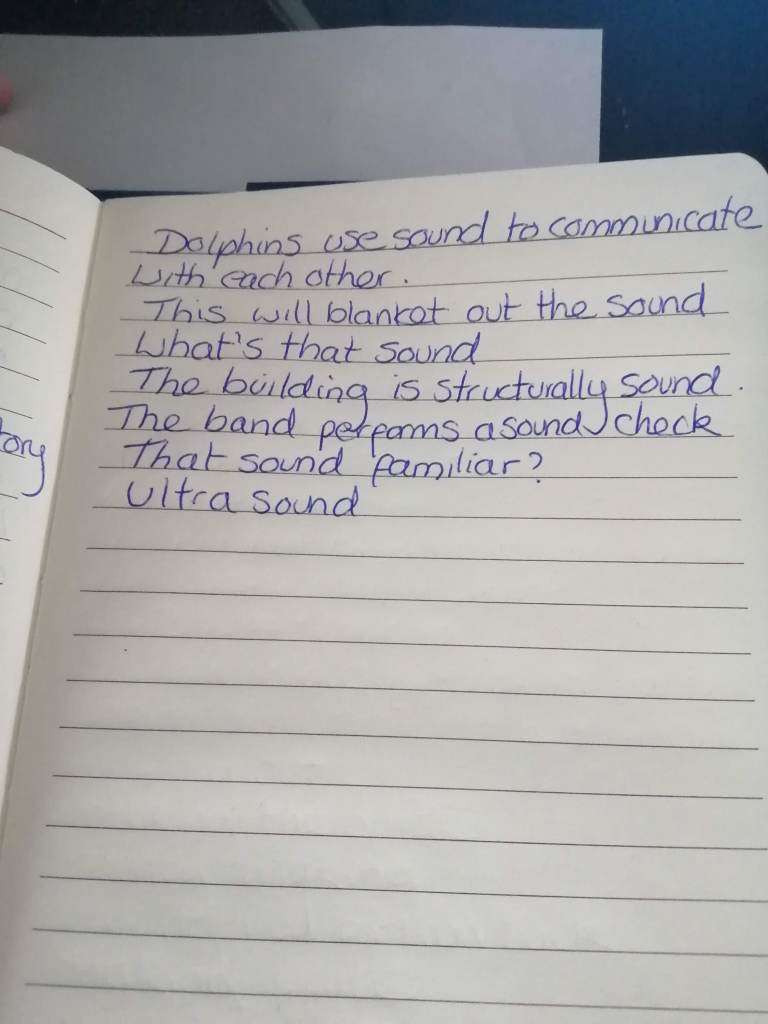
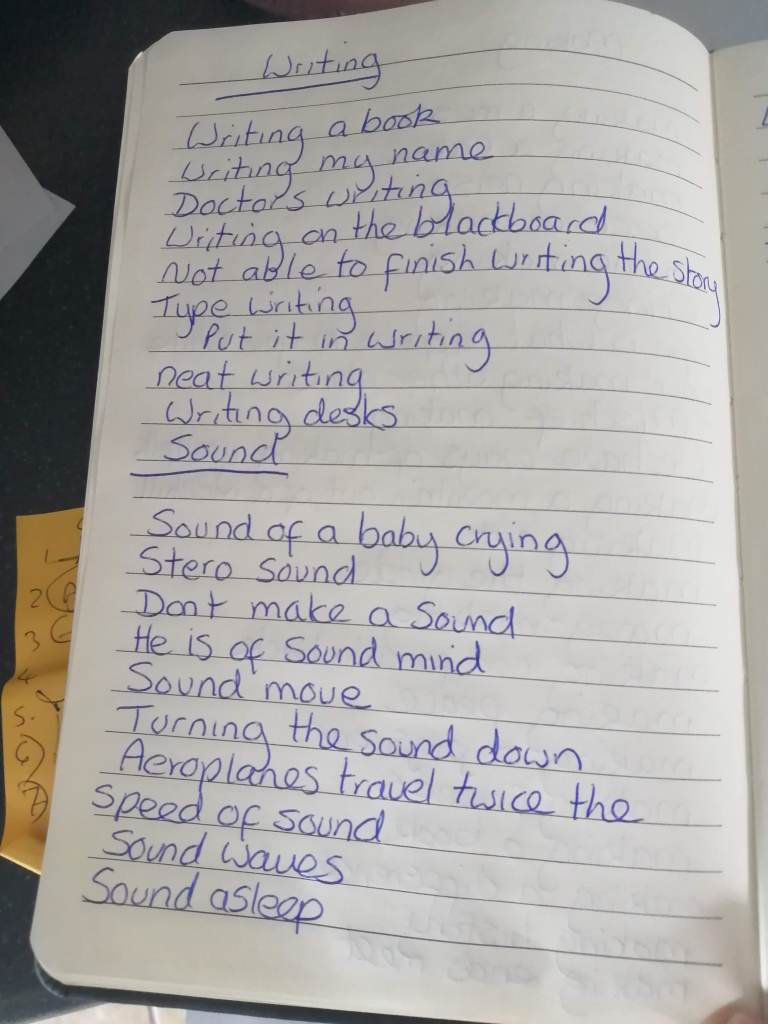
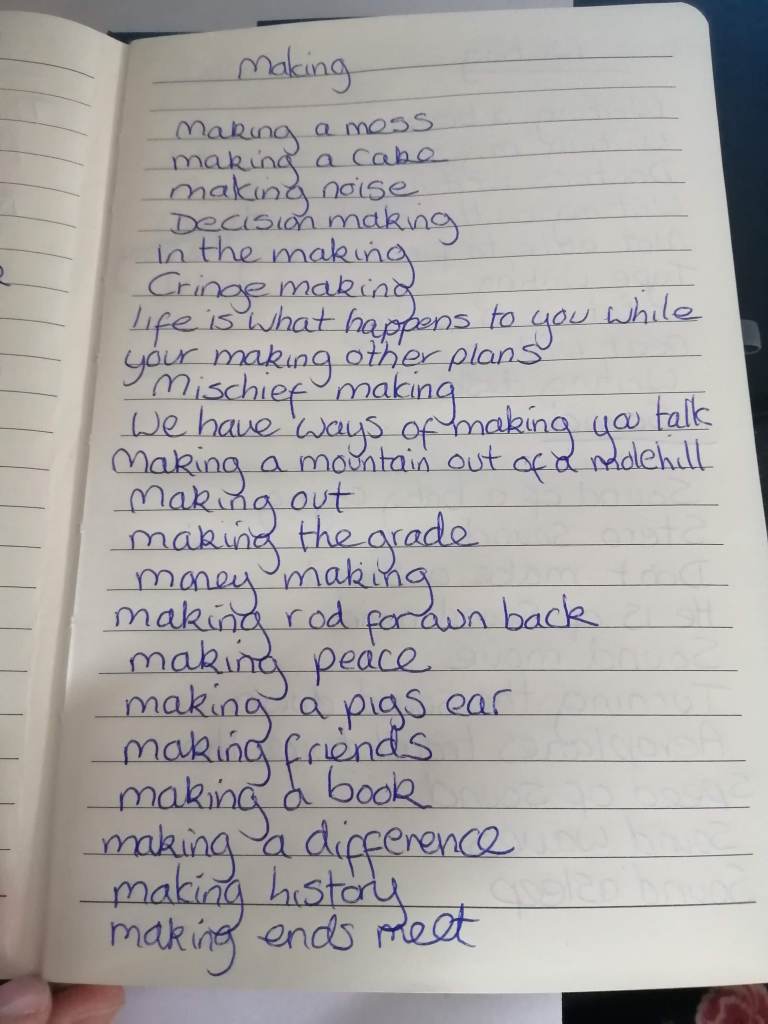
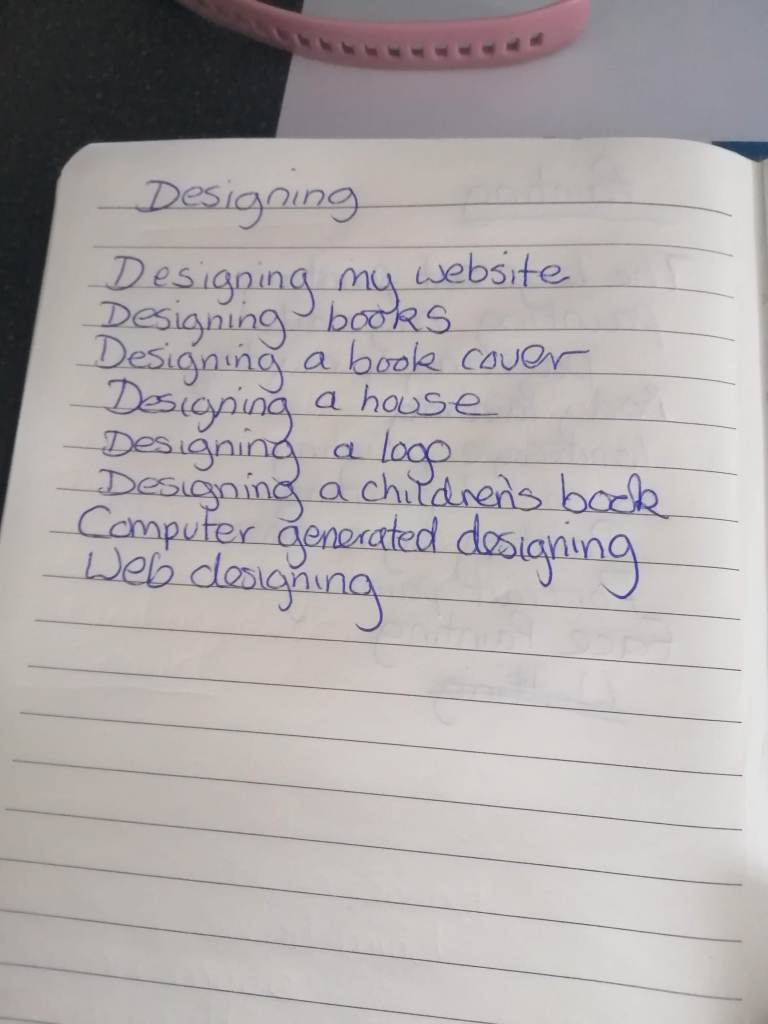
From all the words, the most interesting lists came from the words sound and making. I finally choose the word making.
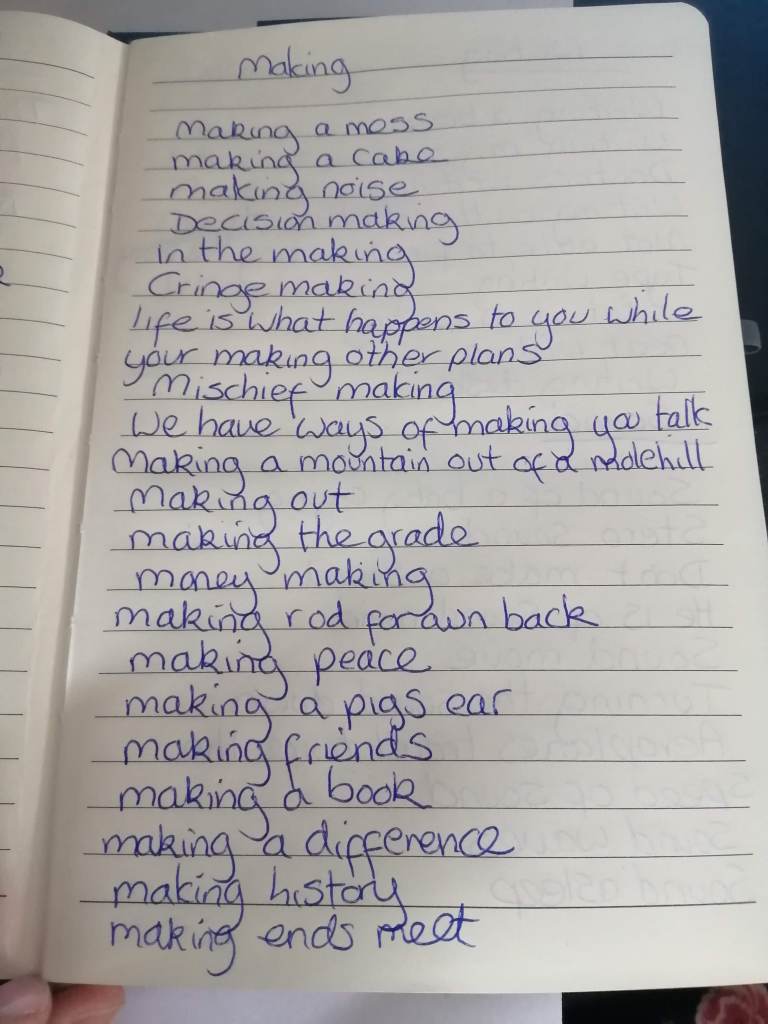
Thumbnail sketches
Below are my thumbnail sketch ideas for each of the sentences.
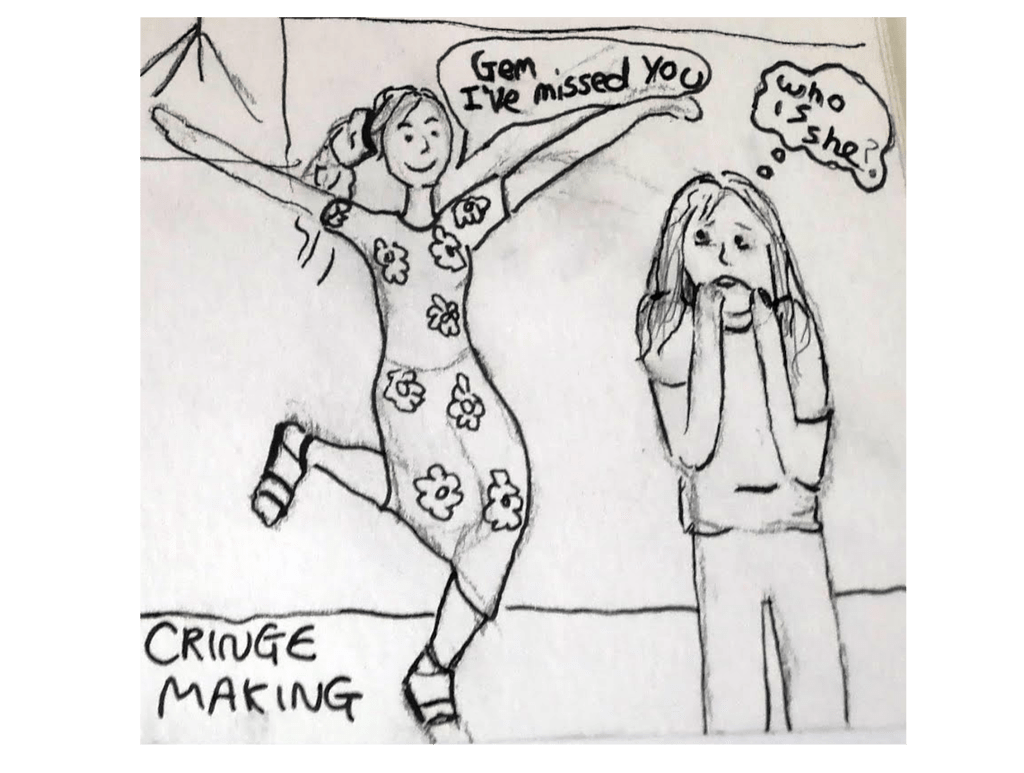
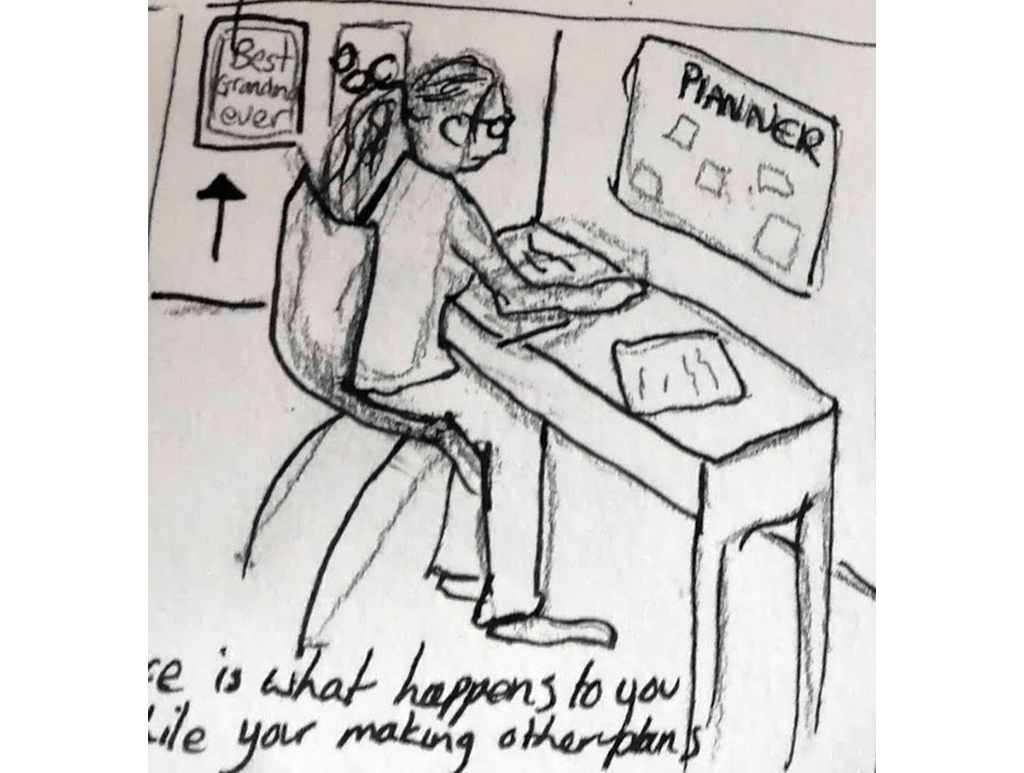

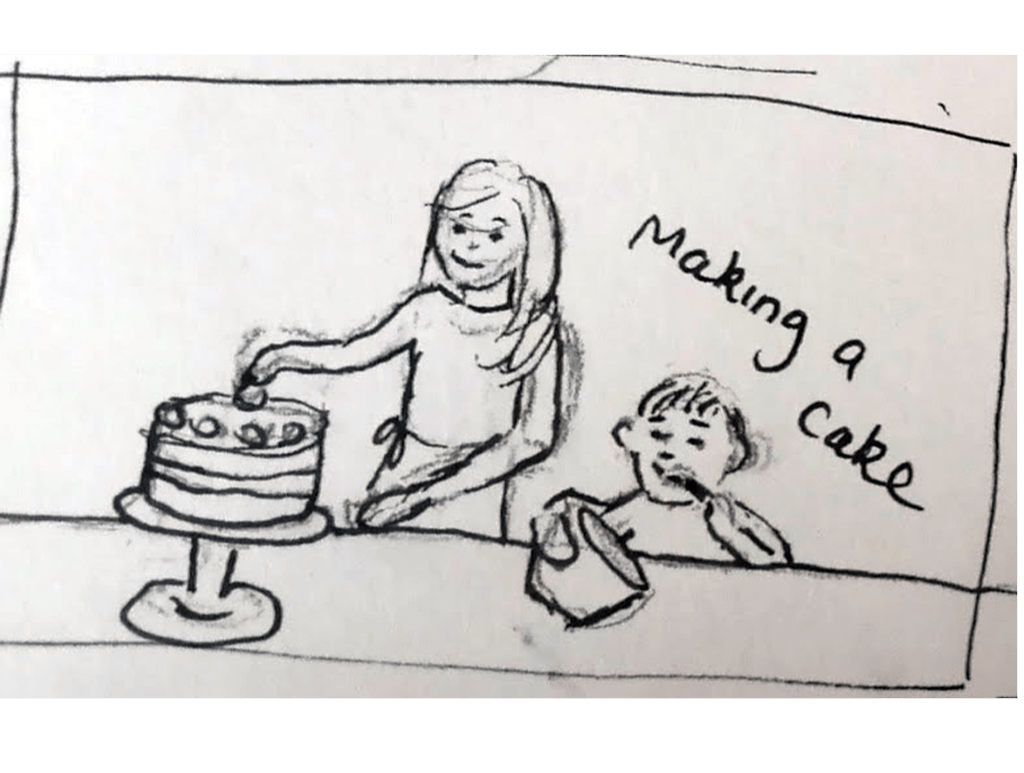
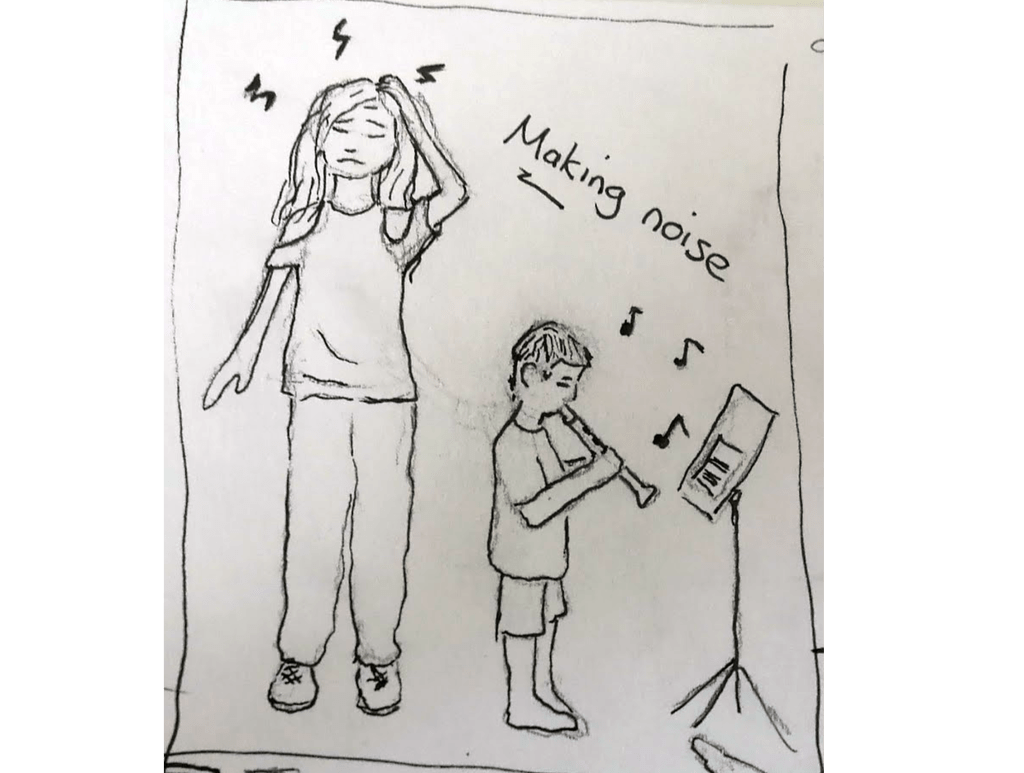
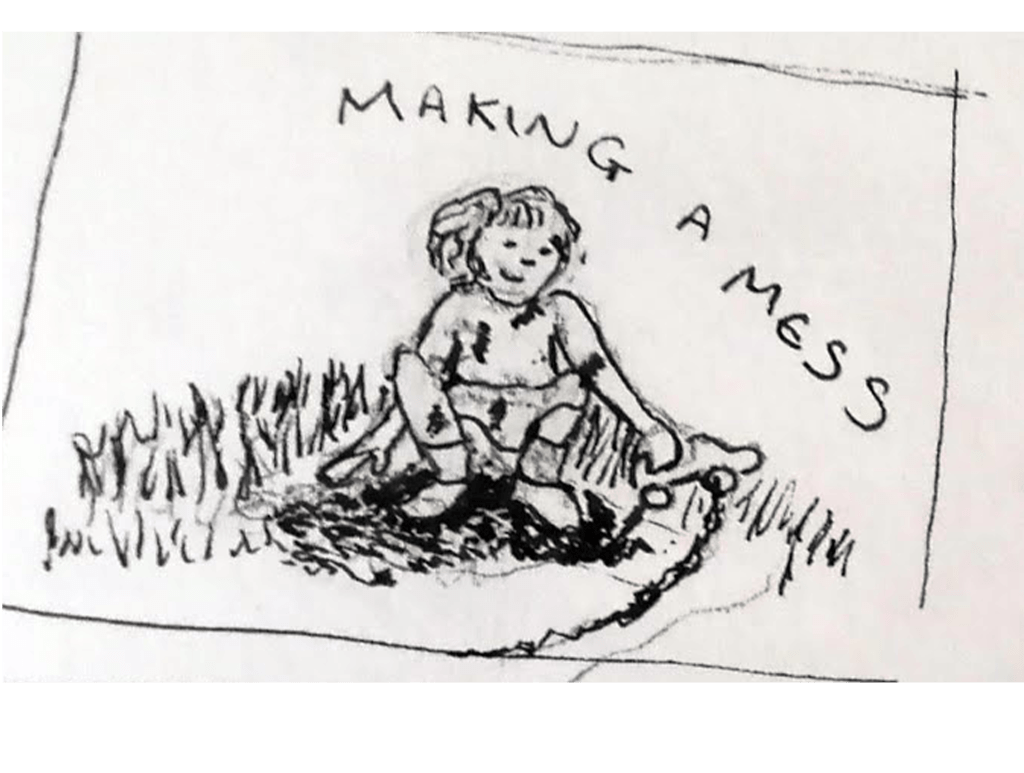
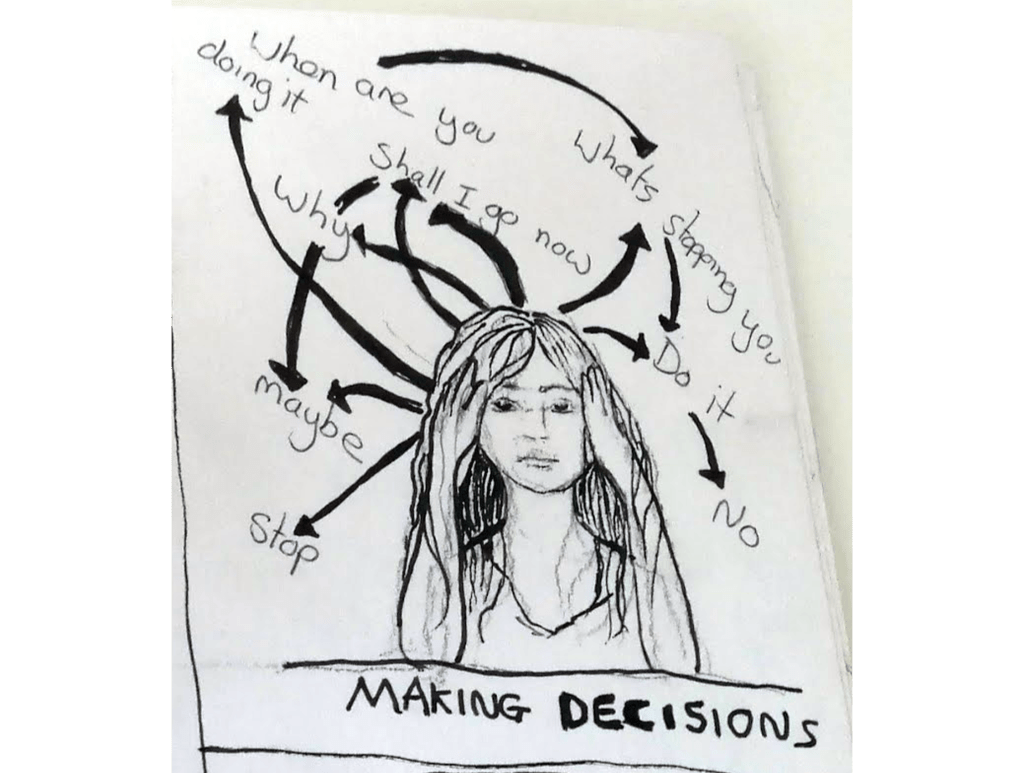
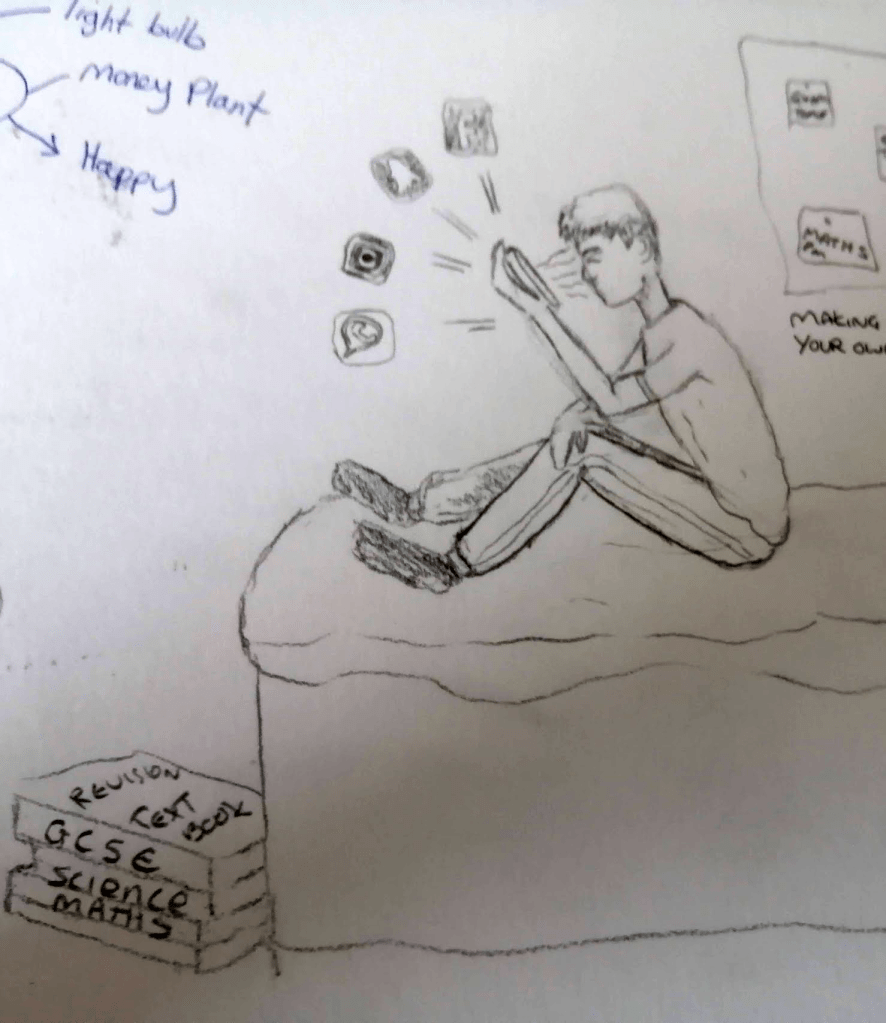
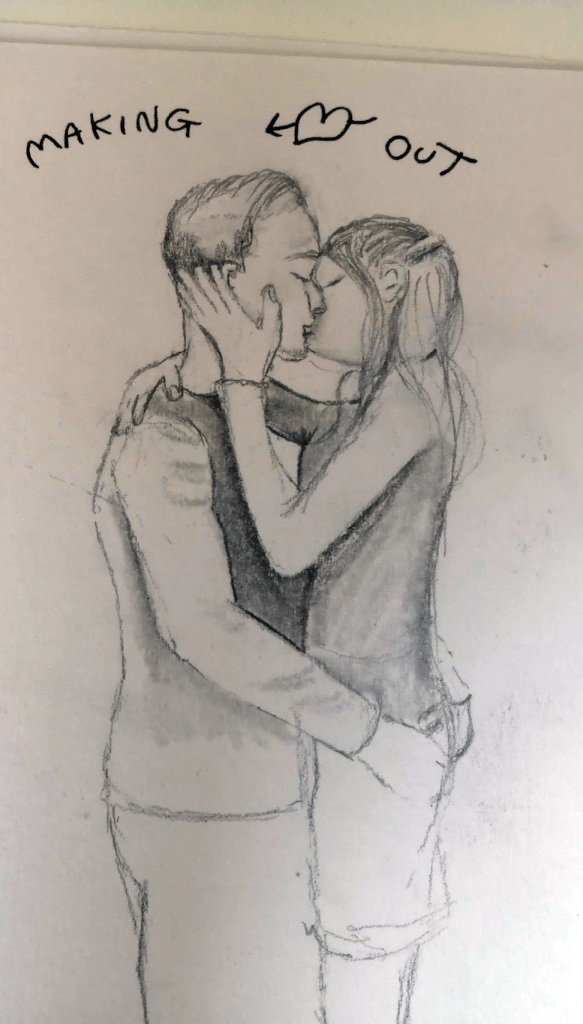
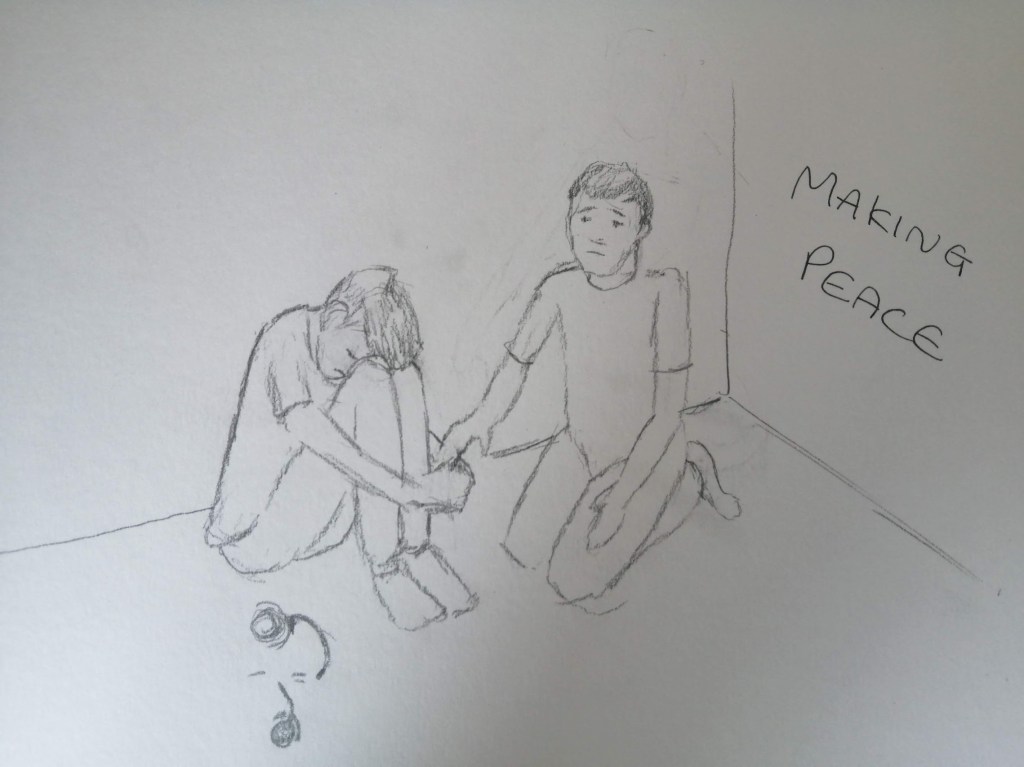
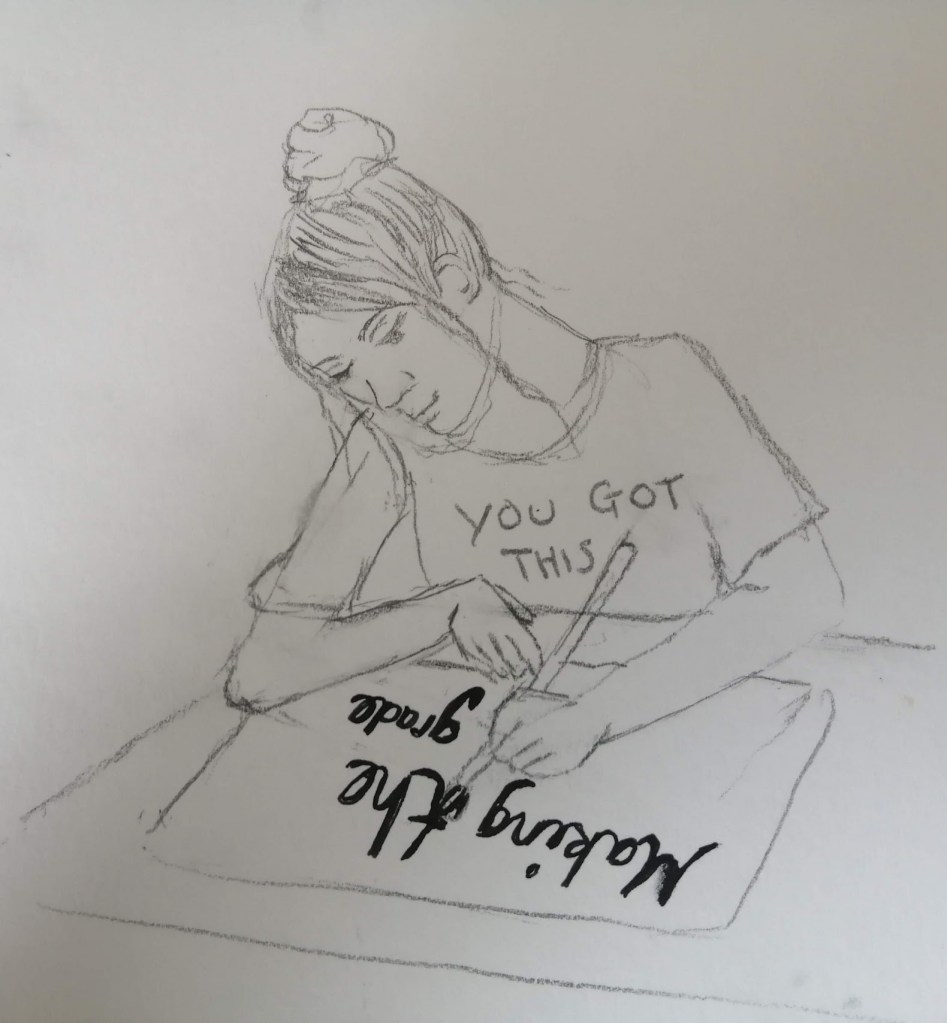
Observational studies
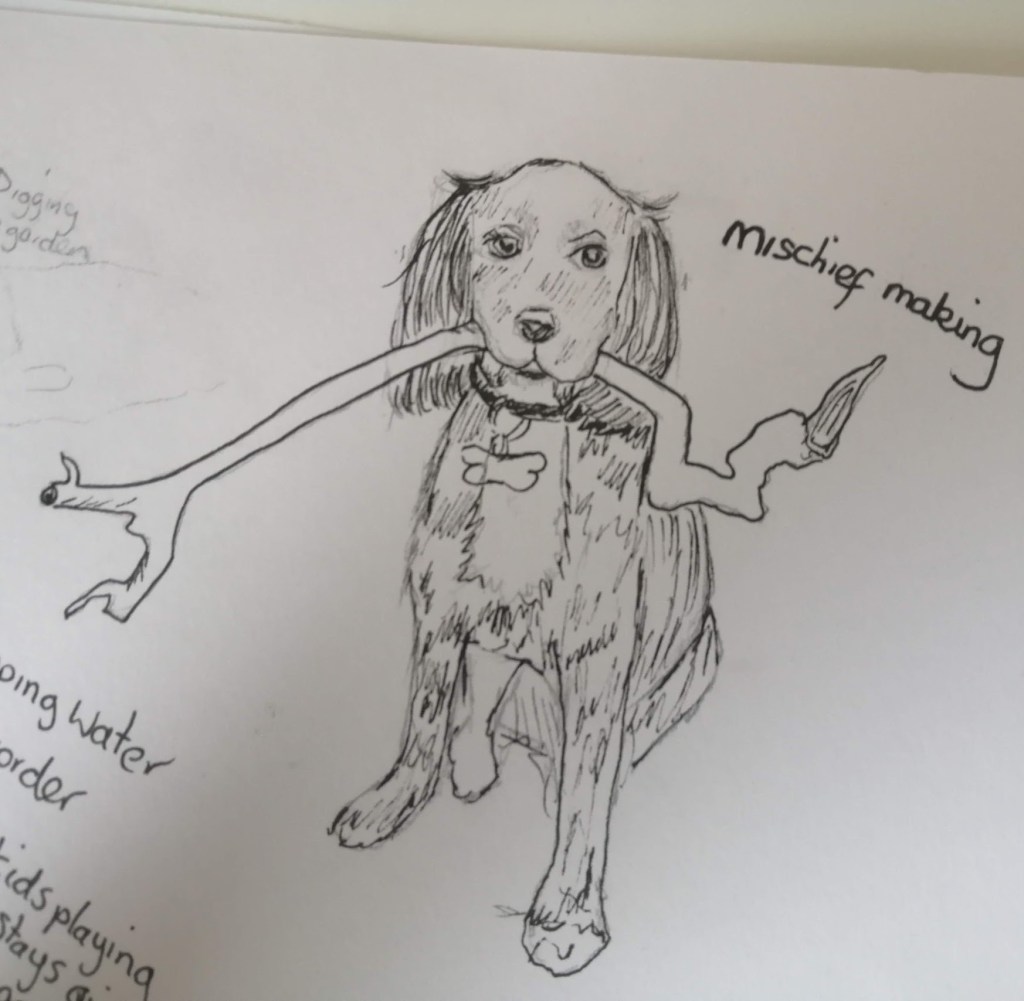
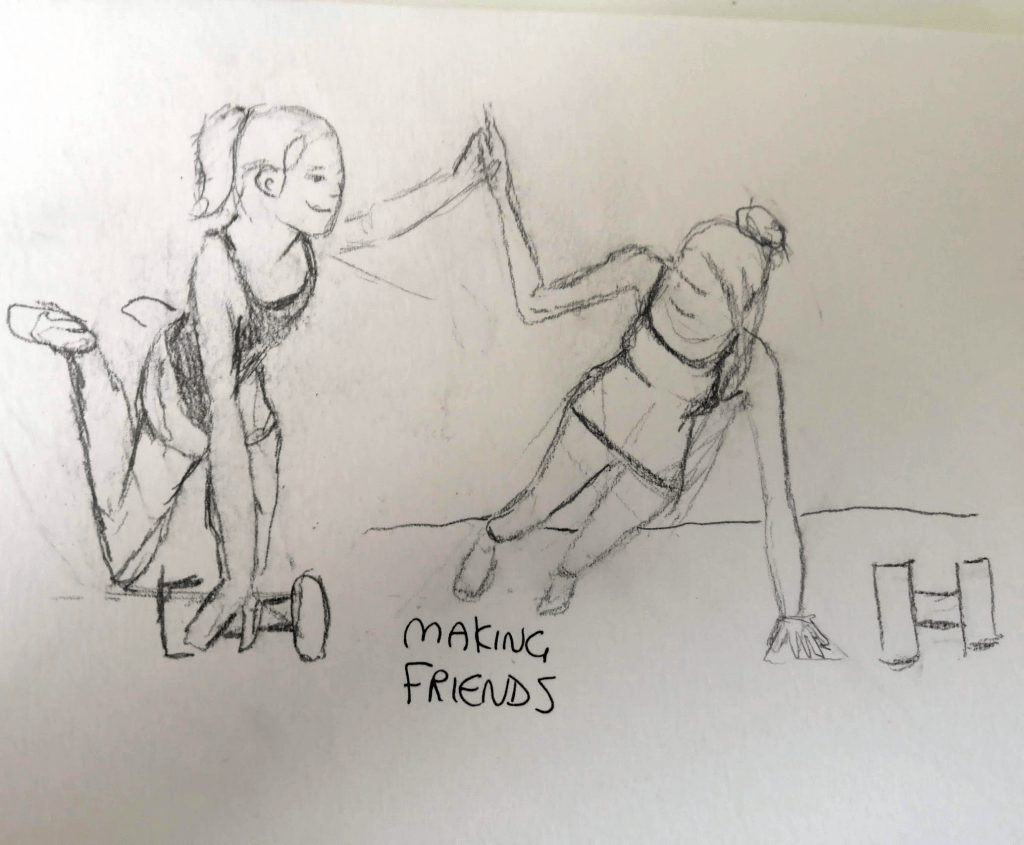
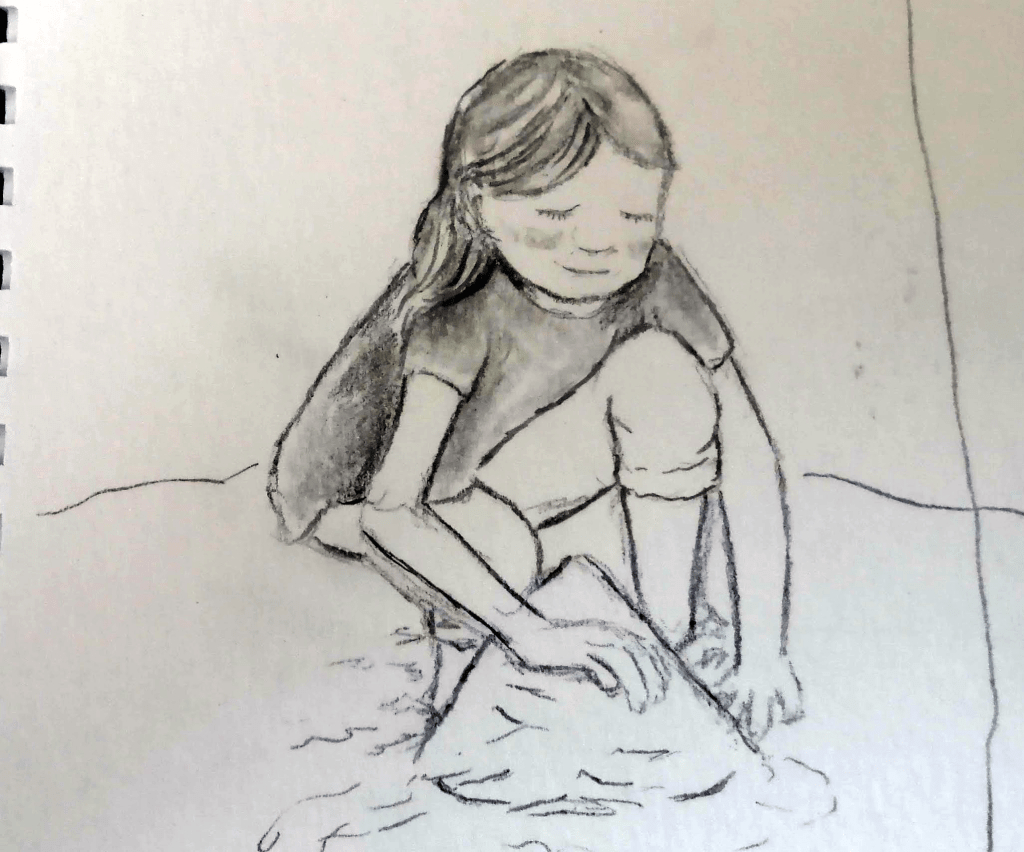
Visual experimentation
Next, I selected some of the sketches and experimented roughly what they may look like when used together to form a new illustration. Below are these ideas.
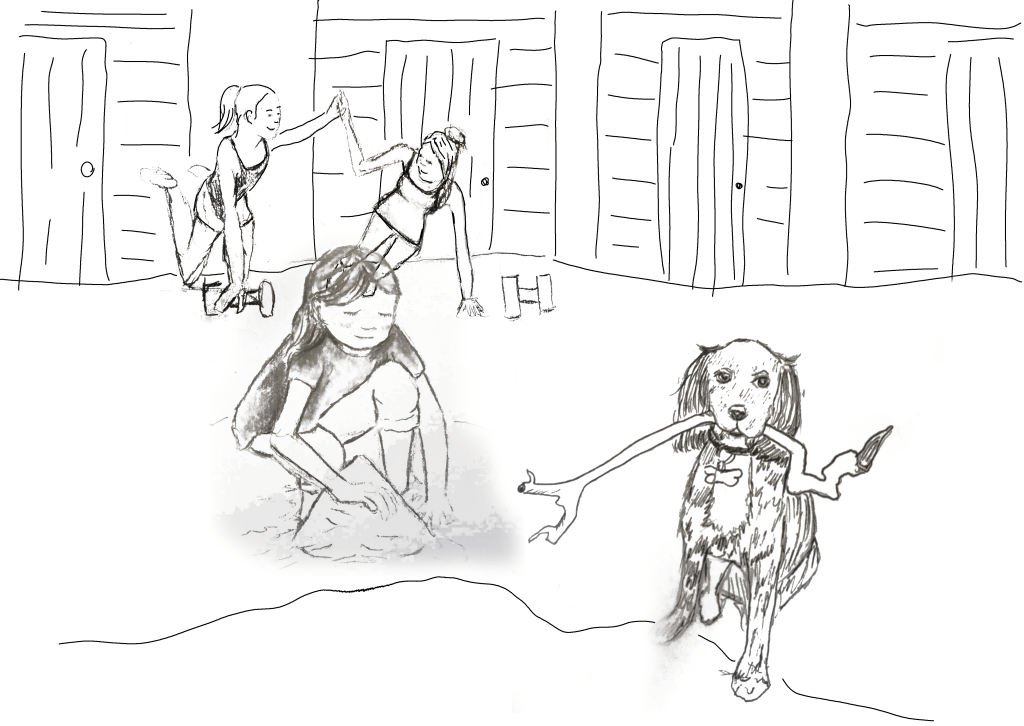
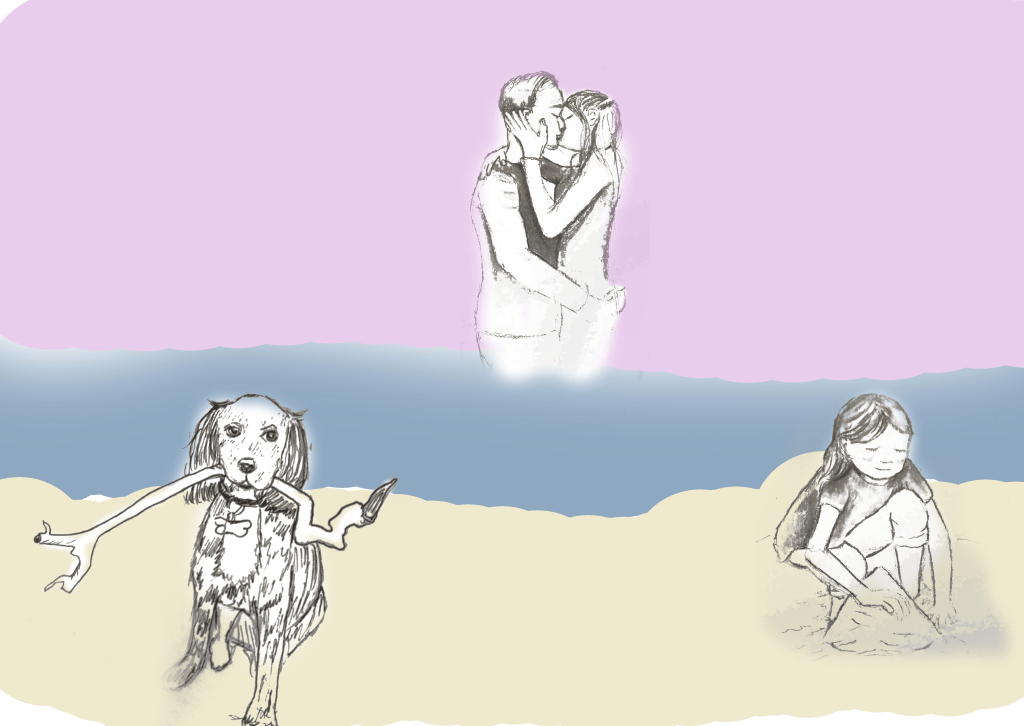
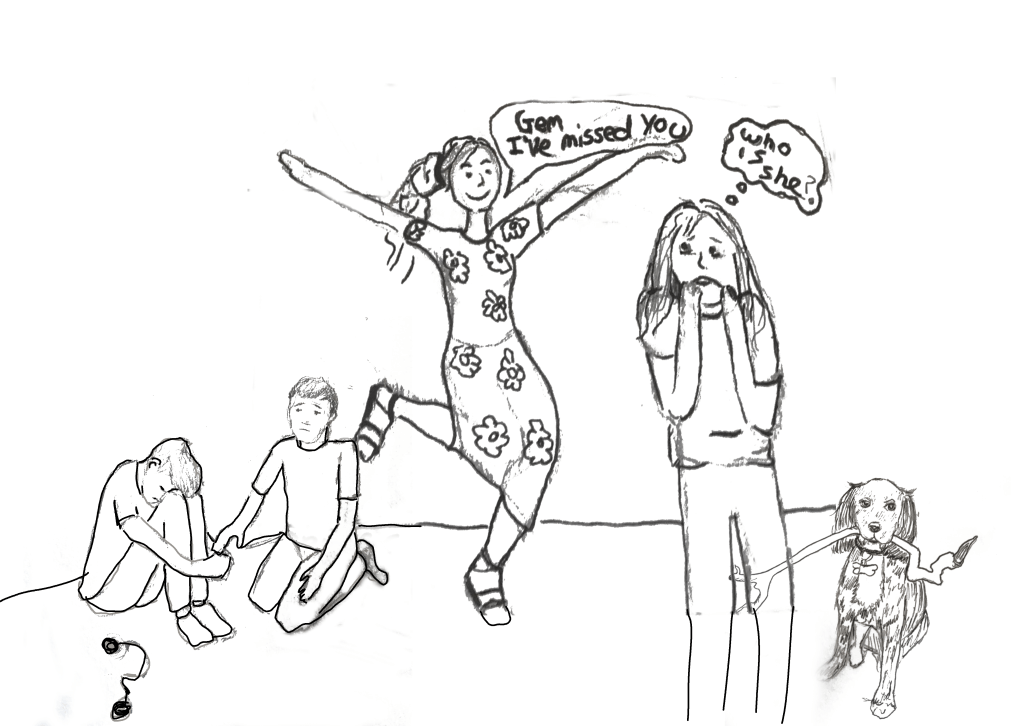
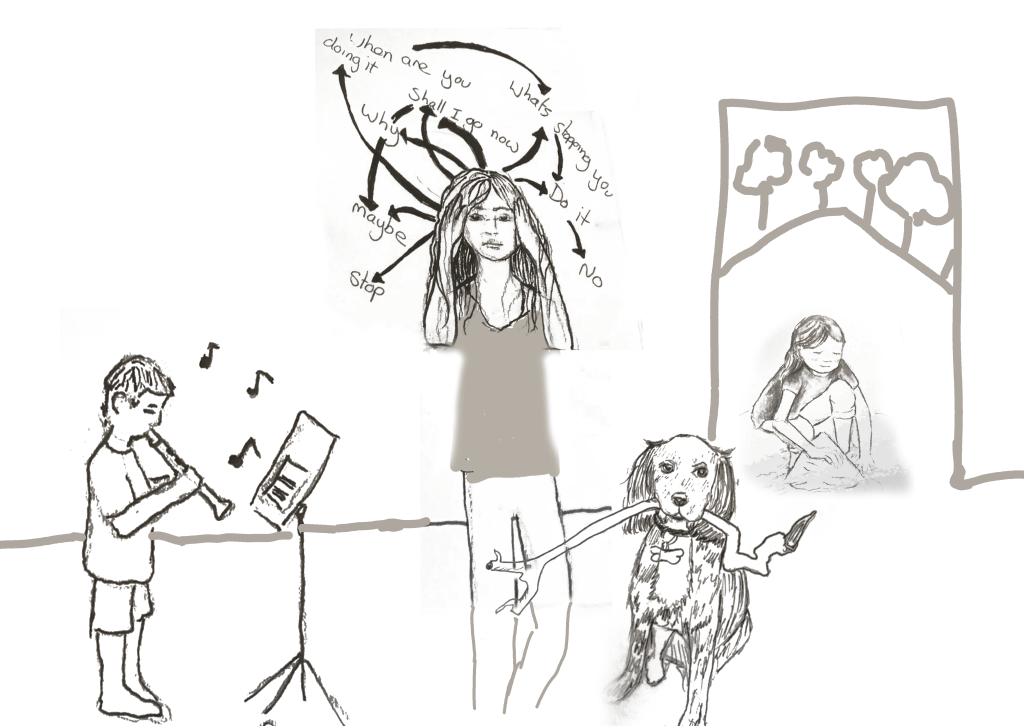
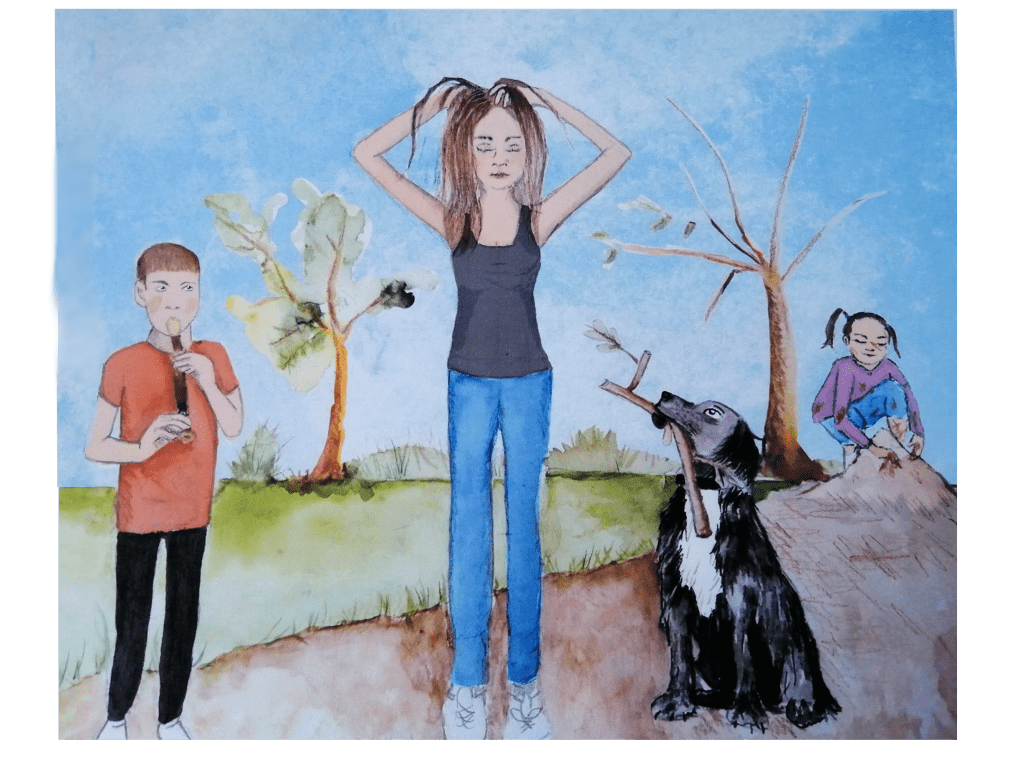
The final sketch reminded me of a day when everything becomes too much for me. For example, having too many decisions to make and too many errands to run while juggling family life. It seemed to have a story to it, so I decided to recreate the drawing into a complete image.
I started by redrawing the thumbnail sketches into more proportioned characters and painting them in watercolour.
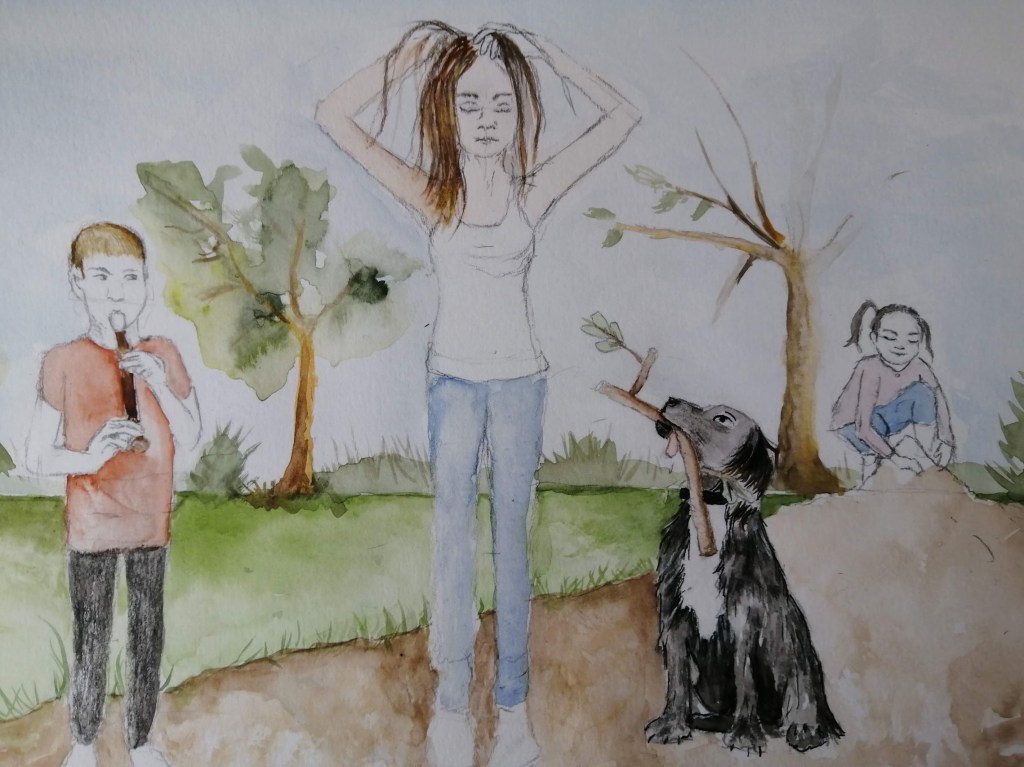
The illustration was then modified in Photoshop by making the image have more vivid colours and adding shadow and shade.
Final illustration
Reflection
To begin with, I thought this exercise was a little random and didn’t see the value of drawing random scenarios. However, after sketching thumbnails, I realised how it opened up my thought process and led me to interesting concepts. It’s a creative practise that could come in handy if I ever get stuck illustrating for a project and don’t know where to start.
I felt relieved after finishing the final illustration. Reflecting on it I thought It captured me on a day when I felt overwhelmed because I didn’t know where to start with a project and I enjoyed the illustration I created of my beloved dog Cody since I thought it portrayed his likeness beautifully.
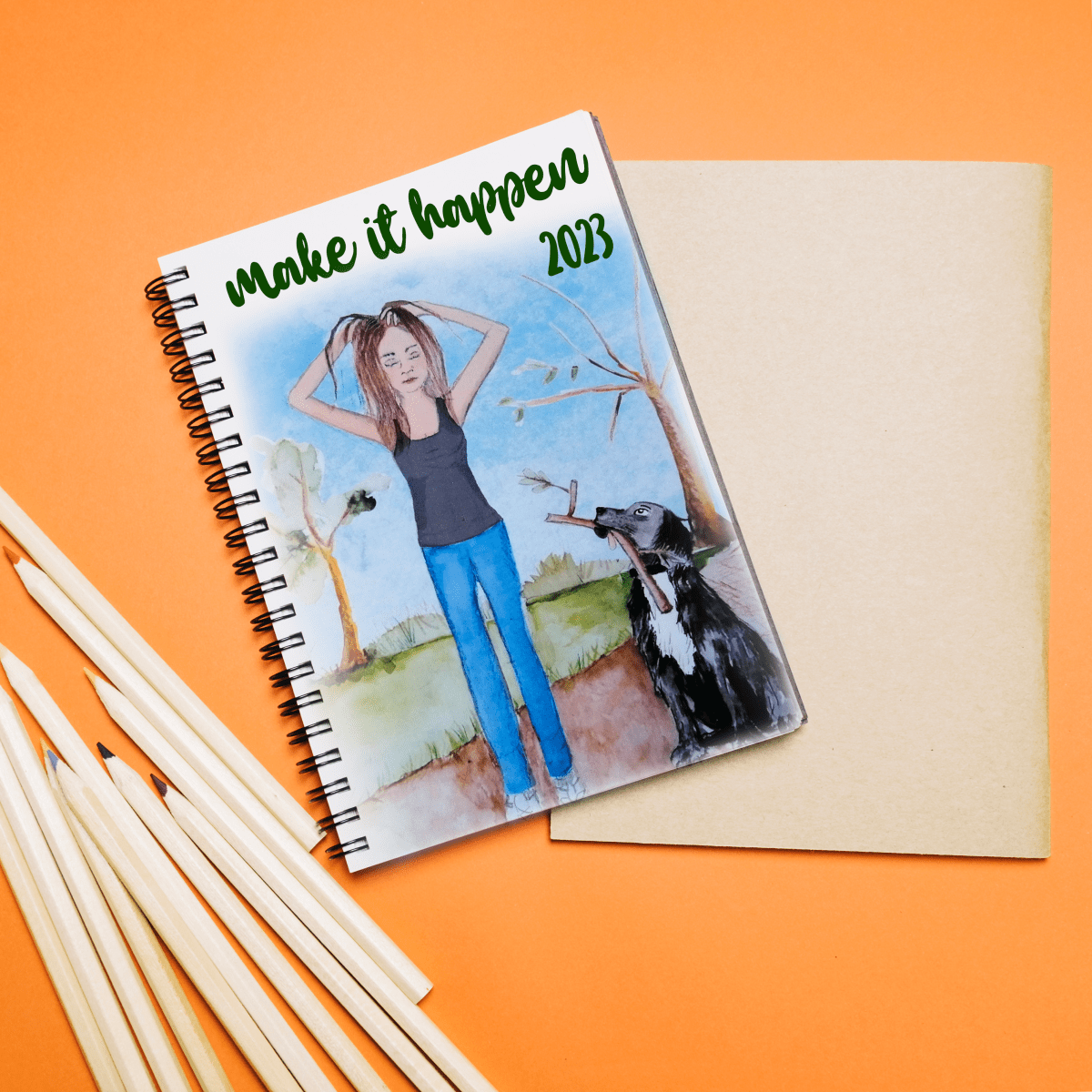
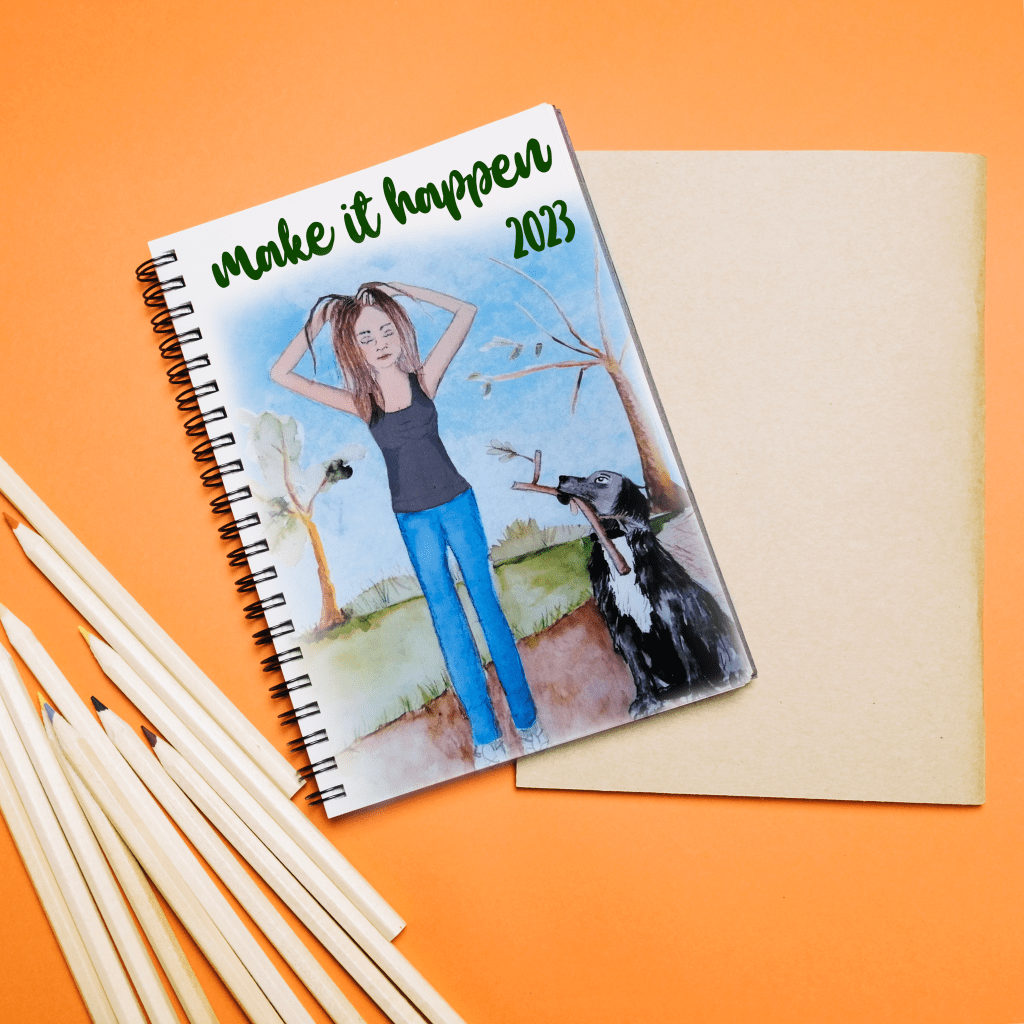
After completing a project’s final illustration, I frequently examine whether it could be used productively in the future for another venture. After staring at the artwork for a while, I decided it would be amusing to use it as the front cover of a notepad for my academic work. To remind me to avoid procrastinating and get things done.
This was a fun exercise that I may repeat in the future.
Below is a mock-up of the note pad.
Reference List
Mock-up of notepad (no date). Freepik. Available at: https://www.freepik.com/free-psd/back-school-template-with-notebook_1293559.htm.
 Visual Skills 2